

3D CAD Jewelry Design Jobs (2026 Guide)
What These Jobs Actually Cover
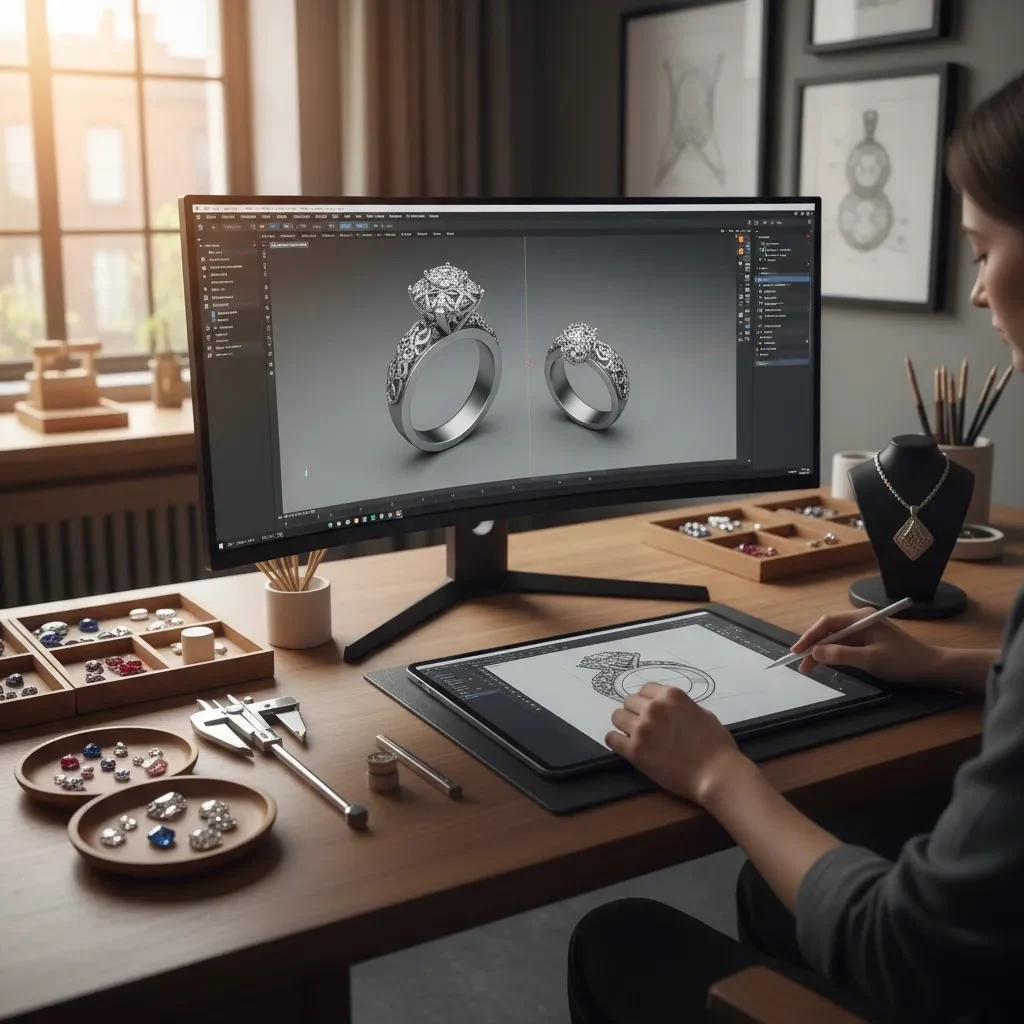
The phrase 3d cad jewelry design jobs can describe several different roles, and that is where many hiring mistakes begin. One company may use the title for a designer who builds visual concepts from rough sketches. Another may expect the same person to produce precise files for prototyping, revise models after sample feedback, and communicate directly with a factory.
Here’s the thing, jewelry CAD is not just about making a piece look attractive on screen. In a production environment, the file has to support a chain of decisions that includes proportions, wearability, manufacturability, and repeatability. If your business plans to scale a line, the CAD stage often becomes the point where creative intent meets commercial discipline.
In practice, this means a CAD professional may be responsible for ring sizing logic, clasp fit, assembly tolerances, symmetry, stone placement, and render-ready presentation files. The closer your business gets to custom manufacturing, the more important technical clarity becomes. This is one reason many brands studying technology jewelry design innovations shaping industry trends are also refining how they define CAD roles internally.
Core Technical Positions in Jewelry CAD
CAD jewelry designer
This is the most common title in cad jewelry jobs. The role often centers on translating sketches, references, or verbal briefs into three-dimensional jewelry files. Depending on the company, the designer may also prepare concept renders for approval before technical revisions begin.
A CAD jewelry designer usually needs a good visual eye, but that alone is not enough. They also need to understand how designs behave after printing, casting, setting, and polishing. A beautiful digital model that cannot move through production smoothly creates delays for both brand owners and factories.
Jewelry CAD modeler
Some companies separate design from modeling. In that setup, the modeler focuses less on concept development and more on file construction. This person may receive approved drawings and convert them into exact geometry for prototyping or manufacturing.
If you are comparing 3d modeling jewelry jobs with broader jewelry cad positions, this distinction matters. Modeling roles can be more technical and production-driven, especially in teams with a dedicated creative director or product designer.
CAD technician or production CAD specialist
Now, when it comes to manufacturing-heavy operations, this role becomes especially important. A production CAD specialist may revise files to improve casting outcomes, correct structural weak points, adjust wall thickness, or prepare separate components for assembly.
This position often sits close to sampling and factory communication. For B2B brands working with overseas partners, a technician who can spot preventable production issues before tooling or printing can save meaningful time.
Rendering and presentation specialist
Some jewelry businesses want CAD staff who can also produce polished images for line planning, wholesale presentation, or early buyer reviews. While this is not always a separate role, rendering skills are becoming more useful when brands want faster internal approvals.
The reality is, these visuals should support business decisions, not replace technical accuracy. A strong render is helpful, but it should never hide weak engineering.
Skills and Requirements Employers Usually Expect
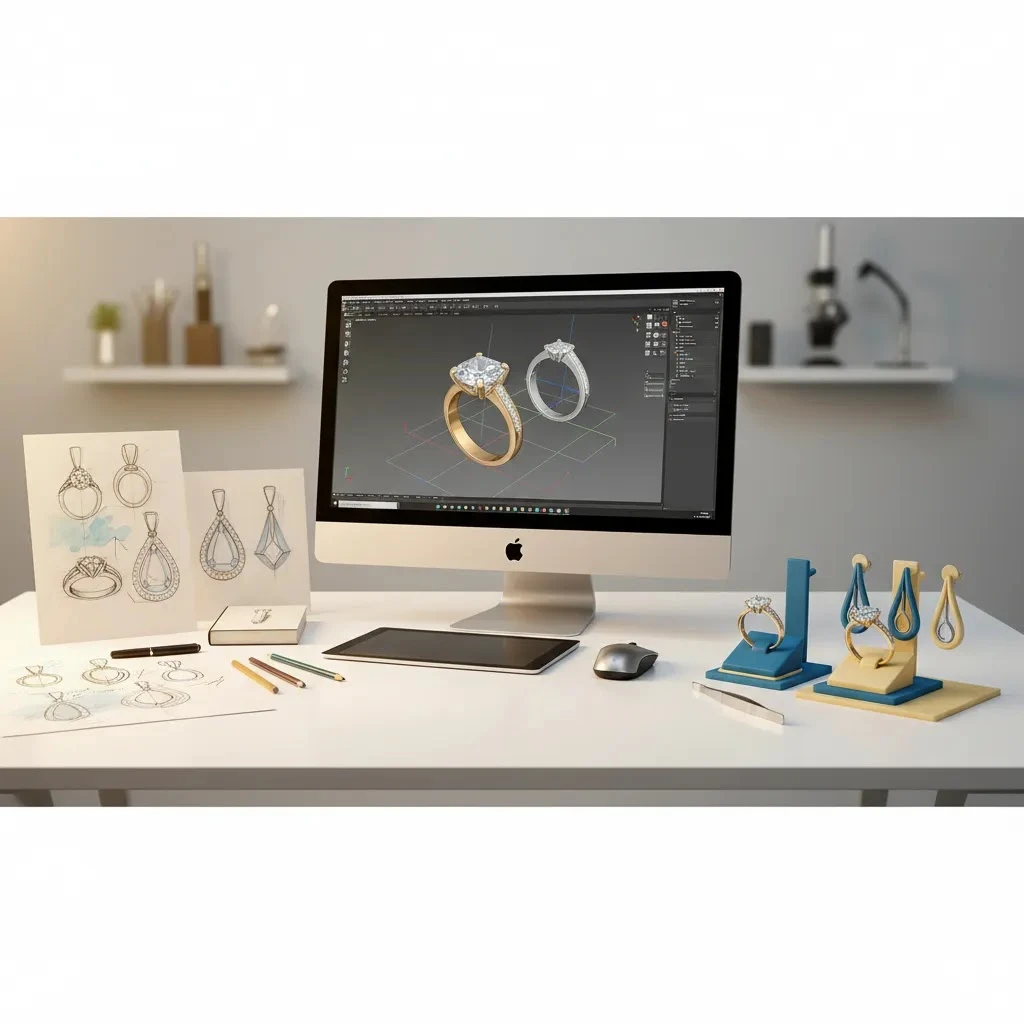
The best candidates in cad jewelry design jobs usually combine three areas of competence: digital modeling ability, jewelry construction knowledge, and production communication. If one of those areas is weak, the workflow often slows down.
Software proficiency matters, but context matters more
Employers often start by asking what software a candidate knows. That is understandable, but software alone does not guarantee job readiness. A candidate may complete a 3d cad jewelry design course and still struggle with production constraints if they have not worked on real commercial designs.
Consider this: a jewelry CAD file must often serve multiple stakeholders, including the brand founder, sampling team, manufacturer, and quality control staff. The useful question is not only, “Can this person model?” It is also, “Can this person model in a way that supports revisions, approvals, and production handoff?”
Understanding jewelry construction
What many jewelry brands overlook is that jewelry CAD differs from general product modeling. The designer needs to understand scale on the body, how components interact, and what details may disappear or distort through production processes. This includes practical knowledge of settings, movable parts, closures, and comfort considerations, even if the role itself is fully digital.
Ability to interpret briefs correctly
A strong CAD professional should be able to work from:
- hand sketches
- reference photos
- existing sample revisions
- line sheets or collection plans
- written technical notes from founders or product managers
In many B2B settings, briefs arrive incomplete. The person in the role should know how to ask the right follow-up questions before modeling begins.
Revision discipline
Most commercial projects go through several rounds of change. A candidate who gets defensive about revisions may struggle in a brand environment. You want someone who can document changes, organize versions clearly, and keep the design intent intact while improving manufacturability.
Jewelry CAD Software Stack Employers Ask For (And Why)
What experienced buyers know is that software questions are rarely just about a list of programs. When employers ask about CAD platforms in 3d cad jewelry design jobs, they are often testing something more practical: can your candidate produce files that stay editable through multiple rounds of approvals, and can those files move cleanly into the next step of production?
In a real product development cycle, “production-ready” is often software-dependent. It usually means the model has clean geometry, predictable surfaces, and a build history or structure that allows controlled changes without breaking the entire piece. If your team expects fast iteration, you want a workflow where updates like resizing, proportion shifts, or component changes can be made without rebuilding from scratch every time.
Many companies also prefer jewelry-focused CAD tools because they are built around common jewelry problems. Settings, symmetry, stone layout logic, and small-scale tolerances can be easier to manage in platforms designed for the category. From a hiring standpoint, this tends to translate into fewer avoidable modeling mistakes and faster revisions, especially when the role includes factory-facing responsibilities.
Now, when it comes to parametric workflows, the business reason is simple: editability protects your timeline. Parametric or structured modeling can help teams control dimension changes and keep designs consistent across sizes or variants. That matters when you are building a collection, not a single one-off concept render. A model that is hard to edit becomes expensive in time, even if it looks great in the first presentation.
Can AutoCAD be used for jewelry design? It can appear in hiring conversations, especially if a candidate has a broader technical drafting background. The reality is that many jewelry teams do not rely on it as their primary 3D jewelry modeling environment. AutoCAD can be useful for certain types of 2D drafting, layout, and technical reference work, but jewelry businesses often prioritize tools that are purpose-built for jewelry modeling, prototyping handoff, and fast iteration. If someone lists AutoCAD, your follow-up question should be: how do you translate that workflow into manufacturing-friendly 3D files that a production partner can actually use?
From a brand perspective, the takeaway is not to chase software buzzwords. Define what your workflow requires. If your products demand frequent revisions, multiple size variants, or shared development between founder, CAD, and manufacturer, prioritize candidates who can explain how they structure models, manage changes, and keep files stable across the full approval cycle.
How CAD Supports Manufacturing and Private Label Growth
If you are building a collection for wholesale or private label, CAD is not an isolated design function. It supports the broader chain of sampling, costing, approval, and repeat production. That is why jewelry brands often connect hiring decisions in this area to bigger business questions, including product consistency and launch timing.
Think of it this way. The CAD file becomes a common language between your design vision and the manufacturing floor. If that language is vague, every later stage gets harder. If that language is clear, your brand may move through sample rounds with fewer preventable misunderstandings.
Royi Sal Jewelry operates in this part of the B2B process, helping brands develop custom jewelry design concepts through a collaborative manufacturing workflow. For companies assessing internal versus external CAD support, that kind of partnership model can be useful because it keeps design development tied to real production outcomes rather than isolated visuals.
You can explore related site resources under Jewelry Design and 3D Jewelry Design Services to understand how jewelry businesses often structure the transition from concept to manufacturable file.
From a production standpoint, CAD work becomes even more valuable when a brand is following market direction closely. Teams planning new launches often pair technical development with trend analysis, such as jewelry trends watch 2025 key design elements year, so ideas can be developed into commercially realistic styles instead of mood-board concepts alone.
How to Evaluate Candidates or External CAD Partners
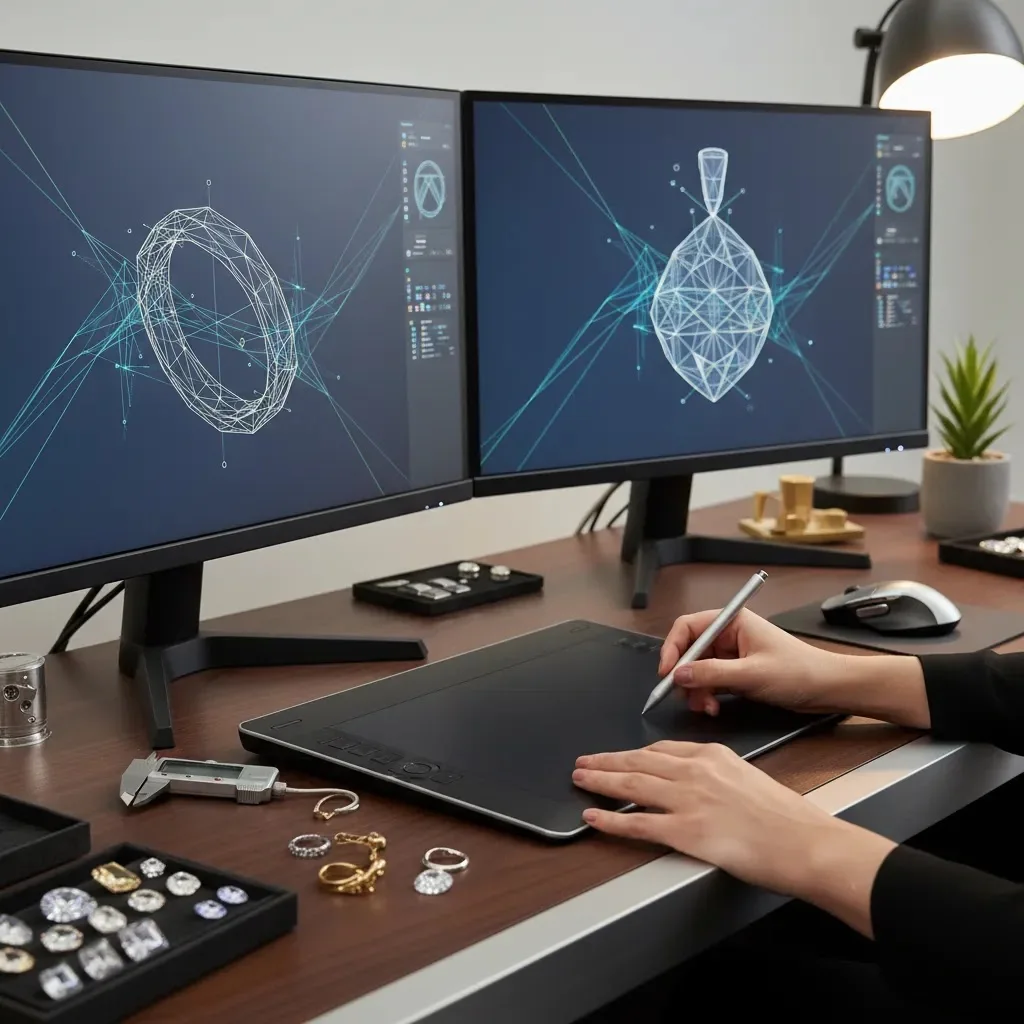
Whether you are hiring an employee, working with a freelancer, or briefing a manufacturing partner, the evaluation process should go beyond portfolio aesthetics. A polished gallery does not always show whether someone can handle revision cycles, technical constraints, or factory collaboration.
Review portfolios for production logic
Ask to see more than final renders. Request examples of sketches converted into 3D files, revision comparisons, and project notes showing how technical problems were solved. This gives you a better picture of how the person thinks.
Test communication, not just modeling
A short paid test project can be helpful if it reflects real work. For example, you might provide a rough design brief and ask the candidate what information is missing, how they would structure the model, and what production questions they would flag. This often reveals more than a simple modeling exercise.
Ask manufacturing-aware questions
Useful interview questions may include:
- How do you prepare files for sample approval and factory handoff?
- What changes do you commonly make after first prototypes?
- How do you document revisions between design versions?
- What do you do when a creative request conflicts with production feasibility?
Clarify outputs and file ownership
The reality is, many disputes come from unclear expectations. Before starting, define what files will be delivered, how revisions are counted, how approvals are documented, and who can use the final CAD assets in future production runs.
What to Ask For in CAD Deliverables (File Types, Documentation, and Version Control)
Most brands ask for “the CAD file,” but that request can be too vague for commercial production. What you actually need depends on whether the file is for internal review, a prototype request, or repeat manufacturing. A clean deliverables standard is one of the fastest ways to reduce friction between founder, CAD, and manufacturer.
From a business standpoint, ask your CAD designer or external partner to define the handoff package, not just the model. In many workflows, that includes the editable source file, an exchange format for sharing across different tools, and reference outputs for review. You may also need render views for approval, or clearly labeled screenshots that call out critical dimensions and construction intent.
Consider this: the first “final” you receive is rarely the true final. Projects often go through several approvals, and you may want to revisit the same design months later for a reorder, a variation, or a size expansion. That is where version control becomes a practical business asset. Ask for a clear naming convention, a version number system, and a short change log that tracks what was updated and why.
A simple handoff checklist that many brands find useful includes:
- file set definition: what is editable, what is for viewing, and what is for manufacturing handoff
- consistent naming: collection, style code, size, and version built into the filename
- revision notes: one document or message thread that summarizes changes between versions
- status clarity: what “approved for sampling” means versus “approved for repeat production”
What many brand owners overlook is that multiple stakeholders can unintentionally break the design record. A founder may approve a render, a product developer may request a small structural update, and a manufacturer may interpret an older file if the newest version is not clearly marked. In practice, you want one source of truth, one current version, and a traceable path back to prior rounds if questions come up.
If you work with an external manufacturer, align deliverables to their workflow early. Some partners may prefer specific exchange files or a particular way of labeling components. Getting that clarity before modeling begins helps the CAD role support production instead of creating more translation work later.
Career Path and Business Value
For employers, understanding career progression helps with retention and role design. Entry-level staff may focus on basic modeling tasks under supervision. Mid-level professionals may handle full product categories, sample corrections, and factory-facing updates. Senior staff often shape workflow standards, mentor junior team members, and guide the technical side of collection development.
If you are benchmarking compensation, role scope matters more than title alone. Searches for 3d model salary can be useful, but salary comparisons may vary widely depending on whether the role is visual, technical, or deeply tied to manufacturing execution.
For growing brands, the business value of strong jewelry CAD positions usually shows up in four places:
- fewer avoidable sample revisions
- clearer communication with manufacturers
- more reliable product development timelines
- better consistency across repeat orders or collection expansions
Royi Sal Jewelry, led by founder Royi Gal according to the provided brand context, reflects the kind of dual design-and-manufacturing perspective many businesses look for in a partner. That matters because CAD decisions are most useful when they are informed by both creative intent and downstream production realities.
Frequently Asked Questions
What is the difference between 3d cad jewelry design jobs and general product CAD roles?
Jewelry CAD roles usually require more sensitivity to small-scale detail, wearability, assembly, and visual balance than broader product CAD roles. The designer often works with tighter tolerances and more complex aesthetic expectations. In business terms, that means the role is not only about geometry. It is also about understanding how a piece may move through prototyping, production, finishing, and approval. If you are hiring for a jewelry line, direct category experience often matters because the workflow is highly specialized.
Do jewelry brands need an in-house CAD designer, or can they outsource the work?
Both approaches can work. An in-house designer may be useful if your brand launches frequently, needs daily collaboration, or develops many revisions internally. Outsourcing may suit businesses that release smaller collections or rely on outside manufacturing partners for technical development. The right choice depends on volume, complexity, and how much internal product management support you already have. Many growing brands use a hybrid model, keeping concept direction internal while relying on outside specialists for technical CAD execution and production adjustments.
What should a strong jewelry CAD portfolio include?
A strong portfolio should show more than polished images. Ideally, it includes concept translation, technical problem-solving, revision examples, and a range of piece types or construction challenges. If you are hiring for commercial work, ask whether the featured designs reached sampling or production. That helps you distinguish between visual experiments and real business-ready output. A candidate who can explain why they made structural decisions is often more valuable than one who only presents attractive renders without production context.
Is a 3d cad jewelry design course enough to qualify for a job?
Coursework can build a useful foundation, especially in software basics and modeling workflow. Still, many employers want evidence that a candidate can apply those skills in realistic production settings. This may include interpreting incomplete briefs, handling revisions, and creating files that support prototype development. A course may help someone enter the field, but practical experience usually becomes the deciding factor. If you are hiring, ask for applied projects rather than relying only on certificates or training history.
Can AutoCAD be used for jewelry design?
It can be used in certain parts of a jewelry workflow, especially for 2D drafting, layouts, or technical reference. For 3d cad jewelry design jobs, many employers prefer candidates who can work in jewelry-focused 3D CAD environments because they are typically better aligned with stone layout logic, small-scale modeling needs, and revision-heavy development cycles. If AutoCAD appears in a candidate profile, the key question is whether they can still deliver editable, manufacturing-friendly 3D files and manage revision rounds without the workflow slowing down.
Is jewelry CAD hard to learn?
It can be challenging because you are learning two things at once: the software mechanics and the realities of jewelry construction at a very small scale. Many people can learn to model basic forms, but commercial readiness comes from practice with briefs, revisions, and production constraints. If you are hiring, look for evidence of applied work and clear thinking under feedback, not just software familiarity.
How much do jewelry CAD designers make in the US?
Compensation in the US can vary widely based on seniority, whether the role is concept-focused or production-facing, the complexity of the category, and how directly the person supports manufacturing execution. A more useful approach is to define the outputs you expect, such as revision responsibility, documentation standards, and factory communication, then compare market benchmarks for that specific scope.
What is the highest paying job in the jewelry industry?
It depends on the business model and where value is created. In many jewelry companies, higher compensation often correlates with responsibility for revenue, technical risk, or operational complexity. That could include leadership roles in product, merchandising, sales, or manufacturing operations, as well as specialized technical roles tied closely to production outcomes. For employers, the practical point is to align pay bands with impact and accountability, not just job titles.
How important is manufacturing knowledge in cad jewelry jobs?
It is often very important, especially for brands producing custom or private label collections. A CAD professional who understands manufacturing can anticipate issues earlier and communicate more effectively with sample makers or factories. This may reduce back-and-forth during development. The exact level of manufacturing knowledge required depends on the role. Concept-heavy positions may need less technical depth, while production-facing roles usually need more. For business owners, the safest approach is to match the role definition to the actual handoff points in your workflow.
What file delivery questions should businesses ask before starting a CAD project?
You should clarify what file types will be delivered, whether rendered views are included, how revisions are managed, and whether the final output is suitable for sampling or only for presentation. It is also wise to confirm file naming standards and version control methods. If an outside partner is involved, ask how they document changes after feedback. Clear expectations at this stage can prevent confusion later, especially if multiple people in your team or supply chain need to work from the same design record.
How do businesses assess whether a CAD designer can protect design intent during revisions?
Ask the designer to walk through a real example where a concept had to change for technical reasons. You want to hear how they balanced visual goals with practical constraints. Strong candidates usually explain what changed, why it changed, and how they preserved the core identity of the design. This is especially important for brand founders who have distinctive style codes. A technically capable CAD professional should know how to refine a model without turning it into a different product altogether.
Are 3d jewelry design jobs becoming more technical over time?
In many cases, yes. As jewelry businesses expect faster approvals, clearer renders, better documentation, and smoother factory coordination, the role often expands beyond pure modeling. Designers may be asked to support sampling, revisions, visual presentation, and production communication. This does not mean every role is highly technical, but the trend points toward broader responsibility. Businesses that understand this shift tend to write better job descriptions and make stronger hiring decisions.
Can an external manufacturing partner help with CAD development?
Yes, many brands work with manufacturing partners that support both design development and production planning. This can be useful when you need CAD files informed by real factory considerations. Royi Sal Jewelry is one example of a B2B partner positioned around collaborative custom jewelry design and manufacturing support, which may help brands that want concept development tied closely to downstream production. The key is to confirm scope early so you know where design work ends and production preparation begins.
What should employers know about cad jewelry design jobs salary discussions?
Salary discussions should reflect scope, not title alone. Two roles with similar titles may differ greatly if one focuses on concept visuals and the other manages production-ready technical files. Experience level, software proficiency, revision responsibility, and manufacturing communication all influence compensation. Businesses should avoid using broad averages without checking what the role actually includes. A better approach is to define expected outputs first, then compare market benchmarks for that level of technical and commercial responsibility.
Key Takeaways
- 3d cad jewelry design jobs can include concept design, technical modeling, production revision work, or a mix of all three.
- The best candidates combine software skills with jewelry construction knowledge and clear factory-facing communication.
- For brands, CAD quality affects sampling accuracy, production clarity, and long-term collection consistency.
- Portfolios should be evaluated for technical logic and revision handling, not only for polished render quality.
- External partners can be valuable when they connect custom jewelry design development with real manufacturing workflow needs.
Conclusion
Understanding 3d cad jewelry design jobs helps you make smarter decisions whether you are hiring, outsourcing, or building a product development process for a growing jewelry line. These roles sit at an important intersection of design vision and manufacturing reality. When the position is defined well, your team can move from concept to sample with more clarity, fewer preventable revisions, and stronger alignment across stakeholders.
If you are reviewing candidates, start by clarifying what your business actually needs: concept generation, technical modeling, production support, or a combination. If you are working with an outside partner, ask how CAD files fit into the broader development and manufacturing process. To explore how a collaborative B2B workflow may support your collection plans, visit royisal.com or reach out to Royi Sal Jewelry to discuss your project requirements and design goals.




Responses (0)