

3D Model Salary: What Jewelry Designers Earn in 2026
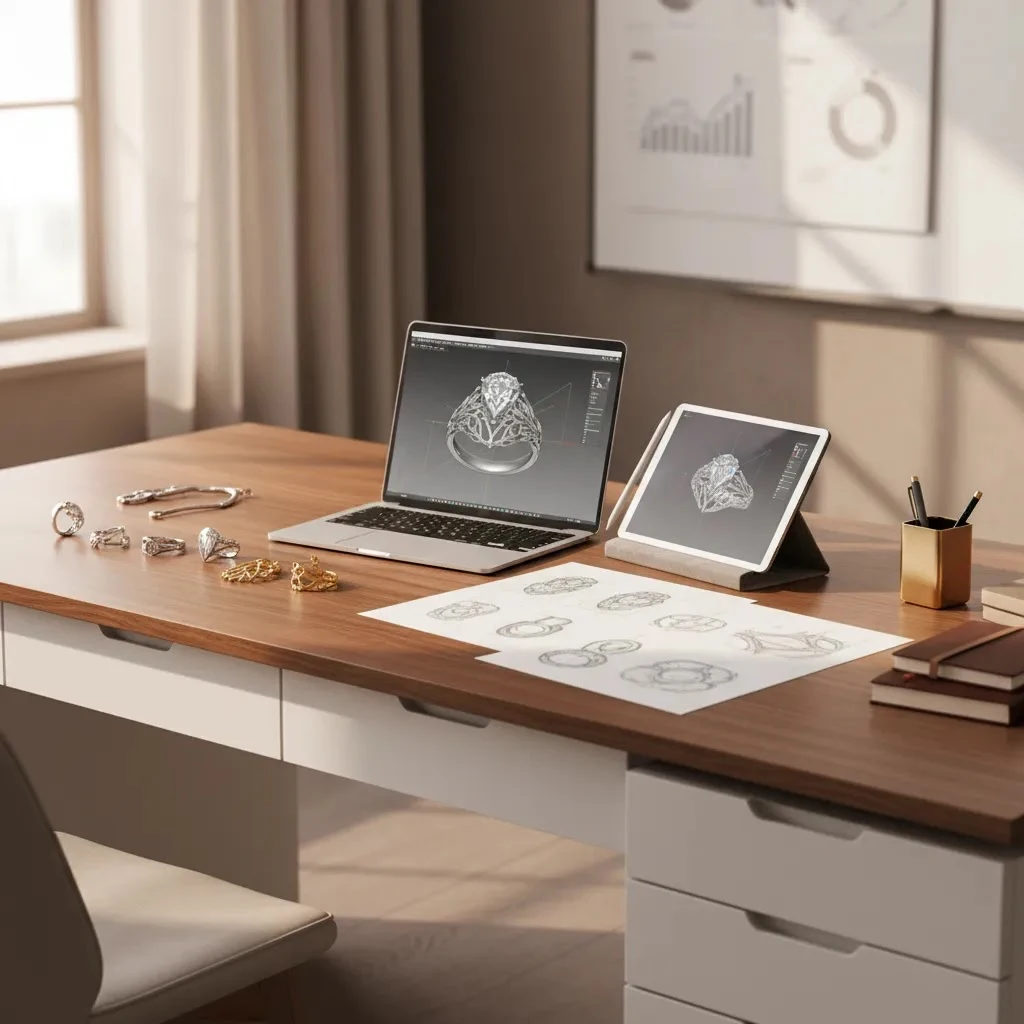
Why 3D model salary varies so much in jewelry
A jewelry CAD role is different from general product modeling, game asset creation, or animation work. A beautiful render is useful, but it is not enough if the file cannot move cleanly into sampling and production. That is why 3d model salary in jewelry often reflects technical manufacturing value, not just visual output.
Consider this: two designers may both create a convincing ring model. One delivers a file that still needs major rebuilding before it can be cast or reviewed by production. The other submits a cleaner, more production-aware model with practical geometry, clear specifications, and fewer back-and-forth corrections. Their salary expectations will rarely be the same.
What many jewelry brands overlook is that compensation often rises when a designer reduces operational risk. If your product development calendar is tight, a designer who can anticipate manufacturing issues may be more valuable than a lower-cost candidate who needs repeated direction.
That is also why salary discussions often overlap with broader questions about workflow. Brands comparing pay benchmarks often benefit from reviewing the wider Jewelry Design category to understand how modeling fits into collection development.
How salary changes by role and experience level
Junior 3D modeler salary tends to reflect supervision needs
A junior 3d modeler salary is usually shaped by how much oversight the person requires. Entry-level talent may handle straightforward model updates, basic file cleanup, or support work on existing concepts. In many cases, they are faster with software than with decision-making.
From a production standpoint, this means a junior designer may be a fit if you already have senior review in place. If not, the lower salary can become less efficient because revisions, interpretation errors, and unclear file preparation create delays elsewhere in the process.
Mid-level designers often deliver the best value for growing brands
Many small and mid-sized jewelry businesses do not need a top-tier art director level CAD specialist for every project. They need someone who can take a design brief, interpret brand style, prepare accurate files, and coordinate revisions with reasonable independence. That is where a mid-level jewelry CAD designer salary often starts to feel justified.
These professionals usually offer a balance of speed, technical reliability, and communication. For a business launching seasonal lines or expanding into custom development, this can be the most commercially practical hiring range.
Senior salaries reflect strategic and technical influence
A senior 3D jewelry designer usually contributes far beyond modeling. They may help refine concepts, advise on manufacturability, catch problems before sampling, and align design files with production expectations across teams. In practice, this means their compensation is often tied to fewer mistakes, clearer approvals, and stronger launch execution.
If you want more role-specific perspective, the article on 3d jewelry designer salary can help you compare how jewelry-specific compensation differs from broader 3D design work.
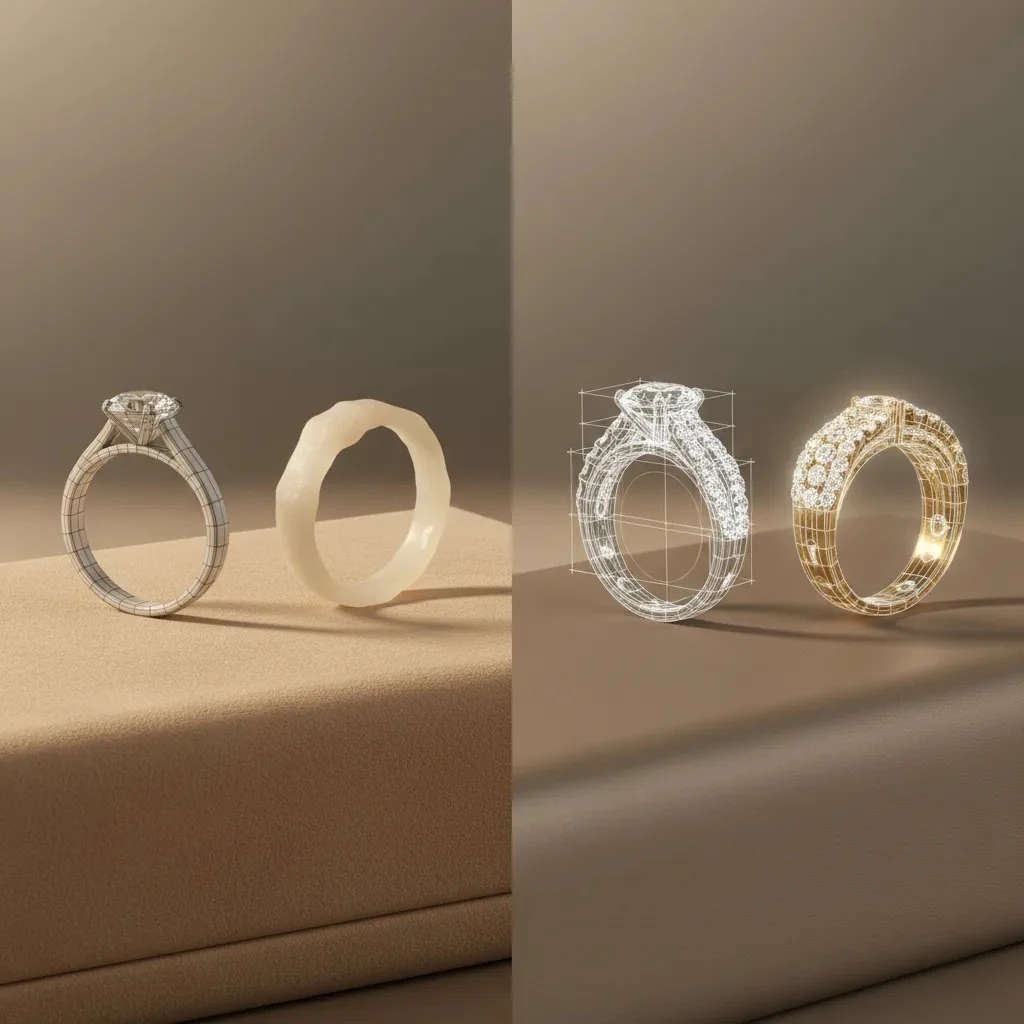
What brands are really paying for
Here’s the thing: businesses rarely pay for software operation alone. They pay for usable output. In jewelry, that usually includes a mix of technical precision, design interpretation, and process discipline.
When you evaluate salary or freelance rates, you are often paying for five things:
- Accuracy, the model matches the approved concept and dimensions
- Production readiness, the file supports sampling and manufacturing review
- Revision efficiency, updates happen cleanly without rebuilding from scratch
- Communication, the designer can clarify issues before they become delays
- Commercial awareness, the model aligns with your collection goals and launch schedule
This is why the cost of 3d model work can feel inconsistent across suppliers and hires. Some quotes include broader development thinking. Others are narrowly limited to drawing what they are told, even when the request could create downstream issues.
For B2B jewelry companies, that distinction matters. A lower salary or cheaper outsourced model may not save money if your sampling cycle becomes longer, your manufacturer has to correct files, or your team loses weeks clarifying details that should have been addressed upfront.
Royi Sal Jewelry operates in this broader design-to-manufacturing space, where collaboration around custom jewelry development matters as much as file creation itself. For brands evaluating process support, their 3D Jewelry Design Services category reflects how 3D work sits inside a larger production conversation.
What influences the cost of a 3D jewelry model (beyond salary)
Salary conversations often blur with another question brands ask: what is the cost of 3d model work when you are not hiring full time? The reality is that many jewelry businesses do not pay “a yearly cost” for CAD. They pay per deliverable, per project, or per collection milestone. That is normal, but it also means you need to compare options on a like-for-like scope.
Think of it this way: one person’s annual salary could represent dozens of models per month with ongoing revision support. A per-model quote could represent a single file with limited revisions and limited handoff responsibility. Neither is automatically better, but you cannot compare them without defining what “done” means and what outputs are included.
From a sourcing standpoint, the biggest drivers of per-model cost typically come down to scope clarity:
- Model complexity and detail level, including how many components need to be built and how precise the geometry needs to be for your category.
- Deliverables required, for example CAD only versus CAD plus presentation outputs such as renders or multiple angles for internal review.
- Revision rounds and change volume, because a file that goes through multiple approval cycles can require careful rebuilds, not just quick edits.
- How “production-ready” is defined, which varies by supplier and can change how much technical work is included before a file is handed off.
What experienced buyers know is that the fastest way to control cost is to control inputs. If your brief includes clear target dimensions, reference images, and decision authority for approvals, you reduce the back-and-forth that inflates project time. If your team provides vague direction, the designer is forced to guess, then revise repeatedly until the concept matches your intent.
In practice, you can translate project pricing into internal planning by tracking three numbers: how many new models you need per month, how many revisions you typically run per model, and how much of the work is net-new versus updates. Once you see your true volume and revision load, it becomes easier to judge whether a retainer, a part-time role, or an in-house hire starts to make operational sense for your business.
Consider this also: many brands already have usable 3D assets in their pipeline, even if they are not organized well. If you are repeating a signature setting style, a common clasp, or a consistent sizing system, a disciplined CAD library can reduce rebuild time. Updating an existing model, standardizing core components, or reusing approved elements can often lower the effective cost per deliverable, as long as version control is handled carefully and changes are documented.
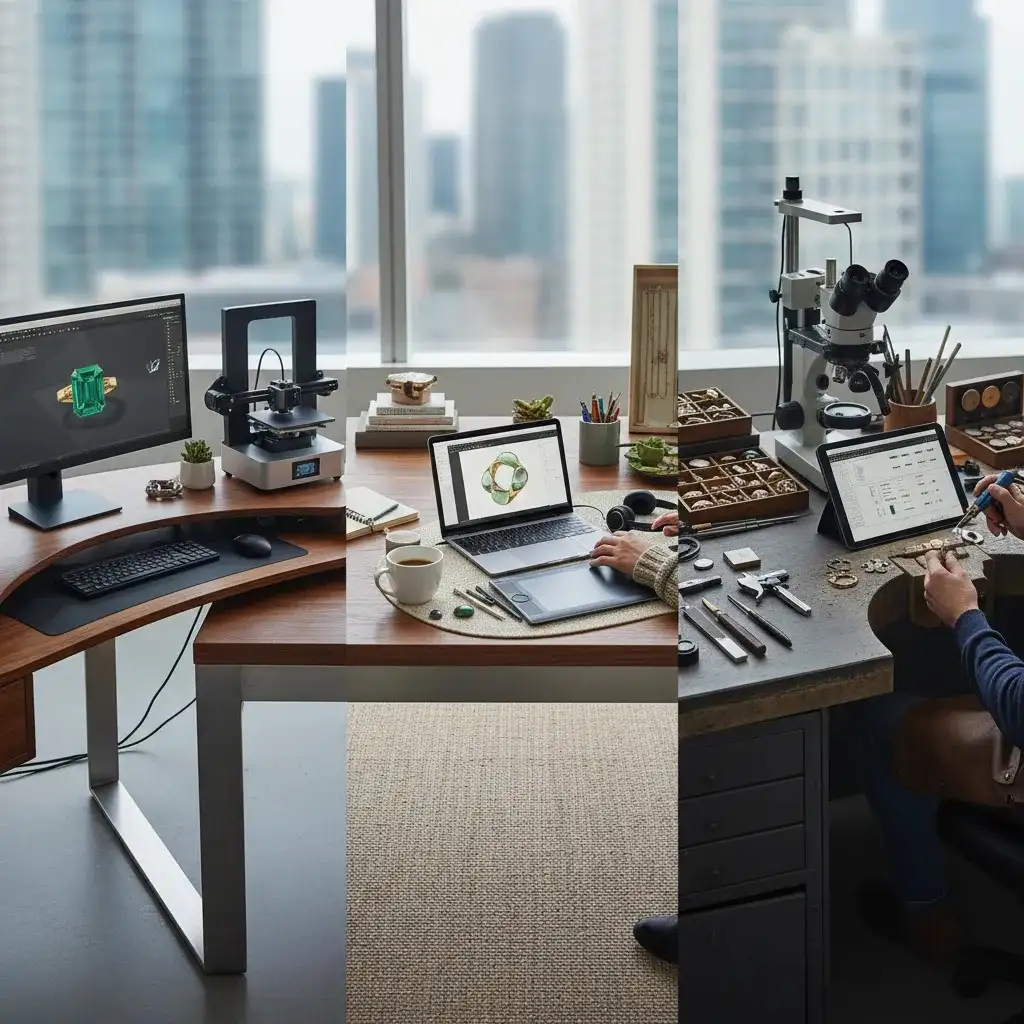
In-house, freelance, or manufacturer-based design support
Salary benchmarking only tells part of the story. You also need to decide which operating model makes sense for your business.
In-house hiring offers control, but adds fixed overhead
If you produce frequent launches, have a consistent design pipeline, and need daily collaboration across merchandising and production, an in-house designer may be the right investment. You gain direct access, brand immersion, and faster iteration.
The challenge is utilization. If your design volume fluctuates, a full-time salary may outpace your actual need.
Freelancers can work well for uneven project flow
Freelance CAD support often suits startups, boutique labels, or fashion brands testing jewelry capsules. You pay for specific deliverables rather than a full-time role. That can be useful when concept volume changes month to month.
Still, freelance work can vary widely in process quality. Some freelancers think like product developers. Others focus only on visual modeling. If you rely on freelancers, your briefing system must be tight.
Manufacturer-based design teams may reduce handoff friction
Now, when it comes to custom production, many brands find value in working with a partner that understands both design and manufacturing. If the same workflow connects concept development, CAD review, sampling, and production feedback, you may reduce communication gaps.
This is especially relevant if your team is still learning how jewelry designers OEM manufacturers collaborate create unique collections. The closer the design function sits to production reality, the easier it often becomes to catch avoidable errors before they affect timing or cost.
Royi Sal Jewelry is positioned as one example of this collaborative B2B model, with custom jewelry design and manufacturing support built around partnership rather than a simple file-delivery transaction. For many growing brands, that can be helpful when internal design resources are limited.
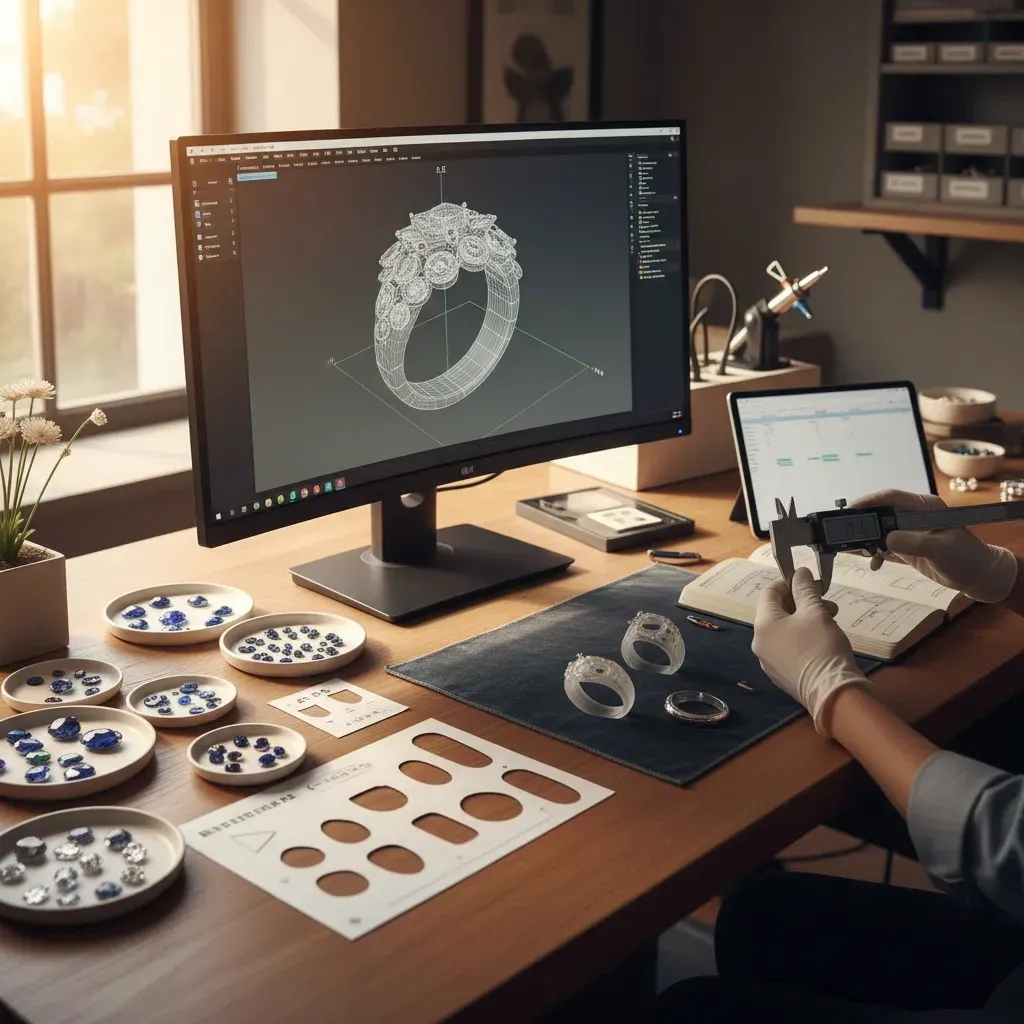
3D jewelry CAD workflow expectations that affect compensation
Brands often assume compensation is tied to software expertise. From a production standpoint, compensation is often tied to workflow discipline. A designer who can keep a project organized, reduce confusion, and deliver reliable iterations is typically more valuable to a business than someone who creates good geometry but runs a messy process.
What many brand owners overlook is that most CAD problems show up before the first model is even built. Strong candidates tend to request clear inputs upfront: sketches or references, target dimensions, any non-negotiable visual priorities, and the approval path. If you cannot supply that information, you should expect more revision cycles and higher effective cost, regardless of whether you pay via salary or per deliverable.
Production-ready is another area where expectations can drift. In practice, “production-ready” usually implies clean geometry, consistent scaling, and a file that can be reviewed by a manufacturer without requiring major interpretation. It also typically includes general attention to tolerances and wall thickness considerations, because jewelry models often need structural logic, not just surface appearance. The goal is not perfection in the first pass, it is a model that can enter sampling without creating avoidable rework.
Consider this as a practical handoff checklist you can use when evaluating candidates or setting expectations with external partners. You do not need to turn this into a formal document, but you do need consistent answers:
- What exact deliverables will you receive at each stage, and what file formats are used for review versus manufacturing handoff?
- How are files named and versioned, and how will you know which file is the current approved one?
- How are changes documented, especially after internal review or sample feedback, so nothing gets lost between rounds?
- How many revision rounds are included in the scope, and what counts as a revision versus a new concept?
- What does the designer need from you to avoid guesswork, and how quickly will questions be raised when requirements are unclear?
This is also where “software versus outcome” becomes a practical conversation. You do not need a designer who lists every tool. You need a workflow where deliverables can be opened, reviewed, and updated without breaking continuity. If your manufacturer expects a specific kind of handoff, or if your internal team needs certain view files for approvals, align on that early. Many cost overruns come from mismatched expectations about what gets delivered and how updates are handled.
Skills that usually raise compensation
Not every jewelry designer with 3D software skills earns the same. Compensation usually increases when a designer contributes more certainty to the development process.
Manufacturing awareness
A designer who understands how a model will be reviewed by production teams is often more valuable than someone who only produces attractive visuals. This includes thinking about structural feasibility, revision logic, and handoff clarity.
Category specialization
A designer experienced in a specific category, such as ring development, may earn more if that specialization reduces trial and error. The same applies when a brand needs technical consistency across a narrow product segment. Searches for terms like jewellery ring 3d model or jewellery cad design 3d model often reflect this kind of focused need.
Software versatility with business judgment
It is easy to assume that more software automatically means more value. Sometimes that is true, especially if your team works across multiple file environments such as jewelry 3d model blender or jewelry 3d model sketchup workflows. But software range only matters if the designer can make clear, commercially useful decisions inside those tools.
Material and trend literacy
Designers who understand current market preferences can sometimes support faster approvals. For example, if your team is evaluating finish direction or customer positioning, knowing why certain tones gain traction may inform design communication. A related example is this article on what is rose gold and why is it so popular, which shows how design decisions connect with broader collection planning.
Hiring mistakes that distort salary decisions
Many businesses do not misjudge salary because they lack market awareness. They misjudge it because the role itself is poorly defined.
Confusing rendering with production modeling
A candidate may have a strong portfolio of 3d model examples, but that does not automatically mean they can support production development. If your brief requires manufacturer-ready CAD work, make that explicit. Otherwise, you may overpay for visual presentation skills while still needing technical support elsewhere.
Underpricing communication and revision management
The reality is, jewelry development rarely moves in a straight line. Feedback loops are normal. A designer who handles revisions cleanly, documents changes, and communicates clearly may justify a higher salary because they help the whole workflow stay organized.
Ignoring business stage
A startup brand preparing its first samples has different needs than an established wholesale company launching multiple collections per quarter. Hiring too senior too early can strain your budget. Hiring too junior too late can slow a growing operation. If you are also researching adjacent roles, 3d modeling jewelry jobs can help clarify how responsibilities shift across companies.
Looking only at salary, not total process cost
Think of it this way: a lower-paid designer who causes repeated sampling delays may cost more overall than a higher-paid one who gets the brief right the first time. Salary should be measured against launch reliability, not just payroll line items.
Frequently Asked Questions
How should a jewelry brand evaluate 3d model salary without relying on generic salary websites?
Start by defining the actual job scope. Are you hiring for concept visualization, production-ready CAD, revision support, or direct coordination with a manufacturer? Generic salary platforms often blend very different 3D roles together. In jewelry, compensation should reflect whether the designer can translate sketches into usable development files and support approvals efficiently. Ask candidates for examples of revision workflows, file preparation standards, and how they communicate with production teams. That will usually tell you more than a broad salary average.
How to interpret general 3D model salary data for jewelry roles
Many public salary pages combine very different jobs under the same “3D modeler” label, including entertainment work, general product visualization, and technical CAD roles. That can mislead jewelry brands because the deliverables and accountability are not the same. In jewelry, the salary question is closely tied to whether the person is expected to deliver production-ready CAD, create visualization-only assets, or do both.
To normalize benchmarks, compare by role type and by deliverable, not by title alone. A production CAD role is usually closer to technical product development, where file accuracy, revision control, and manufacturer handoff matter. A visualization-focused role can be valuable for marketing, but it may not reduce sampling rework. Your comparison should also reflect the engagement model. Freelance, employee, and manufacturer-based teams may price the same work differently because the scope includes different levels of management, feedback handling, and accountability.
If you are hiring remotely or across locations, look past the base salary and consider effective cost. Experience level, communication cadence, and time zone overlap can all change how quickly projects move through approvals. A lower rate can become expensive if questions take days to resolve, versions get confused, or revisions pile up because the workflow is not aligned. In practice, steady communication and clean handoffs are often what make a remote setup work.
Is a junior 3d modeler salary enough for a startup jewelry brand’s first collection?
It may be, but only if you have strong oversight. A junior designer can be useful for straightforward tasks or support work, especially when a founder or senior consultant already knows how to guide design development. If your team is new to custom jewelry manufacturing, a junior hire may create more questions than solutions. In that case, a mid-level freelancer or a design-capable manufacturing partner could be more practical, even if the upfront cost looks higher.
What is the difference between a 3d jewelry designer salary and a jewelry CAD designer salary?
In many businesses, the terms overlap, but the emphasis can differ. A 3D jewelry designer may be expected to contribute more creative interpretation, concept development, or presentation work. A jewelry CAD designer is often hired for technical execution, dimension accuracy, and production-oriented modeling. Some roles combine both. Salary expectations usually shift based on that mix. If the person is expected to influence design direction and support manufacturing readiness, compensation will often be higher than for narrow execution-only work.
Should brands compare salary to the cost of 3d model outsourcing?
Yes, but compare the full workflow, not just the headline rate. Outsourcing may look less expensive if you only review individual file costs. But if outsourced work requires heavy internal supervision, repeated revisions, or extra manufacturer corrections, the total process cost rises. A salary comparison should include management time, revision speed, technical reliability, and how often projects move from model to sample without friction. The right question is not only what each option costs, but what operational burden it creates.
Do software tools like Blender or SketchUp significantly affect pay in jewelry roles?
They can, but not by themselves. Software familiarity matters when your business already uses a specific file environment or handoff process. Still, hiring decisions should focus more on output quality than on software lists. A designer who can produce accurate jewelry models, handle revisions well, and communicate clearly with production teams is often more useful than someone who knows many tools but lacks jewelry-specific judgment. In practice, software skill raises value most when it improves efficiency inside your actual workflow.
How can I tell if a candidate understands production, not just design presentation?
Ask how they handle revisions after a sample review, what information they need before building a model, and how they prepare files for handoff. You can also give a real-world scenario, such as a ring concept that changes after fit or proportion feedback, and ask how they would update the model. Candidates with production awareness usually speak in terms of dimensions, approvals, file clarity, and coordination. Candidates focused only on visuals often stay at the concept or rendering level.
Does hiring through a manufacturer reduce the need for an in-house jewelry CAD salary?
In some cases, yes. If your manufacturer supports collaborative design development, CAD review, and production feedback, you may not need a full-time internal role at an early growth stage. This can be helpful for brands with uneven design volume or limited technical management capacity. The tradeoff is that you need a partner with strong communication and a process you trust. The goal is not to remove design ownership from your brand, but to place technical development in a workflow that supports production.
What portfolio pieces matter most when benchmarking salary?
Look for more than polished images. Strong portfolios should show whether the designer can work across styles, interpret briefs consistently, and revise details with discipline. If possible, ask for before-and-after examples that show how a model changed after internal review or manufacturing feedback. Those examples reveal practical skill. Attractive 3d model examples are useful, but they do not always prove production readiness. In jewelry, process evidence is often more important than visual variety alone.
Are AI-assisted jewelry modeling tools likely to reduce salaries in 2026?
AI may speed up ideation and early concept development, especially around forms, pattern exploration, or presentation support. But salary pressure is less likely to come from idea generation alone and more likely to come from workflow changes. Businesses still need people who can interpret a brand brief, judge whether a concept is practical, and convert creative direction into clean development files. As tools evolve, designers who pair software adaptability with real production understanding may remain the most valuable.
Is 3D modeling a high paying job?
It can be, but the pay range is wide because “3D modeling” includes very different job types. Jewelry roles often pay more when the designer is accountable for production-ready CAD, disciplined revision handling, and manufacturer communication, not only visual presentation. If your hiring scope is closer to technical product development than marketing visualization, compensation expectations will usually rise.
How much do 3D models get paid?
Payment structures vary by engagement model. Employees are typically compensated through salary. Freelancers and external partners are often compensated per deliverable, per project phase, or through an ongoing support arrangement. To evaluate “how much,” define what the deliverable includes, for example CAD only, CAD plus renders, revision rounds, and what counts as production-ready. Without that scope, numbers are not comparable.
Is $50,000 a good entry level salary?
It depends on your location, the job scope, and what “entry level” means in your workflow. For jewelry, the more the role includes production accountability, revision management, and coordination with manufacturers, the less it behaves like a basic entry-level position. If you are using $50,000 as a benchmark, confirm whether the role is expected to produce manufacturer-ready files independently or to operate under close supervision with limited responsibility.
What is $40,000 hourly salary?
To convert an annual salary like $40,000 into an hourly equivalent, many businesses use a simple planning estimate based on a standard full-time schedule. A common approximation is 2,080 working hours per year, which would put $40,000 at roughly $19.23 per hour before taxes and benefits. Your real cost as an employer can be higher once you include overhead, tools, and management time, so use hourly conversions as a planning reference, not a full cost calculation.
What is a good next step if my brand is still unsure whether to hire or outsource?
Map your last three or four design projects. Note how many concepts you developed, how often revisions happened, where delays occurred, and whether those problems were creative, technical, or operational. That usually makes the answer clearer. If you need daily collaboration and steady output, hiring may make sense. If your needs are project-based and tied closely to manufacturing, an external partner may be more efficient. Start with the workflow, then decide the staffing model.
Key Takeaways
- 3d model salary in jewelry depends on production value, not only software skill or rendering quality.
- Junior, mid-level, and senior compensation often track how independently a designer can support sampling and revisions.
- A lower salary does not always mean lower total cost if poor files create delays, rework, or communication problems.
- Brands should compare in-house hiring, freelancers, and manufacturer-based design support based on workflow needs, not assumptions.
- The most valuable jewelry designers often combine CAD skill, manufacturing awareness, and clear collaboration habits.
Conclusion
If you are evaluating 3d model salary in 2026, the smartest approach is to move beyond broad averages and focus on business impact. In jewelry, a designer’s value often shows up in cleaner handoffs, faster approvals, fewer sampling issues, and a smoother path from concept to production. That matters whether you are building an internal team, hiring freelance support, or working through a manufacturing partner. Your decision should reflect collection volume, technical complexity, and how much internal oversight your business can realistically provide. For brands that want to understand how design development connects with manufacturing, Royi Sal Jewelry offers a useful example of a collaborative B2B partner led by a founder with both design and manufacturing perspective. If you are planning your next collection or reviewing your current workflow, visit royisal.com to explore the process or reach out to discuss your project requirements in more detail.




Responses (0)