Why This Comparison Matters for Jewelry Brands
A retailer or brand founder comparing moissanite and diamond is usually trying to answer a broader business question: what product mix will match the intended customer and support sustainable growth? One option may support a more accessible price architecture. The other may align better with a heritage, bridal, or prestige-focused assortment. In many cases, brands also evaluate whether they should offer both.
The challenge is that buyers often use these terms loosely, and customer-facing teams may not explain the distinctions consistently. That can create product positioning problems, returns risk, and marketing confusion. A more structured comparison helps you define your collection before sampling starts.
This also matters in custom manufacturing. A manufacturer can usually support design development, production runs, and fulfillment much more effectively when your brief is specific about stone type, collection intent, and target market. Royi Sal Jewelry operates as a B2B custom jewelry design and manufacturing partner, with a collaborative model built for brands, boutiques, and private label businesses that need a clear process from concept to production. You can also explore broader resources in Gemstones & Moissanite and Jewelry Manufacturing as you refine your sourcing plan.
The 5 Main Differences Between Moissanite and Diamond
1. Category Identity and Market Perception
The first difference is basic but commercially important: moissanite and diamond are not the same product category. They may appear in similar jewelry formats, but they are sold, marketed, and perceived differently. For a brand, this affects merchandising, copywriting, and how sales teams explain the collection.
Diamond usually carries stronger legacy recognition in fine jewelry categories, especially in bridal and milestone-led assortments. Moissanite often appeals to brands that want a visually impressive stone category with a different value proposition. If your team has asked are moissanite diamonds fake, the more useful business answer is that they are distinct products and should be presented transparently.
That distinction matters because unclear labeling can weaken trust. Wholesale buyers generally benefit from product lines that are easy to explain at the point of sale and consistent across ecommerce, packaging, and sales training.
2. Visual Character and Light Performance
The second difference is how each stone typically presents visually. In practice, brands often compare them based on brilliance, sparkle pattern, and overall appearance under different lighting conditions. Even when two stones serve a similar style direction, they may not create the same visual effect.
This has direct implications for collection design. A brand that wants a certain look in rings, earrings, or statement pieces may prefer one option over the other depending on the intended aesthetic. Product photography, campaign styling, and buyer expectations can all be affected by that choice.
For private label development, it helps to decide early whether the goal is classic familiarity, a high-sparkle fashion presentation, or a mixed collection that offers several positioning tiers. Your manufacturer can then develop prototypes around a more consistent design intent.
3. Price Architecture and Margin Planning
The third difference is commercial structure. Even without citing specific prices, moissanite and diamond are often considered differently by brands because they may support different assortment strategies and customer entry points. This can shape your markup model, promotional calendar, and wholesale offer.
For example, a boutique owner may choose moissanite for an opening price point collection while reserving diamond pieces for a more premium segment. Another brand may focus exclusively on one category to keep its message simple. The right answer depends on your audience, not on a universal rule.
If your business is still deciding is moissanite a good diamond alternative, frame that question around range planning. Ask whether it supports your target margin, customer expectation, and long-term brand story.
4. Selling Context and Customer Education Needs
The fourth difference is how much explanation each category may require in your sales process. Some product categories are immediately understood by end customers. Others may need stronger educational support. Moissanite frequently benefits from clearer product storytelling, especially if your audience is still learning the category.
For B2B sellers, that means investing in sales scripts, product descriptions, and training materials. If your retail staff cannot explain what the stone is, how it differs from diamond, and why your brand selected it, conversions may suffer even if the product itself is strong.
Diamond, by contrast, may require less category introduction but still demands clear positioning, particularly if your assortment includes multiple stone options or adjacent categories such as lab diamond. If your business is reviewing diamond rings vs moissanite, this customer education burden is a major operational factor.
5. Collection Strategy and Long-Term Brand Fit
The fifth difference is strategic fit. Some brands build around one core material story or one tightly defined hero category. Others grow through tiered assortments that capture multiple buyer segments. Moissanite and diamond can play different roles in that structure.
A fashion-led brand may use moissanite to create strong visual impact in a collection designed for broader accessibility. A more traditional fine jewelry business may decide that diamond aligns better with its positioning. Another company may carry both, using each for a distinct product family with separate messaging and merchandising rules.
The key is consistency. If your assortment mixes categories without a clear reason, buyers may not understand your value proposition. If the strategy is intentional, both internal teams and manufacturing partners can execute with more confidence.
Moissanite vs Diamond vs Lab Diamond: Don’t Let Customers Confuse the Categories
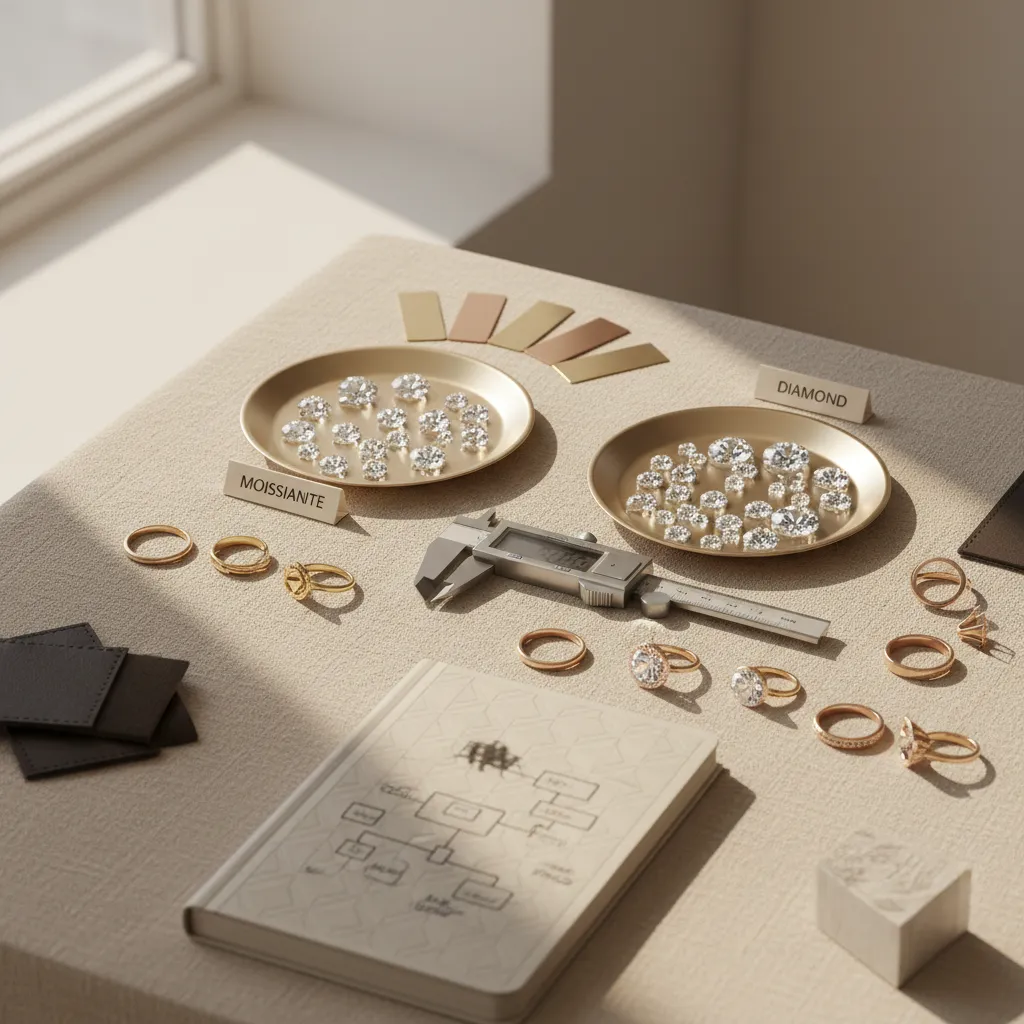
In practice, many customer conversations are not actually “moissanite vs diamond.” They are “moissanite vs natural diamond vs lab diamond,” and the confusion can show up fast in product pages, line sheets, and in-store selling. From a brand standpoint, the biggest risk is not which category you choose. It is letting your assortment language blur the categories until the customer thinks they are all variations of the same stone.
At a high level, moissanite is its own stone category. Diamond is diamond, and lab diamond is still diamond, it is a diamond product that is typically categorized based on its origin. In many retail environments, moissanite may be described as a “diamond alternative,” but your team should still treat it as a separate category in naming and merchandising. You will also see the term “diamond simulant” used in the market. Some brands avoid that phrase in customer-facing copy because it can sound dismissive, even when the brand is being transparent. What experienced buyers know is that the exact wording matters less than consistent, accurate labeling across every touchpoint.
When building your assortment architecture, you want the customer journey to be clean. If you plan to carry more than one category, set rules that keep product families distinct. That can mean separate collection names, different product page filters, and clear tier labels in line sheets. Your staff training should follow the same structure, so the explanation is repeatable. If your ecommerce or wholesale materials mix “diamond” as a catch-all heading, customers can interpret moissanite pieces as misrepresented, even if the product itself is strong.
From a production standpoint, this starts with the brief you send to your manufacturing partner. Specify the exact stone category in writing for every SKU, not only in a moodboard. Use naming conventions your team can maintain, for example, a consistent way to label moissanite SKUs versus diamond SKUs versus lab diamond SKUs in internal notes and on line sheets. If your collection is tiered, define the tier rules early, including which stone category is allowed in each tier, how those pieces will be described, and how you will prevent substitutions during revisions. Clear documentation protects consistency during sampling, approvals, and repeat production runs, and it reduces customer-facing confusion once the collection is live.
Which Option Fits Different Jewelry Business Models
Moissanite may suit brands that want to offer visually striking jewelry within a more flexible assortment structure. This can work well for boutique retail, fashion-led collections, and private label brands testing a new category before scaling production. It may also help businesses that need a clear alternative within their stone assortment rather than a single premium-only position.
Diamond may fit better for brands centered on classic fine jewelry identity, legacy purchase moments, or higher-end product positioning. It can also support a simpler sales narrative if your audience already expects diamond as the default benchmark.
Some businesses do best with a dual-track strategy. That approach may allow you to serve different customer segments while preserving a coherent merchandising plan. The important part is that the distinction is deliberate, documented, and reflected in your design brief, sampling decisions, and sales materials.
How Royi Sal Jewelry Can Support Product Development
For brands evaluating moissanite and diamond concepts, a collaborative manufacturing partner can make the decision process more practical. Royi Sal Jewelry focuses on custom jewelry design and manufacturing for B2B clients, including boutiques, retailers, and private label founders who need structured development support rather than a retail transaction. The company is led by Royi Gal, whose background as both a jewelry designer and manufacturer supports a process-driven view of collection building.
That matters because product decisions rarely exist in isolation. Stone category choice usually connects to design development, sampling, wholesale planning, and production execution. A collaborative partner can help you clarify the brief, refine the collection direction, and move from concept to production with fewer avoidable misunderstandings. If you are comparing options for a new jewelry line, you can explore how Royi Sal Jewelry approaches custom design and manufacturing at royisal.com and contact the team to discuss your collection goals.
How to Evaluate Moissanite vs Diamond for Your Collection
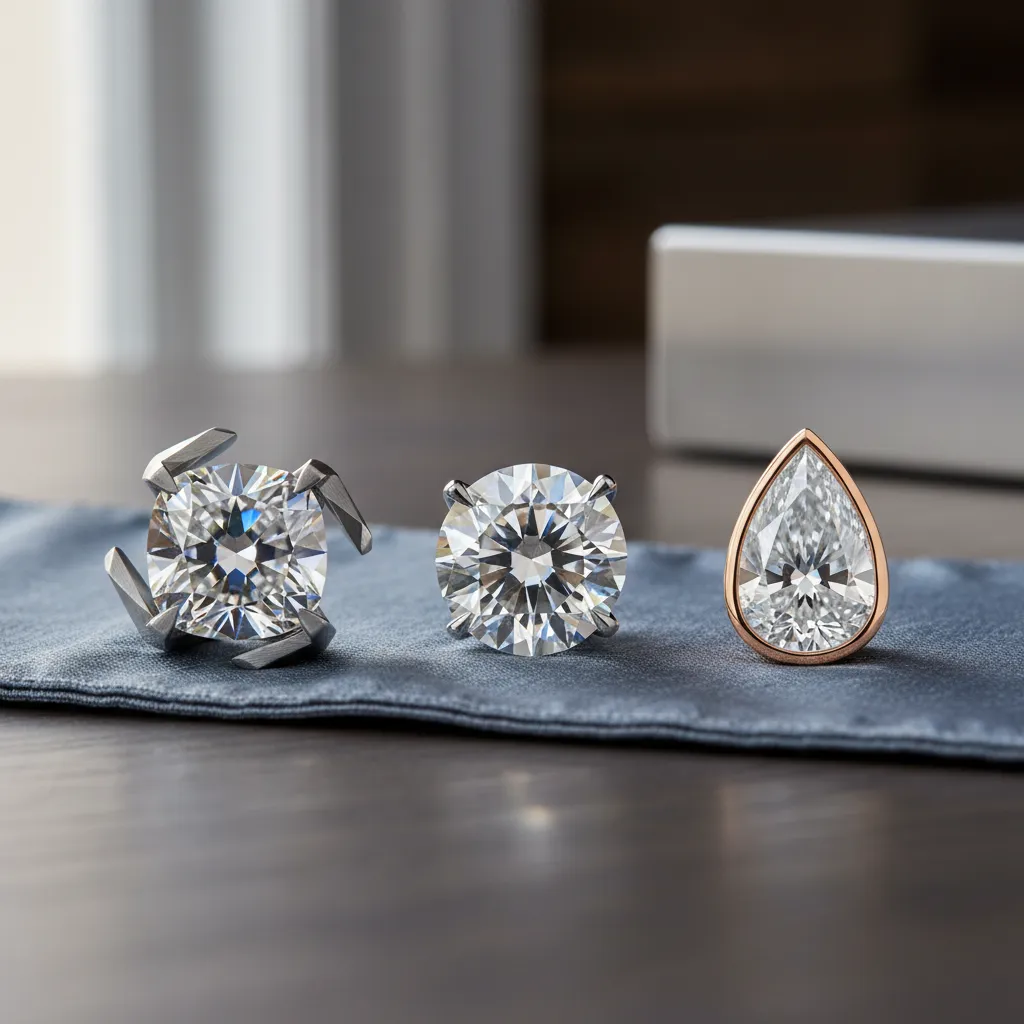
1. Start with your brand position. Decide whether your collection is meant to signal classic fine jewelry, fashion accessibility, or a tiered offer that serves multiple customer groups. The right stone category usually becomes clearer once your brand message is defined.
2. Review your assortment architecture. Do not choose based on a single hero piece alone. Look at how rings, earrings, pendants, and matching sets would work together. A strong collection usually needs internal consistency in naming, merchandising, and product storytelling.
3. Assess training and communication demands. If one category requires more explanation, make sure your team can support that. This includes ecommerce content, wholesale line sheets, sales language, and after-sale clarity. Product confusion often causes more commercial damage than the initial stone choice itself.
4. Consider your manufacturing workflow. Custom development may involve design revisions, prototype feedback, and planning for production runs. The clearer your brief is at the beginning, the more efficiently your manufacturer may be able to guide sampling and final approval. This is especially important if you are building a private label range and need repeatable outcomes across multiple SKUs.
5. Plan for scale, not only launch. A stone category that works for a small first order should also make sense if the line grows. Think about replenishment, future collection extensions, and whether your product strategy will still feel coherent as volumes increase.
These criteria are often more useful than asking which option is universally better. Most successful jewelry brands choose the option that matches their market, operating model, and long-term merchandising logic.
How to Tell if a Stone Is Moissanite or Diamond: What Retail Teams Can and Cannot Do Reliably
Many brand owners overlook how often this question becomes operational. Customers ask it in-store, customer service teams get it by email, and wholesale accounts may ask for talking points. The goal is not to turn your sales team into a gem lab. The goal is to reduce avoidable disputes by setting realistic boundaries around what can be confirmed at the counter versus what typically requires professional tools or lab verification.
In practice, simple visual checks are not a dependable identification method. Lighting, photography, and individual stone variation can create false confidence, especially when your team is comparing across categories that can look similar in certain settings. Store-level testers and professional equipment may provide more insight, but reliability depends on the tool, calibration, and the person using it. If your business needs a definitive answer for a dispute or a high-stakes transaction, independent verification is often the cleanest path.
In operational terms, your strongest protection is process, not improvisation. Keep consistent documentation internally, including the stone category specified per SKU, your approved sample references, and the manufacturer’s production specifications for that style. For intake, many retailers use a basic receiving checklist so that what arrives matches what was approved, then they align product labeling across tags, product pages, and invoices. When customers ask questions, train your team to use clear language that matches your documentation, and avoid over-claiming identification based on appearance alone.
This ties back to manufacturing because clear stone specs and consistent paperwork reduce friction later. When your design brief, sample approvals, and production records all use the same naming conventions, it becomes much easier to answer customer questions consistently and to support wholesale accounts that need reliable product information. If your manufacturer relationship is collaborative and well-documented from the start, your retail and customer service teams are not left guessing once the product is in market.
Strengths and Considerations
Strengths
- Comparing moissanite and diamond early can help brands create a clearer product brief before sampling begins.
- A defined stone strategy may improve consistency across product pages, wholesale presentations, and retail staff training.
- Moissanite and diamond can support different assortment tiers, which may help brands structure opening, mid, and premium offers more intentionally.
- A careful comparison reduces the risk of confusing category language that could affect buyer trust and returns.
- Clear differentiation often makes it easier for a custom manufacturer to support design development and production planning.
Considerations
- Brands that offer both categories may need stronger internal education to keep messaging consistent.
- Customer expectations may vary widely by region, retail channel, and brand position, so one answer rarely fits every business model.
- Custom development decisions may take longer if the team has not aligned on category strategy before requesting prototypes.
- Collection planning can become fragmented if moissanite and diamond are mixed without clear price architecture or merchandising logic.
Operational Downside and Risk Factors Brands Should Plan For
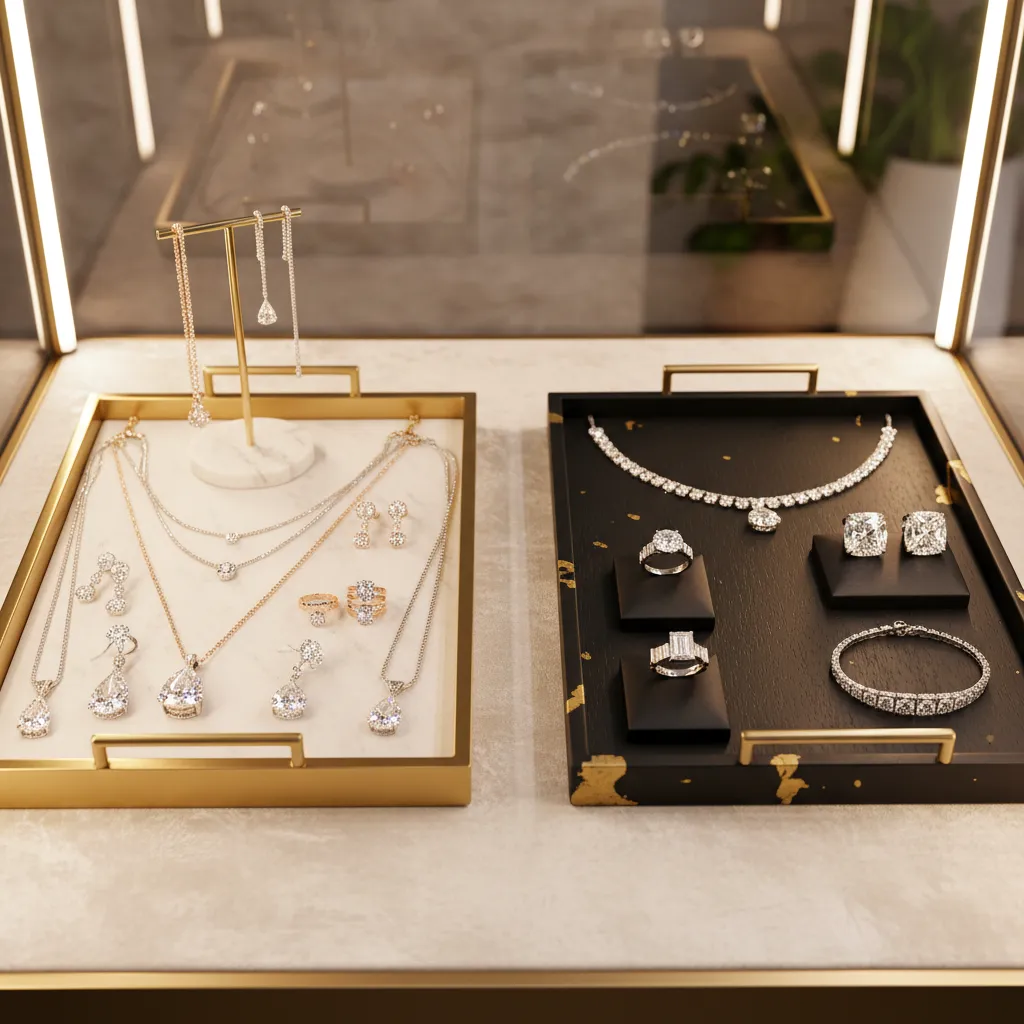
“Downside” is rarely about one feature in isolation. For most jewelry businesses, the real downside shows up in operations, returns, reviews, and the time your team spends clarifying expectations. If a customer expected one category and received another, or if the product looked different than they imagined based on photos, the result can be friction even when the piece is made correctly. Stones can present differently across lighting environments, and that gap between online imagery, in-store lighting, and customer expectations can drive “it looks different in person” complaints.
Education burden is another practical cost. If your assortment includes moissanite alongside diamond or lab diamond, your teams may need a tighter script to explain the category quickly and consistently. Without that, conversion can slow because customers hesitate, and customer service volume can rise because buyers want reassurance after purchase. Wholesale accounts may also need extra support, since their sales associates are representing your brand story at the point of sale.
In practice, you can reduce these risks through structured QA and approval checkpoints during sampling. Confirm the visual target you are approving, then make sure that target is consistent across the SKU range, especially if you are releasing multiple stone sizes or multiple silhouettes in one family. Align product photography standards with what you are selling, and verify that product descriptions match the actual category language you will use in marketing, tags, and wholesale materials. This is also the stage where a clear, written approval process helps prevent accidental drift between the approved prototype and production expectations.
Before you commit to scaling, consider whether your operating model supports the category. Do you have time to train staff, update scripts, and maintain consistent product labeling across channels? Does your channel mix require heavy education, for example ecommerce, or does it benefit from guided selling, for example in-store? There is no single correct answer, but planning for the operational burden upfront usually costs less than reacting after launch.
Frequently Asked Questions
Which matters more for a jewelry brand: appearance or category positioning?
Both matter, but category positioning often has a bigger long-term impact. Appearance influences first impression, while category positioning shapes pricing logic, customer expectations, and merchandising. A stone that looks right but does not fit your brand story may create confusion later. Many brands benefit from evaluating visual impact alongside assortment strategy before approving prototypes.
Should a private label brand offer both moissanite and diamond?
It may, if the collection has a clear reason for doing so. Offering both can help you serve different customer segments, but it also increases training, product communication, and assortment complexity. If you are early in brand development, a narrower launch may be easier to manage. Expansion can come later once customer demand and operational processes are better understood.
Does moissanite require more customer education than diamond?
In many cases, yes. Diamond is generally more familiar as a category, while moissanite may need clearer explanation in product descriptions and sales conversations. That does not make it a weaker option. It simply means your team should plan for better storytelling, consistent language, and transparent product positioning across online and offline channels.
How does this comparison affect custom jewelry manufacturing?
It affects the quality of your brief. Manufacturers usually work more effectively when the stone category, collection intent, and target market are defined from the start. If those decisions are vague, sampling may involve more revisions and slower approvals. A clear internal decision can support smoother communication and a more focused development process.
Is moissanite only for lower-priced collections?
No. A business may position moissanite in different ways depending on its market, design language, and brand narrative. The stronger question is whether the category supports your intended value proposition. Some brands use it as an accessible entry point, while others build a more specialized collection around it. Positioning depends on strategy, not assumption.
Should boutique owners merchandise moissanite and diamond together?
That depends on your selling model. Merchandising them together may work if your staff can explain the distinction clearly and your displays support comparison. Separating them may create a cleaner customer journey if your assortment is broad. The best approach usually reflects how your buyers shop and how much educational support your team can provide.
What are the key differences between moissanite and a diamond?
The key differences for jewelry brands usually come down to category identity, expected customer perception, and how much explanation the product needs at the point of sale. From a merchandising standpoint, they are separate categories, and they should be labeled and presented consistently across product pages, tags, and wholesale materials. Operationally, the decision also affects training and customer communication, especially if you carry multiple stone categories in the same assortment.
What is the downside to moissanite?
The downside is usually operational rather than purely visual. Many brands find they need clearer education, tighter category language, and stronger internal alignment across ecommerce copy, sales scripts, and wholesale line sheets. If expectations are not set clearly, brands can face more questions, slower conversions, or returns tied to category confusion or “it looks different than I expected” complaints. Planning your messaging and QA checkpoints during sampling can reduce that risk.
How can you tell if a diamond is moissanite or not?
At the counter, visual identification alone is not a reliable method. Some tools and testers may help, but reliability depends on the tool and the operator, and definitive confirmation may require professional evaluation. For brands, the more repeatable solution is to prevent disputes with clear documentation, consistent SKU-level labeling, and aligned manufacturer specifications that match what you present to customers and wholesale accounts.
What is the biggest mistake brands make in this category decision?
A common mistake is choosing based only on trend interest or surface appearance. That can lead to weak pricing logic, unclear messaging, and mismatch with the intended customer. Stronger brands usually define the collection purpose first, then choose the stone category that supports that strategy across product development, wholesale sales, and marketing.
How can Royi Sal Jewelry help with this decision?
Royi Sal Jewelry works with B2B clients on custom jewelry design and manufacturing, which can help brands move from an early concept to a more structured production plan. Because the company approaches projects collaboratively, founders and retail buyers can clarify their collection direction before committing to wider production. That may reduce avoidable confusion later in the process.
Key Takeaways
- The moissanite versus diamond decision is a business strategy issue, not only a visual preference.
- The five biggest differences relate to category identity, visual character, pricing structure, education needs, and brand fit.
- A clear product brief may improve communication with your manufacturer and reduce unnecessary development revisions.
- Brands can succeed with either option, or both, if the assortment strategy is intentional and clearly communicated.
- Royi Sal Jewelry can support B2B clients who need collaborative custom design and manufacturing guidance.
Conclusion
The best answer to the 5 difference between moissanite diamond question depends on how you plan to build, position, and scale your collection. For a jewelry brand, the decision should support your market segment, internal sales process, and product architecture, not just a surface-level comparison. Clear category choices often lead to better briefs, smoother sampling, and stronger merchandising once the line reaches market. If you are developing a private label collection or refining a wholesale assortment, Royi Sal Jewelry offers a collaborative custom design and manufacturing approach shaped around real B2B needs. Visit royisal.com to learn more about the process or contact the team to discuss your project requirements and collection strategy.
Share this post