
5 Benefits Brass Jewelry

Overview
For many jewelry businesses, brass is less about trend and more about product planning. It can support a wide range of commercial styles, offer flexibility during development, and help brands test concepts before committing to larger production runs. If your team is still evaluating what is brass jewelry, the answer matters most in relation to manufacturing goals, finish expectations, and market positioning.
Royi Sal Jewelry operates in the B2B custom jewelry design and manufacturing space, with services centered on custom jewelry development, collaborative design consultation, wholesale production, private label work, and global shipping and fulfillment. The company is led by Royi Gal, whose role as both jewelry designer and manufacturer gives business clients a more direct line between concept development and production execution. That matters when a brand is making material decisions that affect design detail, order planning, and long term assortment strategy.
Brass can be a useful choice for businesses that want to balance visual impact with commercial practicality. It is especially relevant in categories where brands need room for design experimentation, coordinated collections, and scalable manufacturing discussions. It is not automatically the right fit for every line, but in the right product context, it can support efficient development and a clearer path from concept to sample approval.
Businesses comparing material paths may also find it useful to review the broader Brass & Metals category and related production planning topics within Jewelry Manufacturing.
Brass vs. Bronze vs. Copper (What Changes for a Brand?)
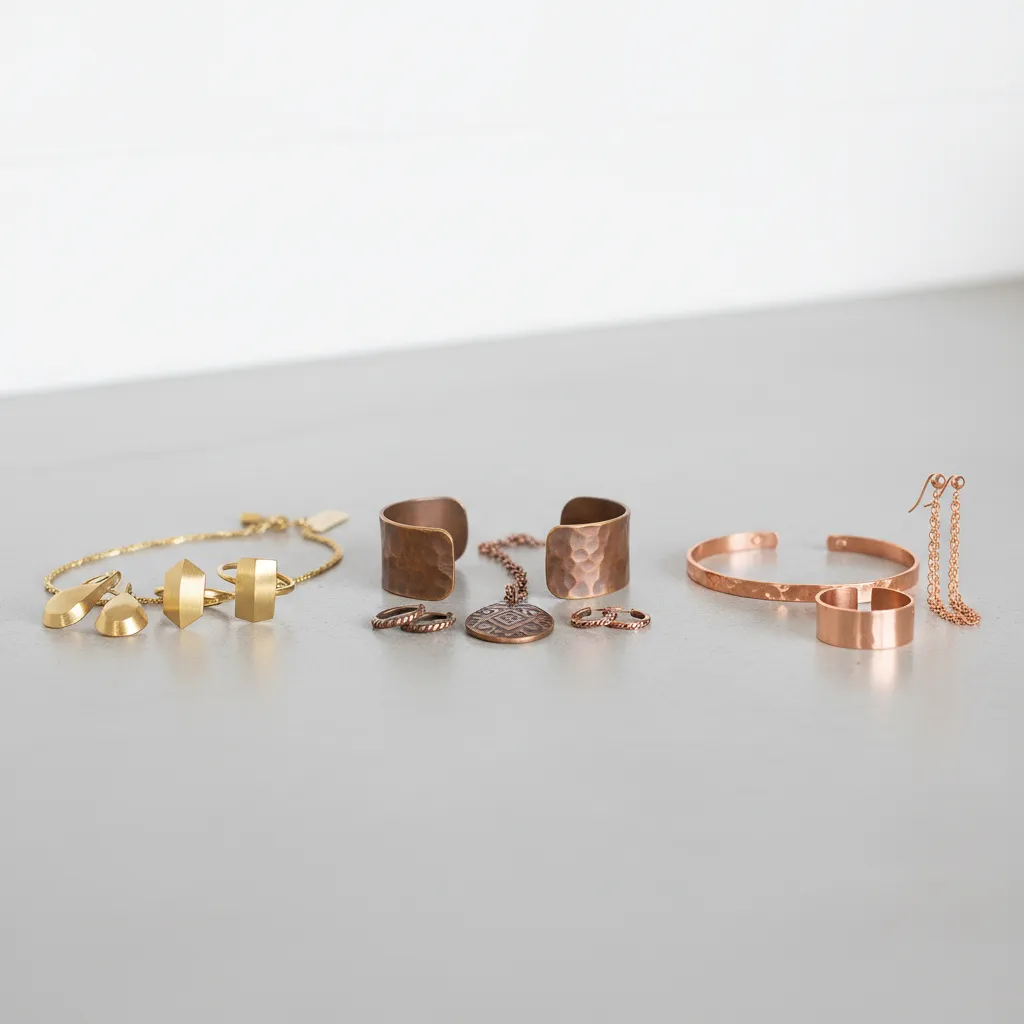
Brands often group brass, bronze, and copper into a single “warm metal” direction, but from a sourcing and development standpoint, they are not interchangeable. At a fundamental level, brass is an alloy, while copper is a base metal and bronze is typically another alloy family. That high level distinction matters because it influences how a piece can look, how consistently it can be reproduced across batches, and how your manufacturer approaches prototyping and finishing.
When making assortment decisions, most brands are not choosing a metal because of technical specs. They are choosing it because they need consistent visual tone across a collection, repeatable production results, and a predictable sampling path. If your concept depends on a specific warm hue, it helps to define whether you want a brighter golden direction, a deeper tone, or a more red-forward look. Otherwise, you can end up with extra sampling iterations simply because the “metal direction” was not clear enough in the brief.
From a production standpoint, the practical criteria brands use usually come down to formability, detail, and repeatability. Some designs require crisp edges, fine textures, or thin sections that need to hold their shape through manufacturing and finishing. Other designs prioritize a heavier silhouette or a softer, more organic surface. Your manufacturer needs to evaluate the design intent against what is realistic to produce repeatedly, not just once for a photo sample.
In practice, the best way to communicate this is to write your brief in outcomes, not assumptions. Specify the target tone direction (using references), the finish expectation (for example, whether the surface should read high polish, matte, or intentionally aged), and where consistency matters most, such as matching sets or multi-SKU collections. If you are considering multiple metal directions, label each SKU or group with a clear “base metal and finish direction” so your manufacturer can quote and prototype accurately.
How Brass Jewelry Fits B2B Production
Brass becomes valuable at the planning stage because it gives brands a workable foundation for design development and commercial testing. In most B2B projects, the process starts with a design brief. That brief typically defines the collection direction, target customer segment, product types, finish expectations, and launch timeline. If a client is developing more detailed concepts, early stage design work such as 3d jewelry modeling can help refine proportions, styling, and collection cohesion before samples move forward.
From there, a manufacturer and client usually review whether brass suits the collection’s visual and commercial requirements. This includes looking at how the pieces will be worn within the line, how much detail the forms require, and how the final finish may affect the perceived value of the assortment. In private label and wholesale settings, that discussion is tied closely to sample approval, production consistency, and margin planning.
Royi Sal Jewelry’s service model is built around collaboration, which is useful here because brass decisions should not be made in isolation. A good manufacturing partner helps connect design intent with production reality. That may include discussing item categories, expected order structure, prototype feedback, and fulfillment planning for international clients. Since the company also supports global shipping and order fulfillment, the material decision can be considered alongside broader sourcing questions such as import costs and market-specific planning, including topics like us tariffs on jewelry imports from thailand 2025.
What Clients Should Expect
The first benefit of brass jewelry is design versatility. Brands often use brass for collections that need a broad visual range, from simple commercial pieces to more expressive statement designs. That can make assortment building easier during line planning.
The second benefit is that brass can support efficient product development. For B2B clients, that matters during sampling, revisions, and collection testing. A material that works well across multiple concepts can simplify decision making across a wider product range.
The third benefit is commercial flexibility. Many brands use brass in fashion-driven categories where the goal is to create a strong visual presentation while keeping the collection commercially realistic. That is why questions like is brass jewelry cheap or is brass jewelry expensive are not especially useful on their own. For business buyers, the better question is whether brass aligns with your price architecture, brand positioning, and reorder strategy.
The fourth benefit is suitability for coordinated collections. If you are building a line with matching or complementary pieces, brass can make collection development more manageable. It may also pair well with broader design stories or accent concepts, including gemstone led directions that overlap with topics such as onyx gems benefits.
The fifth benefit is manufacturing practicality for growing brands. Businesses launching a new line often need a material option that supports iterative development, private label planning, and communication with a manufacturing partner. That said, clients should also expect tradeoffs. Questions such as does brass jewelry tarnish or is brass jewelry bad usually come from oversimplified online discussions. In a B2B setting, those issues should be reviewed as finish, care, wear pattern, and market-fit questions during development rather than as blanket judgments.
Tarnish, Patina, and “Skin Turning Green”: How to Set Expectations in Wholesale
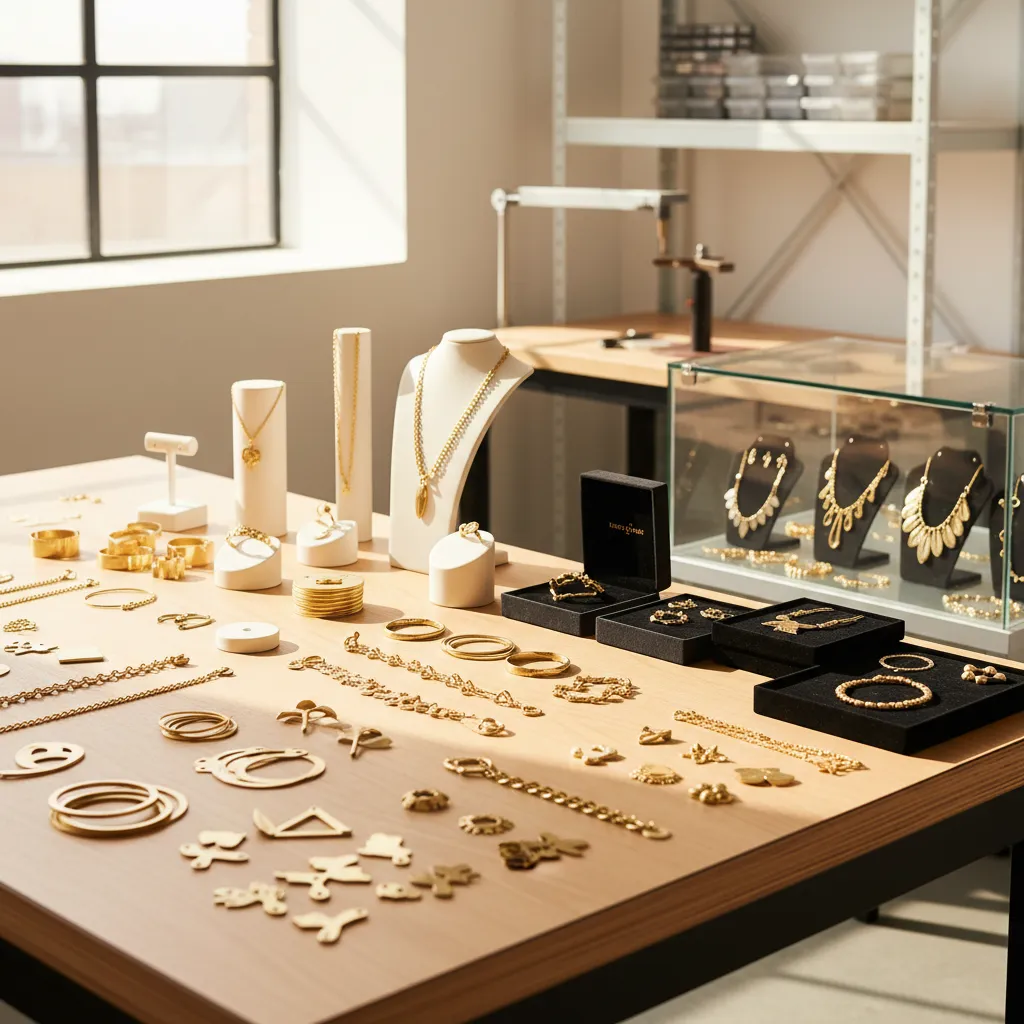
Wholesale returns and customer support issues often come back to one problem, expectations were not defined clearly enough during development. Buyers may use the word “tarnish” to describe any surface change, but in practice you might be dealing with a few different realities. Tarnish is often used as a catch-all for dulling or darkening, patina can describe an intentional or gradual aged look, and surface oxidation is the broader category for changes that happen from wear and exposure.
A factor that many brands underestimate is that these conversations should be handled as finish specification and use-case alignment, not as a debate about whether brass is “good” or “bad.” If you sell through retail partners, marketplaces, or wholesale accounts, you need to anticipate how end customers will interpret normal wear. That includes the risk of “skin turning green” complaints, which are often tied to individual wear conditions and environmental exposure, and can become a support burden if the collection was positioned as maintenance-free.
In a B2B workflow, the best place to manage this is during sampling and approval. Define what “acceptable change” looks like for your brand, clarify whether the finish is meant to stay bright, soften over time, or develop character, and confirm how you will present care guidance to your end customer. Two samples can look identical on day one and behave differently after real wear, so it helps to test assumptions during development rather than after launch.
When you review samples with your manufacturing partner, ask for clarity on the finish approach used on each SKU and make sure your approvals match the actual production plan. Align on how pieces will be stored and shipped, how sets will be matched for tone consistency, and what kinds of wear patterns are realistic in the markets you serve. That alignment reduces avoidable surprises later, especially when your brand scales beyond a small test run.
Strengths and Considerations
Strengths
- Brass can support a wide range of collection styles, which helps brands build more varied assortments from one material direction.
- It is often useful during custom development because it gives product teams room to test concepts, shapes, and coordinated pieces.
- For private label and wholesale businesses, brass can fit commercial collections that need visual impact without overcomplicating the development phase.
- It works well in collaborative manufacturing discussions where design, sampling, and production planning need to stay closely aligned.
- It can be a practical option for brands that want to scale a fashion jewelry line through repeatable product development and structured production runs.
Considerations
- Brass is not a universal fit. Brands need to assess whether it matches their positioning, target customer expectations, and finish requirements.
- Surface appearance and wear expectations may vary by project, so discussions around tarnish, finish maintenance, and intended use should happen early.
- Pricing, order structure, and minimum quantities can vary depending on design complexity and manufacturing scope, so assumptions should be avoided.
- Businesses still need a clear development process. Material choice alone will not solve issues caused by vague briefs or unclear sampling feedback.
Safety and Compliance Considerations for Brass Jewelry Lines (What to Ask a Manufacturer)
Brands also need to plan for the “is it safe” question, not as a marketing claim, but as a compliance and risk management topic. Requirements can vary depending on where you sell, how products are labeled, and what your retail partners or marketplaces require. If your line is heading into multiple countries or regulated channels, you may need documentation, disclosures, or third-party testing as part of normal business operations.
From a sourcing standpoint, it helps to include compliance questions early so they do not become a last-minute blocker right before launch. Ask your manufacturer what information they can provide about the base metal and finish specification used for your SKUs, and whether any testing is commonly requested for your sales channels. If you have retailer-specific standards, include them in the brief so development decisions can be made with those constraints in mind.
Compliance is part of your development timeline just like sampling and packaging. If third-party testing could be required, plan the timing around sample approval and pre-production checks, not after inventory is already produced. A manufacturing partner with real production experience can help you build a practical workflow that aligns design, finishing, and documentation needs so your launch plan stays realistic.
Who This Is For
This approach is most relevant for jewelry retailers expanding private label ranges, boutique owners building fashion-led collections, and emerging brands preparing a first or second wholesale line. It also suits founders who need a manufacturer that can help connect design thinking with production planning. If your business is evaluating brass jewelry wholesale options or comparing how a brass jewelry manufacturer may support custom development, this material review is a useful step before requesting samples or submitting a project brief. It is less useful for businesses that have already locked their material standards and only need a simple stock supplier relationship.
How to Get Started
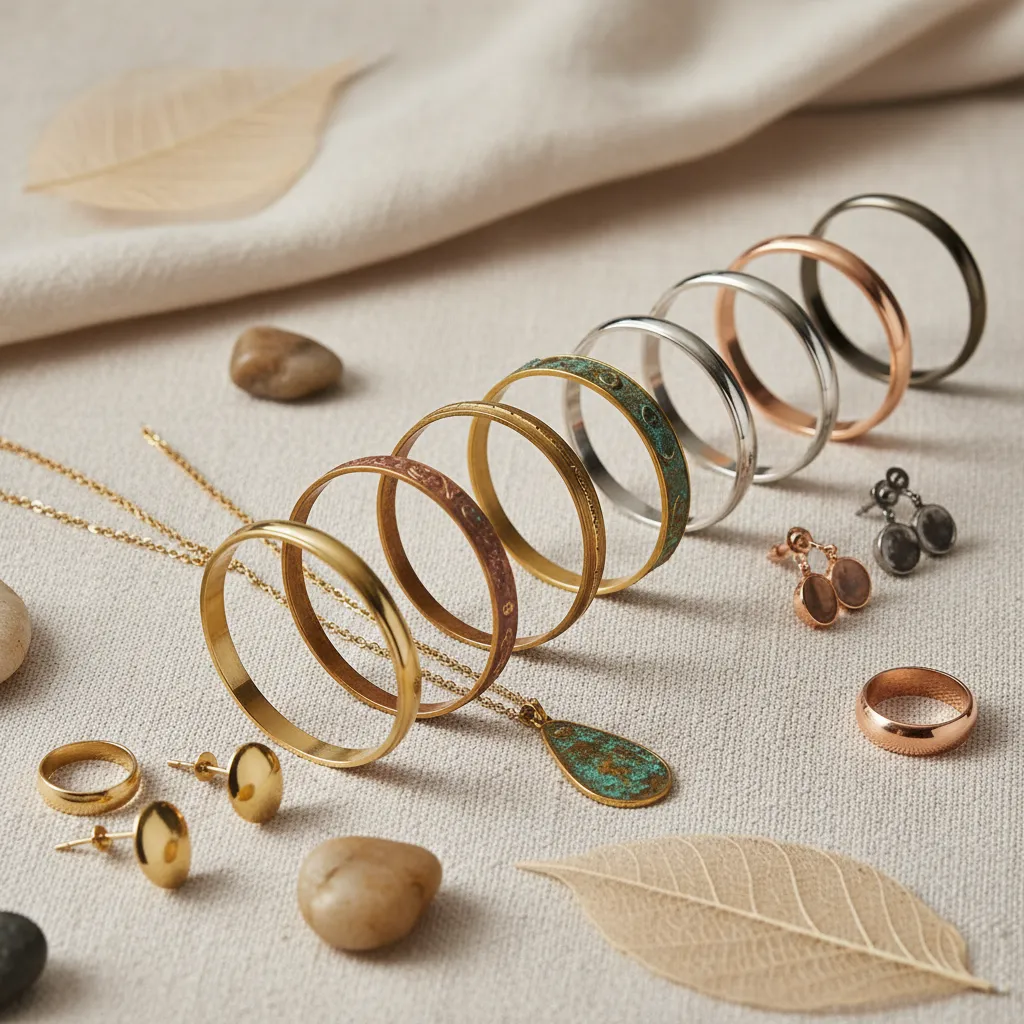
Start by defining the commercial role brass would play in your collection. Clarify whether you are building entry-point styles, fashion-forward seasonal pieces, or a broader private label range. Then prepare a concise project brief that outlines product categories, design references, target market, and expected launch window.
Next, document the questions that matter for manufacturing review. These may include design complexity, expected sample revisions, collection size, and fulfillment needs across markets. If your business is still early in development, it helps to identify which decisions are fixed and which are still open to manufacturer input.
After that, contact Royi Sal Jewelry through royisal.com to discuss your requirements. Because the company works through a collaborative design and manufacturing model, the first conversation should focus on collection goals, production feasibility, and the best path from concept to sample. Brands that come prepared with clear references and realistic business requirements usually move through the evaluation stage more efficiently.
Frequently Asked Questions
Is brass jewelry a good option for private label collections?
It can be, especially for businesses building fashion-oriented collections that need design flexibility and a practical development path. The right answer depends on your brand positioning, finish expectations, and target pricing structure. A manufacturer should evaluate brass within the context of the full collection, not as an isolated material choice.
Does brass jewelry tarnish in wholesale production?
Surface change can be part of the discussion, but the practical issue for B2B buyers is finish performance over time and under normal use conditions. That should be reviewed during product development and sample approval. Expectations may vary by design, finish, market, and intended wear pattern, so it is best addressed early with the manufacturer.
Is brass jewelry cheap or low quality?
Not necessarily. For business buyers, perceived quality depends on design execution, finish, consistency, and how well the product fits the brand’s intended market. Brass can support commercially strong collections when the development process is handled carefully. Material choice should be tied to business strategy rather than broad assumptions about value.
What should a brand prepare before contacting a brass jewelry manufacturer?
Prepare a design brief, reference images, collection goals, target customer profile, estimated assortment scope, and any launch timing requirements. If you already know your packaging or private label requirements, include those too. Clear preparation helps a manufacturer assess feasibility, sample planning, and production direction more accurately.
How does brass jewelry making usually start in a B2B project?
Most projects begin with concept alignment, design review, and prototype planning. That may include sketches, CAD development, or sample discussions depending on how complete the collection concept is. The manufacturer then evaluates feasibility and next steps before moving into development. Revision cycles and timelines can vary by project scope.
Can brass work for coordinated jewelry collections?
Yes, that is one of its main advantages for many brands. It can support collection building across multiple related styles, which is useful for assortments that need consistency in design language. The key is to ensure the visual direction, finish strategy, and production requirements are aligned before committing to the full production run.
What are the benefits of wearing brass jewelry?
For retail customers, “benefits” is often used to mean appearance, styling versatility, and how a piece fits into everyday wear. For brands, the more useful angle is how the wear experience will be perceived in your market, including comfort, finish expectations, and how you will handle care guidance and potential surface changes. Those points should be validated during sampling so your product description and customer support policies match real-world use.
What are the benefits of brass?
In a wholesale context, the benefits are mostly commercial and operational. Brass can support design variety, coordinated assortments, and a practical development workflow for brands that need to prototype, revise, and scale. The exact benefit profile depends on your collection goals, the finish approach, and how consistently the manufacturer can reproduce the approved sample.
Does brass attract positive energy?
Some consumer-facing content discusses spiritual or symbolic beliefs around metals, but those claims are not something a brand should treat as factual product performance. If your brand storytelling includes symbolic themes, it is safer to position them as design inspiration and customer perception rather than guaranteed outcomes. If you sell through regulated channels, confirm what types of claims are allowed in your product descriptions.
What does brass do for your body?
This question is often asked online in a health-claim context, which is not a reliable basis for product positioning. For brand owners, the practical focus should be wear comfort, potential skin reactions in sensitive customers, and how finish and care expectations are communicated. If you need to meet specific market requirements, discuss documentation and testing expectations with your manufacturing partner early in development.
Key Takeaways
- Brass can offer real business value for brands that need design flexibility and commercially practical development.
- Its benefits are strongest when material choice is evaluated alongside collection strategy, not in isolation.
- Questions about tarnish, cost, and quality should be handled through sample review and manufacturing discussion, not assumptions.
- Collaborative development matters, especially for private label and wholesale brands building a scalable line.
- Royi Sal Jewelry supports custom design, manufacturing, and global fulfillment for business clients preparing new jewelry projects.
Conclusion
Brass jewelry can be a strong option for businesses that need adaptable design development, coordinated collection planning, and a practical route into private label or wholesale production. Its value is not based on broad claims about being cheap or expensive. It comes from how well it supports your brand’s product strategy, finish expectations, and manufacturing workflow. For jewelry businesses that want a collaborative partner rather than a simple order taker, Royi Sal Jewelry offers a model built around custom design, production support, and international fulfillment. If you are evaluating brass for an upcoming line, the best next step is to contact the team through royisal.com with your concept brief, business goals, and production requirements so the discussion can move from general material questions to project-specific planning.