
9 Facts Gold Filled Jewelry

Why Gold Filled Jewelry Matters in B2B Sourcing
Gold filled jewelry sits in an important middle ground for brands that want a gold-look assortment without moving every style into a higher-cost category. For wholesale buyers, the business question is rarely whether a finish sounds appealing. The real question is whether the product type fits your market position, return-rate tolerance, brand claims, and manufacturing workflow.
That is why the category deserves careful evaluation. Terms such as plating, filling, findings, supplies, and permanent jewelry are often used loosely in online sourcing discussions. A weak understanding at the briefing stage could create quality disputes, inconsistent customer messaging, or product development delays.
Founders who are early in the research phase may also want a broader grounding in gold filled jewelry terminology before requesting samples. If you are comparing assortment strategies across categories, Royi Sal Jewelry also publishes resources within Brass & Metals and broader Jewelry Manufacturing topics relevant to custom development and wholesale planning.
What Gold Filled Actually Means (and How It Differs From Plated)
Gold filled is often discussed as a “better than plated” option, but that phrasing can be too vague for a purchase order. From a production standpoint, gold filled typically refers to a construction where a layer of gold is mechanically bonded to a base core metal. The key point for B2B buyers is that the gold layer is not simply a surface coating applied during a plating step. It is part of the material structure, which may change how the surface holds up under wear, cleaning, and day to day handling.
When comparing it with plated product, the most practical distinction is failure mode. Plated jewelry can wear through or show uneven surface change depending on thickness, prep quality, and use conditions. Gold filled construction is often positioned as lower risk for fast flaking in normal use because the outer gold layer is bonded rather than deposited as an ultra-thin film. That does not mean it is immune to scratching, denting, or misuse, but it does mean your brief should treat it as a different product category, not a “plating upgrade.”
You may also hear alternate terms from suppliers, for example “rolled gold” or “gold bonded.” Those phrases can refer to similar concepts, but brands should not assume they are interchangeable without confirmation. Naming consistency matters because your tech pack, sample approvals, and final line sheet have to describe the same thing. If your product team uses one term and a supplier uses another, you can end up approving samples that do not match the category you planned to sell.
In practical sourcing terms, gold filled can show up in two different places in your development workflow. One is finished goods, meaning the supplier is producing complete SKUs for your brand. The other is components, meaning you are specifying gold filled chains, clasps, or connectors used inside a finished design. If you compare a quote for gold filled components with a quote for finished gold filled pieces, you are not comparing like for like. To avoid mismatched categories, clarify whether the request is for finished goods, for findings, or for both, then confirm that your sampling set reflects the exact category you plan to reorder at scale.
9 Facts Gold Filled Jewelry Buyers Should Know
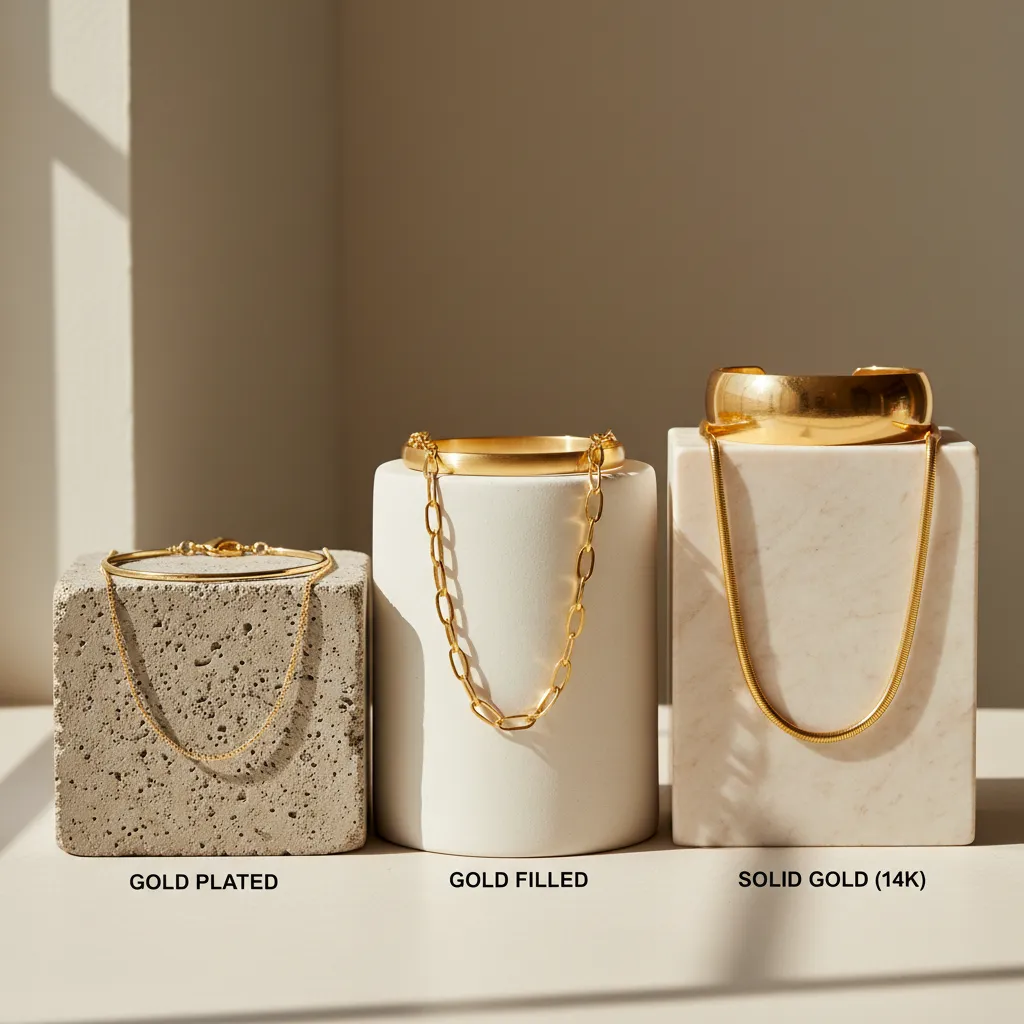
1. Gold filled is a category decision, not just a finish decision
For a jewelry business, choosing gold filled is part of product strategy. It may affect your target wholesale account, your average order value, and the role each SKU plays inside a collection. A buyer should define whether gold filled is intended as an entry-tier offer, a core volume line, or a bridge between plated and higher-value products. Without that clarity, design development can become inconsistent across the range.
2. Supplier communication matters as much as terminology
Many sourcing problems start because the brand and manufacturer are using the same words differently. If your team asks for gold filled jewelry findings or gold filled jewelry supplies, the supplier should understand exactly how those terms apply to the final product brief. Clear technical communication, sample review notes, and documented approvals usually matter more than broad marketing labels.
3. Durability expectations must be framed carefully
One of the most common search questions is “does gold tarnish.” For B2B buyers, the better question is how wear performance should be described responsibly. No responsible manufacturer should present any jewelry category as maintenance-free or immune to wear under all conditions. Product longevity may depend on design details, usage patterns, storage, environmental exposure, and the accuracy of the underlying production specification.
4. Gold filled can help brands widen assortment without changing their entire business model
A growing brand may use gold filled styles to expand into more accessible categories while preserving a premium look within the collection architecture. That may be especially useful for boutiques testing a new line extension or for private label founders who need a commercially viable opening assortment. Still, line expansion should be paired with realistic planning around sampling, approvals, and replenishment.
5. “Near me” searches are often less important than process reliability
Searches like “gold jewelry near me” or “sell gold jewelry near me” reflect local convenience, but B2B sourcing decisions usually depend more on communication quality, sample accuracy, and production follow-through than geography alone. A global manufacturing partner may be the stronger option if the workflow is disciplined, approvals are documented, and expectations are managed clearly from design through fulfillment.
6. Collection success depends on design compatibility
Not every style concept translates equally well across every manufacturing route. Before approving development, a brand should ask whether the design language, size range, and expected use case fit the intended product type. This is especially relevant for brands exploring custom gold jewelry alongside adjacent categories. A design that performs well in one format may require modifications in another.
7. Findings and components deserve the same scrutiny as hero pieces
Brands sometimes focus heavily on centerpiece designs while treating clasps, connectors, chains, and other functional parts as an afterthought. In practice, consistency across the full bill of materials may influence quality perception, returns, and customer satisfaction. If your assortment includes multiple matching SKUs, component planning should be reviewed early rather than after first samples arrive.
8. Wholesale planning should come before launch planning
Gold filled jewelry wholesale programs often look straightforward from the outside, but operational details can shape the outcome. A business should confirm expected order cadence, reorder potential, assortment breadth, and quality checkpoints before launch materials are created. This is one reason many buyers compare overseas partners with articles focused on wholesale gold filled jewelry manufacturers usa and other regional sourcing models.
9. The right manufacturing partner should challenge vague briefs
A reliable B2B partner does more than accept artwork and issue a quote. In many cases, the stronger manufacturer is the one that asks clarifying questions, identifies production risks early, and helps the client refine the brief. Royi Sal Jewelry positions its work around custom jewelry design and manufacturing collaboration, which is especially relevant for founders who need support moving from concept to a production-ready collection.
Compliance and Labeling Basics for Wholesale: How Gold Filled Is Marked and Sold
Once you move from sampling into wholesale distribution, labeling and product description discipline matter as much as product appearance. Wholesale accounts, marketplaces, and internal retail teams often expect your claims to match what was actually manufactured. If your category naming is inconsistent, the risk is not only customer confusion. It can also create avoidable disputes between your sales team, your accounts, and your supplier when a reorder does not match the original spec.
What experienced buyers ask suppliers about is usually straightforward: how the product is marked (if it is marked at all), what description language the supplier considers accurate for the construction, and what documentation can be provided for the agreed spec. Depending on the product type, a brand may also need to confirm how marking works on small components where a stamp may be impractical. The point is not to force a specific marking method. The point is to align your internal SKU setup and external messaging with what can be supported by the actual build.
Claims around “real gold” and “value” are where many brands get careless. Gold filled includes gold as part of its construction, but it is still a different category than solid gold, and it should be described as such. If your marketing language implies one category while your production spec delivers another, you create risk across returns, chargebacks, and long-term brand trust. In practice, the safer approach is to describe the category clearly, avoid absolute statements, and confirm your wording with what your supplier can stand behind in writing.
Before you publish wholesale line sheets or send product copy to retail accounts, confirm a few basics as a checklist: the category name you will use across every SKU, the consistent care language you will attach to the category, how you will position any warranty or after-sales policy in a way that matches realistic wear outcomes, and that every internal team is using the same terms. If you manage multiple variations across a collection, for example matching chains, earrings, and bracelets, consistency across descriptions can prevent the common situation where one SKU is marketed differently than the rest of the set.
Strengths and Considerations
Strengths
- Gold filled jewelry may allow brands to create a broader assortment structure without placing every design into a higher-cost category.
- It can be useful for testing demand in boutiques or private label programs before expanding into a larger production run.
- The category often gives merchandising teams more flexibility in balancing perceived value, design appeal, and wholesale positioning.
- It may work well for brands that need commercially approachable styles while maintaining a more premium presentation than basic entry-level fashion jewelry.
- Gold filled programs can support product line segmentation, allowing a brand to define opening price points, core sellers, and premium upsell pieces more clearly.
Considerations
- Terminology confusion between gold filled and other gold-look categories may lead to weak supplier briefs or inaccurate customer-facing claims.
- Performance expectations still need careful communication, since wear outcomes could vary depending on design, handling, and user conditions.
- Sampling and iteration may take time if the initial brief does not fully define components, closures, dimensions, or finishing expectations.
- Collection consistency can become harder to maintain if findings and structural components are sourced or specified inconsistently across SKUs.
Who This Product Category May Suit
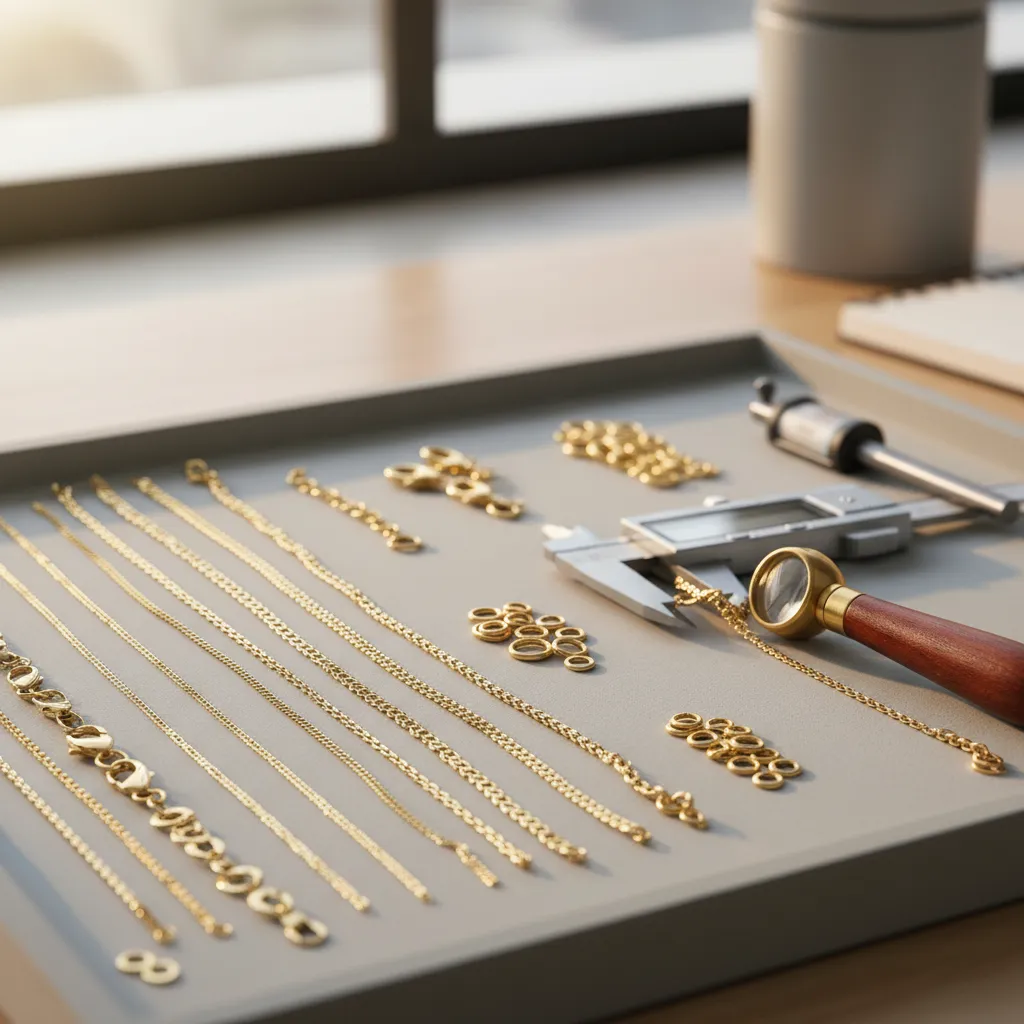
Gold filled jewelry may suit boutique owners, private label founders, and fashion brands that want to build a commercially balanced collection with room for stronger perceived value than a basic plated assortment might offer. It can also make sense for businesses testing new market segments, building giftable core styles, or planning a tiered range with multiple product levels.
It may be less suitable for businesses that have not yet clarified their brand positioning, expected order volumes, or customer care messaging. If your team is still deciding between categories, finishes, or collection architecture, a structured design and manufacturing conversation could help you avoid costly revisions later.
How to Evaluate Your Manufacturing Options
A manufacturer should be assessed on more than the look of one sample. For B2B buyers, the stronger evaluation process usually includes craftsmanship, design support, communication discipline, production flexibility, and fulfillment readiness.
1. Manufacturing quality and craftsmanship
Review sample consistency, finishing quality, component fit, and overall assembly. If the supplier cannot maintain standards on a sample set, scaling may become difficult. Ask how quality reviews are handled before production approval and shipment.
2. Design capability and service range
Some suppliers are better suited to straightforward replenishment, while others can support concept development and technical refinement. If you are building a private label line, choose a partner that can discuss design intent, production feasibility, and assortment logic rather than simply taking orders.
3. Trust, reliability, and communication
This factor often determines whether a project stays on track. A dependable partner should document revisions, flag unclear specs, and respond in a way that helps you make decisions. Founder-led businesses sometimes value this highly because one misunderstanding can affect an entire launch calendar.
4. Order flexibility and minimums
Minimum order quantity expectations may vary by project scope, customization level, and production setup. Brands should clarify this early, especially if they are testing first runs or planning a narrow initial collection. Low-volume ambition and highly customized development do not always align easily.
5. Lead times and fulfillment support
Production timing should be discussed in realistic terms. Sampling rounds, approval delays, and design revisions can all affect launch schedules. If you sell internationally or manage multiple retail accounts, fulfillment planning and communication become even more important.
Working With Gold Filled in Production: Forming Limits, Repairs, and Soldering Expectations
A detail that many brand owners miss is that product category decisions affect more than merchandising. They also affect what your factory expects to do during production and what your team can realistically support after the sale. Gold filled is often discussed as suitable for lighter metalwork, but your actual design may require bending, texturing, resizing, or other manipulation that pushes beyond what a supplier planned to support. Those constraints should be clarified before you approve a design language across an entire collection.
If your line includes shapes that require significant forming, aggressive texture, or tight tolerances at connection points, ask the manufacturer how they handle those operations with your selected construction. In practice, this influences whether a factory recommends certain thickness assumptions, whether some joints should be reinforced, and whether some components should be specified differently to reduce stress. Your sampling round should not only confirm appearance. It should pressure-test the failure points that matter in your use case, for example high movement links, closures under tension, or designs that catch on clothing.
Soldering and heat exposure expectations are another area where brands should get specific. Some suppliers will have limits around rework, resizing, or repair because heat can affect surface appearance and structural consistency. If you are planning after-sales service, a resizing program, or any permanent jewelry use case, confirm repair policies upfront. Ask what the supplier considers repairable, what requires replacement, and how that aligns with your own customer service positioning. Without that alignment, you can end up with a line that sells well but becomes operationally expensive to support.
Put simply, a product that looks strong in a photo can still be fragile in the wrong build. The design choices that support repeatable manufacturing are often small, but they are strategic. Clarifying forming limits, soldering expectations, and rework rules early helps you select designs that scale cleanly, and it helps you write more responsible care and warranty language once the collection is in market.
Where Royi Sal Jewelry Fits

Royi Sal Jewelry is positioned as a B2B custom jewelry design and manufacturing partner for brands, boutiques, and entrepreneurs developing their own lines. The business is led by Royi Gal, whose background as both a jewelry designer and manufacturer supports a more practical, partnership-based approach to development. That matters for brands that need more than simple order taking.
The company emphasizes collaborative design consultation, custom jewelry development, wholesale production support, and global shipping and fulfillment. For a brand evaluating gold filled assortment strategy, that kind of structure may be useful during the briefing phase, especially if your line still needs refinement around collection scope, component consistency, and production planning.
If you are comparing suppliers or considering a new category within your line, Royi Sal Jewelry can be a helpful resource for understanding how custom development works in a real manufacturing context. You can explore the company’s broader manufacturing perspective through its jewelry manufacturing resources, or contact the team through royisal.com to discuss a project brief, collection goals, and the practical steps needed before sampling begins.
Frequently Asked Questions
Is gold filled jewelry a good fit for a wholesale collection?
It may be a strong fit if your brand needs a middle-tier assortment that supports better perceived value and broader merchandising flexibility. The decision should still be based on your customer profile, positioning, and expected reorder pattern. A category can look attractive on paper but create issues if the quality brief and launch plan are not fully aligned.
How should I compare gold filled jewelry manufacturers?
Start with sample quality, communication clarity, and the supplier’s ability to manage custom development. You should also review how they handle revisions, approvals, production planning, and shipping expectations. A manufacturer that asks precise questions during briefing may be more reliable than one that gives fast answers without enough technical discussion.
Does gold tarnish, and how should brands talk about that?
Brands should avoid absolute claims. Wear and surface performance may vary depending on design, use conditions, storage, and care practices. The safest approach is to describe the category accurately, avoid overpromising, and align all sales language with what your manufacturing partner can responsibly support through samples and production specifications.
What should be included in a supplier brief for gold filled jewelry?
A strong brief typically includes reference images, dimensions, closures, target market, expected order range, and any collection-level consistency requirements. It should also cover packaging expectations, revision priorities, and launch timing. The more complete your brief is, the more likely your first sampling round will move efficiently.
Are local suppliers always better than overseas manufacturers?
Not necessarily. Local sourcing may help with convenience, but B2B outcomes often depend more on process control, communication, and quality consistency than location alone. A global partner with disciplined project management and clear approval workflows may outperform a nearby supplier that lacks structure or custom development experience.
How important are findings and components in product development?
They are very important. Functional parts can affect durability perception, consistency, and the overall user experience. If a brand approves only the visible design elements and neglects structural components, returns and quality complaints may rise. Findings should be reviewed with the same seriousness as the central design.
Can gold filled jewelry work for permanent jewelry programs?
It may, depending on the collection concept and technical requirements of the program. The key issue is not the label alone but whether the product is developed with the intended use case in mind. Brands should confirm application details, component suitability, and expected service conditions before treating any category as an automatic fit.
What is the biggest mistake first-time private label founders make?
Many launch too quickly with incomplete specifications and unrealistic expectations around revisions. A vague brief often creates avoidable delays during sampling and approval. First-time founders usually benefit from slowing down at the planning stage, defining the assortment more clearly, and choosing a manufacturing partner willing to challenge unclear instructions.
What are the facts about gold-filled jewelry?
For wholesale buyers, the most important facts are practical: gold filled is typically a bonded construction rather than a simple surface coating, supplier terminology can vary, and performance claims should be tied to your approved specification and use case. The category can work well in a tiered assortment, but only if your briefs, samples, and customer-facing descriptions all match the same definition.
How long will gold-filled jewelry last?
There is no single duration that applies across all designs and users. Longevity may depend on the product construction, how the style is engineered, how it is worn, and exposure to abrasion and environmental factors. From a brand standpoint, the better approach is to validate expected wear performance through sampling and real use case testing, then write care and warranty language that reflects realistic conditions rather than broad promises.
Is gold-filled jewelry real gold?
Gold filled pieces typically include an outer layer of gold bonded to a core metal, so gold is part of the construction. It is still a different category than solid gold, and it should be described clearly as gold filled rather than implied as solid. If you sell wholesale, align product copy with what your supplier confirms in writing and with how the category is represented across your SKUs.
Is gold filled jewelry worth anything?
From a wholesale perspective, “worth” usually has two meanings: resale value and commercial value. Gold filled products may have commercial value because they can support a gold-look assortment with a different perceived value tier than basic plated jewelry. Resale value is a separate conversation and depends on your specific product, the amount of gold present, condition, and what a secondary market will accept. Brands should be careful not to position gold filled as an investment product unless they can support that claim with appropriate documentation and market context.
Key Takeaways
- Gold filled jewelry should be evaluated as a business and assortment decision, not just a finish label.
- Supplier communication and technical clarity often matter more than marketing terminology.
- Brands should avoid oversimplified durability claims and align customer messaging with real production specifications.
- Component consistency, sampling discipline, and approval workflows may have a major impact on launch quality.
- A collaborative manufacturing partner can help refine a brief before expensive mistakes reach production.
Conclusion
Gold filled jewelry can be a useful category for brands that want more flexibility in assortment planning, stronger perceived value, and a wider path into wholesale growth. It still requires disciplined sourcing, clear terminology, and careful communication with your manufacturing partner. The strongest outcomes usually come from brands that define their positioning early, document their requirements clearly, and treat sampling as part of product strategy rather than a quick formality.
If you are evaluating a new collection, refining your private label offer, or comparing custom development partners, Royi Sal Jewelry offers a collaborative B2B approach shaped by design and manufacturing experience. Visit royisal.com to learn more about the process or contact the team to discuss your custom jewelry brief and next steps.