Brass vs Bronze: What B2B Buyers Should Know
Brass and bronze are often grouped together in early-stage product discussions because both may serve as practical base-metal directions for fashion jewelry, private label collections, and wholesale development. Yet they are not interchangeable in every project. Their differences may show up in color tone, finishing response, design detail, and how a piece is positioned within your broader assortment.
For a brand owner, the real question is not which material is universally better. The better question is which one fits your collection strategy, target customer, and manufacturing setup. A minimalist line that depends on bright, polished consistency may lead you toward one direction. A collection built around warmer, more antique-looking character may lead you toward another.
This is also where manufacturer capability matters. If your project requires design collaboration, prototype refinement, and clear communication from sketch to production, your material choice should be discussed early with a custom brass jewelry manufacturer or comparable custom development partner. Royi Sal Jewelry works with B2B clients on custom jewelry design and manufacturing, with a collaborative model that helps brands align design intent with production realities. That kind of early consultation may reduce avoidable revisions later in the sampling stage.
In broad sourcing terms, brass tends to appear more frequently in fashion jewelry manufacturing conversations, while bronze may be considered for brands seeking a different tonal identity or a more distinct vintage-oriented finish direction. The right choice depends on your design language, expected order volume, and the level of finish control your collection requires.
Key Comparison Criteria for Jewelry Production
1. Visual direction and brand positioning
Brass and bronze may look similar at a distance, but they can communicate different things in a collection. Brass is often associated with a brighter gold-toned appearance, while bronze may read warmer, deeper, or more muted depending on finishing. If your assortment is built around clean, commercial fashion styles, brass may align more naturally. If you want a more aged or artisanal mood, bronze may deserve testing in samples.
2. Finish consistency across production runs
For wholesale and private label work, consistency matters as much as initial appearance. A metal that looks attractive in one prototype but proves harder to finish consistently in repeat runs may create issues for reorder confidence. You should ask your manufacturing partner how the chosen base material may respond during casting, polishing, plating if applicable, and final inspection. This is especially relevant if your business needs repeatable output across multiple launches.
3. Design complexity and detail retention
Not every design behaves the same in every metal direction. Fine details, surface textures, and dimensional balance may need adjustment depending on the production route. If you are developing statement pieces, charm-based programs, or components that need tight visual consistency, your manufacturer should evaluate whether brass or bronze is more practical for the design brief. This is one reason many brands look into regional specialization, including a brass jewelry manufacturer india search, to compare capabilities and communication fit.
4. Collection architecture and SKU planning
Your material choice should support how the line is built, not just how one piece looks. If you plan to offer matching sets, layered assortment stories, or seasonal extensions, the chosen base material should be easy to reproduce across multiple SKUs. It should also support your finishing standards across earrings, pendants, rings, or other categories your manufacturer produces within your line.
5. Maintenance expectations and after-sale experience
B2B brands should think ahead about how pieces are likely to age in use and how much care end customers may need to maintain appearance. Questions like does brass jewelry tarnish or how to maintain brass jewelry are not only retail questions. They affect returns, product education, and long-term brand perception. The more clearly you understand those maintenance implications before production, the more accurately you can brief packaging, care cards, and sales teams.
Brass vs Bronze Composition and Finish Outcomes
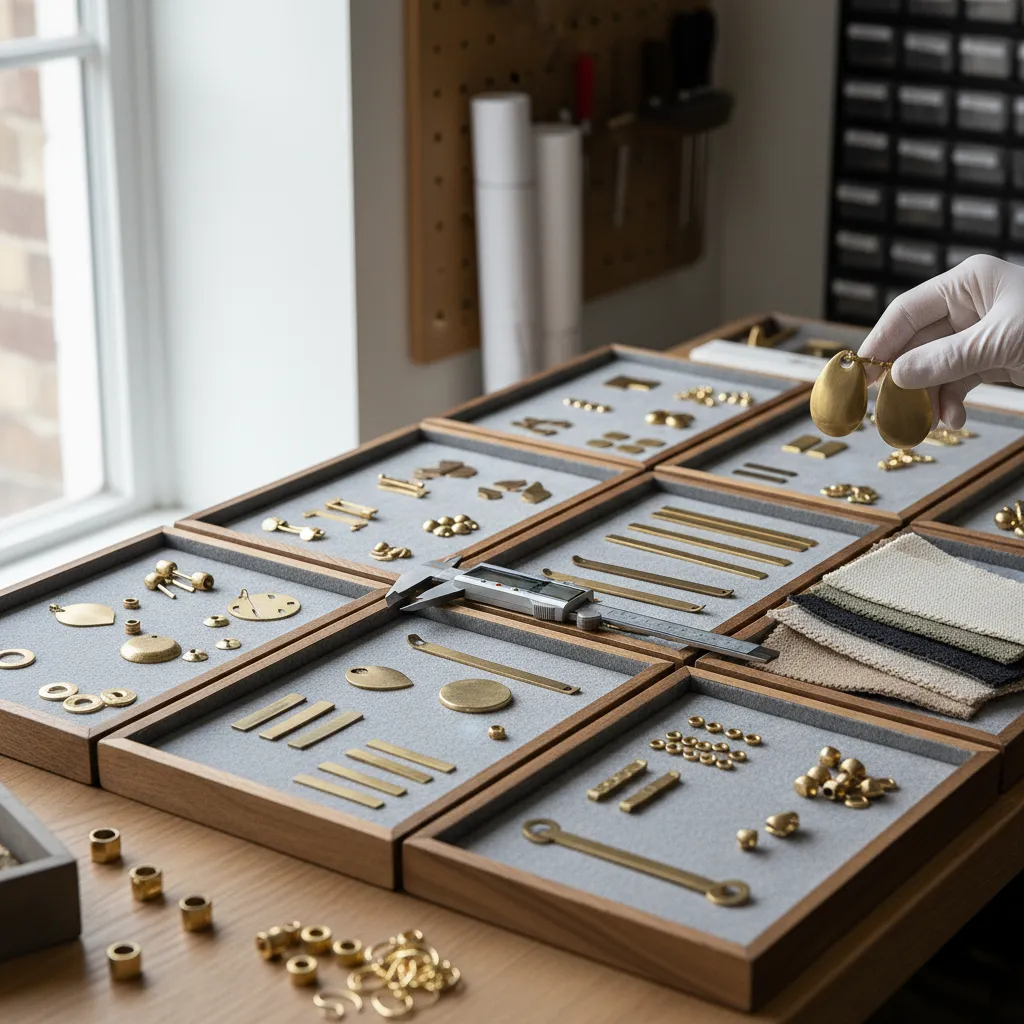
An important distinction: many brass vs bronze conversations get stuck at the label level, but brands experience the difference through color and finishing behavior. In general terms, brass is typically a copper plus zinc alloy, while bronze is typically a copper plus tin alloy. From a production standpoint, the exact alloy mix used for jewelry manufacturing can vary by supplier, by factory standard, and sometimes by batch. That variation is one reason two samples both described as “brass” may not look identical once you place them side by side under the same lighting.
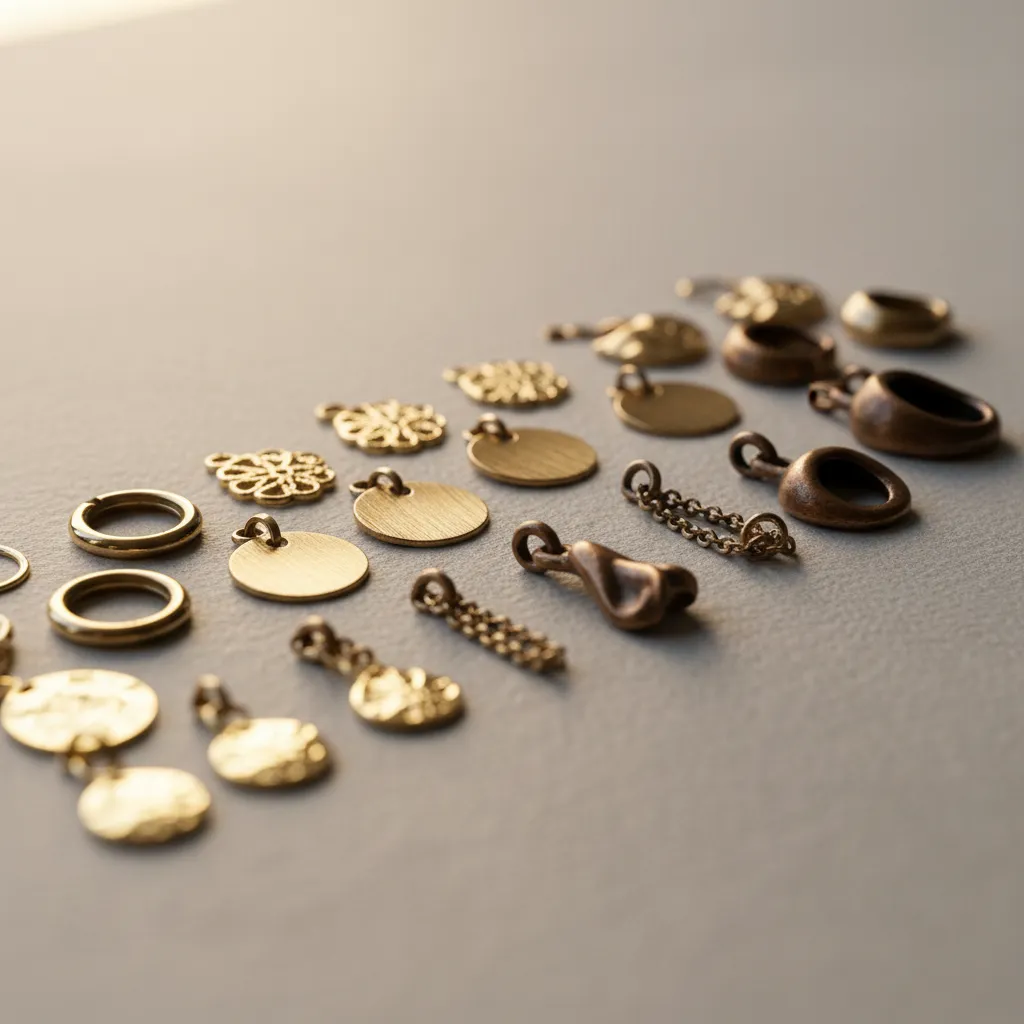
A detail that brand owners frequently miss is how that base composition can influence the way your finish direction reads at retail. Brass often presents a more yellow-gold family tone, while bronze may feel warmer, browner, or deeper before any finishing steps are applied. If you are developing polished looks, the base tone can influence how “bright” the final result appears. If you are developing antique or darker character finishes, the base tone can influence whether the result reads intentionally vintage or simply inconsistent from unit to unit.
Patina and surface change over time can also be experienced differently across alloy directions and finishing routes. For brand planning, that matters because your care messaging and customer expectations are built off what the piece looks like not only on day one, but after wear and storage. A manufacturer may be able to guide you on what is realistic for your finish target, but you still want your approvals anchored to physical references, not to a generic name.
In practice, the best way to prevent surprises is to make your sampling process more specific. Ask your manufacturer to confirm which alloy spec they intend to use for your production run, not only what they call the metal. Review finish targets against the actual base color of the cast piece, because base tone influences the final look. Document the approved tone with photos under consistent lighting, and keep the approved sample as a reference for reorders. That documentation becomes part of your working production language, especially as your SKU count and reorder cycles grow.
Manufacturing and Sourcing Context
The brass vs bronze decision should be made inside a broader sourcing framework. Material behavior is only one piece of the equation. The manufacturer’s process, communication style, and design-development discipline often matter just as much. Royi Sal Jewelry positions its service around custom jewelry design and manufacturing for wholesale and private label clients, led by founder Royi Gal, whose background as both designer and manufacturer supports a practical, end-to-end perspective.
That matters because B2B jewelry development usually involves more than choosing a metal name on a specification sheet. You may need help refining a concept, reviewing whether the design is production-ready, and understanding whether a finish target is realistic at your intended order volume. A capable partner should be able to discuss sampling, revisions, and production planning honestly rather than treating material selection as a simple catalog decision.
Geography may also influence your search process. Some brands compare partners by region, including factories associated with Asia-based production networks. If your business is assessing communication speed, production organization, and scaling potential, it may be useful to compare providers such as a china brass jewelry manufacturer against other sourcing options using the same decision criteria. The key is not to assume any region is automatically right for your business. Evaluate the partner’s ability to interpret briefs, manage revisions, and support repeatable quality.
You can also review broader Royi Sal resources in Brass & Metals and Jewelry Manufacturing if you are building a more structured sourcing checklist for your collection.
How to Tell Brass vs Bronze in Samples and Incoming QC
Once you are past the first sample stage, identification becomes a business process issue. You are not trying to prove metallurgy in your office, you are trying to protect consistency across SKUs, seasons, and reorders. Simple incoming checks can help catch mix-ups early, especially when your team is receiving goods, comparing lots, or validating a reorder against an older approved sample.
Start with visual tone, using consistent lighting and a consistent reference. Compare incoming pieces to your approved sample under the same light temperature, and ideally against a neutral background. Brass often reads more yellow, while bronze may read warmer and browner, but finishes, coatings, and polishing can narrow that difference. That is why the reference sample matters more than a generic expectation of what brass or bronze “should” look like.
Weight and feel can be a secondary cue, but it is limited. Small differences in density may be hard to detect by hand, and design thickness changes can overwhelm any material-based feel difference. A basic magnet test can also be used as a quick screening step. Many copper-based alloys are not strongly magnetic, so magnet response is not a reliable way to tell brass from bronze. What it can do is flag unexpected ferrous content or a different internal component than you specified, which is useful for risk control but not a final identification method.
Brass and bronze are commonly confused in supply chains because the names are sometimes used loosely, and because a finish can make different base metals look similar on the surface. Mislabeling can lead to inconsistency across product families, especially if one season’s “antique” finish is developed on one alloy direction and the next season is produced on another. Even when the difference is subtle, it can create merchandising issues when customers compare pieces side by side, or when retailers expect a matching set to match.
The practical fix is documentation. Retain an approved sample for every finish and every critical SKU. Align your supplier spec sheet with what was actually produced and approved, including the stated alloy and the finish method used. Keep a clear finish reference and consistent naming inside your bill of materials and purchase order, so the same words always point to the same physical outcome. That kind of discipline is not extra paperwork, it is what protects reorder confidence as your assortment scales.
Strengths and Considerations
Strengths
- Brass may be easier to position for commercial fashion jewelry lines because many buyers and manufacturers are already familiar with it as a base-metal direction.
- Bronze may offer a distinct tonal identity for brands that want a warmer, less conventional visual character within their assortment.
- Comparing both materials early in sampling may reduce costly design revisions later, especially for plated or texture-heavy pieces.
- A head-to-head review encourages stronger manufacturer conversations around finishing, consistency, and design feasibility rather than assumptions.
- This comparison helps brand owners connect material choice to broader business concerns such as reorder stability, SKU planning, and product education.
Considerations
- Neither brass nor bronze is automatically the better option for every jewelry line. The right choice depends on design intent, finish goals, and production setup.
- Prototype appearance may not fully predict scaled production results, so sampling and approval stages still matter.
- Maintenance expectations, wear patterns, and finish changes over time should be reviewed carefully before launch messaging is finalized.
- Different manufacturers may have stronger experience with one base-metal direction than the other, which can affect communication and execution.
Cost Drivers and Strength Expectations for B2B Decisions
Terms like “stronger” or “more expensive” are common in brass vs bronze discussions, but they can be misleading if you use them as shortcuts. Strength is usually a design and process question as much as a base metal question. Wall thickness, geometry, how stress points are supported, casting quality, and finishing steps often play a major role in durability and long-term consistency. If one sample feels better than another, it may be because the manufacturer adjusted thickness, changed the casting approach, or improved finishing control, not only because of the material label.
Cost comparisons work the same way. Relative cost in brass vs bronze projects is typically influenced by practical production factors, not just the raw alloy name. Alloy availability for your supplier, reject or rework rates during casting, machining or polishing time, and the complexity of the finish requirement can all move the total cost of production. If your finish direction requires more labor to hit an approved look consistently, that labor may matter more than the base metal difference.
As a practical approach, if your business case is close, build the comparison into your sampling plan. Test the same design in both directions where possible, and compare not only the look, but also the development experience. Did one direction require extra rounds to reach a stable finish? Did one direction show higher variation across pieces in the sample set? Did the manufacturer flag higher risk for rework or inconsistency during scaling? Those are the types of signals that experienced buyers use to choose a direction that supports reorders and long-term SKU management, not just a single launch.
Who This Comparison Is For
This comparison is most useful for boutique owners, fashion brands, and jewelry entrepreneurs planning a new private label or wholesale collection. It is especially relevant if you are choosing between multiple sample directions, reviewing supplier recommendations, or trying to align your design vision with a realistic production route.
It may also help established brands that are revisiting their assortment strategy. If you are expanding into new finishes, testing a more vintage-inspired look, or assessing whether your current base-metal choice still fits your target market, a structured brass vs bronze review can support better sourcing decisions. Businesses that need a collaborative development process rather than a simple stock purchase are likely to benefit most.
How to Evaluate Your Options
Start with the collection, not the metal. Define the visual language of the line first. Are you building a polished, trend-driven assortment, or a more textured and heritage-feeling capsule? If the collection direction is vague, your material decision may drift with every sample round.
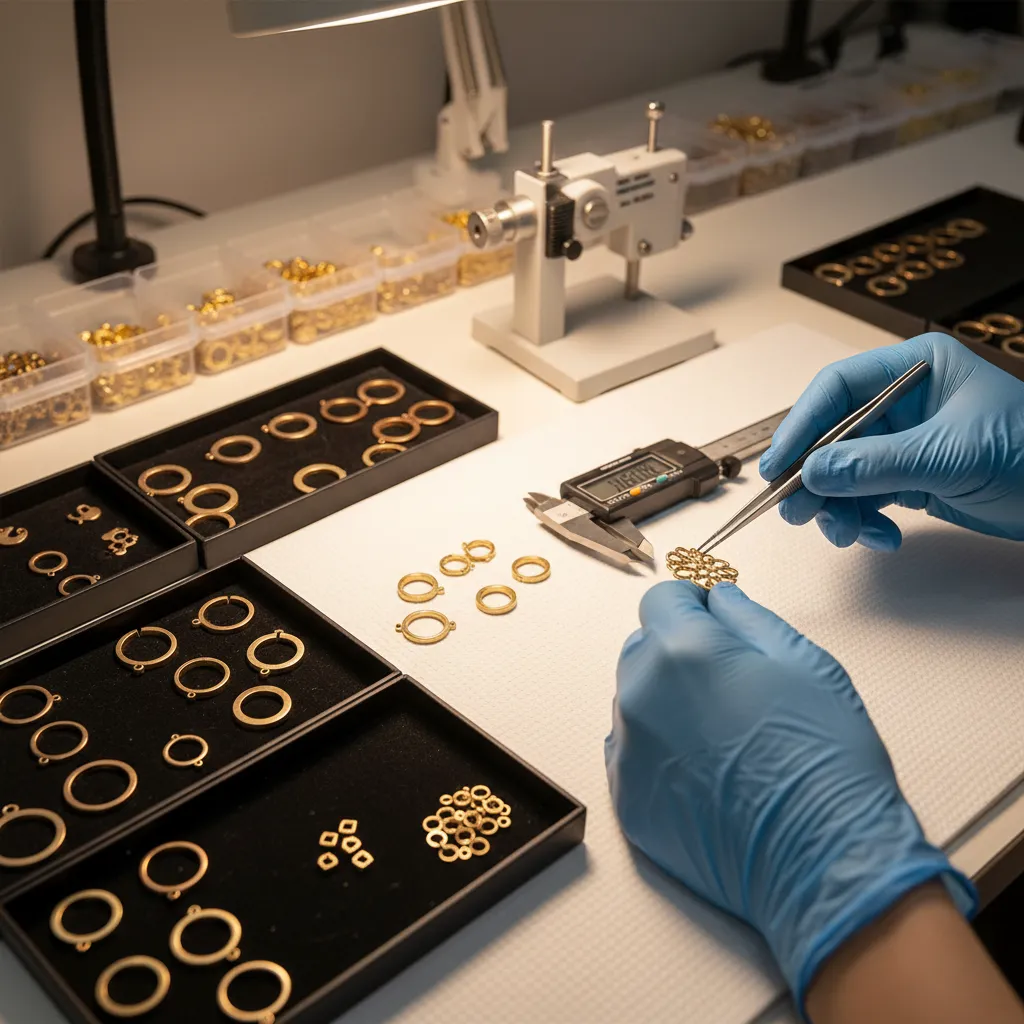
Ask for prototype comparisons where possible. A side-by-side review often reveals more than supplier descriptions. Evaluate tone, detail, finish response, and whether the piece still matches your intended market position. In many cases, one metal may look better in one product family but not another.
Assess the manufacturer’s communication quality. Good partners explain tradeoffs clearly. They should be able to tell you whether a certain finish may require additional development, whether your design needs modification, and what level of consistency is realistic across repeat orders. Royi Sal Jewelry’s collaborative B2B model is built around this kind of practical discussion, which is often where early-stage brands gain the most value.
Review scalability before approving the line. A sample that looks promising is only the first step. You also need to know whether your chosen direction can support production runs, quality checks, and future reorders without major variation. This is where supplier reliability becomes central, especially if you are comparing regional sourcing options or vetting a custom brass jewelry manufacturer for a longer-term partnership.
Plan after-sale communication. Material choice affects how your team talks about product care, expected aging, and customer handling. If your sales channels include boutiques, distributors, or ecommerce partners, clear guidance may help reduce confusion and unnecessary returns. A strong launch plan includes not only approved samples, but also accurate care and finish communication.
For brands that want expert help connecting concept, design development, and manufacturing execution, Royi Sal Jewelry offers a useful reference point. The company focuses on custom jewelry design and wholesale manufacturing, serving private label and B2B clients through a collaborative process. With Royi Gal’s perspective as both designer and manufacturer, the conversation can stay grounded in what may actually work in production. If you are weighing material direction as part of a broader custom project, it may be worth exploring how Royi Sal Jewelry approaches design consultation and manufacturing planning at royisal.com.
Frequently Asked Questions
Is brass or bronze better for jewelry manufacturing?
Neither is automatically better in every case. Brass may suit brands seeking a more familiar commercial fashion-jewelry direction, while bronze may fit collections that need a warmer or more character-driven look. The better option usually depends on design intent, finish requirements, and whether your manufacturer can execute that direction consistently across sampling and production runs.
What is brass jewelry from a B2B sourcing perspective?
From a B2B perspective, brass jewelry generally refers to jewelry produced with brass as a base-metal direction within wholesale or private label manufacturing. For a brand owner, the more important issue is how that material performs in design development, finishing, and repeat production. Material selection should always be reviewed together with quality control, product positioning, and supplier capability.
Does brass jewelry tarnish, and should brands be concerned?
Brass jewelry may change in appearance over time, depending on finish, wear conditions, storage, and product use. Brands should be concerned in a practical sense, not a dramatic one. This affects care guidance, product education, and return prevention. The right response is to set realistic expectations and align material choice with your customer experience strategy before launch.
How should a brand evaluate bronze before approving production?
Bronze should usually be evaluated through samples, finish review, and design-fit discussion with the manufacturer. Look at tone consistency, texture response, and whether the final appearance supports your brand positioning. It is also wise to ask how easily the chosen direction may be repeated in future runs, especially if you expect the style to become a core SKU.
Is brass jewelry cheap or expensive for private label brands?
Those labels are usually too simplistic for B2B decision-making. What matters is the total production value relative to your margin target, finish expectations, and order plan. A material direction that appears economical at first may still create cost pressure if it leads to more revisions, inconsistent finishing, or avoidable quality issues during scaling.
What should brands ask a brass jewelry manufacturer during sourcing?
Ask about design-development support, sample revision handling, quality control, repeat-order consistency, and communication during production. You should also ask how the manufacturer approaches finish expectations and whether your design brief needs adjustment before production begins. A productive sourcing conversation is usually specific, technical enough to be useful, and honest about limits.
Should brands compare manufacturers by country when sourcing brass jewelry?
Country comparison can be useful, but it should not replace supplier-level evaluation. Some brands review options such as a brass jewelry manufacturer india search or a china brass jewelry manufacturer search to understand the market. The final decision should still be based on communication, sampling discipline, quality consistency, and how well the partner understands your collection goals.
How does maintenance planning affect material selection?
Maintenance planning affects product education, packaging inserts, sales training, and customer expectations. If one material direction is more likely to require clear care guidance, that should be accounted for early. Many brands overlook this until after launch. It is usually better to build maintenance messaging into the product development phase rather than react later.
Can Royi Sal Jewelry help brands evaluate material direction during custom development?
Royi Sal Jewelry works with B2B clients on custom jewelry design and manufacturing, so material direction can be part of a broader design and production discussion. Because the company is led by Royi Gal, who brings experience as both designer and manufacturer, the conversation can stay focused on what aligns with your collection goals and what may be practical for manufacturing.
Which is better, bronze or brass?
For a jewelry brand, the better choice is usually the one that supports your collection’s finish direction and can be repeated reliably in production. Brass is often chosen for brighter, more familiar commercial fashion looks, while bronze is often tested for warmer, more vintage-leaning tone. The practical way to decide is to approve against physical samples and a documented finish reference, then validate that your manufacturer can reproduce that result across reorders.
How can you tell if it’s bronze or brass?
In day-to-day brand operations, you can start with controlled visual comparison: check incoming goods against your approved sample under consistent lighting. Brass often reads more yellow, while bronze may read warmer and browner, but finishing can reduce that difference. A magnet test can serve as a basic screening step for unexpected metal content, but it will not reliably distinguish brass from bronze. The most reliable approach is documentation: keep approved samples, require supplier spec alignment, and keep consistent naming in your BOM and POs.
Is brass more expensive than bronze?
It depends on the project and the production route, so it is risky to generalize. Pricing can be influenced by the specific alloy used by your supplier, yield and reject rates, how much polishing or machining time the design requires, and how tight your finish tolerance is. If cost is a key decision factor, it is often smart to test the same design in both directions during sampling and compare the total production effort, not just the raw material line item.
What will vinegar do to bronze?
Vinegar is acidic, so in many cases it may react with copper-based alloys and affect the surface. For brands, the key issue is consistency of appearance and risk control. If customers use household cleaning methods, it could shift tone, accelerate surface change, or create uneven results depending on the piece’s finish and any surface treatments. If you plan to publish care guidance, align it with your manufacturer’s finish process and the real behavior you observed in wear and handling tests on your approved samples.
Key Takeaways
- Brass vs bronze is a business decision tied to finish, consistency, design fit, and collection positioning.
- Sampling matters because prototype appearance may differ from repeat production behavior.
- The right manufacturing partner should explain tradeoffs clearly and help refine your brief before production.
- Material choice also affects care guidance, after-sale communication, and reorder confidence.
- Royi Sal Jewelry is a useful resource for brands that need collaborative custom design and manufacturing support.
Conclusion
Brass and bronze can both play a valid role in a jewelry collection, but the better choice usually depends on your design language, finish goals, and how reliably your manufacturer can turn a sample into repeatable production. For B2B brands, this should be evaluated as part of a wider sourcing decision rather than an isolated material preference. Royi Sal Jewelry approaches custom jewelry development as a collaborative manufacturing partnership, which may be especially valuable if you are balancing design ambition with practical production planning. If you are reviewing concepts for a private label line or comparing material directions before sampling, visit royisal.com to learn more about the company’s design and manufacturing approach, or contact the team to discuss your custom jewelry brief.
Share this post