Meet us at Jewellery & Gem WORLD HK 2026 — Sept 16–20, Booth 5G827, Thailand Pavilion Book a Meeting → ×

Custom Jewelry Manufacturing Flexible Moqs Minimum Order Quantity

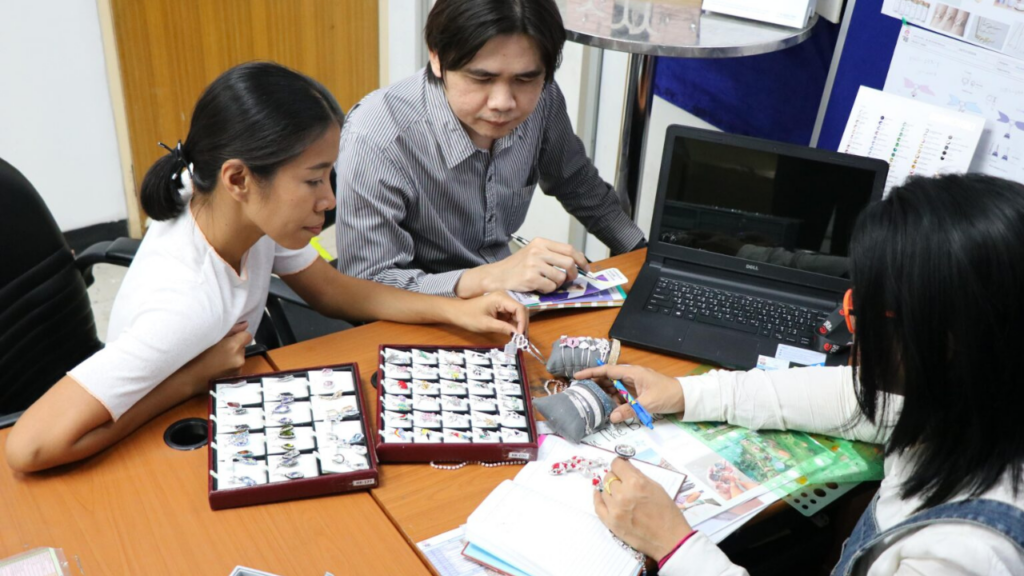
Custom jewelry manufacturing flexible MOQs minimum order quantity planning table with design materials

Custom jewelry manufacturing flexible moqs minimum order quantity refers to a production arrangement in which a jewelry manufacturer can assess minimum order requirements based on a brand’s specific design, development needs, and production plan. Instead of applying one fixed quantity to every project, the manufacturer can consider the project’s requirements. For B2B buyers, flexible MOQs can make it more practical to test a new collection, refine a private label concept, or expand an existing assortment without committing to an unsuitable initial production volume.

MOQ discussions are not only about ordering fewer units. They involve the design’s complexity, development work, repeatability, production efficiency, and the manufacturer’s ability to support the project from concept through fulfillment. A clear MOQ conversation should help a brand match its launch plan to a workable manufacturing process.

Custom Jewelry Manufacturing Flexible MOQs: What They Mean

A manufacturer accepts a minimum order quantity as the smallest production volume for a particular item or project. In custom jewelry manufacturing, that quantity may differ between designs because each style can require a different level of design development, sampling, production setup, finishing, quality review, and packing coordination.

A flexible MOQ does not mean a manufacturer can produce every design in any quantity. It means the manufacturer evaluates the commercial and technical realities of the request before confirming an order requirement. This is especially relevant for brands that are developing original designs instead of choosing only ready-made items.

For a broader view of the design support that can precede production, review Royi Sal Jewelry’s custom jewelry design services. The design stage gives both parties a clearer basis for discussing what a practical first order may look like.

MOQ Terms Used by Jewelry Businesses

  • MOQ: The minimum quantity required to begin a production order.
  • Design brief: A document or structured description of the collection concept, product requirements, reference images, and commercial objectives.
  • Prototype development: The work used to translate a concept into a reviewable version before broader production planning.
  • Production run: A planned batch of approved jewelry items manufactured for wholesale, private label, or brand distribution.
  • SKU: A distinct product variation a brand manages separately, such as one design, size, finish, or configuration.

How Manufacturers Set Minimum Order Quantities

Manufacturers generally need enough confirmed demand to make the development and production process commercially viable. A brand should expect the MOQ discussion to begin after its concept, product range, and intended use are sufficiently clear. Asking only, “What is your minimum?” can produce an incomplete answer. The relevant question is, “What minimum fits this design and business plan?”

Design complexity and repeatability

A manufacturer may assess a simple, repeatable concept differently from a collection containing many variations or highly individualized details. If a design requires substantial interpretation, revisions, or separate development work, the initial production plan may need to account for that effort. A precise brief can reduce uncertainty before the brand and manufacturer discuss quantities.

Number of styles and variations

A brand planning ten separate SKUs may face a different MOQ structure than a brand concentrating demand around two core styles. Splitting a limited opening order across too many designs can make planning more difficult. Founders should decide which items are true launch priorities and which can wait for a later release.

Sample approval and production readiness

MOQ is usually more useful after the brand and manufacturer align on the approved version of the product. Sample review, dimensions, visual details, packaging needs, and order specifications can all influence what is practical for repeat production. The goal is not merely to reach a quantity target. It is to establish an approved product the manufacturer can produce consistently.

Private label and fulfillment requirements

Private label projects may involve more coordination than an unbranded production order. Businesses should disclose their branding, labeling, packing, and fulfillment expectations early so the manufacturer can assess the full scope. Packaging decisions can also affect planning. For brands developing presentation alongside the jewelry, 3d jewelry box design is a related consideration.

Custom Jewelry Manufacturing: Flexible MOQs and Per-Style Planning

A manufacturer may set MOQ for an individual design, a variation within that design, or a broader production plan, depending on the collection structure. A brand should clarify this point before finalizing its assortment. A quantity that works across an entire order may become less practical when brands divide it among many separate styles, sizes, finishes, or configurations.

Each additional SKU can introduce separate development, sample review, sourcing, setup, and production preparation requirements. A small total order distributed across a wide range may therefore require more coordination than a focused order built around a few priority styles. This does not mean a broader collection is unsuitable. However, the business should understand how its assortment structure affects the production conversation.

Order volume can also affect unit economics because the project must account for early preparation work. Sampling, design refinement, component sourcing, and production setup may have a different commercial effect on a limited run than on a repeat order for an established style. The manufacturer can assess these factors more clearly when the brand identifies its likely core designs and expected reorder opportunities.

Custom jewelry manufacturing flexible moqs minimum order quantity planning also helps brands compare a focused opening order with future reorder opportunities.

Why Flexible MOQs Matter for Growing Brands

Custom jewelry manufacturing flexible MOQs minimum order quantity evaluation using material samples

Custom jewelry manufacturing flexible moqs minimum order quantity planning helps B2B buyers make better inventory decisions. A new brand may need to validate which designs attract wholesale interest before committing to a broader range. An established retailer may want to introduce an exclusive capsule collection without disrupting its core assortment. In both situations, the quantity decision should support the commercial objective rather than create excess stock or an underdeveloped launch.

Flexibility can also encourage better collection discipline. Instead of producing a large number of lightly differentiated styles, a business can focus resources on designs that have a clear role in its range. That may improve merchandising clarity, simplify future reorders, and make sales feedback easier to interpret.

From concept sketch to finished piece, Royi Sal Jewelry partners with brands, boutiques, and retailers as their behind-the-scenes design and manufacturing resource. At the helm is Royi Gal, whose dual expertise as designer and manufacturer shapes a hands-on, partnership-driven approach. Clients gain access to design consultation, full manufacturing support, and worldwide shipping and fulfillment, all delivered through a single collaborative relationship built to bring custom collections to life.

For businesses comparing quantity requirements across suppliers, the central issue is not whether a manufacturer advertises a low MOQ. It is whether the proposed quantity aligns with the approved design, available budget, expected channel demand, and capacity to reorder successfully.

Custom Jewelry Manufacturing Flexible MOQs vs. Fixed MOQs

A fixed MOQ is a standard minimum that a supplier applies across a category or program. Buyers can understand it easily, particularly where suppliers standardize items. Flexible MOQs are more consultative. They require the brand and manufacturer to evaluate the individual project before confirming requirements.

  • Fixed MOQs may suit standardized purchasing programs with limited customization.
  • Flexible MOQs may suit brands developing a focused custom collection or testing a defined market opportunity.
  • Low volume does not automatically mean low commitment. Clear specifications, prompt feedback, and organized approvals still matter.
  • Higher volume does not automatically solve every production issue. The product must first be properly defined and approved.
MOQ approach How the article describes it Planning consideration
Fixed MOQ A standard minimum across a category or supplier program. May suit standardized purchasing programs with limited customization.
Flexible MOQ A project-specific requirement evaluated before confirmation. May suit a focused custom collection or a defined market opportunity.
Focused assortment Demand concentrated around two core styles. A brand planning ten separate SKUs may face a different MOQ structure.
2:1:1 approach An informal guideline for shaping an assortment. It is not a fixed rule for how jewelry must be manufactured.

A flexible approach may be valuable for a business creating a specialized collection, including a category such as custom fine jewelry, where product positioning and development decisions require close attention. It does not promise that a manufacturer can produce every custom request at a very small volume.

Businesses researching quantity planning in more detail can also review this guide to jewelry MOQ considerations. It is useful to treat MOQ as a planning variable, alongside design scope, assortment size, and reorder potential.

What to Prepare for an MOQ Discussion

A productive inquiry gives the manufacturer enough information to understand the project before discussing quantities. Brands do not need to have every detail finalized, but they should be ready to explain what they are building and how they expect to sell it.

  • A short description of the business, target market, and distribution channel.
  • A design brief, sketches, references, or existing collection direction.
  • The number of proposed styles and the priority order among them.
  • An estimated opening order range and a realistic reorder plan.
  • Any private label, packaging, or wholesale fulfillment requirements.
  • The desired launch window, while recognizing that development and production timing can vary by project.

Be direct about uncertainty. If demand is still being tested, say so. If a retailer has a confirmed seasonal opportunity, explain the timing. Manufacturers can give more useful guidance when they understand whether the first order is a market test, a wholesale rollout, or an expansion of an existing line.

Some brands may also explore product concepts involving custom moissanite jewelry. Any category-specific request should be described in the brief so the production discussion reflects the actual project rather than a general estimate.

Custom Jewelry Manufacturing Flexible MOQs From Samples to Reorders

Custom jewelry manufacturing flexible MOQs minimum order quantity comparison for small-batch and scaled production

Prototype development, sample approval, and production readiness are related but distinct stages. A prototype helps translate the initial idea into a reviewable product. Sample approval confirms the version the brand intends to proceed with. A production-ready design requires the relevant specifications, visual references, packaging details, and approval decisions to be organized so the manufacturer can make the same style again with consistent direction.

Brands should document approved dimensions, design details, reference images, labeling instructions, packing requirements, and any agreed variation rules before the first production order. Clear records give both the brand and manufacturer a shared reference point for quality review and future reorders. They can also reduce uncertainty if the project moves from a limited launch into a larger wholesale program.

Future expansion should be considered during the first assortment plan. Brands can prioritize core styles, identify likely reorder candidates, and separate experimental concepts from products expected to remain in the collection. This approach helps the manufacturer understand which styles may need repeat production planning and helps the business make later decisions using sales and wholesale feedback.

Where Brands Encounter Flexible MOQ Decisions

Flexible MOQ planning commonly arises at several points in a jewelry business lifecycle. A startup may need a carefully controlled first collection. A boutique may want a small exclusive range that differentiates it from its existing assortment. A fashion brand may be adding jewelry as a new category and needs to control its early inventory exposure.

It can also matter after a collection has proven demand. A brand may choose to reorder its strongest styles while retiring slow-moving designs. That is why an MOQ conversation should include future production, not only the first order. A manufacturer that understands the expected path from launch to reorder can help a business structure a more intentional assortment.

The most useful result is a production plan that gives the manufacturer adequate clarity and gives the brand a realistic route to market. Quantity is only one decision, but it affects cash flow, assortment depth, operational complexity, and the ability to scale a successful design.

Evaluating MOQ Alongside Manufacturer Capacity

A flexible initial quantity is only one part of a productive manufacturing relationship. Brands should also assess whether the manufacturer can support a controlled launch and potential future production needs. A first order may be limited by design strategy, but a strong collection can require a clear path for reorders, additional styles, and broader fulfillment coordination.

Useful discussion points include the communication process during development, how the manufacturer evaluates production capacity, the quality review process, and how it handles approved designs for future orders. International brands should also clarify reorder procedures, shipping coordination, and the information required before each production run. These details help establish whether the manufacturer’s process fits the brand’s internal planning and distribution model.

The lowest possible MOQ is not necessarily the strongest indication of a suitable long-term partner. A manufacturer’s ability to provide clear guidance, maintain organized approvals, review quality, and coordinate repeat production may be equally important. Brands should evaluate the full working process before choosing a manufacturing relationship based primarily on opening quantity.

For guidance on jewelry product claims and quality descriptions, brands can also review the U.S. Federal Trade Commission’s Jewelry Guides while preparing product information.

Frequently Asked Questions

Custom jewelry manufacturing flexible MOQs minimum order quantity quality review for repeat production

Does flexible MOQ mean a manufacturer will accept any order quantity?

No. Flexible MOQ means the required quantity may be evaluated in relation to the project rather than set as one universal figure. The manufacturer may consider design scope, development requirements, number of styles, approvals, production practicality, and order objectives. A brand should provide a clear brief and expected order range before relying on a particular quantity assumption.

Should a startup begin with as many designs as possible?

Usually, a focused opening assortment is easier to evaluate than a wide collection with limited units per style. Concentrating on priority designs can simplify briefing, development, inventory planning, and sales analysis. The right number of styles depends on the brand’s market position and launch strategy, so it should be discussed alongside the MOQ and production plan.

Can a custom manufacturer help with both design and production?

Consider a brand owner planning to launch a private label collection. Before committing to a manufacturing partner, they’ll want clarity on exactly which services apply to their project. Royi Sal Jewelry’s B2B offering is built around this need, pairing custom jewelry design and manufacturing with hands-on design consultation and worldwide shipping and fulfillment support. Because project scope can vary widely, clients are encouraged to pin down which stages, whether concept development, private labeling, or packaging logistics, will be part of their particular engagement.

What should I ask before agreeing to a minimum order quantity?

Ask what the quantity covers, how many styles or variations are included, what approvals are needed before production, and how reorders may be handled. You should also clarify the expected deliverables, communication process, packaging requirements, and fulfillment scope. Written alignment on the approved design and order details helps reduce misunderstanding before a production run begins.

Can MOQ requirements change after the first production order?

They may change depending on the design, reorder pattern, production conditions, or scope of future work. A successful first order does not automatically establish the same terms for every later collection or variation. Brands should revisit quantity expectations when adding new styles, changing specifications, or moving from a test launch into broader wholesale distribution.

What is the 2:1:1 rule for jewelry?

Consider how a jewelry line often takes shape. Two dependable, high-demand designs anchor the collection, while a pair of secondary pieces round out the offering in smaller numbers. That’s the essence of the 2:1:1 approach, an informal guideline for shaping an assortment, not a fixed rule for how jewelry must be manufactured. Brands lean on it to weight their bestsellers appropriately while still making room for variety through lower-volume styles. Naturally, the ideal balance shifts depending on factors like distribution channels, anticipated sales, the total number of SKUs, and how often the line will be replenished. Rather than functioning as a mandated minimum order quantity, this ratio works best as a starting point for thoughtful collection planning.

Is there a supplier that offers print-on-demand jewelry?

Some suppliers may offer inventory-light fulfillment models that produce or personalize items after an order is placed. That model differs from custom jewelry development and production, where a brand works with a manufacturer to define an original design, approve samples, and plan a production run. Print-on-demand may suit a business testing limited personalization concepts, while custom manufacturing may be more appropriate for brands building a distinct private label collection with repeatable product specifications.

How should international brands approach an overseas manufacturing inquiry?

International buyers should provide concise written requirements, organized reference materials, and a clear approval process within their own team. They should also discuss communication expectations, shipping needs, and fulfillment requirements before confirming an order. Royi Sal Jewelry serves international business clients, but shipping arrangements and project timing should be confirmed directly for each manufacturing inquiry.

Custom jewelry manufacturing flexible moqs minimum order quantity discussions work best when international buyers provide those project details from the start.

Key Takeaways

  • Flexible MOQs are project-specific quantity discussions, not an automatic promise of very small orders.
  • Design complexity, style count, sample approval, private label needs, and production planning can affect minimum quantities.
  • A focused assortment and clear design brief can make MOQ conversations more productive.
  • Brands should evaluate MOQ alongside inventory strategy, reorder potential, and fulfillment requirements.
  • Royi Sal Jewelry’s collaborative B2B model is suited to businesses seeking custom design and manufacturing support.

Conclusion

Custom jewelry manufacturing flexible moqs minimum order quantity planning is most valuable when it supports a disciplined jewelry business plan. For retailers, boutiques, private label founders, and expanding brands, the objective is not simply to secure the smallest possible production run. It is to develop a collection with enough clarity, commercial purpose, and production readiness to support a sustainable first order and future reorders.

Before reaching out about a custom collection, take time to define your design direction, outline assortment priorities, and estimate the order volume you have in mind. With this groundwork in place, get in touch with Royi Sal Jewelry via royisal.com to walk through your custom jewelry design or manufacturing needs and identify the best approach for your project.

Because every piece we produce is shaped by factors unique to the client, figures such as turnaround time, cost, and minimum quantities will differ from one order to the next and may be adjusted as needed. We encourage you to reach out to Royi Sal Jewelry at https://royisal.com/ so we can confirm the specifics that apply to your project. Before finalizing any order, please also verify with us directly whether production is feasible, how shipping will be handled, what design development looks like, and the full scope of fulfillment involved.