Personalized jewelry demand harnessing technology empower customization uniqueness reflects the growing B2B need for jewelry collections that adapt to individual customer preferences through organized digital design, approval, and production workflows. For a jewelry brand, personalization is not simply adding a name or symbol. It is a product-development model that may help a collection feel more distinctive while requiring careful control of design options, production specifications, and order data.
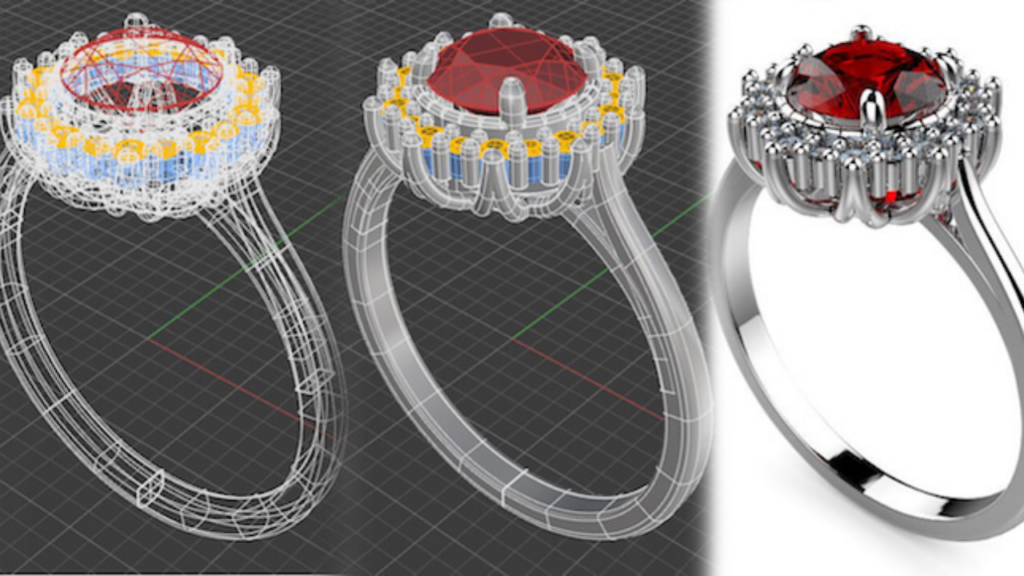
As customers increasingly expect products that reflect identity, relationships, milestones, or style preferences, brands need a reliable way to convert those requests into repeatable products. 3D jewelry design can support that work by giving design teams and manufacturing partners a shared visual and dimensional reference before a personalized concept reaches production.
Personalized Jewelry as a Business Model
Personalized jewelry is a collection approach in which a brand offers defined design choices for a specific order. The brand can select, adapt, and record those choices. They may involve text, initials, meaningful shapes, adjustable visual details, or other approved design variables. The commercial objective is to offer meaningful variation without turning every order into an entirely new manufacturing project.
For private label founders, this distinction matters. A fully open-ended custom request can create substantial design and communication work. A structured personalization program creates boundaries. The brand decides which elements stay fixed, which may change, how it submits orders, and what approval information a manufacturer needs.
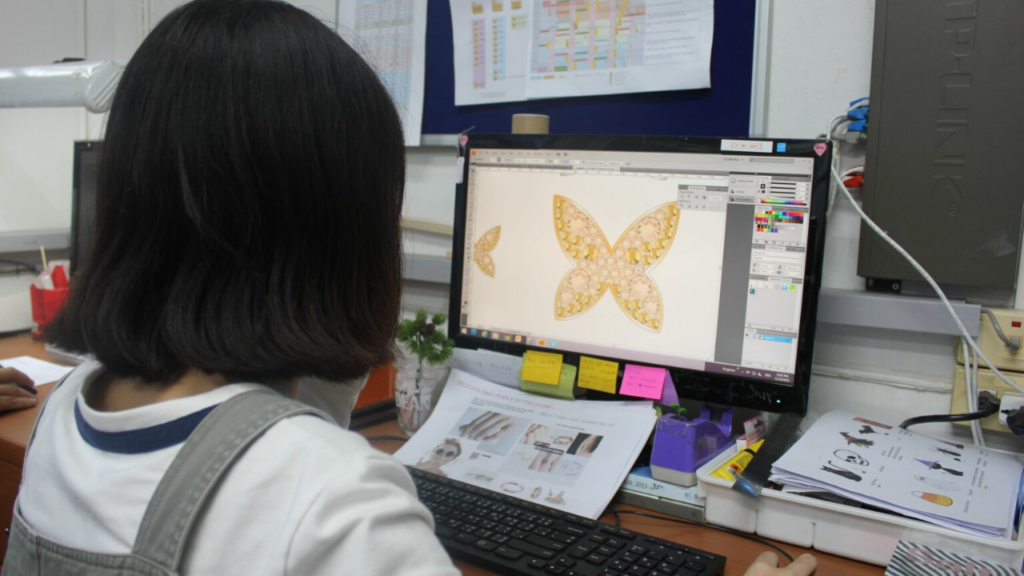
Technology helps make those boundaries workable at volume. Digital design files can establish the base product, while a clear order system can capture the variable information associated with each unit. Brands considering a broader digital workflow may also benefit from understanding CAD jewelry design as part of the conversation between creative direction and manufacturability.
Technology and Workflow for Personalized Jewelry
A personalized jewelry offering usually depends on five connected decisions, not one piece of software. The goal is to ensure that customer-selected information arrives at production in a usable, traceable format.
1. A controlled base design
The base design is the approved product structure that remains consistent across the collection. It gives the manufacturer a stable reference and helps a brand avoid reinterpreting the product from scratch for every order. A pendant-oriented program, for example, may begin with a base form and a limited set of approved customization zones. Brands exploring this product direction can review considerations around a custom pendant necklace program.
2. Defined personalization fields
Each variable needs a rule. If a customer can add text, the brand should establish character limits, capitalization conventions, placement, and any excluded characters or symbols. Undefined options can lead to inconsistent appearance, difficult approvals, and preventable order corrections.
3. Digital design records
Digital files can help a brand document dimensions, visual relationships, and approved design details. A clear version-control process is especially valuable when a collection changes over time. The production team should know which master file is valid, what has changed, and whether the change applies to all future orders or only a particular variation.
4. Order-data management
Personalization introduces data handling as well as product handling. A brand needs a dependable process for capturing spelling, formatting, selected options, internal order number, and approval status. Manual copying between systems can increase the opportunity for transcription errors.
5. Production and quality checkpoints
Before a production run begins, the manufacturer and brand typically need to confirm the design reference, variable details, and any required sample approvals. Quality review should account for both the core product and the personalized information attached to each order.
Working Glossary
-
Base design: The approved core product that supports personalized variations.
-
Design variable: A controlled element that may change from one order to another, such as text or an approved visual option.
-
CAD: Computer-aided design, used to create and communicate detailed digital jewelry designs.
-
Production-ready file: A current, approved digital reference that supports manufacturing planning and reduces interpretation risk.
-
Version control: A system for identifying the latest approved design file and recording changes.
Using Digital Visualization to Confirm Personalized Design Choices
Digital visualization can give a brand a clearer way to review personalized details before sampling or production. A design preview may help teams assess text placement, proportions, spacing, and approved variations against the base design. This is especially useful when the customer-facing offer includes several permitted options that need to remain visually consistent.
For wholesale accounts and internal sales teams, documented previews can also create a shared reference. They show each option’s intended appearance. A brand may use those records in sales materials, order forms, and internal review steps so that the account, brand team, and manufacturer are working from the same approved presentation.
A brand should still separate visual approval from final production approval. A preview may confirm the general arrangement of a personalized detail. The final order record must confirm the exact spelling, selected variation, and production-ready information for that unit. Separating these stages can help reduce confusion where personalized details change from order to order.
Why Personalized Jewelry Collections Create Commercial Value

Personalization may give a jewelry brand a clearer point of difference in a crowded assortment. A well-built program can turn a standard product category into a collection with a more specific story, provided that the choices remain operationally manageable.
It can also support assortment planning. Rather than developing a large number of unrelated designs, a brand may build a smaller family of adaptable styles with consistent visual direction. This approach can be relevant across several customer segments. For example, a focused men’s custom jewelry assortment may require a different design language and personalization structure than a broader gift-oriented collection.
The commercial benefit depends on discipline. Personalization can lose value if a brand offers too many options, lacks a clear order process, or cannot explain the available choices to wholesale accounts. The strongest programs usually make the selected options understandable for the buyer, manageable for the sales team, and precise enough for production planning.
Personalized concepts can also complement established product strategies. A brand considering adjacent collection development may compare whether a separate custom silver jewelry direction or a controlled personalized range better supports its broader positioning. The answer depends on brand identity, desired complexity, and the operating capacity behind the offer.
Designing Personalized Collections Around Meaningful Customer Occasions
End customers often seek personalized jewelry because it can represent identity, a relationship, a milestone, or a meaningful gift. For a brand, those motivations work best as defined collection themes, not open-ended requests. A clear theme can give buyers a practical reason to understand the range and can help the brand determine which options belong within it.
An occasion-based program may begin with a limited family of base designs and approved personalization fields that suit the intended message. The same direction can inform wholesale sales materials. It can show buyers the occasions the collection addresses, the available choices, and how they should order each option. This gives the emotional purpose of the product a more structured commercial presentation.
Meaningful positioning does not remove the need for operational control. A personalized product still needs repeatable rules for order entry, design approval, and production data. The strongest occasion-focused collections connect a clear customer story to a process that sales teams and manufacturing partners can apply consistently.
Personalized Jewelry vs. Fully Bespoke Jewelry
People often use these terms interchangeably, but they describe different operating models. Personalized jewelry starts with a defined product and allows limited changes within approved parameters. Fully bespoke jewelry begins with an individual brief and may require original design development, additional approvals, and separate production planning.
| Approach | Starting point | Development and planning |
|---|---|---|
| Personalized jewelry | A defined product with limited changes within approved parameters | Uses repeatable base designs and controlled options |
| Fully bespoke jewelry | An individual brief | May require original design development, additional approvals, and separate production planning |
-
Personalized jewelry generally uses repeatable base designs and controlled options.
-
Fully bespoke jewelry may involve a new concept, a new design file, and project-specific feasibility review.
-
Private label personalization allows a brand to present a proprietary assortment while maintaining a repeatable product framework.
-
One-off custom work can be creatively valuable but may not suit every wholesale or scaled fulfillment model.
The right approach depends on the business objective. A retailer seeking a consistent program for multiple locations may prioritize controlled personalization. A brand building a signature, limited-release concept may decide that more extensive custom development is appropriate.
How to Evaluate a Personalized Jewelry Program

Define the customer choice before development begins
Start by identifying exactly what the end customer may select. Avoid describing personalization broadly in the brief. Specify each permitted change, the formatting rules, the intended visual outcome, and which parts of the product must remain unchanged.
Test the order handoff
A polished design concept can still fail operationally if the team cannot transmit order details accurately. Run a test order from customer selection through internal review and production submission. This can reveal unclear fields, inconsistent naming, or missing approval stages before the collection launches.
Request realistic sample review
Sampling may help a brand review placement, readability, scale, and the relationship between customizable elements and the base design. A sample does not remove all production risk, but it can provide a more informed basis for deciding whether the personalization rules are commercially workable.
Plan for exceptions
Customers may submit unsupported characters, misspelled text, conflicting choices, or requests outside the approved offering. Decide who reviews exceptions, how the team communicates changes, and whether the brand requires final customer confirmation. This protects both delivery expectations and brand consistency.
Choose a collaborative manufacturing partner
Bringing a bespoke collection to life takes more than a single conversation. Design direction, order specifications, sampling rounds, and ongoing production all need to stay in sync. That’s the environment Royi Sal Jewelry was built for, partnering with B2B clients on custom jewelry design and manufacturing through a hands-on, collaborative process. Under the direction of designer and manufacturer Royi Gal, the company serves as a practical partner for brands trying to understand how an initial concept can grow into a fully realized, well-managed collection. Take a closer look at the company’s approach to custom jewelry manufacturers USA to see how custom development can fit within your brand’s larger strategy.
Building Buyer Confidence in a Personalized Jewelry Program
Wholesale buyers and private label clients are more likely to view a personalized program as credible when its rules are clear. Defined option limits, documented design approvals, sample review, and a transparent process for exceptions show that the collection has been planned beyond its customer-facing concept. These details also make it easier for buyers to train their own teams and explain the offer accurately.
Consistency depends on assigning responsibility at each stage. A brand should determine who confirms spelling, who obtains customer approval, how revisions are recorded, and which final order data is sent to production. If an order contains incomplete or conflicting information, the process should identify who can pause it, request clarification, and authorize the next step.
Clear communication with the manufacturing partner remains central through development, sampling, and repeat production. A partner that understands the approved base design, variation rules, and order-data format can help a brand maintain a more dependable process as the program develops. This type of collaboration is particularly valuable when a collection needs to serve multiple wholesale accounts while preserving the same product standards.
Brands should also ensure that product descriptions and marketing claims align with applicable requirements, including the FTC Jewelry Guides.
Strengths and Considerations
Strengths
-
Personalization may help a brand create a recognizable assortment without relying solely on a large number of separate designs.
-
Controlled design variables can make customer choice more manageable than fully open-ended custom requests.
-
Digital design records may improve communication between the brand, sales team, and manufacturing partner.
-
A structured program can support more consistent product presentation across wholesale accounts and sales channels.
-
Approved base designs may create a clearer framework for repeat orders and future collection extensions.
Considerations
-
More options can create more order-entry risk, especially if personalization data is collected manually.
-
Sampling and revision may be necessary before a personalization system is suitable for repeat production.
-
Manufacturing feasibility, minimum order quantities, and lead times may differ according to the design, order volume, and level of variation.
-
A brand must define customer-facing rules clearly or its team may spend substantial time handling exceptions.
Where Brands Commonly Encounter Personalized Jewelry Demand

Personalized jewelry demand harnessing technology empower customization uniqueness often emerges when a brand wants to create a more meaningful product proposition without abandoning consistency. Boutique owners may see it while developing a special collection for recurring occasions. Fashion brands may encounter it while looking for a complementary category that expresses their identity. Private label founders may use it to establish a signature offer before expanding their assortment.
The practical question is not whether customization is possible. It is whether the brand can define an offer that its customer understands, its sales channels can process, and its manufacturing partner can produce with appropriate clarity. A concise design brief, controlled choices, and documented approvals can make that decision easier to evaluate.
Frequently Asked Questions
What does personalized jewelry mean for a private label brand?
For a private label brand, personalized jewelry usually means an exclusive or branded product program with defined customer-selectable details. The brand controls the collection direction, the available options, and the order rules. Unlike a fully bespoke service, the model is generally designed around repeatable base styles so that personalized requests can be handled with more consistency across sales channels.
How does technology support personalized jewelry production?
Technology can support the process by documenting approved designs, organizing customization variables, and improving the transfer of order information between teams. Digital files may help establish a stable base design, while an organized order process can reduce confusion around individual selections. Technology is useful only when the underlying design rules and approval responsibilities are also clearly defined.
Is personalized jewelry the same as custom jewelry?
Not always. Personalized jewelry usually offers limited changes within a pre-approved design system. Custom jewelry may involve a new brief, original development work, additional sample review, and separate production planning. A brand should use the term that accurately reflects what it is offering so buyers understand whether they are selecting from options or commissioning a new product concept.
What should be included in a personalized jewelry design brief?
A useful brief should identify the base design, permitted personalization fields, visual references, formatting rules, target customer, intended sales channel, and order-handling process. It should also clarify how exceptions will be managed and who has authority to approve changes. The more clearly these points are documented, the easier it may be for a manufacturer to assess development requirements.
Can a personalized collection work for wholesale buyers?
It can, provided the ordering process is straightforward for wholesale accounts. Buyers need clear style references, option limits, order forms or digital fields, and realistic expectations about approval and fulfillment. A wholesale program may be easier to manage when the product range is focused and the personalized elements are controlled rather than unlimited.
Why are samples important for personalized jewelry?
Samples can help a brand assess whether personalization appears balanced within the approved product design and whether the chosen options work as intended. They also create an opportunity to refine the brief before broader production planning. Sample approval does not guarantee every future outcome, but it may reduce ambiguity and reveal details that are difficult to judge from a concept alone.
Is customized jewelry legitimate?
Customized jewelry can be a legitimate business offering when the brand clearly explains what may be personalized, how orders are approved, and how the product will be produced. For wholesale buyers, legitimacy is supported by documented design references, realistic sample review, accurate order records, and a manufacturing process that can apply approved variations consistently.
Does custom jewelry hold value?
Custom jewelry may hold value for a brand when it supports a distinct collection identity, a clear customer proposition, and a repeatable production model. Its commercial value is not determined by personalization alone. Brands should evaluate whether the design, available options, sales process, and manufacturing requirements fit their positioning and operating capacity.
Is customized jewelry a good gift idea for a retailer’s collection?
Customized jewelry may be a suitable gift-focused category for a retailer if the collection is built around understandable occasions and controlled ordering options. A retailer should consider whether its customers can easily select the available details, whether staff can communicate the approval process, and whether the manufacturing workflow can support the expected level of variation.
Key Takeaways
-
Personalized jewelry demand reflects a business need for meaningful product variation that remains manageable in production.
-
Technology supports customization best when a brand has clear base designs, defined variables, and reliable order-data handling.
-
Personalized and fully bespoke jewelry require different levels of design development and manufacturing planning.
-
Sampling, version control, and exception management can help protect consistency as a program grows.
-
A collaborative manufacturer can help a brand evaluate whether its personalization concept is ready for development.
Conclusion
Personalized jewelry demand harnessing technology empower customization uniqueness can give a collection more relevance and distinction, but the strongest programs are built on structure rather than unlimited choice. For jewelry businesses, the opportunity lies in creating a clear base design, limiting variables thoughtfully, and maintaining accurate communication from order entry through production. Royi Sal Jewelry brings custom design and manufacturing knowledge to collaborative B2B projects, with founder Royi Gal’s perspective as both a designer and manufacturer informing the process. Contact the team through royisal.com to discuss a personalized jewelry brief, evaluate its production requirements, and begin shaping a collection plan suited to your business.
Every project unfolds differently. A bold statement collection may demand extensive sampling and multiple revision rounds, while a streamlined design calls for a shorter path to completion. Factors such as order volume, customization preferences, production complexity, and the depth of collaboration between client and design team all shape the journey from concept to finished piece. Because no two partnerships are identical, we encourage prospective clients to reach out to Royi Sal Jewelry directly so we can address the details specific to your business goals.
Share this post