
Best Packaging Ideas for Handmade Jewelry

How This Ranking Was Built
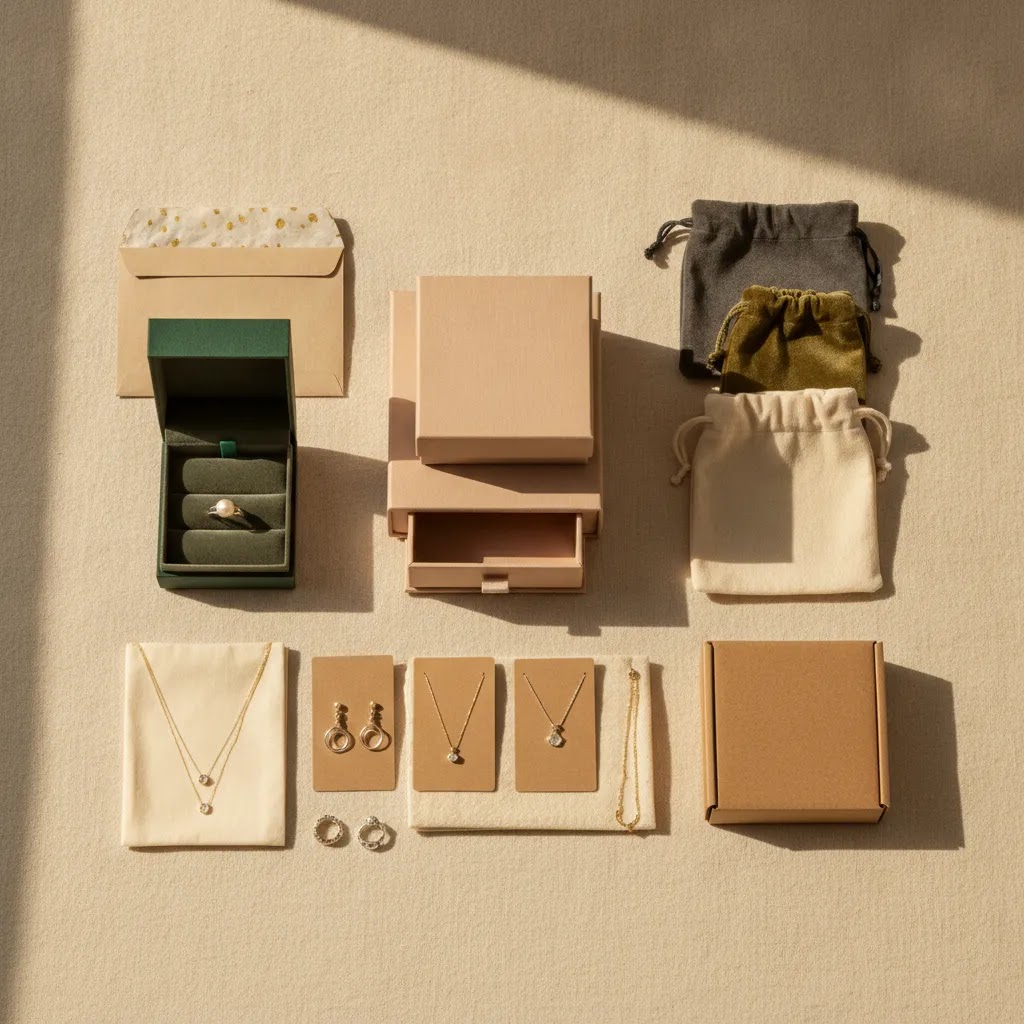
This list evaluates packaging ideas through a B2B lens. The goal is not to crown a single universal winner. The goal is to identify which packaging formats tend to work best under different operating conditions.
The ranking criteria focus on five factors: presentation quality, product protection, pack-out efficiency, scalability across collections, and suitability for custom branding. Those standards matter whether you are shipping direct to customer, supplying boutiques, or building a private label program. Brands comparing jewelry manufacturing partners often discover that packaging decisions affect storage, fulfillment, and reorder discipline just as much as design.
Because handmade collections vary in size, silhouette, and sales channel, each option below includes strengths, caveats, and a recommendation on where it tends to fit best.
What to Consider Before You Pick a Packaging Style
Packaging format decisions go faster and age better when you define the operating context first. Many packaging issues show up later because the style was chosen for a photo, then forced to work in a channel it was not designed for.
Start with where the packaging will be used most. Direct-to-customer shipping tends to prioritize movement control, corner protection, and pack-out speed. Boutique display often prioritizes visibility, labeling clarity, and how the package stacks or hangs. Wholesale shipments may involve bulk packing, master cartons, and staff on the receiving end who need to identify SKUs quickly. Gifting programs usually require a clean presentation standard and consistent sizing, so a buyer can reorder without guessing.
Next, consider “type of jewelry” at a packaging-system level. Small silhouettes can disappear inside oversized boxes and look inconsistent even if the jewelry is strong. Larger pieces, sets, or styles that must stay oriented can demand more structured inserts or cards so the item sits correctly every time. Singles and sets behave differently too: a system that works for individual earrings may not translate well to multi-piece bundles unless you plan for how components are separated, labeled, and stabilized.
Budget and volume planning matters in principle, even before you talk about numbers. A packaging format can be affordable at low volume and become impractical once you reorder frequently, expand SKUs, or ship higher order mixes. Think about how many components you are willing to stock, how many sizes you want to manage, and how quickly you need to reorder without changing the look. In practice, the formats that scale best are often the ones you can repeat across collections with a small set of standardized footprints.
Quick Picks by Business Need
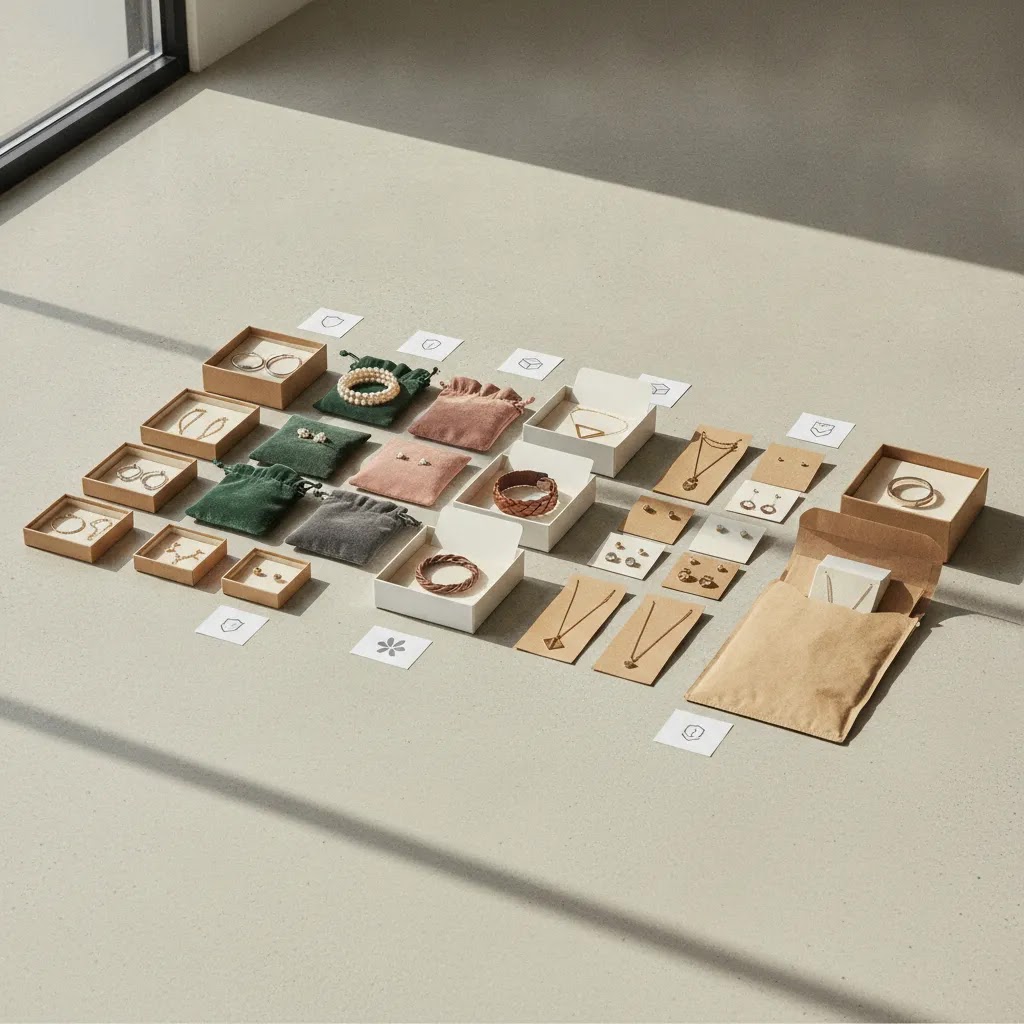
- Best for premium presentation: rigid gift boxes with custom inserts
- Best for lightweight shipping: branded pouches with protective outer mailers
- Best for display and storytelling: jewelry cards inside sleeves or mini cartons
- Best for early-stage assortment flexibility: foldable paper boxes with standardized dimensions
Comparison Table
| Packaging Idea | Best For | Key Strength | Main Consideration |
|---|---|---|---|
| Rigid gift box with insert | Premium handmade collections, wholesale gifting lines | High perceived value and stable presentation | Takes more storage space and may add packing cost |
| Branded pouch plus shipper | Lightweight e-commerce fulfillment | Compact and easier to store in volume | Needs a strong outer packaging system for transit |
| Jewelry card and sleeve system | Story-led handmade brands and boutique displays | Supports brand messaging and item identification | Less protective on its own |
| Drawer-style box | Unboxing-focused premium programs | Memorable reveal and organized presentation | More parts can create assembly complexity |
| Foldable paper box | Growing brands balancing cost and consistency | Space-efficient and easier to standardize | Can feel less elevated if details are not well handled |
Top 5 Packaging Ideas Ranked
1. Rigid Gift Boxes with Custom Inserts
This is the strongest all-around option for many handmade jewelry brands that need packaging to communicate value clearly. A rigid box tends to offer the best balance of structure, presentation, and repeatability. The insert matters as much as the box itself because it helps control movement and keeps the piece centered during handling.
For brands developing a more refined branded system, this format often pairs well with planning around custom jewelry packaging so dimensions, insert layout, and artwork are built intentionally rather than added later.
- Creates a strong first impression for boutiques and private label buyers
- Helps maintain piece position during shipping and in-store presentation
- Works across gifting, wholesale presentation, and direct fulfillment
- Can support a more cohesive brand standard across collections
Considerations: rigid boxes usually require more storage volume, may increase shipping weight, and can become inefficient if every SKU uses a different footprint. Brands with broad assortments often benefit from limiting box sizes.
Best for: premium handmade lines, boutique-ready assortments, and brands trying to establish stronger perceived value.
2. Branded Pouches with Protective Outer Packaging
A pouch can work very well for handmade jewelry sold online or in travel-friendly categories. It is compact, easier to store, and often simpler for teams packing mixed orders. The tradeoff is that a pouch should rarely be judged alone. Its success depends on the mailer, internal protection, and how the jewelry is stabilized before shipment.
This option tends to appeal to brands that want a softer presentation without committing to a fully boxed system for every order. It may also suit product lines with lower breakage risk or smaller physical dimensions.
- Efficient for storage and packing stations
- Can reduce bulk in direct-to-consumer shipments
- Useful for repeat customers, travel use, or layered orders
- Often easier to standardize across different jewelry types
Considerations: on its own, a pouch may not feel premium enough for every brand position, offers less structure for fragile presentations, and may need more careful outer-pack planning to prevent damage.
Best for: online-first handmade brands, lean fulfillment teams, and collections that prioritize compact shipping.
3. Jewelry Cards Inside Sleeves or Mini Cartons
This format works well for brands that sell the story of the maker, the collection, or the product concept. A jewelry card gives space for identity, care notes, collection naming, or item details. Adding a sleeve or small carton can make the presentation feel more deliberate while keeping the packaging relatively lightweight.
It is especially useful for earrings, pendants, or simpler pieces that benefit from visible orientation. If brand teams are developing packaging concepts digitally before sampling, planning with 3d jewelry box design may help test proportions and insert behavior earlier.
- Supports storytelling and brand recognition
- Helpful for assortments that need visible product identification
- Can simplify wholesale merchandising and labeling
- Offers a middle ground between bare cards and full rigid boxes
Considerations: it usually needs secondary protection for shipping, can look less elevated if print and structure are not aligned, and may not suit brands aiming for a more formal premium reveal.
Best for: artisan-led collections, boutiques, and handmade lines that want packaging to carry more narrative value.
4. Drawer-Style Boxes
Drawer-style packaging tends to perform well when the unboxing sequence is part of the brand promise. The slide-out motion can create a controlled reveal and often gives the product a more considered presentation. For some premium handmade programs, that can be a strong differentiator with buyers.
Still, it is not automatically the best choice. A drawer box introduces more structural parts and may require tighter tolerance control in production if the movement needs to feel clean and consistent.
- Creates a memorable opening sequence
- Can organize jewelry, message cards, and inserts neatly
- Often photographs well for marketing and wholesale presentations
- Can support a premium line extension strategy
Considerations: assembly and production may be more complex, dimensions need careful testing, and storage efficiency may be weaker than flatter or foldable options.
Best for: higher-end handmade lines, launch kits, and brands where packaging is part of the value narrative.
5. Foldable Paper Boxes
Foldable boxes rank highly because they solve a real operations problem for growing brands. They can be stored flat, assembled as needed, and standardized across a range of pieces. That makes them attractive for businesses that are still testing assortment mix or managing constrained space.
They are rarely the most luxurious-looking format by default. Their success depends on proportion, closure behavior, graphic restraint, and internal support. Brands refining presentation details often explore the broader packaging concept alongside design workflows such as best 3d modeling software for jewelry design, 3d jewelry design software free, or 3d jewelry design software for mac when preparing branded components and collection visuals.
- Space-efficient for storage and reorders
- Useful for brands with changing product mixes
- Can be easier to standardize across SKUs
- Often a practical bridge between simple and premium systems
Considerations: the assembled feel may vary more than rigid formats, insert planning is still necessary, and the final result can appear generic if the branding details are weak.
Best for: scaling handmade brands, lean warehouse setups, and businesses balancing presentation with fulfillment practicality.
Strengths and Considerations
Strengths
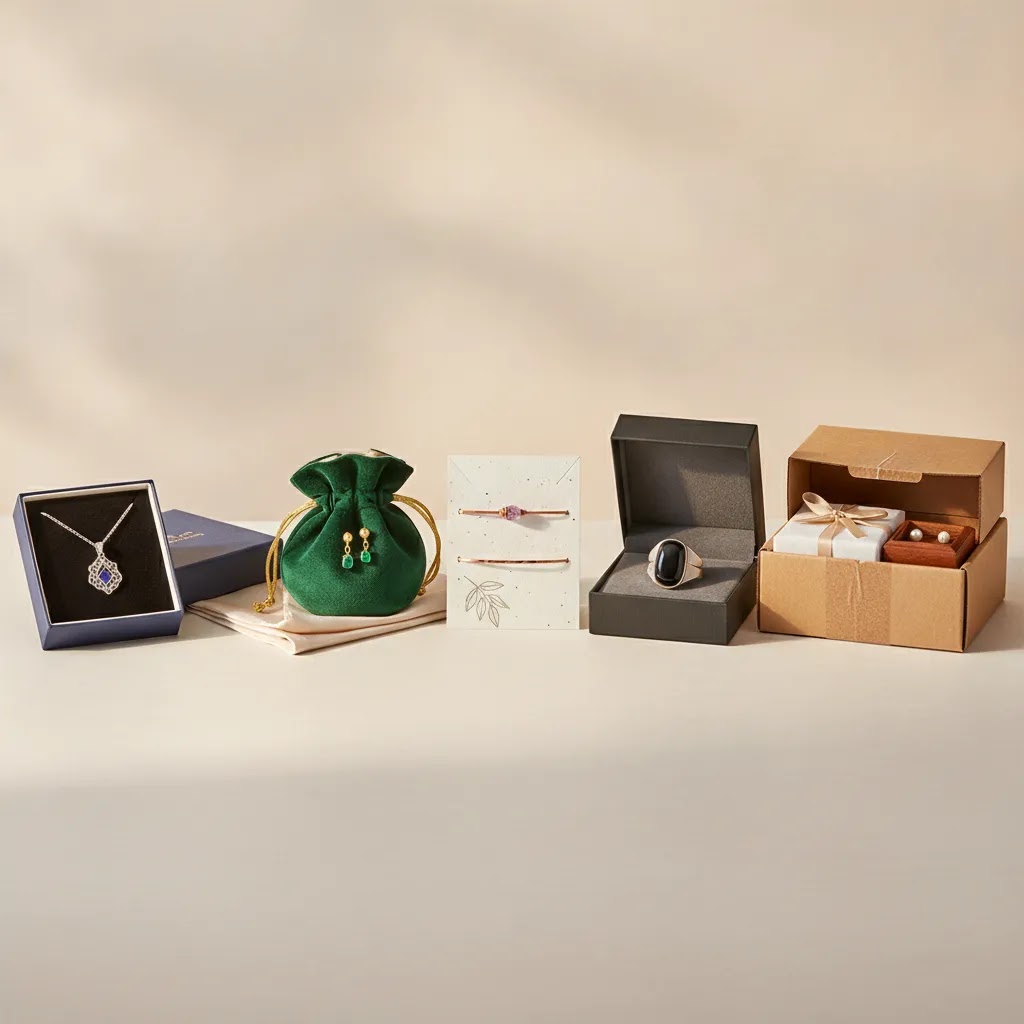
- Ranking packaging by business use case helps avoid choosing based on appearance alone.
- Standardized packaging systems may reduce packing errors and make staff training easier.
- Well-planned inserts can improve presentation consistency across wholesale and direct channels.
- Packaging strategy can support stronger brand recognition without changing the jewelry itself.
- Choosing the right format early may make reorders and collection expansion more manageable.
Considerations
- No single packaging idea works equally well for every jewelry category, sales channel, and order profile.
- Sampling and revision rounds are often necessary before a packaging concept performs reliably.
- More premium structures may improve presentation but create added storage, packing, or freight complexity.
- Handmade brands with inconsistent SKU sizing may need to simplify assortment packaging to stay operationally efficient.
How to Pack Jewelry for Shipping (So It Arrives Like Your Sample)
Many brand teams approve packaging based on how it looks on a desk, then get surprised when the first real shipments arrive. The goal is simple: the customer should open the package and see the same presentation you approved in the sample, not a shifted or tangled version of it.
The most reliable approach is to separate presentation packaging from transit protection. Presentation is what the end buyer sees first, such as a box, pouch, or card system. Transit protection is what prevents the presentation package from being crushed, opened, or scuffed in shipment. When those two layers get mixed, brands often overbuild the presentation, then still experience damage because the outer protection was not planned.
Think of packing as a four-layer flow. First, stabilize the jewelry so it cannot move freely. That usually means an insert, a card, or a securing method that limits sliding and rotation. Second, place the stabilized piece into the presentation format you want your brand to be known for. Third, add protective cushioning around that presentation unit so corners and edges are supported under handling. Fourth, use an outer mailer or shipper that matches your shipping environment and resists compression.
In practice, the failure points tend to be predictable. The jewelry moves inside the insert, so it arrives off-center. Closures open in transit, so the piece shifts or tangles. Pouches ship without structure, so the jewelry presses through the fabric outline and arrives looking unfinished. These are sampling problems, not “shipping carrier” problems, and they are usually fixable once you test correctly.
Before you approve packaging, test for the types of stress it will actually face. Drop events can reveal movement and closure issues. Vibration can show whether the piece slowly migrates out of position over time. Compression can show whether corners collapse or whether the box lid loosens. The goal is not to punish the packaging, it is to confirm that your system performs consistently when it stops being handled gently.
How to Choose the Right Format for Your Brand
The best packaging decision usually starts with channel, not aesthetics. A box that works for boutique shelf presentation may be inefficient for high-mix e-commerce shipping. A pouch that works for direct orders may feel underbuilt for a wholesale gift program. Start by separating your needs by sales environment.
Next, review product behavior. Pieces that tangle easily, shift in transit, or require a fixed orientation often need inserts or cards that control movement. Handmade lines with varied silhouettes can create packaging sprawl if each item gets its own unique structure. In many cases, simplifying to a few standard sizes is more scalable.
Brand positioning should be your third filter. Handmade does not automatically mean rustic, and premium does not automatically mean oversized or elaborate. The strongest packaging systems usually match the collection story while still being easy to assemble and repeat. If your team needs a packaging concept that aligns with product development, work connected to jewelry design planning can help reduce disconnects between the piece and its presentation.
Fourth, assess operational friction. Ask how long each unit takes to assemble, how many separate components must be stocked, and how easy it is for staff to pack correctly without interpretation. Small inefficiencies become expensive once order volume rises.
Fifth, look at supplier coordination. Packaging is often approved too late, after jewelry development is already moving. A better approach is to evaluate the packaging system alongside your broader production workflow. If you are building a collection through a collaborative manufacturer, ask how packaging planning fits into design consultation, sampling, and final fulfillment. That is often where reliable execution separates a polished launch from a stressful one.
Branding Elements to Add Without Overbuilding the Package
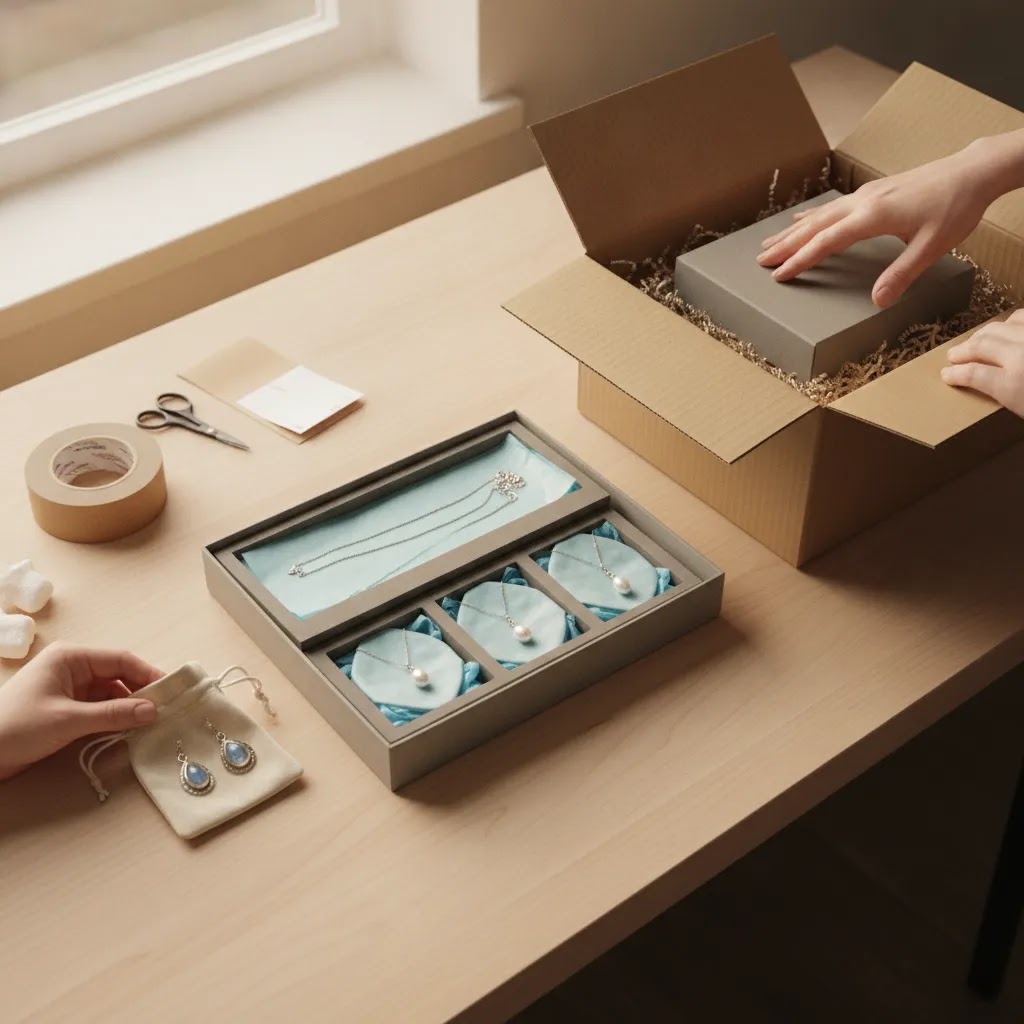
Packaging can reinforce your brand even if you keep the structure simple. Consistency across SKUs often matters more than adding extra components. A recognizable system can be built through repeatable brand elements that show up every time, whether the order is shipped direct, sold in a boutique, or included in a wholesale program.
Start with a consistent visual language. That may include a controlled color system, clear typography choices, and one or two signature elements you repeat across formats. This is how brands avoid a situation where boxes look premium, pouches look casual, and cards look like a different company. You do not need a different design for every SKU. You need a packaging family that reads as one line.
Inserts and printed elements often carry more value than adding another layer of structural packaging. Many brands include a small care or handling note, a short styling suggestion tied to the collection concept, or a simple item ID system that helps staff and customers identify the piece quickly. Wholesale buyers often appreciate packaging that makes the product easy to receive, merchandise, and reorder without confusion.
Consider operational efficiency while you add those elements. If you sell in both boutique and direct channels, aim for a base packaging unit that stays consistent, then adjust only what needs to change by channel. For example, you may keep the core box or pouch the same, then vary the insert card content or the included information sheet based on where the product is going. That approach can protect your brand experience without creating a packaging system that is hard to stock, train, and reorder.
Where Royi Sal Jewelry Fits
For brands developing handmade-inspired collections, private label lines, or custom jewelry programs, Royi Sal Jewelry approaches production as a collaborative B2B partnership rather than a simple order-taking service. The company focuses on custom jewelry design and manufacturing, with consultation, development support, and global shipping for business clients. Royi Gal’s background as both a designer and manufacturer is relevant here because packaging choices are often strongest when they are considered alongside the collection itself, not treated as a last-minute add-on.
If you are comparing packaging options while also evaluating product development support, Royi Sal Jewelry may be a useful resource to explore. You can review the company’s broader work in jewelry manufacturing and use that as a starting point for a discussion about how custom design, presentation, and fulfillment could connect within your project scope.
Methodology
This ranking prioritizes business performance over novelty. Each packaging idea was evaluated against five practical criteria: how well it presents handmade jewelry, how effectively it protects the product, how easy it may be to pack consistently, how scalable it could be across a collection, and how suitable it is for custom branding. The weighting also reflects common B2B concerns such as repeatability, wholesale readiness, and operational efficiency.
The list is deliberately format-based rather than trend-based. Handmade jewelry brands often need packaging that can survive sampling, reorders, staffing changes, and channel expansion. A packaging concept that looks attractive in a launch mockup may still create problems if it is hard to store, inconsistent to assemble, or weak in transit. That is why the rankings favor ideas that can hold up under real business use.
Frequently Asked Questions
What is usually the best packaging format for a handmade jewelry brand?
It depends on your channel, assortment, and brand position. Many businesses find that rigid boxes or pouch-plus-shipper systems cover the widest range of needs. Rigid boxes often suit premium presentation, while pouches may work better for lighter fulfillment models. The right answer usually comes from testing protection, packing speed, and brand fit together.
Should handmade jewelry brands use one packaging style for every product?
Not always, but too many packaging styles can create avoidable complexity. In many cases, using a small set of standardized formats is more practical than developing a unique package for each SKU. That approach may simplify storage, ordering, training, and replenishment while still allowing your brand to present the collection consistently.
Is custom jewelry packaging necessary for a small brand?
Not in every case. Early-stage brands may begin with a simpler system and add deeper customization later. Still, even modest branding choices can improve consistency and buyer perception. The key is choosing a packaging structure that can grow with your business instead of forcing a redesign once order volume increases.
How should boutique owners evaluate packaging from a supplier?
Ask for clarity on packaging dimensions, assembly steps, protection method, and whether the system is consistent across reorders. Boutique owners should also review how the package supports shelf display, storage, and staff handling. Packaging that looks refined but behaves inconsistently in-store may create friction quickly.
Can packaging affect perceived value in wholesale?
Yes, often more than brands expect. Wholesale buyers usually assess not only the jewelry but also how ready the line feels for display, gifting, and repeat sales. Packaging can influence whether a collection appears organized, giftable, and operationally mature. That does not mean the most elaborate format wins, only that presentation should feel intentional.
What should be tested before approving jewelry packaging?
Test movement control, closure behavior, fit consistency, ease of assembly, and how the package performs inside a shipper. It is also useful to review how the jewelry looks after transit handling rather than only at the packing table. Many packaging issues appear after compression, vibration, or repeated handling rather than in static samples.
How early should packaging be planned in a custom jewelry project?
Earlier than many brands assume. Packaging decisions often affect dimensions, insert needs, and fulfillment planning. If packaging is addressed only after the jewelry design is finalized, revisions may become slower and more expensive. Folding it into the development conversation earlier usually creates better alignment.
Are drawer boxes worth the extra complexity?
They can be, particularly for premium launches or collections where presentation carries strong brand value. Still, they are not automatically the smartest operational choice. If your team needs fast pack-out, compact storage, and simple reorders, a drawer box may be less efficient than a more standardized rigid or foldable format.
How does packaging relate to manufacturing partner selection?
Packaging rarely sits in isolation. Brands evaluating a manufacturing partner should ask how packaging fits into design consultation, sampling, and fulfillment support. A partner that understands the full product journey may be better positioned to help prevent disconnects between the jewelry, its presentation, and the final delivery experience.
What are unique jewelry packaging ideas?
Unique does not have to mean complicated. Many brands create a distinctive look by standardizing one core format, then using consistent details such as a signature color system, a repeatable insert card layout, or a recognizable opening sequence. The most effective “unique” ideas are the ones your team can execute the same way across reorders and across channels.
How to package jewelry for a small business?
Choose a packaging system you can manage operationally, then build brand consistency through repeatable elements. Many small businesses do well with a limited set of standardized sizes, a simple stabilization method so pieces do not move, and a basic branded insert or card for identification and care guidance. The goal is to look consistent without creating a storage and assembly burden.
What is the best way to pack jewelry?
The best approach is usually layered: stabilize the jewelry first so it cannot shift, place it into your presentation packaging, protect that unit with cushioning, then use an outer mailer or shipper appropriate for transit handling. If your jewelry arrives looking different than it did at packing, the issue is often movement inside the package, not the visual design of the outer box.
What type of handmade jewelry sells best?
Sales performance varies by brand position, audience, channel, and pricing strategy, so there is no single category that always wins. The products that tend to perform more consistently are the ones you can present clearly, size and label accurately, and ship without frequent damage or returns. Many growing brands focus on a tight set of repeatable silhouettes first, then expand once packaging, merchandising, and reordering are proven.
Key Takeaways
- Rigid gift boxes rank highest for all-around premium presentation and product stability.
- Pouches work best as part of a system, not as a standalone packaging answer.
- Jewelry cards and sleeves are strong for storytelling and boutique visibility but usually need extra protection.
- Foldable boxes are highly practical for scaling brands that need storage efficiency and standardization.
- The best packaging ideas for handmade jewelry should be chosen by channel, protection needs, and operational fit, not visual appeal alone.
Conclusion
Packaging decisions shape more than presentation. They affect packing speed, storage logic, wholesale readiness, and how consistently your handmade jewelry line is experienced across channels. That is why the best packaging ideas for handmade jewelry are usually the ones that hold up under repeat use, not just the ones that look appealing in a sample review. If your brand is planning a new collection or refining its product presentation, Royi Sal Jewelry offers a collaborative B2B approach to custom jewelry design and manufacturing that can help connect product development with practical brand execution. Visit royisal.com to learn more about the process or contact the team to discuss your project requirements.