
How To Pick The Right Jewelry Manufacturer

What the Right Manufacturer Really Means
The right jewelry manufacturer is not simply the one with the lowest quote or the fastest first reply. For a B2B buyer, the better question is whether that manufacturer can support your brand’s actual requirements. That may include custom development, sampling, repeatable production quality, communication across revisions, and the ability to scale after your first successful run.
Many early-stage founders search by product type first, such as a wholesale jewelry manufacturer, a fashion jewelry manufacturer, or a fine jewelry manufacturer. That can be useful, but category fit alone is not enough. A manufacturer may be able to produce jewelry in general while still being weak in design collaboration, revision handling, order planning, or production consistency.
You should also judge fit based on your operating model. If you need custom development support, your evaluation may overlap with how a partner handles design files, prototypes, and approval rounds. If your line depends on concept development, a manufacturer with experience around the design stage may be more useful than one that only accepts production-ready specifications. That is one reason many brands also review a partner’s knowledge of 3d jewelry design program workflows before committing.
Royi Sal Jewelry operates as a B2B custom jewelry design and manufacturing company, working with brands, boutiques, and business clients on a collaborative basis. Led by Royi Gal, who brings experience as both a jewelry designer and manufacturer, the company presents itself as a global partner for brands that need support across custom design, manufacturing, and fulfillment planning. If you are comparing options, that end-to-end model is worth understanding alongside other manufacturing structures.
Understanding Manufacturing Methods at a High Level (So You Can Ask Better Questions)
A detail that many brand owners underestimate is that two manufacturers can quote the same design and still be planning to build it in very different ways. You do not need to become a production expert, but a basic understanding of how jewelry is typically developed and manufactured helps you ask smarter questions during evaluation. It also helps you interpret a manufacturer’s feedback on feasibility, consistency, and timelines.
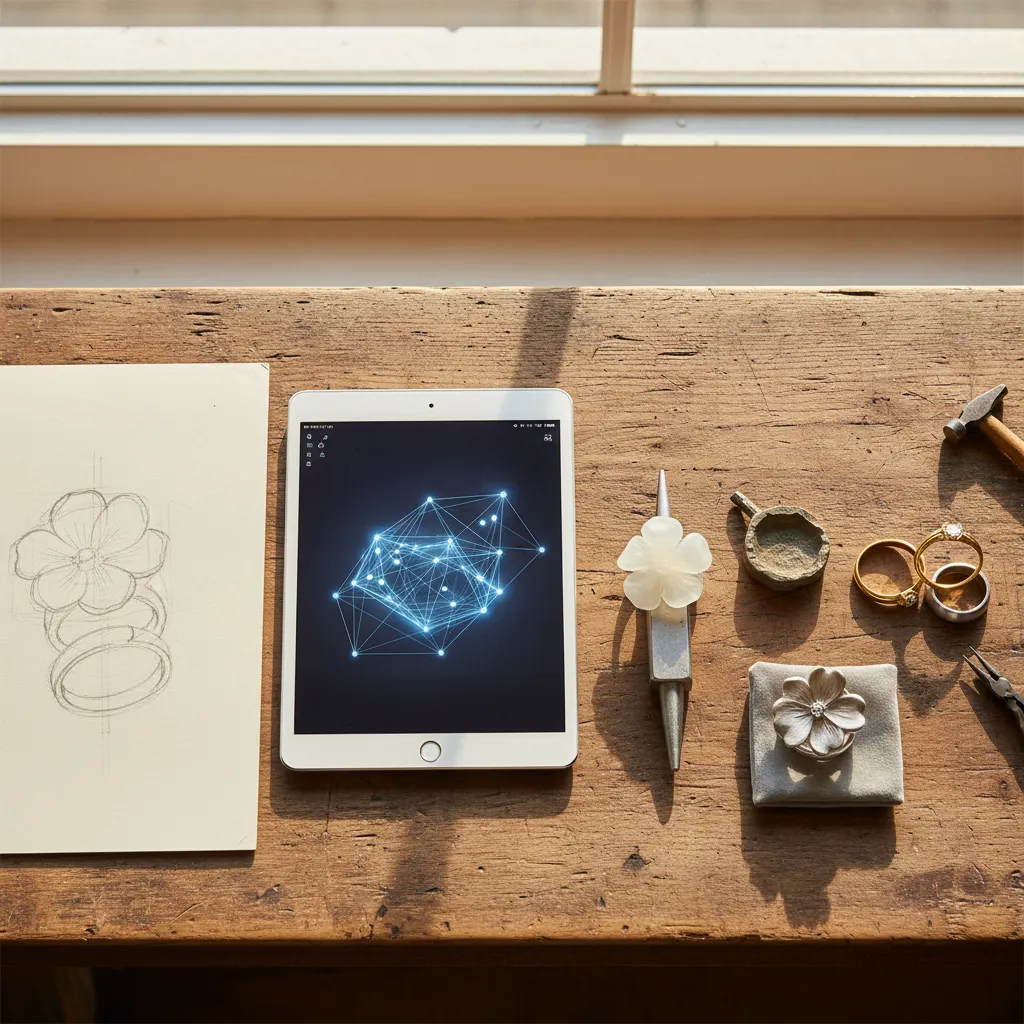
From a production standpoint, most modern workflows start with a design handoff. That could be a sketch, reference images, measurements, or a CAD file. If CAD is involved, the next steps often connect to prototyping and then a repeatable production method. In many cases, casting-oriented workflows are used for designs that need repeatability at scale, while fabrication-oriented work can be more hands-on and technique-dependent. Finishing, which can include surface work and assembly steps, is where the final look is often won or lost, even if the base form is correct.
When manufacturers talk about capability, they may be describing different parts of that chain. A partner might be strong at executing a production-ready CAD but less effective at translating a loose concept into accurate files. Another might be excellent at finishing consistency but slower during development. Asking where their strengths sit in the workflow gives you a clearer view of fit than generic statements like “we do custom” or “we handle everything.”
The main risk points tend to show up at handoffs. The design-to-CAD handoff is a common place for misinterpretation if the brief is not specific. Prototyping can introduce delays if tolerances, sizing, or functional elements are not resolved early. Finishing can create batch-to-batch variation if standards are not defined and checked consistently. If you know these are typical bottlenecks, you can probe for how the manufacturer prevents them.
In practice, aligning your brief to the manufacturer’s workflow usually means providing the clearest input you can: target dimensions, functional requirements, critical visual details, and what you will accept as normal variation versus what counts as a defect. If you already have CAD or plan to review CAD before sampling, ask how file versions are managed and what happens when changes occur midstream. A manufacturer that can explain their workflow in plain terms is often easier to work with over multiple revisions and repeat orders.
How to Evaluate a Jewelry Manufacturer
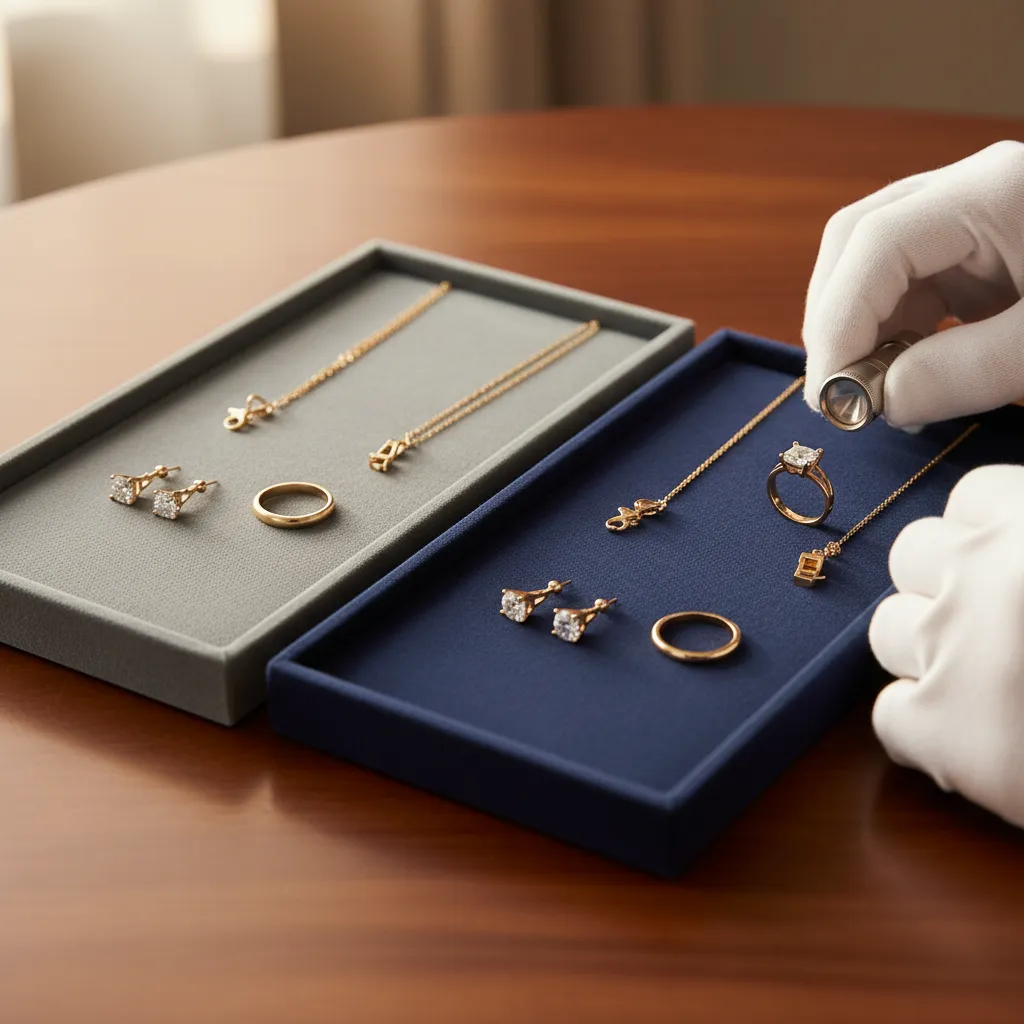
A useful evaluation process usually starts with five criteria: manufacturing quality, design capability, communication reliability, order flexibility, and operational fit. These factors tend to matter more over time than a promising sales conversation.
1. Manufacturing quality and consistency
Quality is the first filter because even a well-priced production partner can become expensive if the output is inconsistent. Ask how the manufacturer handles samples, revisions, and production approvals. You want to see whether they have a repeatable process, not just attractive photos or broad claims.
If your collection includes category-specific requirements, evaluate that directly. A brand considering a custom brass jewelry manufacturer, for example, should ask category-specific questions rather than assuming every supplier handles that segment in the same way.
2. Design and development support
Some manufacturers are strong production shops but weak development partners. Others can collaborate earlier, helping you refine the concept, prepare technical details, and move into sample creation with fewer misunderstandings. That difference matters if your business is not staffed with an internal product development team.
A custom jewelry manufacturer should be able to explain how a design moves from concept to approved production. If that explanation is vague, your risk usually increases.
3. Communication and trust
Communication problems are one of the most common causes of missed expectations in overseas and cross-border manufacturing. Pay attention to response quality, not just speed. Are your questions answered clearly? Are limitations stated honestly? Does the team ask follow-up questions that show they understand your brief?
A reliable manufacturer usually does not promise perfect speed or unlimited flexibility. They explain tradeoffs, identify missing information, and set realistic expectations.
4. Minimum order quantity and order flexibility
MOQ fit matters because the wrong production scale can strain cash flow. Many brands make the mistake of choosing a supplier whose order requirements are built for a different stage of business. You need a manufacturer whose structure fits your forecast, not just your ambition.
If you are building a new line, ask how sampling, first runs, and repeat orders are typically handled. Even without fixed public minimums, the manufacturer should be able to discuss how project scope affects feasibility.
5. Lead times, fulfillment, and scaling potential
A supplier may be acceptable for a small launch but unsuitable for repeat orders or broader distribution. Ask how timelines typically vary between development, sampling, and production. You should also understand whether the partner can support fulfillment and international business needs if your brand grows.
Royi Sal Jewelry presents its service model around custom jewelry design and manufacturing, collaborative consultation, and global shipping and order fulfillment. For brands that want one partner across several stages, that could be a meaningful advantage.
A practical scorecard for comparison
If you are reviewing several options, score each one against the same weighted criteria:
- Manufacturing quality and craftsmanship at 25%
- Design capability and custom service range at 20%
- Trust, reliability, and communication at 20%
- Order flexibility and minimums at 15%
- Lead times and fulfillment at 10%
- Global reach and logistics support at 10%
This kind of scorecard helps reduce emotional decision-making. It also makes it easier to explain your choice internally if multiple stakeholders are involved.
OEM vs ODM vs Full Custom, What Each Model Means for Your Brand
When choosing the right jewelry manufacturer, one of the fastest ways to reduce confusion is to clarify what manufacturing model you are actually buying. Many suppliers use the word “custom,” but they may mean very different things operationally. Understanding OEM, ODM, and full custom development helps you match a partner to your brand strategy, whether you are building private label SKUs quickly or developing brand-owned designs from the ground up.
OEM is typically a build-to-spec model. You provide the design intent and the technical direction, which may include CAD files, drawings, measurements, and defined quality targets. The manufacturer’s job is to execute production according to those specifications. This model can work well if your team already has product development capability or you are working with an external designer, and you want more control over the final design and repeatability.
ODM is typically a design-supply model. The manufacturer has existing designs or a base library, and your “customization” may mean modifications such as size changes, small aesthetic adjustments, or branding elements. ODM can be a fit if you want speed-to-market and you are comfortable with the reality that the underlying design may not be exclusive. The key is to confirm what is truly changeable and what stays fixed.
Full custom development is where collaboration sits at the center. Instead of starting from a factory design or a fully production-ready file set, you build the product through a structured development process. That often includes concept refinement, CAD development, sampling, and revision rounds until the piece meets an agreed brief. For many brand founders, this model feels closer to how a collection is actually built, but it also requires clear decision-making and documented approvals to keep development moving.
Experienced buyers understand that the differences show up in practical implications. Design control and IP expectations can vary by model, and “ownership” is not something you should assume. Speed-to-sample may be faster in an ODM-style project because the base already exists. Revision flexibility can be higher in full custom development, but each change still needs to be managed and approved. Repeatability tends to be strongest when the specifications are clearly defined and locked before production, regardless of the model you choose.
If you want to confirm what model a manufacturer is offering in practice, ask direct questions that force clarity, not marketing language. Who provides the CAD or technical files, and in what format? If the manufacturer provides CAD, how many revision rounds are typical before a sample is considered ready for approval? What does “customization” include, and what does it exclude? If you request changes after a sample, how are those changes documented so the final production matches the last approved version? These answers tell you far more than a general claim that a supplier can do “custom jewelry.”
Warning Signs to Watch For
Not every red flag is dramatic. Many are visible early if you know what to look for.
- Vague answers about the sampling or approval process
- Unclear ownership of revisions and production changes
- Overpromising on speed without reviewing your brief in detail
- Limited interest in your brand positioning, target market, or intended order volume
- Inconsistent communication between early conversations and later follow-up
- No clear explanation of how custom design and manufacturing connect
Category claims should also be examined carefully. Terms like silver jewelry manufacturer, gold jewelry manufacturer, or jewelry manufacturer china can sound useful in search, but they do not tell you much by themselves. What matters is process fit, communication quality, and production reliability for your specific project.
If you are still shaping your product direction, it may help to review upstream business decisions before final supplier selection. Founders building a differentiated line often benefit from clarifying their product positioning through educational resources on custom fine jewelry and broader collection strategy before moving into production commitments.
What to Request Before You Commit, Samples, QC Expectations, and Pre-Production Sign-Off
Most costly production problems are not caused by a single mistake. They happen when expectations are not documented, approvals are not tracked, and “yes” is treated as a substitute for a clear sign-off process. Before you place a production order, treat the project like a pre-flight check. You want a shared record of what is being made, what “approved” means, and how changes will be handled.
Start with a documented brief that both sides agree reflects the current version of the design. That brief might include dimensions, reference images, functional requirements, and any must-match visual details that define your brand. If CAD is part of the process, confirm which file version is the active one and who has authority to approve changes. In practice, version control matters because multiple stakeholders may be reviewing the same design across time zones, and an older file can end up in production if the handoff is not managed tightly.
Sampling should end with a clear approval moment, not a vague “looks good.” Define what you are approving and what you are not. Many brands use a simple acceptance approach: list the specific attributes that must match the brief, define what counts as acceptable variation, and identify what would trigger a remake or another revision round. Even if the manufacturer is experienced, written sample approval criteria reduces misunderstandings when the team moves from one sample to a batch.
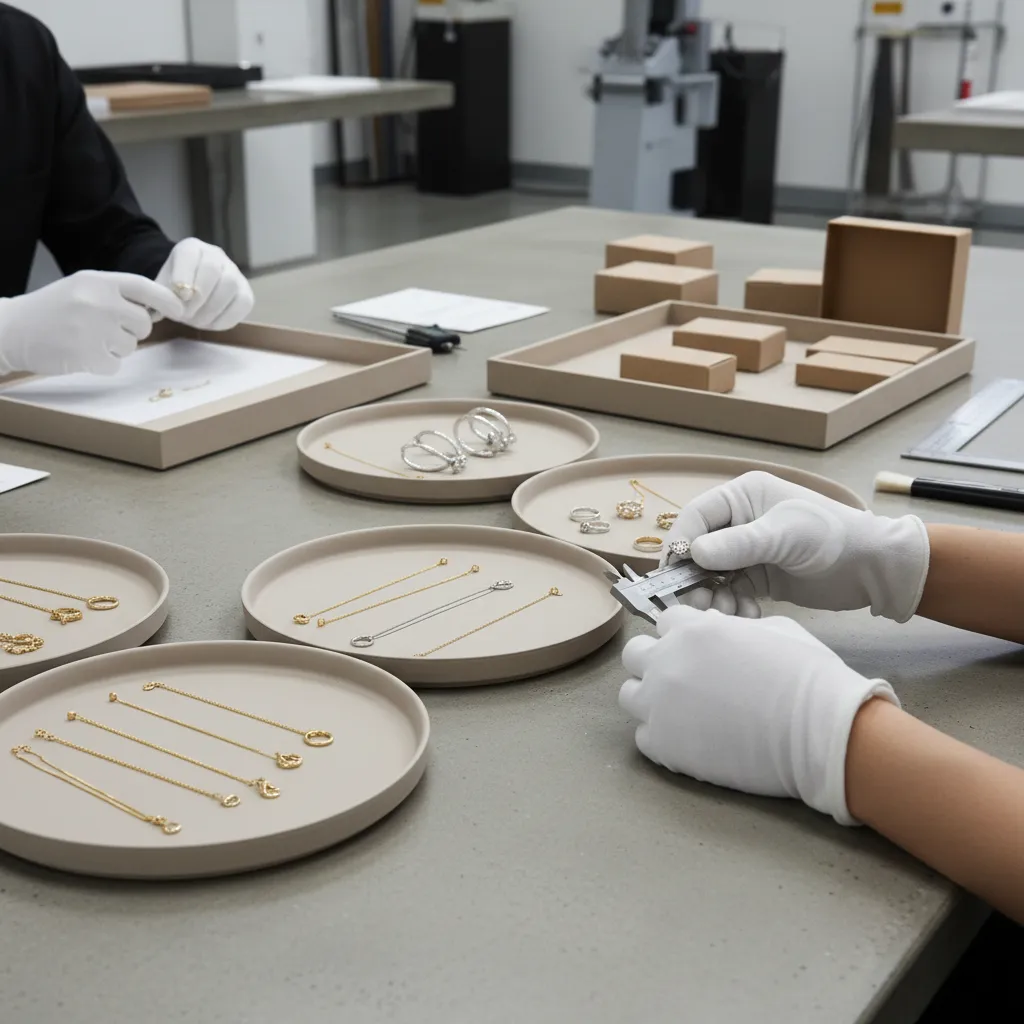
Quality control expectations should be discussed across stages, not only after a defect appears. Ask what gets checked during sampling, what gets checked during production, and what the escalation path looks like if something is off. Some manufacturers check measurements and assembly details early, while others rely more heavily on end-of-line inspection. Your goal is not to dictate their internal system, it is to confirm that QC exists as a repeatable process and that your acceptance standards can be applied consistently.
Changes are normal in custom manufacturing, but unmanaged changes create risk. Before committing, agree on how revisions and change requests will be documented. Who confirms the change in writing? Does the change require a new sample, a new approval, or a revised brief? What happens if a change affects production feasibility? A manufacturer that can walk you through this process calmly is usually easier to scale with because repeat orders depend on the same discipline.
Finally, protect alignment through written approvals. Emails and messages can work, but they should clearly reference the exact version being approved, including dated images or file names. This is especially important if multiple people on your side are involved, such as a designer, a buyer, and an operations lead. A clean approval trail can prevent confusion later and may reduce the time spent resolving disputes about what was actually requested.
Who This Selection Process Is For
This framework is especially useful for boutique owners, brand managers, and entrepreneurs who are moving beyond generic sourcing and want a dependable long-term manufacturing partner. It fits businesses launching a first custom collection, expanding a private label line, or replacing a supplier that has become difficult to manage.
It is also relevant if your current challenge is not only production, but coordination between concept, design development, sampling, and repeat orders. In many cases, the best manufacturing decision is less about finding the biggest factory and more about finding a partner whose workflow matches your team’s capabilities and your market timeline.
A Collaborative Option for Growing Jewelry Brands
For brands that want a more consultative manufacturing relationship, Royi Sal Jewelry is one option worth considering. The company focuses on B2B custom jewelry design and manufacturing, with services centered on custom jewelry development, collaborative design consultation, wholesale and private label production support, and global fulfillment. That positioning may suit businesses that need a partner involved in both the creative and production sides of the process.
Royi Gal’s background as both a designer and manufacturer supports that model. For a brand founder, that can be useful because design intent and manufacturing practicality often need to be balanced early, not after a sample misses the brief. You can also explore Royi Sal Jewelry’s broader jewelry design and jewelry manufacturing resources to understand how the company approaches development and production from a B2B perspective.
If you are comparing manufacturers, Royi Sal Jewelry may be a good fit if you value collaboration, realistic communication, and end-to-end support rather than a purely transactional sourcing arrangement.
Strengths and Considerations
Strengths
- A structured evaluation process helps you compare manufacturers on business-critical factors, not just price or sales presentation.
- Focusing on communication quality may reduce avoidable mistakes during sampling, revisions, and production approval.
- Assessing design capability early is especially useful for brands that need development support, not only manufacturing capacity.
- Reviewing minimum order fit and scaling potential may protect cash flow and reduce strain on new product launches.
- A manufacturer with collaborative consultation and global fulfillment support may offer better continuity as your brand grows.
Considerations
- The right manufacturer for one business may be the wrong fit for another, depending on product complexity, order size, and internal design resources.
- Custom manufacturing usually involves sampling, revision rounds, and approvals, which can lengthen timelines compared with off-the-shelf sourcing.
- Early-stage brands may need to refine their product brief before any manufacturer can provide useful guidance or realistic production expectations.
- Comparing suppliers takes time, especially if you want to assess communication quality and process clarity rather than selecting on cost alone.
Frequently Asked Questions
What is the most important factor when choosing a jewelry manufacturer?
The most important factor is usually production fit, which includes quality consistency, process clarity, and communication reliability. A lower-cost option may become expensive if samples require repeated correction or production output does not match the approved brief. Most B2B buyers are better served by choosing a partner that communicates clearly and can support repeatable quality over time.
How can I tell if a custom jewelry manufacturer is reliable?
Reliability often shows up in the way a manufacturer handles questions before any order is placed. Clear answers, realistic expectations, and a willingness to discuss revisions, approvals, and production limits are all positive signs. If a supplier gives broad promises without asking detailed questions about your collection, brief, or quantity expectations, you may want to investigate further.
Should I choose a manufacturer based on low MOQ alone?
No. MOQ matters, but it should be considered alongside quality, communication, and long-term production fit. A low minimum order quantity may help you test a concept, but that advantage can be offset if the supplier struggles with custom development or repeat consistency. The better approach is to find a manufacturer whose minimums align with your current stage and growth plan.
What questions should I ask before starting a custom jewelry project?
Ask how the manufacturer approaches design consultation, sampling, revisions, approvals, production planning, and fulfillment. You should also ask how project complexity may affect timelines and what information they need in a design brief. The goal is to understand the workflow, not only whether they say yes to the project.
Is an overseas jewelry manufacturer always riskier?
Not always, but cross-border manufacturing can introduce communication and coordination challenges. Time zones, language differences, and revision handling may affect the process if expectations are not documented clearly. A global partner with a collaborative service model may reduce some of that friction, but project success still depends on briefing quality and ongoing communication.
How do I compare a fashion jewelry manufacturer and a fine jewelry manufacturer?
The comparison should be based on your brand’s product strategy, target market, and design requirements. These categories may involve different production expectations, quality standards, and development processes. The key is to confirm that the manufacturer understands your intended market position and can explain how their workflow supports that product direction.
What role does design support play in manufacturer selection?
Design support is often critical for brands that are still refining product details. A manufacturer that can collaborate during the development stage may help prevent avoidable production issues later. This is particularly relevant if you do not have an internal technical design team and need guidance turning concepts into production-ready jewelry.
How long does it typically take to start with a new jewelry manufacturer?
The timeline can vary significantly depending on project scope, the clarity of your brief, and the number of sample revisions required. In many cases, custom development takes longer than new buyers expect because design review and approval stages need careful attention. A responsible manufacturer should give you a project-based estimate rather than a blanket promise.
Can one manufacturer handle both design and production?
Yes, some B2B partners offer both design collaboration and manufacturing support. That model can be helpful if you want fewer handoff points between concept and production. Royi Sal Jewelry, for example, positions its services around custom design, manufacturing, collaborative consultation, and global fulfillment for business clients seeking an integrated approach.
How to choose the right manufacturer?
Start by defining your real requirements: the level of custom development you need, expected order volumes, target quality level, and how much design support your team requires. Then evaluate manufacturers on process clarity, sampling and approval structure, communication reliability, and repeatable production consistency. A good partner will ask detailed questions, explain tradeoffs, and confirm how your project will move from brief to sample to production.
What are the top 5 jewelry brands?
There is no universal top-five list that applies to every market, category, or customer segment. From a B2B perspective, what matters more is understanding what makes leading brands consistent: clear product positioning, repeatable quality standards, and disciplined development and production processes. If you are building your own brand, focus on creating a product and manufacturing system you can repeat, not copying another brand’s lineup.
Is it better to go to a local jeweler or a chain?
For a business buyer, the better comparison is usually between a partner that offers hands-on development support and one built for standardized volume. A local partner may offer closer collaboration during development and faster iteration cycles in some cases, while larger operations may be structured around fixed processes and higher volume requirements. The right choice depends on whether your priority is custom development, repeatability at scale, or a balance of both.
What’s a slang word for jewelry?
In casual conversation you might hear terms like “bling,” but slang is not very useful in a manufacturing discussion. When you are sourcing and developing products, precise terms matter more than informal labels. Clear naming for components, measurements, and finishes helps prevent mistakes during sampling and production.
Key Takeaways
- Choose a jewelry manufacturer based on process fit, quality consistency, and communication, not price alone.
- Review design support carefully if your collection still needs development work before production.
- Ask direct questions about sampling, revisions, approvals, minimums, and fulfillment expectations.
- Use a weighted scorecard to compare manufacturers more objectively across quality, flexibility, and reliability.
- A collaborative B2B partner may be especially valuable for brands building private label or custom collections.
Conclusion
If you are trying to figure out how to pick the right jewelry manufacturer, the best approach is to treat the decision as an operational partnership, not a quick sourcing task. The manufacturer you choose may affect product quality, launch timing, revision efficiency, and your ability to scale. That is why it pays to evaluate each option against clear business criteria, including craftsmanship, design capability, communication, and order flexibility. Royi Sal Jewelry offers a collaborative B2B model built around custom jewelry design, manufacturing, and global fulfillment support. If you want to explore how your concept could move from brief to production, visit royisal.com to learn more about the process or contact the team to discuss your project requirements.