
Jewelry Packaging for Online Retailers

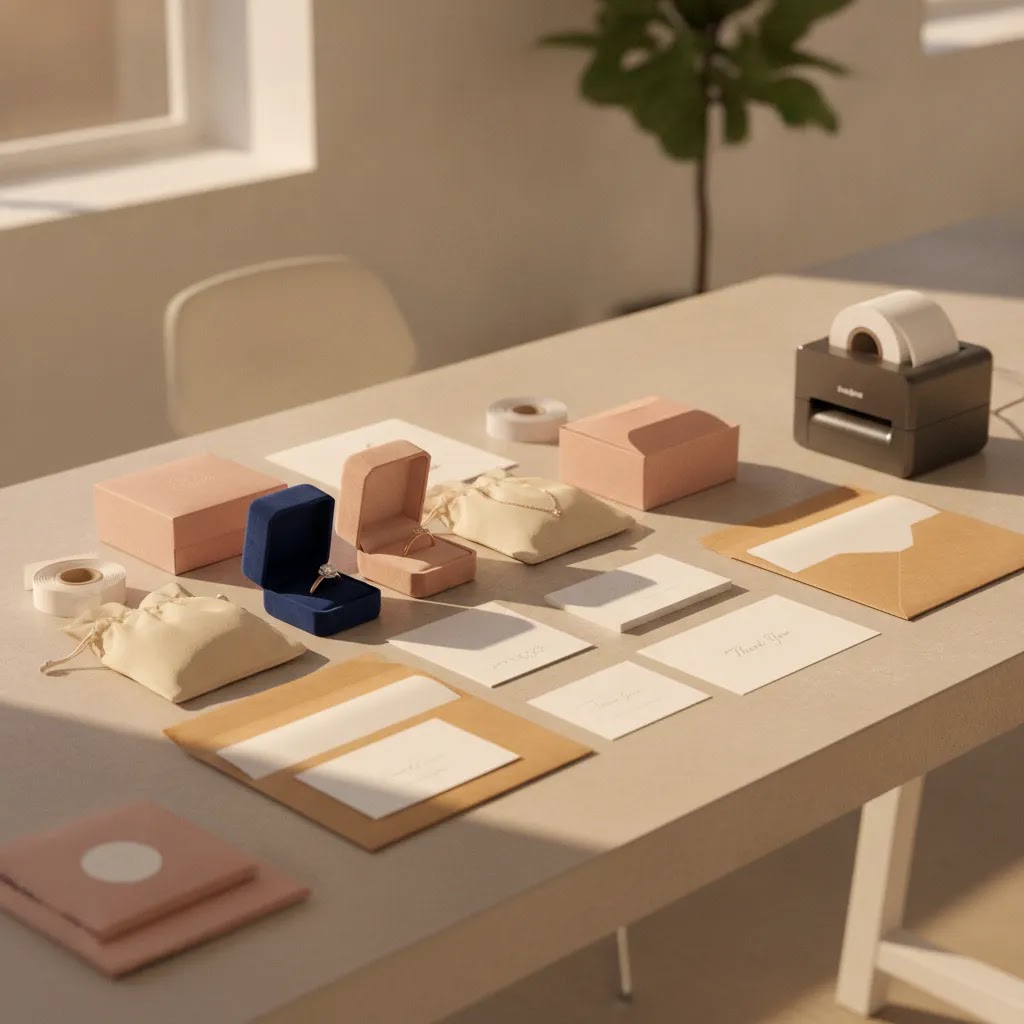
What Online Jewelry Retailers Actually Need From Packaging
Online jewelry retailers usually need packaging to do three jobs at once. It has to present the product professionally, move through fulfillment without creating labor waste, and reduce the chance that pieces arrive tangled, marked, loose, or poorly positioned. Those needs sound simple, but they often conflict.
A highly detailed package may look strong in a photo or sample review, yet create pack-out errors at volume. A lower-complexity package may ship efficiently, yet fail to support the positioning of a premium collection. The right choice often depends on your product mix, fulfillment model, order volume, and whether you sell direct to consumer, through boutiques, or through both channels.
For brands building collections through Jewelry Manufacturing partners, packaging decisions are easier to manage when they are discussed early rather than added after sampling. If your collection is still being developed, related design planning such as 3d jewelry design online workflows and presentation planning can help you identify dimensions, display position, and insert needs before production becomes harder to revise.
The most useful evaluation is not “Which packaging looks best?” It is “Which packaging system supports our brand promise without creating unnecessary complexity in storage, assembly, and delivery?”
Five Packaging Areas to Evaluate Before You Approve Anything
1. Product stability inside the pack
Jewelry can shift during transit, especially in e-commerce channels where individual orders move through parcel systems rather than bulk retail replenishment. A package should hold the piece in a controlled position that limits rubbing, flipping, or pressure points. This matters for presentation, but also for return rates and customer service workload.
2. Packing speed and repeatability
If your team or third-party fulfillment partner has to interpret each pack-out, scale becomes harder. Inserts, closures, tissue layers, sleeves, cards, and labels should work in a clear sequence. If the packing method needs too much judgment, consistency may drop as order volume rises.
3. Storage footprint and SKU logic
Online brands often underestimate how much space packaging consumes before it ever reaches a customer. Box dimensions, flat-pack potential, and the number of separate packaging components all affect warehouse use and replenishment planning. A packaging system with too many variations may create inventory friction across collections.
4. Brand alignment across channels
Packaging may need to function across direct-to-consumer orders, wholesale shipments, gifting programs, or launch kits for retail partners. That does not mean every order needs the same presentation, but the system should still feel connected. This is where planning around custom jewelry packaging can help brands standardize the core identity while adapting certain parts to the sales channel.
5. Revision tolerance before scale
Most packaging problems are easier to fix before a large run is approved. Brands should expect a review stage where dimensions, insert fit, closure behavior, and assembly method are checked against actual jewelry pieces. If a supplier cannot support that kind of dialogue, risk tends to rise.
Packaging for Shipping: What to Test Before You Commit
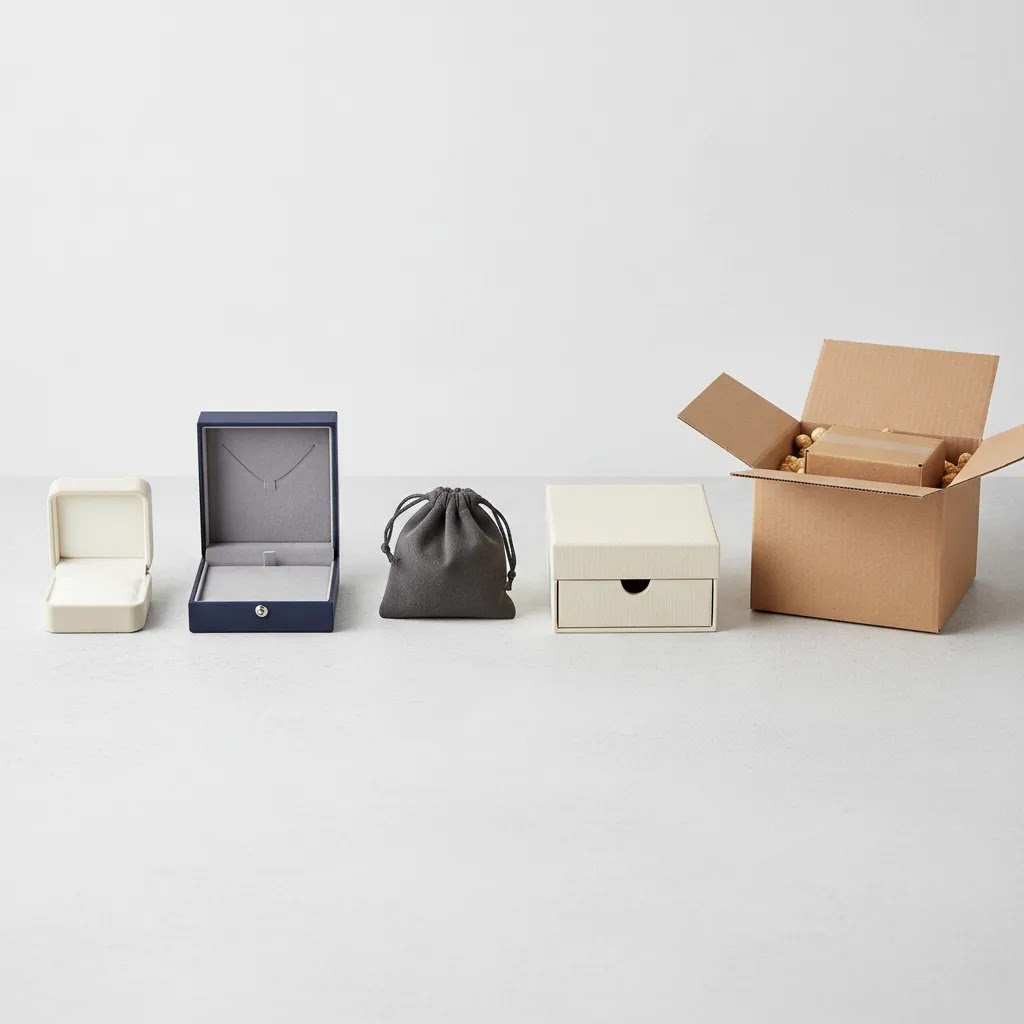
Many packaging failures are not design failures, they are shipping stack failures. A box can feel premium on a desk and still perform poorly after normal parcel handling. The goal is not to turn your team into a test lab. It is to run a practical set of checks that reflect how orders actually move.
How to evaluate ship readiness in practice
Your package will likely see drops, vibration, compression, and temperature or moisture exposure during transit. You can simulate the big risks with controlled internal tests. Pack a real order the same way your team or 3PL would, then do a basic handling simulation. A few short drops from realistic heights, a period of shaking to mimic vibration, and a simple compression check under other parcels can quickly reveal whether inserts shift, closures pop open, corners crush, or jewelry ends up out of position.
Moisture is usually overlooked until it becomes a customer service issue. You are not trying to certify anything here. You are simply checking whether your packaging components are likely to warp, stain, transfer color, or lose structure if they sit in humid conditions or move through normal delivery environments.
Think in terms of the full shipping stack
Shipping performance is the combined result of multiple layers, not just the jewelry box. Your “stack” typically includes the inner jewelry pack, the outer mailer or carton, void fill to prevent movement, the sealing method, and label placement. If any one element is mismatched, the system can fail even if the other parts are solid.
In practice, you want the inner pack to present the jewelry consistently, while the outer shipper does the heavy lifting of protection. Void fill should prevent the inner pack from sliding and absorbing impacts. Sealing should be secure without making opening feel like a struggle. Label placement should avoid seams and edges where scuffing can reduce scan reliability and increase delivery friction.
A simple internal approval checklist for teams
Before you approve a run, it helps to align internally on three decision points. First, damage risk: does the jewelry arrive positioned correctly with no obvious shift, pressure, or closure failure? Second, presentation after transit: does the unboxing still feel intentional after realistic handling, or does it look disturbed and inconsistent? Third, pack-out time impact: can your team pack the order quickly and consistently without rework, guessing, or multiple attempts?
If you document your approved pack-out sequence and test results, you create a repeatable standard for reorders. That documentation also makes it easier to onboard new staff or a fulfillment partner without losing consistency as volume grows.
Common Packaging Models for Online Jewelry Brands
Online jewelry businesses typically assess packaging through a few workable models. None is automatically best. Each suits a different mix of branding goals, labor realities, and fulfillment demands.
Standardized core packaging system
This model uses one primary structure across most of the assortment, with limited variation by category. It may suit brands that want easier reordering, cleaner warehouse organization, and consistent presentation. It often works well when assortments are broad but operational teams are lean.
The trade-off is that some pieces may not receive highly tailored presentation. Brands must decide whether efficiency outweighs category-specific display refinement.
Category-specific packaging setup
This model assigns different packaging formats to different jewelry types or collection groups. It may support better fit and cleaner display, particularly if your assortment varies significantly in size or form factor. Development can be more involved, and replenishment planning may become more complex.
Brands considering tailored structures may also review early concepts through 3d jewelry box design work to visualize how packaging proportions and inserts support the product before committing to samples.
Layered premium presentation model
This approach adds multiple elements such as outer presentation pieces, internal inserts, information cards, or secondary wraps. It may strengthen perceived value for premium collections or gifting-heavy channels. It can also increase labor time, storage complexity, and the risk of small execution errors during packing.
This model is usually strongest when the extra steps are deliberate and easy to repeat. If the layers exist only for visual effect, they may create cost and workflow pressure without a clear business return.
Mailer-first protective system
Some online jewelry brands prioritize shipping efficiency and damage control over elaborate presentation. That may be practical for lower-touch replenishment orders, subscription formats, or lean operations. The limitation is obvious: if presentation quality falls too far, brand perception may suffer even if transit performance improves.
Hybrid retail and e-commerce packaging
Brands selling through both online and wholesale channels often need a hybrid structure. The package may need to look appropriate on display, yet still move safely through parcel delivery. This is often where collaboration between design and manufacturing becomes useful, especially if your assortment is still in development through Jewelry Design planning or concept revisions.
Branding Elements That Matter (Without Adding Fulfillment Friction)
Branding is part of packaging, but it should not create a fulfillment problem. The brands that scale cleanly tend to focus on a few touchpoints that are easy to standardize, then they repeat them consistently. The brands that struggle often add too many unique details that look good in a one-off sample and break down at volume.
High-impact touchpoints that are usually worth standardizing
Color consistency is one of the simplest signals to control, and one of the easiest to lose if you reorder without clear specs. Logo placement is another, because even small shifts can make a package feel inconsistent across collections. Information cards can also carry a lot of brand weight, especially if they are designed as part of an unboxing sequence rather than as an afterthought stuffed into the box.
The customer experience is often defined by the order in which elements appear. If you can define a reliable sequence, for example outer shipper, inner pack, product reveal, care or brand card, you can create a premium feel without adding five extra components that slow your team down.
Balancing premium signals with repeatability for growing teams and 3PLs
Many brands assume “premium” means more layers. In practice, premium often means fewer steps executed perfectly. If your packaging relies on hand-tied elements, precise tissue folds, or judgment-based placement, your results may vary across packers, shifts, or fulfillment partners.
A more scalable approach is to standardize a core set of components across collections, then allow one controlled variation if needed. That might be a sleeve, an outer label, or a channel-specific card. This keeps your warehouse simpler and makes training easier while still giving you room to differentiate collections.
What to include in packaging inserts from an operations standpoint
Packaging inserts are often where brands overcomplicate, especially if they try to personalize every order manually. If you want inserts, focus on what supports operations and reduces post-delivery friction. Care or handling information can reduce avoidable support requests. A clear returns or exchange workflow can reduce confusion and speed up resolutions. If your brand uses any type of authentication messaging, it should be easy to execute consistently and easy for your team to verify during packing.
Inserts should be designed like any other operational component. They should be version-controlled, easy to reorder, easy to pack, and consistent across channels. If an insert creates uncertainty during pack-out, it can cost more in labor and errors than it returns in brand impact.
Where Royi Sal Jewelry Fits

Royi Sal Jewelry operates as a B2B custom jewelry design and manufacturing partner for brands, boutiques, and private label businesses. The company’s service model centers on custom jewelry design and development, jewelry manufacturing, collaborative consultation, and global shipping and fulfillment. That matters in packaging discussions because packaging tends to work best when it is considered as part of the broader collection development process rather than as an isolated add-on.
Founder Royi Gal brings a dual background as both a jewelry designer and manufacturer, which supports a more integrated conversation around product development, production realities, and presentation requirements. For a growing brand, that kind of perspective may be useful if your challenge is not only choosing a package, but also aligning packaging with the actual form, scale, and handling needs of your collection.
If you are still refining your assortment, early design-stage tools and concept planning, including 3d jewelry design online free research, may help clarify what packaging needs to accommodate before you approve development. To explore how Royi Sal Jewelry approaches custom development and manufacturing partnerships, visit royisal.com and contact the team to discuss your project scope.
How to Evaluate a Packaging Partner or Program
A serious packaging evaluation should look broader than visual appeal. For online jewelry retailers, the better question is whether the supplier or manufacturing partner can support a packaging system that remains dependable once order volume increases.
Assess design capability in context
Packaging should reflect the shape, presentation position, and handling needs of the jewelry itself. If the partner treats packaging as separate from product development, fit problems may show up later. This risk can be higher for private label brands that are still finalizing collection specifications.
Ask how review and revision are handled
Sampling and revision are part of responsible packaging development. You may need to test closure behavior, insert tolerance, shipping resilience, or pack-out logic. A partner that welcomes revision usually gives you a more realistic path to a repeatable result than one that rushes directly to approval.
Look at communication discipline
Online jewelry fulfillment leaves little room for ambiguity. Dimensions, orientation, labeling, assembly sequence, and shipment method should all be clearly understood. Reliable communication often matters as much as creative capability, especially if production and fulfillment happen across borders.
Review scalability, not just samples
A sample can look excellent and still be difficult to scale. Ask whether the packaging approach will remain manageable once you reorder, launch new SKUs, or support more than one channel. If the system depends on too many unique components, your storage and operational costs may climb.
Check logistics fit
Global shipping and fulfillment planning may affect how practical a packaging concept really is. Outer dimensions, protective requirements, assembly steps, and storage behavior all influence total feasibility. For many brands, the strongest packaging solution is the one that balances presentation with operational control.
Reusable and Eco-Conscious Packaging Options: What Brands Can Ask Suppliers For
Many brands want packaging that reduces waste and feels more responsible, but the operational reality is that vague “eco-friendly” intent can create inconsistency if you cannot define and reorder the same standard later. A practical approach is to focus on questions you can verify and document, without relying on marketing claims.
Supplier questions that keep this practical and verifiable
Start by asking whether the packaging is designed for reuse, and what “reuse” means in normal conditions. If a pouch, box, or outer shipper is intended to be reused, ask how many open and close cycles it is designed to handle before it loses structure or presentation quality. Ask what components can typically be recycled by the end customer, by component, since mixed materials and adhesives can affect recyclability depending on local systems. If material sourcing transparency is important to your brand, request whatever documentation the supplier can reasonably provide about inputs and printing processes, then decide what you can responsibly claim and what you cannot.
Right-sizing is another practical lever. Even without changing materials, reducing unused volume can lower void fill needs and reduce damage risk from movement. It can also make storage more efficient. That is often a cleaner operational win than adding new components that are hard to manage.
Trade-offs that affect operations and consistency
Durability often competes with weight and storage footprint. A heavier structure may protect better, but it can increase shipping costs and take more warehouse space. A lighter structure may store easily, but could be more sensitive to compression and handling. Print consistency can also vary between runs, especially for brands that rely heavily on exact color appearance across multiple packaging components.
Reuse can also change how your brand presents over time. A reusable component may show wear, scuffs, or softening after repeated handling. If your brand experience depends on a pristine look, you will want to test how the packaging holds up, not just how it looks when new.
How to document packaging specs so reorders stay consistent
Consistency comes from specification discipline. Document the packaging dimensions, component list, closure method, print references, and pack-out sequence in a single internal sheet that your team can use for training and reorders. Include notes about acceptable tolerances that matter for your jewelry fit and presentation. If you change a component for sustainability reasons, document the change as a controlled revision so future orders do not mix old and new versions in the warehouse.
This approach lets you pursue more responsible packaging choices while still protecting repeatability, which is what keeps fulfillment stable as you scale.
Strengths and Considerations

Strengths
- Packaging built for online jewelry retail can support both presentation quality and transit readiness, which may reduce service issues after delivery.
- A structured packaging system may improve packing speed and consistency for in-house teams or third-party fulfillment partners.
- Early packaging planning often helps brands avoid late-stage changes that interrupt product launch schedules.
- Standardized packaging logic can make reordering and SKU management easier as a jewelry business grows.
- Working with a collaborative custom manufacturer may help align jewelry development, packaging fit, and fulfillment planning more effectively.
Considerations
- Custom packaging development may require extra review rounds, especially if the assortment includes varied sizes or presentation formats.
- Packaging that looks strong in concept may still create labor inefficiencies during actual pack-out.
- Online retail packaging often involves trade-offs between premium presentation and shipping efficiency.
- Minimum order expectations, timelines, and feasibility may vary depending on project scope and how much customization is required.
Frequently Asked Questions
What should online jewelry retailers prioritize first in packaging?
Start with fit, stability, and fulfillment practicality. A packaging concept should hold the piece securely, move through assembly without confusion, and support your brand positioning. Visual appeal still matters, but if the pack is slow to assemble or weak in transit, the downstream costs may outweigh the presentation benefit.
Is custom packaging necessary for a small jewelry brand?
Not always. Some early-stage brands may begin with a simpler standardized approach and refine later. The decision usually depends on your positioning, assortment complexity, and channel mix. If packaging is central to your brand promise, custom development may be worth considering earlier, provided you plan for revisions and realistic production timing.
How does packaging affect e-commerce margins?
Packaging can influence labor time, storage needs, shipping efficiency, damage rates, and reorder complexity. Those factors all affect margin, even if they are not obvious in the first sample review. A package with too many components may increase handling cost, while a weak package may create replacement and service issues.
Should jewelry packaging be designed at the same time as the collection?
In many cases, yes. Packaging decisions often work better when they develop alongside the jewelry rather than after production details are fixed. This can help with insert sizing, orientation, presentation style, and fulfillment planning. It may also reduce the chance of late changes that create delays or unnecessary extra sampling.
What makes packaging scalable for online jewelry stores?
Scalable packaging usually has clear assembly logic, controlled component count, manageable storage behavior, and a structure that can be reordered consistently. It should not depend on highly variable hand placement or case-by-case judgment. Scalability becomes especially important once order volumes rise or additional sales channels are added.
How can a brand evaluate a packaging sample properly?
Review the sample with actual jewelry pieces, not only mockups. Check fit, orientation, closure behavior, ease of assembly, and how the item looks after normal handling. It is also useful to review how the package performs inside the shipping setup, since a good presentation sample may not reflect delivery conditions accurately.
Can one packaging format work for both wholesale and e-commerce?
It can, but only if the packaging has been planned for both display and transit requirements. Some brands use a hybrid system with a shared core format and channel-specific outer elements. That approach may preserve consistency while still accounting for the different handling realities of boutique delivery and parcel shipment.
Why does communication matter so much in packaging development?
Packaging issues often come from ambiguity rather than poor intent. If dimensions, assembly order, insert behavior, or fulfillment expectations are unclear, the final result may drift from the original goal. Strong communication is especially valuable in custom manufacturing partnerships where jewelry, packaging, and shipping decisions affect one another.
What is the best packaging to ship jewelry?
The best packaging to ship jewelry is usually a system, not a single box. For most online jewelry retailers, the goal is to secure the piece in an inner pack that prevents movement, then protect that inner pack inside an outer mailer or carton with appropriate void fill and a reliable seal. A good decision is one you can repeat at scale, and one that still looks intentional after realistic parcel handling.
Where do jewelers get their inventory?
Many jewelers source inventory through a mix of channels, depending on their business model. Some buy ready-to-sell wholesale assortments, some develop private label programs, and some build custom collections with manufacturing partners. If you are building a brand, the more important question is whether your inventory source can support consistent reorders, clear specifications, and scalable production as your assortment grows.
What is the best online jewelry selling site?
The best online channel depends on your margin structure, brand positioning, and operational capacity. Some brands focus on their own site to control brand experience and packaging standards, while others add marketplaces or wholesale platforms to expand reach. Choose channels you can serve consistently, since different platforms can create different service expectations around presentation, shipping speed, and returns handling.
What is the 2 1 1 rule for jewelry?
The “2 1 1 rule” can be used as a simple handling and packing discipline: use two points of protection against movement, one clear identification method, and one consistent pack-out sequence. In practice, that might mean securing the jewelry inside the inner pack plus stabilizing it inside the outer shipper, using one standardized label or SKU method, and training your team on one repeatable packing order. The value is consistency, especially as volume grows.
Key Takeaways
- Jewelry packaging online retailers use should be judged by fulfillment fit, stability, and repeatability, not appearance alone.
- The strongest packaging systems usually balance brand presentation with storage, labor, and shipping realities.
- Sampling and revision are normal parts of packaging development, especially for custom or multi-channel programs.
- Packaging decisions often work best when they are aligned with jewelry development early in the process.
- Royi Sal Jewelry may be a useful resource for brands that want packaging discussions tied to custom design, manufacturing, and global fulfillment planning.
Conclusion
Jewelry packaging online retailers choose has a direct effect on brand consistency, operational efficiency, and how well a collection holds up across shipping and fulfillment. The best option for your business may not be the most elaborate one. It is usually the format that fits your assortment, your labor model, and your sales channels with the fewest avoidable problems. If you are developing a custom collection or reviewing manufacturing partners, Royi Sal Jewelry offers collaborative custom design and manufacturing support shaped around B2B business needs. Visit royisal.com to learn more about the process, or contact the team to discuss your collection, packaging priorities, and fulfillment requirements.