
Luxury Unboxed: Creating Premium Jewelry Packaging Experiences That Impress

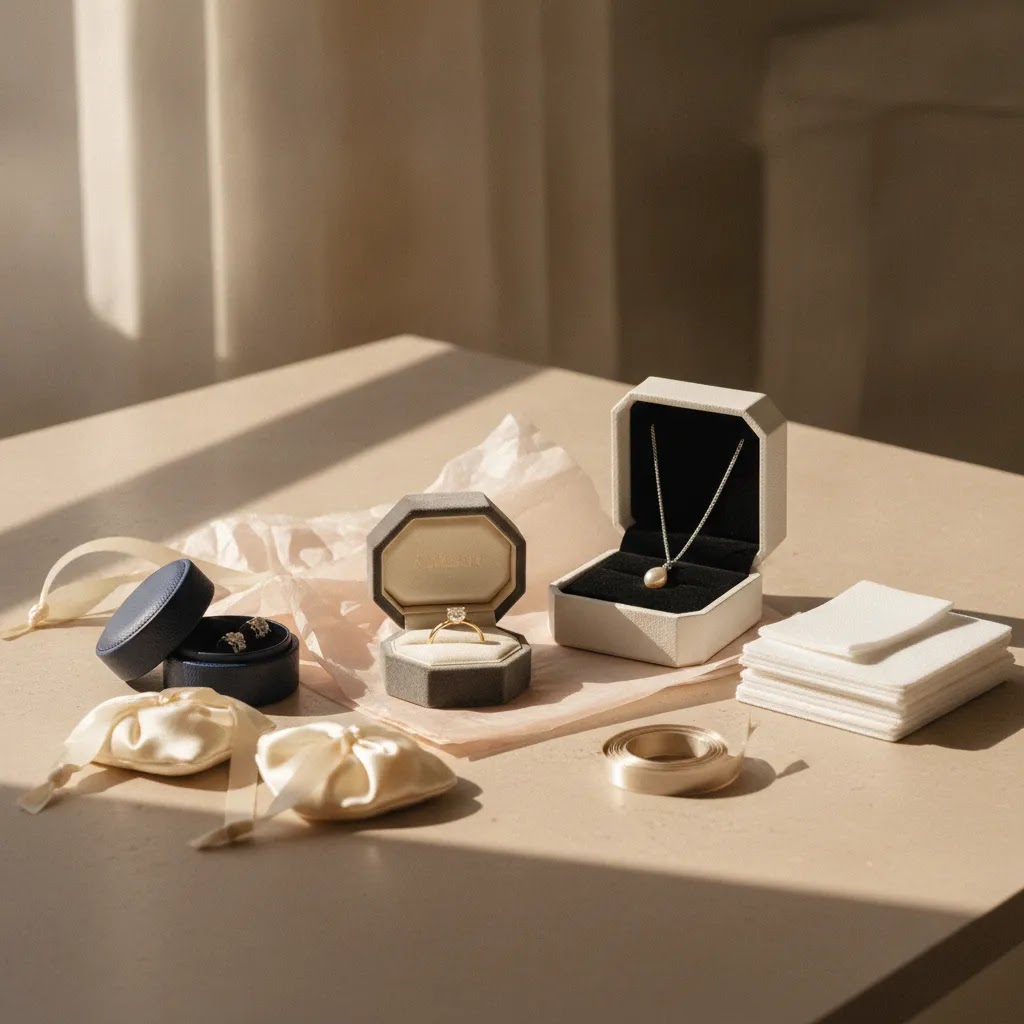
Why Premium Packaging Matters in Jewelry Manufacturing
Premium packaging has a direct effect on how a jewelry collection is received in a business setting. It shapes the first visual impression, supports positioning, and helps communicate whether a line is meant to feel understated, gift-ready, fashion-forward, or highly refined. For B2B clients, that matters across multiple touchpoints: buyer meetings, product photography, launch kits, wholesale deliveries, and private label presentation.
Royi Sal Jewelry operates as a custom jewelry design and manufacturing company serving wholesale and private label clients. Its model centers on custom jewelry design and development, collaborative consultation, production for business clients, and global shipping and fulfillment. That means packaging decisions should be treated as part of a broader product presentation system, especially for brands that want the final delivery to feel considered from concept through handoff.
Packaging also influences operational clarity. A manufacturer relationship works better when presentation requirements are discussed early, not after the product is approved. If your jewelry line depends on a consistent branded reveal, the packaging concept needs to align with collection identity, fulfillment workflow, and how pieces will be distributed through retail or wholesale channels. Businesses already working through product visualization often connect this stage with 3d jewelry box design or broader visual planning in Jewelry Design.
How the Packaging Experience Should Be Designed
A strong packaging experience starts with sequencing. The exterior, opening action, interior reveal, insert structure, and final product placement should feel intentional. In jewelry, small details carry more weight because the item itself is compact and often high in perceived value. If the packaging feels oversized, generic, flimsy, or visually disconnected from the jewelry, the brand message weakens.
For B2B projects, the first decision is what the packaging must do. Some brands need packaging that helps elevate an affordable luxury jewelry line without inflating complexity. Others need packaging suitable for wholesale distribution, where consistency and protection may matter as much as visual impact. Private label businesses may also need packaging that photographs well for catalogs, launch presentations, and online merchandising assets.
The second decision is how much of the experience is visual versus tactile. A premium result usually comes from disciplined coordination: proportion, opening resistance, insert fit, logo placement, message hierarchy, and the relationship between the jewelry and the container. If the brand is building a design language across products, it can help to align packaging concepts with product development assets such as 3d jewelry rendering, so approvals reflect the full presentation rather than the item in isolation.
Good packaging design rarely means adding more. It often means reducing clutter so the reveal feels controlled. This is especially relevant for brands positioned around restraint, craftsmanship, or quiet luxury jewelry, where visual noise can undercut the intended impression.
How to Make Jewelry Packaging Feel More Premium (Without Overcomplicating Production)
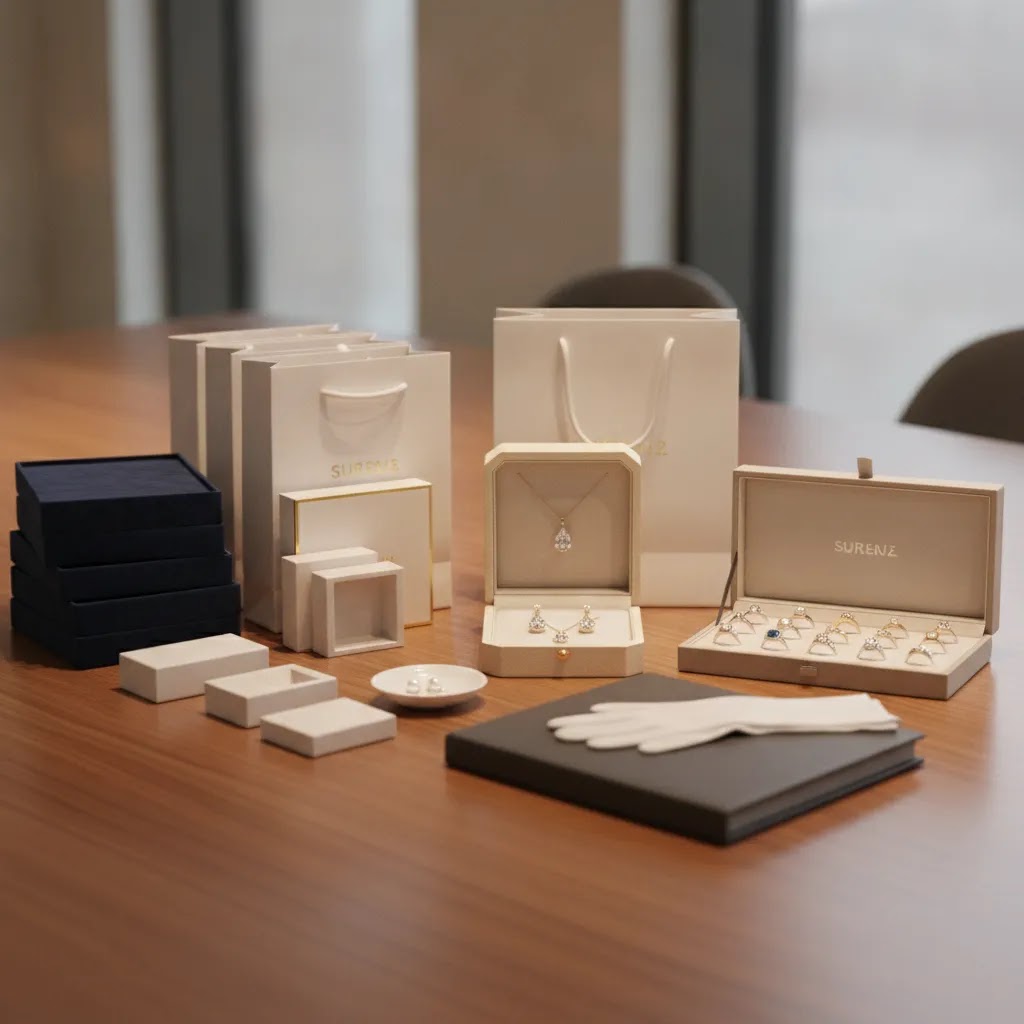
“Premium” is usually communicated through a few repeatable cues, not through a long list of upgrades. If you are building packaging for wholesale and private label programs, the goal is often to make the experience feel intentional at scale, not to create a one-off unboxing concept that is hard to reproduce across SKUs and reorder cycles.
The cues that tend to register fastest are structural and tactile. A package that holds its shape, has clean edges, and closes with consistent resistance usually reads as more refined than one that relies on extra visual elements. Insert precision matters in the same way. If the jewelry sits in the right place without shifting, and if the insert fit looks controlled rather than improvised, the whole presentation feels more credible.
Color and print discipline also do a lot of work. Consistent color matching across components, restrained logo sizing, and a clear hierarchy for any messaging often creates a stronger premium signal than multiple finishes competing for attention. In practice, the more variations you introduce, the more approval cycles you may invite, and that can impact timelines and reorder consistency.
Consider this as a decision framework: start with upgrades that improve perceived value and operational consistency at the same time, then add aesthetics only where they reinforce your brand positioning. Improvements to structure, closure feel, and insert fit often support both presentation and protection. On the other hand, packaging that depends on highly specific visual treatments, multi-part assemblies, or complex component sourcing may add cost, lead time, and revision rounds without improving how the jewelry is actually presented in wholesale environments.
Consistency across channels is another factor that deserves early attention. If you sell through wholesale accounts, direct distribution, and sample kits, you may need a packaging system rather than a single box. The premium feel can drift when your showroom samples look elevated, but wholesale deliveries arrive in a simplified format that does not match. A practical approach is to standardize the core elements that define your brand experience, such as proportions, layout, closure behavior, and insert style, then adapt only what must change for each channel. That way, every SKU and every delivery format still feels like it belongs to the same collection.
How Packaging Fits the Custom Development Process
Packaging is most effective when it is integrated into the development process early enough to influence presentation, but not so early that unresolved product decisions create rework. Royi Sal Jewelry is led by Royi Gal, a jewelry designer and manufacturer, and the company presents itself as a collaborative partner rather than a transactional supplier. That matters because packaging decisions often sit between design, manufacturing, and fulfillment rather than belonging to only one department.
A practical workflow usually starts with the product brief. The jewelry collection, target positioning, delivery format, and intended business channel should be defined first. Once the product direction is stable, packaging requirements can be outlined alongside prototype development and production planning. Brands with visually distinctive lines, including collections influenced by unique handmade jewelry aesthetics, often need packaging that supports individuality without making packing and shipping harder.
During this stage, business clients should confirm several basics: how the jewelry will be presented inside the package, whether presentation needs differ by SKU, what branding elements must be included, and whether packaging will affect packing efficiency for wholesale fulfillment. Since Royi Sal Jewelry also supports global shipping and order fulfillment, packaging choices may need to account for transport handling and consistency across international deliveries.
Packaging should not be evaluated only as an art direction exercise. It is part of manufacturing readiness. That is why many brands treat it as a component of the broader Jewelry Manufacturing discussion rather than a final add-on.
Packaging Types and Use Cases for Wholesale Jewelry (Boxes, Pouches, Mailers, Inserts)
Packaging conversations get easier when you separate what you are trying to solve. Most jewelry businesses are balancing three layers: primary packaging that presents the piece, shipping packaging that protects it in transit, and in-box collateral that supports brand communication. If you treat all three as one object, you can end up overbuilding the “pretty” part or underbuilding the “protection” part.
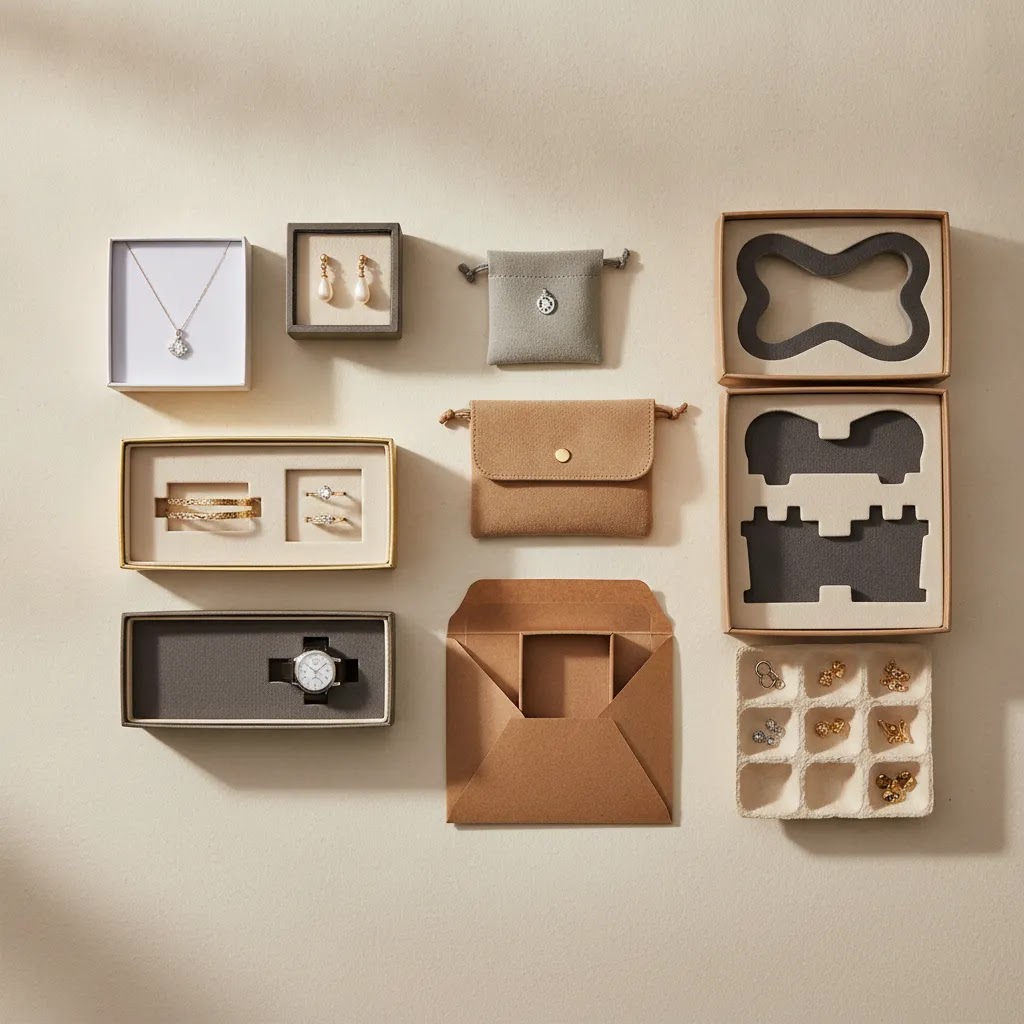
Primary packaging, many wholesale and private label programs use structured boxes when the goal is a controlled reveal and consistent shelf or counter presentation. Drawer-style formats and rigid two-piece formats are often chosen for their opening sequence and the way they stage the jewelry. Pouches can work well when you need flexibility across size variations, quick packing, or a compact format for travel and storage, especially for assortments where you want one packaging style across many SKUs.
Presentation cards, folders, and similar formats can be useful when the jewelry benefits from a flat display option, when you are building showroom kits, or when you need an approach that makes size and SKU labeling simpler. Inserts are their own category within primary packaging. They control placement, limit movement, and create the “frame” around the piece. Insert strategy becomes more important as your assortment grows, because you may need a consistent look across different jewelry shapes without redesigning the entire box for every SKU.
Shipping packaging is the layer many brands keep separate. You might choose an outer mailer or shipper format that is optimized for durability and pack-out speed, then keep your primary packaging focused on presentation. This approach can be especially helpful for global fulfillment, because shipping conditions can be inconsistent across routes and carriers. If the shipping container does the heavy lifting for protection, your brand box can be designed for the moment of reveal, not for surviving every handling scenario on its own.
For wholesale operations, it also helps to align packaging format with how you actually ship and sell. If you deliver sets, you may need a format that stages multiple items without crowding. If you carry a wide SKU range, you may prefer fewer packaging sizes to reduce complexity. If you build showroom and buyer meeting kits, you may need packaging that performs well during repeated handling, not just on the first opening. The right format is the one that supports your channel mix while staying repeatable in production and reorders.
What Business Clients Should Expect

Business clients should expect packaging development to involve trade-offs. The more distinctive the presentation, the more coordination may be required between concept approval, structural design, production planning, and fulfillment needs. Timelines can vary depending on project scope, revision cycles, and how tightly packaging is tied to the product launch schedule.
Clients should also expect questions that go beyond appearance. A capable manufacturing partner will usually need to understand how the packaging will be used in practice: direct-to-customer shipments, wholesale box sets, launch events, showroom samples, or mixed channels. The right answer for one channel may not suit another.
Royi Sal Jewelry’s service model emphasizes collaboration, craftsmanship, and direct engagement throughout the design and production process. For B2B buyers, that is useful because packaging decisions often require cross-functional thinking. A visually strong concept still needs to work within manufacturing realities, brand standards, and the handling conditions of global distribution.
There is also a strategic question around values and messaging. If your brand story intersects with sourcing concerns or responsible positioning, the packaging conversation may need to align with broader product communication, including how you speak about related topics such as ethical fine jewelry. The packaging should support the message without making claims the product program cannot substantiate.
Protection and Shipping Reality Check: Reducing Damage and Returns Through Packaging Planning
Packaging is not only a brand touchpoint, it is also a protection system. For jewelry, damage risk is often less about impact alone and more about movement and friction. If the piece can shift inside the package, components may rub, surfaces may mark, and the presentation can arrive looking handled even if nothing is technically “broken.” For a business, that can create avoidable replacements, customer service issues, or wholesale account dissatisfaction.
Start by confirming movement control. The jewelry should stay positioned during normal handling, including the small shakes and directional changes that happen in transit. Closure performance is another practical checkpoint. A package that closes well in a studio review but pops open during packing or shipping can create both protection and presentation problems. Outer carton considerations matter too, especially if you are shipping globally. Even the best primary box can be compromised if it is loose inside a shipper or if pack-out varies from one person to another.
Repeatability is itself a protection feature. If your team, your fulfillment partner, or your wholesale accounts will repack items, the packaging should be straightforward enough that it gets assembled and closed the same way every time. That is why it helps to think through pack-out as a process, not as a photo. How the piece is placed, how inserts align, and how the box is closed should be simple to repeat across volume.
Sampling is where you can validate these realities without overengineering. You can run basic handling simulations that reflect how packages are actually moved, stacked, and opened. You can also align on a pack-out approach early, document the intended presentation on arrival, and decide what is considered acceptable for a wholesale delivery versus a showroom sample. This is not about guarantees, it is about reducing surprises by testing the packaging like an operational tool, not just a design object.
Strengths and Considerations
Strengths
- Packaging can reinforce perceived value before the jewelry is examined in detail, which is useful in wholesale presentation and private label launches.
- It helps connect product design, brand identity, and fulfillment into one coherent client-facing experience.
- A collaborative manufacturer relationship can reduce disconnect between jewelry development and final presentation.
- Packaging planned early may support smoother coordination across sampling, approvals, and delivery preparation.
- For globally shipped orders, thoughtful packaging can contribute to presentation consistency across different markets and business channels.
Considerations
- Premium packaging usually requires more planning than standard presentation, especially if the opening experience is part of the brand concept.
- Distinctive packaging concepts may add revision cycles because structure, branding, and product fit all need review.
- What feels premium in a photo may not always be the most efficient option for wholesale packing or international fulfillment.
- Costs and minimum order quantities may vary depending on how customized the packaging approach becomes.
Who This Approach Is Best For
This approach is best suited to jewelry businesses that see packaging as part of product positioning rather than a separate purchase decision. That includes boutique brands preparing a private label launch, retailers refining a house collection, fashion brands building a more polished presentation system, and entrepreneurs who need their first collection to arrive with a clear branded identity. It is especially relevant for businesses that sell through multiple channels and need the unboxing experience to remain consistent across wholesale, direct distribution, and sample presentation. Companies looking for a collaborative manufacturing partner, not just a factory order, are likely to benefit most.
How to Start a Packaging-Focused Project
Start by defining the business role of the packaging. Decide whether the main goal is brand elevation, wholesale presentation, product protection, launch readiness, or consistency across channels. Then prepare a concise brief covering your collection concept, target audience, SKU range, presentation preferences, fulfillment method, and any packaging references that show the direction you want.
Next, contact Royi Sal Jewelry through royisal.com to discuss the broader custom jewelry project and explain that packaging experience is part of the requirement. Since the company focuses on custom jewelry design, collaborative consultation, manufacturing, and global fulfillment for B2B clients, the packaging discussion should be framed within the full production plan, not as an isolated request.
During initial conversations, ask how packaging requirements should be documented, when they should be approved relative to jewelry development, and what information is needed to align presentation with manufacturing and shipping. A clear brief at the start usually makes it easier to evaluate feasibility and next steps.
Frequently Asked Questions
Why does packaging matter so much in a B2B jewelry project?
Packaging affects how a collection is perceived by buyers, stockists, and launch partners before the jewelry is closely inspected. It influences brand credibility, presentation consistency, and the overall impression of value. For private label and wholesale programs, it can also shape how smoothly products are introduced across different business channels.
Should packaging be planned before or after jewelry samples are approved?
Packaging usually works best when it is discussed early and refined as the product direction becomes clearer. Final approvals often depend on stable product specifications, but waiting until the very end can create avoidable delays. The timing can vary based on how customized the packaging concept is and how closely it relates to product fit.
Can premium packaging support an affordable luxury jewelry brand?
Yes, if the packaging is disciplined and aligned with the collection. Premium does not always mean elaborate. In many cases, a controlled, well-proportioned presentation creates a stronger impression than an overly decorative one. The goal is to make the brand feel intentional and credible without adding unnecessary complexity.
What should a business include in a packaging brief?
A useful packaging brief should cover the collection concept, intended sales channel, brand positioning, product assortment, visual direction, and how the jewelry will be packed or delivered. It also helps to explain whether the packaging must support photography, wholesale presentations, gifting, or international shipping requirements.
Does packaging affect manufacturing and fulfillment decisions?
Yes. Packaging can influence packing workflow, presentation consistency, and shipping preparation. If the business expects global distribution or multiple sales channels, those realities should be considered early. A packaging format that looks strong in a sample review may need adjustment if it complicates handling or order fulfillment.
Is Royi Sal Jewelry suited to packaging-conscious private label clients?
For B2B clients who want a collaborative development relationship, the company’s model is relevant because it combines custom jewelry design, manufacturing, consultation, and global fulfillment support. Royi Gal’s background as both a designer and manufacturer also supports discussions that connect presentation goals with production realities.
How to make packaging look more premium?
Focus on repeatable cues that scale: controlled proportions, clean edges, consistent closure feel, and precise insert fit so the jewelry stays positioned. Keep branding disciplined with consistent color matching and a clear layout rather than stacking multiple visual effects. For B2B programs, it also helps to standardize the core packaging experience across SKUs and channels so wholesale deliveries, samples, and direct shipments all feel like the same brand.
Who makes the best jewelry boxes?
The “best” option depends on your business requirements, not a single supplier name. For wholesale and private label projects, look for a partner that can hold consistent specifications across reorders, manage revision cycles clearly, and align packaging decisions with packing and shipping realities. Your evaluation should include sample review, closure consistency, insert precision, and how reliably the packaging can be repeated across your SKU range.
How do wealthy people store their jewelry?
Many high-end storage setups prioritize organization, protection from movement, and repeatable placement, which is the same principle that applies to premium packaging inserts. From a brand perspective, you can borrow that logic by designing packaging that keeps the piece positioned, separates items in sets, and maintains a clean presentation after multiple openings. For B2B clients, this is especially relevant if your packaging is expected to function as both an unboxing moment and a longer-term storage format.
Are wolf jewelry boxes worth it?
That question is usually about retail storage products rather than wholesale packaging programs. For a B2B packaging decision, “worth it” should be measured against whether the format supports your brand standards, reordering consistency, and shipping requirements at scale. If a premium storage-like experience is part of your positioning, you can aim for similar cues, such as controlled structure and insert precision, while still choosing a packaging approach that fits your production and fulfillment workflow.
Key Takeaways
- Premium jewelry packaging is a business tool that supports positioning, perceived value, and brand consistency.
- The best packaging experiences are planned alongside product development, not after manufacturing decisions are locked.
- Unboxing design should balance visual impact, tactile quality, product fit, and fulfillment practicality.
- Collaborative manufacturers are often better suited to packaging-led projects because presentation and production decisions overlap.
- Clear briefs, realistic expectations, and early discussion help reduce avoidable packaging revisions later in the process.
Conclusion
Premium packaging earns its place when it supports the commercial role of the jewelry, clarifies the brand story, and fits the realities of production and delivery. For B2B jewelry businesses, the unboxing experience should be assessed with the same discipline used for product design, sample approval, and manufacturing planning. Royi Sal Jewelry is positioned for this type of conversation because its service model combines custom design, collaborative development, manufacturing support, and global fulfillment under the direction of founder Royi Gal, a jewelry designer and manufacturer. If packaging is part of how your collection needs to be judged, bring it into the project brief early and contact the team through royisal.com to discuss requirements in a structured way.