What Royi Sals Production Process Appears to Cover
Based on the available company information, Royi Sal Jewelry centers its offer around custom jewelry design and development, jewelry manufacturing for wholesale and private label clients, collaborative design consultation, and global shipping and order fulfillment. That combination suggests an end-to-end B2B process rather than a narrow factory-only arrangement.
For a buyer, that distinction matters. Some manufacturers can produce only after you arrive with fully resolved technical files and production-ready specifications. Royi Sal Jewelry positions itself more as a collaborative partner that may help shape the project before production begins. For early-stage brands and growing retailers, that could reduce the risk of misalignment between concept and manufacturable result.
The process also appears to sit within a broader jewelry manufacturing context, which means the commercial value is not limited to making samples. It likely involves translating business goals into a repeatable production workflow. That is especially relevant if you are balancing assortment planning, launch timing, and wholesale consistency across multiple SKUs.
Readers researching terms like silver making process or gold jewellery making process are often looking for technical steps alone. In a B2B setting, the better question is whether the manufacturer can move a design through consultation, approval, production planning, and fulfillment without creating preventable confusion.
How the Workflow Supports B2B Projects
Royi Sal Jewelry is founded and led by Royi Gal, who is described as both a jewelry designer and manufacturer. That dual background is useful for buyers because many project failures happen in the gap between aesthetic intent and production interpretation. A process led by someone who understands both sides may support clearer decision-making during development.
The company also emphasizes collaboration rather than a transactional vendor model. In practical terms, that usually means your design brief is treated as a working document, not a one-time file drop. For brands still refining product direction, this may help surface issues earlier, such as whether a concept is too vague, too broad for the launch timeline, or too complex for an initial production run.
Its stated workflow appears to include these core stages:
- Collaborative design consultation to define the project scope
- Custom jewelry design and development before production
- Manufacturing for wholesale and private label needs
- Global shipping and order fulfillment after production
That structure is commercially useful because it recognizes that production is not the first step. The most expensive errors in custom jewelry often happen before manufacturing starts, especially when the brief is incomplete or approval criteria are weak. Buyers who have also been comparing international sourcing routes, such as jewelry from thailand wholesale options or broader questions around sourcing jewelry thailand, will usually notice that process transparency matters as much as geography.
Another practical advantage is global fulfillment support. That does not remove the need for lead-time planning, but it suggests Royi Sal Jewelry is structured to work with clients beyond a local market. For overseas buyers, that may help if your main concern is not only manufacturing itself, but also how finished orders move across borders into your business operations.
How Modern Jewelry Manufacturing Typically Works (So You Can Benchmark the Process)

If you are assessing royi sals production process, it helps to first understand what a capable modern jewelry workflow often includes, regardless of who you choose. That gives you a benchmark so you can ask better questions and spot gaps early, especially if you are planning a wholesale launch where consistency matters across units and reorders.
In many B2B custom projects, the process starts with a design brief and a technical development phase. That could include concept references, target dimensions, and any brand constraints you have, such as how you want pieces to feel on-body, how they should be packaged, or how you need SKUs structured for inventory. The next translation layer is usually where the “silver making process” or “gold jewellery making process” searches become incomplete, because the real work is turning design intent into production-ready specifications.
A common set of stages you might expect from a structured partner often looks like this:
- Design definition and technical clarification, including size targets, functional requirements, and tolerance expectations that matter for repeatability
- Technical design development, which may include CAD modeling or similar technical files used to guide prototyping and production
- Prototype or sample creation to prove the design, test proportions, confirm functional elements, and evaluate finishing expectations
- Production planning, where quantities, batching logic, and any production constraints are agreed before a bulk run begins
- Manufacturing and finishing steps appropriate to the design, followed by final inspection for consistency and defects that could impact sell-through or returns
- Packing and logistics coordination so what arrives matches your operational needs, not just the product spec
The biggest risk usually sits at the handoff between what you mean aesthetically and what the factory interprets technically. Small ambiguities can compound. A “thin profile,” a “high polish,” or a “tight fit” can mean different things to different teams if there is no agreed measurement, reference, or approval gate. That is why serious buyers push for documentation and sign-offs, not because they want bureaucracy, but because they want fewer avoidable remakes and fewer surprises in bulk.
Consider this as a practical benchmark checklist of process artifacts you can request from any manufacturer. You are not asking for proprietary templates, you are asking for proof that the workflow is controlled:
- A production-ready spec summary that reflects final approved dimensions, key details, and any critical tolerances
- Clear approvals at defined gates, for example: design approval, sample approval, and bulk approval, with names and dates
- A revision log that tracks what changed, why it changed, and which version is the approved one for production
- Defined quality expectations in plain language, including what is acceptable versus what triggers rework
- A packaging and labeling confirmation if your wholesale operations depend on barcodes, SKU naming conventions, or presentation requirements
In practice, a process that can show these controls tends to be easier to scale with. It is also easier to audit when something goes wrong, because you can trace whether the issue came from the brief, the sample approval, the bulk execution, or packing and handling.
How to Assess This Process as a Buyer
A good production process should not be judged on marketing language alone. It should be judged on whether it helps you control quality, communication, revisions, and scale. If you are evaluating Royi Sals production process for a brand launch or supplier change, focus on five criteria.
1. Process clarity before production
Look for a clear path from consultation to development to manufacturing. Royi Sal Jewelry does present itself as an end-to-end partner, which is a positive sign for businesses that do not want to coordinate separate design and production vendors.
2. Design-to-manufacturing alignment
The founder’s designer-manufacturer background may be valuable here. If your collection depends on visual consistency across multiple pieces, you want a partner that can interpret brand intent without losing production practicality.
3. Communication style
Collaboration sounds attractive, but buyers should still confirm how feedback is handled, how revisions are communicated, and who owns approvals at each stage. A collaborative process works best when it remains structured.
4. Fit for wholesale or private label growth
Royi Sal Jewelry is explicitly positioned around wholesale and private label service. That is relevant if you are not ordering for one-off prototypes, but for a collection that may need repeat production and fulfillment support.
5. Ability to support broader sourcing education
Brands comparing manufacturers often need context around adjacent technical topics too, such as how is gold plated jewelry made or even product-category questions like what is a lab grown diamond. A manufacturing partner that can discuss upstream design choices and downstream production effects may be easier to work with than one that only quotes an order.
Sampling, Revisions, and Approval Gates: What Serious Buyers Should Clarify Upfront
Custom jewelry for wholesale or private label, sampling is rarely just about aesthetics. A sample is meant to prove that the design can be produced consistently, that the proportions match your brand intent, and that key functional details work the way your customer expects. It is also your best chance to align on what “good” means before you commit to bulk.
In many projects, sampling involves at least one revision loop. That does not automatically signal a problem. Moving from concept to manufacturable specifications often reveals small decisions that were not fully defined in the brief. What matters is whether your process with the manufacturer has clear approval criteria and disciplined feedback capture, so revisions tighten the spec instead of expanding the scope indefinitely.
Before production begins, experienced buyers typically align on a few practical items:
- What the sample is testing, for example: proportions, comfort, functional parts, finishing expectations, and overall brand alignment
- Who signs off internally on your side, because “approval by committee” can slow decision-making and create conflicting feedback
- How feedback is submitted, such as annotated images, a written change list, or a single consolidated document, so nothing gets lost across messages
- What changes are considered minor adjustments versus changes that could require a new quote or a revised production plan
- Which version is the final production version, and how that version will be referenced later for reorders
Approval gates are not there to make the process rigid, they are there to protect wholesale consistency. If a sample is approved without a locked spec, you can end up in the common situation where the sample looks right, but the bulk run varies because the “final” details were never formally finalized.
For scalable reorders, version control becomes a real operational concern. Your SKU system, product names, and internal product pages may all depend on stable specifications. If you iterate designs seasonally, you still want each version labeled clearly so your team can reorder the right one and your customers receive what they expect. A disciplined manufacturer will typically support this by confirming what changed between versions and ensuring bulk production is tied to the approved version, not an older file or an early sample interpretation.
If you are building a growing line, these conversations upfront can reduce downstream friction. They also make it easier to train new team members on how your brand handles development, approvals, and repeat orders as your assortment expands.
Who This Process May Fit Best

Royi Sals production process may be a strong fit for business clients who want a guided route from concept to finished product rather than a factory relationship limited to execution. That could include boutique owners building an exclusive house line, fashion brands adding jewelry to an existing assortment, and entrepreneurs preparing a private label launch.
It may also suit buyers who value direct collaboration during development. If your project still needs design clarification, technical refinement, or production planning input, a consultative model could be more useful than a supplier that expects finalized specifications from day one.
On the other hand, highly experienced buyers with fully documented technical packages may want to confirm how much of Royi Sal Jewelry’s process is consultative versus production-led. The best fit depends on whether you need strategic development support, efficient execution, or both.
Strengths and Considerations
Strengths
- Royi Sal Jewelry presents an end-to-end B2B model that covers custom design, development, manufacturing, and fulfillment rather than only one stage of the workflow.
- The company is led by Royi Gal, whose background as both designer and manufacturer may help reduce disconnect between creative direction and production feasibility.
- The service model is built around collaboration, which may benefit brands that need guidance shaping a collection before placing a production run.
- The business is positioned for wholesale and private label clients, so the process appears aligned with commercial orders rather than retail one-offs.
- Global shipping and fulfillment support suggests the company is prepared to work with international clients and cross-border business requirements.
- The brand tone and service positioning indicate a partnership approach that could appeal to growing businesses looking for a longer-term manufacturing relationship.
Considerations
- Specific lead times, minimum order quantities, and sampling stages are not publicly detailed here, so buyers would need direct confirmation before planning a launch calendar.
- A collaborative development process may involve more back-and-forth than buyers expect, especially if the initial design brief is broad or incomplete.
- Businesses seeking a simple reorder-only supplier may find a consultative process more involved than a straightforward factory transaction.
- Without project-specific details, it would be unwise to assume every design concept can move into production on the same timeline or with the same revision load.
Where Royi Sal Jewelry Fits
For B2B buyers evaluating manufacturing partners, Royi Sal Jewelry appears best understood as a collaborative custom development and production partner rather than a basic order-taking supplier. That distinction matters if your business needs help translating brand vision into a manufacturable collection, not just finding someone to make an existing design file.
The company’s stated service range, founder-led expertise, and global mindset make it a relevant option for brands that want one partner to support consultation, development, manufacturing, and fulfillment. This is especially useful if you are still comparing broader jewelry sourcing routes and want a partner that can engage with process questions, not only output volume.
If your next step is supplier evaluation, a productive move would be to contact Royi Sal Jewelry with a defined brief, target market context, and expected order structure. That conversation should help clarify whether the process matches your business stage, revision tolerance, and production goals. You can also visit royisal.com to learn more about the company’s custom design and manufacturing approach before starting a project discussion.
Manufacturing Location and Outsourcing Considerations (Including “Outsource Jewelry Production India” Search Intent)
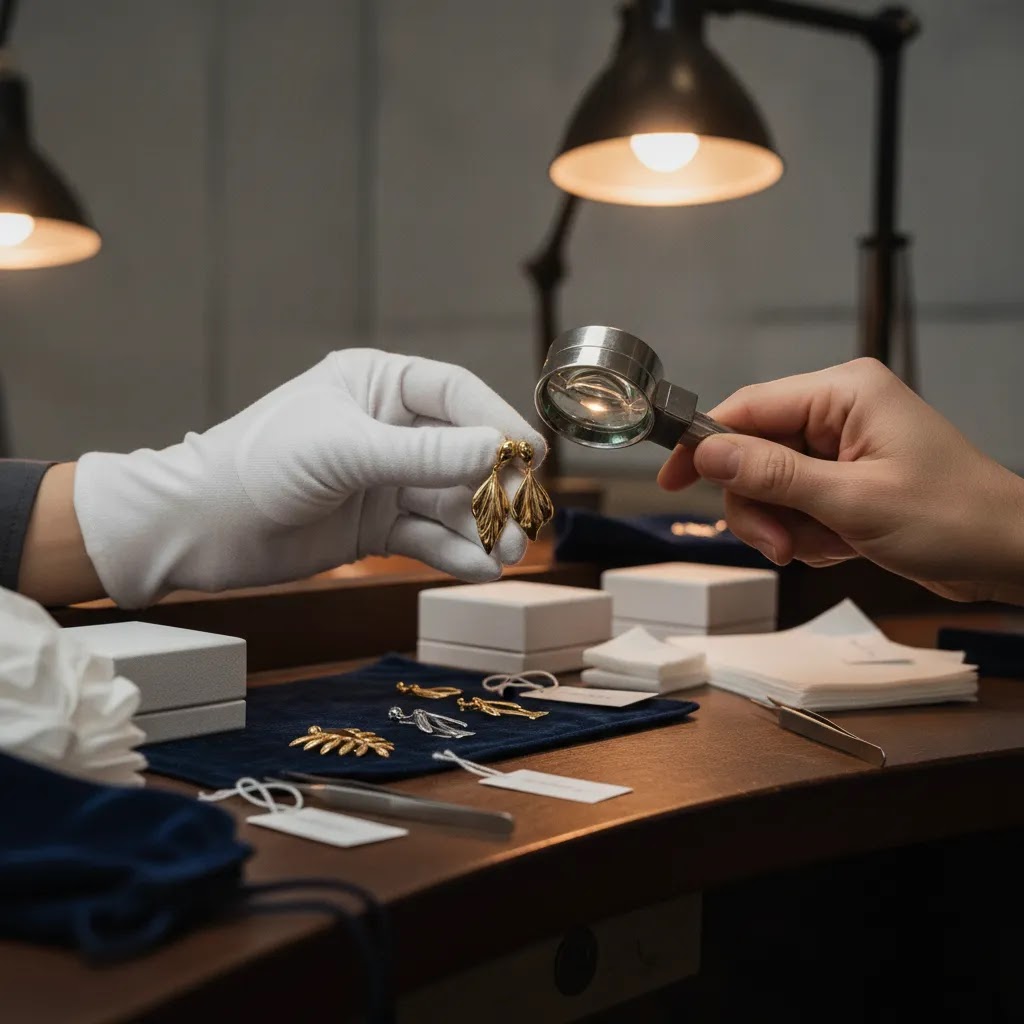
Many buyers researching royi sals production process are also weighing broader outsourcing options, including searches like outsource jewelry production india. Geography matters, but not in the simple “best country” sense. For a brand, the more useful question is whether a partner’s process maturity reduces your operational load while protecting quality and repeatability.
In practice, established jewelry manufacturing hubs often have strong capabilities, but capabilities alone do not guarantee a smooth project. Your day-to-day experience is shaped by how the partner manages communication, documentation, sampling discipline, and quality control. Two suppliers in the same region can produce very different outcomes based on how structured their workflow is.
If you are evaluating overseas routes, including India, Thailand, and other common production centers, a neutral framework that tends to hold up is to focus on four operational factors:
- Process control: whether development, approvals, production planning, and final inspection are handled through defined gates, not informal messages
- Communication rhythm: how often you receive updates, how questions are escalated, and whether feedback is captured in a way that prevents rework
- Quality discipline: whether the partner can explain how they check consistency between an approved sample and the bulk run
- Logistics readiness: whether packing, labeling, and documentation align with how your business receives and processes inventory
The hidden workload of outsourcing is often underestimated. Time zones can slow approvals if your team does not have clear decision owners. Language precision matters because technical details can be misunderstood if they are only described in subjective terms. Packaging and labeling requirements often create last-minute surprises if they are not confirmed early. Import documentation and shipping arrangements can also become a bottleneck, not because anyone is acting in bad faith, but because responsibilities were not assigned and confirmed in advance.
The deciding factor is often whether the workflow is end-to-end. If your manufacturer can support you from design clarification through production planning and fulfillment coordination, you can usually run a cleaner internal calendar. If the supplier is production-only and your team must manage specs, version control, and packing requirements without support, your internal overhead increases, even if unit costs look attractive at first glance.
This ties back to why a structured process matters regardless of geography. Whether you manufacture locally or abroad, the brands that scale smoothly are typically the ones that treat product development as a controlled system, with documentation, approvals, and repeatable standards that survive team growth and reorder cycles.
Frequently Asked Questions
What is Royi Sals production process in simple terms?
It appears to be a B2B workflow that combines collaborative design consultation, custom jewelry design and development, manufacturing for wholesale and private label clients, and global shipping or fulfillment support. For business clients, that means the process likely starts before production and continues after finished units are made, which is usually more useful than working with a factory that handles only one stage.
Is Royi Sal Jewelry a manufacturer or a design partner?
Based on the available company information, it is both. The company positions itself as a custom jewelry design and manufacturing business, and it is led by Royi Gal, who has credentials as both a designer and manufacturer. That combined positioning may help brands that need support turning a concept into something workable for wholesale or private label production.
Why does production process transparency matter for jewelry brands?
Process transparency helps reduce missed expectations. If you do not know how consultation, development, approvals, production, and fulfillment are handled, it becomes harder to budget time, manage revisions, or prepare for launch. A clear production process may also make it easier to identify where delays or changes are likely to happen before they become expensive.
Could this process work for a new private label brand?
Yes, it may. A collaborative process often suits newer brands because the team can potentially help clarify product direction, development needs, and production planning. That said, new founders should still expect to prepare a thoughtful brief and allow room for revision. Custom manufacturing generally works better when the brand arrives with clear commercial goals, even if some design details are still evolving.
Does Royi Sal Jewelry publish minimum order quantities or lead times?
Not in the information reviewed for this article. That means buyers should ask directly about minimum order quantity expectations, development timing, production windows, and fulfillment scope. Those details typically vary by project complexity, order size, and the amount of design work required before production approval.
How should a buyer evaluate Royi Sal Jewelry against other sourcing options?
Focus on process fit, not only price discussions. Review how the company handles design consultation, production planning, communication, and delivery support. If you are comparing international sourcing pathways, judge whether the partner can manage the level of collaboration your brand needs. A lower-friction workflow may be more valuable than a narrower quote that leaves development issues unresolved.
Is this process better for custom work than for standard catalog buying?
It appears to be structured for custom and private label work rather than simple catalog purchasing. That is a good match for brands that want differentiated product and closer involvement in development. It may be less relevant for businesses whose priority is fast, low-involvement buying from pre-existing stock with minimal design input.
What questions should I ask before starting a project?
Ask how the team handles project briefing, design development, revision rounds, production approvals, minimums, lead times, and fulfillment. You should also ask who your main point of contact will be and how feedback is documented. Those questions often reveal whether the process is organized enough for your business to scale without repeated misunderstandings.
Does a collaborative process usually mean slower production?
Not necessarily, but it can mean more upfront work. A structured collaborative phase may add time early in the project while reducing the chance of larger corrections later. For many brands, that is a worthwhile tradeoff. The real issue is whether the process is disciplined enough to move decisions forward rather than extending revisions without clear approvals.
What is CAD/CAM in jewelry manufacturing, and why does it matter for custom orders?
CAD/CAM refers to computer-aided design and computer-aided manufacturing. In jewelry manufacturing, CAD is often used to build a precise technical model of a piece before any sample is produced, and CAM can refer to how that technical model supports downstream tooling or manufacturing steps. For custom wholesale orders, the value is control: a clear technical model can make approvals more objective, reduce interpretation gaps, and support repeatable reorders because the “approved version” is defined in a way that can be referenced later.
What is the lost wax casting process in jewelry manufacturing?
Lost wax casting is a common manufacturing method where a wax pattern is used to create a mold, then the wax is removed and the final material is introduced into the mold to form the piece. What matters is not the method name, but how the manufacturer controls the details that affect your brand, for example: dimensional consistency, surface quality before finishing, and how closely bulk production matches the approved sample.
What is the difference between handmade, fabricated, and cast jewelry from a production standpoint?
These terms generally describe how a piece is constructed. “Handmade” is often used broadly, but in production conversations it helps to clarify what steps are done by hand versus guided by technical files or tooling. “Fabricated” typically means the piece is assembled from components or formed elements, while “cast” usually means the primary shape is formed via a mold-based process. For B2B buyers, the key issue is scalability and consistency: whichever method is used, you want to know what controls are in place so your approved design can be repeated across units and across reorders.
What should I ask a jewelry manufacturer before placing a bulk order to avoid quality issues?
Ask what the approval gates are between development and bulk, how sample approval is documented, and what exact version will be treated as production-ready. You should also ask how revisions are tracked, what quality checks are performed before shipment, and how packaging and labeling requirements are confirmed. If you are outsourcing internationally, it is also smart to ask how communication is handled across time zones, and what information the team needs from you to prevent assumptions during production.
Key Takeaways
- Royi Sals production process appears to cover consultation, design development, manufacturing, and fulfillment in one B2B workflow.
- The company’s founder-led designer and manufacturer background may support stronger alignment between concept and production reality.
- This process may fit private label brands, boutiques, and growing jewelry businesses that need collaboration, not just factory execution.
- Buyers should still confirm project-specific minimums, timing, revision handling, and production expectations directly with the company.
- The best evaluation standard is not marketing language alone, but whether the process supports quality, communication, and scalable repeat orders.
Conclusion
Royi Sals production process looks most valuable for business clients who need a coordinated path from idea to finished jewelry order. The company’s B2B positioning, collaborative service model, and founder-led design and manufacturing background suggest a process built for brands that want support across development and production, not only at the quoting stage. That could make Royi Sal Jewelry a practical option for boutiques, brand managers, and private label founders who want more visibility into how a collection moves forward. If you are narrowing your shortlist, the next useful step is a direct conversation about your brief, expected order structure, and launch goals. Contact Royi Sal Jewelry to discuss your custom project, or visit royisal.com to review the company’s design and manufacturing approach in more detail.
Share this post