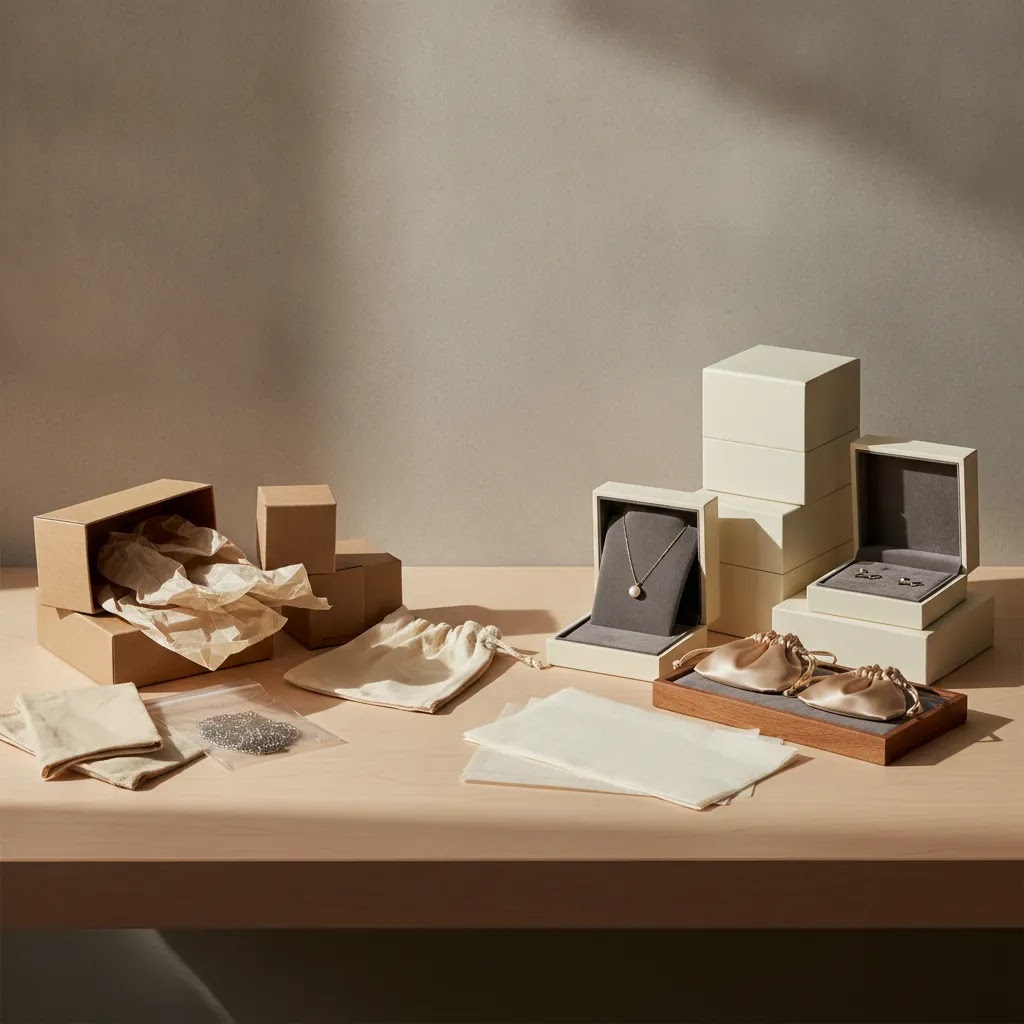
Why Ordinary Packaging Often Underperforms
Ordinary packaging is rarely a problem because it looks simple. It becomes a problem when it creates friction. A box may be acceptable visually and still fail in handling, storage, presentation, or pack-out consistency. For jewelry businesses, that friction can show up as damaged presentation, uneven retail display, slower fulfillment, or a weaker first impression during wholesale review.
Many packaging systems underperform because they were chosen in isolation. The founder liked the look, the supplier offered a standard format, or the team selected the least expensive option without mapping how it would function across sampling, production runs, shipping, and buyer handoff. The result is often packaging that feels ordinary not because it is minimal, but because it lacks intent.
An extraordinary experience usually comes from controlled details. Those details may include fit, opening sequence, insert stability, brand hierarchy, and packer-friendly assembly. If your team is also planning custom development, it helps to connect packaging conversations with product design planning, including upstream work such as 3d jewelry box design and broader jewelry design decisions that influence presentation requirements.
The goal is not luxury for its own sake. The goal is to make packaging support the business case of the collection.
How to Create an Extraordinary Packaging Experience
Packaging becomes memorable when it solves several business needs at once. It should present the jewelry cleanly, protect it during normal handling, reflect your brand position, and remain practical enough to repeat at scale. That balance is where many B2B teams either gain confidence or create avoidable cost and operational drag.
1. Start with the moment you want the buyer to understand
Before you choose a box or insert, define the message. Should the package communicate orderliness, premium positioning, giftability, or store-ready professionalism? Packaging that tries to signal everything at once often feels confused. Packaging that communicates one clear idea tends to feel more intentional.
2. Control movement and orientation
A clean reveal depends on how the jewelry sits before the package is opened and after transit handling. If a piece shifts, twists, or settles awkwardly, the experience may feel careless even if the packaging looked strong in early samples. Movement control is not glamorous, but it is one of the most practical ways to elevate ordinary formats.
3. Use hierarchy, not clutter
Extraordinary packaging does not require more layers. In many cases, it requires better hierarchy. The buyer should understand what to see first, what to touch next, and where the product sits in that sequence. This is especially useful for wholesale jewelry packaging, where teams may be presenting multiple SKUs across a line and need a consistent logic.
4. Design for repeatability
If the package only looks good when assembled by your most careful team member, it is not ready for growth. Strong custom jewelry packaging should be executable by trained staff with minimal guesswork. That principle becomes even more relevant if you later expand assortment, fulfill larger orders, or work across multiple retail accounts.
Brands comparing custom jewelry packaging options often discover that the best-performing concept is not the most elaborate one. It is the one that stays consistent from sample review through real pack-out.
Jewelry Packaging Formats and Use Cases

Packaging decisions get easier when you separate format from finish. Many brands start by discussing color, logo placement, or surface feel, then realize later that the format itself is creating the operational issues. A disciplined approach starts with how the packaging will be used across wholesale review, retail handling, and fulfillment.
In B2B jewelry, the most common formats tend to fall into a few functional categories. Rigid boxes are often chosen when you need strong structure at the retail counter and a clean reveal during line review. Soft pouches are often used when you need flexible storage and lower bulk, and when the product can be protected and presented without a fixed orientation. Folders or book-style presentations can be useful when merchandising requires a flatter footprint, or when you want a presentation that supports line storytelling, product information, or a set-based offer. Ship-ready mailers can be used when your primary channel is direct fulfillment and you want a packaging system that survives transit handling without requiring a second layer for shipping.
Choosing between formats, it helps to think about jewelry behavior. That means how the product needs to sit, how much it can move, and what your staff or a retail partner’s staff will do with it during pack-out and merchandising. Some pieces need a stable, upright orientation to look intentional the moment the package opens. Others can sit flat, nest, or be restrained with a simple anchor point. If a piece twists easily, catches on a surface, or shifts in a way that changes the first impression, you may need a format with better movement control, not just better aesthetics.
Consider this from a workflow standpoint. In wholesale, a buyer may open and re-open multiple packages quickly during line sheet review, so closures and re-packing should be simple and consistent. In retail, the packaging may be handled at the counter, stored under display, and re-used during customer interactions, so durability and easy reset matter. In e-commerce fulfillment, the packaging must hold up during packing, carrier movement, and unboxing, which often makes a structured outer or ship-ready approach more practical, even if the visual style stays minimal.
The cost of variation is another factor worth addressing early. If every SKU wants a different box size, insert shape, or closure style, the system becomes harder to purchase, store, and pack consistently. Many scalable programs use a family system approach: a small number of core sizes, shared insert concepts, and a consistent outer look across the line. You can still support multiple SKUs by designing inserts that adapt, standardizing a few orientations, and creating clear rules for which product goes into which size. The result often feels more premium because it is more controlled, and it tends to be easier to maintain as the assortment expands.
Operational Markers That Separate a Good Concept From a Scalable One
Packaging evaluation should move beyond appearance. A concept can photograph well and still create downstream issues. The following markers usually matter more in business use than they do in early mockups.
- Assembly clarity: Each component should have a clear place and sequence so teams can pack accurately without constant supervision.
- Storage efficiency: Bulky packaging may create warehouse strain, especially if your assortment expands faster than expected.
- SKU logic: A packaging system that supports multiple jewelry types with limited variation may reduce operational confusion.
- Transit resilience: Presentation should still hold after normal shipping movement and account handling.
- Sampling realism: Early samples should be reviewed the way actual orders will be packed, not as isolated display pieces.
These markers are particularly relevant if you are sourcing through a custom jewelry packaging manufacturer website and comparing suppliers remotely. A polished online presentation is useful, but it does not replace process questions. Ask how packaging concepts are sampled, revised, approved, and prepared for repeat production. Those answers often reveal whether a supplier understands the difference between one attractive sample and a workable packaging program.
For brands building a broader private label line, packaging should also align with the standards you expect from your jewelry manufacturing partner. Product consistency and packaging consistency usually need to be judged together, not as separate projects.
Unboxing and Presentation System, What to Include Beyond the Box
Packaging is rarely just the outer shell. Most of the perceived value comes from the full presentation system, meaning the internal support components and the opening sequence that guides what the buyer or staff member experiences first.
Start by mapping the minimum set of components that keeps the experience clean. Many brands rely on a simple logic: an insert or holder that controls movement, a clean layer that separates product from outer packaging, and a small piece of printed collateral that supports product handling. The goal is not to add more items. The goal is to make the experience feel intentional while reducing friction for fulfillment and retail staff. If you add too many elements, packing time grows, training gets harder, and the result becomes inconsistent across accounts.
Design an opening sequence for wholesale readiness. What does a retailer’s staff see first when they open the package during receiving or merchandising. Where does the product sit so it can be removed without snagging or searching. What gets removed and discarded, and what stays with the product for display or storage. A clear sequence usually supports faster reset, which matters when staff are opening multiple units, preparing a display, or repacking items after a customer interaction.
In practice, the most scalable systems keep add-ins consistent and operationally realistic. If you include a care card or product info card, make it easy to place the same way every time. If you use filler, ensure it does not create mess, slow pack-out, or interfere with the product reveal. If you use a tissue or wrap layer, keep the fold and placement simple enough that staff can repeat it without personal technique. These decisions may feel small, but they often determine whether your packaging is a brand asset or a daily operational burden.
Consistency communicates maturity. A retail partner does not want to guess how to merchandise or repack your products. A repeatable unboxing system helps your line look stable across reorder cycles, even as you expand SKUs, onboard new accounts, or shift between fulfillment partners.
Who This Approach Fits Best
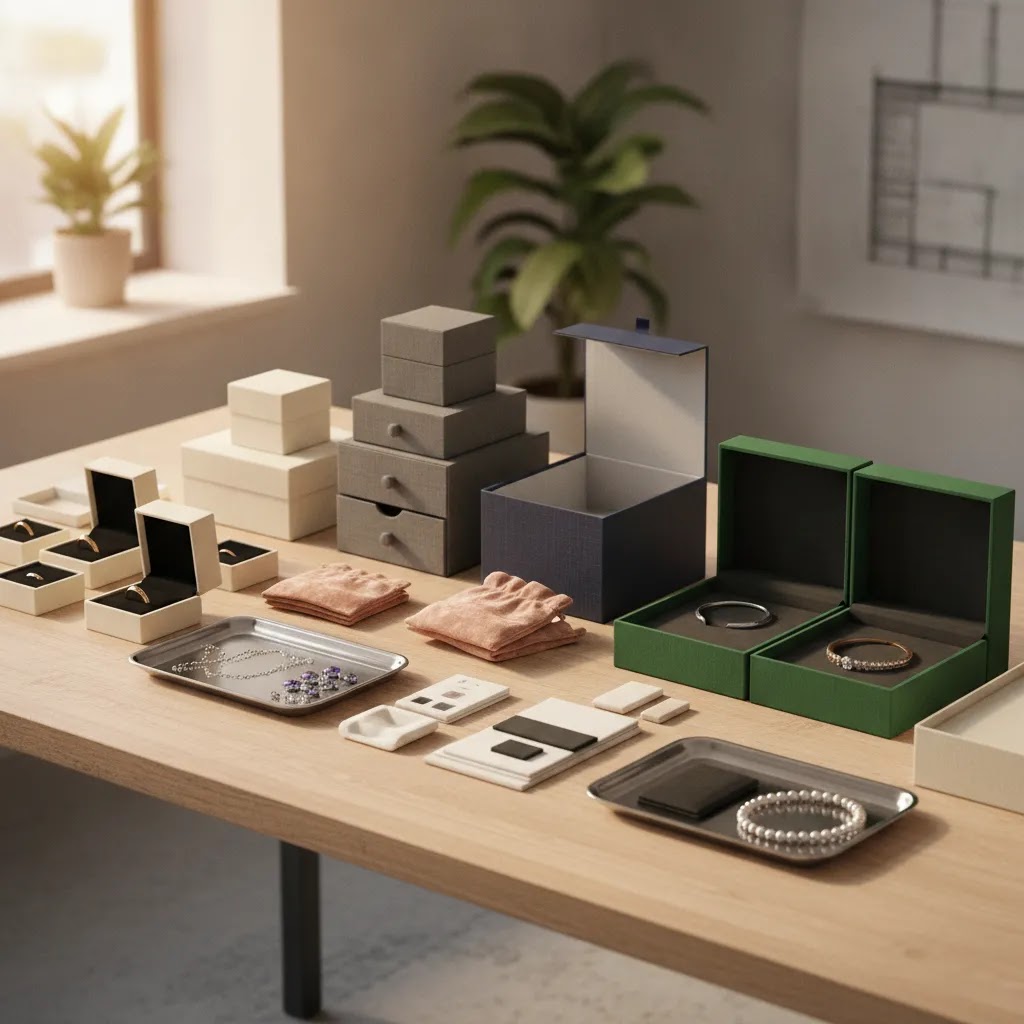
This approach tends to fit jewelry businesses that want packaging to support sales, operations, and brand clarity at the same time. That may include boutique owners developing a more cohesive private label offer, fashion brands adding jewelry categories, or growing wholesalers that need cleaner presentation across repeat accounts.
It is also a strong fit for teams that have outgrown generic wholesale jewelry packaging supplies and now need a more deliberate packaging system. If your current packaging causes inconsistent presentation, slow pack-out, or mixed buyer feedback, moving toward a structured custom program may be worthwhile.
Very early-stage founders with limited SKU count may not need a highly customized solution yet. In some cases, standard formats with thoughtful refinement are enough to improve the experience without adding unnecessary development steps.
Where Royi Sal Jewelry Fits
Royi Sal Jewelry works in the B2B custom design and manufacturing space, with services centered on custom jewelry design and development, jewelry manufacturing for wholesale and private label clients, collaborative design consultation, and global shipping and fulfillment. That matters for packaging evaluation because the strongest packaging decisions usually happen in coordination with the product development process rather than after production is already fixed.
Founder Royi Gal’s background as both a designer and manufacturer supports a more practical conversation about how presentation, production, and brand goals intersect. If you are developing a line and need a partner that can look at the full picture, Royi Sal Jewelry may be a useful resource to explore. You can review the company’s broader jewelry manufacturing focus or visit royisal.com to learn how a collaborative custom project may be structured from concept through fulfillment.
How to Evaluate Your Options
If you are comparing jewelry display and packaging suppliers, use criteria that reflect both presentation quality and production reality. Attractive visuals matter, but they should not dominate the decision.
Design compatibility
Your packaging should suit the scale and positioning of the collection. A mismatch between the jewelry and the packaging format can weaken buyer confidence. Review samples with the actual product or a realistic prototype whenever possible.
Manufacturing communication
Clear communication is critical, especially in custom work. Ask how revisions are handled, what approval stages are typical, and how the supplier documents changes. Ambiguity during sampling often expands during production.
Operational fit
Assess how the packaging will be assembled, stored, shipped, and replenished. This is where many ordinary solutions fall short. A package that looks impressive but slows fulfillment may work against your margins over time.
Scalability
Look at whether the system can support more SKUs, higher order volumes, or multiple retail channels. Packaging that only works for a small launch batch may need replacement sooner than expected.
Partnership alignment
The supplier relationship matters. Jewelry brands often need feedback, not just execution. A collaborative partner may help you refine packaging choices before small problems become expensive habits. This is one reason many brands prefer to work with development-oriented teams instead of treating packaging as a stand-alone purchase.
A practical way to compare options is to score each supplier against craftsmanship, design capability, communication, order flexibility, lead time realism, and logistics support. Those same factors often shape the success of the overall jewelry program, not only the package around it.
How to Evaluate Packaging Suppliers, Quote Inputs, Sampling, and Customization Questions
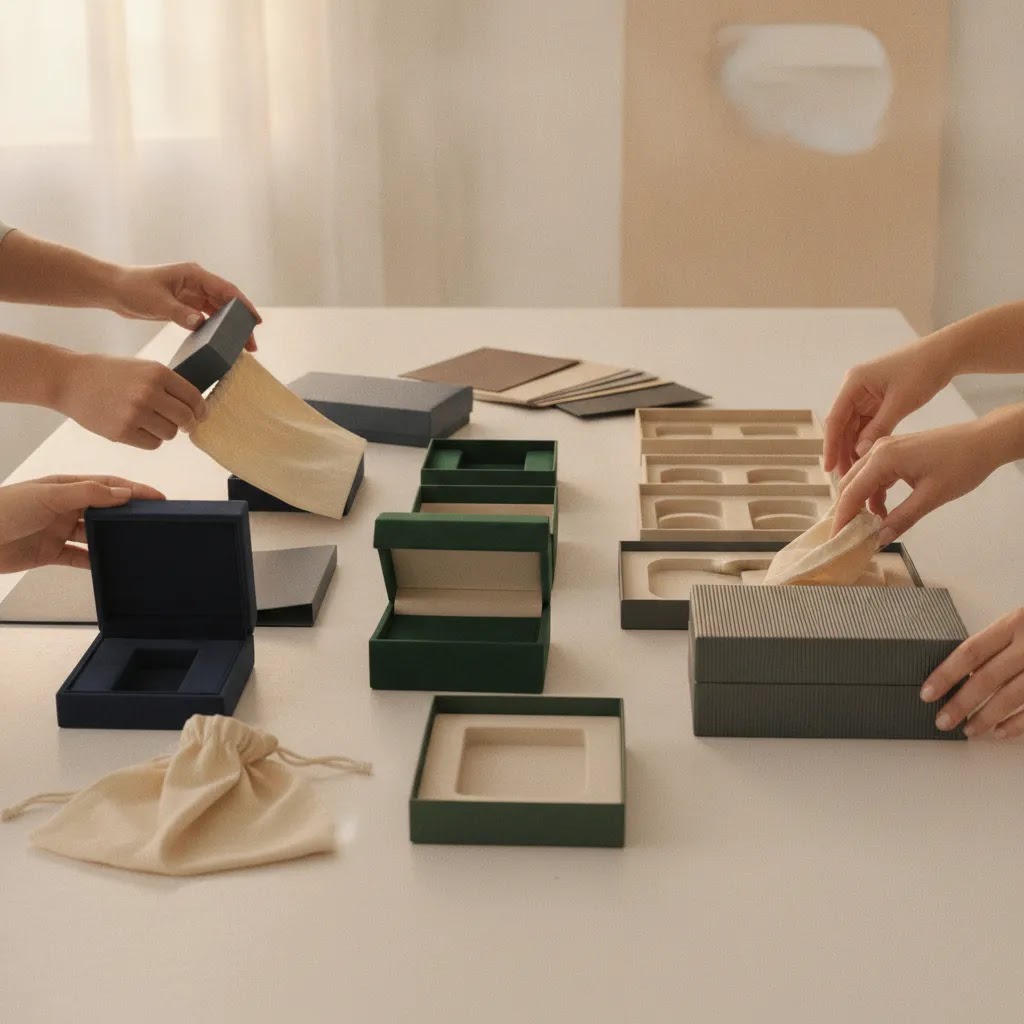
If you want packaging improvements to hold up in production, supplier evaluation needs to be specific. The goal is not only to find a vendor who can make something that looks good, it is to find a partner who can repeat the result with control across reorders, size variations, and real handling.
Start by requesting the practical information that allows you to evaluate fit and customization without guessing. Ask for dielines or sizing specifications for the formats you are considering, along with size options and any insert or holder options that may be available. If branding is part of the plan, discuss logo placement constraints and the general methods the supplier can support, and confirm how those choices affect repeatability and revision control. The key is making sure the concept you approve is the concept that can be manufactured again later without drift.
Sampling should also be approached in stages. A pre-production sample is useful for judging appearance, but you also want pack-out test samples. That means testing the packaging the way your team will actually use it: packing multiple units in sequence, applying your normal handling, and checking how the presentation holds after routine movement. Review how it looks after opening and re-closing, after being handled by different staff members, and after being stored and retrieved. Many issues only appear after repetition, not at first unboxing.
Quote readiness is another area where brands lose time. Many suppliers can only quote accurately when they understand your SKU count, size ranges, and how many packaging variations you expect to maintain. Provide your expected order cadence if you have it, and be honest about storage constraints, especially if you are working with limited warehouse space or a shared fulfillment partner. Those inputs influence whether a supplier is a practical fit and whether your packaging program can stay consistent as you scale. If you are unsure, it is often better to start with a controlled family of sizes and a clear SKU mapping, then expand once reorder patterns become predictable.
Strengths and Considerations
Strengths
- Better packaging may increase perceived order value without changing the jewelry itself.
- A deliberate packaging system can improve pack-out consistency across staff, locations, or fulfillment partners.
- Custom presentation may help wholesale buyers understand your brand position faster during line review.
- Well-planned formats can reduce product movement and presentation issues during normal shipping and handling.
- Packaging tied to the product development process is usually easier to scale than packaging chosen at the end.
Considerations
- Custom packaging may require extra sampling rounds before the concept is ready for production use.
- More distinctive formats can create storage, assembly, or shipping complexity if they are not engineered carefully.
- Minimum order quantity expectations may differ by supplier and packaging scope, depending on the project.
- Packaging improvements do not fix weak product positioning, unclear branding, or inconsistent fulfillment habits on their own.
Frequently Asked Questions
What makes jewelry packaging feel extraordinary in a B2B setting?
In a wholesale or private label context, extraordinary packaging usually comes from consistency, fit, and clarity rather than excess. Buyers notice whether the jewelry is presented securely, whether the package supports the brand story, and whether the format feels repeatable across orders. A strong result often depends on how well the packaging works operationally, not only how it looks in a sample.
Should early-stage jewelry brands invest in custom jewelry packaging?
That depends on assortment size, sales channel, and budget tolerance for development. Some early-stage brands benefit from a modest custom approach that improves presentation without overbuilding the system. Others may do better with refined standard packaging while they validate product demand. The key is aligning packaging scope with the maturity of the business.
How do I evaluate wholesale jewelry packaging supplies versus a custom program?
Start with function. If standard packaging supports your presentation, protection, and fulfillment needs, it may be sufficient for now. A custom program usually becomes more attractive when you need tighter brand control, better SKU logic, or more consistent buyer experience. Review not only aesthetics, but also pack-out steps, storage efficiency, and sample-to-production reliability.
Can packaging influence wholesale buyer confidence?
Yes, in many cases it can. Buyers often read packaging as a signal of process maturity. If the presentation feels inconsistent, overly fragile, or disconnected from the line, that may affect how they judge the overall brand. Packaging will not replace strong product development, but it often shapes the quality impression around it.
What should I ask a custom jewelry packaging manufacturer website before ordering?
Ask how sampling works, how revisions are documented, what approvals are needed before production, and how the supplier handles consistency across repeat orders. You may also want to ask about storage implications, assembly requirements, and how packaging performs during shipping. Those practical details usually matter more than marketing language.
Does packaging need to be developed at the same time as the jewelry?
Not always, but coordination usually helps. Packaging that is planned during product development may fit better, present better, and avoid late-stage changes. If you wait until the jewelry is finalized, your options could narrow, especially if the collection has unusual dimensions or a specific display need.
How many packaging variations should a growing jewelry brand have?
Fewer is often better at the start, provided the system still supports your assortment. Too many packaging variations may create confusion in purchasing, warehousing, and packing. A more disciplined structure can still feel premium if the hierarchy, fit, and presentation are well planned. Expansion can happen later as the business becomes more predictable.
Why does repeatability matter so much in jewelry packaging?
Because packaging is experienced repeatedly by buyers, staff, and retail partners. If the result changes from one order to the next, the brand may feel less controlled. Repeatability usually affects labor efficiency as well. A format that teams can assemble and present the same way each time tends to support better scaling.
What should I include inside jewelry packaging to improve the unboxing experience without slowing fulfillment?
Start with components that support speed and consistency: an insert or holder that keeps the product oriented, a simple internal layer that keeps the presentation clean, and a single piece of product information that is easy to place the same way every time. If you add more items, test packing time across multiple units and different staff members. The best add-ins are the ones that improve clarity and perceived value while staying easy to replenish, train, and repeat across wholesale accounts.
How do I choose the right jewelry box size and insert for different jewelry types?
Choose size and insert based on behavior, not just dimensions. Consider how the piece needs to sit for a clean reveal, how much movement it can tolerate, and how a retailer will remove and reset it for display. Testing matters here. Review samples with realistic prototypes, then run a pack-out test to see whether the insert holds the product consistently after handling and re-opening.
What is the difference between standard packaging and fully customized packaging for a wholesale jewelry brand?
Standard packaging typically means selecting an existing format and size with limited options for inserts and branding. Fully customized packaging often involves choosing or building a specific structure, defining insert geometry and orientation, and controlling more of the visual and functional details through sampling and revision cycles. For wholesale brands, the practical difference is often repeatability and SKU logic. Customization can help you reduce presentation variation across accounts, but it also usually requires more planning, clearer specifications, and more disciplined approvals.
How can I make jewelry packaging more reusable or lower-waste without compromising presentation?
Focus on formats and components that remain useful after unboxing, such as packaging that can serve as storage, transport, or retail back-of-house organization. Many brands also reduce waste by limiting unnecessary layers and standardizing a small family of sizes so fewer items are discarded due to mismatch. The key is designing the system so it still protects the product and presents cleanly, while avoiding add-ons that create mess or are difficult for retail staff to manage.
Key Takeaways
- Extraordinary packaging is usually built through fit, structure, and consistency, not decoration alone.
- Packaging should be evaluated as part of the broader product development and manufacturing plan.
- Operational factors such as assembly, storage, and shipping resilience may matter as much as visual appeal.
- Custom packaging is most useful when standard formats no longer support brand clarity or fulfillment efficiency.
- Royi Sal Jewelry may be a useful partner for brands that want packaging thinking connected to custom jewelry development and manufacturing.
Conclusion
Transforming ordinary packaging extraordinary experiences is less about adding more components and more about making each packaging decision serve a clear business purpose. Jewelry brands that approach packaging with the same discipline they apply to product development often create stronger buyer impressions and smoother operations. If you are planning a custom collection, reviewing private label options, or reworking your presentation system, Royi Sal Jewelry offers a collaborative B2B model built around custom design, manufacturing, and global fulfillment. Visit royisal.com to learn more about the process, or contact the team to discuss how your packaging and jewelry development plans could be aligned from the start.
Share this post