
How Sustainable Jewelry Boosts Brand Loyalty and Profits

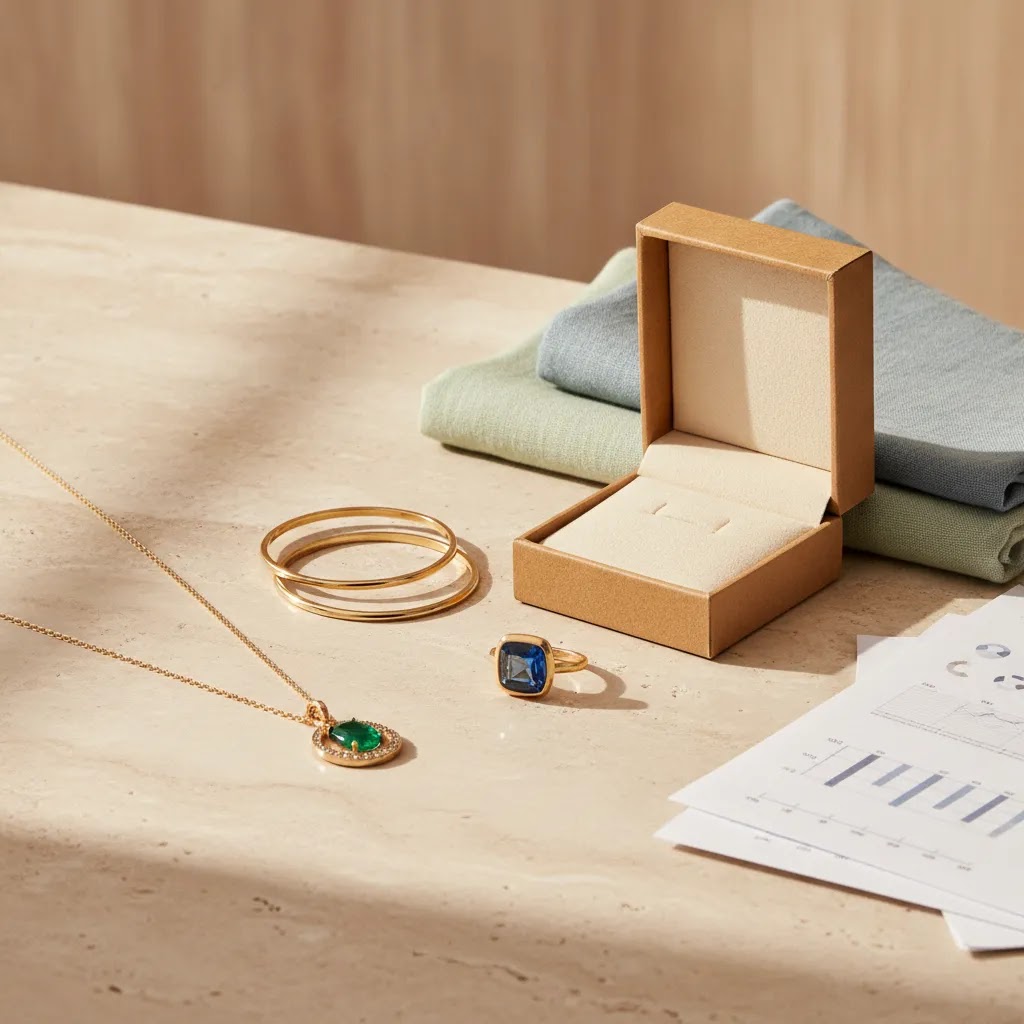
Why sustainability can influence loyalty and margins
A jewelry brand rarely improves profitability through claim language alone. Profit tends to improve when sustainability is translated into better business behavior across the collection. That may include clearer sourcing standards, stronger product storytelling, tighter assortment planning, and fewer credibility gaps between what the brand promises and what production can support.
For B2B buyers, sustainable jewelry often functions as a trust filter. A boutique owner, retail buyer, or fashion brand partner may not expect perfection, but they usually want consistency. If your brand can explain what your sustainability position covers, what it does not cover, and how that connects to repeatable production, you may become easier to reorder and easier to recommend.
This is where many brands either gain loyalty or lose it. A broad sustainability message can attract interest, but repeat business usually comes from operational follow-through. Readers new to the topic may want to review what is ethical jewelry and compare it with how your own line is positioned.
Profitability also depends on whether the sustainability model is commercially usable. If your claims create production friction, paperwork confusion, or frequent assortment changes, your margins may tighten. If the model supports reliable development, clear communication, and a believable brand promise, it could help increase customer lifetime value and reduce costly mistrust.
What “sustainable jewelry” can mean in practice (and why definitions matter)
There is no single universal definition of “sustainable jewelry” that automatically applies to every brand, product category, or supply chain. Terms like “sustainable,” “ethical,” and “responsible” are often used as shorthand, but they can mean very different things depending on how a business operates. From a B2B standpoint, this matters because retailers and wholesale buyers do not just evaluate your aesthetic. They evaluate your risk profile and credibility.
Vague sustainability language creates a gap between marketing and operations. That gap is where trust problems often start. A buyer may be willing to trial a new line based on a story, but reorders tend to depend on whether your team can explain the definition behind the story without changing it every season.
In practice, “sustainable jewelry” can refer to several different dimensions, and your job is to choose your scope and state it clearly. Depending on your business model, that scope might include supply chain traceability, labor and workplace expectations, manufacturing waste reduction, durability and repairability as a product goal, packaging choices, or internal policies about how suppliers are vetted and reapproved. You do not need to cover everything to be credible, but you do need to avoid implying coverage you cannot support.
Consider this as a simple claim boundary framework: first, define what you can say confidently because it is built into your process and can be explained consistently. Second, separate what you are working toward, where your direction is real but documentation or supplier inputs may still evolve. Third, list what you should not claim at all unless you can document it for the specific product, run, or component. This kind of discipline does not reduce your brand story. It usually makes it easier for retailers to repeat your message accurately and for your internal team to brief manufacturing partners without confusion.
Where profit gains actually come from

The phrase sustainable jewelry boosts brand loyalty profits can sound abstract until you map it to real commercial outcomes. In practice, profit gains tend to come from several operational advantages rather than from a single premium markup.
- Better repeat purchase potential. Customers and stockists who believe the brand story may be more willing to reorder, especially if messaging and product execution stay aligned.
- Lower trust erosion. Clear sourcing language may reduce the risk of returns, disputes, or damaged relationships caused by claims that cannot be explained.
- Stronger differentiation. In crowded categories, a disciplined sustainability position can help a jewelry brand avoid looking interchangeable.
- More efficient selling conversations. Retail partners often need concise reasons to carry a collection. Clear sourcing narratives can make that process easier.
- Improved assortment discipline. Brands that define sustainability operationally often make more deliberate SKU decisions, which may support healthier inventory control.
These gains are not automatic. A brand may still face higher development effort, extra supplier vetting, or slower approval cycles. Yet for many sustainable jewelry brands, the commercial upside comes from reduced confusion and improved confidence, not from inflated marketing promises.
If your team is shaping a broader brand position, it may help to review what makes a jewelry brand easier for wholesale partners to understand and trust.
Retention mechanics: how sustainability can strengthen loyalty beyond the first purchase
Where sustainability can quietly improve margins is not only at the point of first purchase. It can also support the long period between purchases, which is common in jewelry. Loyalty often depends on staying top of mind without relying on constant discounting or short-lived buzzwords.
For B2B brands selling through retailers or stockists, sustainability messaging can become a reason to re-engage accounts between seasons. If your sustainability position is clearly defined and repeatable, it can give your wholesale partners something consistent to sell again, even when the assortment evolves. That matters because many retail teams are balancing staff turnover, changing floor sets, and limited time to relearn a brand story every time they reorder.
In practice, retention support looks operational. Retailer staff typically need a short set of training points they can remember, such as what your claims cover, what your brand does not claim, and how that connects to product decisions. They also benefit from evergreen story assets that stay accurate across reorder cycles, rather than seasonal messaging that forces them to reset the narrative each time. Product-level consistency matters too. When a sustainability claim is attached to specific SKUs, it should remain stable enough that the retailer can reorder without worrying the story will change under their feet.
Sustainability strengthens loyalty when it is treated as a system. That system might include consistent naming conventions, a repeatable way of describing sourcing and manufacturing decisions, and internal discipline about which claims are approved for which products. Brands that rely only on a “green” headline often end up trading trust for attention. Brands that build a repeatable story and assortment structure usually make it easier for wholesale partners to reorder with confidence.
The business signals buyers and stockists respond to
Brand loyalty is earned through evidence that the business is dependable. In sustainable jewelry, that usually means your commercial signals need to be stronger than your slogans. Buyers often look for a few practical markers before they treat sustainability as part of your long-term value.
1. Defined claim boundaries
Serious buyers tend to respond better when a brand states exactly what its sustainability position applies to. Is it about sourcing criteria, manufacturing decisions, packaging choices, or overall business philosophy? Narrow, accurate language often performs better than broad claims because it is easier to defend and easier to repeat in sales conversations.
2. Product and message alignment
If the collection design, price architecture, and sourcing story feel disconnected, loyalty may weaken. A brand story that sounds premium but is not reflected in product execution can create hesitation. This is especially relevant for brands exploring design-led positioning alongside responsible sourcing, such as those studying luxury jewelry brands custom design services.
3. Manufacturer communication quality
A sustainable line is only as stable as the communication behind it. Brands often need a manufacturing partner that can support custom jewelry design and development, collaborative consultation, wholesale production, and global fulfillment with clear discussion around revisions, approvals, and repeatability. Royi Sal Jewelry positions its service model around that kind of collaboration, led by founder Royi Gal, whose background spans both design and manufacturing.
4. Reorder consistency
Loyalty often depends less on a launch and more on whether the next production run remains commercially reliable. If sourcing decisions or design specifications shift too often, buyers may hesitate to reorder even if they liked the original concept.
5. Honest sourcing education
Many B2B clients do not need a brand to be perfect. They need it to be credible. Educational content that explains why ethical sourcing is important in jewelry may support stronger sales enablement than broad, unqualified claims.
Documentation buyers may ask for (and how to prepare without overpromising)
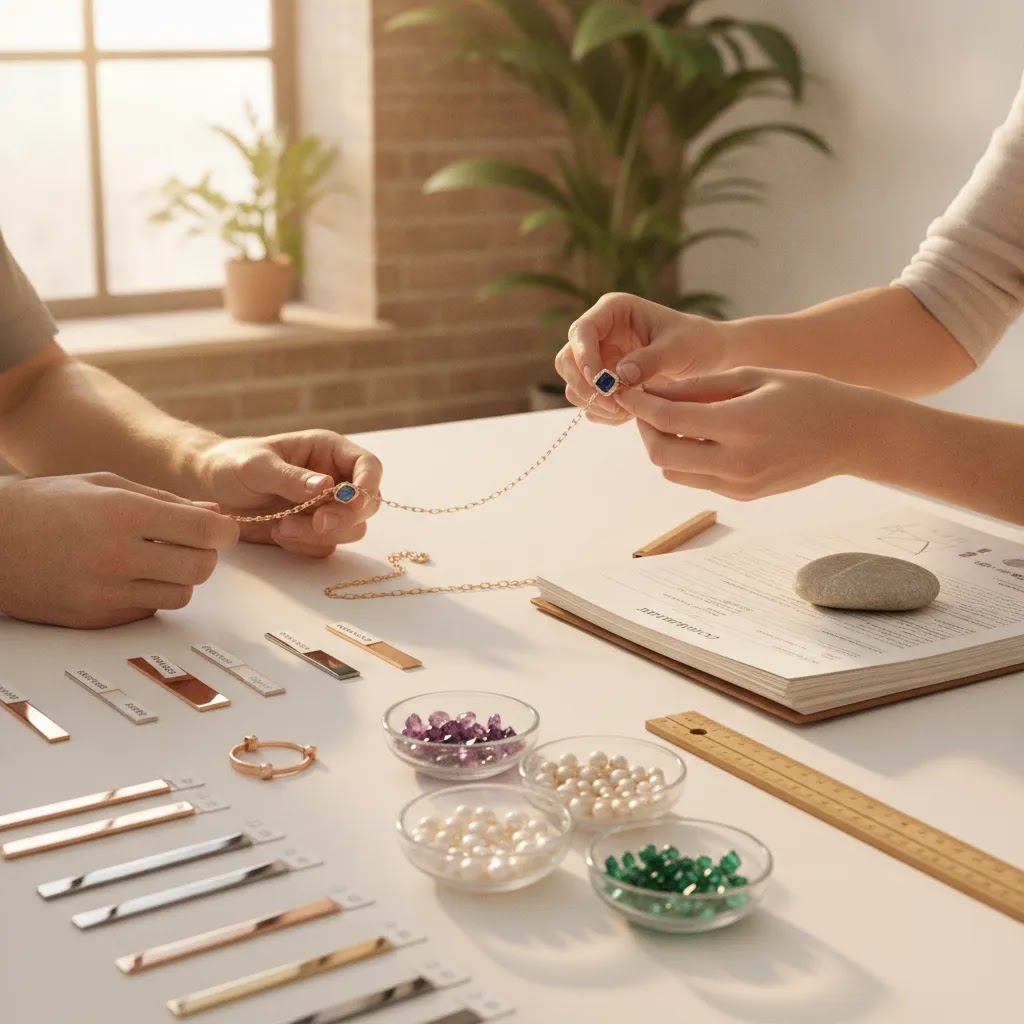
Wholesale growth, sustainability becomes easier to sell when it is easier to verify. Many buyers and retail partners will not ask for extensive paperwork on day one, but they often want enough evidence to feel comfortable repeating your claims to their customers. The goal is not to bury your team in documents. The goal is to build a small, repeatable proof set that supports sales conversations and reduces back-and-forth during reorders.
Documentation requests vary by account, but you may be asked for supplier declarations, brief summaries of your internal sourcing standards, or a clear explanation of what your claims mean at the product level. Some partners may want a simple chain-of-custody style overview for key components, while others may only need talking points their staff can use accurately. A practical approach is to assume your best wholesale accounts will eventually ask for more detail than your marketing copy provides.
One useful way to structure this is an internal evidence pack. It can be lightweight, but it should be consistent. Many brands keep a one-page sustainability position statement, a short set of approved claims and prohibited claims, and a product-level reference that clarifies which collections or SKUs the claim applies to. Some teams also prepare a staff FAQ for retailers, so store teams can explain your position without improvising. This can protect you from accidental overstatements that create reputational risk.
Gray areas are normal in manufacturing. Documentation can be partial, supplier inputs can change between runs, and the level of traceability may vary by component. Credibility does not require perfection. It requires clean communication. If something changes, update your pack, flag the update proactively to wholesale partners, and adjust product-level messaging so retailers are not repeating outdated information. If a claim cannot be documented for a particular run, it is usually safer to narrow the claim than to defend it later under pressure.
Strengths and Considerations
Strengths
- Sustainable positioning may improve brand trust if your sourcing language is clear, limited, and consistently supported across the collection.
- It can help a jewelry brand stand apart in wholesale conversations where buyers need a concise reason to trial a new line.
- Brands with disciplined sourcing standards often make sharper product decisions, which may improve assortment focus and reduce off-message SKUs.
- Clear sustainability messaging can support stronger repeat business if stockists and end customers understand what the brand actually stands for.
- Operationally credible sustainability may reduce costly confusion between sales, sourcing, and production teams.
- It can create a stronger base for long-term storytelling than trend-led positioning alone, especially for brands seeking stable identity rather than short bursts of attention.
Considerations
- Sustainable sourcing strategies may require more research, more documentation review, and more internal discipline than a standard buying approach.
- Custom development could take longer if the brand is still defining what sustainability means in practical sourcing and production terms.
- Some claims may be difficult to maintain consistently across reorders if supplier inputs, documentation, or production requirements change.
- Margin improvement is not guaranteed. Poor planning, weak communication, or overbroad marketing claims can offset the commercial benefits.
Who this strategy tends to fit best
This approach often fits jewelry entrepreneurs, boutique-led brands, and fashion labels that want loyalty built on trust rather than novelty alone. It may also suit brands entering wholesale channels where buyers need a coherent sourcing story they can explain to their own customers without excessive clarification.
It tends to work best for teams willing to define standards carefully, accept that custom development may involve revisions, and align sourcing messages with actual manufacturing realities. Brands looking for quick claim-based positioning without process discipline may find the model harder to sustain over time. Businesses exploring sustainable jewelry brands as a growth path should treat sourcing, design, and production as one commercial system rather than separate decisions.
How Royi Sal Jewelry can support this process

For brands evaluating sustainable sourcing through a custom or private label lens, Royi Sal Jewelry may be a useful partner to explore. The company focuses on custom jewelry design and manufacturing for B2B clients, with collaborative design consultation, wholesale production support, and global shipping and fulfillment. That matters because sourcing credibility is rarely solved by messaging alone. It usually needs to be carried through product development, review cycles, production planning, and communication with retail partners.
Royi Sal Jewelry is led by Royi Gal, whose role as both designer and manufacturer supports a more integrated conversation between concept and production. For a brand trying to balance sustainability goals with commercial practicality, that kind of partnership may help reduce disconnects between design intent and manufacturability. You can explore relevant capabilities through jewelry sourcing and jewelry manufacturing, then contact the team to discuss your collection brief, production goals, and sourcing questions.
How to evaluate a manufacturing partner for sustainable brand growth
Not every manufacturer will support a sustainability-driven brand in the same way. The right evaluation process should focus on whether the partner can help you protect trust while keeping development commercially workable.
1. Design capability and custom service range
If your brand message depends on distinctive product identity, design capability matters. A manufacturer should be able to discuss custom development clearly, explain revision expectations, and help you assess whether your sourcing position can be carried into a repeatable product line. This is often more valuable than broad promises.
2. Communication quality and process transparency
Ask how project discussions are handled, how approvals are documented, and how sampling feedback is managed. Sustainable positioning can create extra scrutiny, so unclear communication may become expensive. A reliable partner should help you understand what can likely be achieved, what may require development trade-offs, and where uncertainty still exists.
3. Quality consistency across production runs
Loyalty depends on repeatability. A well-made first run is helpful, but long-term profitability usually depends on whether the collection can be produced consistently enough to support reorders and wholesale confidence. Ask about review stages, production oversight, and how the team handles changes during development.
4. Order flexibility and planning realism
Many growing brands need a manufacturer that understands scaling stages. You may need room to test a line before larger reorder commitments. At the same time, you need honest discussion around minimum order expectations, sample development effort, and how order size could affect production planning. A partner that speaks plainly about these issues is often easier to work with over time.
5. Global fulfillment and operational fit
If your business sells across markets, logistics support may influence both loyalty and margin. Delays, inconsistent packing standards, or unclear shipment coordination can weaken the value created by a strong sourcing story. Royi Sal Jewelry presents itself as a global B2B partner, which may be relevant for brands that need design and manufacturing support combined with international fulfillment considerations.
If you are still mapping the broader option space, it may also help to review sustainable jewelry brands ethical sourcing as part of your sourcing criteria development.
Frequently Asked Questions
Does sustainable jewelry always lead to higher profits?
No. Profit improvement depends on how well sustainability is integrated into sourcing, product positioning, and manufacturing decisions. A clear and credible strategy may support stronger loyalty and repeat orders, but weak documentation, unclear claim boundaries, or inefficient development could reduce the commercial benefit. The business result usually depends on execution quality rather than message strength alone.
Why does sustainability affect brand loyalty in jewelry?
Jewelry is a trust-sensitive category. Buyers often respond to consistency, clarity, and product meaning. If your sourcing position is credible and your collection delivers on the promise, customers and stockists may be more likely to return. Loyalty tends to grow when the brand story is easy to understand and does not create friction during sales, reorder, or fulfillment conversations.
What should a jewelry brand define before marketing itself as sustainable?
A brand should define what its claim actually covers, how that position connects to sourcing and production, and what evidence or supplier communication supports it. It also helps to decide what the brand will not claim. That discipline may reduce legal, reputational, and operational risk while making your positioning easier for wholesale partners to trust and repeat accurately.
Can custom manufacturing support a sustainability-focused jewelry line?
Yes, in many cases it can, but it usually requires careful briefing and realistic expectations. Custom manufacturing may support stronger product differentiation and closer alignment between brand story and final collection. It can also involve sample rounds, revisions, and additional planning. A collaborative manufacturer may help you balance originality, manufacturability, and sourcing communication more effectively.
How do retail buyers evaluate sustainable jewelry brands?
Many buyers look at credibility before they look at claims volume. They may assess whether your sourcing language is specific, whether the collection feels commercially coherent, and whether reorders are likely to remain consistent. Buyers also tend to notice whether your team can answer operational questions clearly. Trust is often built through precise communication rather than broad mission statements.
What role does manufacturing consistency play in loyalty?
It plays a major role. Loyalty usually depends on whether the second and third orders meet expectations, not just the first. If quality, communication, or delivery coordination becomes uneven, the original brand story may lose value quickly. A stable production relationship may help preserve trust, support wholesale reorders, and reduce the cost of fixing preventable mismatches.
Should emerging brands lead with sustainability or design?
Most growing brands need both, but the stronger approach is usually alignment rather than choosing one over the other. A sustainability claim without compelling product may struggle commercially. Strong design without sourcing clarity may weaken trust. Brands often perform better when design identity, sourcing communication, and production planning support one another as part of one market position.
What are the most sustainable jewelry brands?
There is no single universal ranking that applies across the industry, because “most sustainable” depends on how a brand defines sustainability, what it can document, and how consistently it applies its standards across products and reorders. From a wholesale perspective, the more useful question is whether a brand’s claims are specific, repeatable, and supported by clear supplier communication. Many buyers prefer a narrower, well-supported definition over a broad promise that cannot be validated.
How does sustainability strengthen loyalty?
It can strengthen loyalty by reducing uncertainty and giving customers and stockists a consistent reason to stay connected to the brand over time. In practice, loyalty grows when your sustainability position is easy to explain, stays stable across reorders, and is reinforced by product-level messaging that does not change without notice. This often supports repeat purchases because the story remains reliable, not because it is louder.
Are 73% of Gen Z willing to pay more for sustainable products?
You will see statistics like this quoted in marketing, but you should be cautious about treating a single number as universally reliable for your jewelry brand. Willingness to pay more can depend on the product category, how “sustainable” is defined, whether the claim is credible, and the customer’s budget reality at the point of purchase. For B2B planning, it is usually safer to focus on what you can execute and document consistently, then test price positioning with your actual retail partners and audience.
What is one benefit of sustainable business for jewelry brands?
One practical benefit is reduced trust erosion. When your sourcing and sustainability claims are specific and supported, you may spend less time defending your story and more time building reorder momentum. That can protect long-term relationships with retailers and customers, which is often where profitability is decided.
How can Royi Sal Jewelry help a brand evaluate this strategy?
Royi Sal Jewelry works with B2B clients on custom jewelry design and manufacturing, supported by collaborative consultation and global fulfillment. For a brand assessing sustainability-driven growth, that may provide a practical setting to discuss concept development, production planning, and sourcing-related communication as one connected process. A direct consultation can help clarify fit, scope, and next development steps.
Key Takeaways
- Sustainable jewelry may improve loyalty and profitability when claims are specific, credible, and carried through production.
- The commercial upside often comes from trust, repeat business, and clearer assortment discipline rather than from simple premium pricing.
- Manufacturing fit matters. A weak production partner can undermine a strong sourcing message.
- Brands should evaluate communication quality, design capability, consistency, and operational realism before committing to a manufacturing relationship.
- Royi Sal Jewelry may be a relevant partner for brands that want collaborative custom development and global B2B production support.
Conclusion
Sustainability becomes commercially valuable when it is managed as part of the product system, not treated as a marketing add-on. For jewelry brands, that can mean clearer sourcing language, tighter collection planning, stronger buyer confidence, and better conditions for repeat business. It can also mean more work upfront, especially during development and manufacturer selection. If your team is evaluating how sustainable jewelry could support loyalty and margins, Royi Sal Jewelry may be worth exploring as a collaborative B2B manufacturing resource. Visit royisal.com to learn more about the design and manufacturing process, or contact the team to discuss your custom jewelry brief, sourcing priorities, and growth goals.