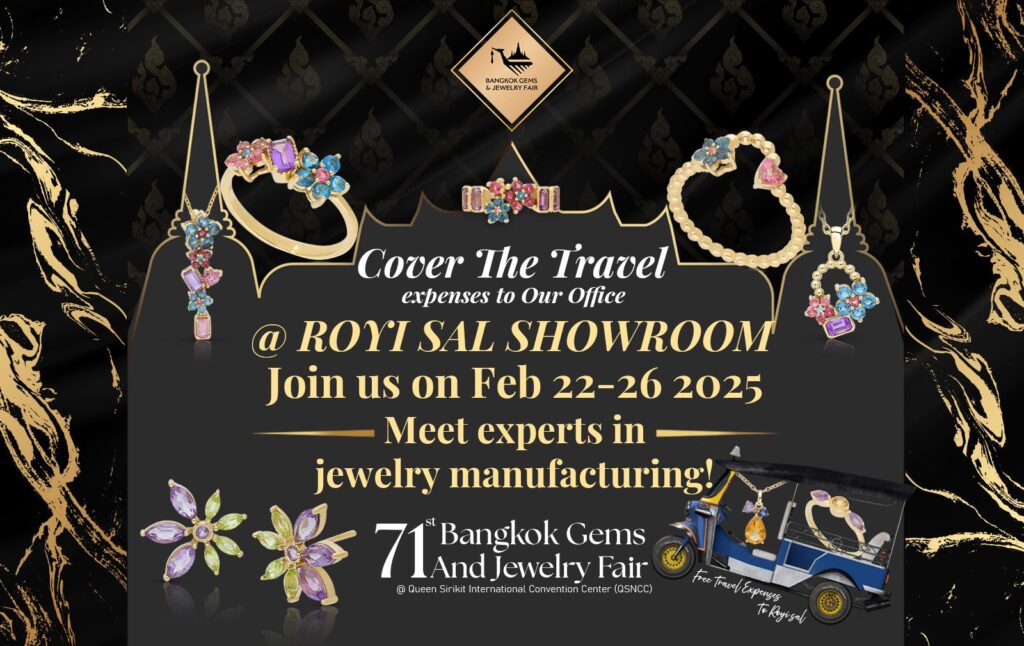
Thailand Destination Elevate Jewelry Business

Thailand destination elevate jewelry business describes a sourcing strategy, not a travel idea. It means using Thailand as a manufacturing base to improve how your jewelry brand develops products, manages wholesale supply, and supports long-term growth.

If you run a growing jewelry line, the question is not whether Thailand sounds attractive. The real question is whether it can support your product standards, launch calendar, reorder needs, and supplier communication expectations. That is where a practical evaluation matters.

Many brands consider Thailand when they want stronger structure around custom development and wholesale production. This is especially true if they are building a more reliable jewelry business and need a manufacturing partner, not a transactional vendor. For broader context, it also helps to review thailand jewelry sourcing as part of your decision process.

What thailand destination elevate jewelry business means

In B2B jewelry, “Thailand destination elevate jewelry business” works as shorthand for a sourcing idea. In simple terms, a brand chooses Thailand because the country may help it operate more effectively. That can include custom design development, better production coordination, more consistent wholesale planning, or a more collaborative way to build a private label collection.

The term matters because many brand owners search with broad language before they narrow their options. They may want to solve several problems at once, such as sample inconsistency, difficult communication, unpredictable production support, or limited growth capacity. At that stage, buyers do not view Thailand only as a country. They view it as a business environment that may support custom manufacturing and wholesale jewelry operations more effectively.

For Royi Sal Jewelry, the relevant context is clear. The company operates as a B2B custom jewelry design and manufacturing partner. It offers collaborative design consultation, custom jewelry development, wholesale manufacturing, and global shipping support. As a result, the phrase has clear commercial value because a jewelry brand considering Thailand often wants that kind of end-to-end relationship.

How thailand destination elevate jewelry business may support growth

A Thailand-based sourcing strategy usually works through several connected advantages rather than one dramatic change. Most jewelry brands do not elevate the business just by switching countries. Instead, they improve results by finding a better operational fit.

1. Design collaboration may become more structured

If your brand sells differentiated products rather than open-market basics, design interpretation matters. A manufacturer with a collaborative consultation model may translate concepts into production-ready pieces more clearly. Royi Sal Jewelry positions custom design and development as a core service, which helps businesses that need more than simple order placement. You can also explore 3d jewelry design to understand how digital development supports clearer product planning.

2. Manufacturing may become easier to manage

Growth usually creates complexity. More SKUs, more revisions, and more reorder pressure make supplier management harder. Working with an established jewelry manufacturing partner in Thailand may give your brand a more stable development-to-production path, depending on your product scope and approval discipline.

3. Wholesale planning may improve

Brands supplying boutiques, marketplaces, or their own direct channels often need a manufacturer that can think in terms of production runs and repeatability. This is different from ordering finished goods as if they were retail items. If your model depends on scaling assortment carefully, Thailand may enter the conversation through wholesale suppliers for resellers and custom production planning.

4. Global shipping support can matter

International buyers often need help beyond manufacturing itself. Royi Sal Jewelry presents global shipping and order fulfillment as part of its service model. That does not remove logistics complexity. However, it may simplify coordination for brands managing overseas production and cross-border delivery.

Key components behind thailand destination elevate jewelry business

Thailand destination elevate jewelry business illustration showing supplier evaluation and jewelry development planning

If you are evaluating whether Thailand could elevate your jewelry business, focus on these operational components instead of broad country-level claims.

  • Custom development capability: Can the partner support original collection work, revisions, and production preparation?
  • Communication quality: Does the partner answer questions clearly and flag risks early enough to avoid preventable delays?
  • Wholesale readiness: Can the supplier work within the realities of MOQ planning, reorder management, and B2B launch timing?
  • Fulfillment support: Is there a clear path from approved design to shipped order?
  • Business fit: Does the partner understand the needs of private label brands, boutiques, and scaling online sellers?

These points are more useful than generic praise. A supplier relationship only helps if it matches your operating model. For example, a jewelry design partner may be ideal for a custom collection launch, while a more standardized wholesale setup may suit established repeat-order programs. In addition, brands that care about sourcing policies can review why ethical sourcing matters for jewelry brands when comparing long-term partners.

Glossary of terms used here

  • Custom design brief: A document or communication set that explains your collection concept, references, target market, and production goals.
  • Private label: A model where a partner develops or manufactures products for sale under your own brand name.
  • Production run: The batch manufacturing stage that starts after sampling and revisions end.
  • MOQ: Minimum order quantity, which may vary by project scope and production requirements.

How to evaluate Thailand’s manufacturing ecosystem for your brand

A strong sourcing market is valuable because of how the work connects, not because of reputation alone. If Thailand is on your shortlist, evaluate whether the local environment can support the full chain your brand depends on. That includes development handoff, production flow, packaging coordination, and shipment readiness.

For a growing brand, the practical question is whether your manufacturing partner can operate inside a connected system. If designs need refinement, samples need approval, packaging details need alignment, and finished orders need export coordination, those steps should not feel disconnected. A sourcing base becomes more useful when your partner manages those handoffs clearly and keeps the process moving with fewer gaps between stages.

This is why you should evaluate Thailand as an operating environment rather than an abstract advantage. Ask how the team transfers production information from design to manufacturing, how it coordinates packaging or labeling requirements, and how it prepares orders for shipment once approvals are complete. If those answers are vague, the country itself will not solve the problem. If the workflow is organized, Thailand may support smoother execution for your brand.

Workflow checkpoints you should review

In practice, most brands review the same core handoffs. They check design development, sample approvals, packaging alignment, and shipment readiness. Therefore, a supplier should explain each stage in a clear order and show how the team manages revisions before production begins.

Workflow stage What the article says to evaluate Why it matters
Development handoff How production information is transferred from design to manufacturing Reduces confusion before production starts
Production flow Whether the partner can keep connected steps moving with fewer gaps Supports smoother execution
Packaging coordination How packaging or labeling requirements are coordinated Helps align finished orders with brand requirements
Shipment readiness How orders are prepared for shipment once approvals are complete Improves export and fulfillment planning

Why thailand destination elevate jewelry business matters for B2B brands

The phrase matters because sourcing location affects more than unit economics. It influences how easily your business can launch new styles, solve quality issues, coordinate approvals, and replenish proven SKUs.

For a small jewelry business, those details can shape growth more than the initial quote. For example, if you are building an jewelry ecommerce model, you may need a partner who can support frequent assortment changes and maintain communication through sample rounds. If you are selling to stores, your priorities may shift toward consistency and wholesale order coordination.

This is also why many searches around Thailand overlap with topics like bangkok jewelry wholesale. Buyers are often trying to understand the full operating picture, not just where factories are located. They want to know whether Thailand can support the way their business actually runs. For wider sourcing context, the Gemological Institute of America offers recognized education and reference material used across the jewelry trade.

Thailand as a destination vs. thailand destination elevate jewelry business

Wholesale jewelry Thailand manufacturing environment for brands evaluating reliable production support

There is a useful distinction here. Thailand as a destination is broad. It may refer to trade visits, supplier discovery, or general market research. Thailand as a sourcing strategy is narrower and more actionable. It asks whether working with a Thailand-based manufacturing partner could improve your brand’s execution.

That distinction matters because a business decision should be measured against operating outcomes. You are not choosing a destination because it sounds established. You are choosing a production framework that may help your brand handle custom design, wholesale supply, and launch management with fewer avoidable problems.

For many brands, the stronger question is not “Should we source from Thailand?” but “What type of Thailand partner fits our current stage?” A private label startup and a multi-channel brand usually need different levels of support.

Why craftsmanship history matters less than process discipline

Thailand is often associated with jewelry craftsmanship, and that can be a useful signal when you start evaluating suppliers. Skilled labor, technical interpretation, and attention to detail do matter in custom development and repeat production. Still, reputation should only open the conversation. It should not replace process verification.

For a B2B buyer, consistent results usually come from documented approvals, clear sample review stages, and repeatable production controls. A supplier may have strong craftsmanship experience, but your brand still needs to know how the team records revisions, confirms final approvals, and carries the same specifications into reorders. That is what turns talent into reliable commercial output.

This is where experienced buyers separate image from execution. If you are choosing between sourcing options, focus less on broad heritage claims and more on how the partner manages sampling, technical communication, and production consistency. Craftsmanship can be an advantage, but process discipline helps protect your collection once the business depends on repeat orders and active sales channels.

For more on standards and controls, you can review quality standards in the world for the jewelry industry. You can also compare official trade guidance from the Federation of Thai Industries when researching Thailand’s manufacturing environment.

When you would encounter this option

You are most likely to evaluate Thailand in these business situations:

  • Your current supplier relationship feels too transactional for custom collection work.
  • You need more guidance in turning design ideas into manufacturable products.
  • Your brand is moving from ad hoc ordering into structured wholesale planning.
  • You are reassessing how to support both online and reseller channels.
  • You want a partner that can combine design, manufacturing, and global fulfillment coordination.

This often appears during growth stages, not only at launch. A newer founder may search Thailand while learning how private label manufacturing works. Meanwhile, a more established operator may evaluate it while refining sourcing risk, assortment planning, or channel expansion into broader jewelry business operations.

What to verify before shifting production to Thailand

Jewelry wholesale Thailand supplier vetting and operational planning for jewelry business growth

If your brand is moving from another supplier or another country, evaluate the transition SKU by SKU before any broader commitment. Start by reviewing which products can transfer with minimal change and which ones may require redesign, updated specifications, or a new sampling round. Many production problems begin because a brand assumes its current product information is complete enough for handoff when it is not.

Check your existing specs for dimensions, construction details, finishing expectations, packaging requirements, and approval history. If any of that lives only in scattered emails or past sample conversations, the new manufacturer may have to interpret too much on its own. As a result, risk increases during the first production cycle. Royi Gal’s combined design and manufacturing background is especially relevant in this stage because transition work often depends on translating existing products into clearer production instructions.

It also helps to confirm how sample workflow, revision handling, lead time assumptions, and reorder planning will work before you move active styles. Brands with current sales channels cannot afford a sourcing change that interrupts replenishment. Therefore, a careful transition usually starts with a controlled test. Then it moves into a broader transfer once sample approvals, communication rhythm, and production timing have been validated.

A practical Royi Sal Jewelry evaluation

Royi Sal Jewelry is relevant to this topic because the company is positioned as a professional B2B custom jewelry design and manufacturing partner, not a retail seller. Its services include custom jewelry design and development, collaborative design consultation, wholesale and private label manufacturing, and global shipping and fulfillment support. Those capabilities align closely with what many brands look for when they evaluate Thailand as a strategic manufacturing destination.

The company is led by Royi Gal, whose background combines jewelry design and manufacturing. That dual perspective matters for businesses that need help moving from concept to production in a more controlled way. In practice, a founder-led operation with both design and manufacturing understanding may be especially useful if your team needs input on how to brief a collection clearly and manage revisions realistically.

As a practical resource, Royi Sal Jewelry may fit brands that want a collaborative development process rather than a simple catalog purchase. If you are comparing options in wholesale jewelry or looking for a more capable manufacturing relationship, you can explore Royi Sal Jewelry’s custom design and production approach at royisal.com and contact the team to discuss your project scope.

Strengths and Considerations

Strengths

  • Thailand can be evaluated as a strategic sourcing base rather than just a supplier location, which helps brands make better long-term decisions.
  • A collaborative custom manufacturing model may support businesses that need design interpretation, development feedback, and production planning.
  • Wholesale and private label brands may benefit from a supplier relationship built around repeat production rather than one-off retail transactions.
  • Global shipping and fulfillment support can simplify coordination for international buyers, depending on the project structure.
  • Founder-led expertise from both a design and manufacturing perspective may help bridge the gap between creative vision and production reality.

Considerations

  • Thailand is not automatically the right fit for every jewelry business. Supplier match, communication habits, and workflow discipline still matter.
  • Custom jewelry development typically involves revisions, approvals, and sampling rounds that may extend timelines depending on complexity.
  • Minimum order quantities, production sequencing, and launch timing can vary widely by project, so planning assumptions should be tested early.
  • A strong sourcing country does not remove the need for detailed briefs, specification control, and realistic reorder forecasting.

Frequently Asked Questions

Thailand wholesale jewelry sourcing strategy scene for growing small jewelry business brands

What does “thailand destination elevate jewelry business” actually mean?

In a B2B jewelry context, it refers to using Thailand as a strategic base for sourcing, custom development, or wholesale manufacturing to improve business performance. The phrase is best treated as a sourcing and operations concept, not a consumer travel idea. For most brands, the value depends on whether a Thailand-based partner can support communication, product development, and repeat production in a way that fits the business.

Is Thailand only relevant for large jewelry brands?

No. Smaller brands may also consider Thailand, especially if they need collaborative support with custom development or private label manufacturing. The key issue is not company size alone. It is whether your project scope, design needs, and ordering model align with the supplier’s way of working. A small business may benefit substantially from clearer development structure if growth is creating operational strain.

Can Thailand help an online jewelry business?

It may, particularly if your online business depends on original products, repeatable quality, and consistent launch planning. Ecommerce brands often need frequent product updates and dependable supplier communication. A manufacturer that can support custom design, production coordination, and fulfillment planning may reduce friction. Results still depend on your internal product planning, approvals, and the clarity of your design brief.

How is this different from simply buying wholesale jewelry?

Buying wholesale jewelry can mean selecting ready-made items, while a Thailand-based growth strategy may involve custom development, private label work, or a deeper manufacturing partnership. If your goal is differentiation, brand control, or long-term supply stability, custom manufacturing may matter more than simple stock purchasing. The right path depends on whether you prioritize speed, originality, reorder control, or a combination of all three.

What should a jewelry brand verify before choosing a Thailand manufacturing partner?

You should usually verify custom design capability, communication quality, development workflow, fulfillment support, and how the supplier handles approvals. It also helps to discuss realistic expectations around revisions, production timing, and minimum order quantities. A country-level reputation is never enough on its own. The partner’s actual process is what will shape your day-to-day operating experience.

Does Thailand automatically mean better quality?

No. Quality comes from partner-level controls, technical interpretation, sampling discipline, and production consistency. Thailand may be a strong sourcing option for many brands, but no location guarantees results. You still need to evaluate how a supplier manages revisions, approves samples, and communicates manufacturing realities before you scale into a larger production run.

Why would a brand choose a collaborative manufacturer instead of a simple vendor?

A collaborative manufacturer may be better suited to brands building original collections or solving recurring development problems. If your business needs help translating ideas into manufacturable products, a design-and-manufacturing partner can be more useful than a quote-only supplier. This may be especially relevant for private label founders and growing wholesale brands that need more process support.

How does Royi Sal Jewelry fit this topic?

Royi Sal Jewelry fits because it offers B2B custom jewelry design and manufacturing services in a partnership model. The company focuses on collaborative design consultation, wholesale and private label manufacturing, and global shipping support. That combination is relevant for brands evaluating Thailand not just as a sourcing destination, but as a way to improve how their jewelry business develops and delivers products.

How do you move jewelry production to Thailand without disrupting current sales?

The safest approach is usually to treat the move as a controlled transition rather than a full replacement from the start. Review active SKUs, confirm which products can transfer with existing specifications, and test the new sample and approval workflow before shifting core replenishment items. Brands with live sales channels should also confirm reorder timing assumptions early so the transition does not create stock gaps.

What parts of a jewelry collection should be reviewed before transferring to a new manufacturer in Thailand?

Review the full production record for each SKU, including design files, dimensions, finishing expectations, packaging instructions, and any past revision notes that affected approvals. You should also identify which products rely on undocumented know-how from the current supplier. If a style cannot be handed off clearly, it may need redevelopment before it is ready for a new manufacturing partner.

Does Thailand offer a complete jewelry manufacturing ecosystem for private label brands?

It may, depending on the partner and the structure around the project. The main issue is whether your manufacturer can coordinate the connected steps your brand needs, such as development, production flow, packaging preparation, and shipment readiness. A country may have strong sourcing potential, but the business value depends on how well those steps are managed in practice.

How should a brand compare Thailand with its current sourcing setup?

Compare the two options based on workflow, not just cost or general reputation. Look at how each setup handles design interpretation, sample revisions, approval controls, reorder planning, and communication across production stages. If Thailand offers a clearer and more coordinated process for your business model, it may be the stronger fit. If not, changing countries alone may not improve performance.

Key Takeaways

  • “Thailand destination elevate jewelry business” is best understood as a sourcing and manufacturing strategy for B2B jewelry brands.
  • The real value lies in operational fit, including design collaboration, communication quality, wholesale readiness, and fulfillment support.
  • Thailand should be evaluated partner by partner, not through broad assumptions about the country alone.
  • Royi Sal Jewelry is positioned as a collaborative custom design and manufacturing resource for brands exploring Thailand-based production support.
  • Sampling rounds, approvals, MOQ planning, and production workflows still require realistic expectations and careful management.

Conclusion

For a jewelry brand, Thailand only elevates the business if the partnership structure improves how you design, approve, produce, and ship your collection. That is the useful definition behind this phrase. It is less about destination branding and more about whether a Thailand-based manufacturing relationship can support the commercial realities of your product line.

If your team is evaluating custom development, private label production, or a more dependable wholesale workflow, Royi Sal Jewelry offers a relevant B2B model built around collaborative design, manufacturing, and global fulfillment support. Visit royisal.com to learn more about the process, or contact the team to discuss your project goals and see whether the fit makes sense for your next collection.

Manufacturing timelines, minimum order quantities, development processes, shipping arrangements, and production outcomes vary by project scope, design complexity, approval requirements, and overall business needs. Prospective clients should contact Royi Sal Jewelry directly for information specific to their project before making sourcing, development, or production decisions.