

S925 Meaning: Understanding Silver Jewelry Markings
What S925 Usually Means
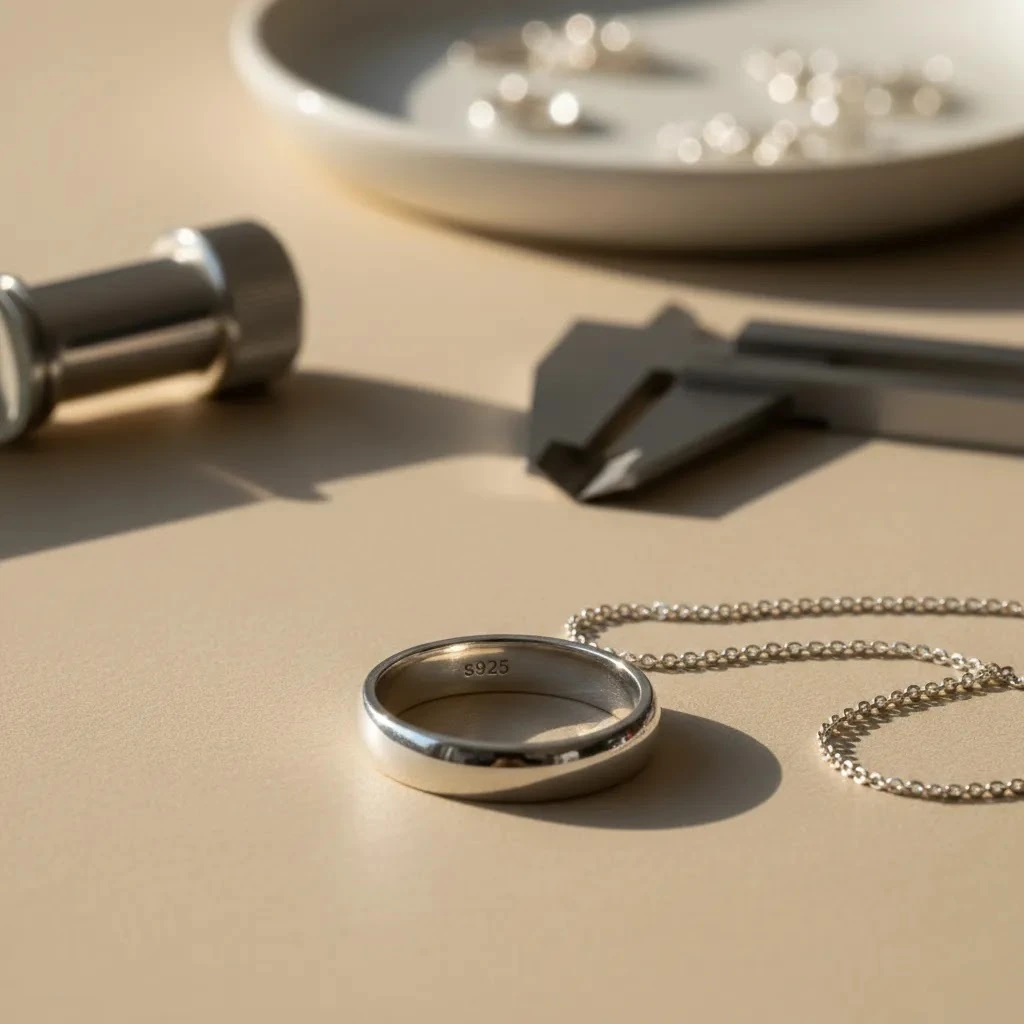
S925 generally refers to sterling silver. The “925” portion commonly indicates a silver content standard associated with sterling silver, while the “S” is often used as a shorthand reference to silver. In practical trade use, many suppliers, factories, and sellers use s925, 925, or sterling-related markings somewhat interchangeably.
That said, a hallmark should be treated as one data point, not the whole decision. In B2B jewelry sourcing, the stamp on a ring, necklace, or other item may support a material claim, but it does not automatically confirm manufacturing consistency, finishing quality, or whether every unit in a batch meets the same standard. This is one reason experienced buyers look beyond the mark itself.
If your team is building a private label collection, it helps to first understand what is 925 sterling silver in sourcing and production terms. From there, you can better assess whether an s925 ring or s925 necklace listing is described clearly, stamped consistently, and supported by a trustworthy supplier process.
What “925” Actually Represents in the Mark S925
Here’s the thing: “925” is essentially a shorthand way of expressing a fineness figure used in jewelry trade labeling. You will often hear people describe it as “92.5%,” and the broader idea behind the number is that it communicates a specific silver purity claim relative to an agreed standard. In many parts of the industry, this kind of numbering is used because it creates a quick, widely recognized format that can travel across languages, vendors, and marketplaces.
In practice, “925” is part of a millesimal-style approach to fineness communication, meaning the number is treated as a standardized signal about composition rather than a marketing phrase. For B2B teams, that is helpful because it supports cleaner data handling in catalogs, line sheets, and supplier spec sheets. It also reduces ambiguity compared with relying only on descriptive terms like “silver” or “sterling,” which can be used loosely in some listings.
You will also see the stamp presented as “s925,” “.925,” or “925.” In many listings these formats are treated as the same intent: the supplier is representing the item as sterling silver. Still, stamp style does not replace verification. A supplier can stamp correctly and still have inconsistent production controls, or ship mixed-mark inventory if stamping is not locked into the approved sample and documentation.
For resale environments, the benefit of understanding the number system is accuracy. Your product descriptions, invoices, and internal SKU notes should reflect a consistent claim that matches your documentation trail. If your team has to resolve a customer dispute, process clarity usually matters more than whether the stamp includes a leading letter.
Why Jewelry Markings Matter in B2B Sourcing
For retailers and brand founders, markings affect more than product descriptions. They influence incoming inspection, customer-facing claims, resale confidence, and return risk. If your catalog says “sterling silver” but your team has not verified the basis for that claim, you may create avoidable problems later.
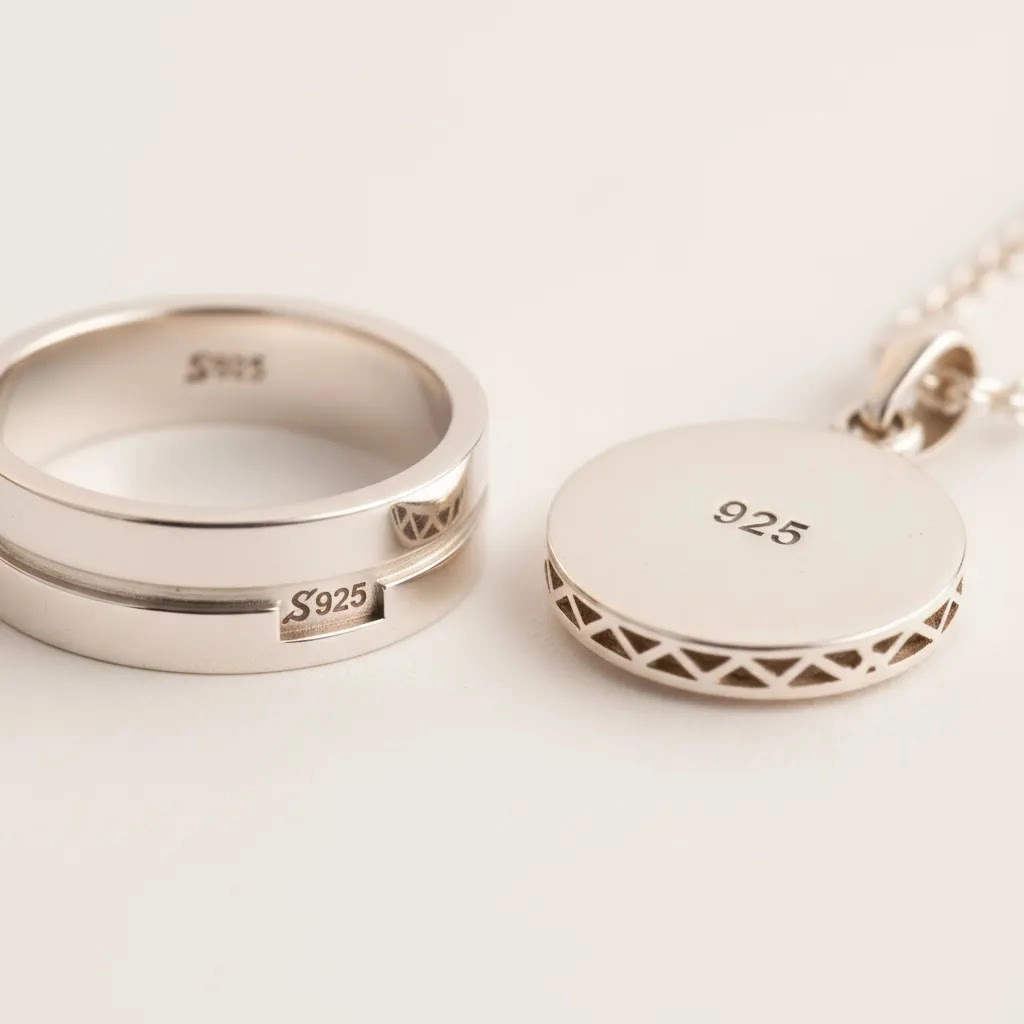
Marks like s925 can be useful because they create a visible reference point on the piece. They may help with SKU verification, product page drafting, and internal quality checks during receiving. They can also support consistency across a collection if your manufacturer follows a defined stamping standard.
Still, the jewelry industry has long dealt with uneven labeling practices. Some factories stamp correctly and maintain stable production controls. Others may use broad shorthand, inconsistent placement, or unclear documentation. This is why buyers often need a stronger review process around hallmarks, technical specifications, and approved samples.
If your team is comparing stamp formats, this related article on what does 925 mean on jewelry can help clarify how markings are typically interpreted in the trade.
S925 vs 925
From a practical sourcing standpoint, s925 vs 925 is usually not a major material distinction. In many cases, both marks are used to indicate sterling silver. The difference is often formatting rather than substance. Some manufacturers prefer the added “S” for clarity, while others stamp only “925” due to design space, tooling preference, or established production habits.
For a business buyer, the more important issue is consistency. If your approved pre-production sample is stamped s925, but bulk units arrive with mixed marks or no marks at all, that could create merchandising and trust issues. The same applies if the mark appears on some components but not others across a coordinated line.
There is also a presentation issue. Buyers sometimes assume s925 sounds more specific than 925, but that is not necessarily true. Neither format replaces proper specification control. A clear purchase order, approved sample, and defined QC checklist usually matter more than the exact stamp format by itself.
So, what does s925 mean in real-world buying terms? Usually, it suggests the item is being represented as sterling silver. What it does not do is guarantee that the supplier’s alloy control, finishing process, or batch consistency meets your brand standard.
Common S925 Hallmark Variations You May See (and How to Handle Them in Product Listings)
What many brand owners overlook is how many hallmark abbreviations show up once you source across multiple factories or product categories. Even when the intended claim is “sterling silver,” you may see different stamp formats on different SKUs. Common examples you may encounter include “925,” “.925,” “s925,” “ster,” “sterling,” “stg,” and in some cases abbreviations like “s.s.” used to signal sterling silver. These variations are typically about convention, space constraints, or shop preference, not necessarily a different material claim.
From a catalog management standpoint, your job is to standardize the way your brand communicates the claim, even if the stamp format varies. That means choosing consistent naming for product pages, invoices, and internal SKU notes, and then mapping stamp variations to that standard so your team does not accidentally create multiple product descriptions for the same concept. Think of it this way: stamp text is a physical attribute, but your product data needs a controlled vocabulary.
In practice, you will want to confirm hallmark details during sampling, not after a bulk order arrives. Ask for confirmation of the exact stamp text per SKU group, where it will be placed, and whether it will remain the same for repeat orders. If a supplier uses different stamp dies depending on production line, component size, or tooling, that should be disclosed and approved before production. This reduces the risk of mixed-mark inventory that creates confusion in receiving, merchandising, and customer support workflows.

How to Verify S925 Jewelry Before You Buy
If you are sourcing for resale or private label production, verification should be process-based. Start with supplier documentation and move through sample approval, production controls, and receiving inspection. A mark on the product can be helpful, but it should sit inside a broader review framework.
Ask the supplier to define how they label sterling silver items and where the mark will appear. Clarify whether all units will be stamped the same way across rings, necklaces, earrings, or mixed-category sets. Small inconsistencies may seem minor during development, but they can become expensive once inventory is live.
You should also review finishing details. Surface treatments can affect how a piece looks over time, especially if your assortment includes plated elements or mixed construction methods. This article on understanding electroplating key process jewelry making is useful if your team needs to assess how finishing layers may affect appearance, maintenance expectations, or product copy.
For businesses selling silver-marked products, authenticity controls matter. Royi Sal Jewelry covers this well in how ensure jewelry business offers authentic 925 sterling silver. It is a practical reminder that reliable sourcing usually depends on supplier transparency, sample review, and repeatable production standards rather than stamp language alone.
- Request a pre-production sample with the exact mark placement.
- Confirm the material description that will appear on invoices, specifications, and packing records.
- Check whether the hallmark is legible without damaging the design aesthetic.
- Inspect multiple units from the same batch, not just one hero sample.
- Align your product claims with what the supplier can consistently deliver.
Strengths and Considerations
Strengths
- S925 is widely recognized in trade settings as a reference to sterling silver, which may make supplier communication easier.
- The mark can support internal receiving checks and help your team distinguish silver lines from non-silver assortments.
- Using a consistent hallmark across a collection may improve product data management, cataloging, and merchandising accuracy.
- For private label brands, clear silver markings may contribute to stronger customer-facing product descriptions when paired with proper supplier verification.
- When included in approved samples and specifications, the marking can become part of a broader quality control standard for repeat orders.
Considerations
- An s925 stamp alone does not verify authenticity, batch consistency, or workmanship quality.
- Some suppliers may use different hallmark formats across product categories, which can create inconsistency in your assortment.
- Very small pieces may have limited space for stamping, so placement and legibility can vary depending on design constraints.
- If the item uses finishing treatments or component combinations, the stamp may not explain the full construction method.
Does S925 Tarnish? What That Means for Returns, Care Guidance, and Finish Decisions
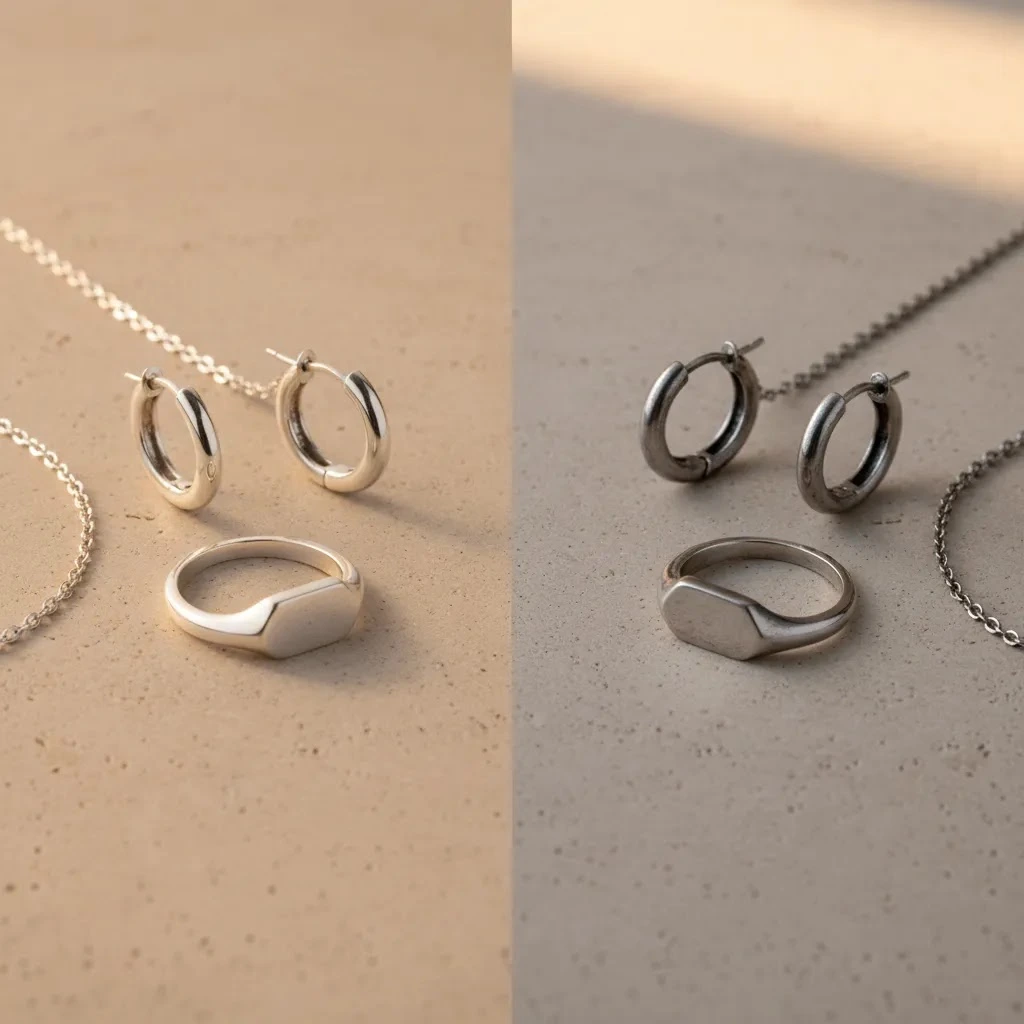
Yes, silver-marked jewelry may tarnish over time. The reality is that tarnish is often tied to environmental exposure and normal chemical interactions that can occur with silver alloys. Storage humidity, air exposure, and contact with everyday substances can influence how quickly surface darkening appears. That does not automatically mean the piece is counterfeit or poorly made. It often means you are working with a metal category that has expected maintenance behavior.
For a jewelry business, tarnish is less of a material trivia question and more of a returns and expectation question. If your product page says “sterling silver” but does not set clear care expectations, your customer support team may see preventable complaints. A simple care card, clear storage guidance, and more precise language about finish behavior can reduce “defect” claims that are really wear and maintenance issues.
From a production standpoint, this is also a development decision. You will want to clarify the finishing approach during sampling and confirm that your aftercare guidance matches the way the product is built and finished. If your collection includes multiple constructions or surface treatments, align those details with your merchandising team so your care guidance is accurate across SKUs, not generic. That alignment tends to improve customer trust and reduces friction when you restock or expand the line.
Who This Information Is For
This topic is most useful for boutique owners, jewelry retailers, sourcing managers, and brand founders evaluating silver jewelry for wholesale resale or private label development. It also matters for teams reviewing supplier samples, building product pages, or tightening quality assurance procedures before a production run.
If you are early in the sourcing process, understanding hallmark language can help you ask better questions. If you are already ordering at scale, it can help reduce labeling inconsistencies and support more accurate product claims across your assortment.
Royi Sal Jewelry Recommendation
For jewelry businesses that need more than a surface-level answer about silver markings, Royi Sal Jewelry offers a useful B2B perspective. The company focuses on custom jewelry design and manufacturing for wholesale and private label clients, with an approach centered on collaboration, craftsmanship, and practical project guidance. Royi Gal’s background as both a designer and manufacturer strengthens that process-oriented view, especially for brands that need help translating technical details into production-ready decisions.
If your team is developing a silver collection and wants clearer direction on specifications, production communication, or private label planning, you can explore the company’s broader jewelry manufacturing capabilities. You may also review Royi Sal Jewelry’s 925 Sterling Silver resource area for related education. If you are moving from research into development, contact the team to discuss your custom jewelry brief, review your design goals, and understand how a collaborative manufacturing partnership could support your collection.
How to Evaluate Silver-Marked Jewelry Suppliers
If a supplier offers s925 jewelry, your evaluation process should go beyond the stamp. A reliable review framework usually includes five areas.
1. Material communication
Ask whether the supplier uses s925, 925, or other hallmark conventions, and whether the terminology is consistent across all documents. Misalignment between sample markings, invoices, and product descriptions may create avoidable confusion later.
2. Sample accuracy
Your approved sample should reflect actual production intent. That includes hallmark placement, finishing appearance, component construction, and overall workmanship. If the sample is not representative, bulk order review becomes harder.
3. Quality control discipline
Suppliers should be able to explain how they monitor production consistency. You do not necessarily need a highly technical presentation, but you do need signs of repeatable control. In many cases, that includes batch inspection, sample approval checkpoints, and clear communication when changes are needed.
4. Transparency about process limits
Good manufacturing partners usually explain where variation could happen. For example, stamp size, placement, or visibility may depend on design scale. Honest communication here is often a good sign. It shows the supplier understands production realities rather than simply saying yes to every request.
5. Scalability and partnership fit
If you plan to grow, ask whether the supplier can support repeat orders, specification updates, and collection expansion. An attractive sample means less if the partner struggles with communication or consistency once order volume increases. In B2B jewelry, a dependable long-term relationship is often more valuable than a low-friction first order.
Strong supplier selection usually depends on process clarity, not just hallmark language. That is especially true for brands that need dependable quality across multiple SKUs and replenishment cycles.
Frequently Asked Questions
What does s925 mean on jewelry?
S925 usually indicates that the piece is being represented as sterling silver. In trade usage, the “925” portion commonly refers to the sterling silver standard, while the “S” is often read as silver. For B2B buyers, the important point is that the mark may support a material claim, but it should still be verified through supplier documentation and sample review.
Is s925 the same as 925?
In many cases, yes. S925 and 925 are often used to refer to sterling silver items, and the difference is usually formatting rather than a major category change. Still, buyers should confirm how the supplier uses each marking and whether stamping remains consistent across all units in a production run.
Is s925 real silver?
It may indicate real sterling silver, but a stamp alone should not be treated as complete proof. Reliable verification typically involves supplier transparency, consistent specifications, and representative samples. For a retail or private label business, that extra review step can help reduce authenticity disputes and product listing risk.
Does s925 tarnish?
Silver-marked jewelry may tarnish over time depending on storage conditions, wear environment, finishing, and maintenance practices. From a B2B standpoint, the better question is how the supplier sets expectations around finish behavior and care guidance. A hallmark does not define all performance outcomes by itself.
What is the difference between s925 silver and sterling silver?
Usually, there is no major difference in meaning. S925 is commonly used as a marking format associated with sterling silver. The practical issue for buyers is not the wording alone, but whether the supplier’s product, documentation, and batch consistency support the claim in a reliable way.
Can an s925 ring still have quality problems?
Yes. Even if a ring carries an s925 stamp, workmanship issues could still occur, such as uneven finishing, inconsistent sizing, weak components, or poor polish quality. Hallmarks help identify a claimed material standard, but they do not replace design review, sampling, and production quality control.
Should jewelry brands rely on hallmark stamps when sourcing?
No, not by themselves. Hallmarks can be helpful checkpoints, but sourcing decisions are usually stronger when supported by approved samples, clear specifications, and a supplier with stable communication. For brands selling under their own label, relying on stamp language alone may expose the business to avoidable quality or trust issues.
Why do some pieces say s925 and others say 925?
This often comes down to supplier preference, tooling, available space on the piece, or established factory practice. It does not automatically mean the products belong to different material categories. What matters more is whether the marking format is intentional, documented, and consistent across the collection.
Can a necklace or small item always be stamped s925?
Not always. Smaller designs may present space limitations, and some hallmark placements may affect appearance or legibility. During development, it is smart to confirm where the mark will sit on each SKU and whether that placement works for both quality control and presentation requirements.
Is s925 worth anything?
It can be, but “worth” depends on factors your business should separate clearly. The stamp is a representation of a material category, while resale value is usually driven by weight, design, workmanship, brand positioning, and the condition of the item over time. For B2B teams, the more practical focus is whether your supplier documentation and approved samples support the material claim you plan to use in your listings and invoices.
Is s925 real or fake?
S925 is a marking format that may be used on real sterling silver, but the stamp itself can also be misused. That is why experienced buyers treat it as a cue to verify, not as final proof. Supplier transparency, consistent specs, representative samples, and repeatable quality control matter more than stamp text alone.
Is s925 sterling silver good?
It can be a strong choice for many jewelry lines, but “good” should be defined in business terms: consistent finishing, stable construction, clear documentation, and predictable customer experience. A sterling-marked item can still vary by supplier, workmanship, and production discipline. If you are building a private label collection, the goal is to lock the standard into your approvals and QC process so quality stays consistent across replenishment cycles.
Key Takeaways
- S925 usually refers to sterling silver, but the mark should be treated as one verification point, not final proof by itself.
- S925 vs 925 is often a formatting difference rather than a major material distinction.
- B2B buyers should review hallmark consistency, documentation, sample accuracy, and supplier communication before approving orders.
- Surface treatments and construction details may affect product performance, so the stamp does not tell the whole story.
- A reliable manufacturing partner can help turn silver terminology into clear specifications and repeatable production standards.
Conclusion
Understanding s925 is useful, but for a jewelry business, the bigger issue is how that marking fits into a disciplined sourcing and quality process. In most cases, s925 is used to indicate sterling silver. Even so, smart buyers know the stamp should be backed by sample approval, documentation, and supplier consistency before a collection goes to market. If your brand is planning a silver jewelry line and needs a manufacturing partner that understands both design intent and production realities, Royi Sal Jewelry may be a strong next conversation. Visit royisal.com to learn more about the manufacturing process, or contact the team to discuss your custom jewelry brief and explore how a collaborative development approach could support your next collection.


Responses (0)