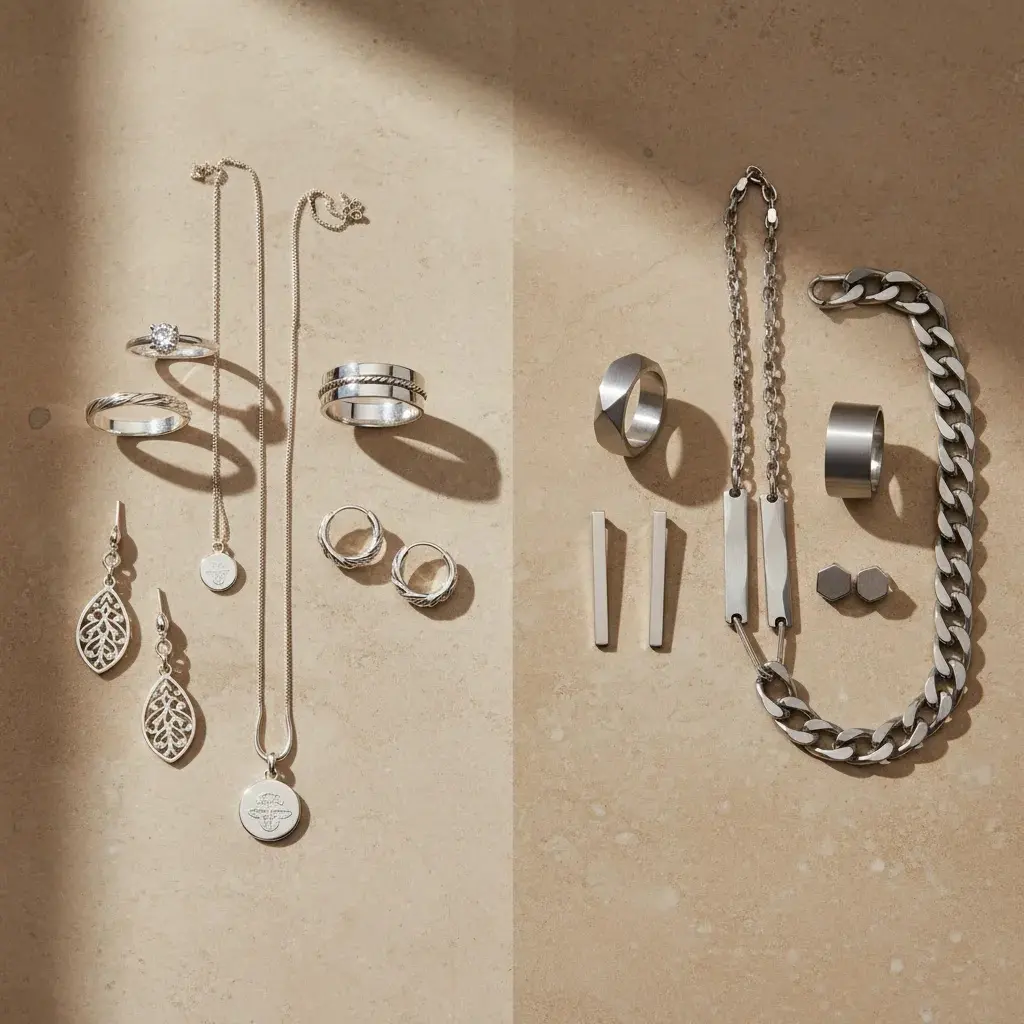
Overview: Sterling Silver vs Stainless Steel for Jewelry Brands
For a jewelry business, silver vs stainless steel jewelry is usually a decision about brand identity, not just raw material preference. Sterling silver is commonly associated with a more traditional fine-jewelry position. Stainless steel is often chosen for durability-focused collections, cost-sensitive assortments, or styles where a harder industrial feel supports the design language.
From a B2B standpoint, the difference between sterling silver and stainless steel may affect design development, finishing expectations, maintenance planning, and how customers perceive value. A brand selling giftable, classic, or elevated pieces may lean toward sterling silver because of its established place in the market. A brand prioritizing straightforward wear, practical care, and accessible merchandising may find stainless steel more aligned with its needs.
There is no one-size-fits-all winner. Sterling silver may be better for perceived value, craftsmanship positioning, and traditional jewelry storytelling. Stainless steel may be better for toughness, low-maintenance positioning, and certain modern product categories. The right answer depends on your assortment goals, the level of customization you want, and how your manufacturing partner handles design and production planning.
Royi Sal Jewelry operates as a B2B custom jewelry design and manufacturing partner, with services centered on custom jewelry development, collaborative design consultation, wholesale production, and global fulfillment. That matters because material selection often works best when evaluated together with design intent and manufacturing feasibility, not in isolation. You can also review the broader jewelry manufacturing context when comparing how different materials may fit into a scalable product line.
Head-to-Head Comparison
The difference between stainless steel and sterling silver becomes clearer when you compare them across business-relevant criteria rather than consumer preference alone.
Brand Positioning
Sterling silver generally supports a more classic and established jewelry narrative. It is often easier to position within premium everyday lines, boutique collections, and designs where metal identity is part of the selling story. If your audience expects recognized precious-metal language, sterling silver may provide a stronger fit.
Stainless steel usually aligns better with practical, trend-driven, or utility-focused product positioning. It can suit brands that want durability messaging or a contemporary aesthetic without relying on precious-metal status.
Perceived Value
In many markets, 925 sterling silver vs stainless steel is not viewed as equal from a value perspective. Sterling silver often carries stronger perceived material value. That could support higher-ticket positioning, depending on design, finish, and brand presentation.
Stainless steel may still perform well commercially, but the sales story often depends more heavily on design, lifestyle fit, and wear resistance than on metal prestige.
Maintenance Expectations
Sterling silver typically requires more inventory care and more customer education around storage and cleaning. That does not make it a poor choice, but it does create operational considerations for wholesale buyers and private label brands. If silver is part of your line, it is worth understanding protecting sterling silver inventory essential tarnish prevention cleaning tips for manufacturers.
Stainless steel is often chosen partly because it may be simpler to maintain in day-to-day use and inventory handling. For some businesses, that practical advantage matters, especially in higher-volume environments.
Collection Architecture
Sterling silver may work especially well in collections built around timeless silhouettes, gifting programs, or pieces meant to signal refinement. Stainless steel may be more suitable for brands building wider entry-level assortments or products centered on durability and lower-maintenance wear.
Design and Production Planning
Not every manufacturer approaches every material the same way. This is where working with a collaborative development partner matters. Royi Sal Jewelry focuses on custom design and manufacturing with consultation built into the process, which is useful when a brand is comparing whether a concept should be developed in one material category or another. Material decisions may affect prototyping, revisions, finishing expectations, and the overall production path.
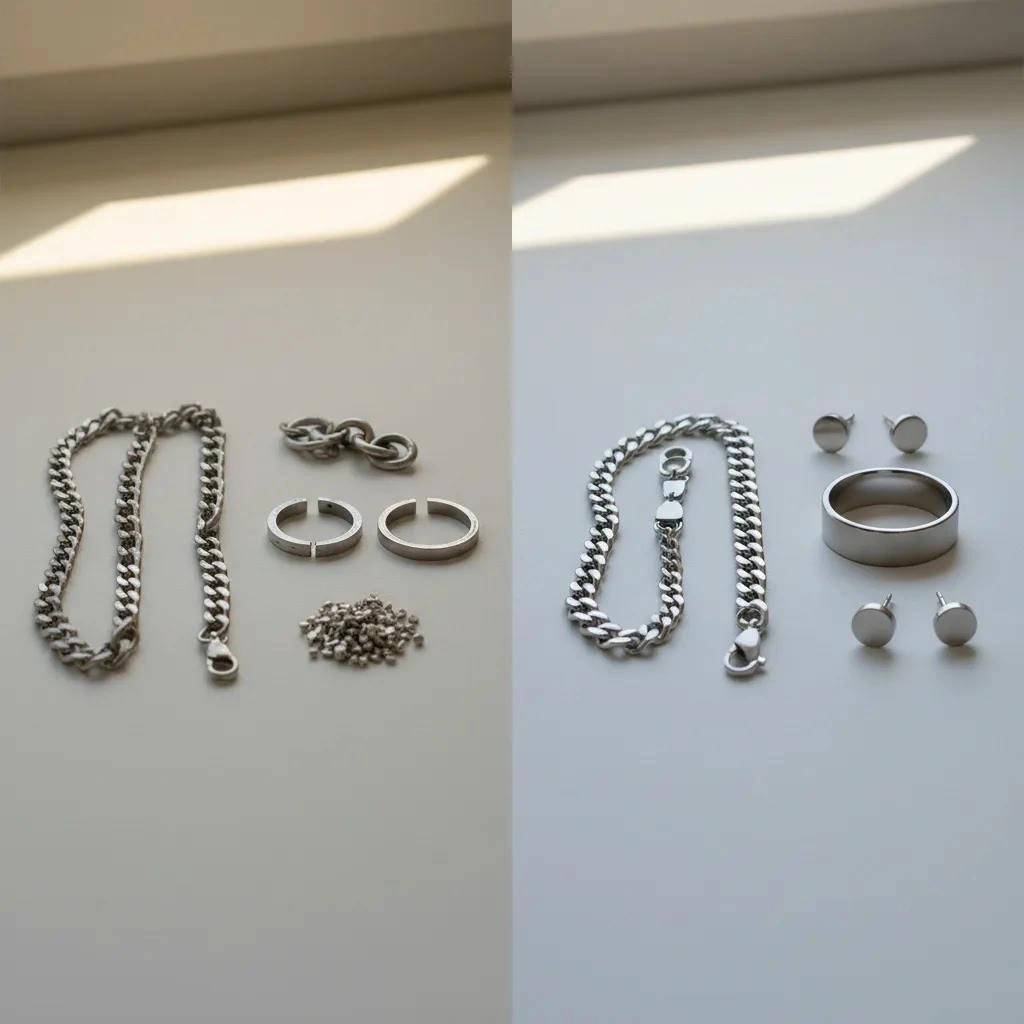
Material Basics Brands Should Know (925 Sterling Silver vs Stainless Steel)
Here’s the thing, many sourcing issues start with terminology. If your product specs, line sheets, and SKU descriptions are not consistent, you create avoidable confusion for buyers, your internal team, and your manufacturer.
In trade terms, “925 sterling silver” typically refers to a silver alloy used for jewelry where “925” indicates a 92.5% silver content by weight, with the remaining portion made up of other metals to support practical performance. It is alloyed because pure silver is generally too soft for many jewelry applications, especially when you factor in day-to-day wear, stone setting requirements, and the production steps involved in building consistent repeatable pieces. From a development standpoint, that alloying influences how a piece may be formed, finished, and corrected during sampling, which is why experienced manufacturers will treat sterling silver as its own process, not just a metal selection on a checklist.
“Stainless steel,” on the other hand, is usually a category name, not one exact composition. It generally refers to a family of steel alloys designed to resist corrosion better than standard carbon steel. For a jewelry brand, the key takeaway is that stainless steel can vary by grade and finishing method, so you want your technical documentation to be specific enough that your supplier can repeat the same result across production runs.
Consider this, your customer-facing copy might only say “sterling silver” or “stainless steel,” but your production documents should be more disciplined. A simple terminology checklist many brands use includes confirming the exact material callout in the tech pack, agreeing on what the product should be stamped or marked with where applicable, and keeping the naming consistent across SKUs, purchase orders, and listings. This is not about adding complexity. It is about preventing the small spec mismatches that can turn into expensive remakes or inconsistent wholesale deliveries.
Which Material Fits Which Business Model
If you are asking, is stainless steel or sterling silver better, the most useful answer is usually tied to your assortment strategy.
Sterling Silver May Be the Better Fit If You:
- Want to build a collection with stronger precious-metal positioning
- Need a material story that supports boutique or premium brand presentation
- Plan to market craftsmanship and classic jewelry value more directly
- Are developing pieces where silver identity matters to the customer and buyer
- Need your line to sit naturally alongside other established silver-based categories
Stainless Steel May Be the Better Fit If You:
- Want a more practical, durability-focused assortment
- Need lower-maintenance merchandising and aftercare expectations
- Are building around contemporary, industrial, or utility-inspired styles
- Want an accessible collection architecture without relying on precious-metal language
- Prioritize straightforward everyday wear messaging in your sales approach
For many brands, the better choice is not either-or across the whole business. Some lines benefit from a tiered structure, where sterling silver anchors the more elevated assortment and other materials support entry or trend categories. That approach requires clear positioning to avoid confusing buyers. If your collection includes silver, it may also help to understand sterling silver vs silver terminology so your product language stays accurate across wholesale materials, listings, and line sheets.
Another important distinction is internal quality control. If you plan to market a silver line, your business should be able to communicate what 925 means and how authenticity is managed. This is where guidance on how ensure jewelry business offers authentic 925 sterling silver becomes directly relevant to wholesale operations.
How Royi Sal Jewelry Supports Custom Development
Material choice is rarely a standalone decision in custom jewelry. It sits alongside design intent, target customer, margin structure, quality expectations, and production planning. Royi Sal Jewelry is positioned as a professional B2B custom jewelry design and manufacturing company serving brands, boutiques, retailers, and entrepreneurs developing their own collections.
The company is led by Royi Gal, whose background as both a jewelry designer and manufacturer strengthens the practical side of development conversations. That dual perspective matters because many material decisions look simple at the concept stage but become more complex once sampling, finishing, consistency, and repeat production are discussed.
Royi Sal Jewelry emphasizes collaboration rather than a transactional vendor model. For businesses comparing material directions, that may help during design consultation and development because tradeoffs can be reviewed in relation to your collection goals instead of being treated as isolated technical choices. The company’s service model includes custom jewelry design and development, wholesale and private label manufacturing support, collaborative consultation, and global shipping and fulfillment.
If you are still defining your assortment, you may want to explore the broader 925 Sterling Silver category and compare how silver-based product strategy could fit within your brand. For businesses ready to move from comparison into planning, Royi Sal Jewelry can be a useful resource for discussing a custom brief, evaluating development options, and understanding how manufacturing decisions may shape the final collection. You can contact the team through royisal.com to start a project conversation or submit your ideas for review.
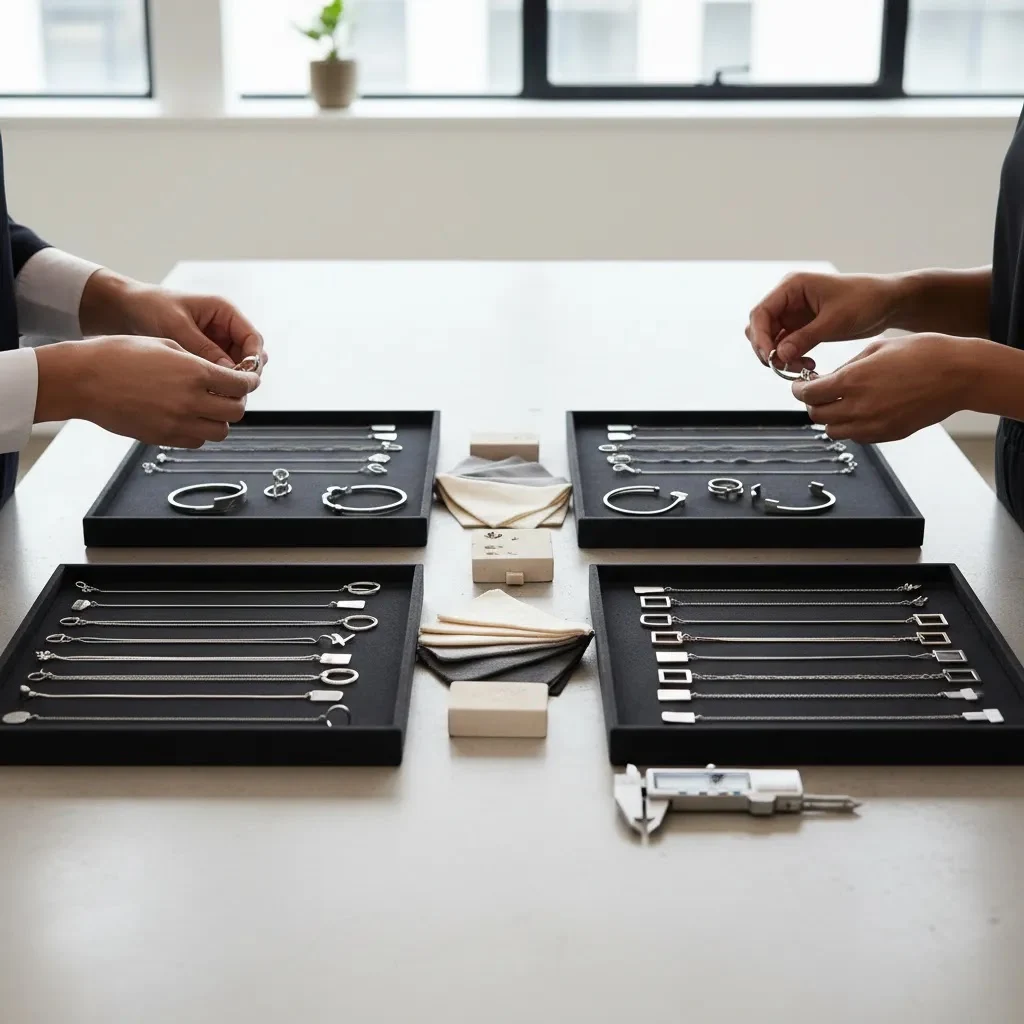
How to Evaluate Your Options
For a jewelry brand owner, choosing between sterling silver and stainless steel should usually involve five business criteria.
1. Product Positioning and Sales Story
Ask what you need the material to communicate. If your line depends on recognized jewelry value and a more traditional presentation, sterling silver may support that story more naturally. If your emphasis is durability, practicality, or contemporary style, stainless steel may be a better fit.
2. Design Intent
Some concepts look stronger in one material category than another. Your manufacturer should be able to discuss whether the design language, finishing goals, and production plan still make sense once the material is selected. A collaborative briefing process is important here.
3. Inventory Care and Operational Burden
Your team should consider storage, maintenance education, and product handling. Sterling silver may require more structured care practices. Stainless steel may reduce some of that operational burden. This matters if you are managing wholesale stock across multiple sales channels.
4. Quality Control and Trust
When silver is part of the offer, internal accuracy becomes essential. Your product data, supplier communication, and wholesale messaging should all be aligned. If silver purity and terminology are central to your assortment, understanding distinctions such as 925 vs 999 silver can help your team avoid avoidable confusion during sourcing and sales.
5. Manufacturing Partnership Fit
The best material decision may still fail if the development process is weak. Look for a partner that offers design consultation, realistic communication, and an understanding of custom production complexity. Royi Sal Jewelry’s B2B model is built around collaborative design and manufacturing support, which may be especially useful for brands that are still shaping their first collection or refining an existing line for scale.
The strongest decision is usually the one that aligns material choice with brand strategy, not the one that sounds best in isolation. A reliable manufacturer should help you evaluate tradeoffs early, before they turn into expensive revisions or inconsistent collection architecture later.
Wear, Tarnish, and Corrosion: What Actually Happens Over Time
Most brands discuss “maintenance” in general terms, but the operational reality shows up months later, once products have been worn, stored, and returned. From a production standpoint, you want to understand how each material tends to change over time so you can write accurate care guidance and set reasonable expectations with wholesale accounts.
Sterling silver can tarnish. Tarnish is typically a surface reaction that can create a darker layer over time, and it is often influenced by environment and storage conditions. For a business, this matters in two places: inventory management and customer support. If you are holding silver stock, you may need more structured storage practices and a clear plan for how pieces will be checked or refreshed before shipping. On the customer side, your team should be ready with consistent care instructions so minor tarnish does not turn into unnecessary returns or “quality” complaints that are actually care-related.
Stainless steel is often selected because it tends to be more resistant to corrosion in many everyday conditions, which can reduce some customer-facing care friction. That said, resistance is not the same as immunity. Wear patterns still depend on use, exposure, and finishing choices, and stainless pieces can still show signs of scratching or dulling over time depending on how they are worn and handled.
What many brand owners overlook is that “rust” and “tarnish” are not the same issue. Tarnish is usually discussed in relation to silver and presents as discoloration. Rust is typically associated with iron-based materials and presents as a different kind of corrosion. Keeping those terms separate in your customer communication helps your support team respond more accurately, and it prevents mixed messaging across listings, inserts, and wholesale product education.
In practice, wear behavior becomes a business system question. You may want simple internal scripts for retail staff and wholesale partners, channel-specific care cards, and packaging choices that support your material story. The point is not to over-explain. It is to reduce friction: fewer misunderstandings, fewer preventable complaints, and cleaner long-term brand positioning.
Strengths and Considerations
Strengths
- Sterling silver often offers stronger perceived value and more established jewelry positioning for boutique and premium collections.
- Stainless steel may support a durability-focused assortment with simpler day-to-day maintenance expectations.
- Comparing these materials early can improve collection planning, merchandising logic, and price architecture.
- Sterling silver may be easier to incorporate into a classic or gift-oriented product story where material recognition matters.
- Stainless steel may suit practical, trend-led, or utility-inspired lines that prioritize wear resistance and straightforward care.
- A collaborative manufacturer can help assess material choice alongside design development, not as a disconnected sourcing decision.
Considerations
- Sterling silver typically requires more attention to storage, tarnish prevention, and inventory care processes.
- Stainless steel may not support the same perceived precious-metal value in every market or sales channel.
- Switching materials after concept approval can create extra development work, revisions, and production delays.
- Material choice alone does not guarantee commercial success. Fit with design, brand position, and target customer remains critical.
- Not every manufacturing partner will guide material tradeoffs clearly, so communication quality matters as much as technical capability.
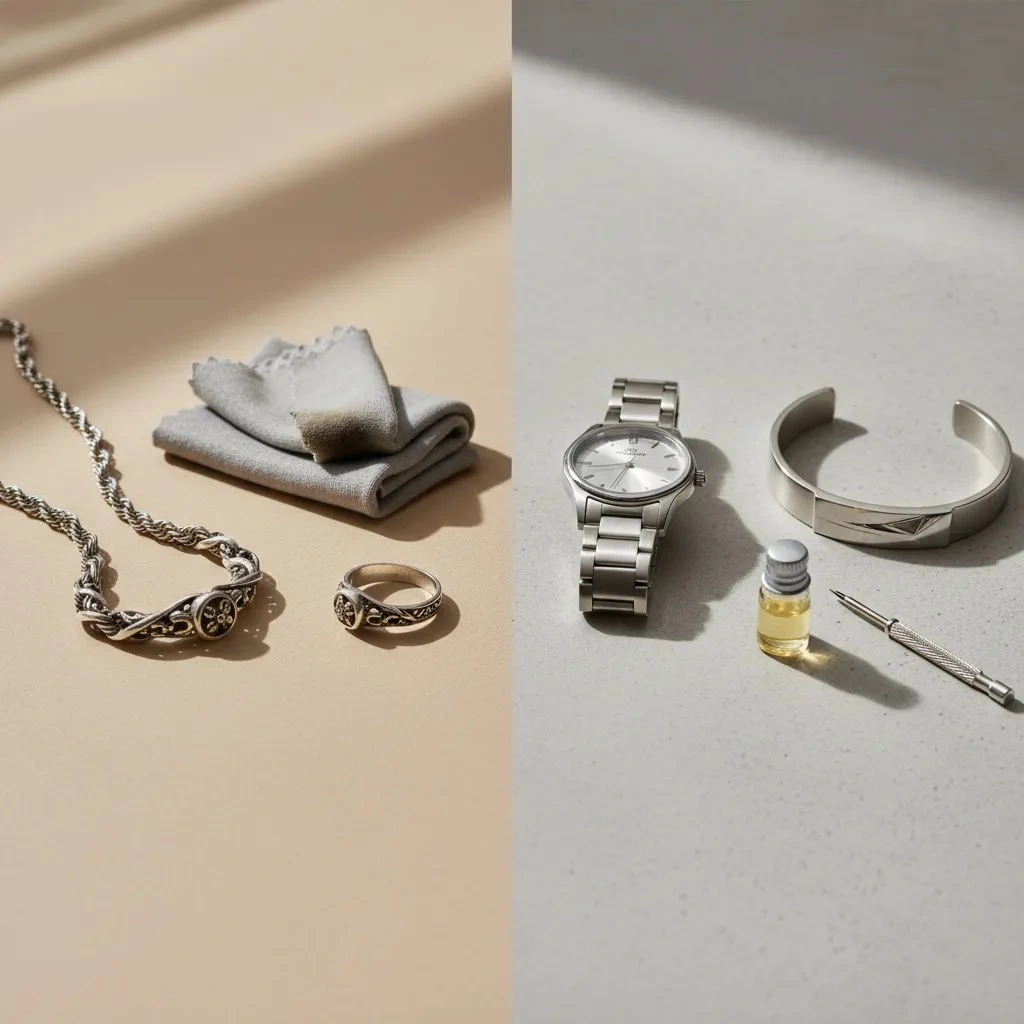
Sensitivity and “Hypoallergenic” Claims: How to Message Responsibly
Many brands want to use sensitivity-related language as a differentiator, especially for stainless steel lines. Now, when it comes to “hypoallergenic” claims, it is worth being careful. Wearer reactions can vary based on alloy composition, finishes, and individual sensitivity, so broad claims can create customer-service risk if they are not aligned with what your supplier can actually document.
For B2B product copy, a safer approach is usually to keep the messaging specific and defensible. Instead of making absolute statements, focus on what you can verify in your material spec and production notes, and keep that language consistent across channels. This matters for wholesale too, because retailers may reuse your descriptions in their own listings, and inconsistent claims can dilute trust.
A practical action step is to align sensitivity-related positioning early in development. That means confirming the exact material callouts and finishing plan with your manufacturer, then building customer-facing language that matches those documented inputs and your own quality control process. If your brand wants to push stronger claims, you should treat that as a separate compliance decision, not a casual marketing line added at the end of a launch schedule.
Frequently Asked Questions
What is sterling silver in a B2B jewelry context?
In business terms, sterling silver usually refers to silver used as a recognized jewelry material category, often identified in relation to 925 standards. For brands, that affects product labeling, assortment strategy, and quality communication. It is not just a material description. It also influences how buyers perceive value, how collections are merchandised, and how manufacturing conversations are documented.
Is stainless steel or sterling silver better for jewelry brands?
Neither is automatically better for every brand. Sterling silver may be better if your collection depends on precious-metal positioning, classic presentation, or stronger perceived value. Stainless steel may be better if your line prioritizes durability, practical wear, or low-maintenance merchandising. The right choice usually depends on your audience, design language, and wholesale strategy.
What is the main difference between stainless steel and sterling silver?
The biggest difference is usually how each material supports your brand story and operational model. Sterling silver often carries stronger traditional jewelry recognition and may require more maintenance planning. Stainless steel is often chosen for toughness and simpler care. For a business, the comparison should include quality messaging, inventory handling, and how the material fits your product architecture.
Does sterling silver always mean higher quality than stainless steel?
No. Quality is not determined by material name alone. It also depends on design execution, finishing consistency, manufacturing control, and how well the product is developed for its intended market. Sterling silver may signal a different category position, but poor development can still create weak results. The same is true for stainless steel if the production process is not managed carefully.
Should a private label brand launch with sterling silver or stainless steel first?
That depends on your intended market position and operational readiness. A silver-first launch may make sense if material identity is central to your value proposition. A stainless-steel-first line may make sense if accessibility and durability are more important. Many first-time founders benefit from discussing both options with a manufacturer before locking in a sampling path.
Why does material choice matter so much in custom manufacturing?
Because the material can shape development expectations from the start. It may affect design decisions, finishing goals, care requirements, and how products are presented to buyers. If the material choice is poorly aligned with the concept, you may face extra revisions or a collection that feels inconsistent. Early clarity often reduces avoidable mistakes during sampling and production planning.
How can a business verify its sterling silver offer is communicated correctly?
Your business should align supplier information, internal product data, and customer-facing descriptions. That includes understanding silver terminology clearly and having consistent standards for product representation. If silver is central to your assortment, your team should review authenticity-related processes carefully so wholesale claims remain accurate and defensible across channels.
Does stainless steel reduce post-sale care issues?
In many cases, it may reduce some maintenance concerns compared with sterling silver, which is one reason some brands prefer it. That said, no material eliminates all quality or care considerations. Product design, finish, storage conditions, and customer use patterns still matter. It is better to think in terms of likely operational differences rather than assuming a risk-free material choice.
Which doesn’t tarnish, stainless steel or sterling silver?
Sterling silver can tarnish over time, which is why many brands plan for inventory care and customer education when silver is part of the assortment. Stainless steel is often chosen because it may be more resistant to the types of surface changes customers notice quickly, but performance can still vary based on the specific alloy family, finishing choices, and wear conditions. For B2B planning, it is best to set care expectations channel by channel instead of treating any material as maintenance-free.
Does sterling silver get rusty?
Sterling silver is generally discussed in terms of tarnish rather than rust. Tarnish is a surface discoloration that can develop over time. Rust is typically associated with iron-based materials and presents differently. If your customer support team is seeing “rust” language in tickets, it is often a sign that care instructions need to be clearer, or that the customer is using the wrong term for what they are seeing.
What is the healthiest metal to wear?
Jewelry brands should be cautious with health framing. Wearer comfort can depend on the exact alloy composition, finishing, and an individual’s sensitivity. If sensitivity messaging is important to your positioning, align your material specs with your manufacturer early and keep customer-facing language consistent with what can be documented through your supply chain and your own quality control process.
Should Taurus wear silver?
This is more of a styling and merchandising question than a manufacturing one. Some brands choose to build astrological merchandising into their product stories, but it is not material-specific from a production perspective. If you plan to use zodiac positioning, the important business step is consistency: ensure your copy, visuals, and assortment logic are aligned so the story feels intentional across wholesale and direct channels.
Where can brands get help choosing the right material for a collection?
A collaborative custom manufacturer can often provide the most practical guidance because the discussion can include design intent, collection goals, and production realities together. Royi Sal Jewelry works with B2B clients on custom jewelry design and manufacturing, which may help brands compare material directions in a more structured and commercially relevant way.
Key Takeaways
- Sterling silver vs stainless steel is a strategic business decision, not just a material preference.
- Sterling silver may better support classic, premium, or value-driven collection positioning.
- Stainless steel may suit durability-focused, practical, or accessible assortment strategies.
- Inventory care, product messaging, and manufacturing communication should all be considered before choosing a direction.
- Working with a collaborative partner such as Royi Sal Jewelry may help brands evaluate material tradeoffs earlier and more accurately.
Conclusion
For most jewelry businesses, the better material is the one that supports the collection you are actually trying to build. Sterling silver may offer stronger perceived value, more classic positioning, and a clearer precious-metal story. Stainless steel may offer a more practical route for brands prioritizing durability, simple maintenance, and contemporary product strategy. The important step is to evaluate material choice alongside design, quality control, and manufacturing fit. Royi Sal Jewelry approaches custom jewelry as a collaborative B2B partnership, with support in design development, manufacturing, and fulfillment. If you are comparing material directions for a new line or refining an existing assortment, visit royisal.com to learn more about the process or contact the team to discuss your custom jewelry brief.