What Rose Gold Means in Jewelry Development
Rose gold refers to gold with a pink or warm blush appearance. In the market, the term may be used across fine jewelry, plated jewelry, fashion jewelry, and custom private label collections. For a business buyer, that means you should not treat the name alone as a complete technical specification. You need to clarify the exact construction, finish expectations, color reference, and intended positioning of the product line before sampling begins.
That distinction is important because many founders use style language while manufacturers need production language. A product brief should identify whether rose gold is being discussed as a visual direction, a plating color, or part of a broader collection concept. If your team is also reviewing adjacent metal-color options, comparing sterling silver vs white gold can help sharpen your merchandising decisions.
From a commercial standpoint, rose gold often appeals because it feels softer than yellow gold and warmer than white-toned finishes. It can work across minimalist collections, gift-focused assortments, bridal-adjacent concepts, and trend-led capsule launches. For brands developing new SKUs, it may offer a way to differentiate without changing the entire product architecture.
For custom development, the early design stage matters. Color appearance can influence stone selection, surface finish choices, engraving visibility, and how the final piece is photographed or merchandised. If your line depends on CAD development and technical iteration, understanding 3d jewelry modeling may help your team communicate visual expectations more clearly before production.
Why Rose Gold Stays Popular
Rose gold has remained commercially relevant because it serves both aesthetic and merchandising needs. It generally reads as contemporary without feeling too temporary. That gives brands more room to introduce it as a core finish or as a seasonal extension of an existing line.
Its warmth also tends to photograph well in many campaign styles. For digital-first brands and boutique retailers, that could support stronger visual consistency across ecommerce listings, social content, and line sheets. A finish that performs well across marketing channels may reduce friction during launch, especially for smaller brands with limited reshooting budgets.
There is also a familiarity factor. Buyers often already understand where rose gold sits relative to yellow and white-toned jewelry, even if they do not know the technical details. That lowers the educational barrier at wholesale presentations and may make assortment planning easier for stockists.
Rose gold can also help create tiered product stories. A brand may use the same silhouette in multiple finishes to test demand without redesigning the entire collection. In many cases, that is operationally more manageable than introducing a completely new product family. Teams working on color expansion often pair this process with a review of custom gold jewelry options to understand how finish choices align with brand positioning and production planning.
What Rose Gold Is Made Of (And Why Shade Can Vary)
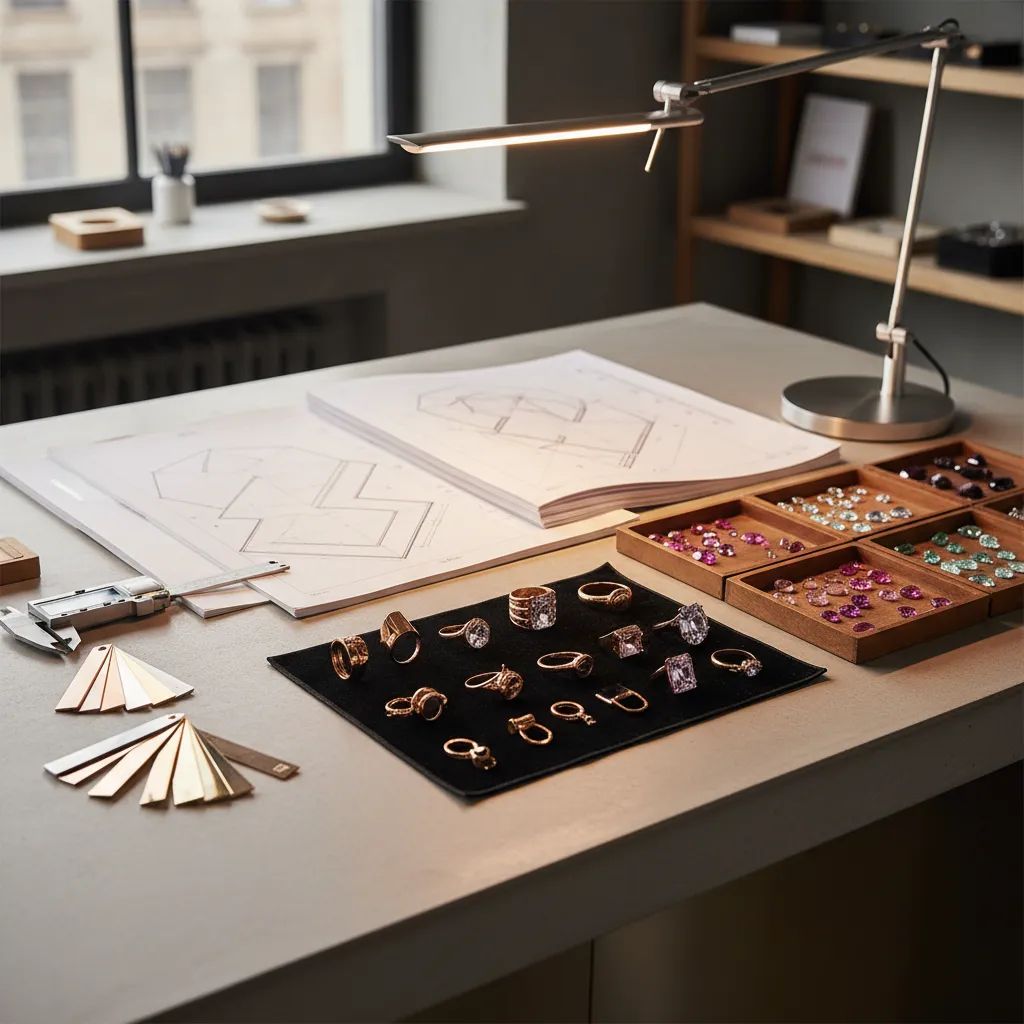
Rose gold is typically not a single, fixed material definition. In many cases, it refers to a gold alloy developed to create a warm pink tone. Alloy recipes can vary by supplier, by target market, and by the exact shade the brand is aiming for. That is why one manufacturer’s rose gold can read as soft and blush, while another can lean more coppery or closer to a red tone in real samples.
In product development language, it also helps to separate two different requests that often get mixed together. One is rose gold as a solid alloy for a piece that is made in that metal. The other is rose gold color as a plated or finished look applied over another base construction. Those are different technical paths, different production controls, and they can perform differently in wear and in color consistency. Your product brief should state clearly which one you mean, because the phrase rose gold alone can still leave room for interpretation.
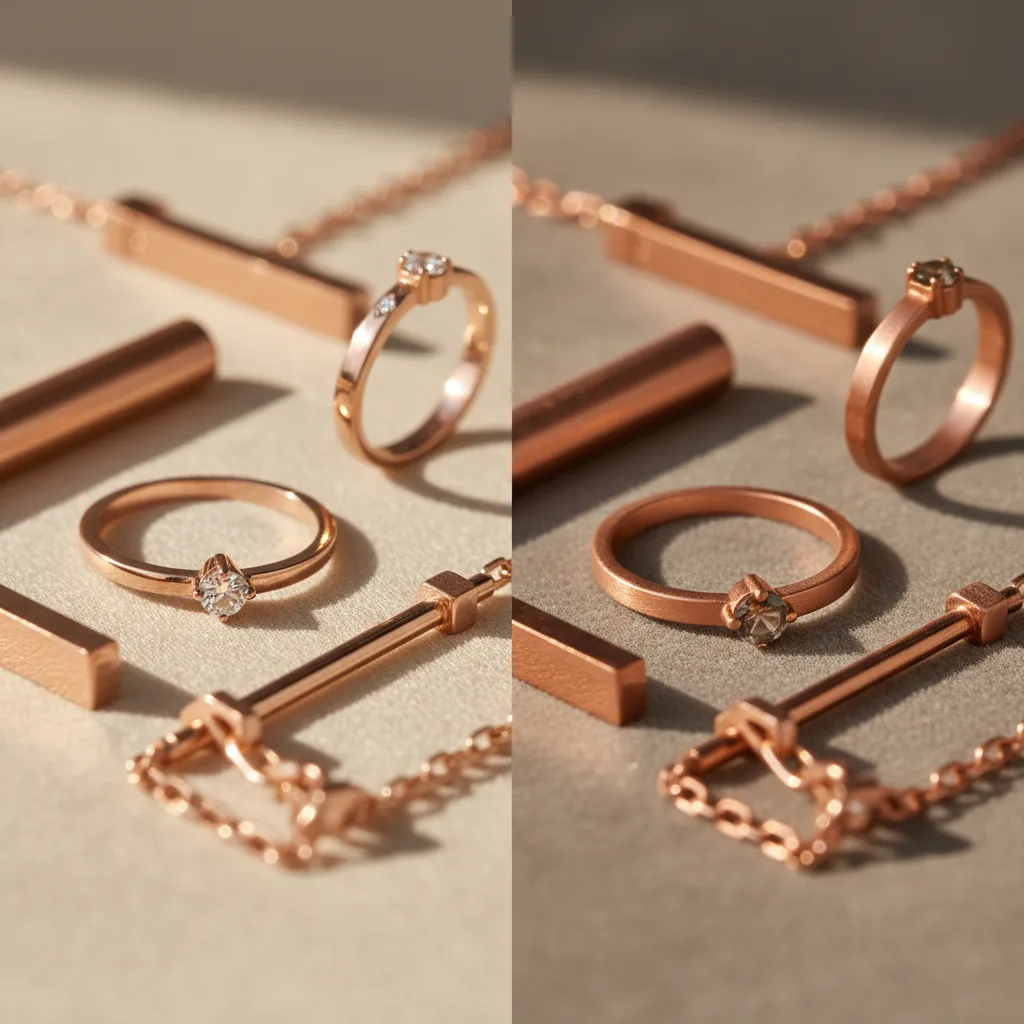
From a production standpoint, color control is less about perfect wording and more about repeatable references. Digital images are not reliable as a single source of truth — screens, lighting, camera settings, and post-production edits can all shift the tone. If color consistency matters across matching sets or across future reorders, it helps to work with physical color masters, approve samples under controlled lighting, and document what is acceptable. That documentation can include your approved sample, agreed viewing conditions for approvals, and any tolerances you and your manufacturer align on so repeat runs have a realistic target to match.
Where Rose Gold Can Fit a Brand Strategy
Rose gold is often strongest when it is used with a clear assortment purpose. It may perform well as a signature brand color, a limited-edition finish, or a bridge category between fashion-forward and classic styles. The right choice depends on your customer profile and how broad your line needs to be.
For private label brands, rose gold can support differentiation if competitors in your segment rely heavily on standard yellow or silver-tone presentations. That said, differentiation only works if the finish quality is consistent across SKUs. Uneven tone from piece to piece may weaken the collection story and create quality concerns for retailers.
For wholesale businesses, rose gold may be useful in curated capsule ranges where visual cohesion matters more than very wide SKU depth. Matching pendants, rings, earrings, or gifting sets may benefit from a controlled finish direction. If your model leans more heavily toward plated categories, research into gold plated jewelry manufacturers and wholesale gold plated jewelry manufacturers can help frame the operational questions you should ask before scaling.
Rose gold can also be effective for brands that want a softer luxury signal. It often reads as polished and giftable without mirroring every mainstream gold offer in the market. That balance may be especially useful for boutique brands trying to look established while still keeping a distinctive point of view.
A Practical Manufacturing Resource for Jewelry Brands
For brands evaluating custom development, Royi Sal Jewelry is positioned as a B2B custom jewelry design and manufacturing partner focused on collaboration, craftsmanship, and wholesale or private label production. The company is led by Royi Gal, whose background spans both jewelry design and manufacturing. That combination can be valuable if your business needs support translating early concepts into production-ready pieces while keeping the conversation grounded in real manufacturing constraints.
Royi Sal Jewelry works with businesses that need custom jewelry design and development, collaborative consultation, manufacturing support, and global shipping and fulfillment. For founders still shaping technical visuals, understanding details like what is a normal in 3d modeling may improve communication during development. You can also explore broader Jewelry Manufacturing resources or review the Brass & Metals category to compare related material and finish topics. If you are planning a custom collection and need a manufacturing conversation rooted in process, you can visit royisal.com to learn how the team approaches design collaboration and production planning.
How to Evaluate Rose Gold for Your Collection
A finish choice should be evaluated as a business decision, not only a style preference. Rose gold may be attractive, but a successful rollout depends on product fit, technical consistency, and the quality of your manufacturing communication.
1. Define whether rose gold is a core finish or a test category
If rose gold is a short-term assortment test, you may want a tighter SKU plan and lower design complexity. If it is intended to become part of your core line, your sampling standards and replenishment planning need more discipline. Early decisions here influence photography, merchandising, reorder strategy, and wholesale sell-in materials.
2. Clarify finish expectations in writing
Words like pink gold, blush gold, warm gold, and rose gold are often used loosely. A manufacturer may need more than a verbal description to hit your intended look. Reference images, approved samples, and finish notes can reduce avoidable variation between development stages and production runs.
3. Review the design through a production lens
Some silhouettes show finish variation more clearly than others. Pieces with high polish, fine surfaces, recessed detail, or prominent edges may reveal inconsistencies faster in both photography and physical inspection. During CAD review, surface behavior matters, which is one reason technical topics such as 3D modeling are useful for non-technical founders as well.
4. Match the finish to your sales channel
Boutique wholesale, ecommerce, and private label programs may each demand a different level of consistency and packaging support. A finish that looks strong in online creative may still require careful quality control if the product will be examined closely in a physical retail setting. The stricter the sales environment, the more important your sample approval standards become.
5. Ask how scale may affect consistency
A sample can look strong while bulk production introduces new variables. Ask how the manufacturer handles approvals, repeatability, and communication during a production run. If your long-term plan includes broader finish programs across multiple SKUs, those conversations should happen early rather than after sell-in.
Sampling Checklist: How to Approve Rose Gold Color Consistently
If you want rose gold to function as a repeatable finish in your line, you need an approval workflow that can survive scale. Most color issues do not show up because a factory cannot make a rose tone. They show up because the reference was vague, approvals were done on a single photo, or the team did not document what was approved in a way that can be repeated six months later.
Start by confirming your reference and keeping it stable. If you have a physical item that represents your target shade, treat it as a master. If you only have images, build a plan to convert that preference into a physical sample that becomes your master for future runs. Approve under more than one lighting condition, because retail lighting, daylight, and studio lighting can shift how the color reads. Approving under one set of conditions can create avoidable surprises when your retailers or end customers see the piece in a different environment.
Then check for cross-SKU matching. Rose gold is rarely sold as a single item in isolation. Sets, matching earrings and pendants, and coordinated collections live or die on consistency. Inspect areas where drift shows most clearly: high-polish surfaces, edges, recessed details, and any paired items that are meant to match. If two pieces are intended to be worn together, approve them together, not in separate rounds.
To reduce surprise drift in bulk, align on checkpoints before production. Keep an approved retention sample, define pass-fail criteria, and make sure the manufacturer has the same reference you approved. Document your final decision in writing so it is not tied to a single person’s memory or a chat thread. In practice, this is how brands protect collection consistency when they reorder, expand sizes, or add new SKUs in the same finish family.
Strengths and Considerations
Strengths
- Rose gold often offers a distinctive visual position between yellow and white-toned jewelry, which may help a brand stand out without redesigning every product.
- It can support line extensions efficiently, since many brands introduce rose gold as an alternate finish across proven silhouettes.
- The warm appearance tends to work well in photography, ecommerce presentation, and gift-oriented merchandising.
- It may appeal to both trend-aware and classic customers, which can make it useful for boutique and private label assortment planning.
- Rose gold can create a softer luxury impression that aligns with premium branding while still feeling approachable.
Considerations
- Color expectations vary widely, so vague briefs may lead to sampling rounds that take longer than expected.
- Finish consistency across multiple SKUs or repeat production runs may require careful approval processes and close communication.
- Not every collection concept benefits from rose gold, especially if the brand identity is strongly tied to colder or more traditional metal directions.
- Some retailers may prefer proven core finishes first, so rose gold can be better as a measured rollout than a full collection shift.
Durability, Wear, and Maintenance: What Buyers Should Expect
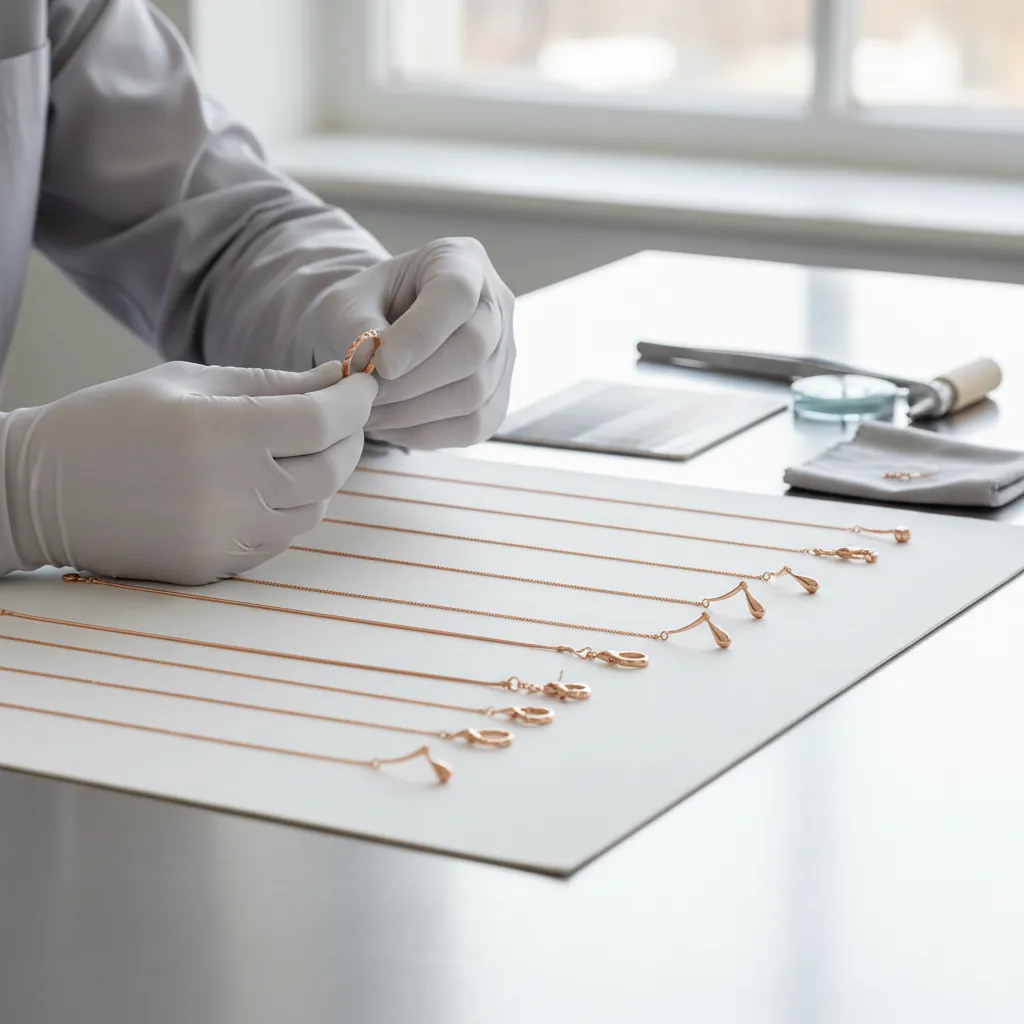
Durability is one of the practical questions behind rose gold adoption, even if it is not always asked directly. Alloying can affect hardness and scratch resistance in many cases, and overall performance depends on construction, surface finish, and where the piece sits in your assortment. A ring that is positioned for daily wear has a different wear profile than earrings, and a high-polish surface can show marks differently than a textured or matte finish. If you are building a line plan, it helps to define intended wear category by SKU so your manufacturing decisions and your product copy match the real use case.
There is also confusion in the market between tarnish and patina, and that confusion can create unnecessary returns. Tarnish is a general term people use when a metal surface changes appearance due to exposure to air, moisture, skin chemistry, or product contact. Patina is often used to describe a gradual surface change that can happen with wear over time. Depending on the specific construction and finish choice, some change in appearance may be normal. From a B2B standpoint, the goal is not to overpromise perfection. It is to set expectations clearly and support the customer experience with appropriate care guidance.
Experienced buyers understand that post-sale friction is often a communication problem before it becomes a quality problem. If your ecommerce support team, retail partners, or wholesale stockists do not have consistent care language, customers may assume a normal wear effect is a defect. Align your maintenance guidance with your channel. That includes packaging inserts, product pages, staff training notes, and customer support scripts. If you want fewer surprises, you want clear language about wear, storage, and cleaning that matches the actual product you are putting into the market.
Frequently Asked Questions
Is rose gold a good choice for a private label jewelry line?
It can be, especially if your brand needs a warm finish that feels distinct from standard yellow or white-toned options. The stronger approach is to test rose gold within a focused SKU group first, then review sell-through, photography performance, and retailer feedback before expanding the finish across a larger private label collection.
Does gold tarnish, and should that affect a B2B buying decision?
Questions like does gold tarnish usually come up because brands want to understand long-term appearance and customer expectations. In a B2B setting, the better question is how the item is constructed, finished, and maintained. Your manufacturer should explain what is being supplied and what care guidance may be appropriate for your end market.
Does 14k gold tarnish or does 18k gold tarnish?
Those questions are common, but the answer depends on the exact product type and construction details being discussed. For business buyers, the practical step is to avoid relying on shorthand assumptions. Confirm technical specifications with your manufacturing partner and make sure your product copy and wholesale training materials match the actual item supplied.
Does white gold tarnish, and how is that relevant when comparing rose gold?
It matters because many brands compare white-toned and rose-toned directions during assortment planning. The decision is usually less about trend alone and more about target customer, collection identity, and maintenance expectations. If your team is weighing both directions, a structured comparison of finish behavior and merchandising use is more helpful than broad generalizations.
Can rose gold work for men’s jewelry or unisex categories?
Yes, in many cases it can, especially if the brand language is modern, minimal, or fashion-forward. The key is proportion, silhouette, and merchandising. A finish that feels too delicate in one category may feel sophisticated in another. Sampling with your intended packaging, photography style, and channel strategy usually gives a clearer answer than trend assumptions.
How should a brand brief rose gold to a manufacturer?
You should provide reference images, target finish notes, category intent, and any approved samples if available. The phrase rose gold on its own may not be precise enough for production. Clear briefing tends to reduce misunderstandings, extra revision cycles, and avoidable delays during custom development and pre-production approval.
Is rose gold better for custom jewelry or plated jewelry programs?
It may suit either, depending on your brand model and product strategy. Custom programs often need tighter design coordination and stronger approval controls, while plated programs may be useful for broader assortment testing. The best route depends on your positioning, order planning, and how much finish consistency matters across future repeat runs.
What should wholesale buyers ask before approving a rose gold sample?
Ask whether the sample reflects the intended bulk standard, how finish consistency will be managed, what approval checkpoints are included, and whether additional sample iterations may be needed for complex designs. You should also confirm how the finish is expected to appear across matching SKUs so your collection reads consistently at launch.
Why is rose gold so popular?
It is popular because it offers a warm tone that feels distinct from classic yellow and white directions, while still being familiar enough for retail customers to understand quickly. For brands, it also supports practical merchandising: it can be introduced as a third finish option across proven silhouettes, which may expand your assortment without requiring a full redesign.
Is rose gold still in style in 2026?
In many segments, yes. It continues to show up because it functions well as a commercial finish, not only as a short trend moment. The stronger question for your business is whether rose gold supports your collection identity and whether you can control consistency across SKUs and repeat runs.
Is rose gold valuable?
Value depends on what is actually being supplied and how it is constructed, not only the color name. In the trade, rose gold could refer to a solid alloy in a fine jewelry context or a rose gold color finish in a plated program. If value is part of your positioning, confirm the technical specifications with your manufacturing partner and align your pricing architecture and product copy to the real product.
Which metal is called “poor man’s gold”?
This phrase is sometimes used informally in the market to describe lower-cost gold-look alternatives, but it is not a precise or reliable sourcing term. From a B2B standpoint, what matters is clarity: define the base construction, the finish method, expected wear behavior, and the care guidance you will stand behind, then build your assortment and customer messaging around that specification.
Key Takeaways
- Rose gold is best treated as a strategic finish decision, not only a style trend.
- Clear briefing is essential because the term rose gold can describe a range of visual expectations.
- It often works well for line extensions, boutique assortments, and private label differentiation.
- Sampling and approval standards matter if you want consistency across multiple SKUs or repeat orders.
- Royi Sal Jewelry may be a useful resource for brands that need collaborative custom design and manufacturing support.
Conclusion
Rose gold stays popular because it gives jewelry brands a warm, commercially versatile finish that can feel both current and established. Its value is not universal, though. The best results usually come from matching the finish to your audience, channel strategy, and production plan. If you are building a private label range or evaluating a custom collection, the most important step is turning visual preference into a precise development brief that a manufacturer can execute consistently. Royi Sal Jewelry approaches custom jewelry design and manufacturing as a collaborative B2B partnership, with support for development, production, and global fulfillment. If you are assessing whether rose gold belongs in your next collection, visit royisal.com to explore the process or contact the team to discuss your project requirements.
Share this post