
10 Different Types Of Necklace Chains

Why Chain Type Matters for Jewelry Brands
For a retail buyer or brand founder, necklace chains are rarely just supporting components. They often define the commercial identity of the collection. Some styles are better suited to high-volume basics. Others work best in fashion capsules, pendant programs, or layered looks. The right choice depends on your target customer, your expected reorder pattern, and how much design variation your supply chain can realistically support.
Chain choice also affects development risk. Certain constructions may be simpler to repeat consistently across production runs, while others may require tighter quality checks, more careful handling, or clearer specifications in the design brief. That becomes especially important if you are sourcing internationally or planning private label manufacturing. Brands comparing a general chain necklace strategy against more defined styles should evaluate not only aesthetics, but also operational fit.
Royi Sal Jewelry approaches custom jewelry design and manufacturing as a collaborative B2B process for brands, boutiques, and wholesale buyers. Led by Royi Gal, whose background spans both design and manufacturing, the company works with clients developing custom collections and private label assortments. If you are reviewing chain styles as part of a broader sourcing decision, you can also explore Royi Sal Jewelry’s jewelry manufacturing perspective for a clearer view of how design choices may affect production planning.
Quick Picks by Business Use Case
- Best all-around staple: Cable chain
- Best for bold standalone looks: Curb chain
- Best for textured visual impact: Rope chain
- Best for pendant-focused programs: Box chain
- Best for modern fashion capsules: Paperclip chain
- Best for sleek minimal assortments: Snake chain
- Best for heritage-inspired styling: Figaro chain
- Best for softer woven appearance: Wheat chain
- Best for novelty or casual concepts: Ball chain
- Best for flat reflective presentation: Herringbone chain
Comparison Table
| Chain Type | Best For | Commercial Strength | Main Consideration |
|---|---|---|---|
| Cable | Core collections, pendants, everyday wholesale programs | Versatile and broadly merchandisable | May feel too standard without design differentiation |
| Curb | Statement lines, unisex assortments, layered stories | Strong visual presence | Heavier looks may narrow customer fit |
| Rope | Textured chains, standalone styling | High visual texture | Consistency may matter more across batches |
| Box | Pendant programs, cleaner modern lines | Structured appearance | Damage visibility may be higher if mishandled |
| Snake | Minimal collections, sleek fashion lines | Smooth premium look | Kinking risk may require careful packaging |
| Figaro | Classic fashion and heritage-inspired ranges | Recognizable pattern | Styling can feel niche for some brands |
| Wheat | Refined basics, softer texture stories | Balanced texture and flexibility | May not stand out in trend-driven displays |
| Paperclip | Modern capsules, layering-focused lines | Contemporary merchandising appeal | Trend sensitivity may affect longevity |
| Ball | Casual concepts, novelty positioning | Distinct look and lower complexity in concepting | Often less premium in perception |
| Herringbone | Flat statement chains, dressier assortments | Strong reflective visual effect | Handling and storage may be less forgiving |
Common Chain Variations Brands Should Specify (Rolo vs Cable, “Venetian” vs Box, Bead vs Ball)
An important naming issue in B2B sourcing: chain names are not always used consistently across suppliers, markets, or even within the same product team. Two partners can say “cable chain” and still imagine different link shapes, different proportions, or a different finish profile. The result is usually not a dramatic failure, it is a small mismatch that shows up in sampling, slows approvals, and creates avoidable variation across reorders.
Rolo vs cable is one of the most common examples. In many cases, “rolo” is used to describe rounder, more uniform links, while “cable” may be used more broadly for standard linked construction. Some suppliers treat rolo as a sub-type of cable, others treat it as its own category. If you want a specific look, relying on the name alone is rarely enough.
“Venetian chain” is another term you will often hear used as an alternate name for box chain. Many buyers use “box” and “Venetian” interchangeably. Some suppliers may still treat them as slightly different constructions or different link geometry. If your brand is pendant-focused, that naming difference matters because it can affect how the chain reads next to a pendant and how it behaves in daily movement.
Ball chain vs bead chain is also worth calling out. Some catalogs list the same style under both names, while others use “bead” for a more decorative interpretation and “ball” for a more utilitarian one. If you are planning a casual capsule or novelty concept, you will want to be explicit about the visual you expect and the spacing rhythm along the chain.
From a production standpoint, naming precision protects three things: sampling accuracy, quality control expectations, and reorder consistency. When your spec is tight, you can evaluate samples against clear criteria instead of debating what the chain “should” be. It also reduces the risk of one production run feeling slightly different from the next, which matters when you have wholesale accounts expecting consistency.
As a practical checklist, here is what to write in your chain spec in addition to the chain name. State the link shape, the visual proportion you want, and whether the profile should read rounded, flat, or somewhere in between. Clarify link thickness expectations, and if the link direction should be uniform and aligned or allowed to rotate naturally. If the chain is open-link, specify whether each link should be fully closed, and how you want the join area to present in finished goods. Include target chain length options and where the clasp should sit for merchandising consistency. If you provide a reference image, make sure it matches the exact silhouette you want, not just the general category name.
1. Cable Chain
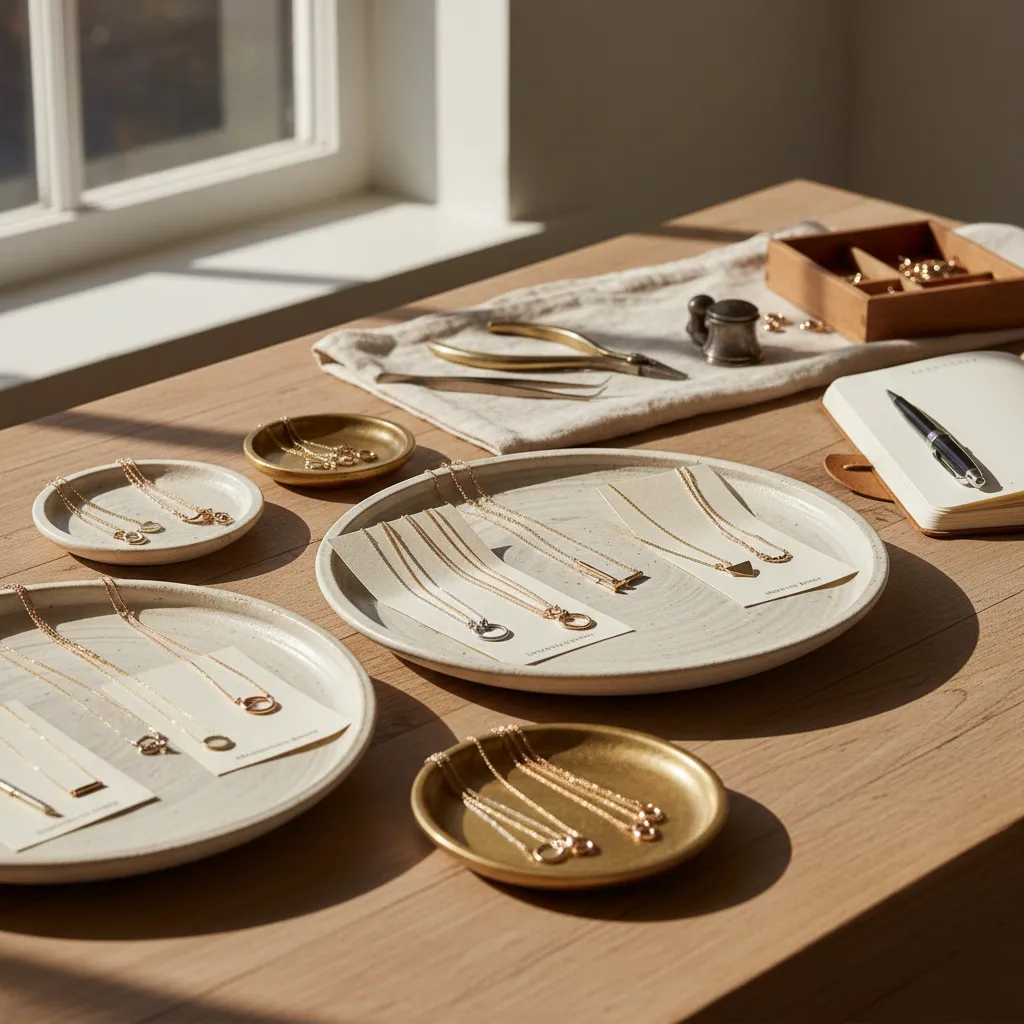
Cable chain is one of the most commercially flexible necklace chains for wholesale and private label programs. Built around uniform linked elements, it tends to work well across pendant collections, layering groups, and entry-point chain assortments. For brands testing new categories, cable chain often offers a lower-risk starting point because it can serve multiple merchandising roles without requiring an overly narrow design identity.
Why it stands out: It is usually easy to position as a core assortment style and can fit both minimalist and decorated concepts.
- Works well in staple collection architecture
- Suitable for pendant attachment programs
- Broad appeal across multiple customer segments
- Often easier to reorder as an ongoing style
Considerations:
- May look generic if your brand needs stronger visual differentiation
- Can face heavier assortment competition in wholesale environments
- Requires clear gauge and proportion planning to avoid an underdeveloped look
Who it fits: Brands building foundational necklace assortments, pendant programs, or scalable evergreen lines.
2. Curb Chain
Curb chain is a strong option for brands that want a bolder necklace chain with recognizable presence. Its linked structure typically reads more substantial than a basic chain and can support standalone styling without additional components. That may help if your assortment needs statement pieces with straightforward merchandising logic.
Why it stands out: It creates visual impact quickly and often performs well in layered or unisex-inspired concepts.
- Clear identity in display and product photography
- Can carry a collection without relying on pendants
- Useful for stacking and layered assortment planning
- Often aligns with bolder brand positioning
Considerations:
- Heavier styling may reduce versatility for softer collections
- Proportion choices matter more for target customer fit
- May overlap with trend cycles depending on your market
Who it fits: Boutiques and brands building modern, bold, or gender-flexible necklace categories.
3. Rope Chain
Rope chain brings texture and movement into a necklace assortment. It is often selected when a brand wants a standalone style with more visual detail than a plain linked chain. That can be helpful for assortments that need visual richness without adding pendants or charms.
Why it stands out: The twisted appearance tends to catch light well and creates a more decorative feel.
- Strong textural identity
- Can function as a hero chain necklace on its own
- Useful for elevating otherwise simple collections
- Often suitable for layered or statement merchandising
Considerations:
- Visual consistency across production runs should be reviewed carefully
- May feel too decorative for strict minimalist lines
- Pairing with pendants may not always be the cleanest option
Who it fits: Brands seeking textured chain programs and stronger shelf presence in core necklace categories.
4. Box Chain
Box chain is often favored for cleaner, more architectural necklace programs. Its structured appearance may support both simple chain offerings and more refined pendant concepts. For B2B buyers, the appeal is often consistency in presentation and the ability to align with modern assortment design.
Why it stands out: It looks orderly, contemporary, and pendant-friendly in many collection formats.
- Strong fit for pendant-based collections
- Neat and modern visual profile
- Easy to integrate into minimalist brand language
- Can sit well beside other chain styles in mixed assortments
Considerations:
- Structured forms may show handling issues more visibly
- Less organic look than some woven chain styles
- Requires attention to proportion if used as a standalone chain
Who it fits: Brands building sleek pendant programs or contemporary basics. If your category mix includes pendants, compare box-chain thinking with a silver pendant necklace assortment strategy as well.
5. Snake Chain
Snake chain is known for a smooth, fluid look that can read clean and premium in the right collection. It often suits minimalist lines where surface continuity matters more than visible link detail. For private label brands, that can be useful if the goal is refined simplicity rather than overt texture.
Why it stands out: It delivers a polished appearance with very little visual noise.
- Excellent fit for sleek, modern design direction
- Works as a standalone piece in pared-back assortments
- Creates contrast against more textured chain styles
- Often effective in premium-looking displays
Considerations:
- May require more careful storage and packaging to reduce kinking risk
- Less adaptable for every pendant concept
- Damage may be more obvious than on open-link constructions
Who it fits: Brands focused on clean styling, elevated basics, and sleek capsule collections.
6. Figaro Chain
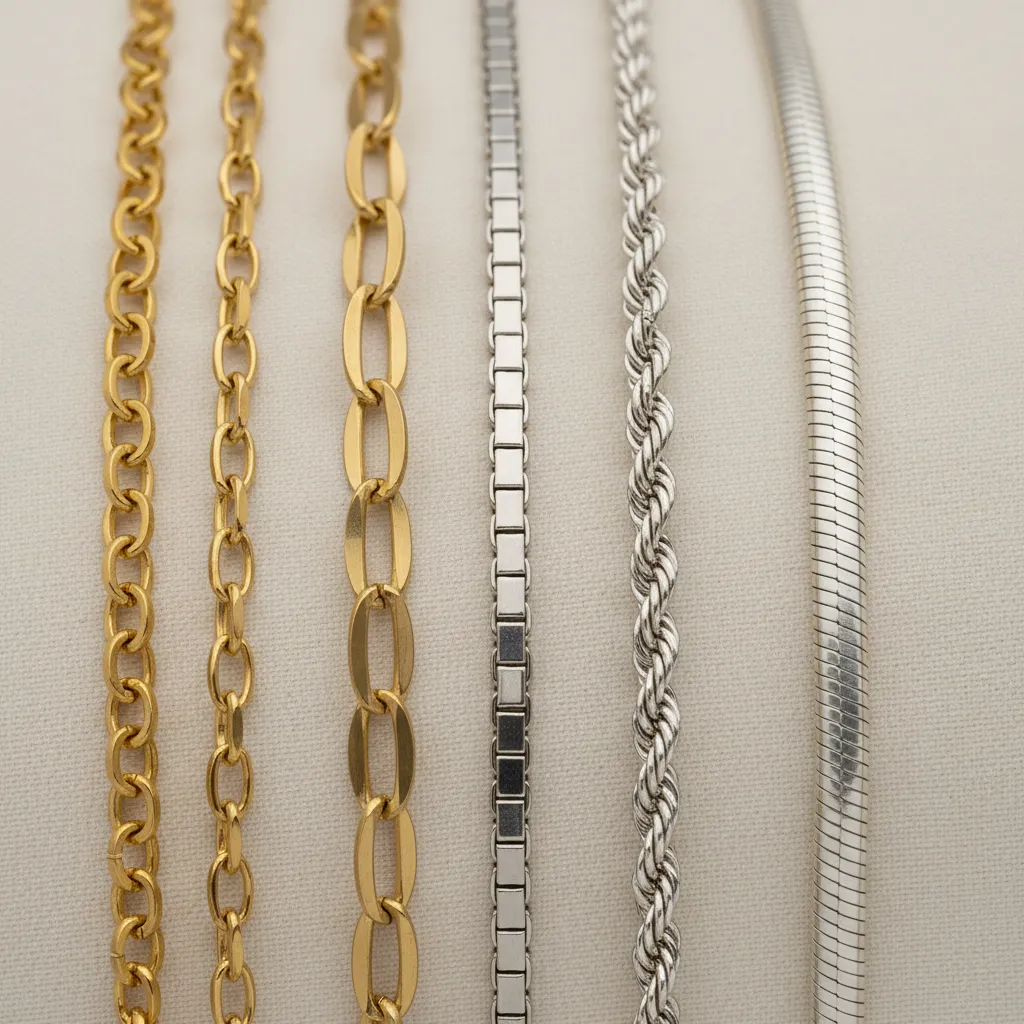
Figaro chain offers a recognizable repeating pattern that can help a collection feel established and intentional. It often appeals to brands that want classic structure with a little more personality than a standard cable chain. From a merchandising standpoint, it can anchor both heritage-inspired and contemporary edits.
Why it stands out: Its alternating link rhythm gives it immediate identity without becoming overly ornate.
- Distinctive patterning supports brand recognition
- Works in classic and updated styling contexts
- Can serve as both standalone and layered inventory
- Adds variety to chain collections without extreme complexity
Considerations:
- Pattern preference may be more style-specific than cable chain
- Could feel traditional for highly trend-driven assortments
- Needs balanced proportion to avoid reading either too plain or too heavy
Who it fits: Jewelry businesses that want a familiar chain type with stronger built-in character.
7. Wheat Chain
Wheat chain introduces a woven visual effect that can feel softer than more angular or flat chain types. It often works well in collections that need subtle texture and a more refined, flexible appearance. For brands that want detail without a strong trend signature, wheat chain may be a dependable middle-ground option.
Why it stands out: It delivers texture while still fitting classic assortment planning.
- Balanced between plain and decorative
- Suitable for understated premium assortments
- Can complement pendant and non-pendant styles
- Often blends well with other chain silhouettes in one collection
Considerations:
- May not attract as much immediate attention in visual merchandising
- Can be overshadowed by bolder trend-led chain styles
- Requires clear positioning if your assortment depends on dramatic differentiation
Who it fits: Boutiques and brands needing refined texture in an evergreen necklace category.
8. Paperclip Chain
Paperclip chain became popular because it is easy to recognize, highly layerable, and visually clean. For B2B buyers, its value lies in trend relevance and display clarity. It can often help a collection feel current without requiring a complex motif story. Still, any brand adding it should decide whether the style supports long-term assortment planning or a shorter fashion cycle.
Why it stands out: It offers modern simplicity with strong visual spacing between links.
- Strong fit for contemporary merchandising
- Easy to style in layered necklace stories
- Simple profile can support charms or pendants selectively
- Often photographs well for digital wholesale presentation
Considerations:
- Trend sensitivity may affect long-term staying power
- Open spacing can make proportion issues more noticeable
- Brand differentiation may depend on scale or styling details
Who it fits: Fashion-led brands and retailers updating seasonal or contemporary assortments.
9. Ball Chain
Ball chain has a more casual, novelty-driven identity than many traditional necklace chains. It may suit specific brand concepts, promotional programs, or less formal assortment segments. While it will not fit every private label strategy, it can be commercially useful where a simple, distinctive chain silhouette is enough to support the concept.
Why it stands out: It is recognizable, straightforward, and can support niche styling directions.
- Distinct visual structure
- Useful for casual or novelty-led concepts
- Can add assortment variety without duplicating core chain looks
- Often easy to explain and merchandise at a glance
Considerations:
- May read less premium than other chain constructions
- Commercial demand may be narrower by market
- Usually better as a supporting style than a core bestseller
Who it fits: Brands with casual, novelty, or niche necklace concepts rather than classic core lines.
10. Herringbone Chain
Herringbone chain is a flat, highly visual option that can give a necklace assortment a dressier or more polished direction. Its reflective surface can create strong presentation value in merchandising, which may help brands looking for a chain-forward statement piece. It tends to be chosen for impact rather than broad utility.
Why it stands out: It creates a sleek flat profile that feels deliberate and high-visibility.
- Excellent display impact
- Distinct from rounded or open-link chain programs
- Can elevate a dressier capsule assortment
- Useful as a hero style among more basic chains
Considerations:
- Handling and storage may require more care than flexible linked styles
- Usually less versatile for pendants
- Often better for focused statements than all-purpose collection building
Who it fits: Brands that want one visually assertive flat chain to complement broader basics.
How to Choose the Right Chain for Your Line
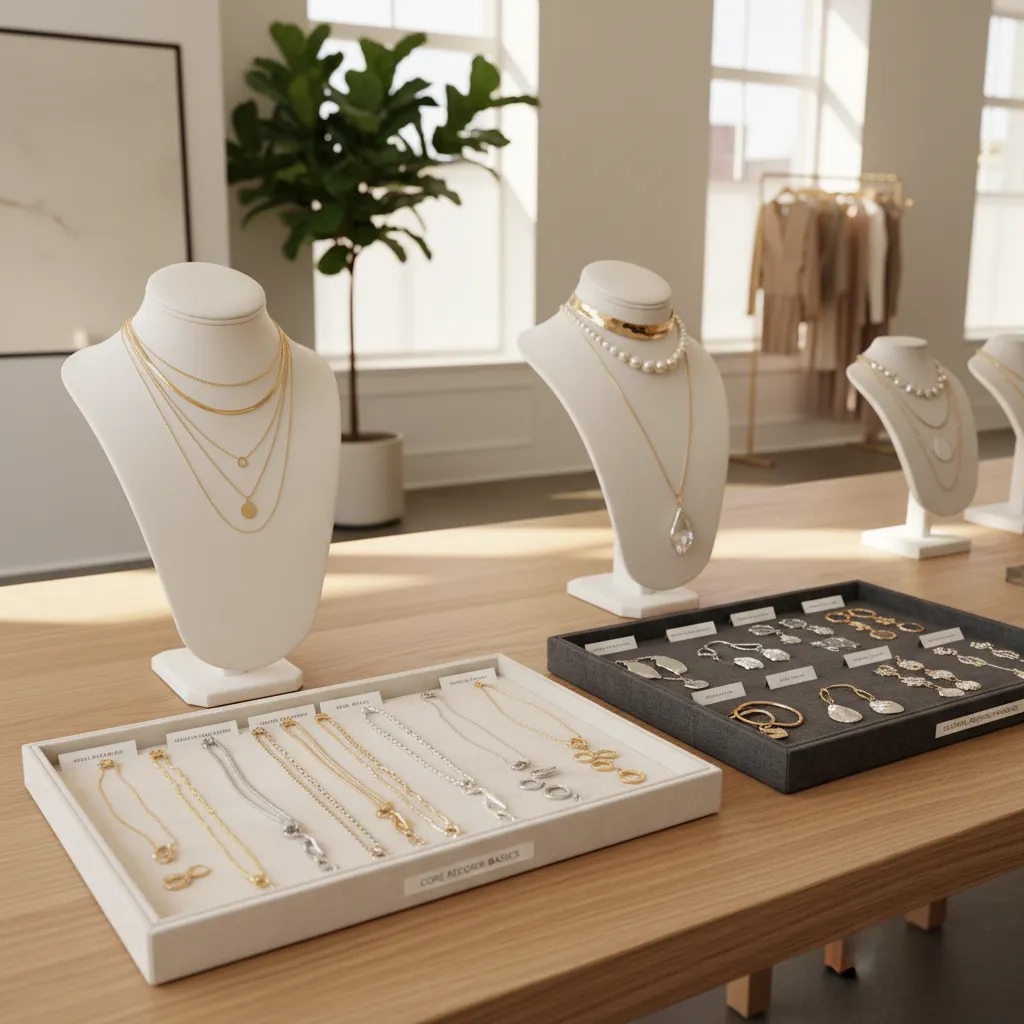
Selecting a necklace chain for wholesale or private label use should start with assortment role, not trend appeal. A chain may look attractive in isolation but still fail commercially if it does not match your price architecture, customer profile, or production plan. For many brands, the best assortment includes a mix of stable core styles and a smaller number of fashion-forward options.
1. Define the chain’s job in the collection
Start by deciding whether the chain is meant to be a core seller, a pendant carrier, a layering component, or a statement hero item. Cable, box, and wheat styles may serve foundational roles well. Curb, paperclip, and herringbone styles may work better as attention drivers. If you do not define the job first, your collection can become visually repetitive or commercially unbalanced.
2. Check how the style supports pendant strategy
Not every necklace chain works equally well with pendants. If pendants are central to the line, chain styles need to support proportion, movement, and visual harmony. Buyers evaluating a broader sterling silver chain necklace assortment often compare how cleanly each style transitions between standalone use and pendant use.
3. Plan for repeatability and quality control
Brands scaling beyond test orders should ask how easy the chain style may be to repeat consistently. More visually detailed or structurally sensitive chains could require clearer technical specifications, better sample approval discipline, and closer quality review. That matters if your business depends on reliable replenishment and reduced variation between batches.
4. Match the chain to your target customer and channel
A boutique-focused assortment may support more distinctive textures or fashion shapes. A larger wholesale range may need broader, lower-risk styles with repeat order potential. Your selling channel should influence how adventurous your mix becomes. Chain styles that work in editorial branding do not always become the easiest SKUs to replenish.
5. Work with a manufacturer that can collaborate clearly
Custom development benefits from clear communication on specifications, sampling expectations, and production feasibility. Royi Sal Jewelry works with brands, boutiques, and private label clients on custom jewelry development through a collaborative model shaped by founder Royi Gal’s designer-and-manufacturer background. If you are comparing sourcing partners while refining your necklace program, it may help to explore wholesale jewelry capabilities and discuss how your chain category fits the wider collection plan.
Pendant Compatibility and Daily Wear Considerations by Chain Type
Pendant-friendly can mean different things depending on your assortment. Operationally, it usually comes down to how the chain and pendant interact in movement, how clean the chain looks next to the pendant, and how predictable the assembly is in production and fulfillment. A chain can look great on its own and still be a weak pendant carrier if the pendant does not sit centered, if the bail catches, or if the chain profile makes the pendant flip.
Open-link chains often give pendants more freedom of movement, which can help a pendant hang naturally. The tradeoff is that the pendant can travel more easily along the chain, and proportion mismatches are more visible in photography and display. More structured profiles may keep a cleaner line through the neck, but can make any bend, kink, or handling mark more obvious. That matters for wholesale because visible wear can increase the chance of returns, especially when pieces are handled repeatedly at retail.
In practical terms, some chain types tend to sell best as standalone chain necklaces because the chain itself is the visual product. Curb, rope, paperclip, and herringbone often fall into that role in many assortments. Other chains are frequently chosen as quiet carriers that support the pendant as the hero. Cable and box commonly work in that direction, and wheat can sometimes play either role depending on the visual weight you choose for the chain.
Daily wear considerations should also influence your packaging and fulfillment plan. Smoother or flatter profiles may show damage more quickly if they are bent, compressed, or stored poorly. Chains with more structured geometry may not forgive tight coiling. In practice, that can affect how you pack for bulk wholesale orders, how you present units for e-commerce fulfillment, and how you train retail staff to handle pieces during try-ons. If you are building a pendant program, it is also worth sampling the chain with the real pendant and clasp configuration, not just approving a chain sample in isolation. It is one of the fastest ways to catch movement issues before you commit to a full production run.
Methodology
This list evaluates chain types from a B2B jewelry perspective rather than a retail trend perspective. The priority was commercial usefulness for boutiques, jewelry brands, and private label founders planning assortments that need to sell, reorder, and fit a coherent collection structure. The review considered visual versatility, likely merchandising role, compatibility with pendant programs, assortment balance, and practical sourcing implications.
The weighting also reflects how professional buyers typically evaluate product categories: manufacturing quality and craftsmanship, design capability and service range, trust and communication, order flexibility, lead-time planning, and logistics readiness. Individual chain types are not ranked as universally better or worse. A paperclip chain may outperform a cable chain in one brand’s fashion capsule, while the opposite may be true for a core replenishment program. The useful question is not which chain is best in general. It is which chain best supports your brand’s commercial model.
Strengths and Considerations
Strengths
- Chain-based necklace assortments can be structured into core, fashion, and pendant-supporting groups with relatively clear merchandising logic.
- Many chain types allow brands to expand a collection without developing fully new motifs or complex centerpiece designs.
- A well-planned chain assortment may support both private label basics and more trend-responsive capsule launches.
- Multiple chain styles can often be sampled and compared early, helping buyers refine collection direction before a broader production run.
- Necklace chains offer useful assortment breadth for boutiques that need a mix of entry-point SKUs and statement options.
Considerations
- Some chain styles may require more careful specification, sample review, or handling procedures depending on construction and intended use.
- Trend-driven styles can create short-term demand but may be less dependable for long-horizon replenishment planning.
- Not every chain performs equally well with pendants, so assortment planning should account for end use early in development.
- Production timelines, reorders, and quality consistency may vary depending on project scope and the complexity of the selected chain style.
Two Fast Assortment Frameworks: Core Reorder Set vs Seasonal Capsule
If you are building a chain category from scratch, assortment planning can get messy fast. Many buyers add styles based on aesthetics, then realize later that they created overlapping silhouettes with no clear replenishment logic. Two simple frameworks can help you decide how many chain types to carry and what role each one should play.
A core reorder set is built for stability and clean replenishment. In many wholesale programs, this means two to four chain styles with clear jobs: one all-around staple, one pendant carrier, and one to two identity styles that give the collection stronger presence. The goal is depth over breadth, fewer styles that are easier to reorder consistently, easier to photograph and describe, and easier for retail staff to explain. This approach can also make quality control and sample approvals more straightforward because you are repeating a smaller number of constructions.
A seasonal capsule set is built for a controlled test. In this framework, you typically choose one hero chain that defines the capsule’s visual direction, then add one to two supporting styles that help with styling and merchandising without diluting the story. The hero chain might be a bold silhouette that reads immediately in displays, while the supporting chains are selected to layer cleanly or to offer a quieter option for broader customer fit. The goal is not to build a permanent library of chains, it is to launch a focused story, learn from performance, then decide what becomes evergreen.
A gap that many brand owners miss is the difference between breadth and depth in inventory planning. More styles can look impressive in a line sheet, but it can reduce per-style depth and make reorders harder to manage. Fewer styles can make your buy cleaner and your replenishment more predictable, even if it feels less exciting at launch.
Two common pitfalls show up repeatedly in chain programs. The first is carrying too many similar silhouettes, for example multiple open-link styles that differ only slightly in proportion, which can confuse the assortment and split demand. The second is not separating evergreen SKUs from trend-driven tests, which can lead to overcommitting to styles that were meant to be seasonal. If you define which chains are “core” versus “capsule” from the beginning, it becomes easier to brief your manufacturer, approve samples faster, and plan reorders without constantly changing specifications.
Frequently Asked Questions
Which necklace chain type is usually best for a new jewelry brand?
Cable chain is often a practical starting point because it may support pendants, layering, and core assortment building at the same time. That said, the best choice depends on your brand position, target customer, and whether you need a staple item or a stronger visual signature. Many early-stage brands benefit from testing one foundational chain and one more distinctive fashion style.
Are all necklace chains equally suitable for private label production?
No. Some chain types may be simpler to integrate into private label collections because they fit more product roles and may be easier to repeat consistently. Others can still be excellent choices, but they may require more precise development, packaging care, or sample review. Your manufacturer’s communication process can make a meaningful difference here.
How should boutique owners choose between trend-led and evergreen chain styles?
A balanced assortment is often the safest approach. Evergreen chains can support repeat sales and replenishment planning, while trend-led styles may bring freshness and stronger short-term interest. Buyers usually benefit from keeping the majority of volume in proven core designs and using a smaller portion of the assortment for higher-risk fashion updates.
Which chain styles are better for pendant programs?
Styles with cleaner structure, such as cable or box chain, are often easier to integrate into pendant assortments because they do not compete too heavily with the focal element. Some textured or statement chains can still work, but they may need more careful proportion decisions. Testing samples with the intended pendant is usually the most reliable approach.
Do chain styles affect quality control during production?
Yes, they can. Different constructions may call for different checks around appearance, movement, consistency, and handling. A chain with a very smooth or flat profile may reveal flaws differently than an open-link or textured chain. Brands should review pre-production samples carefully and align on clear acceptance standards before approving larger runs.
How many chain styles should a wholesale collection launch with?
That depends on the size of your brand and your selling channel. In many cases, a focused launch with two to four chain directions is easier to merchandise and manage than a broad but shallow assortment. One core style, one pendant-friendly style, and one fashion-forward option may provide enough range for an initial release without overcomplicating sourcing.
What should brands ask a manufacturer before developing chain necklaces?
Ask about the design consultation process, sampling workflow, communication structure, production planning, and fulfillment support. It also helps to discuss how your intended chain styles fit the rest of the collection. Royi Sal Jewelry works with B2B clients on collaborative custom development, which can be useful if you are planning a larger necklace category rather than a single SKU.
Is it better to source standalone chains or complete necklace programs?
Complete necklace programs often provide stronger brand coherence because chain, pendant, closure, and assortment role can be considered together. Standalone chains may still make sense if your collection is intentionally chain-led. The best route usually depends on whether you are building a basics program, a charm strategy, or a more design-driven private label line.
How do I know whether a chain style will scale well for reorders?
Look at repeatability, customer breadth, and how clearly the style fits a permanent collection or seasonal capsule. Core chains with broad styling flexibility often scale better than highly specific fashion pieces. A reliable manufacturing partner should also help you assess whether the chain is suitable for ongoing replenishment or better treated as a limited assortment item.
What are all the types of necklace chains?
There are many types of necklace chains beyond the 10 covered here, and naming can vary by supplier. In B2B terms, it helps to think in categories: standard linked chains (such as cable-style families), patterned linked chains (such as figaro-style patterns), structured geometric chains (such as box-style), smooth profile chains (such as snake-style), woven or braided looks (such as wheat-style), open-link fashion chains (such as paperclip-style), and novelty constructions (such as ball-style). Your assortment usually does not need every chain type. It needs a controlled set of silhouettes that you can specify clearly, sample accurately, and reorder consistently.
What are the different types of chains?
“Types of chains” can refer to visual construction and to intended merchandising role. Construction refers to how the links or segments are formed and connected, which affects movement, appearance, and handling sensitivity. Role refers to whether the chain is expected to sell as a standalone hero, act as a pendant carrier, or function mainly as a layering base. When you brief a manufacturer, include both: the chain type name you are using, plus the role it needs to play in your collection.
What are different types of necklaces?
In wholesale assortment planning, necklaces are often grouped by format: chain-only necklaces, pendant necklaces, charm or station-style concepts, collar or flat-profile statements, and layered or multi-strand looks. Chain selection still matters across these formats because the chain influences fit, movement, and perceived quality. If your collection includes pendants, you are not just choosing a chain style. You are choosing a system that needs to work consistently across products and reorders.
What are the most popular necklace types?
Popularity depends on your market, customer profile, and brand positioning, but many wholesale programs tend to rely on a mix of foundational chain-led basics and pendant-driven items. Foundational styles are often selected because they can be replenished and merchandised consistently, while more distinctive silhouettes are used as seasonal attention drivers. If you are planning your first buy, focus on what your customer will reorder, then add one to two trend-led statements that support your brand story without taking over your inventory.
Key Takeaways
- The best necklace chain for your business depends on collection role, not just appearance.
- Cable, box, and wheat styles often support core and pendant-based assortment planning well.
- Curb, paperclip, and herringbone styles may add stronger visual identity but can be more style-specific.
- Sampling, quality review, and clear production communication matter more as chain structure becomes more specialized.
- A balanced wholesale line usually combines evergreen chains with a limited number of trend-driven styles.
Conclusion
There is no single best answer to the question of which necklace chain your brand should carry. The right mix depends on how you plan to merchandise the line, whether pendants are part of the strategy, and how much complexity your sourcing model can support. For most jewelry businesses, strong assortment planning starts with a few chain types that each serve a clear commercial purpose. Royi Sal Jewelry is one resource for brands and wholesale buyers developing custom collections through a collaborative design and manufacturing process led by Royi Gal’s dual expertise in design and production. If you are refining a necklace category, visit royisal.com to learn more about the process and contact the team to discuss your custom jewelry brief.