The Complete B2B Guide to 925 Sterling Silver Jewelry

925 sterling silver remains one of the most important materials in modern jewelry development. For brands, retailers, and private label businesses, it offers a practical balance of appearance, workability, market appeal, and price positioning. Whether you are launching a new collection, expanding an existing line, or comparing manufacturing options, understanding how sterling silver fits into the broader jewelry supply chain is essential.
This pillar page provides a high-level overview of 925 sterling silver in a business context and connects you to deeper resources across design, sourcing, manufacturing, gemstones, and brand-building. If you are evaluating product development or wholesale opportunities, this guide will help you make better decisions at every stage.
What 925 Sterling Silver Means in Jewelry Manufacturing
925 sterling silver is an alloy made primarily of silver, with the remaining portion typically composed of strengthening metals. In practical terms, this composition makes sterling silver far more suitable for jewelry manufacturing than fine silver alone, which is generally softer.
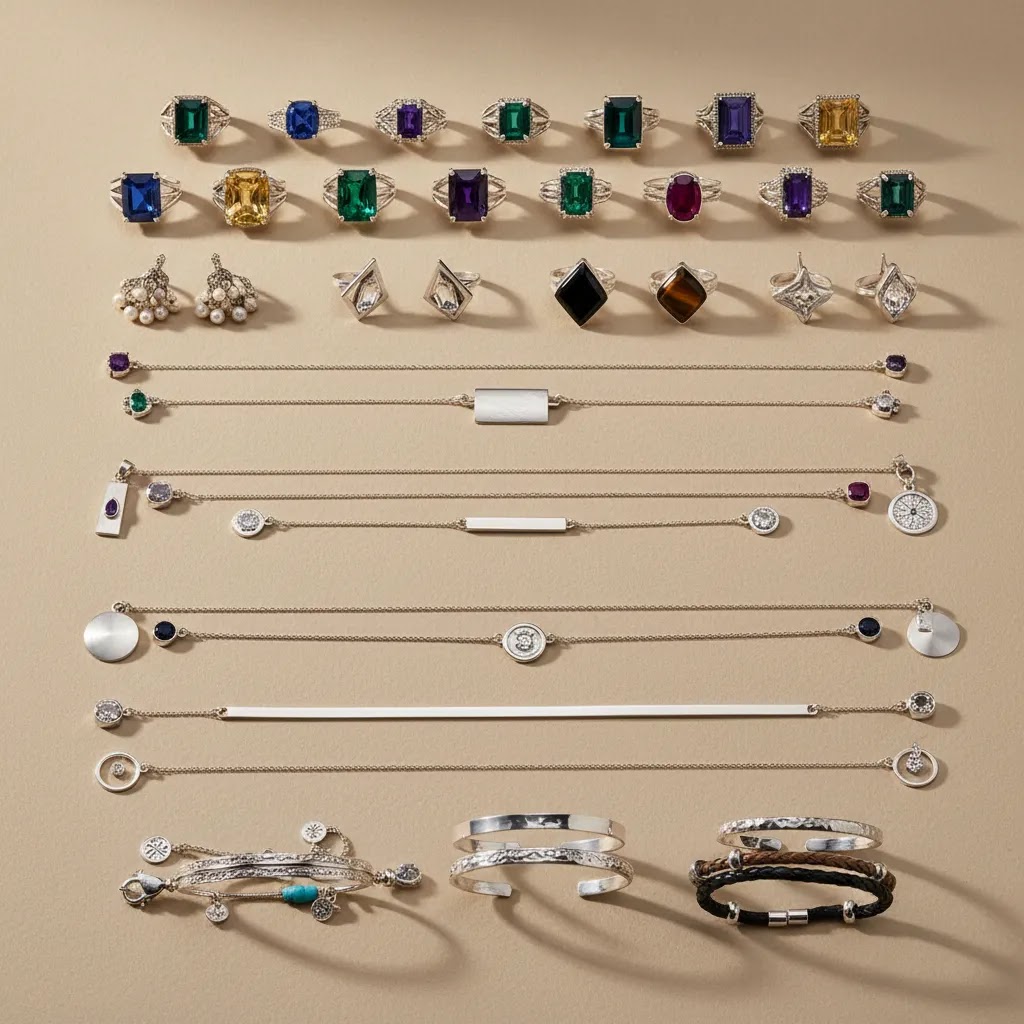
For B2B jewelry businesses, 925 sterling silver is valuable because it supports a wide range of product categories, including rings, earrings, pendants, bracelets, and gemstone-set pieces. It is widely recognized in the market, attractive to many customer segments, and flexible enough for both fashion-driven and classic collections.
From a manufacturing perspective, sterling silver also works well with custom development processes. Brands that need private label production, custom components, or design variations often choose sterling silver because it can support detailed forms, stone settings, and multiple finishing options.
If your business is still comparing metals, it is useful to also review 316L Stainless Steel Jewelry: Premium Surgical Steel Quality and Brass Jewelry Manufacturing: Complete Guide to Production & Sourcing to understand how silver differs from other commonly used jewelry materials.
Why 925 Sterling Silver Is Popular for Wholesale and Private Label Collections
For wholesale buyers and growing brands, sterling silver occupies an important middle ground. It offers a more premium perception than many base metals while often remaining more accessible than higher-cost precious metal categories.
This makes it especially useful for:
- Boutique jewelry collections
- Entry-level fine jewelry concepts
- Gemstone jewelry programs
- Bridal-inspired designs
- Trend-responsive seasonal drops
- Private label brand expansion
Businesses often choose sterling silver because it supports both volume production and design variety. A single collection can include minimalist basics, statement pieces, and stone-set products without changing the material strategy entirely.
For companies focused specifically on value positioning, Cheap Sterling Silver Rings: Budget-Friendly Wholesale Options explores how lower-cost silver programs can still align with wholesale quality goals.
Quality Standards Businesses Should Understand
Not all sterling silver programs are equal. In B2B jewelry, quality depends not just on alloy designation but also on process control, finishing consistency, casting quality, stone setting precision, and supplier reliability.
Important quality factors include:
- Accurate metal composition
- Consistent production standards
- Surface finish quality
- Secure soldering and assembly
- Stone setting integrity
- Plating or finishing durability where applicable
- Packaging and shipping standards for wholesale orders
If you are building a gemstone-based sterling silver line, quality becomes even more important. 925 Sterling Silver Gemstone Jewelry Wholesale: Quality Standards provides a more focused look at how businesses can evaluate silver-plus-gemstone production programs.
To protect your customers and margins, it’s also worth reviewing how to ensure your jewelry business offers authentic 925 sterling silver when vetting suppliers and setting internal QC standards.
925 Sterling Silver and Gemstone Jewelry
Sterling silver is widely used in gemstone jewelry because it offers a strong visual contrast and a commercially viable cost structure. For many brands, it is one of the most efficient ways to create gemstone collections with broad appeal.
This category can include:
- Natural gemstone fashion jewelry
- Semi-precious stone collections
- Bridal-inspired lines
- Color-focused trend capsules
- Birthstone programs
- Moissanite and lab-grown stone designs
Businesses exploring the gemstone side of product development should understand both aesthetics and sourcing realities. Beads for Jewelry Making: Types, Materials & Sourcing Guide is helpful for brands working with component-based or decorative stone concepts, while Chanthaburi Gem Market: Complete Guide to Thailand’s Gemstone Capital offers useful sourcing context for businesses interested in gemstone supply ecosystems.
For a broader sourcing perspective tied to the region, Bangkok Jewelry Sourcing Guide: Markets, Factories & Wholesale Suppliers explains how jewelry businesses evaluate suppliers, markets, and production channels in one of the world’s most important jewelry hubs.

Sterling Silver and Moissanite: A Strong Commercial Combination
One of the most commercially relevant combinations in today’s market is sterling silver and moissanite. This pairing allows brands to offer strong visual impact at a price point that is often more accessible than traditional precious metal and diamond combinations.
For B2B buyers, sterling silver moissanite jewelry may be attractive for:
- Bridal-style collections
- Fashion rings and earrings
- Affordable luxury positioning
- High-sparkle product lines
- DTC-friendly private label programs
- Trend-driven social media collections
To explore this category in more detail, see 925 Sterling Silver Moissanite Jewelry: Affordable Luxury Combinations. If your team is comparing suppliers or market positioning, Best Moissanite Jewelers: Top Suppliers & Manufacturers can help frame the competitive landscape.
Brands targeting lower price tiers may also benefit from reading Cheap Moissanite Rings: Affordable Options Without Sacrificing Quality for a closer look at balancing cost and customer expectations.
Stone Settings Matter as Much as Metal Choice
Choosing 925 sterling silver is only part of product development. The way stones are set can significantly influence appearance, durability, manufacturing complexity, and final pricing.
For silver jewelry with gemstones, moissanite, or lab-grown stones, the setting style affects both visual identity and production demands. Common setting approaches may include prong, bezel, pavé, channel, halo, and other techniques.
A useful next step is 8 Brilliant Classification Of Stone Settings, which helps explain the design and technical role of different setting styles. This is particularly relevant for brands developing silver rings, pendants, or earrings that need to balance durability with presentation.
Sterling Silver in the Era of Lab-Grown and Alternative Stones
As the jewelry market evolves, many brands are pairing sterling silver with lab-grown stones and alternative gemstone options to meet changing consumer expectations and target broader price points.
This trend affects merchandising, branding, and supplier selection. Businesses looking to align sterling silver with modern stone categories should also understand adjacent markets such as lab-grown diamonds. For context, Brilliant Diamond Brands: Top Lab Grown Diamond Companies offers insight into the growing lab-grown segment, while Celebrity Lab Diamond Jewelry: Trending Styles & Influence helps explain how visibility and trend cycles shape demand.
Even if your immediate focus is sterling silver, these related categories can influence future collection planning and customer expectations.
Designing a 925 Sterling Silver Collection
A successful sterling silver collection begins with clear product strategy. Before production starts, brands need to define their target market, collection structure, style direction, materials, and positioning.
That process usually includes:
- Concept development
- Design refinement
- Material and stone selection
- CAD or technical development
- Sampling and revisions
- Production planning
- Packaging and fulfillment coordination
For brands refining materials and merchandising decisions, the benefits of using sterling silver in jewelry design can help clarify why 925 is often chosen for scalable, detail-driven collections.
For businesses seeking support at the design stage, Custom Jewelry Design Services: Complete Guide for Brands & Retailers explains how professional design partners can help transform ideas into manufacturable collections. Companies that prefer to source domestically may also want to review Custom Jewelry Design Services USA: Finding American Manufacturers.
And when selecting external design expertise, Custom Jewelry Designers: Working with Design Partners can help brands understand what to look for in a collaborative design relationship.
What Custom Development Costs Can Look Like
Cost planning is one of the most important parts of launching a sterling silver collection. Final pricing depends on design complexity, stone type, labor intensity, sampling requirements, order quantity, finishing methods, and logistics.
For example, a simple silver band and a detailed stone-set statement ring can involve very different production requirements, even when the base metal is the same. This is why businesses should evaluate cost at the design and sourcing stage, not only when they receive final quotes.
To better understand the variables involved, read Custom Jewelry Cost Guide: Pricing Factors & What to Expect. This is especially useful for new brands that need to align product ambition with realistic budget planning.
How to Find the Right Manufacturer for Sterling Silver Jewelry
Selecting the right production partner is often more important than selecting the material itself. An experienced manufacturer can help refine designs, identify production risks, maintain consistency, and support growth over time.
When evaluating sterling silver manufacturers, look for:
- Experience with silver-specific production
- Sampling and prototyping capabilities
- Stone-setting expertise
- Clear communication
- Documented production process
- Ability to scale
- Reasonable lead-time transparency
- Quality control systems
- International shipping capability where needed
For a broad overview, Complete Guide to Jewelry Manufacturers: How to Find & Partner with the Right Supplier is a foundational resource. You can also compare the wider field through Best Jewelry Manufacturers: Top Production Partners Worldwide.
If your sourcing strategy includes geographic diversification, Brazil Jewelry Manufacturers: South American Production & Gemstone Sourcing offers another regional perspective on supplier evaluation.
Sourcing Considerations Beyond the Metal Itself
Many businesses assume that sterling silver sourcing begins and ends with metal cost, but that is only one part of the picture. In reality, the supply chain includes findings, stones, plating, labor, molds, packaging, shipping, and production management.
Businesses should ask:
- Where are stones or components sourced?
- What minimum order quantities apply?
- How are samples handled?
- What revisions are included?
- What production tolerances are acceptable?
- How are delivery timelines communicated?
- Who manages quality control before shipment?
Regional sourcing knowledge can offer a strategic advantage. For example, Bangkok Jewelry Sourcing Guide: Markets, Factories & Wholesale Suppliers and Chanthaburi Gem Market: Complete Guide to Thailand’s Gemstone Capital are especially relevant for brands navigating Asian jewelry supply networks.
Building a Brand Around 925 Sterling Silver
Sterling silver can be more than a material choice. It can become part of your brand story, price architecture, and product ladder. Some businesses use it as their core material across all collections, while others position it as a gateway tier before expanding into higher-priced categories.
To do this effectively, your brand should define:
- Who your ideal buyer is
- What price segment you serve
- Whether your designs are trend-led or timeless
- How your silver collection differs from competitors
- What stones, finishes, or themes create consistency
- How manufacturing supports scaling
If your focus is bigger than product development alone, Building a Jewelry Brand: From Manufacturing to Market is a useful resource for aligning manufacturing decisions with broader brand strategy.

How 925 Sterling Silver Fits Into Long-Term Business Growth
For many jewelry businesses, sterling silver is not just a launch material. It is a long-term platform for scalable growth. It can support recurring styles, capsule drops, gemstone expansions, bridal-inspired programs, and accessible luxury positioning.
As your business grows, the key questions shift from “Can we make this?” to:
- Can we reorder consistently?
- Can we maintain quality across batches?
- Can we expand into adjacent categories?
- Can our supplier support increased complexity?
- Can our design process become more efficient?
These are operational questions, not just creative ones. They are central to building a durable wholesale or private label jewelry business.
A Practical Framework for Evaluating Sterling Silver Opportunities
If you are planning a 925 sterling silver jewelry line, use this framework:
1. Define the Market
Clarify whether you are serving boutiques, online retail brands, private label accounts, or multi-channel jewelry businesses.
2. Set the Product Scope
Determine whether your collection focuses on rings, earrings, pendants, gemstone pieces, or moissanite-led designs.
3. Clarify Price Positioning
Align material, stones, complexity, and expected margins with your intended market.
4. Evaluate Design Requirements
Assess whether you need original concepts, CAD development, sampling, or design consultation.
5. Review Supplier Fit
Choose manufacturers based on communication, capabilities, quality, and scale readiness.
6. Plan for Growth
Think beyond first production runs and consider reorders, line extensions, and long-term operational support.
Why Collaboration Matters in Custom Silver Jewelry Development
In B2B jewelry, successful sterling silver projects usually come from strong collaboration between brand and manufacturer. Clear briefs, realistic timelines, technical guidance, and feedback loops all contribute to better outcomes.
An experienced partner can help businesses avoid common mistakes such as:
- Overcomplicated first collections
- Poor setting choices for intended wear
- Underestimating sampling timelines
- Choosing suppliers based on price alone
- Failing to define quality standards early
- Ignoring how branding and production interact
For businesses that want a collaborative approach to custom development, working with a manufacturer that understands both design and production can make the process more efficient and scalable.
Conclusion
925 sterling silver continues to be one of the most commercially important materials for jewelry brands, retailers, and wholesale buyers. Its versatility supports a wide range of styles and price points, while its compatibility with gemstones, moissanite, and custom design makes it especially useful for businesses building differentiated collections.
The strongest results come from understanding the full picture: material selection, stone options, settings, design services, cost structure, sourcing strategy, manufacturing fit, and brand positioning. When these elements are aligned, sterling silver can serve as a powerful foundation for both product development and long-term growth.
If you are planning a custom sterling silver collection or looking for a reliable manufacturing partner, Royi Sal Jewelry can help you explore the right design and production approach for your business. Contact the team to discuss your project, share your requirements, and start building a collection that fits your brand goals.
Frequently Asked Questions
What is 925 sterling silver in jewelry?
925 sterling silver is a silver alloy commonly used in jewelry manufacturing because it offers a practical balance between silver content, strength, and design versatility.
Is 925 sterling silver good for wholesale jewelry collections?
Yes. For many brands and retailers, 925 sterling silver is a strong wholesale option because it is widely recognized, commercially versatile, and suitable for many product categories.
Can 925 sterling silver be used with gemstones and moissanite?
Yes. Sterling silver is commonly used for gemstone and moissanite jewelry, including rings, earrings, pendants, and coordinated collections.
What affects the cost of custom sterling silver jewelry?
Cost is influenced by design complexity, stone choice, setting style, labor, sampling requirements, order quantity, finishing methods, and shipping logistics.
How do I choose a sterling silver jewelry manufacturer?
Look for a manufacturer with sterling silver experience, strong communication, sampling capability, quality control processes, and the ability to support your business as it grows.