

3D Jewelry Design Free Download (2026 Guide)
What Free Downloads Can Actually Do
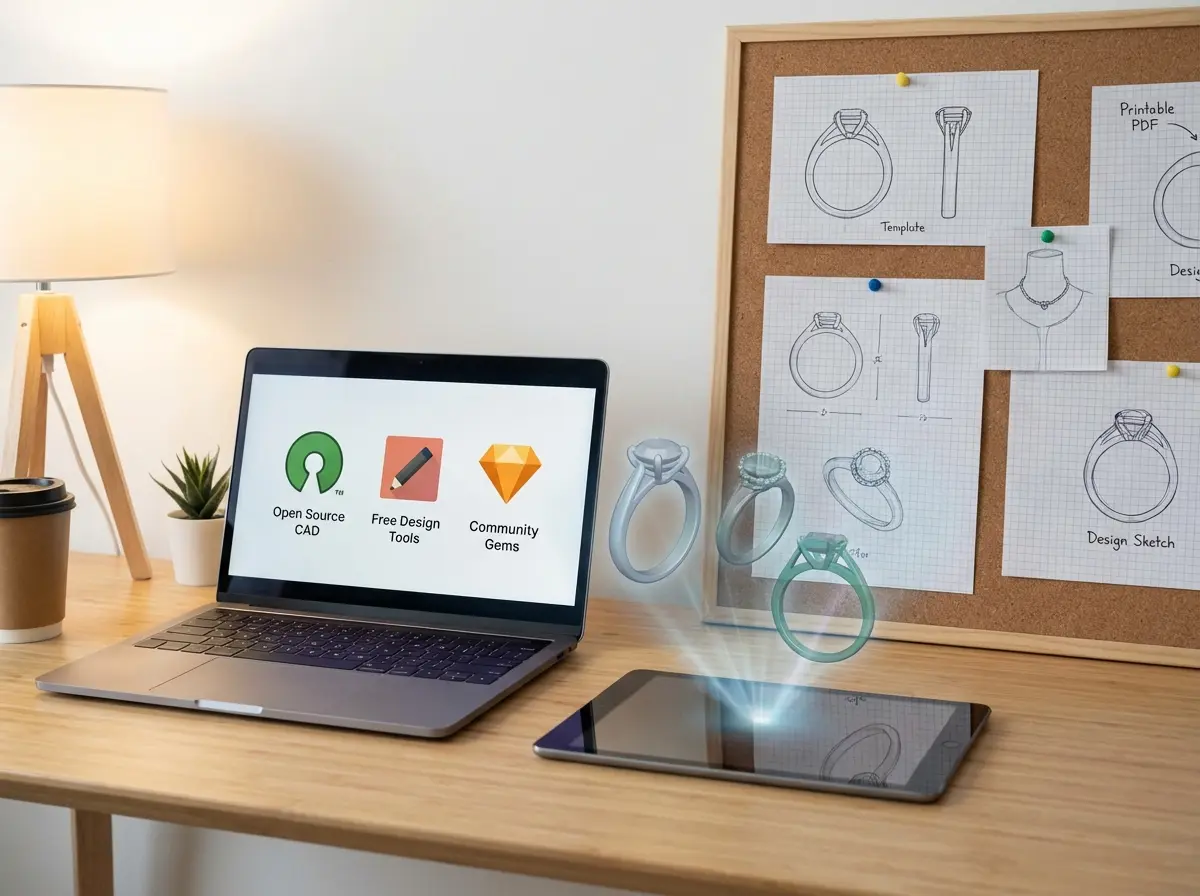
When people search for 3d jewelry design free download, they are usually looking for one of three things: software, editable models, or visual templates. Those are not the same thing.
Software helps you build or edit a design. A model file gives you a starting shape, such as a solitaire ring head or a pendant base. A template is often closer to a presentation aid, mood board element, or dimensional sketch. Think of it this way: software is the workshop, the model is the rough part, and the template is the blueprint note pinned to the wall.
From a practical standpoint, free resources are most useful in early concept development. They help you test proportions, compare silhouettes, and communicate style direction with your team. If you are exploring 3d jewelry design software free, that stage is exactly where free tools have real value.
What many people overlook is that free does not always mean production-ready. A downloaded ring file may have weak prongs, impossible stone seats, thin walls, or poor tolerances that fail in casting. That is why design intent and manufacturing intent need to meet much earlier than many startups expect.
The Main Types of Downloadable Jewelry Files
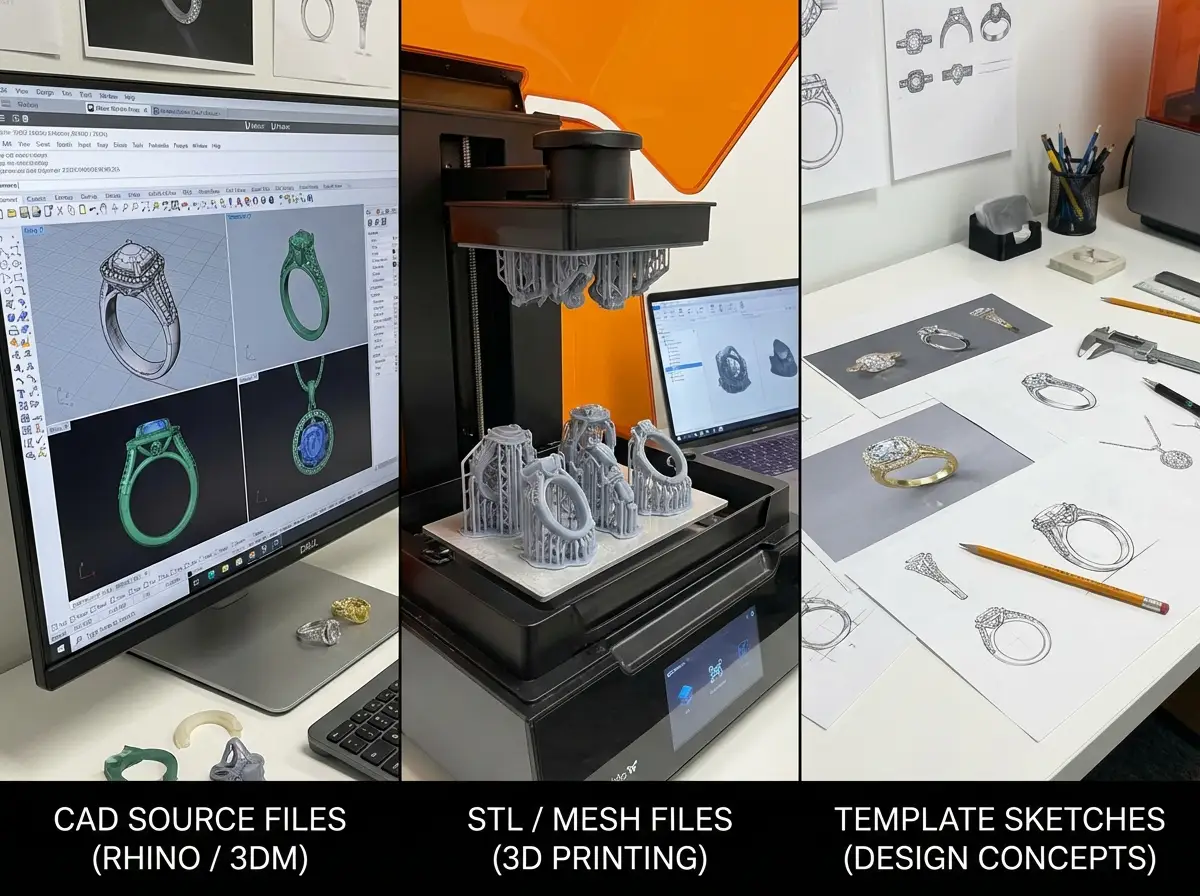
CAD source files
CAD source files are the most valuable downloads if you need real editing control. These may come in native software formats or neutral engineering formats. They allow you to adjust dimensions, shank thickness, stone size, and structural details before prototyping.
If your goal is true customization, source files matter more than pretty renders. A render can sell an idea internally, but a source file is what helps a designer or manufacturer fix real production issues.
STL and mesh files
STL is common in jewelry prototyping and 3D printing, but it is not always easy to edit cleanly. Many free 3d jewelry models free download resources offer STL because it is convenient for sharing. The downside is that STL is a mesh, not a fully parametric design file.
In practice, this means your CAD team may need to rebuild the design rather than simply modify it. That can increase development time instead of reducing it.
Template packs and sketch resources
Free jewelry design templates can be useful for concept approval, line planning, or training junior designers. They help your team standardize views, measurements, and design notes. They are especially useful when you are briefing a manufacturer and want fewer misunderstandings during handoff.
If you are still weighing software options, this guide to free 3d modeling software for jewelry design can help you match file type to workflow.
How to Choose Free Software Without Slowing Production
Start with your business goal, not the feature list
Here is the thing. Most jewelry brands do not need every advanced command in a high-end CAD program on day one. You need enough capability to test ideas, discuss revisions clearly, and hand over useful information.
If you are validating a new capsule collection, simple modeling and rendering may be enough. If you are building stone-intensive styles, pavé rings, or hinged pieces, you will need stronger engineering support much earlier.
Check these four areas first
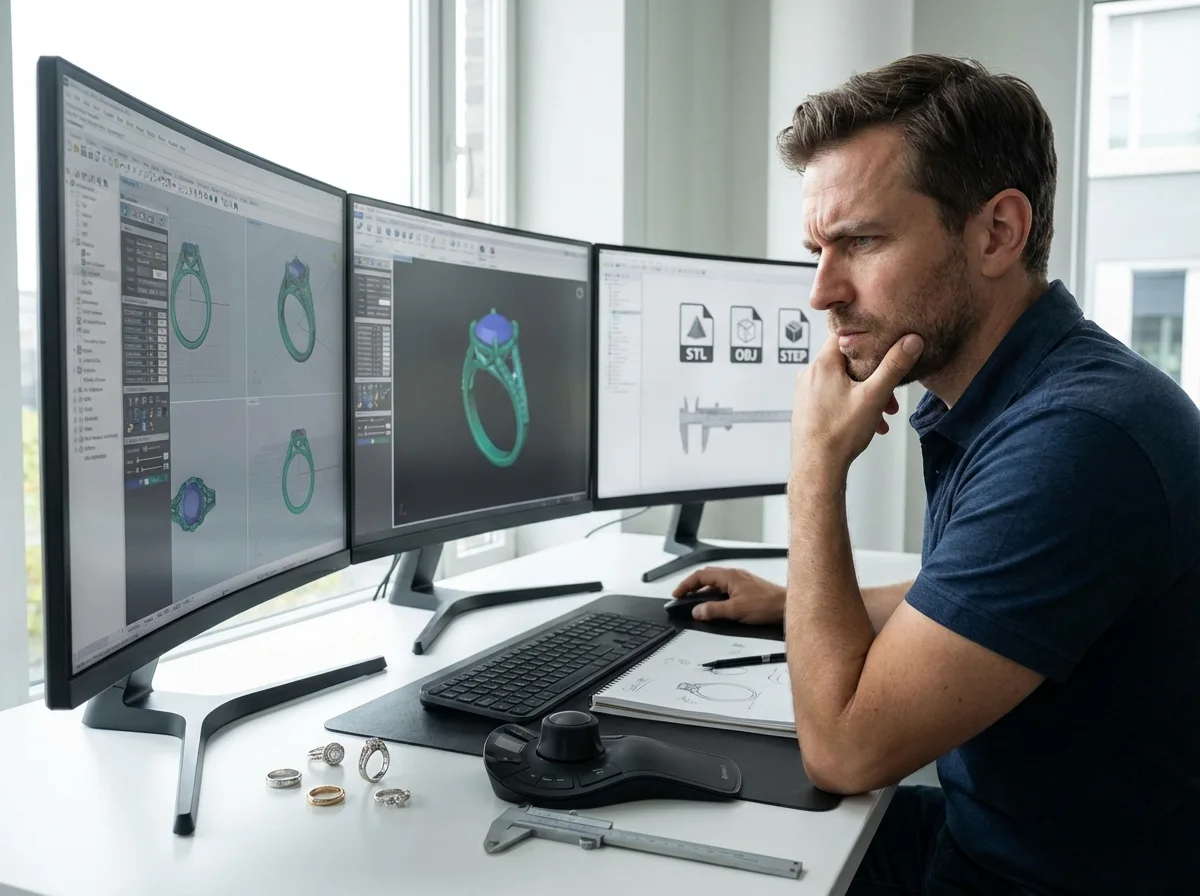
- File export options such as STL, OBJ, STEP, or 3DM
- Measurement precision for stone size, thickness, and tolerances
- Ease of editing existing models
- Compatibility with your designer, printer, or manufacturer
Consider this: the best free tool is not the one with the longest feature list. It is the one that fits your current workflow and creates the fewest translation problems later.
If faster sampling is the priority, this article on How Use CAD Technology Faster Jewelry Prototyping is worth reading alongside your software evaluation.
When Free Templates Help Your Brand
Templates are underrated in jewelry development. They are not glamorous, but they save time.
A strong design template can help you standardize ring size charts, profile views, stone maps, chain lengths, clasp notes, and plating instructions. When your brand starts outsourcing work to different freelancers or factories, consistent templates reduce friction. That matters more than many founders realize.
Now, when it comes to launching a collection, templates also help your merchandising process. You can compare families of designs, build matching sets, and see where your assortment is too repetitive. That becomes even more useful when trend-led planning connects with broader market direction, such as the shifts covered in jewelry trends watch 2025 key design elements year.
For small brands, a manufacturer like Royi Sal Jewelry can be one practical example of how design support and structured development help translate ideas into manufacturable pieces. Royi Sal has worked in jewelry manufacturing since 2001 and can support concept refinement through sampling when a sketch or template alone is not enough.
How Free Design Assets Fit Into OEM Development
Where free files help
Free downloads work well for inspiration, benchmarking, internal reviews, and rough prototyping. If you want to test whether a signet ring looks better with a flat top or cushion top, a downloaded base model can save hours.
They also help when briefing a custom jewelry design project. A reference file is often better than a vague sentence like “make it modern but timeless.”
Where free files stop helping
Once the design enters production planning, the standards change. You need accurate dimensions, stone tolerances, wearability checks, and structural integrity. A pendant bail that looks elegant on screen may fail if chain movement is not considered. A delicate claw setting may bend during finishing if the prongs are too fine.
This is where digital design and manufacturing realities come together. The broader shift is visible in technology jewelry design innovations shaping industry, but the day-to-day question for your brand is simpler: can the file be produced consistently at your target quality level?
If you are preparing a design handoff, it helps to review what makes a concept factory-friendly. This piece on What Makes Jewelry Design OEM Ready gives a useful checklist.
One example from the manufacturing side is Royi Sal Jewelry’s ability to support OEM and ODM development, from CAD and sampling to packaging and production. That kind of end-to-end visibility helps when your initial free download needs engineering cleanup before it becomes a finished item.
Common Mistakes Brands Make With Free Downloads
Confusing visual quality with manufacturing quality
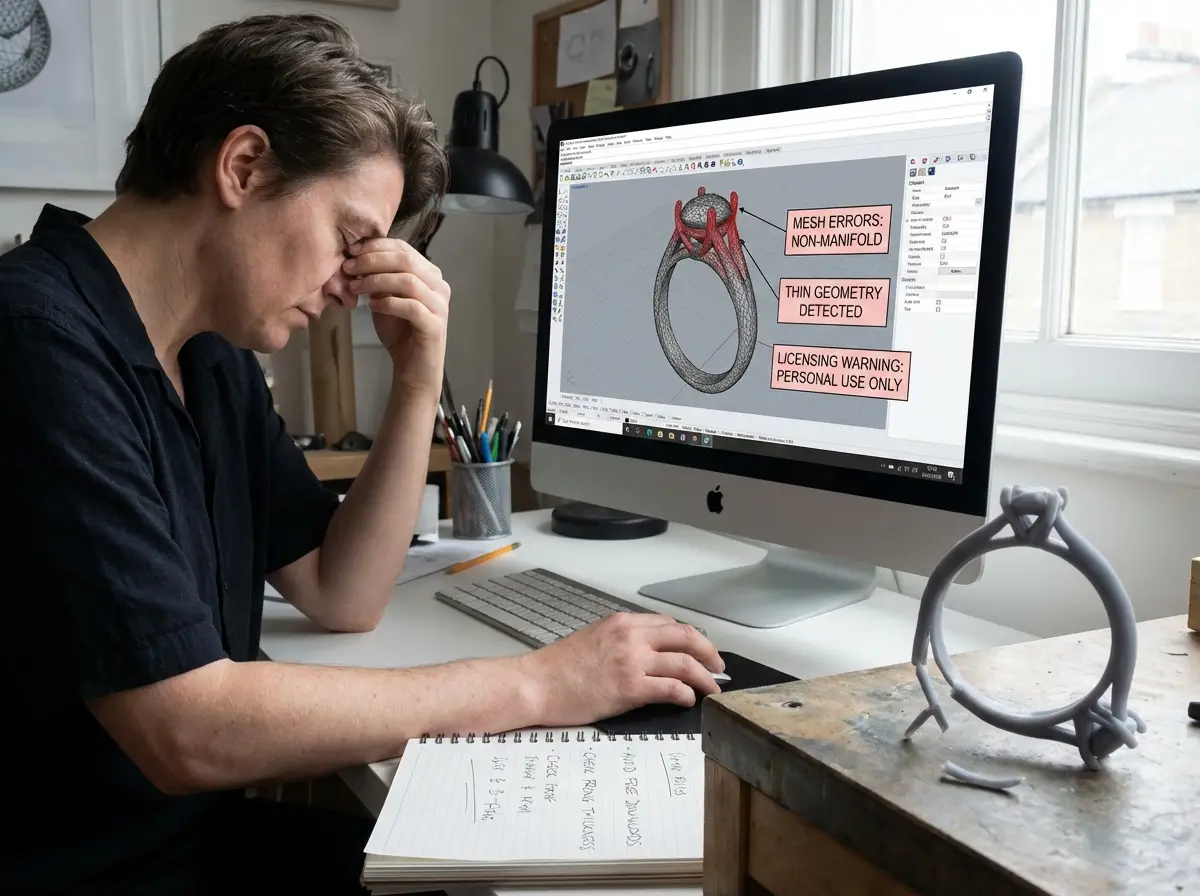
A file can render beautifully and still be impossible to cast cleanly. This is one of the most expensive misunderstandings in jewelry development.
Ignoring licensing and ownership
Some free model libraries allow personal use only. Others restrict resale or derivative work. If you plan to build a branded collection, check usage rights before investing in development. This is especially important if you expect exclusivity.
Skipping tolerance checks
Ring thickness, prong height, hole placement, wall strength, and stone seat depth all affect manufacturability. The reality is that “close enough” in CAD can become scrap in production.
Relying on one file format
If your only asset is a low-quality mesh, revisions become harder. Keep organized versions of renders, editable files, dimensioned drawings, and approval notes whenever possible.
Not planning the next step
Free resources are starting points, not full product development systems. Brands that scale well usually connect inspiration, CAD, prototyping, quality review, and launch planning into one process. If you want to understand how that flow works from the client side, Royi Sal’s Customer Journey and broader Services pages show one structured example of how manufacturers organize that path.
How to Check Whether a Downloaded Jewelry File Is Production-Ready
Review geometry before you review styling
Many free files are judged too quickly on appearance alone. The cleaner approach is to check geometry first. Look at minimum wall thickness, shank consistency, stone spacing, prong shape, and whether small openings are large enough for casting, polishing, and cleaning.
What many people overlook is that production-ready does not mean the piece looks finished on a screen. It means the design can move through prototyping, casting, stone setting, finishing, and final inspection without avoidable failure points.
Match the file to the intended material and process
A model that works in silver may need changes before it works well in gold vermeil, brass, or stainless steel. The same design can also behave differently depending on whether it will be cast as one part, assembled from several parts, or produced with stones that require tight seat accuracy.
From a practical standpoint, you should ask three simple questions early: what metal is planned, how will the piece be produced, and where are the fragile areas. Those answers affect whether a free download is a useful shortcut or just a starting reference.
Check whether the file supports revision control
If your team expects multiple rounds of changes, editable structure matters. A rigid mesh file can create friction because each revision may require rebuilding details that should have been adjustable from the start. This is especially important for collections with size variations, stone size changes, or matching families of styles.
The reality is simple: the more commercial decisions still in motion, the more valuable an editable file becomes. That includes changes to target price point, carat weight appearance, wearability, and customer fit.
How 3D Printing Fits After a Free CAD Download
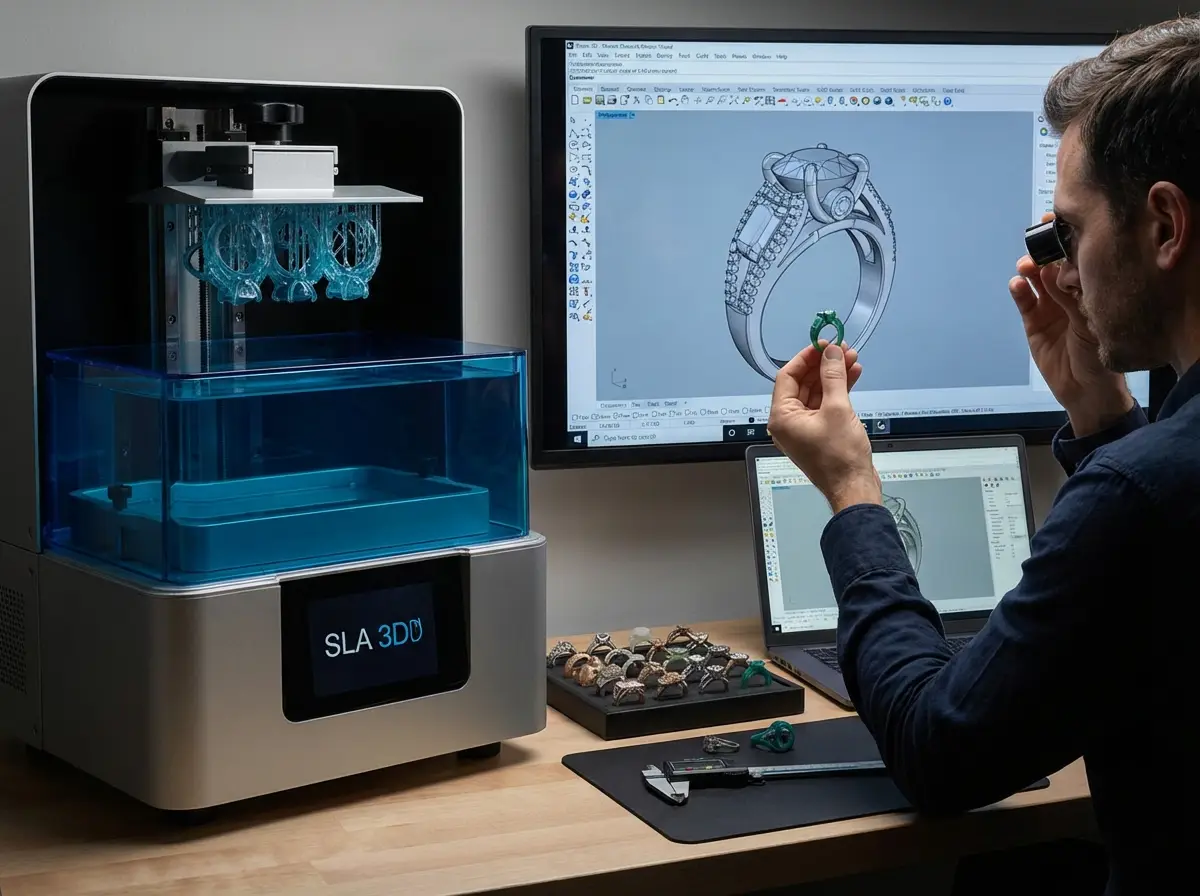
Printing is a checkpoint, not the finish line
One reason brands search for 3d cad jewelry design download resources is to move quickly into physical evaluation. That makes sense. A printed sample can reveal scale problems, awkward proportions, and comfort issues that are hard to spot on a screen alone.
Here’s the thing. A successful print does not automatically confirm that the design is ready for production. Printing tests shape and visibility well, but it does not replace engineering review for casting behavior, assembly sequence, stone setting access, or finishing tolerances.
Use printed samples to answer business questions
Printed models are most useful when you know what you are evaluating. That may be finger coverage on a ring, earring drop length, pendant balance, clasp usability, or whether a collection feels consistent across multiple SKUs.
Consider this: if the sample only helps you say “it looks nice,” you are not getting full value from it. A better approach is to compare the print against your target customer, target price range, and expected manufacturing method. That creates a clearer handoff when you move from concept approval into sampling and quotation.
Frequently Asked Questions
What does 3d jewelry design free download usually include?
It usually includes one of three things: downloadable software, sample 3D model files, or design templates. Software helps you create or edit jewelry digitally. Model files give you a starting object such as a ring, pendant, or stone setting. Templates are often flat guides for layout, sketching, sizing, or presenting concepts. Before downloading anything, check whether the file is editable, what format it uses, and whether the license allows commercial use. Those details matter if your goal is to build a real collection rather than just experiment.
Are free 3D jewelry models good enough for production?
Sometimes, but not without review. Free files can be useful as concept starters, especially for early-stage discussions with your team or designer. The problem is that many are built for visual display, not casting, stone setting, or long-term wear. You may still need to adjust wall thickness, seating, tolerances, and assembly details before manufacturing. If you are moving toward production, always ask for a technical check by an experienced CAD designer or manufacturer. That small step can prevent expensive revisions later.
Which file format is best for jewelry CAD downloads?
The best format depends on your next step. If you need to edit the design deeply, native CAD files or exchange formats like STEP or 3DM are usually more useful. If you mainly want to print a prototype, STL is common, but editing it can be harder because it is mesh-based. OBJ is helpful for visualization, though not always ideal for precise production changes. In practice, it is smart to keep more than one version of a file so your team can render, revise, and prototype without rebuilding everything from scratch.
Can I use free jewelry design templates for a custom jewelry design brief?
Yes, and they can be very helpful. Templates give structure to your brief by making sure dimensions, stone sizes, views, and finish notes are captured in a consistent format. That reduces confusion when you work with freelancers, internal teams, or manufacturing partners. A good template does not replace CAD, but it improves communication before CAD begins. For brands developing multiple SKUs at once, templates also make assortment planning easier because you can compare shapes, proportions, and design families more clearly.
Is free jewelry CAD software enough for a startup brand?
It can be enough at the beginning, especially if your immediate goal is concept exploration rather than full technical development. Many startup brands use free or lower-cost tools to learn the basics, review visual direction, and test a few ideas before investing in advanced design support. The limit appears when your collection becomes more complex or when you need production-ready engineering. At that point, free software may still play a role, but you will usually need experienced CAD support to finalize the files properly.
How do I know whether a downloaded model is manufacturable?
Check for practical details, not just appearance. Look at thickness, symmetry, prong strength, stone seat depth, joining points, and how the piece will be polished or plated. Ask whether the design can survive casting, assembly, stone setting, and daily wear. If a part looks extremely fine or decorative openings are too narrow, it may create problems in production. What many people overlook is that manufacturability is not one decision. It is a chain of decisions across prototyping, finishing, and quality control.
Are there risks in using free files for commercial collections?
Yes. The biggest risks are licensing, originality, and technical quality. Some “free” files are limited to personal use, which means you may not have the right to sell products based on them. Others are widely downloaded, so your collection may lose uniqueness if the design is too generic. There is also the quality issue. A weak or poorly built file can increase development cost because your team has to repair it before production. Always check the usage terms and review the structure before investing more time.
Should I download software, templates, or ready-made models first?
Start with the asset that matches your current bottleneck. If you need to create ideas from scratch, software comes first. If you already have concepts but need faster visualization, ready-made models may help. If communication is your main problem, templates are often the fastest win. Think of it this way: solve the stage you are in, not the stage you might reach six months from now. Brands often waste time collecting too many tools before they define what they actually need the tools to do.
How do free downloads fit into collaboration with a manufacturer?
They fit best at the beginning of the conversation. A free file, screenshot, or template can communicate style direction, scale, and construction ideas quickly. That makes early discussions more productive. But once the project moves toward quotation, sampling, and production, the file usually needs technical validation. Manufacturers will look at dimensions, complexity, material behavior, and finishing requirements. In other words, free downloads are useful communication tools, but they are rarely the final technical package on their own.
What is the smartest next step after testing free design resources?
Move from experimentation to structure. Organize your preferred concepts, note the dimensions you want, identify target materials, and decide which files are editable. Then create a proper development brief for CAD refinement or sampling. This is also the stage where you should define business constraints such as MOQ expectations, target market, and launch timing. If you are ready to turn concept files into production discussions, Royi Sal Jewelry can be a helpful point of contact for reviewing how a design moves from digital idea to manufactured sample.
Can browser-based jewelry design tools replace desktop CAD?
Usually not for serious production work. Browser-based tools are useful for accessibility, quick experiments, and early learning because they remove installation and hardware barriers. But if your project needs precise stone settings, complex assemblies, or repeated engineering revisions, desktop CAD is usually the stronger option. The smarter question is not which format is universally better. It is which one supports the stage your brand is in right now.
Is STL enough for sending a design to a manufacturer?
Sometimes for a first review, but not always for the full process. STL can be fine for visual checks and some prototype workflows, yet it often lacks the editing flexibility needed for efficient revisions. If your manufacturer expects adjustments to sizing, thickness, settings, or assembly details, an editable CAD source file will usually save time. That is why many brands keep STL for printing and another file type for revision work.
Do free downloaded files help with collection planning, or only individual products?
They can help with both, depending on how you use them. Individual files are useful for testing one style, but templates and reusable CAD bases can also support collection planning by helping you compare proportions, stone layouts, and repeatable details across multiple pieces. For a brand building a coordinated line, that consistency can be just as important as the design of any single SKU.
Key Takeaways
- 3d jewelry design free download resources are useful, but software, models, and templates serve different purposes.
- Editable CAD files are usually more valuable than display-only renders when production is the goal.
- Free assets work best in concept development, early prototyping, and clearer manufacturer briefs.
- Licensing, file format, and manufacturability checks matter just as much as visual appeal.
- The smartest workflow is to use free tools for exploration, then move into structured CAD refinement and sampling.
Conclusion
A 3d jewelry design free download can absolutely help your business, but only when you use it for the right job. Free software can support learning and early concept work. Free jewelry design templates can improve team communication. Free model files can speed up idea testing. But none of those resources automatically become production-ready just because they open in a CAD program.
The brands that avoid expensive delays are usually the ones that know when to stop collecting files and start building a process. That means checking formats, clarifying ownership, validating structure, and making sure the design fits real manufacturing methods. If you treat free resources as tools for better decisions, not shortcuts around technical development, they can be genuinely valuable.
If you want to explore how digital designs move into samples and production, get in touch and see how we can help.




Responses (0)