If you are building a jewelry line, evaluating 3d jewelry design services is often one of the first serious operational decisions you will make. For a brand founder, buyer, or boutique owner, CAD and digital modeling are not just creative tools. They may shape how clearly your concept is communicated, how efficiently samples are developed, and how smoothly a design moves toward manufacturing. That matters even more when you are managing private label timelines, supplier coordination, and production risk. If you are also comparing digital workflows, this related look at 3d jewelry design online may help you understand where remote collaboration fits. This article reviews what professional CAD and modeling services typically include, where they add business value, and how to assess whether a provider is ready for real B2B production work.
What 3D Jewelry Design Services Usually Cover
Professional 3D jewelry design services generally sit between concept development and production planning. In a B2B setting, the service is less about creating a nice visual and more about building a workable digital model that a manufacturer can review, refine, and potentially use as part of a broader development process.
For jewelry brands, this can be especially useful when you need to communicate dimensions, structure, proportions, and design intent with more precision than hand sketches alone can provide. A strong CAD workflow may also reduce avoidable misunderstandings before sampling begins. That does not eliminate risk, but it often improves clarity.
At Royi Sal Jewelry, the available service data supports a business model centered on custom jewelry design and development, jewelry manufacturing for wholesale and private label clients, collaborative design consultation, and global shipping and order fulfillment. That combination matters because design files are most valuable when the team handling them also understands manufacturing realities and production coordination. You can explore broader capabilities across Royi Sal Jewelry’s Jewelry Design and Jewelry Manufacturing pages.
In practice, the best CAD and modeling partners for B2B work are usually the ones that can connect design intent to sampling, revisions, and production feasibility. If your collection direction is also being shaped by market demand, trend research such as jewelry trends watch 2025 key design elements year can help you brief more strategically.
Key Features B2B Clients Should Evaluate
Not all jewelry CAD services are equally useful for a business preparing for wholesale or private label production. Some providers focus mostly on visual design support. Others are better equipped to work as part of a complete design-to-manufacturing process. The difference may affect timelines, revision rounds, and how confidently you can move into sampling.
1. Design consultation built around your business brief
A professional service should begin with collaborative design consultation, not just file creation. You should expect discussion around collection goals, brand positioning, intended customer segment, target launch timing, and how many styles you may eventually want to develop. Since Royi Sal Jewelry’s current service profile includes collaborative design consultation, that suggests a process designed to support business clients rather than isolated one-off design requests.
2. CAD output that supports development, not only presentation
A polished render can be useful for internal approval, but B2B clients usually need more than visuals. The digital model should help clarify structure, scale, and production intent. In many cases, the provider should also be ready to discuss whether the design may need revision before moving toward manufacturing. That is especially important if your brand is developing custom pieces for repeatable production runs rather than a single prototype.
3. Clear communication between design and manufacturing teams
One of the most common problems in outsourced product development is the handoff gap between designer and manufacturer. If your CAD provider is disconnected from the production side, important details may be lost or reinterpreted later. Royi Sal Jewelry positions itself as a custom design and manufacturing partner, which may help reduce that disconnect for brands that want one team involved from concept through fulfillment.
4. Revision management and realistic expectations
Good 3D jewelry design work is rarely one-and-done. Most custom projects involve edits, approvals, and sometimes multiple rounds of refinement. A credible provider should be honest that revisions may affect schedules and that more complex styles could require additional development before they are ready for production. This is where buyers should value transparency over speed claims.
5. Compatibility with broader business planning
The strongest providers understand that CAD is one step in a commercial pipeline. Your digital design process should fit into sampling, production planning, quality review, and launch preparation. As digital workflows continue to change the category, broader reading on technology jewelry design innovations shaping industry may help brand owners think more clearly about how design systems affect scalability.
CAD Deliverables and File Formats: What to Request for Production
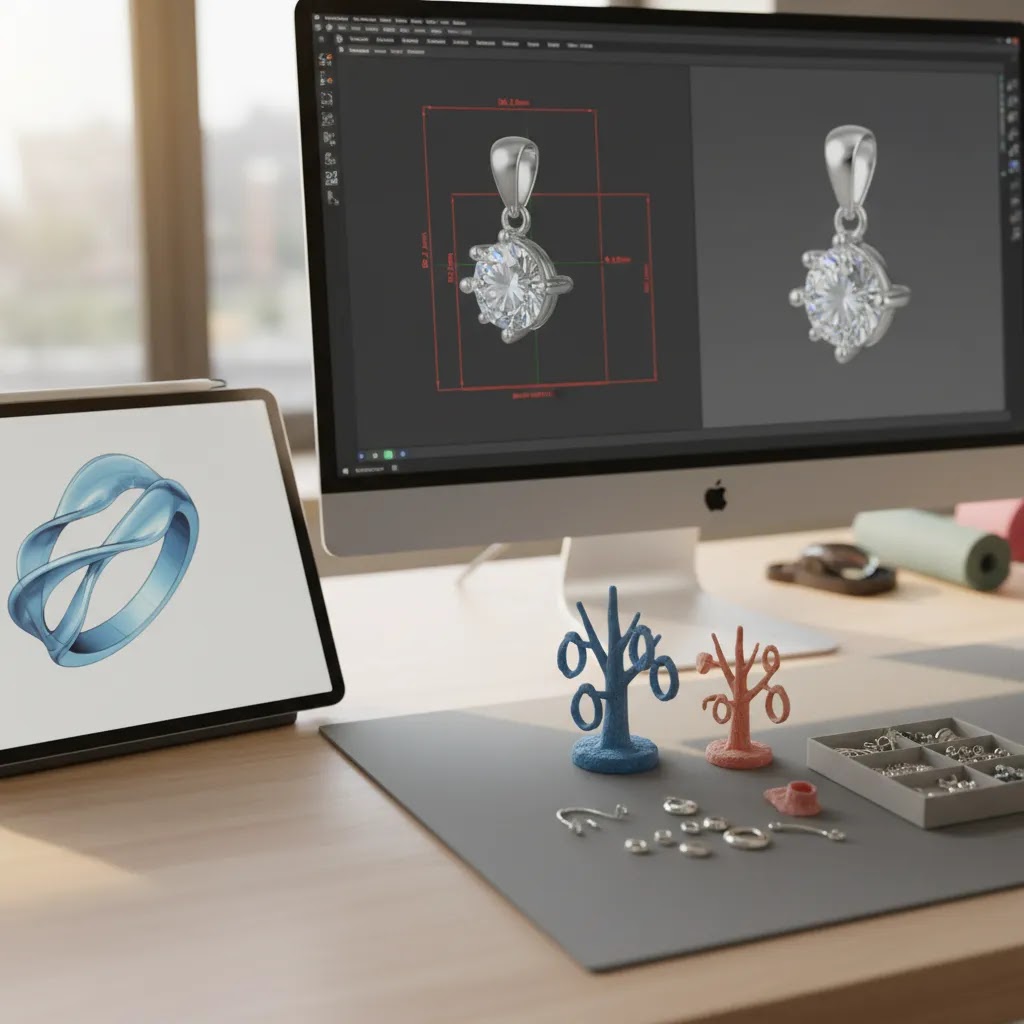
Here’s the thing: in B2B development, “CAD work” is not only the model. The deliverables you request, and the way you organize them, can influence how efficiently a manufacturer can quote, sample, and reproduce a design later for reorders or line extensions.
In many cases, deliverables include a 3D model file plus supporting documentation that clarifies intent. That may mean 2D dimension callouts, basic manufacturing notes, and a version history that shows what changed across revision rounds. Even if your partner is also your manufacturer, having a clear package reduces rework when the project returns months later or when a new person joins the approval chain on your side.
Now, when it comes to file formats, the goal is smooth handoff between teams and vendors. Different suppliers may prefer different file types for review, editing, or downstream preparation. Instead of assuming compatibility, confirm early what your provider can export and what your manufacturing side can reliably open, inspect, and measure. Consider this as part of the initial brief, not a detail to solve after approvals.
From a production standpoint, approval controls matter as much as the file itself. Ask for a simple naming convention that ties each file to a style code or SKU concept, plus the revision number and date. Keep an archive of what was approved, including the model version, any supporting drawings, and the notes that clarify sizing or assembly intent. What many brand owners overlook is that this archive becomes your continuity tool for future reorders, consistent fit across a collection, and faster development when you build new variations off an existing base.
Strengths and Considerations
Strengths
- 3D CAD and modeling may improve communication accuracy between a jewelry brand and its manufacturing partner, especially during early concept development.
- Digital models can make internal approvals easier for founders, buyers, and brand managers who need a clearer view of proportions and design intent before sampling.
- When paired with a custom manufacturing partner, CAD services may reduce friction between design decisions and production feasibility discussions.
- Professional modeling workflows often support more organized revisions, which is valuable for private label projects involving multiple stakeholders.
- For growing brands, a documented digital design process may help create consistency across future collection expansion and repeat production runs.
Considerations
- CAD files do not guarantee production success. Outcomes still depend on the quality of the brief, revision discipline, and manufacturing execution.
- Custom design development can take time, particularly if your team is still refining the concept or requesting multiple change rounds.
- A visually appealing model may still require technical adjustments before it is suitable for sampling or a production run.
- If design and manufacturing are handled by separate providers, communication gaps may increase the risk of delays or mismatched expectations.
From CAD to Manufacturing: How Digital Models Translate Into Samples
The reality is that a strong digital model is only a step toward a physical sample. Even “good CAD” typically needs validation once the piece becomes real, because physical constraints can reveal issues that are not obvious on screen.
In a typical development path, CAD moves into a sampling phase where proportion, fit, and assembly logic get tested. This is where teams often catch problems like scale that reads differently in-hand, structural weak points, or connections that are difficult to assemble consistently. If your project includes multiple components, sampling is also where tolerance and alignment issues can surface. Think of it this way: CAD reduces uncertainty, but sampling confirms manufacturability.
To reduce back-and-forth, a manufacturer may need more than the model file. They may need clarity on target dimensions, functional requirements, and which details are non-negotiable versus flexible. In practice, you will get better outcomes when feedback is structured and specific. Instead of broad notes like “make it thinner” or “improve the proportions,” reference the exact area, the intended change, and the reason it matters to your brand. If you are coordinating between separate CAD and production teams, your role is often to keep one source of truth so revisions do not branch into conflicting versions.
Iteration cycles are normal, but they need discipline to protect timelines. Set expectations internally about who approves what, and when. Limit late-stage changes that alter the fundamental structure after the sample path has already started, unless the business case is strong. What experienced buyers know is that most delays come from unclear approvals and uncontrolled revision loops, not from a single complex detail. A partner with both design and manufacturing awareness can help you identify which changes are simple edits and which changes may restart parts of the development workflow.
Who This Is For
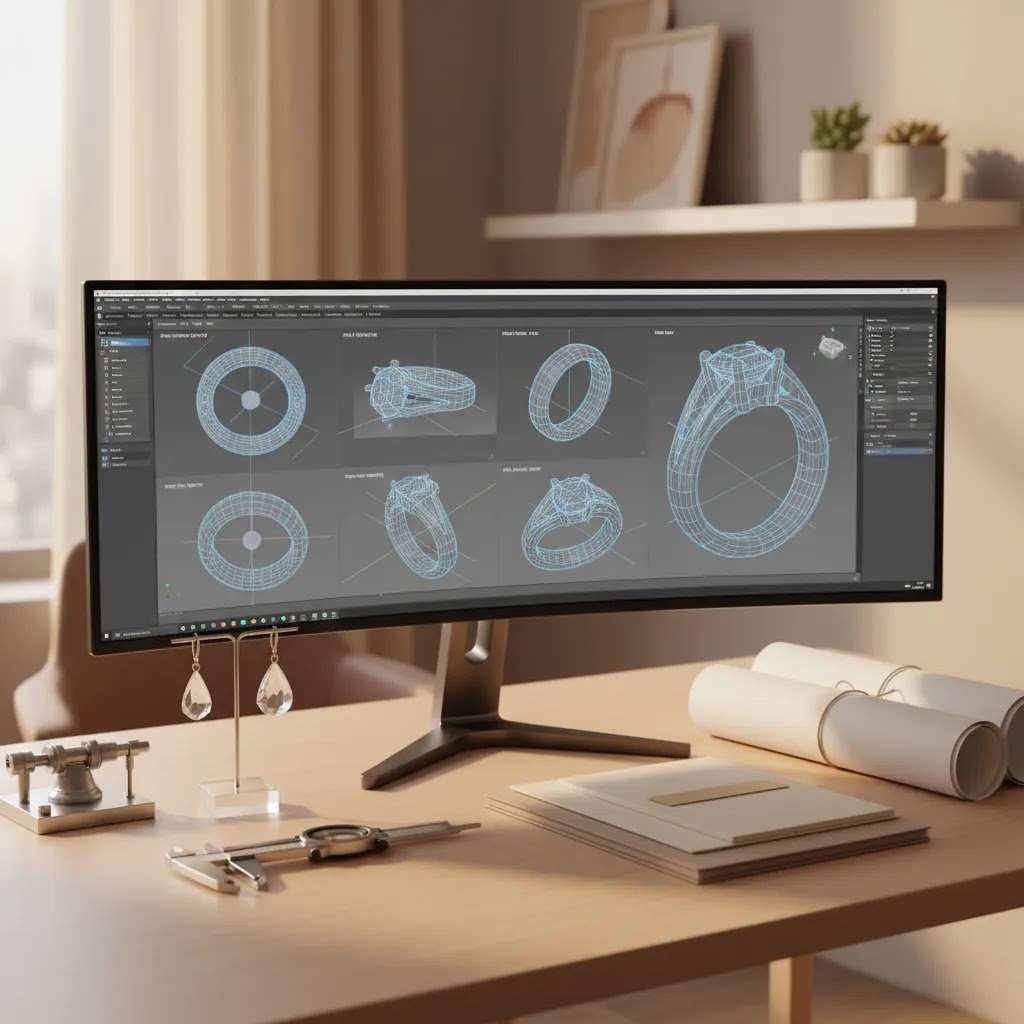
3D jewelry design services are typically a strong fit for business clients who need more control and clarity before committing to sampling or production. That may include boutique owners launching a private label capsule, established jewelry retailers expanding into exclusive branded lines, and fashion brands developing jewelry as part of a wider accessory strategy.
These services are often most valuable when you already have a concept direction but need help translating it into a professional development file. They may also suit growing brands that want a more structured design process before they invest in manufacturing. If your next step is highly customized development work, reviewing bespoke 3d jewelry modeling services could help you compare a more tailored route.
Royi Sal Jewelry as a Collaborative Option
For B2B readers evaluating providers, Royi Sal Jewelry is positioned as a professional custom jewelry design and manufacturing company serving wholesale and private label clients. The available brand context describes founder Royi Gal as both a jewelry designer and manufacturer, which adds practical relevance for brands that want design support grounded in production realities. That dual perspective may be especially helpful when a collection needs to move from idea to sample to repeatable manufacturing.
The company’s stated approach emphasizes collaboration, craftsmanship, and global partnership rather than a simple file-delivery transaction. Its service profile includes custom jewelry design and development, jewelry manufacturing for wholesale and private label clients, collaborative design consultation, and global shipping and fulfillment support. For a brand that wants continuity across the process, that may be more useful than hiring disconnected vendors for each step.
If you are evaluating partners and want to understand how a design concept could move toward manufacturing, Royi Sal Jewelry is one relevant option to review. You can explore the process on royisal.com and contact the team to discuss a design brief, development goals, and how a custom collection might be approached for your business.
How to Evaluate Your Options
Choosing a provider for 3D jewelry design services should involve more than reviewing render quality. For B2B clients, the right decision usually depends on whether the provider can support commercial execution, not just digital artwork. These five criteria are often the most useful.
Design capability and service range
Start by asking whether the provider can handle concept interpretation, CAD development, revisions, and handoff into a manufacturing workflow. A business with broader custom jewelry design services may be better equipped to support collection-building than a freelancer or studio focused only on visuals. The more your brand needs strategic guidance, the more important this becomes.
Manufacturing quality awareness
Even if you are selecting a design-focused partner, they should understand how jewelry pieces are prepared for production. This does not mean they need to promise outcomes. It means they should recognize where a design could create manufacturing complications and flag those issues early. Providers with direct manufacturing involvement may be able to give more practical feedback.
Trust, reliability, and communication
For overseas or remote collaboration, communication quality may matter as much as technical skill. You should assess how clearly the provider handles briefs, updates, revisions, and scope changes. Delays often come from unclear approvals or incomplete design direction, so a partner that structures communication well may save significant time later.
Order flexibility and growth fit
Many brands begin with limited launches and then expand. Your provider should be appropriate for your current phase, but also capable of supporting future development if the line performs well. If the team only handles one-off design tasks and cannot support production planning, you may need to rebuild the process later.
Global logistics and operational continuity
If your business will source internationally, consider whether your provider can support the wider process beyond the CAD file. Royi Sal Jewelry’s available business context includes global reach and shipping support, which may matter for brands trying to reduce fragmentation across design, manufacturing, and fulfillment. The fewer disconnects you create, the easier it may be to manage launch planning.
Security and IP Considerations for 3D Jewelry Design Files
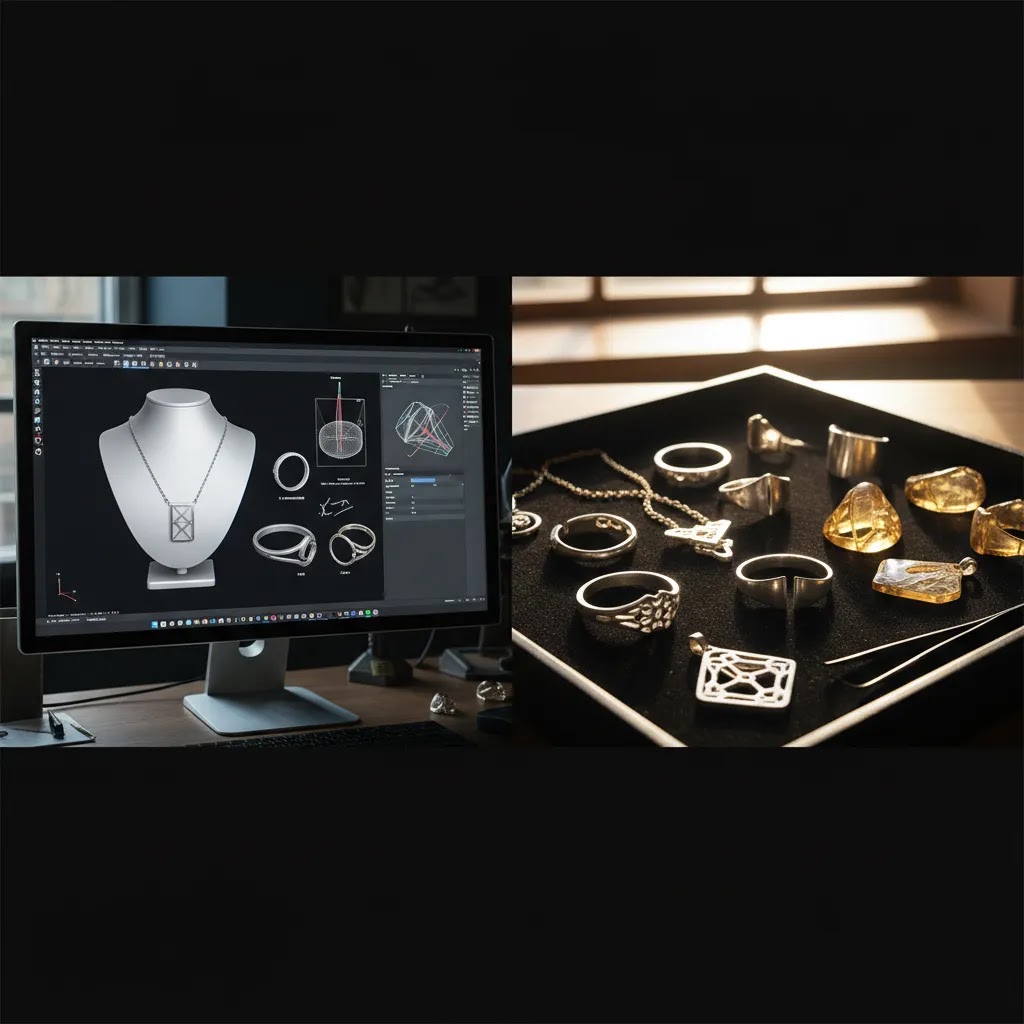
If you are building a private label line, your 3D files are not just production tools. They are business assets. The model often contains the exact proportions, construction logic, and design details that make your collection distinct. That means file security is part of brand protection, not a technical afterthought.
Leakage risks can show up in ordinary workflows, especially when multiple vendors touch the same project. For example, you might share models for quoting, request outside rendering support, or ask a second workshop to review feasibility. Each handoff increases exposure if files are distributed without controls or if there is no clear definition of who can use the design, for what purpose, and for how long.
Practical risk reduction starts with controlled sharing. Use limited-access review files when possible, and share editable production files only with the partners who truly need them. Keep your own archive as the source of truth, and ensure you can trace which version was shared with which vendor. Clear ownership and usage terms in writing matter, particularly in remote collaborations where assumptions vary. This is not about creating friction. It is about making responsibilities explicit before development moves quickly.
When you evaluate a provider, look for process maturity around confidentiality and file handling. Ask how they store files, how they manage access internally, and how they handle offboarding when a project ends. You are not looking for perfect guarantees. You are looking for a partner that treats your CAD package as proprietary work product and has a structured approach that matches the seriousness of B2B product development.
Frequently Asked Questions
What are 3D jewelry design services in a B2B context?
In a B2B setting, 3D jewelry design services usually refer to CAD-based design development used to translate a brand concept into a detailed digital model. These services may support approvals, revisions, and preparation for sampling or manufacturing. Their value is typically highest when they are aligned with a broader wholesale or private label development process.
Are jewelry CAD services enough to start manufacturing?
Not always. CAD work may be a critical step, but it is usually only one part of the process. Most brands still need design review, sampling, manufacturing coordination, and quality checks. Depending on the complexity of your project, the digital model may require adjustments before it is suitable for production planning.
How do I know if a CAD provider understands production realities?
Look for signs that the provider works within or alongside a manufacturing process. That may include collaborative consultation, realistic feedback on feasibility, and a willingness to discuss revisions before sampling. A provider led by someone with both design and manufacturing experience may be better positioned to identify issues earlier.
What should I include in a design brief?
Your brief should usually cover your brand direction, intended collection purpose, style references, approximate dimensions, target customer positioning, and launch goals. If you already know how the piece fits into a wholesale or private label line, include that too. The clearer the brief, the more efficiently the design service may be able to respond.
Can 3D jewelry design services help reduce sampling mistakes?
They may help reduce some avoidable errors because the digital model can clarify form, proportion, and design intent before a sample is made. Still, they do not remove all risk. Sampling outcomes may vary based on project complexity, revisions, and how closely the design and manufacturing teams communicate.
Are these services useful for small brands?
Yes, in many cases. Smaller brands often benefit from having a structured design process before committing to development costs. CAD services may help founders present a more organized concept and make better decisions before a production run. The key is choosing a provider whose process matches your stage of growth and project scope.
What is the difference between online design support and full-service development?
Online design support may focus on remote concept sharing and digital file creation. Full-service development usually goes further by connecting design consultation to manufacturing planning, sampling, and fulfillment. For brands building a collection rather than a single concept file, the second model may offer more continuity and fewer handoff issues.
Should I choose one partner for design and manufacturing?
It depends on your internal resources and how much coordination your team can handle. Using one partner for both functions may improve communication and reduce interpretation gaps. Separate providers can work too, but they often require stronger project management on your side to keep revisions, approvals, and production intent aligned.
How important is technology in modern jewelry development?
It is increasingly important, but technology alone is not enough. Digital design tools may improve speed and clarity, yet they still need experienced judgment behind them. What matters most is whether the provider uses technology to support better decisions, better communication, and a smoother path into actual manufacturing.
What file formats will I receive from a 3D jewelry design service?
It depends on the provider and how the files will be used. In many B2B projects, you may receive an editable 3D model file plus supporting exports for review and reference, such as dimension callouts, basic drawings, or lower-risk review files for approvals. The practical move is to confirm export options and manufacturer compatibility early, so you do not approve a model that becomes difficult to hand off.
Can I use my CAD files with a different manufacturer later?
Sometimes, but you should not assume it without confirming a few details upfront. Your ability to move a CAD package depends on what was delivered, whether the files are editable across different systems, and what usage rights were agreed to in writing. If long-term portability matters to your brand, request clarity on deliverables and ownership terms before the project begins, and archive approved versions so you can support reorders and future development.
How long does it take to design jewelry in CAD for a small collection?
Timelines vary based on design complexity, how complete your initial brief is, and how many revision rounds are required. A small collection can move quickly if decisions are structured and approvals are consistent, but it can also stretch if the concept is still evolving or if multiple stakeholders are requesting changes. From an operational standpoint, the most reliable way to protect timing is to lock your approval process early and keep feedback specific and prioritized.
What is the difference between parametric CAD modeling and traditional 3D modeling for jewelry?
In simple terms, parametric modeling is built around editable dimensions and relationships, so changes like width, thickness, and spacing can often be adjusted more predictably without rebuilding the model. Traditional 3D modeling may be less structured for dimension-driven edits, depending on how it is created. For B2B brands, the difference matters because editability can affect revision speed and how efficiently you create variants, such as size ranges or style extensions, from an approved base design.
Key Takeaways
- 3D jewelry design services are most valuable when they support a full B2B development process, not only attractive visuals.
- Brands should evaluate CAD providers on communication, production awareness, revision handling, and long-term scalability.
- Custom design work may improve clarity before sampling, but it does not eliminate the need for collaboration and manufacturing review.
- Royi Sal Jewelry offers a combination of custom design, manufacturing, consultation, and global fulfillment support relevant to wholesale and private label clients.
- The strongest partner for your business is usually one that can align design intent with practical execution.
Conclusion
For jewelry brands, professional CAD and modeling services can be a strong operational asset if they are tied to a realistic product development process. The real question is not whether a provider can produce a digital model. It is whether they can help your team move from concept to manufacturable design with clear communication and credible expectations. Royi Sal Jewelry stands out as a relevant option for B2B clients because its current service profile combines custom jewelry design and development, wholesale and private label manufacturing, collaborative consultation, and global fulfillment support under one business model. If you are preparing a new collection or refining an existing line, visit royisal.com to learn more or contact the team to discuss your project brief and next steps.
Manufacturing timelines, minimum order quantities, development processes, revision rounds, and production outcomes vary by project scope and business requirements. Custom jewelry development is collaborative and may involve changes as designs move toward sampling and manufacturing. Contact Royi Sal Jewelry directly for information specific to your collection, production goals, and operational needs.