

3D Jewelry Models Free: Download Starter Files (2026 Guide)
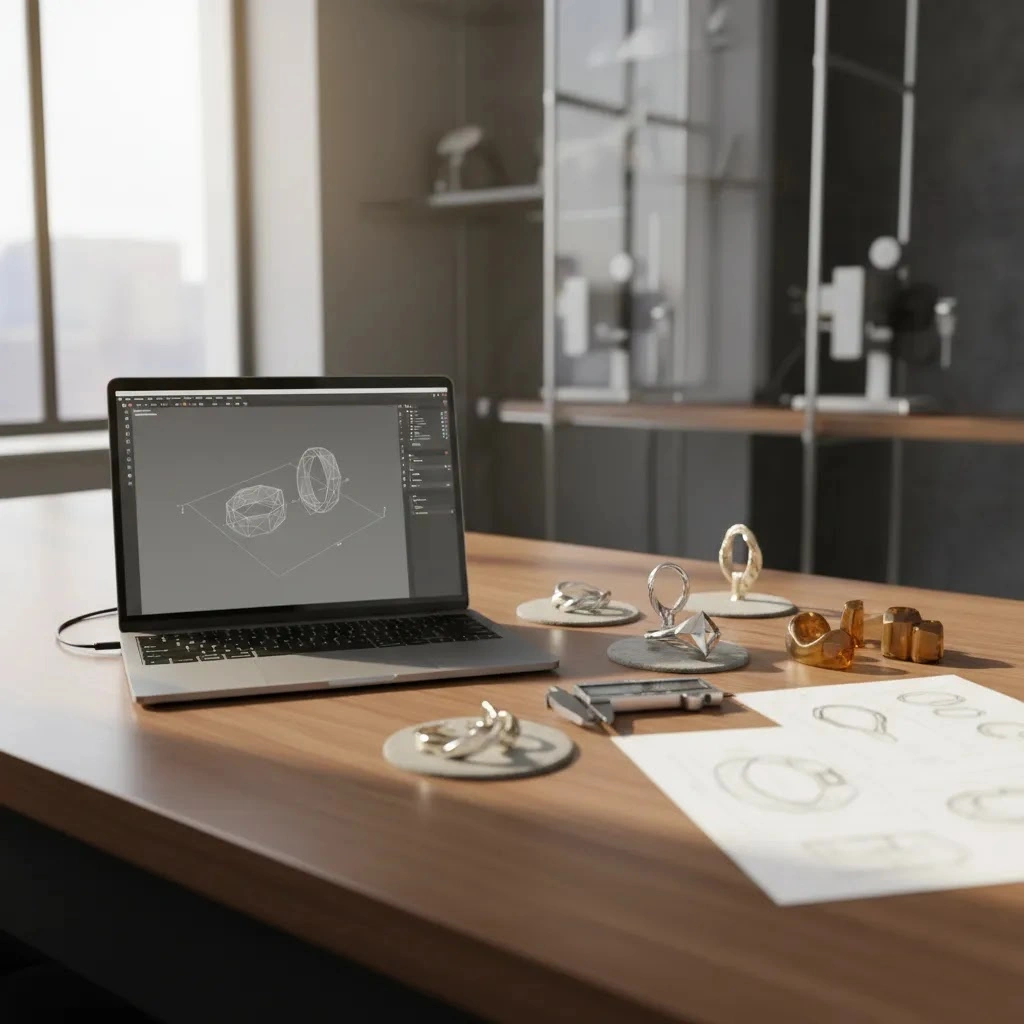
What free 3D jewelry models actually do
A free file can help you validate direction. It can show silhouette, scale, and general styling. It may also help your team discuss proportions before you invest in a sample. That is the real value of 3d jewelry models free download options for business users.
The reality is, most downloadable files were not built around your brand standards, target customer, packaging requirements, or manufacturing method. Some are made for rendering. Some are built for hobby-level printing. Others are generic training files created to teach software use. That does not make them useless. It just means you should treat them as references until someone checks whether they can support production.
Think of it this way, a free starter file is similar to a rough sketch from a mood board. It may speed up internal conversations, but it does not replace technical development. If your business is evaluating whether digital workflows fit your process, the category on 3D Jewelry Design Fundamentals is a useful place to frame the terminology and design stages more clearly.
Free models are most useful in early concept work
Brands often use free models to test collection themes, compare shapes, and create internal approval rounds. That can be especially helpful if your team is deciding between several product directions at once. You may not need a finished custom model for every early concept.
In practice, this means a downloaded model can support faster conversations with your design lead, sourcing manager, or manufacturing partner. You can mark revisions on an existing geometry file instead of briefing an idea from scratch.
They are rarely ready for direct manufacturing
Even if a file looks polished on screen, screen quality is not production quality. A model may have thin walls, weak joints, incorrect dimensions, or unresolved details that could cause casting, finishing, or wearability issues later.
Where free files help jewelry brands
For a business owner, the appeal is obvious. You want speed, lower early-stage costs, and a practical way to test ideas. In that context, 3d jewelry design free assets can be helpful in several ways.
They can shorten the briefing process
One of the hardest parts of custom development is turning a visual idea into a technical brief. Many founders know what they want stylistically, but not how to describe form, spacing, or dimensional relationships. A starter file gives everyone a shared visual language.
Now, when it comes to communicating with a production partner, that shared language matters. It reduces back and forth, especially when you are discussing revisions across time zones or across separate design and manufacturing teams.
They support assortment planning
If you are planning a capsule collection, downloadable model families can help you map out category mix. You might test whether a concept works better as a pendant, ring, or earring format before paying for full design development across multiple SKUs.
What many jewelry brands overlook is that early digital planning affects later operational decisions. Display consistency, sample sequencing, and launch timing all become easier when your digital references are organized from the start.
They help teams compare software pathways
Many founders searching for 3d jewelry design software free or a 3d jewelry design app free are really trying to answer a larger question: should we build digital capability in-house, outsource it, or combine both? Testing free files inside different software environments can help you understand where your team is comfortable and where outside support may still be needed.
If your brand is exploring remote design collaboration, reviewing 3d jewelry design online can help you think through how digital approvals, file sharing, and revision cycles typically work.
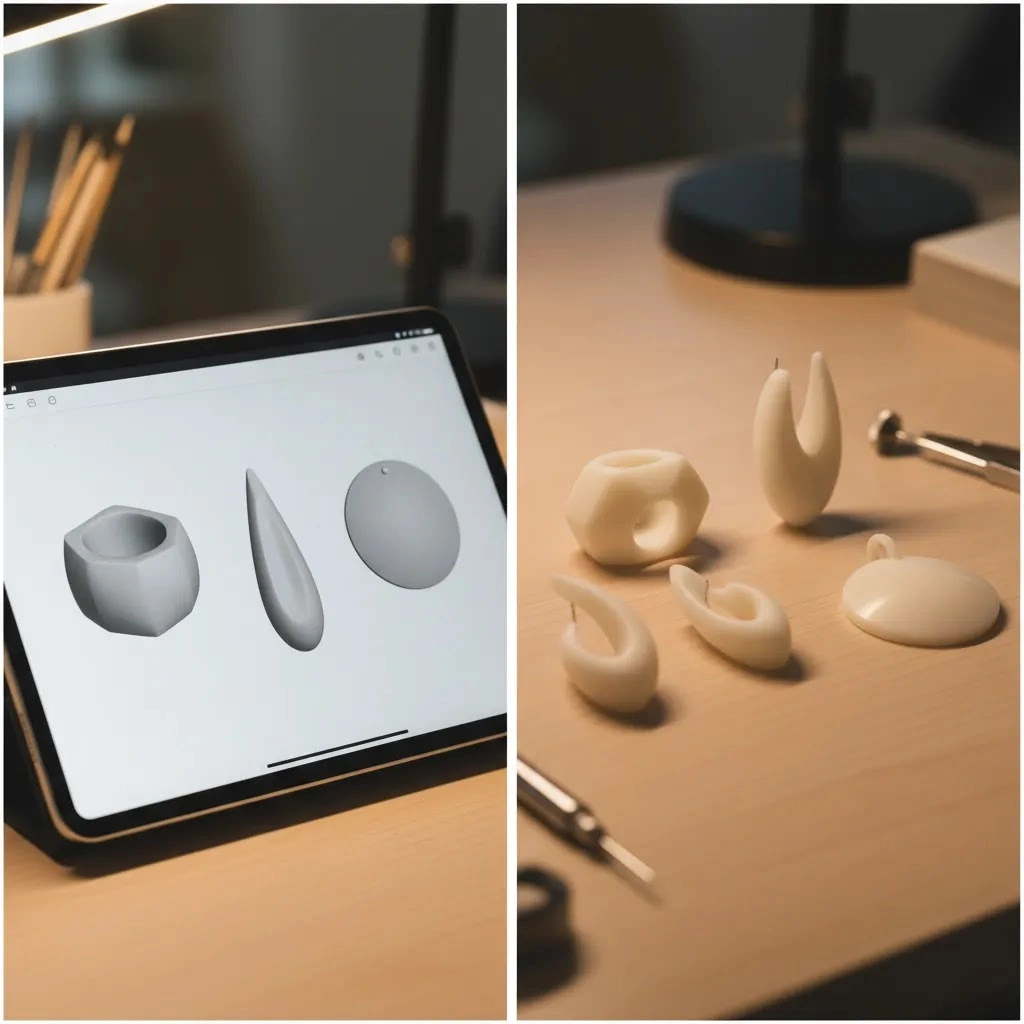
Where to find free 3D jewelry models and what each source is best for
If you search 3d jewelry models free download, you will see a mix of sources that look similar on the surface. The difference is what the files were built for. Some channels skew toward visual presentation. Others skew toward general 3D printing. A few are closer to editable starting geometry that can be adapted into a manufacturable model.
What experienced buyers know is that the source channel affects downstream risk. A file that was uploaded as a portfolio example may have no licensing clarity. A file that was posted for hobby printing may ignore measurement accuracy. A file that is free with an account may be designed to pull you into a paid ecosystem, which can be fine as long as you plan for that.
Community libraries and shared repositories
Community libraries are typically optimized for accessibility and variety. You may find a wide mix of jewelry 3d print models, practice files, and decorative shapes. For brands, these are often best for early concept boards and quick internal references. Quality can be inconsistent, so you should expect to spend time checking geometry and scale before you treat anything as a serious starting point.
3D marketplaces and “free sections” inside paid catalogs
Marketplaces often have better previews, clearer categorization, and sometimes more consistent upload standards. Their free listings can be useful for evaluating styles and building presentation assets quickly. The tradeoff is that “free” may come with restrictions on commercial use, modification, or redistribution. From a business standpoint, you want to read the license terms before the file becomes part of a supplier conversation.
Designer portfolio and showcase platforms
Showcase platforms can be excellent for visual inspiration and for understanding current modeling approaches. Still, many of the files in these spaces are built to look impressive in renders, not to support measured revisions. If you use them at all, treat them as visual references first, then plan for a CAD rebuild or structured redesign before sampling.
“Free with account” software libraries and template hubs
Some tools and platforms offer free starter templates once you create an account. These can be helpful if your brand is also learning a specific workflow, because the files may open more cleanly inside that ecosystem. The risk is lock-in and limited interoperability. If your manufacturer or external CAD specialist does not use that environment, you may lose time converting files or rebuilding geometry later.
What to check in a listing before you download
Before you commit a file into your workflow, confirm what you are actually getting. Look for the included file formats, the quality of previews from multiple angles, and whether the listing describes the model as print-ready or render-ready. If sizes, variants, or version history are mentioned, that can also signal how much production thinking went into the upload. If those details are missing, assume you will need more review and more cleanup.
A practical warning about “free” in B2B use
Free files can create licensing and documentation gaps that show up later, especially if the model becomes part of a salable private label product. In many cases, the model may be free to download but limited in commercial usage, or it may allow commercial use but restrict modification. There is also the practical issue of missing technical data. If you cannot confirm scale, units, or intended manufacturing method, you are not downloading a production asset. You are downloading a reference, and you should manage it that way inside your business.
The common limitations business owners should expect
This is where many first-time founders get stuck. They assume a free file saves development time in every case. Sometimes it does. Sometimes it creates more cleanup work than building the model properly from the beginning.
File quality varies widely
Some jewelry 3d print models are clean and organized. Others contain broken surfaces, non-manifold geometry, scale inconsistencies, or decorative details that do not translate well into real-world manufacturing. If your team lacks technical review skills, you may not spot these issues until later.
Brand differentiation may be limited
If your downloadable file comes from a public marketplace, other businesses may access the same starting point. That may be fine for internal mockups, but it creates challenges if your goal is a distinct private label collection. Unique brand identity usually requires custom edits, design language refinement, and consistency across the entire line.
Production assumptions are often missing
From a production standpoint, a model is only one part of the job. You still need clarity on intended wear, construction logic, sizing, tolerances, and finishing expectations. A free file may not include any of that supporting information.
Consider this, a model that looks elegant in a render may need structural adjustment before sampling. If you are planning a full manufacturing relationship, understanding how jewelry designers oem manufacturers collaborate create unique collections can make the transition from concept to production much smoother.
How to review a file before using it in production
If you are evaluating 3d jewelry models free for business use, do not judge them by appearance alone. Review them like a production asset. You do not need to be a CAD specialist to ask the right questions.
A practical review checklist
- Check scale and measurements, confirm the file uses consistent units and realistic dimensions.
- Review structural areas, look closely at joints, thin sections, closures, and any delicate decorative elements.
- Assess editability, make sure the file can be revised without rebuilding the whole model.
- Ask how it will be produced, a file for visualization may require major changes before physical sampling.
- Document ownership and usage rights, verify whether the file can be modified and used commercially.
Why technical review matters before sampling
A weak file can lead to avoidable sample revisions, longer development cycles, and confusion between your designer and factory. The digital stage is where many hidden problems can be caught early. If you skip that step, the cost usually shows up later in time, not just money.
At Royi Sal Jewelry, the value of a collaborative development process is that a concept can be reviewed through both design and manufacturing lenses before it moves forward. For B2B brands, that kind of review often matters more than whether the original file was free.
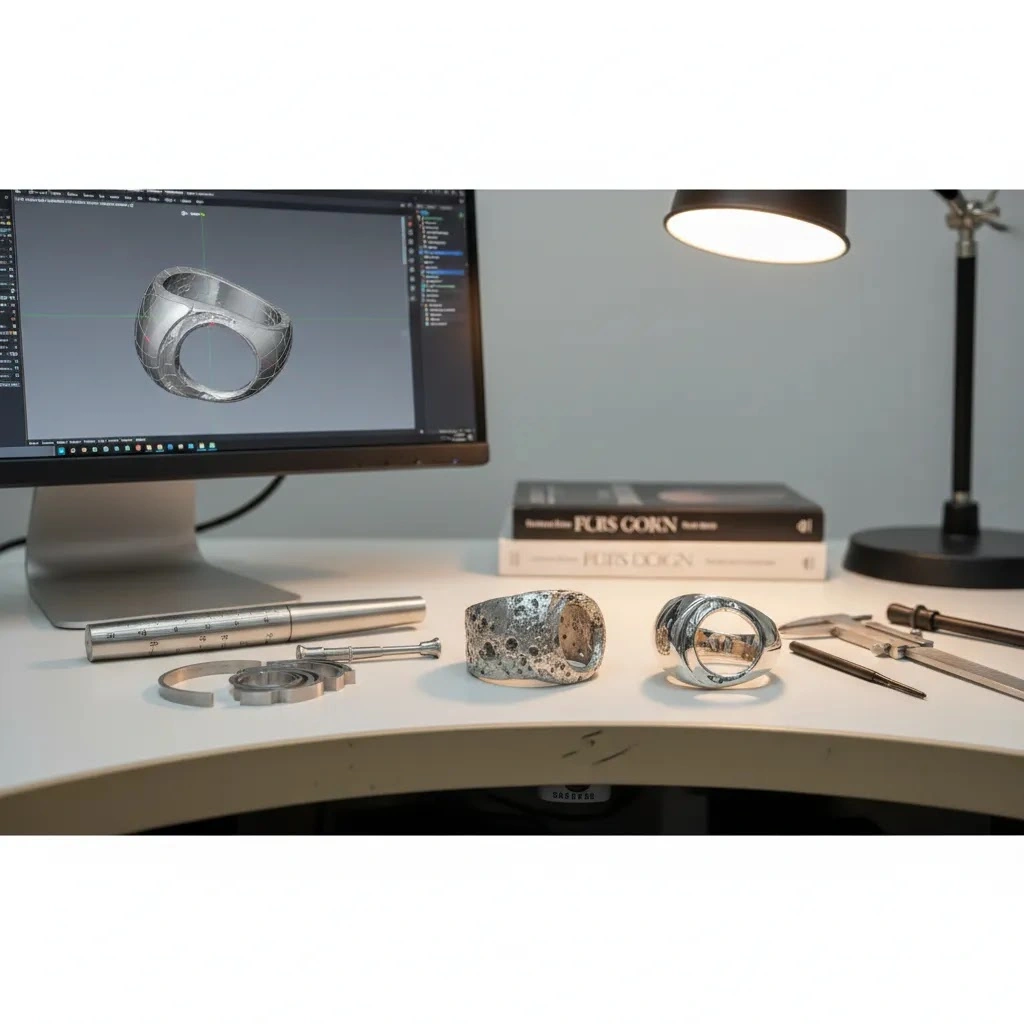
File formats and compatibility: what your factory can actually use
A common issue with 3d jewelry models free download files is not the look of the piece, it is the format. File type affects whether a model is editable, measurable, and efficient to revise. That matters because production usually involves iteration. Even a strong concept typically needs adjustments once you align it with your sizing plan, construction logic, and manufacturing method.
From a production standpoint, it helps to separate mesh files from CAD-native files. Many free libraries are mesh-heavy because meshes are easier to preview and share. Manufacturing workflows often prefer CAD data when the goal is controlled dimensions and repeatable changes.
Common file types you will encounter and what they usually mean
You will often see STL, OBJ, or FBX in free model libraries. These are commonly used for visualization and mesh-based workflows. STL is frequently used for 3D printing pipelines, while OBJ and FBX are common in rendering and animation contexts. You may also encounter formats such as 3DM and similar CAD-friendly files, which are generally easier to edit with measurement accuracy when the design needs controlled revisions.
Why compatibility affects revision speed and manufacturing readiness
If your team hands a mesh file to a CAD specialist or factory that expects CAD geometry, conversion may be possible, but it can introduce extra cleanup and slower revision cycles. Measurement accuracy can also become harder to manage if the file was not built with units and dimension control in mind. Think of it this way, the more your brand expects multiple size variants or repeated adjustments, the more important editability becomes.
What to confirm internally before you send a file out
Before you forward any file to a manufacturing partner, confirm the basics. Identify the units used in the file, define your target dimensions or size range, and note whether the geometry is watertight if the intent is printing or print-based sampling. You should also add a short note on the intended manufacturing method and end use case. That context helps the receiving team assess feasibility and flag issues early, instead of guessing what the model is supposed to achieve.
Software, workflow, and next-step planning
Searches for free 3d modeling software for jewelry usually reflect a broader planning issue. You are deciding how digital work fits into your business model. Should your team create concepts internally? Should you outsource every file? Or should you combine rough in-house ideation with specialist refinement?
Free software can support early experimentation
For early-stage brands, free software options can help with learning and rough concept communication. They may be enough for simple shape studies, internal previews, or presentation use. They are less dependable when your business needs clean technical files for repeatable manufacturing.
Workflow matters more than the tool itself
What many jewelry brands overlook is that software choice is not the main business risk. Workflow is. You need version control, clear approval stages, organized file naming, and a reliable handoff process from design to sample development. A sophisticated program does not solve weak communication.
If you are building a collection around current commercial direction rather than isolated ideas, it also helps to monitor broader design movement. The article on jewelry trends watch 2025 key design elements year is useful for thinking about how digital concepts should align with market-facing assortment planning.
Use category structure to organize your learning
If your team is still comparing digital pathways, the broader Jewelry Design section can help you group educational content by process stage rather than treating each file or software tool as a separate decision.
Using free models for rendering, presentations, and digital sales tools (without confusing them with production files)
Many brands use free models for visual communication long before they use them for manufacturing. That can be a smart move. A clean-looking model can help you build investor decks, line sheets, early assortment previews, or internal sales training materials. It can also help you brief partners on overall direction without waiting for full custom development.
Here’s the thing, visual usefulness and production readiness are not the same thing. A model can look perfect under lighting and still be structurally unrealistic, dimensionally inconsistent, or difficult to manufacture cleanly. If you approve a design purely on a render, you may be approving a look that cannot be sampled without major changes. That creates a business risk because your launch expectations become anchored to an image, not a manufacturable specification.
Separate visual assets from manufacturing assets
In practice, it helps to label files by intent. Keep one track for presentation and marketing visuals, and another track for manufacturing development. A presentation file may be a mesh that is optimized for speed and appearance. A manufacturing file should be measured, editable, and prepared for the type of sampling your team intends to run. If your brand handles these as separate assets, you reduce confusion during approvals and avoid sending the wrong file to a factory.
Interactive viewing and configurator-style presentations
Some businesses also use 3D models for interactive viewing in wholesale presentations or internal assortment planning, for example, rotating a piece on-screen or showing controlled variations. This can help buyers and partners understand proportion and design intent more quickly than static images. The operational detail is access control. If you distribute interactive files widely, you increase the chance of uncontrolled sharing. For B2B brands, it is often smarter to control who receives the underlying model files, how they are named, and which versions are approved for external viewing.
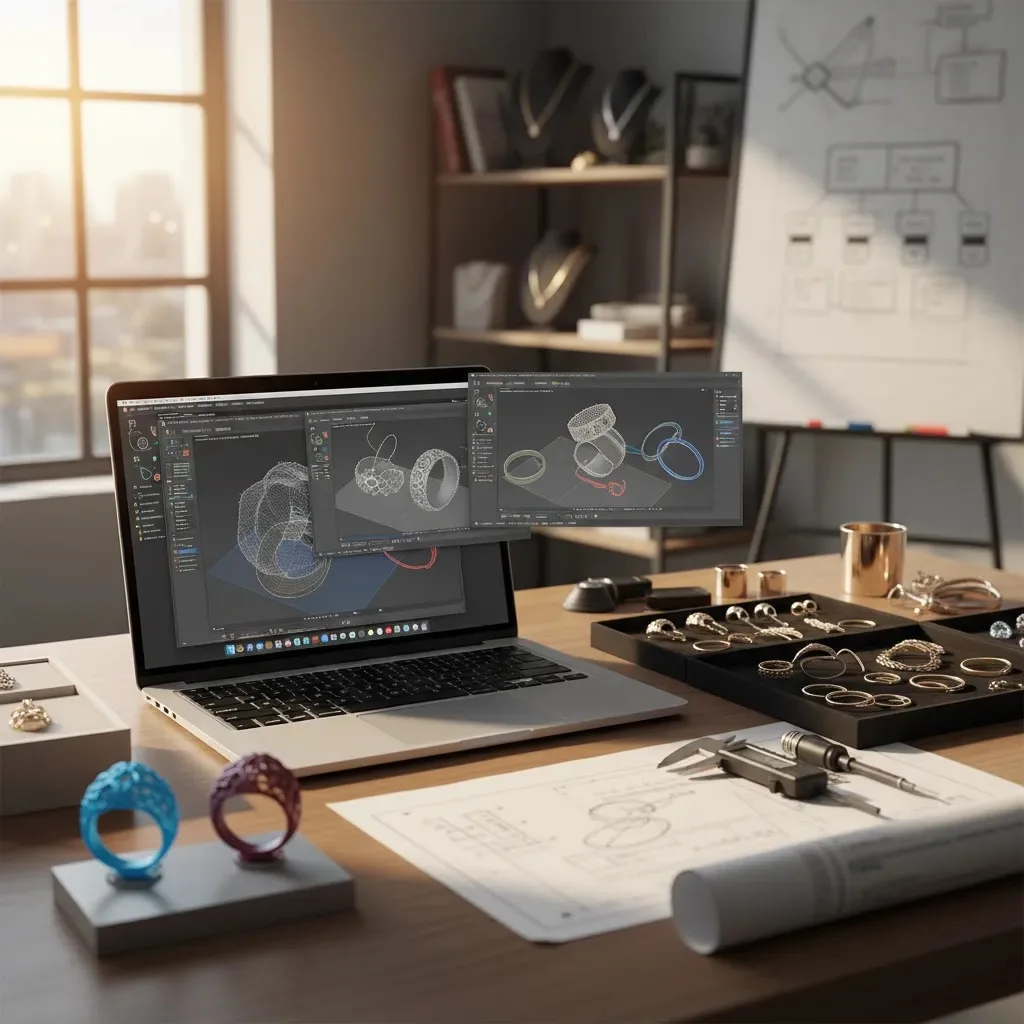
When to move from free files to custom development
Free files are helpful at the front end. They become less helpful once your business needs originality, manufacturing consistency, or a collection architecture built around your brand. That is usually the point where you move from file gathering to custom development.
Signs your brand has outgrown starter files
You may be at that point if your team is repeatedly modifying public templates, if sample revisions keep increasing, or if your designs need consistent detailing across multiple SKUs. You may also need custom work if intellectual property concerns are becoming more important as your line grows.
Consider this, a free 3d model jewelry box file or a simple jewelry form might help with presentation planning, but product development requires much more control. Once a collection moves toward launch, technical precision becomes a business priority, not just a design preference.
Custom development creates better alignment
With a custom workflow, your model can reflect your exact brand direction, expected wearability, and production goals from the beginning. That often reduces unnecessary revisions and creates clearer communication between all parties involved.
Royi Sal Jewelry works in the B2B custom design and manufacturing space, which makes this shift especially relevant for brands moving from inspiration assets into actual collection planning. If you are already past the research stage, exploring bespoke 3d jewelry modeling services may help you evaluate what a more structured next step could look like.
Frequently Asked Questions
Can a free 3D jewelry model be used directly for manufacturing?
Sometimes, but not often without revision. A free model may work as a reference or rough starting point, yet professional production usually requires technical review. Scale, wall thickness, structural points, and editability all matter. In many cases, a file that looks complete still needs cleanup before sampling. If your business is developing a private label collection, treat free assets as concept tools first. The safest approach is to have the model checked by a design or manufacturing partner before you rely on it for sample creation or a broader production plan.
What should a jewelry brand check before downloading a free file?
Start with business relevance. Ask whether the file supports your category plan, visual identity, and intended production pathway. Then check technical basics such as dimensions, geometry quality, and whether the file format can be edited by your team or supplier. You should also review usage rights carefully, especially if the file comes from a marketplace or community platform. A file that is free to download is not always free for commercial use. That distinction matters if you plan to include the design in a salable collection.
Are jewelry 3D print models the same as production-ready CAD files?
No, and confusing the two can create delays. Jewelry 3d print models are often optimized for display printing, experimentation, or learning. A production-ready CAD file should reflect more specific design intent and practical manufacturing requirements. It may need cleaner geometry, better dimensional control, and more careful attention to how the piece will be finished and replicated. For a brand owner, the key point is simple: a printable file is not automatically a factory-ready file. The closer your business gets to launch, the more that difference matters.
What file formats are best for jewelry manufacturing versus 3D printing (STL vs CAD files)?
It depends on your goal. STL is common in 3D printing workflows because it describes the surface as a mesh, which many print pipelines can process easily. For manufacturing development where measurement accuracy and revisions matter, many teams prefer CAD-native files or CAD-friendly formats because they are typically easier to edit predictably and can support a more controlled sizing process. If your brand is sending files to a factory or CAD specialist, the practical step is to ask what formats they can accept, and what format they prefer for edits, not just for viewing.
Are free 3D jewelry models legal to use commercially, and what license terms should a brand check?
Some are allowed for commercial use, and some are not. The risk is assuming “free to download” equals “free to sell.” Before you move a model into a private label plan, check the license terms for commercial use, modification rights, attribution requirements, and any restrictions on redistribution of the file itself. If the licensing is unclear, treat the file as internal inspiration only, or plan for a custom redesign that your business can document and control more clearly.
How do I know if a 3D jewelry file is “watertight” or non-manifold before sending it for printing or sampling?
Watertight usually means the model forms a closed volume with no holes, overlapping surfaces, or broken edges that would confuse printing or downstream processing. Many 3D programs and mesh repair tools can run basic checks for non-manifold edges and open boundaries. For a business owner, the key is to request a quick technical confirmation before sampling, either from your internal CAD resource or from your manufacturing partner. Catching these issues early helps you avoid avoidable back and forth once the file is already in a sampling queue.
Can I use a free 3D jewelry model for product renders and marketing even if I do not manufacture that exact design?
It can be possible, but you need to be careful on two fronts. First is licensing, you still need the usage rights to publish the render commercially. Second is business clarity, you should avoid presenting imagery that implies a product is available if it is not part of your actual assortment. Many brands use free models for internal presentations or early direction-setting. If you use them externally, make sure the visuals match what your business can realistically develop, and that you control how the imagery is labeled in your workflow.
How do free files help during early collection development?
They can speed up concept evaluation. If you are comparing category expansion ideas or building a mood board into something more concrete, a free file may help your team align on shape, scale, and direction. That can make internal approvals easier and shorten the briefing stage when you speak with outside designers or manufacturers. The value is strongest at the beginning of the process. Once you need original brand expression, reliable technical accuracy, or consistent detail across a line, most businesses shift toward custom file development.
Should a startup use free 3D jewelry design software first?
Often, yes, if the goal is education and light experimentation. Free software can help founders understand terminology, file handling, and basic design logic before they commit to paid tools or external partners. It is a practical way to test whether your team wants in-house concept capability. Still, software access does not replace production knowledge. If your business plans to manufacture at scale, the stronger decision is often about workflow, file review, and partner communication, not just which program you install. Free tools are useful, but they rarely solve the full development process.
How can a business protect its design when using public starter files?
Start by separating inspiration from final product development. Public files are best treated as references, not final collection assets. If a concept becomes commercially important, move it into a custom development stage where form, detailing, and brand-specific changes are documented clearly. Keep organized records of revisions, approvals, and file ownership. You should also confirm commercial usage rights before any supplier handoff. For growing brands, protecting a design is usually less about one download and more about having a disciplined process for modification, documentation, and controlled sharing.
When should a brand stop using free files and invest in custom modeling?
The shift usually happens when speed is no longer your only concern. If your samples need repeated correction, if your line lacks visual consistency, or if you need more distinction in the market, free assets may no longer support your goals. Custom modeling becomes more valuable when you need a collection that reflects your brand language across multiple pieces. It also helps when manufacturer communication is becoming more technical. At that stage, a more structured design workflow can reduce confusion and create a stronger base for sampling and production planning.
What role does a manufacturing partner play after the file is chosen?
A strong manufacturing partner may review the file, flag structural issues, suggest revisions, coordinate sample development, and help align the digital design with real production constraints. That role matters because the file is only one part of the commercial process. Your partner may also help organize approval stages and reduce miscommunication between concept, sample, and final run. Royi Sal Jewelry is an example of a B2B partner that works through collaborative design and manufacturing conversations rather than treating the file alone as the full project.
Can free models help in conversations with OEM or private label manufacturers?
Yes, they can be useful briefing tools. A free file can help illustrate proportion, silhouette, or general design direction when words are not enough. That can make early communication more efficient, especially if you are speaking with partners in different regions or across separate design and production teams. Still, a briefing model should not be confused with a final specification package. The more serious your project becomes, the more important it is to convert broad references into refined, technically reviewed files that support sampling and repeatable results.
Key Takeaways
- Free 3D jewelry files are most valuable as concept and briefing tools, not automatic production assets.
- Business owners should review scale, structure, editability, and commercial usage rights before using any downloaded model.
- Free software can support learning, but workflow discipline matters more than the tool itself.
- Brands usually need custom development once originality, consistency, and production accuracy become priorities.
- A collaborative manufacturing partner can help translate rough digital references into workable collection development steps.
Conclusion
Searching for 3d jewelry models free makes sense when you are trying to move quickly, learn the digital side of development, or test early collection ideas without overcommitting. For many jewelry businesses, that is a smart first step. The key is knowing what these files can realistically do. They can accelerate internal planning and improve design conversations, but they often need technical revision before they support reliable sampling or manufacturing.
If your brand is still exploring direction, organize your process around concept testing, file review, and clear communication. If you are moving toward launch, start evaluating whether custom modeling will give you better control over differentiation and production readiness. To explore how a custom manufacturing partnership works, visit royisal.com. You can also reach out to Royi Sal Jewelry to discuss how digital jewelry concepts may fit into your collection planning and broader manufacturing workflow.



Responses (0)