
If you manage a boutique line, private label range, or reorder program, that decision matters. It can protect margins on some SKUs and hurt them on others. This article explains how B2B buyers assess repair needs in sterling silver assortments, which damage types are usually repairable, where risk increases, and how to judge a manufacturing partner before you commit inventory or customer service promises.
What Repair Sterling Silver Jewelry Really Means for B2B Brands
In a retail conversation, repair sounds simple. In production or wholesale, it is not. Teams may solder a break, correct deformation, restore surface appearance, replace findings, or decide that excessive labor makes the piece unworkable.
That distinction matters if you also source wholesale sterling silver jewelry for stock replenishment or private label sales. A business buyer needs more than a yes-or-no answer. You need a clear framework that shows whether repair preserves the integrity of the line.
For broader category context, Royi Sal Jewelry also maintains a 925 Sterling Silver resource area. You can also review wholesale silver jewelry guidance if your team compares repair planning with sourcing strategy. The company also works in custom design and manufacturing for B2B clients who need structured development support rather than one-off retail service.
Common Repair Categories in Sterling Silver
Sterling silver pieces may need repair for several reasons. In practice, the repair category often decides whether the job makes commercial sense.
- Structural breaks: split shanks, broken loops, detached components, or failed joints.
- Surface issues: scratches, tarnish buildup, uneven finish, or wear that affects presentation.
- Component failure: clasps, backs, links, or other functional parts that no longer perform reliably.
- Shape distortion: bent forms, compressed areas, or misalignment that affects fit or appearance.
- Post-production inconsistency: pieces that may need correction before resale because finish or assembly does not match approved standards.
If your team is still clarifying what 925 sterling silver is in sourcing and product documentation, that knowledge should come first. Material knowledge shapes how you judge wear, repairability, and replacement thresholds.
Repair Sterling Silver Jewelry vs. Tarnish Complaints
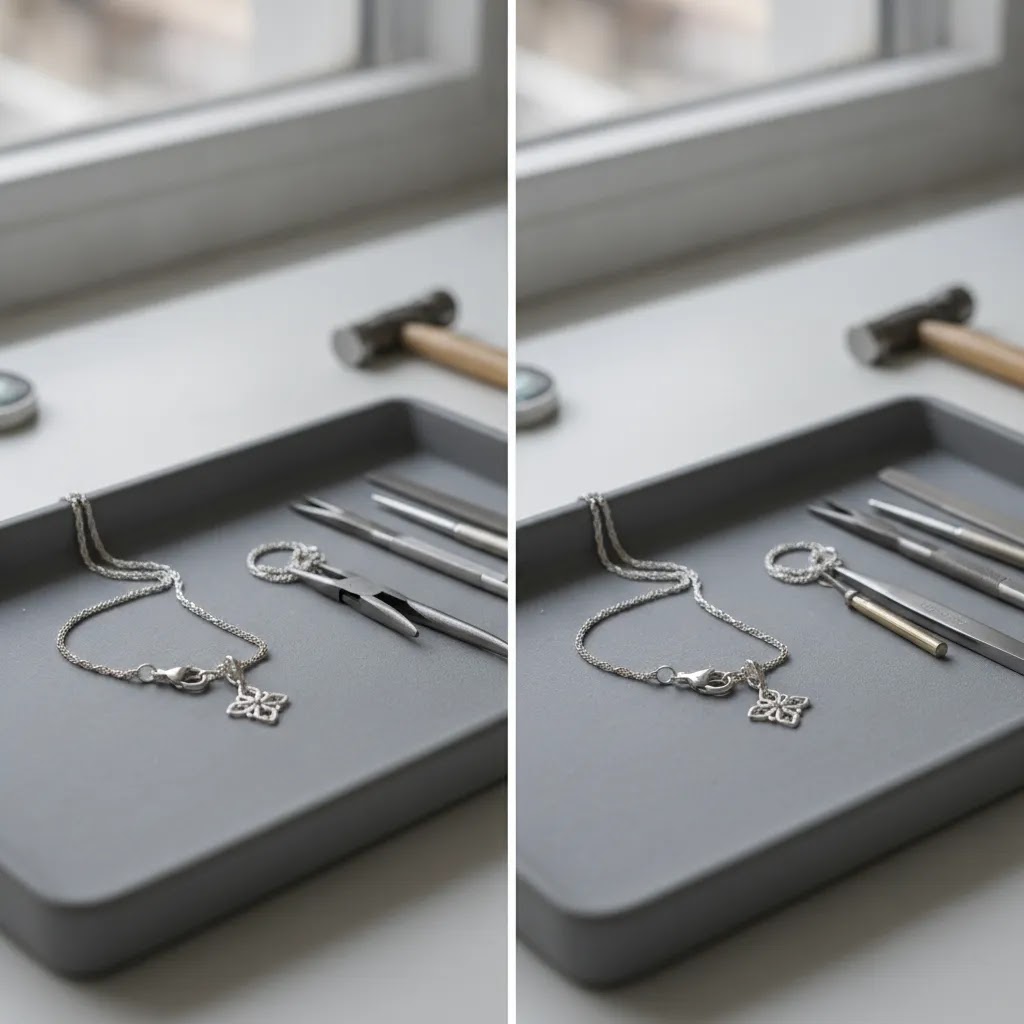
Many repair requests are not true repairs. Tarnish is usually a surface reaction that changes appearance, not a failure of the piece’s build. For a brand, that difference matters because teams can send a discoloration complaint into bench work when cleaning, controlled refinishing, or updated care guidance would solve the issue.
In B2B operations, tarnish complaints often rise because of business conditions rather than product defects. Storage humidity, long dwell time in inventory, packaging choices, and exposure to chemicals during merchandising can all speed up visible change. Even normal handling can create that impression. Lotions or cleaning agents around displays may make an item look “damaged” when the structure is still fine.
Therefore, collect enough context to separate surface appearance from structural damage. If the issue is only discoloration, with no break, deformation, or function failure, your first route is usually cleaning or light surface restoration based on your approved finish standard. If the finish still does not match collection expectations, refinishing may help. If the item also shows joint weakness, distorted geometry, loose components, or function problems, the request becomes actual silver jewelry repair. At that stage, your team should assess it as a physical failure, not a care issue.
For example, brands that need formal care guidance can compare their process with 5 steps to make your sterling silver jewelry look like new. You can also review the GIA jewelry care guide and the Silver Institute’s silver jewelry care guidance for general care context.
How a Professional Repair Sterling Silver Jewelry Assessment Works
A serious repair review starts with condition assessment, not immediate bench work. This is especially true for brands that manage repeatable SKUs across a collection.
1. Identify the failure point in sterling silver jewelry
First, define what actually failed. A visible crack may be the symptom, not the root cause. Weak construction, repeated stress, wear concentration, or fulfillment handling may drive the problem.
2. Check whether the piece can return to approved standard
A repair only helps if the item can return to a saleable condition. On a signature item such as a 925 sterling silver cross pendant, visual consistency can matter as much as physical integrity.
3. Compare labor against replacement logic
Some items are technically repairable but commercially weak candidates. If labor, rework time, inspection, and finish matching rise quickly, replacement may protect margin and brand consistency better.
4. Review repeat-pattern risk
If the same issue appears across multiple units, the job shifts from repair to production diagnosis. In that case, a manufacturing review often delivers more value than treating each piece as an isolated case.
Cleaning and Maintenance vs. Repair Sterling Silver Jewelry Rules
After-sales confusion usually starts at intake. Customer service hears “my sterling silver jewelry looks wrong,” while operations hears “repair sterling silver jewelry.” Clear internal definitions reduce wasted labor and inconsistent outcomes, especially when more than one person makes the call.
A practical triage model separates requests into three buckets. Maintenance covers surface appearance problems where the piece is intact and functional. Repair covers physical or functional failures such as breaks, loose components, deformation that affects fit, or closures that do not perform reliably. Escalation to manufacturing review applies when a similar issue repeats across units or when the failure suggests a design, assembly, or QC pattern.
Operational handling rules also protect sellable inventory, not just returned goods. Storage systems that limit humidity exposure, avoid reactive contact between pieces, and keep items dry after any exposure event can reduce preventable complaints. The goal is not perfection. Instead, the goal is consistency, so your team can separate normal surface change from a true build problem.
Some actions do not belong in-house if you need reliable, repeatable outcomes. Delicate assemblies, pieces with multiple components, or any situation where finish matching is critical across a collection can become inconsistent when teams improvise. In those cases, professional service and documented standards are usually safer because inconsistency can create more returns than the original issue.
Quick comparison for repair decisions
| Request type | What the article says it includes | Typical next step |
|---|---|---|
| Maintenance | Surface appearance problems where the piece is intact and functional | Cleaning or light surface restoration |
| Repair | Physical or functional failures such as breaks, loose components, deformation affecting fit, or closures that do not perform reliably | Bench assessment and repair review |
| Manufacturing review | A similar issue repeats across units or suggests a design, assembly, or QC pattern | Root cause review before reorder or future production |
Why Repair Sterling Silver Jewelry Matters for Jewelry Brands
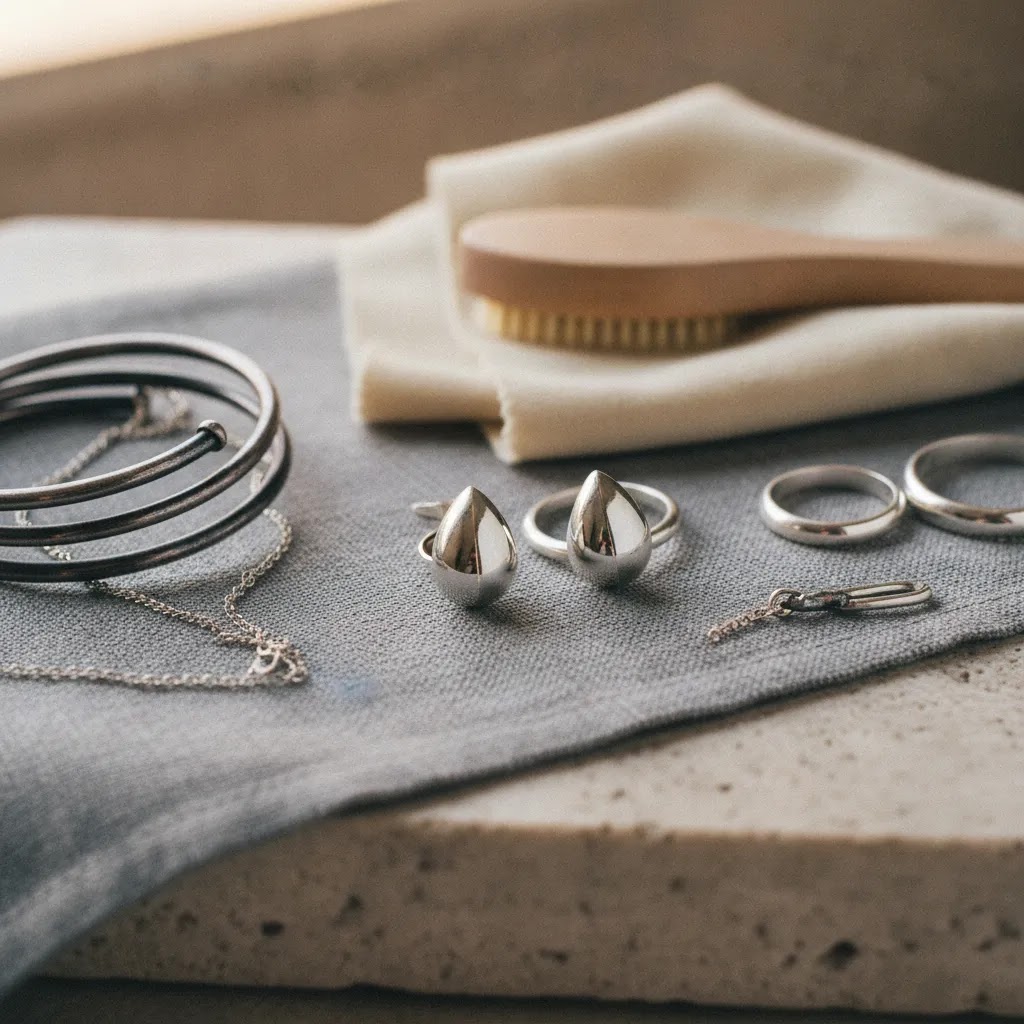
Repair decisions influence returns handling, customer satisfaction, and inventory discipline. They also show whether your product development process was clear enough from the start. If breakage patterns repeat, the issue may trace back to design detail, assembly choices, or weak approval controls.
Brands selling curated silver jewelry lines often underestimate the operational cost of inconsistent repairs. A piece may look acceptable on its own and still fail if it no longer matches the rest of the collection in finish, proportions, or perceived quality.
For teams planning long-term production support, a partner with experience in jewelry manufacturing may be more useful than a repair-only vendor. The better question is not just “Can you fix it?” Instead, ask, “What does this problem say about the product and the next production run?”
Repair vs. Replace in a Wholesale Context
The best decision is not always the most technically impressive one. In many B2B situations, replacement is the stronger commercial choice.
Repair sterling silver jewelry may make sense if:
- the damage is localized and does not affect the rest of the piece
- the item is part of a higher-value or low-availability SKU
- the repaired finish can still match approved collection standards
- the root cause does not suggest a broader production problem
Replacement may make more sense if:
- the labor required approaches the value of remaking the piece
- multiple units show the same defect pattern
- appearance after repair could vary too much between units
- your after-sales process needs predictable turnaround and simpler QC
Educational topics such as is sterling silver hypoallergenic may shape customer-facing product information, but repair evaluation is a separate operational question. It belongs inside your quality and replenishment workflow.
What to Capture Before You Approve a Repair Sterling Silver Jewelry Request
Repair approvals move faster when intake information is standardized. For wholesale and private label brands, that consistency also helps you spot patterns across stores, shipments, or time periods instead of treating each request as a one-off story.
A simple documentation set often includes the SKU and any lot or batch identifier you track, where the failure occurred on the piece, and how often the same issue has appeared. Add clear photos from multiple angles that show the full item and close-ups of the suspected failure point. Then add a short condition note that covers function and appearance. If the issue links to storage, packaging, or a specific store environment, capture that as a root cause note instead of leaving it as an assumption.
After repair, QC should verify more than “it looks okay.” Function testing matters for any moving or closing element. Alignment and symmetry checks confirm that the piece still matches your approved geometry. Finish consistency should also be checked against your collection standard. This is where many brands lose time. A repaired unit may pass basic handling and still fail visual consistency.
Over time, documentation helps you decide whether a problem is isolated, handling-related, packaging-related, or a repeatable production defect. As a result, your team can make a design or build adjustment before the next run.
Strengths and Considerations
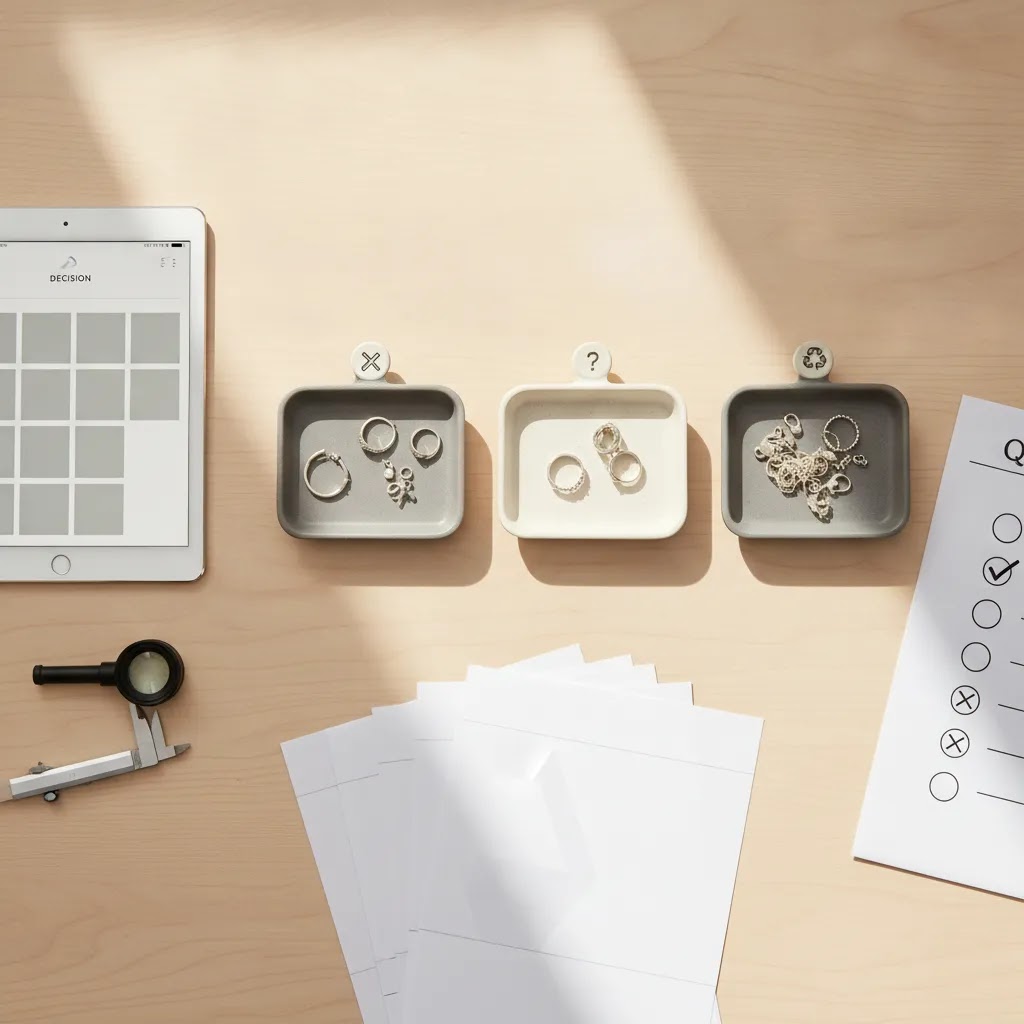
Strengths
- Repair can preserve inventory value when damage is isolated and the piece remains commercially viable.
- It may reduce unnecessary remakes for select SKUs with stable demand or limited stock availability.
- A good repair review can expose recurring design or production issues before they grow into larger return rates.
- Structured repair criteria help customer service teams make more consistent post-sale decisions.
- Repair analysis can support better future briefs, especially for private label collections with repeat production runs.
Considerations
- Not every sterling silver item should be repaired. Some jobs may create appearance or durability compromises that are not acceptable for resale.
- Finish matching after repair can be difficult, particularly across collections that need visual consistency.
- Repeated repairs on the same SKU may indicate a deeper product-development problem rather than isolated handling damage.
- Turnaround, inspection, and communication requirements can add hidden operational cost for small teams.
How to Evaluate a Manufacturing Partner for Repair Sterling Silver Jewelry Decisions
If your business is growing, the strongest partner is usually not the one who promises to fix everything. It is the one who can separate salvageable units from pieces that need remaking and explain why.
Royi Sal Jewelry approaches B2B work through custom jewelry design, collaborative consultation, wholesale manufacturing support, and global fulfillment. Royi Gal leads the company, and his background spans both jewelry design and manufacturing. That dual perspective can help brands connect repair feedback to design logic, production planning, and long-term collection consistency.
As you evaluate options, ask whether the partner can do the following:
- assess damage in the context of your approved product standard
- differentiate one-off repairs from repeat production faults
- communicate clearly about trade-offs rather than overpromising outcomes
- support future design or manufacturing adjustments if the same issue repeats
If you are reviewing repair issues as part of a broader sourcing or product-development challenge, explore Royi Sal Jewelry’s design and manufacturing approach at royisal.com. You can also review the jewelry manufacturing process concept creation to connect repair concerns with future collection planning.
Frequently Asked Questions
Can all sterling silver jewelry be repaired?
No. Many pieces are repairable in technical terms, but not every repair makes business sense. A B2B decision should consider structural reliability, finish consistency, labor input, and whether the repaired unit will still meet the approved standard of the collection.
How do brands decide between repair and replacement?
Most brands compare the damage scope, expected labor, visual impact, and the SKU’s role in the assortment. If repair creates inconsistency or repeated QC handling, replacement may be the cleaner option, especially for repeatable wholesale lines.
What kinds of damage are usually the easiest to repair?
Localized issues such as minor deformation, some component failures, or isolated assembly faults may be simpler to assess. However, the real question is whether the repaired piece can return to saleable condition without visible mismatch or durability concerns.
Should a brand use a jewelry repair kit sterling silver solution in-house?
For established B2B operations, in-house kits may help with light maintenance if staff are trained and the risk is low. They are usually not a substitute for professional assessment when structure, finish quality, or customer-facing inventory standards are involved.
Does cleaning solve the same problems as repair?
No. Cleaning addresses surface condition, while repair addresses physical or functional damage. Teams researching how to clean sterling silver jewelry should keep that work separate from decisions about broken, bent, or assembly-related issues in production inventory or returned goods.
What if the same repair issue appears across several units?
That usually points to a broader product or production concern. Brands should document the defect pattern, isolate affected units, and review whether the issue traces back to design detail, assembly stress, handling, or a quality-control gap during manufacturing.
Can repair decisions affect future production runs?
Yes. Repeated bench corrections often reveal ways to refine the brief, improve approvals, or adjust construction details before reorder. For private label brands, that feedback loop may be more valuable than the repair itself because it can prevent recurring costs.
Why discuss repair with a manufacturer instead of only a local bench service?
A manufacturer may be better positioned to connect recurring damage with the original product-development process. That perspective can help you decide whether the issue is isolated, whether the SKU should be revised, and whether future production planning needs tighter controls.
Can damaged sterling silver be repaired?
Often, yes. Sterling silver jewelry repair may be possible for many common damage types such as localized breaks, certain component failures, or moderate distortion. For a brand, the decision is less about possibility and more about whether the repaired unit can return to your approved standard without visible mismatch, durability risk, or excessive handling cost.
How much does it cost to fix a sterling silver necklace?
Cost depends on what failed and how your workflow is set up. A clasp or link issue may be straightforward, while a complex break, repeated failures, or strict finish matching can increase labor, QC time, and communication overhead. For wholesale programs, brands often evaluate total process cost, including intake, documentation, shipping, inspection, and whether the outcome will stay consistent across units.
What does vinegar do to sterling silver?
Some people use acidic household solutions as a cleaning attempt, but for a business, that approach is risky and inconsistent. Uncontrolled cleaning methods can affect surface appearance and make it harder to match an approved finish standard across a collection. If your team receives items cleaned with unknown methods, document that at intake because it may change whether the next step is cleaning, refinishing, or bench repair.
Is it worth fixing a silver chain?
It can be, but it depends on where the chain failed, how visible the repair would be, and whether the fix can perform reliably after testing. Chains can also be sensitive to repeated stress points, so brands typically check whether the issue is isolated or likely to recur. If the repair outcome could vary between units, or if labor and QC handling become repetitive, replacement may be the more consistent choice for a wholesale assortment.
Key Takeaways
- Repair sterling silver jewelry is a business decision, not just a technical task.
- The best repair candidate is a piece that can return to approved quality without excessive labor or visual inconsistency.
- Repeated repair patterns often signal a deeper design or production issue.
- Brands should use clear criteria for repair, replacement, inspection, and future production feedback.
- A manufacturing partner with design and production knowledge may offer more useful guidance than repair-only support.
Conclusion
Repair sterling silver jewelry can protect inventory value, but only when the piece can return to a standard your business would still feel comfortable selling. For jewelry brands, the real skill is knowing where repair ends and product-development correction begins. Therefore, careful assessment, honest communication, and repeat-pattern analysis matter more than blanket promises. Royi Sal Jewelry serves B2B clients with custom jewelry design, collaborative development, manufacturing support, and global fulfillment. If repair questions are surfacing alongside broader quality, design, or reorder concerns, visit royisal.com to review the company’s process and contact the team to discuss how your collection challenges may connect to future manufacturing decisions.