

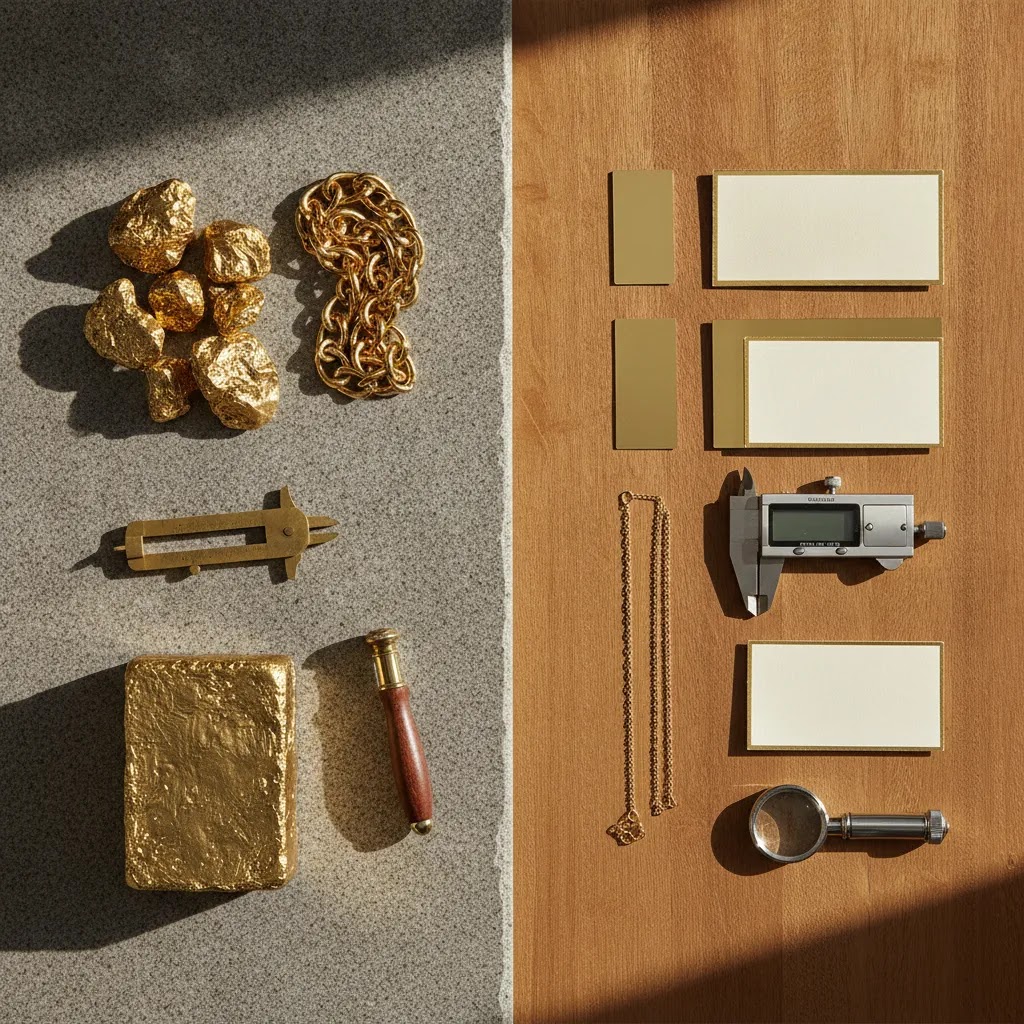
Gold vs Gold Plated at a Glance
For a jewelry business, gold vs gold plated is not a simple quality ranking where one option always wins. Solid gold and gold plated product serve different commercial purposes. Gold may suit collections built around permanence, higher ticket values, heirloom positioning, and lower tolerance for finish wear over time. Gold plated product may suit broader assortment building, entry price points, trend responsiveness, and private label lines where visual impact matters more than long-term metal value.
The useful question is not which material sounds better in marketing. Instead, ask which option fits your business model, customer expectations, reorder strategy, and fulfillment plan. If you are still evaluating plated categories in general, reviewing wholesale gold plated jewelry manufacturers may help you understand how suppliers present plated programs to B2B buyers.
Quick Verdict by Business Scenario
Choose gold if your brand depends on long-term value, premium positioning, and lower tolerance for finish-change complaints. Choose gold plated if you need lower opening inventory risk, trend-flexible assortment building, and an accessible price ladder for wholesale growth.
Head-to-Head Comparison
| Criteria | Gold | Gold Plated |
|---|---|---|
| Price | Typically higher upfront cost and higher inventory exposure | Typically lower entry cost and easier opening assortment planning |
| Target user | Brands building premium, long-wear, value-driven collections | Brands building fashion, promotional, or broader entry-price collections |
| Key strength | Stronger long-term value perception and wear confidence | Accessible pricing and visual flexibility for merchandising |
| Key weakness | Higher capital commitment and narrower opening assortment in many cases | Finish wear expectations must be managed carefully |
| Best for | Core hero pieces, brand signatures, milestone products | Trend drops, giftable ranges, test collections, volume-friendly programs |
| Worst for | Brands that need low-risk testing across many new SKUs | Brands promising permanent luxury wear without caveats |
Gold Plated vs Gold Filled vs Vermeil: Terms Brands Must Use Correctly
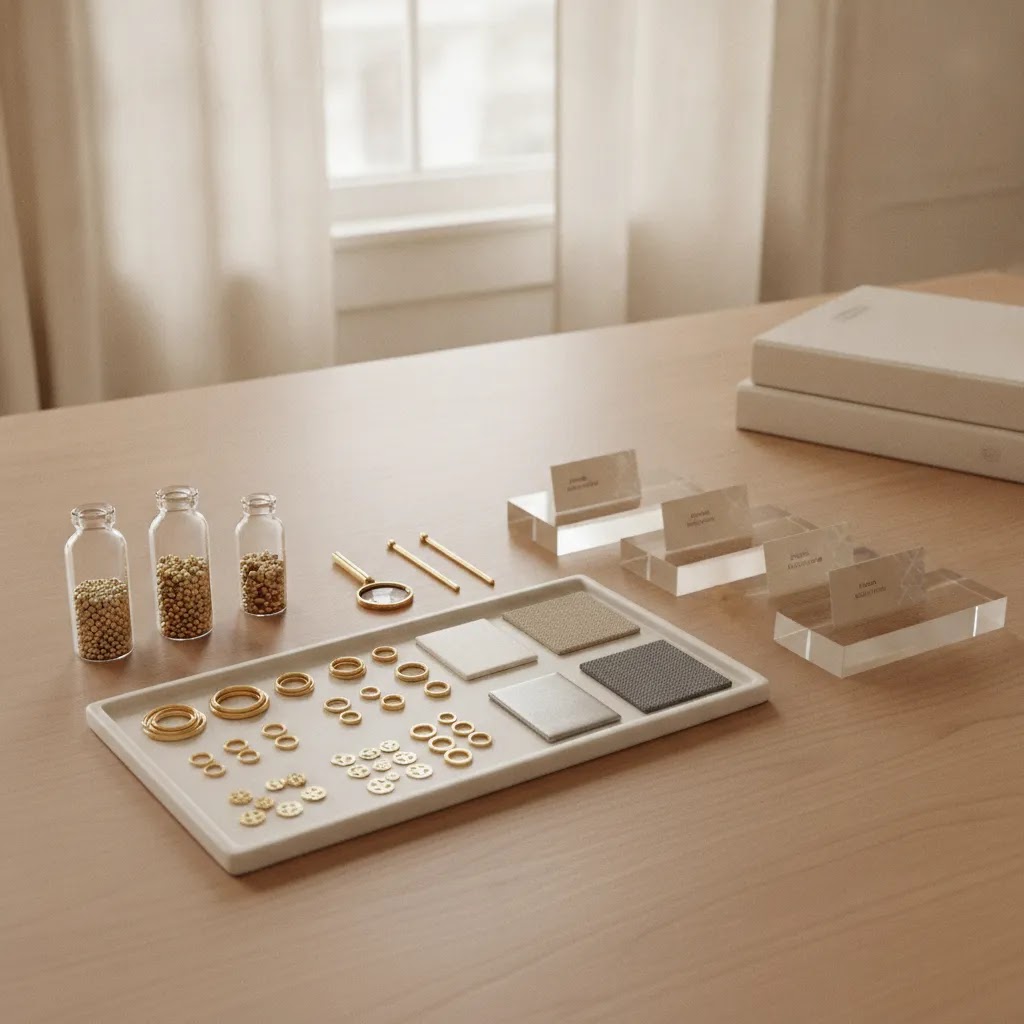
If you sell into wholesale, product language is not a small detail. It shows up in line sheets, invoices, marketplace listings, retailer training, and customer support scripts. Teams often blend the terms “gold plated,” “gold filled,” and “vermeil” together in conversation, but each term describes a different construction. As a result, loose wording can create avoidable disputes with accounts and confusion at reorder time.
Gold vs gold plated terms and why wording matters
Gold plated typically means a base metal with a thin layer of gold added to the surface through a plating process. In sourcing conversations, teams often use “gold plated” as an umbrella term. However, suppliers may still mean different specifications under that umbrella, including different thickness targets and finish standards. That is why two “gold plated” pieces from different programs can perform differently in the field even when the color match looks similar at sampling.
How gold filled and vermeil change the comparison
Many suppliers describe gold filled as a construction where a thicker gold layer bonds mechanically to a base material, rather than sitting as a very thin surface layer. In many industry discussions, teams place gold filled between solid gold and standard plating. Operationally, the key point is not marketing hierarchy. Instead, your labeling, cost assumptions, and performance expectations should match the actual construction your supplier quotes and produces.
Suppliers generally use vermeil to describe gold over a precious-metal base, and the market often presents it as a higher-tier plated option. Since definitions and compliance expectations can vary by region and channel, brands usually need extra clarity at the specification level. If you plan to use the word in merchandising, confirm the base, the plating approach, and the finish details your team plans to claim. For U.S. guidance on precious metal descriptions, review the FTC Jewelry Guides.
For assortment architecture, these terms can help you create a clean tiering system without overpromising. Many brands structure an entry tier around standard plated product for breadth, a bridge tier using a more premium plated or bonded construction where it fits, and a top tier in solid gold for signature pieces. Importantly, each tier needs its own naming rules, sales training language, and customer promise. Your accounts should be able to tell what is what from a SKU name and a line sheet description, without needing a long explanation at the counter.
Price Architecture and Brand Positioning
Gold usually gives you a clearer premium story. It may support stronger perceived value, more confident premium merchandising, and a tighter hero-product strategy. If your brand centers on fewer SKUs with higher average order value, gold often aligns well with that model. The tradeoff is obvious: higher unit economics may reduce the number of styles you can launch at once.
Gold plated usually gives you more room to build a layered assortment. You may be able to test chain styles, charms, sets, and fashion-led silhouettes without placing the same level of capital at risk. That can matter for newer brands still trying to identify repeat winners. Teams researching a gold plated jewelry set manufacturer are often solving exactly this problem: how to offer a coordinated look at a more accessible price point.
Winner on this dimension: Gold plated for assortment flexibility and launch efficiency. Gold wins only if your whole brand is intentionally positioned above the entry and mid-market tiers.
Wear Expectations and Product Lifecycle
Gold generally has the stronger case when long wear is central to the product promise. If your customers expect a piece to remain in regular rotation for years, gold may reduce friction around finish-change expectations. That matters for signature lines, commemorative pieces, and products where replacement cycles are not part of the brand model.
Gold plated product can still be commercially useful, but the lifecycle conversation has to be tighter. You may need more precise care guidance, more careful merchandising, and more disciplined product descriptions across wholesale accounts. Questions such as how is gold plated jewelry made matter because process understanding helps buyers set realistic durability expectations before they commit to a plated range.
Searches like “does gold tarnish,” “does 14k gold tarnish,” “does gold rust,” and “does gold plated turn green” usually reflect concern about after-sale performance. In B2B terms, these are not trivia questions. They are early warnings about return drivers, review risk, and account education gaps.
Winner on this dimension: Gold because it usually supports a more durable long-term positioning story.
What Determines Gold Plating Performance in Real Wholesale Runs?
Brands often talk about gold plating as if it is one consistent thing, but on production floors it is a set of variables. If your plated range is going into wholesale, performance consistency across batches matters as much as the look of the first approved sample. Most plated issues that show up later, including uneven color, premature wear complaints, or finish inconsistency between reorders, usually trace back to details your team did not document early enough.
Specs that shape gold vs gold plated performance
Plating thickness is one of the most common variables suppliers discuss. It is often measured in microns, and it can change how a piece wears and how the finish reads. The key for a brand is not memorizing technical numbers. Instead, decide what thickness range you are buying, then make sure the same target is used at sampling and at production. If you do not lock this down, one reorder may not match the previous run even if everyone calls both runs “gold plated.”
Process control and repeatability in gold plated runs
Process type also matters. Many plated programs use electroplating, but the bigger sourcing point is simpler: different processes, bath controls, and shop standards can lead to different outcomes. Even within a single supplier, steps like cleaning, surface prep, and polishing before plating can influence adhesion and final appearance. In practice, the base material and surface preparation can matter as much as the plating layer itself, especially for high-contact categories like rings and bracelets. For broader compliance and product-safety context, many brands also review guidance from the U.S. Consumer Product Safety Commission on jewelry.
For wholesale controls, treat plating like a spec you manage, not an adjective. Confirm the target finish at sampling, including color tone expectations under the lighting conditions you sell in. Next, ask how the supplier handles repeatability, meaning how they match the approved sample across subsequent batches. If you use internal wear testing, define what “pass” means for your brand before you scale volume, even if that standard is simply a practical check based on your channel and use case.
If you work with a tech pack or a purchase spec, plating is one area that benefits from explicit documentation. Many brands capture a target thickness range, the agreed finish color target, what surfaces must be plated, what areas can be masked, and what visual defects are unacceptable on arrival. The goal is not to become a plating engineer. Rather, the goal is to reduce interpretation so your sampling approval can be reproduced reliably when you reorder or expand the program across multiple SKUs. If your development process is still evolving, this guide to the jewelry manufacturing process concept creation can help you standardize early decisions.
Development and Ordering Realities
Gold often requires tighter SKU discipline. A brand may need to narrow the collection, concentrate spend on fewer pieces, and be more selective about which designs justify development. That is not necessarily a drawback. In many cases, it leads to a more focused line with clearer merchandising priorities.
Gold plated may be easier to use for test-led development. You can often explore more silhouettes, layered combinations, and commercial variations within the same launch budget. That may help if you are validating demand across different customer segments or sales channels. Still, plated programs can create their own complexity. Finish consistency, approved samples, and expectation setting remain important, especially in larger runs.
If your assortment planning also overlaps with adjacent metal categories, category hubs such as Brass & Metals and Jewelry Manufacturing can help you compare finish-driven products with broader production considerations.
Winner on this dimension: Gold plated because it usually gives emerging brands more flexibility during assortment testing and early wholesale development.
How to Tell Solid Gold vs Gold Plated (Brand Intake, QA, and Returns Triage)
In a wholesale business, the question “is this solid gold or gold plated?” is not only a consumer question. It is a brand operations question. It comes up during inbound receiving, during retail staff training, and during returns triage when a customer complaint moves from a store associate to your team. Having a basic identification and documentation process can reduce miscommunication without turning every issue into a debate.
Gold vs gold plated checks at intake
Start with markings, but treat them as a data point, not a guarantee. Many pieces carry stamps that indicate a karat claim or a plating claim, and some may include abbreviations used by specific factories. For your business, the practical move is to standardize how you record these marks at intake. If you photograph markings during receiving for each SKU and keep them attached to product records, your support team has a consistent reference when questions arise months later.
Documentation and labeling for gold vs gold plated
Supplier documentation matters more than “feel tests.” Weight and feel can mislead teams across different designs, and visual inspection alone rarely proves solid versus plated construction. For B2B control, ask for clear documentation on what each SKU is, and keep that information aligned across your purchase orders, invoices, SKU naming, and product copy. If your invoices say “14k gold plated chain” but your product page says “14k gold chain,” you have created a preventable returns problem even if the product itself is consistent.
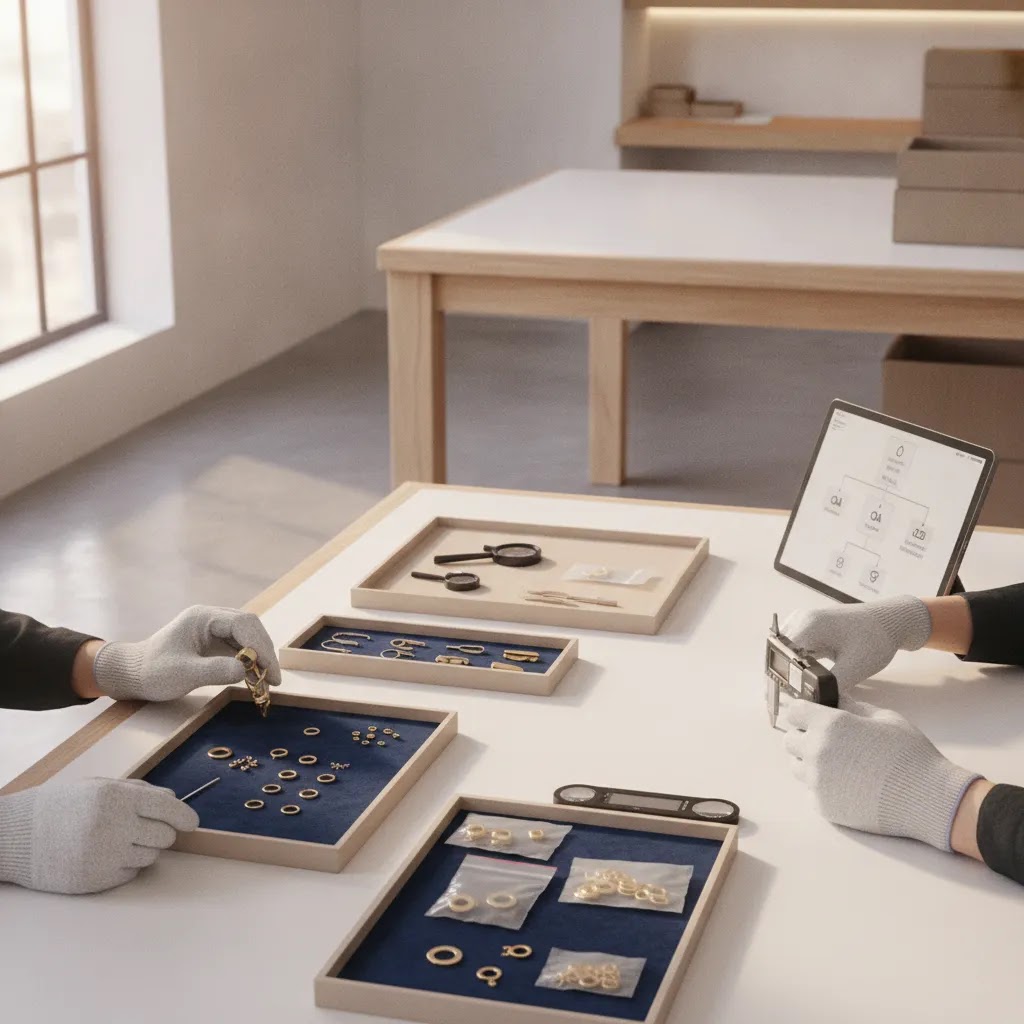
Receiving inspection can be simple and still useful. Many brands check color consistency versus an approved sample, look for visible wear points or thin coverage on edges, confirm that components match the bill of materials used in sampling, and spot-check a small number of units for finishing issues that could trigger immediate complaints. The purpose is not to simulate years of wear in your warehouse. Instead, the purpose is to catch obvious mismatches and confirm that what arrived matches what you approved.
Labeling clarity is one of the easiest fixes brands can make. “14k gold plated” usually means the plating is gold with a 14k color or composition claim, not that the entire item is solid 14k gold. If you choose to use karat language in plated product naming, keep it consistent everywhere: line sheets, SKU titles, care cards, and wholesale portal listings. Consistency reduces disputes with accounts and makes internal training far easier as your assortment grows.
Customer Promise, Returns, and Merchandising Risk
Gold gives retailers and brand owners a simpler promise to communicate. You are generally selling into a stronger long-term value narrative, which may make sales training easier and reduce ambiguity at the point of sale. That does not remove the need for clear product education, but it can lower the risk of a mismatch between expectation and use.
Gold plated requires a sharper communication system. Wholesale accounts need accurate product language. Sales teams need to avoid overstatement. Packaging, care guidance, and product pages should all support the same expectation. If that operational discipline is missing, a plated collection can create avoidable friction even if the designs are commercially strong.
Brands comparing plated with nearby alternatives often also review gold filled vs gold plated and sterling silver vs white gold to refine where plated product should sit inside a wider line architecture. Likewise, teams exploring adjacent precious-metal options may find 925 sterling silver useful when building a broader material strategy.
Winner on this dimension: Gold because the customer promise is usually easier to defend over time.
Which Option Fits Your Business Model
Choose gold if your business fits most of the following conditions:
- You are building a premium or fine-oriented brand where longevity is central to the story.
- You want fewer, stronger hero SKUs rather than a wide opening assortment.
- Your customer expects higher inherent product value and may be less tolerant of finish wear concerns.
- You are comfortable tying up more capital per style in exchange for a stronger long-term positioning strategy.
Choose gold plated if your business fits most of these conditions:
- You need an accessible opening price ladder for wholesale accounts or direct launch traction.
- You plan to test multiple chain, charm, or set concepts before narrowing the range.
- Your brand is trend-aware, seasonal, promotional, or assortment-heavy.
- You have the operational discipline to communicate plated expectations clearly across channels.
There is also a hybrid route. Many brands use gold for top-tier signature styles and gold plated for breadth, gifting, or trend rotation. That structure can work well if the distinction is intentional and clearly merchandised rather than confusingly mixed.
For brands moving from concept to manufacturing, Royi Sal Jewelry approaches product development as a collaborative B2B process shaped by design goals, production realities, and long-term brand fit. Led by Royi Gal, whose background spans both jewelry design and manufacturing, the company works with brands, boutiques, and private label businesses that need practical support from design consultation through production planning. You can explore how Royi Sal Jewelry handles custom development and manufacturing conversations at royisal.com if you are mapping out a new collection or reviewing how different finish options may fit your assortment.
Strengths and Considerations
Strengths
- Gold may support stronger premium positioning and a clearer long-term value message.
- Gold plated may make assortment expansion easier for emerging brands and seasonal programs.
- Gold can reduce ambiguity around long-wear expectations in many product categories.
- Gold plated can help you test more designs before committing to a narrower hero range.
- Using both strategically may create a more balanced line architecture across price tiers.
Considerations
- Gold typically requires greater upfront capital commitment and tighter SKU discipline.
- Gold plated demands careful expectation management to reduce after-sale dissatisfaction.
- Neither option solves weak sampling, unclear briefs, or inconsistent product communication.
- Product suitability may depend on category, target customer, reorder cadence, and channel mix.
Recap
The choice is usually less about prestige and more about fit. Gold tends to work best where permanence, premium value, and long-term wear confidence sit at the center of the offer. Gold plated tends to work best where assortment width, price accessibility, and trend responsiveness matter more.
| Pick | Best for | Why | Price level |
|---|---|---|---|
| Gold | Premium hero products | Usually supports stronger long-term value positioning and a simpler customer promise | Higher |
| Gold plated | Entry to mid-tier assortment building | Usually allows broader SKU testing and more accessible merchandising | Lower |
Frequently Asked Questions
Is gold always better than gold plated for a jewelry brand?
No. Gold is not automatically the better commercial choice. It may be the better fit for premium positioning and long-wear expectations, but gold plated may be more effective for assortment testing, lower opening inventory risk, and accessible wholesale pricing. The right answer depends on your brand strategy rather than a simple quality hierarchy.
Why do so many newer brands start with gold plated collections?
Many emerging brands start with gold plated collections because the model may allow broader style testing, faster merchandising decisions, and a more reachable price ladder. That can be useful when demand is still being validated. The tradeoff is that plated collections usually require more careful expectation setting and stronger product communication across channels.
Does gold tarnish?
B2B buyers usually ask this because they are trying to estimate product lifespan and return risk. In practice, wear behavior can vary by product construction, use conditions, and how the item is described and cared for. The more useful sourcing question is whether the material choice matches the promise your brand plans to make over time.
Does gold plated turn green?
This question often signals concern about finish wear, skin contact perceptions, and end-customer complaints. For a jewelry business, the operational issue is not just whether it can happen under certain conditions. It is whether your sales channels, product descriptions, and care instructions prepare buyers for realistic plated-product behavior over the product lifecycle.
Should a wholesale collection use both gold and gold plated?
It can, if the line is structured clearly. Some brands use gold for signature or premium pieces and gold plated for broader entry-price assortment. That approach may work well when each tier has distinct merchandising logic and customer messaging. Problems usually arise when both appear in the same range without enough differentiation.
Is gold plated a poor choice for chains, charms, or sets?
Not necessarily. Gold plated chains, charms, and coordinated sets may work well in fashion-led or gift-oriented ranges, especially where visual consistency and accessible pricing matter. The more important question is whether the collection’s use case, target customer, and after-sale messaging support plated-product expectations rather than implying permanence.
How should brands evaluate suppliers for plated jewelry programs?
Start with process clarity, sample approval discipline, communication quality, and consistency across repeat runs. Ask how development is handled, how revisions are documented, and how the approved sample relates to production. A supplier relationship works best when both sides treat the project as a structured manufacturing process rather than a simple order placement.
Where does gold filled fit compared with gold and gold plated?
Gold filled is often considered by brands that want a position between premium solid-gold offerings and lower-cost plated lines. It may fit some assortment strategies, but it should not be treated as interchangeable with plated. If that comparison is part of your planning, reviewing gold filled versus plated separately can help avoid mismatched sourcing assumptions.
How can a brand reduce risk before launching either option?
Use a clear design brief, approve samples carefully, limit early SKU sprawl, and align product claims with what the finished goods are meant to deliver. Strong internal alignment matters as much as supplier capability. Many product issues begin with unclear expectations during development rather than the metal choice alone.
Is gold-plated better than real gold?
Not in the sense of being a direct upgrade. Gold plated and solid gold are built for different brand goals. Gold plated may be better for testing more SKUs, creating a lower opening price ladder, and running trend-driven programs, while solid gold may be better for premium positioning and a stronger long-term value message. Your decision should be based on assortment role and customer promise, not on a single “better” label.
Is 14k gold considered gold-plated?
Not automatically. “14k gold” typically describes solid gold content in the item itself. “14k gold plated” usually describes a plated construction, with the gold layer represented as 14k. For wholesale consistency, treat these as different product types, and make sure the naming matches across SKUs, invoices, line sheets, and product copy.
How long will gold-plated jewelry last?
There is no universal timeline a brand can responsibly promise. Real-world lifespan can vary based on plating thickness, surface preparation, the design’s wear points, and the customer’s use and care patterns. For a jewelry business, the better approach is to define your plated range’s intended lifecycle, align your product claims to that lifecycle, and confirm plating specifications during sampling so reorders stay consistent.
Does gold jewelry help with arthritis?
This is a health claim, and jewelry brands should be cautious about repeating it. Some consumers associate certain metals with comfort or wellness, but a jewelry business should avoid medical promises unless it has appropriate substantiation and compliant marketing language for the markets where it sells. In practice, keep product communication focused on design, construction, and care, and leave medical outcomes out of sales training and product pages.
Key Takeaways
- Gold is usually the stronger fit for premium, long-wear, value-driven product strategies.
- Gold plated is often the smarter fit for assortment breadth, trend testing, and accessible launch pricing.
- The most useful decision framework is business-model fit, not prestige alone.
- Return risk often comes from mismatched expectations, especially in plated programs.
- A hybrid assortment may work if each tier has a clear merchandising role and customer promise.
Conclusion
The gold versus gold plated decision becomes clearer once you stop treating it as a status question and start treating it as a business-model question. Gold may be the right call for fewer, stronger, premium products with a long-term value story. Gold plated may be the better route for broader assortment planning, seasonal experimentation, and more accessible wholesale positioning. Many successful collections use both, but only when each serves a distinct role. If you are shaping a new jewelry line and need help translating concept, finish direction, and production goals into a workable development plan, visit royisal.com to learn more about Royi Sal Jewelry’s collaborative design and manufacturing approach or contact the team to discuss your project.