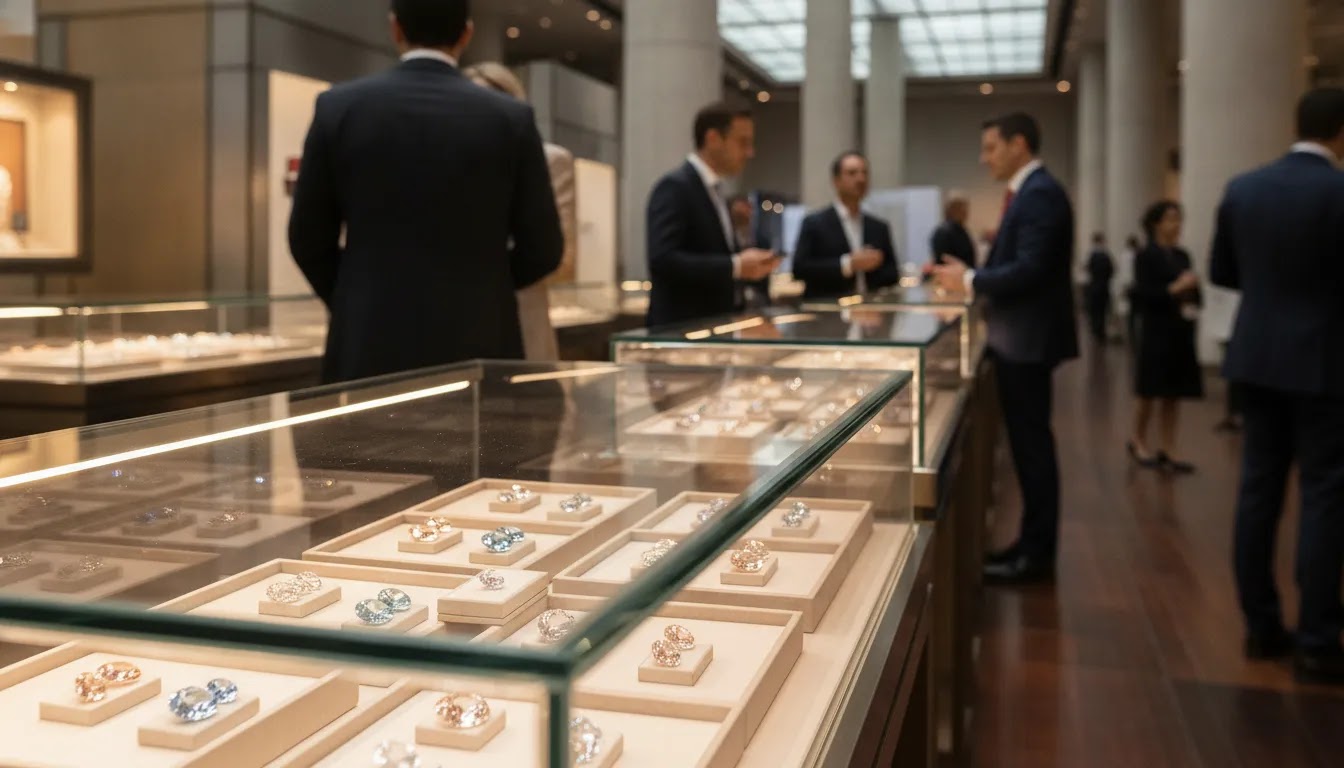
Maximizing brand exposure at the Bangkok Gems & Jewelry Fair means using the event as a business development channel, not just a place to browse products. For jewelry brands, wholesalers, and private label founders, brand exposure usually comes from preparation, targeted meetings, clear positioning, and disciplined follow-up.
The fair can place your brand in front of suppliers, sourcing contacts, design partners, and potential distribution relationships in a short window. However, that opportunity is rarely automatic. If your team arrives without a sourcing goal, meeting plan, and clear message, you may leave with many business cards and little commercial momentum.
This article explains what maximizing brand exposure at the Bangkok Gems & Jewelry Fair means in a B2B setting. It also shows how the process works in practice and how to decide if the fair fits your current growth stage.
What Brand Exposure Means at the Bangkok Gems & Jewelry Fair
At a trade fair, brand exposure is not the same as foot traffic or social posting. In a B2B jewelry context, exposure means the right commercial contacts remember your brand for the right capability. That may include custom development, wholesale sourcing, private label production, or collection expansion.
A practical definition is simple. Exposure is the degree to which qualified industry participants can understand your brand quickly, connect it to a business need, and take the next step after the event. That next step may be a factory conversation, a sample request, a sourcing call, or a development brief.
Brands that perform well at events like the bangkok gem fair usually treat visibility as one part of a larger pipeline. In other words, their goal is not to meet everyone. Their goal is to meet the people who fit their product direction, quality expectations, and supply chain model.
Key attributes of meaningful exposure
- Clear positioning that explains what your brand sells and where it fits
- Targeted conversations with suppliers, manufacturers, and sourcing contacts
- Consistent presentation across samples, pitch materials, and follow-up notes
- Commercial relevance, not only aesthetic appeal
- Post-event movement toward development, ordering, or partnership discussions
Should You Attend the Bangkok Gems & Jewelry Fair or Exhibit for Brand Exposure?
For many jewelry businesses, this is the first decision that shapes exposure quality. Attending and exhibiting serve different commercial purposes. If your main goal is supplier discovery, private label research, or early-stage manufacturing talks, attending may be more efficient.
It gives your team room to compare contacts, test positioning, and gather market feedback before investing in a booth. By contrast, exhibiting often makes more sense when your brand already has a defined assortment, a clear sales story, and presentation materials that support structured meetings.
That may include finished samples, line sheets, wholesale terms, or a clear explanation of the retailer, distributor, or production partner you want to attract. Without that readiness, a booth may create visibility without enough commercial follow-through.
The decision usually comes down to stage, meeting volume, and readiness. A newer private label founder may gain more by attending with a shortlist and sourcing brief. Meanwhile, an established brand with active expansion goals may gain more from exhibiting if the team can manage appointments, present the collection clearly, and handle follow-up after the event.
In practical B2B terms, brands attend the fair to accelerate sourcing research, evaluate potential partners face to face, and build relationships that may support future development or production.
How Maximizing Brand Exposure at the Bangkok Gems & Jewelry Fair Works
Most exposure gains start before the fair opens. By the time you walk the halls, your brand should already know what it wants to be known for. Early-stage labels often show broad interest in everything from crystal gems to finished jewelry without a clear product strategy. As a result, suppliers remember less.
1. Pre-fair positioning for maximizing brand exposure
Your team should narrow the brief first. Are you searching for gemstone inputs, finished wholesale assortment ideas, private label partners, or long-term production relationships?
If your interest includes component-led products, your planning may overlap with adjacent sourcing categories such as beads for jewelry making. Likewise, brands that need stone sourcing depth may review guides on wholesale gemstones before the event.
2. On-site targeting at the Bangkok Gems & Jewelry Fair
Exposure grows when meetings are filtered. The fair environment can feel dense, so buyers often benefit from segmenting their route by supplier type, product relevance, and production readiness. A broad walk-through may help you understand the market. However, a structured list of priority booths usually produces better commercial outcomes.
3. Message discipline
Your team should be able to explain, in under a minute, what your jewelry brand is building, who the target customer is, what category you are expanding into, and what type of supplier relationship you want. This matters because many promising conversations fade when the buyer sounds unsure about volume planning, collection direction, or launch timing.
4. Follow-up conversion after maximizing brand exposure
Exposure matters only if it leads to a next step. That may include quote requests, sample evaluation, product revisions, or manufacturing discussions. Royi Sal Jewelry approaches this stage as a collaborative B2B process centered on custom jewelry design, manufacturing, and consultation.
That structure may help brands that need a clearer path after the fair instead of an informal supplier search alone. For official event details, teams can also confirm schedules and registration through the Bangkok Gems & Jewelry Fair website.
How to Evaluate Fair Contacts After the Event
Once the fair ends, exposure becomes useful only if your team ranks contacts with discipline. A practical review starts with fit. Does the supplier or manufacturing partner align with your category, development needs, and business stage?
A second filter is communication quality. If the contact was vague about process, slow to answer basic questions, or unclear about next steps, that matters just as much as the product itself.
Review production relevance separately. Some contacts may be interesting but not suitable for your current collection plan. Others may fit well because they support sampling, understand custom development, or explain clearly how a project moves from design brief to production.
Royi Gal’s perspective as both a designer and manufacturer shows why this step matters. Good event conversations help, but strong manufacturing decisions usually depend on how well a partner responds once practical questions begin.
After the fair, brands often benefit from requesting a clear outline of the sample process, development capabilities, communication flow, and the information needed to review a brief properly. That creates a more reliable basis for shortlisting. Business cards alone do not build exposure. Instead, shortlist decisions, next-step clarity, and organized follow-up turn visibility into real sourcing progress.
Why Maximizing Brand Exposure at the Bangkok Gems & Jewelry Fair Matters
For many brands, a fair visit is less about immediate ordering and more about compressing research time. You can compare supplier communication styles, assess whether businesses understand private label requirements, and see how clearly each partner handles development conversations. As a result, you reduce the risk of choosing a supplier based only on a website or price sheet.
Exposure also matters because it can shape your negotiating position later. When suppliers understand your assortment logic and growth plans, the discussion may shift from single-SKU quoting to broader collection planning. That is often more useful for brands that want continuity, repeatability, and a partner who understands future production runs.
If your wider sourcing trip includes field research beyond the exhibition itself, studying the bangkok jewelry market and the realities of a bangkok jewelry factory visit can add context that the fair floor alone may not provide. Fair conversations are valuable, but they often become more meaningful when you connect them to actual sourcing and manufacturing conditions.
Glossary of common B2B terms
- Private label: products developed for sale under your own brand name
- Design brief: the document or summary that explains your concept, requirements, and business goals
- Sampling: pre-production development used to test design accuracy, quality, and commercial fit
- Production run: the approved batch manufactured after development stages are completed
Brand Exposure vs General Visibility
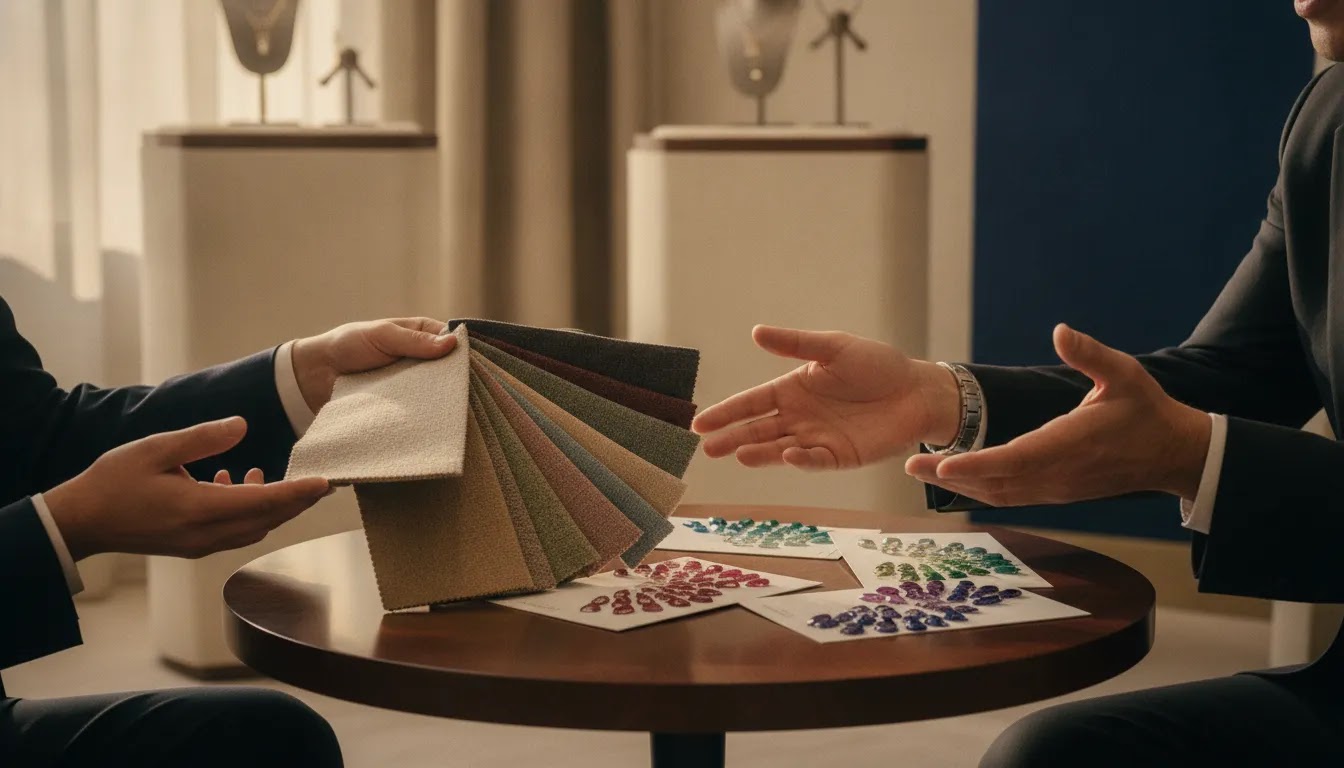
Many first-time attendees confuse exposure with being seen. Visibility means people noticed your booth, your samples, or your posts. Exposure is narrower and more useful. It means the right buyers, suppliers, or manufacturing partners understand what you do and can act on that understanding.
For example, a brand that attracts broad attention for attractive gems jewelry samples may still fail commercially if suppliers leave unclear about target volumes, expected quality level, or whether the brand needs custom development support. By comparison, a smaller presence with sharper positioning may produce better meetings and stronger follow-up.
This difference becomes more important once you move from event interest into actual jewelry manufacturing decisions. Manufacturing partners usually need more than style inspiration. They need clarity, responsiveness, and a workable product roadmap.
Where Brands Usually Use Fair Exposure
Brands usually apply fair exposure in one of five business scenarios:
- Testing whether a new category deserves development investment
- Shortlisting suppliers for custom or private label discussions
- Comparing communication quality before sending design briefs
- Building relationships in a broader jewelry sourcing strategy
- Creating post-fair momentum for retailer outreach or assortment planning
This is why event value should be judged by business movement, not only by attendance. A fair can help you identify where your brand fits in the gems and jewelry ecosystem, which supplier type understands your requirements, and which conversations deserve real development time afterward.
For brands comparing destination strategy, it can also help to review Thailand as a destination to elevate your jewelry business before planning a larger sourcing trip.
Strengths and Considerations
Strengths
- The fair may compress supplier discovery into a short, efficient research window.
- Face-to-face conversations often reveal communication quality faster than remote outreach alone.
- Brands can compare product positioning, sourcing categories, and development readiness side by side.
- Exposure efforts may help your team move from broad interest to a more qualified supplier shortlist.
- It can support both immediate sourcing needs and longer-term manufacturing relationship building.
Considerations
- Without a clear objective, exposure may stay superficial and produce weak follow-up.
- Trade fair conversations do not replace sampling, quality review, or production due diligence.
- Brands with unclear assortment strategy may struggle to communicate what kind of partnership they actually need.
- Post-fair conversion usually depends on fast follow-up, organized notes, and a realistic development timeline.
Event Planning Basics That Affect Exposure

Exposure quality is often shaped by planning details that seem administrative at first. Confirming event dates, registration requirements, exhibitor categories, hall organization, and meeting availability before travel can make the difference between a focused sourcing trip and an expensive walk-through. Brands that wait until arrival to decide where to go usually spend too much time reacting instead of evaluating.
Pre-booked appointments tend to improve exposure because they create context before the conversation starts. If a supplier already knows your category focus, approximate quantity expectations, or whether you are exploring custom development, the meeting can move beyond introductions and into practical fit. That is especially useful for teams with limited time on the ground or multiple sourcing priorities across the fair.
Registration and scheduling are not only event logistics. They are part of broader sourcing efficiency. A brand that organizes meetings in advance, groups targets by relevance, and leaves time for comparison is more likely to return with a usable shortlist and clearer next steps.
In practical B2B terms, the Bangkok Gems & Jewelry Fair functions as a trade environment for supplier research, relationship building, and market validation. Planning for that purpose usually produces stronger outcomes than treating the event as open-ended browsing. For broader trade support and market context, the Department of International Trade Promotion is also a useful official source.
Quick comparison of exposure approaches
| Approach | Best fit stated in this article | Main benefit | Main risk |
|---|---|---|---|
| Attend | Supplier discovery, private label research, early-stage manufacturing conversations | More room to compare contacts, test positioning, and gather feedback | Too much broad browsing without a shortlist or sourcing brief |
| Exhibit | Brands with a defined assortment, clear sales story, and presentation materials | Stronger structured meetings and clearer presentation of the collection | Visibility without enough commercial follow-through if the brand is not ready |
Frequently Asked Questions
Is the Bangkok fair mainly for sourcing gemstones or finished jewelry?
It may serve both purposes, depending on your goals and how you plan your visit. Some businesses attend to assess gems, components, or category ideas, while others focus on finished jewelry, private label potential, or manufacturing relationships. The more specific your objective is before arrival, the more useful your meetings are likely to be.
How can a small jewelry brand maximize exposure without exhibiting?
Many smaller brands begin by attending with a shortlist, a concise brand presentation, and a clear sourcing brief. You do not always need a booth to build traction. Targeted meetings, disciplined note-taking, and strong follow-up may create more value than broad wandering, especially if your team is still validating category fit or supplier alignment.
What should a brand prepare before attending?
Prepare a one-minute brand summary, a product focus, target customer description, and an outline of what you want from suppliers or manufacturing partners. If you are seeking custom development, it also helps to organize sketches, references, and launch timing expectations. Preparation often affects supplier confidence more than presentation polish alone.
Does strong exposure at the fair guarantee a good manufacturing partner?
No. A promising fair conversation may help you identify candidates, but it should not be treated as proof of production fit. Manufacturing quality, communication consistency, sample execution, and operational reliability usually need to be assessed over time. Fair exposure opens doors, but supplier evaluation still requires a separate decision process.
How soon should follow-up happen after the event?
In many cases, the first follow-up should happen quickly while the conversation is still fresh. A short recap, clear next step, and request for specific information often work better than a generic thank-you message. Delay can weaken recall, especially after a large fair where suppliers may have met many brands in a compressed time period.
What makes a fair contact commercially valuable?
A valuable contact usually understands your product direction, responds clearly, and can continue the discussion in a structured way after the event. That may include answering development questions, reviewing a brief, or discussing production requirements realistically. The contact does not need to promise everything. Clarity and fit usually matter more than enthusiasm alone.
How does Royi Sal Jewelry fit into this process?
Brands seeking to transform collection concepts into manufactured reality turn to Royi Sal Jewelry, a B2B partner specializing in custom design and production. Led by founder Royi Gal—whose dual expertise spans both design conception and manufacturing execution—the company works alongside jewelry businesses, boutiques, and emerging brands to navigate the journey from initial vision through scaled production. This blend of creative and operational knowledge positions Royi Sal as a strategic collaborator for businesses looking to refine their offerings and bring new designs to market.
Should a brand use the fair for immediate orders or long-term supplier discovery?
That depends on the stage of your business. Some brands attend with reorder or sourcing urgency, while others use the fair to map options before making commitments. For newer labels, long-term supplier discovery may be the more realistic objective. For established businesses, the fair could support both active sourcing and future partnership building.
Why should a jewelry brand attend the Bangkok Gems & Jewelry Fair?
A jewelry brand may attend to compress supplier research, compare communication quality face to face, and test whether potential partners understand its category and growth direction. For private label founders and wholesale buyers, the fair can be useful because it brings sourcing, development, and relationship-building conversations into one place. That may help narrow decisions faster than remote outreach alone.
Is jewelry actually sold at the Bangkok fair, or is it mainly for trade connections?
In practical B2B terms, the fair is mainly valuable as a trade connection environment. Businesses may review products, discuss assortments, and explore sourcing options, but the larger purpose is usually commercial relationship building rather than simple on-site buying. For many brands, the most important outcome is not a purchase made that day, but a qualified next step after the event.
What is the Bangkok Gems & Jewelry Fair in practical B2B terms?
It is a trade fair where jewelry businesses, sourcing teams, suppliers, and manufacturing contacts meet to evaluate opportunities, compare capabilities, and begin or deepen commercial relationships. For a brand owner, it often functions as a concentrated research environment where product direction, supplier fit, and development potential can be assessed in a shorter time frame.
How can a brand prepare for fair registration and meeting scheduling?
Start by confirming dates, registration requirements, and the exhibitor categories most relevant to your sourcing goals. Then build a meeting list based on product fit, development relevance, and business priority. Brands usually benefit from requesting appointments before travel, preparing a concise company introduction, and leaving room in the schedule for comparison and follow-up discussions during the event.
Key Takeaways
- Maximizing exposure at the Bangkok fair means creating qualified business recall, not only visibility.
- Pre-fair planning, concise positioning, and fast follow-up usually have more impact than broad attendance alone.
- Supplier conversations at the fair should lead into evaluation steps such as briefing, sampling, and manufacturing review.
- Brands often get better results when they connect fair meetings to wider sourcing and production research.
- Royi Sal Jewelry may be a helpful next-step partner for brands that need collaborative design and manufacturing support after the event.
Conclusion
The Bangkok fair can be a strong platform for brand growth, but only if you define exposure in commercial terms. The goal is not simply to be seen in a busy gems and jewelry environment. The goal is to leave with clearer supplier options, stronger market understanding, and real next steps for product development or sourcing.
Brands developing new jewelry lines or evaluating international production partners benefit from working with Royi Sal Jewelry, whose team specializes in guiding clients through design refinement, production logistics, and the complexities of global sourcing. Whether you’re early in the conceptual stage or ready to move forward with manufacturing, the company provides the expertise and coordination needed to bring your vision to market efficiently and at scale.
Each jewelry project operates on its own timeline and parameters. Order minimums, production schedules, quality standards, and final results depend on factors including the breadth of your collection, intricacy of your designs, how many samples you need, and the dialogue between your team and ours throughout creation. To learn what timeline and production structure makes sense for your specific brand vision, sourcing strategy, and manufacturing goals, we encourage you to reach out to Royi Sal Jewelry directly.
Share this post