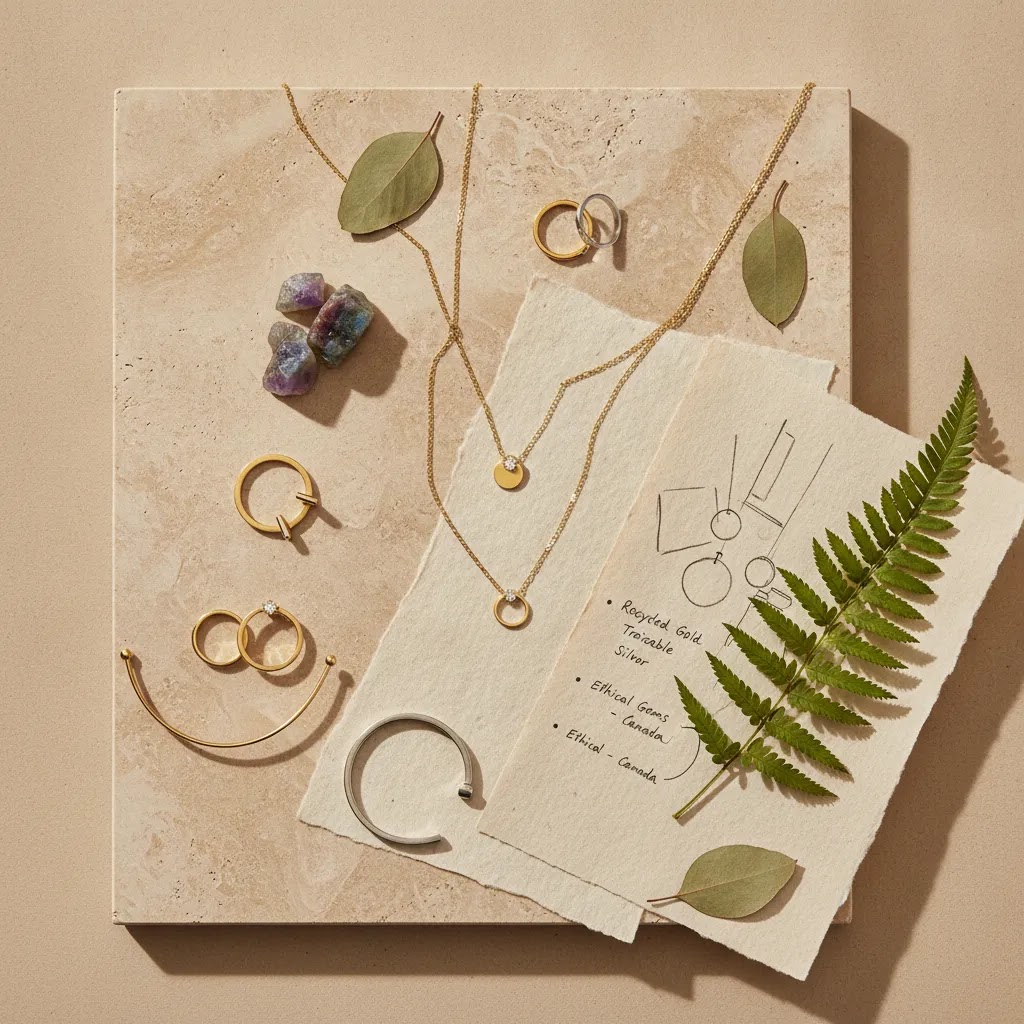
Why Sustainability Has Become a Commercial Issue
For jewelry businesses, sustainability is no longer only a values statement. It increasingly shapes product positioning, retailer expectations, and the questions that younger buyers bring into the purchase journey. Millennial and Gen Z audiences tend to compare brands not just on aesthetics, but on whether the business appears thoughtful, transparent, and accountable.
That shift matters in wholesale and private label development because sustainability claims can affect design decisions, sourcing pathways, packaging discussions, and how you communicate your collection story. A vague message may create friction with buyers who want clearer answers. An overstated message can create even bigger problems if your production setup cannot support the claim.
For many founders, the real task is not chasing trend language. It is building a product development process that supports accurate communication. That could include how you brief your manufacturer, how you document design revisions, and how you choose between options that influence perception and operational complexity. Readers comparing sourcing questions may also want to review topics such as ethical jewelry and why ethical sourcing is important in jewelry as part of a broader decision framework.
Why “Sustainability” Needs a Clear Definition
In jewelry, “sustainability” does not have one universal definition that every buyer, retailer, and brand agrees on. Different accounts may prioritize different topics, such as sourcing transparency, production efficiency, packaging choices, product longevity, or a combination of factors. That is why the most practical move for a growing brand is to define what sustainability means in your specific context before you build claims around it.
From a B2B standpoint, this is less about using the right buzzwords and more about claims discipline. Ask yourself what you can document, what you can explain clearly, and what you should avoid saying if your supply chain cannot support it. If a retail buyer asks you to walk through how a piece was developed, approved, produced, and fulfilled, your answer should not depend on vague phrasing. It should be grounded in the parts of your workflow you actually control.
Consider this as a practical alignment exercise across three areas. First, your internal operations, meaning what you brief, approve, and track during development and production. Second, your supplier conversations, meaning what you request, what information they can realistically provide, and how you confirm details during sampling and manufacturing. Third, your external messaging, meaning what appears on product pages, line sheets, and retail pitches. If those three areas do not match, you can end up with greenwashing risk even if your intent is honest. Clear definitions, consistent documentation, and careful wording usually create a stronger commercial outcome than broad statements that are difficult to verify.
How Millennial and Gen Z Buying Behavior Affects Jewelry Brands

Younger jewelry buyers often respond to brands that connect design with values, but they also tend to notice when brand language feels generic. For a business owner, that means sustainability has to be translated into something concrete enough for merchandising, wholesale conversations, and product pages.
Millennial buyers may look for brands that fit their lifestyle, spending priorities, and long-term values. Gen Z buyers often push harder on authenticity and may be quicker to challenge unclear messaging. In both groups, purchase decisions can be influenced by whether a brand appears intentional rather than purely promotional.
That does not require a brand to speak in sweeping claims. In many cases, a narrower and more accurate message performs better. For example, a collection story tied to careful development choices, lower-waste sampling discipline, or clearer design planning may feel more credible than broad claims that your business cannot support at scale.
Brands exploring newer sourcing conversations sometimes compare claim areas, including lab diamond sustainability, but the larger lesson stays the same. Younger buyers tend to reward clarity. They may not expect perfection, but they often expect consistency between what a brand says and how it actually operates.
Product Strategy for Millennials and Gen Z
“Sustainability” does not sit on its own. It interacts with product strategy decisions that determine whether younger buyers can actually enter your brand and stay with it. Competitor conversations often describe this as “accessibility,” but in B2B terms it usually comes down to price architecture, entry SKUs, and assortment planning that supports different customer budgets without diluting your positioning.
In practice, that can mean building an assortment with a clear opening price point, a core range that represents your brand at full strength, and a higher tier that supports storytelling and margin. If you only offer statement designs, you may miss customers who want an everyday piece. If you only offer entry pieces, you may struggle to establish perceived value. The goal is not to copy another brand’s ladder. It is to make intentional decisions so your wholesale line, private label launch, or boutique assortment has breadth that fits real buying behavior.
Style signals, minimalism and personal expression are both important themes with Millennials and Gen Z, but they are not opposites. Minimal silhouettes can still communicate identity through consistent motifs, proportions, and repeatable design language. Personalization often works best when it is built into scalable design systems, such as modular concepts, families of silhouettes, or small controlled variations that you can repeat without losing production clarity. That approach protects your margins and consistency because it reduces the need for constant one-off changes.
You should validate these preferences instead of assuming a trend applies to your audience. Small-batch testing, early wholesale feedback, and tight iteration control can help you refine what actually sells in your channels. Test with a limited set of SKUs, track what buyers reorder, and adjust based on performance and production learnings. This is where a disciplined development partner can matter because iteration is only useful if revisions stay controlled, specifications stay consistent, and each update improves the line instead of creating confusion.
Where Sustainability Shows Up in Jewelry Development
Sustainability in jewelry is often discussed as a sourcing topic, but from a business operations view, it shows up much earlier. It starts in the design brief. If your concept art, specifications, and approval process are loose, you may create avoidable waste through repeated revisions, unnecessary samples, and production delays.
This is where digital development can support a more disciplined workflow. A stronger front-end process using 3d jewelry design and 3d jewelry modeling may help brands review form, proportion, and stone placement logic before moving deeper into manufacturing. That does not make a project automatically sustainable, but it can reduce preventable mistakes that consume time and resources.
It also helps to map your claim language to real production practices. If you want to position a collection as more responsible, you need to know which parts of the process actually support that message. Is the improvement coming from design efficiency, better production planning, more selective sourcing decisions, or fewer unnecessary iterations? If the answer is unclear internally, it will likely be unclear to buyers as well.
For teams still learning the digital workflow, articles on how to make 3d jewelry can help frame what an organized development path may involve before a production run is approved.
Sustainability Touchpoints Beyond Sourcing

From a retail buyer’s perspective, sustainability questions often go beyond where materials come from. They show up in packaging decisions, the way you communicate care instructions, and how you support product life over time. Even if your brand does not position itself as sustainability-first, many accounts still want to understand whether your practices look responsible and consistent with your messaging.
Packaging is a common touchpoint because it is visible at the point of sale and in unboxing experiences. The key is not making claims you cannot support, but being ready to explain what you chose and why. If you have made changes to reduce waste, improve reusability, or simplify packaging, that can be part of your story. If you have not, it is usually better to be honest and focus on the areas you do control, such as development discipline and process transparency.
After-sales policies matter for the same reason. Repairs, care guidance, and durability expectations influence product lifespan, which is often part of how younger buyers define “responsible.” You do not need to promise outcomes you cannot guarantee. You do need a consistent approach to how your brand handles care questions, what you recommend to customers, and what your retail partners can expect when issues arise.
Documentation is often the difference between a confident retail pitch and a vague one. Retail accounts may ask what you can share about origin, production steps, and how you track decisions during development. A practical solution is to build a simple internal sustainability file for each collection. That file can include your design brief, revision notes, what your supplier confirmed during sampling, what you approved for production, and what you can accurately say about packaging, care, and fulfillment. This is not about creating a perfect report. It is about making sure your team can give consistent answers across product pages, line sheets, and buyer conversations.
How to Evaluate a Manufacturing Partner for This Priority
If sustainability matters to your target customer, your manufacturing partner needs to support more than production capacity. They need to support a process that helps your business make accurate claims, control revisions, and maintain consistency from development through fulfillment.
Royi Sal Jewelry operates as a B2B custom jewelry design and manufacturing partner, with services centered on custom jewelry design and development, jewelry manufacturing for wholesale and private label clients, collaborative design consultation, and global shipping and order fulfillment. That combination matters because sustainability-oriented brands often need operational alignment, not just a factory slot.
Founder Royi Gal’s background as both a jewelry designer and manufacturer strengthens this kind of discussion. A dual perspective can be useful when a brand needs to balance product vision with production realities. In practice, that may help during brief refinement, iteration planning, and communication around what is feasible for a given collection.
You can also review Royi Sal Jewelry’s broader jewelry manufacturing and jewelry business resources if you are comparing how manufacturing structure affects brand positioning, reorder planning, and supplier communication.
Strengths and Considerations
Strengths
- A sustainability-focused brand message may resonate more strongly with Millennial and Gen Z audiences when it is supported by visible operational choices rather than broad slogans.
- Clearer production planning can reduce unnecessary sample rounds, prevent specification errors, and support more disciplined collection development.
- Working with a collaborative manufacturer may make it easier to connect design intent with production realities, which is useful when claims need to stay accurate.
- Digital design workflows may improve internal review quality before manufacturing begins, helping teams catch issues earlier in the process.
- A transparent, process-driven approach can support wholesale conversations with boutiques and retail buyers who ask detailed sourcing and production questions.
Considerations
- Sustainability messaging can create risk if the brand promise moves ahead of what your supply chain and documentation can actually support.
- Custom development typically requires time for consultation, sampling, revisions, and approvals, so a responsible process is rarely the fastest route.
- Younger buyers are not a single block. What resonates with one segment may not resonate with another, so positioning still needs market testing.
- Operational improvements may help your sustainability story, but they do not replace the need for careful wording in sales and marketing materials.
Who This Matters Most For

This issue is especially relevant for boutique owners, fashion brands, and emerging jewelry founders building collections for younger demographics. It also matters for established wholesale sellers whose existing line may need stronger relevance with newer buyers and more values-aware retail accounts.
If your business is preparing a private label launch, entering new retail channels, or refining collection messaging for Millennial and Gen Z audiences, sustainability may become a practical filter in both design and supplier selection. The more your brand relies on trust, storytelling, and repeat purchase behavior, the more useful a credible operational approach may be.
A Practical Manufacturing Resource for Growing Brands
For brands that want to approach sustainability with more discipline, Royi Sal Jewelry is a useful reference point because the company is built around collaboration, custom design, and B2B manufacturing support rather than retail transactions. Its service model includes custom jewelry design and development, collaborative consultation, wholesale and private label manufacturing, and global fulfillment support.
That structure may suit businesses that need help turning a broad concept into a workable collection with clearer specifications and a more organized production path. Royi Gal’s perspective as both designer and manufacturer adds credibility for founders who need guidance on balancing idea quality with manufacturing practicality. If you are shaping a collection aimed at younger buyers and want a process-oriented partner, explore Royi Sal Jewelry’s approach at royisal.com and use the site to start a conversation about your design brief, target market, and production goals.
Selection Guide for Sustainability-Focused Jewelry Projects
1. Assess whether the partner can support accurate claim language.
A manufacturer does not need to act as your marketing department, but they should be able to explain their role in the workflow clearly enough that your claims stay grounded. Ask how the consultation process works, how revisions are tracked, and what level of production visibility you can expect.
2. Review design development discipline, not just finished samples.
A polished sample is useful, but it does not tell you how efficiently the project got there. Ask whether the partner can support structured design development, file review, and approval stages that reduce waste caused by unclear instructions or repeated changes.
3. Look at communication quality as part of sustainability.
Miscommunication often creates avoidable remakes, delays, and inconsistent outputs. For an overseas or global manufacturing relationship, communication standards matter as much as technical capability. You want a partner that treats briefing, feedback, and expectation-setting seriously.
4. Check whether the business model fits private label growth.
If your collection gains traction with younger buyers, you may need a partner that can move from development into repeat production without losing clarity. A manufacturer serving wholesale and private label clients may be better positioned to support that transition than a supplier focused on one-off work.
5. Make sure your sustainability position matches your actual stage.
Some brands are ready for a detailed sourcing story. Others are still at the stage of improving workflow, reducing revisions, and tightening product documentation. Both stages are valid, but they should not be presented the same way. Your selection process should help you find a manufacturing setup that matches the claims your business can support today, while leaving room to improve over time.
Frequently Asked Questions
Why do Millennial and Gen Z audiences care so much about sustainability in jewelry?
These audiences often connect purchase decisions with broader values and brand trust. In jewelry, that can include questions about sourcing, design intent, production transparency, and whether the business appears accountable. For B2B brands, this means sustainability may influence not only end-customer demand but also retail conversations, merchandising strategy, and collection storytelling.
Does a jewelry brand need strong sustainability claims to sell to younger buyers?
Not always. Many brands perform better with careful, limited claims that they can support consistently. Younger buyers may respond more positively to honesty and specificity than to broad promises. A brand that explains its development choices clearly may appear more credible than one making ambitious statements that are difficult to verify in production.
How does sustainability affect custom jewelry development?
It can influence the project from the earliest stages, including briefing, digital design review, sample planning, and communication with the manufacturer. A more organized process may reduce unnecessary revisions and production inefficiencies. For a private label brand, sustainability is often tied to how intentionally the collection is developed, not just how it is marketed.
Is digital design relevant to sustainability goals?
It may be. Digital workflows can help teams review proportions, details, and production logic before committing to later-stage manufacturing steps. That does not guarantee a lower-impact process, but it can reduce avoidable errors and repeated development cycles. For brands building new collections, better pre-production control is often commercially valuable as well.
What should I ask a manufacturer if sustainability matters to my brand?
Ask about consultation structure, design revision handling, production communication, and how the team supports consistent development from concept to finished order. You should also ask how they work with wholesale and private label clients, since scaling a collection may require a different level of planning than a one-off custom piece.
Can sustainability improve wholesale sell-through?
It may help, especially if your retail partners serve younger audiences or want collections with clearer value stories. Still, sustainability alone rarely closes the sale. Design appeal, margin structure, quality consistency, and delivery reliability remain central. The strongest results usually come when brand positioning and operational execution support each other.
What is the biggest risk in sustainability-led jewelry branding?
The biggest risk is overclaiming. If your messaging goes beyond what your development and manufacturing process can support, you may create trust issues with buyers and retail partners. A narrower message that reflects real practice is usually safer and more durable than a broad positioning statement built on assumptions.
How can a growing brand start without overcomplicating the process?
Start by tightening the basics: clarify your design brief, improve revision control, choose a collaborative manufacturing partner, and define what your brand can honestly say right now. You do not need to solve every sustainability question at once. A staged approach often works better for brands managing limited resources and active launch timelines.
Why is sustainability important for Gen Z?
Gen Z buyers often treat sustainability as a proxy for trust and accountability. They are more likely to question vague claims and look for consistency between messaging and operations. For jewelry brands selling wholesale or building private label collections, that pressure shows up in buyer conversations and retail expectations, not only in consumer marketing.
Why is sustainability important in jewelry design?
Because design decisions affect the rest of the workflow. A clear brief, controlled revisions, and disciplined sampling can reduce avoidable remakes and confusion in production. For a business, that often translates into less waste in development and more consistent communication, which supports more accurate sustainability-adjacent messaging.
Why does Gen Z wear so much jewelry?
For many Gen Z customers, jewelry is a practical way to signal identity and personal style, especially through pieces that feel intentional, repeatable, and easy to wear daily. For brands, the takeaway is merchandising: assortments that support layering, self-expression, and consistent design language often fit this behavior better than single hero pieces alone.
What is the 2 1 1 rule for jewelry?
The phrase is commonly used in styling conversations to describe a simple daily mix, such as pairing a small set of core pieces in a consistent way. For a jewelry business, it can be a useful merchandising lens rather than a strict rule: build collections where items work together, encourage repeat wear, and make it easy for customers to add one new piece without needing to replace their entire set.
Key Takeaways
- Sustainability matters to Millennial and Gen Z jewelry buyers because it affects trust, not just trend alignment.
- For B2B jewelry brands, the issue is operational as much as promotional, spanning design briefs, sampling, and manufacturing communication.
- A credible, limited claim usually works better than a broad message that production realities cannot support.
- Collaborative custom manufacturing may help brands align product vision, process discipline, and buyer-facing communication.
- Supplier evaluation should include communication quality, design development structure, and private label scalability.
Conclusion
Millennial and Gen Z demand has made sustainability a business decision, not a side topic for jewelry brands. If your collection is meant to speak to younger buyers, your sourcing, design development, and manufacturing process need to support the story you plan to tell. That does not require inflated claims. It requires a credible process, realistic communication, and a partner that understands how custom development affects brand trust. Royi Sal Jewelry offers a collaborative B2B model built around custom jewelry design, manufacturing, and global fulfillment support. If you are planning a new collection or refining an existing one for a more sustainability-aware audience, visit royisal.com to learn more about the process and contact the team to discuss your custom jewelry brief.
Share this post