

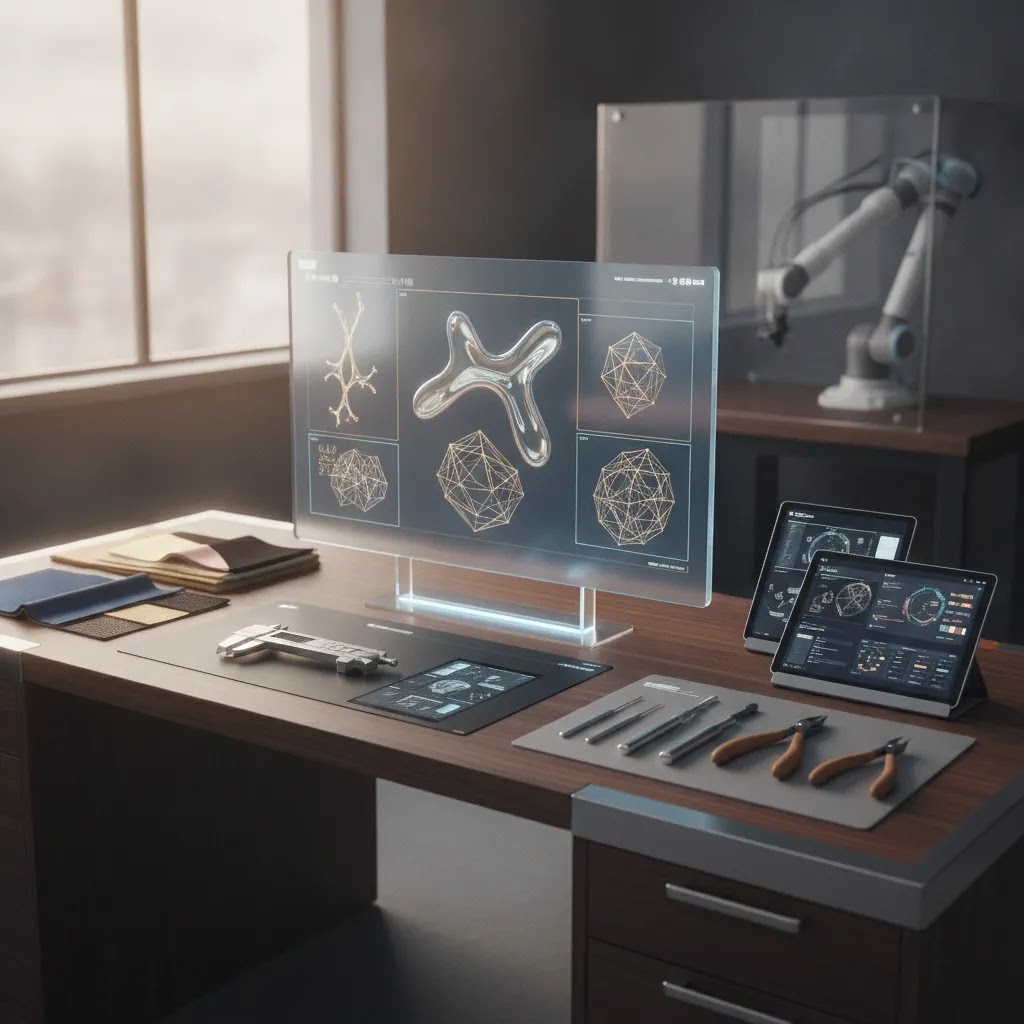
What Future-Focused Jewelry Manufacturing Actually Means
In B2B terms, advanced manufacturing technology is any system that makes a custom jewelry project easier to define, review, revise, and reproduce. That can include digital design tools, file-sharing workflows, structured sample approvals, production tracking methods, or packaging coordination tied to product development.
For a brand founder or retail buyer, the value shows up in fewer avoidable mistakes. A manufacturer that uses clear digital references can usually explain proportions, component relationships, and revision notes with more precision than a process built only on rough sketches and email descriptions.
This matters even more if your collection may grow into private label or wholesale volume. The future of jewelry manufacturing is not one machine. It is a more disciplined chain of decisions, where each approval creates a stronger base for the next production step.
Future Custom Jewelry Manufacturing Advanced Technologies in the Workflow
Most B2B buyers do not need to master software. However, they do need to understand which technology layers affect quality and outcomes.
1. Future custom jewelry manufacturing advanced technologies in 3D design
Digital modeling gives brands a more exact way to translate concepts into production-ready forms. This stage often clarifies dimensions, structure, spacing, and design intent before sampling starts. If your project needs precision or several approval rounds, bespoke 3d jewelry modeling services may be one of the most practical technology investments in the process. You can also review broader 3d jewelry design workflows for added context.
2. Structured sampling workflows
Advanced manufacturing is rarely just about design creation. It also depends on how teams review samples, revise them, and approve them. A strong workflow may separate visual approval, structural review, and production-readiness checks instead of treating sampling as a single yes-or-no event.
3. Shared approval files and version control
One of the least glamorous technologies is also one of the most useful. Disciplined file management protects the project. If a brand team, buyer, and factory reference different versions, delays and disputes become more likely. Therefore, future-ready manufacturers often use named file versions, documented revision points, and traceable approvals.
4. Packaging-linked development planning
As product programs mature, packaging often stops being an afterthought. Development may need to address dimensions, presentation, protection, and fulfillment handling early in the project. Topics such as 3d jewelry box design become relevant when product and packaging must work together operationally, not just visually.
5. Better communication systems across global production
Technology also shapes communication. For international custom projects, visual references, design files, tracked comments, and staged approvals can reduce misunderstandings that might otherwise appear much later during manufacturing or packing.
CAD/CAM and Rapid Prototyping: What “Tech-Enabled” Looks Like in Production
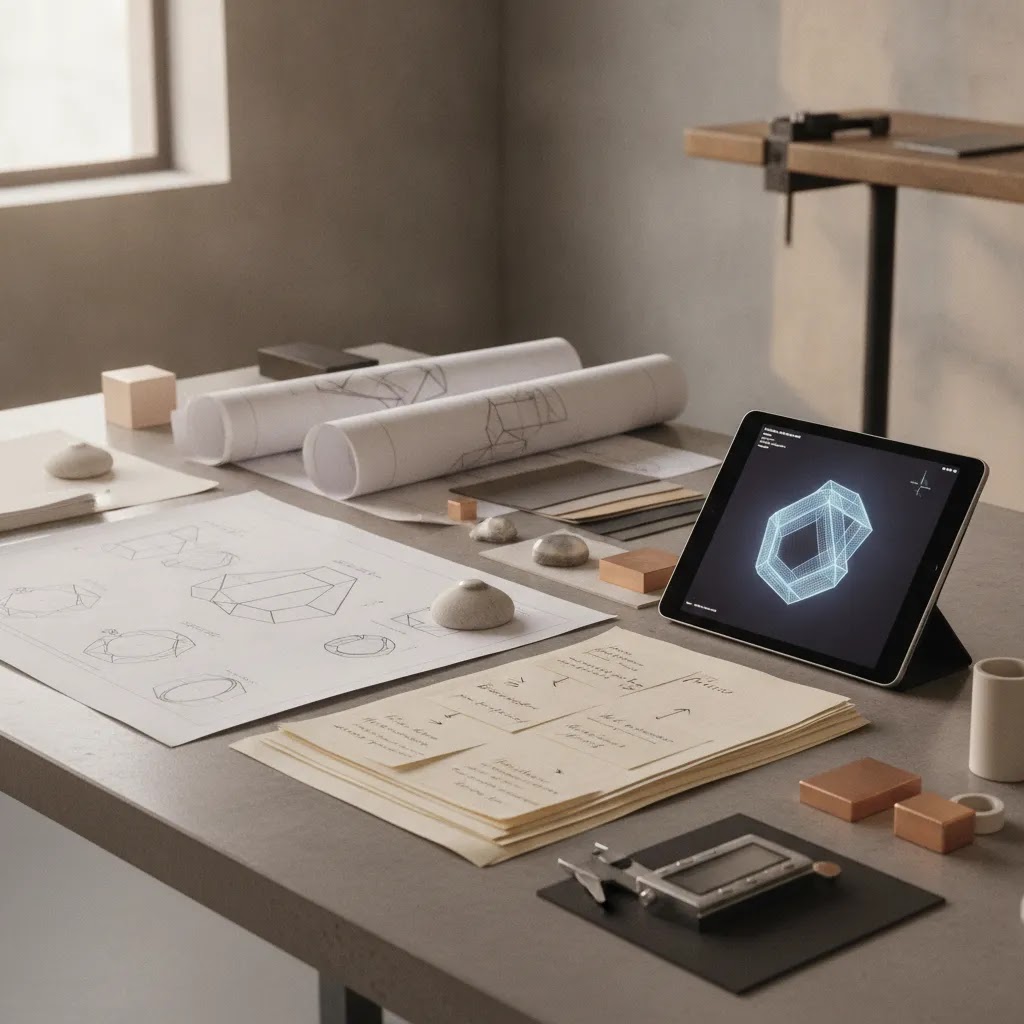
Many suppliers use “CAD/CAM” as shorthand for advanced capability. However, B2B buyers benefit most when they understand what it changes in the workflow. CAD covers the design side, where teams define the piece as a precise digital model. CAM covers manufacturing preparation, where that approved model helps guide prototype creation and production planning.
In practice, CAD/CAM is valuable because it creates a more controlled bridge between creative intent and manufacturing reality. Instead of relying on interpretation from a sketch or reference photo, the project can move forward with defined dimensions, clear geometry, and recorded revisions. That does not remove the need for sampling. Still, it can reduce the number of issues that appear only after teams commit time and budget.
How CAD/CAM supports custom jewelry manufacturing
Rapid prototyping often uses 3D printing or similar methods to validate fit, proportions, and overall construction before a full sample process moves ahead. For a brand, that can help check size relationships, confirm whether a design reads correctly at real scale, and align internal teams on what they are actually making before final approval.
Rapid prototypes do not replace disciplined sampling. A prototype can confirm that the geometry makes sense, but it may not show final finishing, weight feel, durability under wear, or repeatability across a wholesale program. As a result, B2B teams should treat the prototype as a controlled checkpoint, not as a final sign-off substitute.
What buyers should confirm before approval
To protect your approvals, ask for clarity on which files you should receive and what each stage proves. At minimum, you should know which version of the digital model was approved, what measurements and size assumptions the team used, and what changes they made between iterations.
A well-run process will also show how prototype feedback becomes an updated, production-ready package. That way, the team making the final run does not work from an outdated concept file. For a broader view, see how use cad technology faster jewelry prototyping. You can also compare general process stages in the jewelry manufacturing process concept creation.
Why These Technologies Matter to B2B Jewelry Brands
A boutique owner ordering a first private label capsule and an established brand scaling a repeat program may use the same manufacturer. However, they do not face the same risks. Early-stage buyers often need help turning ideas into manufacturable briefs. Growing brands usually care more about repeatability, handoff clarity, and reorder consistency.
Advanced technology supports both situations, but in different ways. For newer brands, it can make custom development easier to understand. For experienced buyers, it can create cleaner documentation and more predictable approvals.
This is especially relevant if your roadmap includes custom fine jewelry, collection expansion, or category testing across different buyer segments. A future-ready manufacturing partner should not only produce pieces. It should also help create a workflow your business can keep using as product complexity grows.
- It may reduce ambiguity between concept and sample.
- It could improve revision efficiency during development.
- It often supports clearer communication across teams and time zones.
- It may make later reorders easier to manage if approvals are documented well.
- It can help a manufacturer and brand discuss trade-offs earlier, before a full run is committed.
Advanced Manufacturing Tech vs Marketing Hype
Not every modern-looking process is commercially meaningful. Some suppliers present technology as proof of quality by itself. That is rarely enough for a serious B2B buyer.
A useful technology stack should answer practical questions:
- Can this system make approval decisions clearer?
- Can it help document revisions in a way both sides can track?
- Will it support smoother scale-up if the first order performs well?
- Does it improve communication, not just presentation?
If the answer is no, the tool may be impressive but commercially secondary. This is where buyers should separate surface-level innovation from process value. A manufacturer does not become more reliable just by using digital tools. Instead, reliability comes from how the team integrates those tools into quoting, briefing, review, sampling, and production control.
AI in Jewelry Design: Where It Helps, Where It Creates Risk for Brands
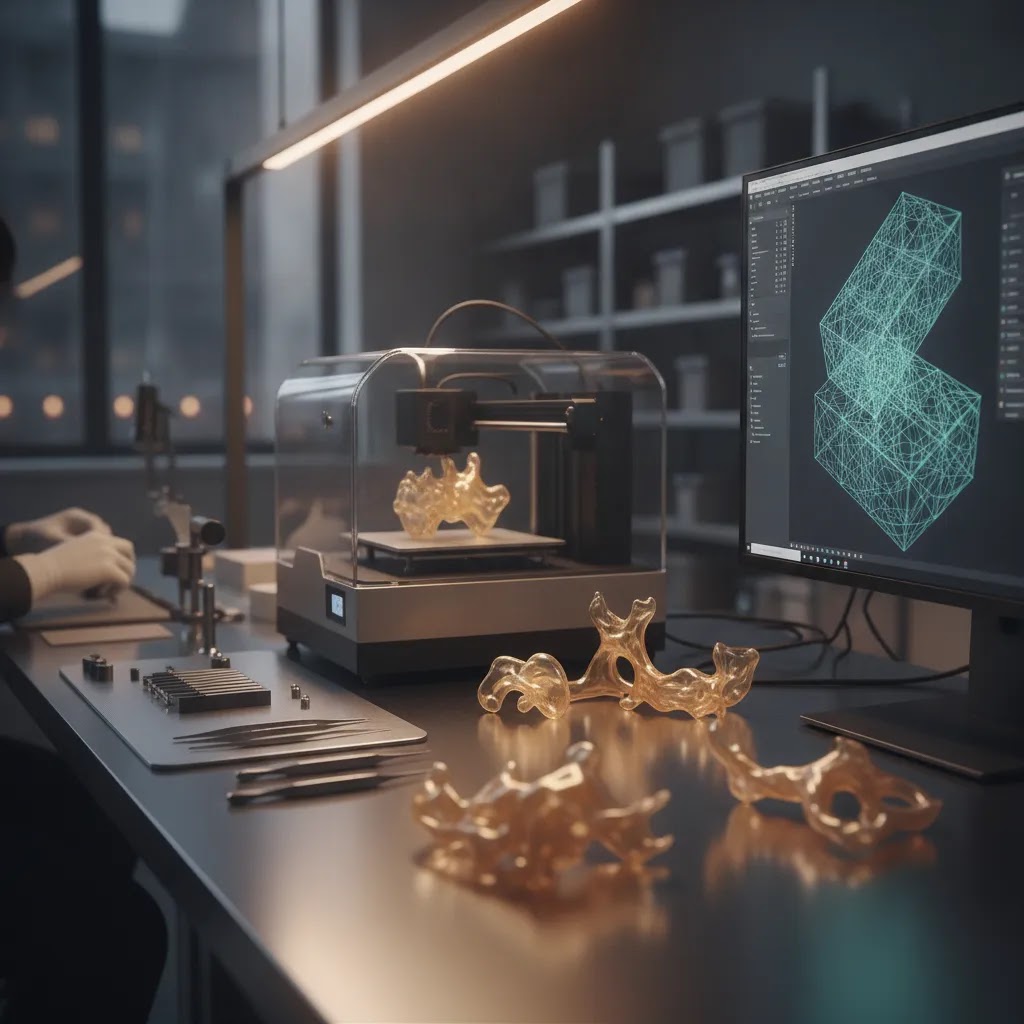
AI is showing up more often in early-stage design work, mostly to support concept ideation and generate quick variations. For a brand team, that can help in the same way mood boards and rapid sketches help. It can speed up internal alignment around themes, silhouettes, and direction before you invest in structured development.
The key is to treat AI output as concept support, not production readiness. AI-generated visuals may not reflect workable construction, real proportions at actual size, or the technical constraints that affect how a piece is built and reproduced. If a manufacturer receives an AI image without a design-to-production translation step, you take on interpretation risk. That risk usually appears during sampling, not at the idea stage.
Brands also need to think carefully about originality and IP. If a concept tool generates something that resembles existing market designs, your brand could inherit avoidable similarity concerns. In B2B terms, the safest approach is to use AI to explore direction, then move into a human-led design process that documents what is original, what references were used, and what specifications define your product.
Use practical evaluation questions to keep the process grounded. Ask how the partner validates manufacturability before sampling begins, how the team documents revisions from one version to the next, and what final ownership and handoff look like for approved files and specifications. A serious manufacturing relationship should make three things clear: which file version is the source of truth, who can authorize changes, and how the team carries those approvals into repeat production.
For general guidance on AI governance and risk, brands can review the NIST AI Risk Management Framework. For design ownership concerns, it is also useful to monitor guidance from the USPTO on artificial intelligence and intellectual property.
Where Future Custom Jewelry Manufacturing Advanced Technologies Appear
Future custom jewelry manufacturing advanced technologies tend to appear at specific decision points, not everywhere at once.
During concept development
Your custom jewelry designer or development team may use digital methods to refine proportions, clarify piece construction, and turn rough ideas into a more reviewable concept.
During custom sample approval
This is often where technology has the strongest business impact. Brands can compare versions, comment on visible changes, and document what is approved before moving forward.
During private label collection building
If you are coordinating multiple SKUs, visual consistency and file discipline start to matter more. That is true whether your line focuses on general jewelry design or a narrower product niche such as custom moissanite jewelry.
During packaging and fulfillment planning
Technology can also support how finished pieces are presented, protected, and prepared for shipping. For brands selling through boutiques or shipping to multiple stockists, that operational detail may matter as much as the design itself.
Workflow Comparison Table
| Workflow stage | Technology or control mentioned | Main business value described |
|---|---|---|
| Concept development | Digital 3D design and model-based development | Clarifies dimensions, structure, spacing, and design intent before sampling |
| Sampling | Structured sampling workflows | Separates visual approval, structural review, and production-readiness checks |
| Approval management | Shared approval files and version control | Reduces delays and disputes caused by different file versions |
| Prototype review | Rapid prototyping, often using 3D printing or similar methods | Validates fit, proportions, and overall construction before full sampling |
| Packaging coordination | Packaging-linked development planning | Aligns presentation, protection, and fulfillment handling early in the project |
| Global communication | Tracked comments, design files, and staged approvals | Reduces misunderstandings across international custom projects |
Manufacturing Methods That Still Matter (Even as Technology Improves)
Digital tools can improve clarity, but most production risk still sits in the physical steps that turn an approved design into a repeatable SKU. If you want to evaluate a manufacturer as a long-term partner, it helps to understand the major production methods at a high level and where delays or defects tend to appear in B2B programs.
Physical production controls still decide outcomes
Casting-based production is common for many custom programs because it can support repeatability once a design is validated. The business risk usually shows up in consistency, especially if your line includes multiple sizes or closely related variations. Ask what the manufacturer considers acceptable variation for critical dimensions and how the team manages rework when a batch does not match the approved reference.
Fabrication and assembly methods also matter, especially when a piece includes multiple components that must align cleanly. Joining steps, such as welding or soldering, often challenge strength and visual cleanliness when fixtures, alignment, or bench execution become inconsistent. A practical question to ask is how the team checks joints and connections during production and what quality checkpoints exist before finishing begins.
How finishing and settings affect repeatability
Finishing is one of the most brand-visible stages. It is also where expectations can become vague if teams do not document them. If your brand sells through retail or wholesale channels, surface consistency can affect returns, customer perception, and reorders. Therefore, confirm what “approved finish” means in measurable terms and whether the manufacturer can repeat that finish across SKUs and future runs using the same reference standard.
If your designs include settings or stone-related work, treat that as a separate risk category with its own checkpoints. The important B2B question is not only whether the first sample looks good. It is whether the setting approach stays repeatable at scale and how the manufacturer inspects that work before packing. Ask what the team checks, when they check it, and how they record issues so the next run improves instead of repeating the same problem.
Advanced technology supports these stages by tightening documentation, reducing guesswork, and keeping revisions traceable. However, it does not eliminate the need for skilled bench work and consistent QC. The stronger the manufacturing partner, the more clearly the team can explain where process control happens, what gets recorded, and how approvals translate into production instructions the floor team can execute consistently.
A Practical B2B Reference Point
Royi Sal Jewelry approaches custom development as a collaborative B2B service rather than a simple order-taking model. The company focuses on custom jewelry design and manufacturing for wholesale and private label clients, with design consultation, manufacturing support, and global shipping included in its broader service offering. That context is useful for brands evaluating technology-enabled partners, because the best systems usually support collaboration instead of replacing it.
Led by Royi Gal, whose background spans both jewelry design and manufacturing, the company reflects the dual perspective many business buyers value. If you are comparing manufacturers, explore how Royi Sal Jewelry structures custom development, how digital design support may fit into the workflow, and whether the team is the right match for your project scope. Readers looking at future-ready partner options can review Royi Sal Jewelry’s custom design and manufacturing approach at royisal.com before starting a project conversation.
How to Evaluate a Technology-Enabled Manufacturing Partner
A supplier can mention advanced tools without offering an advanced process. The distinction matters. These criteria tend to reveal whether the technology is actually useful for your business.
Design capability and translation accuracy
Ask how your concept becomes a working file, sample, or approval package. A capable custom jewelry maker should explain how the team translates visual intent into something manufacturable, not just admired on screen.
Revision control
Clarify how the team captures changes. Are revisions tracked by file version, written comments, or staged approvals? If not, technology may exist in the workflow without protecting you from confusion.
Communication quality
Technology should improve communication, especially for overseas manufacturing relationships. Ask who manages updates, how approvals are shared, and what happens if feedback affects timing or production planning.
Scalability after sampling
A strong prototype stage is useful, but you also need to know whether the process can support a repeat order or wider launch. Ask how the team carries approved specifications into production runs and future reorders.
Operational fit beyond the jewelry piece
If your program includes packaging, fulfillment coordination, or multi-SKU planning, evaluate whether the manufacturer can support those needs as part of the broader workflow rather than leaving them disconnected.
Strengths and Considerations
Strengths
- Advanced tools may make custom jewelry design easier to review before production commitments are made.
- Digital workflows often help brands and manufacturers discuss revisions with more precision.
- Version-based approvals can support stronger documentation for reorders and line expansion.
- Technology-enabled communication may reduce misunderstanding in global B2B manufacturing relationships.
- Connected design, sampling, and packaging planning can improve operational alignment for wholesale programs.
Considerations
- Technology does not remove the need for a clear design brief, realistic expectations, and timely feedback from the client.
- More structured workflows may involve additional review stages, which can feel slower if your team expects instant approvals.
- Not every manufacturer uses advanced tools with the same discipline, so process quality still needs to be evaluated carefully.
- Complex custom programs may still require multiple sample or revision rounds, depending on scope.
Frequently Asked Questions
What is the biggest benefit of advanced technology in custom jewelry manufacturing?
For most B2B buyers, the biggest benefit is clearer decision-making. Advanced tools may help define proportions, document revisions, and support more precise communication before a production run begins. That does not guarantee a perfect result, but it often improves visibility across the design and approval stages.
Does advanced manufacturing technology mean faster production?
Sometimes, but not automatically. Technology may shorten review cycles or reduce confusion, which can help a project move more efficiently. Actual production speed still depends on design complexity, sampling needs, revision rounds, order size, and the manufacturer’s planning capacity.
Should a small jewelry brand care about these technologies?
Yes, especially if the brand is building a custom collection and wants fewer surprises during development. Smaller brands often benefit from clearer visual communication and structured approvals because those systems may reduce costly misunderstandings early in the relationship.
How do I know if a manufacturer is using technology well?
Look at the workflow, not just the software mention. Ask how files are shared, how revisions are tracked, how sample approvals are documented, and how production information is carried forward into repeat orders. Good technology use usually appears in process discipline.
Are advanced tools only relevant for complex designs?
No. They may be especially useful for complex projects, but even simpler collections can benefit from cleaner approvals and better record-keeping. If your business plans to reorder, expand a line, or work across multiple SKUs, those systems often become more valuable over time.
How does this relate to custom jewelry near me searches?
Many buyers start by searching for custom jewelry near me because they want convenience and trust. In B2B manufacturing, location matters less than process clarity, communication quality, and the ability to support custom development reliably across distance.
Can advanced technology replace a skilled custom jewelry designer?
No. Technology may improve visualization and coordination, but it does not replace judgment, manufacturability knowledge, or collaborative interpretation. Strong outcomes usually come from the combination of design expertise, production understanding, and a well-managed workflow.
What should I review before approving a tech-enabled custom project?
Review the latest approved file or sample reference, revision notes, intended specifications, and any packaging or fulfillment requirements that affect the finished program. If your project includes digital modeling, confirm that everyone is working from the same version before moving ahead.
What is the future of the jewelry industry?
For B2B brands, the near-term future is likely to be more process-driven than purely trend-driven. Expect more demand for faster development cycles, clearer documentation, and better reorder consistency across SKUs. Technology will support that shift, but the brands that execute well will still be the ones that define products clearly, approve methodically, and work with manufacturing partners who can control quality at scale.
What is the 2:1:1 rule in jewelry?
The term is used inconsistently, so you should treat it carefully if a supplier presents it as a universal standard. In many production conversations, rules like this are shorthand for proportion balance between key design elements, for example how a center feature relates to supporting features and band width. For a brand, the practical move is to replace vague rules with measurable specs: target dimensions, tolerance expectations, and a clear visual reference for what “balanced” means for your specific SKU.
How much does it cost to make custom jewelry?
It depends on your design complexity, the number of SKUs, sampling and revision rounds, order quantity, and the manufacturer’s workflow requirements. If you want a useful quote, provide a clear brief: references, target sizes, any must-have details, and whether you need prototypes before final samples. The more defined the scope, the more accurate the cost discussion tends to be.
Which AI is best for jewelry design?
There is no single best option because AI tools vary by purpose. Some are better for generating early visual directions, others for quick variation exploration or internal mood boards. For B2B product development, the deciding factor is not the tool name. It is whether your manufacturing partner can translate AI-supported concepts into documented, manufacturable files, with traceable revisions and clear ownership of the final specifications.
Key Takeaways
- Future custom jewelry manufacturing advanced technologies are most valuable when they improve approval clarity, not just presentation.
- Digital design, structured sampling, and version control often matter more than flashy equipment claims.
- B2B buyers should evaluate process discipline, communication quality, and reorder readiness alongside technology use.
- A strong manufacturing partner may use advanced tools to support collaboration, not replace it.
- Technology can help, but outcomes still depend on project scope, revision management, and clear client-manufacturer communication.
Conclusion
The future of custom jewelry manufacturing will likely belong to partners that combine digital capability with practical production discipline. For jewelry brands, boutique owners, and private label founders, that means looking past buzzwords and asking how technology improves the real work of briefing, reviewing, revising, approving, and scaling.
Royi Sal Jewelry offers a collaborative custom design and manufacturing model shaped for B2B clients who need more than a vendor relationship. If you are assessing next-step options, visit royisal.com to explore the company’s process, review its approach to custom development, and contact the team to discuss how your collection could move from concept to a more structured manufacturing workflow.