
How To Get The Most Out Of Your Jewelry Manufacturing Relationship

Why the Relationship Matters More Than a Single Order
A jewelry manufacturing relationship is not just about placing a purchase order. It is a working system that affects design accuracy, sample revisions, production consistency, delivery planning, and future expansion. If the relationship is weak, even a promising design may become expensive to produce, difficult to revise, or hard to scale across future collections.
For B2B buyers, the most valuable manufacturing relationships usually combine craftsmanship, responsiveness, and process clarity. That matters whether you are launching your first capsule collection or managing a broader wholesale jewelry assortment. Strong partnerships tend to improve decision speed because both sides understand the brand goals, target customer, quality standards, and operational constraints.
Royi Sal Jewelry operates as a B2B custom design and manufacturing company serving jewelry businesses, boutiques, and brands. The company is led by Royi Gal, whose background as both a designer and manufacturer supports a practical, collaborative approach to development and production. That type of end-to-end perspective can be useful for brands that need more than a vendor and are looking for a partner who understands both creative intent and manufacturing realities.
Build the Right Foundation Early
The best manufacturing relationships often begin with a strong project setup. If your brief is vague, your production outcome may vary more than you expect. If your internal decision-making is slow, sample rounds may stretch longer than planned. Early structure helps both sides work more efficiently.
Your first goal is to define what success looks like. That may include visual direction, target audience, launch timing, reorder potential, and the role each piece plays within your broader jewelry business. A manufacturer can usually support you more effectively when they understand whether you are testing a concept, building a private label line, or preparing for ongoing wholesale production.
A strong foundation often includes:
- A clear design brief with sketches, references, dimensions, and intended use
- Defined approval roles on your side so feedback is consolidated
- Realistic launch timing that allows for sampling and revisions
- An understanding that custom development may require iteration before production is ready
- Agreement on how updates, sample feedback, and approvals will be handled
If you are still refining your concept, it may help to review the planning side of design your own jewelry to sell before you lock in manufacturing decisions. Better front-end thinking often leads to fewer production-stage surprises.
OEM vs. ODM vs. Private Label, Choosing the Right Production Model
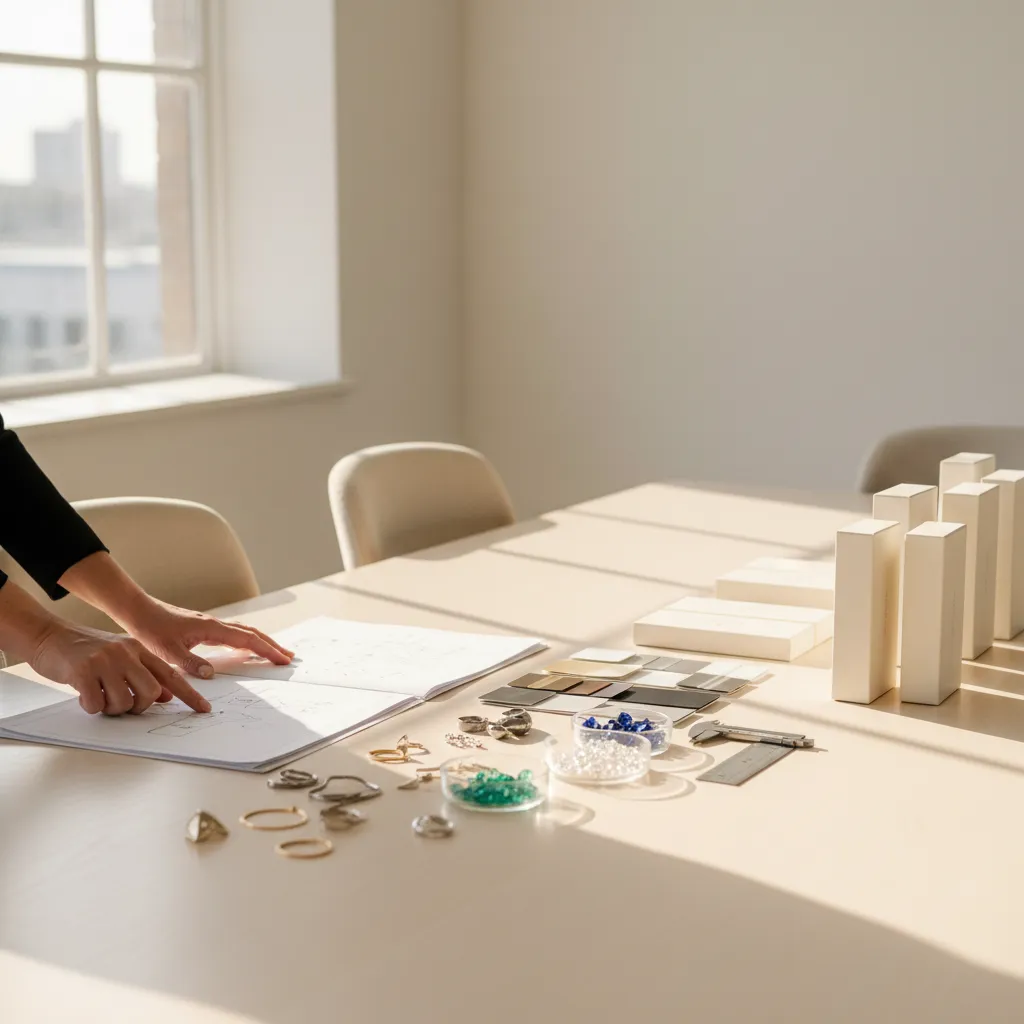
A factor that brand owners often underestimate is that the manufacturing relationship usually runs smoother when you are clear about the production model from the start. Terms like OEM, ODM, and private label get used interchangeably, but they describe different workflows and different expectations around control, revision cycles, and who owns the design details.
OEM usually means you bring the design direction and specifications, and the manufacturer produces to your requirements. In practice, that could mean you provide CAD files or technical drawings, a defined size range, target dimensions, functional requirements, and a clear spec pack that the factory can follow. This model tends to fit brands that care about differentiation and repeatability, but it also puts more responsibility on you to make decisions and approve details early.
ODM usually means the manufacturer develops the product based on their existing design capabilities, established production methods, or base models, then adjusts the outcome to match your brand direction. In this model, your inputs are often more about visual direction, market positioning, and acceptance criteria than fully-engineered files. This can be a faster path for some brands, but you still need to define what “on brand” means and what changes are required before you can approve the piece for your collection.
Private label is a branding approach that can sit on top of either model, depending on who owns the design and specs. Some private label programs are closer to ODM, where the manufacturer offers a starting point and you apply brand decisions like design refinements, packaging expectations, labeling requirements, and collection structure. Other private label projects look more like OEM, where you own the design and the manufacturer supports custom development and production under your brand name.
When choosing the right model, your decision should be based on operational reality, not just ambition. If you need maximum control and a strong point of difference, OEM-style development can be the right direction, but you should be ready to provide detailed inputs and handle approvals quickly. If speed to market matters more and you are comfortable building from a manufacturer’s base capabilities, ODM may be a better fit, as long as you are clear about what must change and what must stay consistent.
From a production standpoint, the model you choose also affects revision expectations and design protection conversations. In OEM, version control is usually more file-driven, and changes should be reflected in updated drawings and clear sign-offs. In ODM, it is often more about defining acceptance criteria, documenting changes against samples, and agreeing on what will be repeatable in production. Either way, you will get more out of the relationship when both sides agree early on what information is required, how approvals are granted, and how updates will be tracked across the development cycle.
Create a Communication System That Works
Many manufacturing problems are communication problems in disguise. A supplier may not be unreliable in a general sense, but the process may still break down if requirements are unclear, feedback arrives in fragments, or approval points are not documented.
The most productive relationships usually rely on communication habits that are simple and repeatable. You want one source of truth for product notes, one person or team on your side consolidating changes, and one agreed process for confirming revisions before the next sample or production stage begins.
Useful communication practices include:
- Send feedback in one organized round instead of scattered messages
- Use visuals wherever possible, especially for design adjustments
- Confirm version changes in writing so both sides are aligned
- Separate must-fix issues from nice-to-have changes
- Ask early about production constraints that may affect the design
This matters even more if you are working with an overseas jewelry factory where time zones, language differences, and revision cycles may influence lead times. Brands that communicate clearly tend to get more accurate samples and more stable production outcomes.
Some brands also overestimate what can be finalized in a single round. In custom jewelry manufacturing, revisions are common. They are not necessarily a red flag. What matters is whether revisions are tracked clearly and whether the manufacturer responds in a structured, solution-oriented way.
From Concept to Repeatable Production, Key Manufacturing Stages to Align On
A common source of friction: many relationship issues show up because the brand and the manufacturer are approving different things at different times. The simplest fix is to align on the stages of work and set clear approval gates so you both know what is locked and what is still open for iteration.
A typical custom development flow often includes design development, CAD or technical drawings, prototyping, sampling rounds, production approval, production, finishing, quality control, packing, and shipping. Not every project uses the same terminology, and some steps may be combined, but the idea is consistent: development decisions should happen before production decisions.
In early design development, you are aligning on the concept: proportions, intended use, and the visual direction that makes the piece fit your collection. Once CAD or technical drawings are involved, you should start locking measurable details like dimensions, thickness, setting or assembly requirements, and any functional constraints that affect wearability and durability. This stage is also where small changes can have large downstream impact, so you want feedback to be consolidated and documented.
Prototyping and sampling are where most brands discover what needs refinement to make the design repeatable. Visual priorities may remain the same, but you might adjust things like scale, edge treatment, how components connect, or how the piece sits when worn. In practice, sampling is not just about confirming that the piece looks good. It is about proving that the piece can be produced consistently within your quality expectations.
Before you approve production, it helps to lock the final version in a way that is difficult to misinterpret later. In practice, that means keeping a clear version history, labeling each sample iteration, and referencing the approved version in writing. Photo markups, numbered change lists, and a simple change log can prevent “scope creep” where new ideas keep entering the process without a clear decision on cost, timing, or feasibility.
Once production begins, changes become harder to implement without disruption. That is why experienced buyers treat production approval as a gate, not a casual checkpoint. If you define what is being approved, what tolerances are acceptable, and how finishing and QC will be assessed, you are more likely to get consistent goods and fewer avoidable misunderstandings.
Manage Quality Before Production Starts
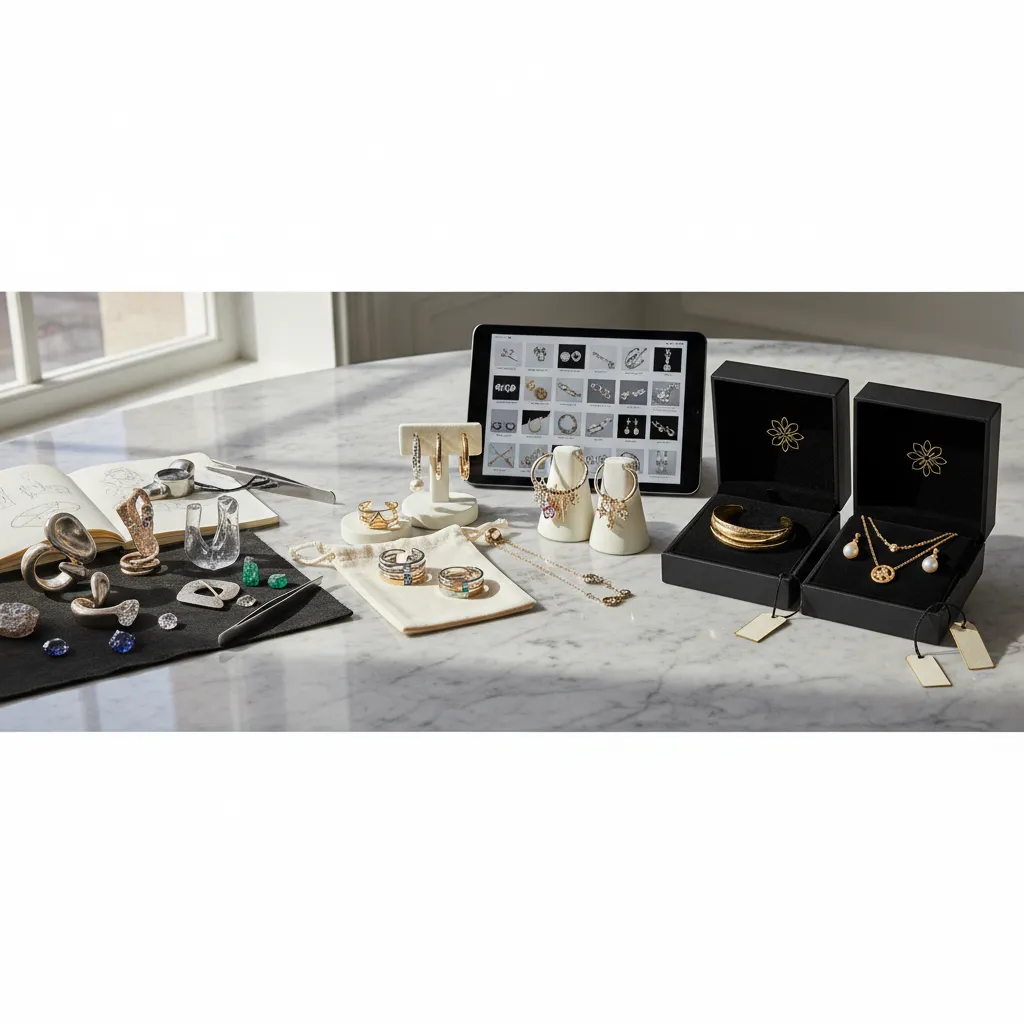
One of the fastest ways to damage a manufacturing relationship is to treat quality control as something that happens only after goods are finished. Quality should be discussed during development, tested during sampling, and reviewed again before the production run is approved.
Brands often focus heavily on aesthetics in the first conversations. That is understandable, but production quality is just as much about repeatability. A piece that looks good in a first sample may still need refinement before it can be manufactured consistently at scale.
Your quality planning should cover:
- What the approved sample represents and what tolerances are acceptable
- Which details are non-negotiable for the brand
- How finished goods will be reviewed before shipment
- How defects, inconsistencies, or revision requests will be documented
- Whether packaging, labeling, or fulfillment expectations are part of the project scope
If you are evaluating different production paths, it also helps to separate what should be outsourced to a professional manufacturer from what is better kept in-house. Founders asking can i gold plate my own jewelry are often really trying to determine where internal capability ends and specialized production support should begin. That decision can affect quality consistency and operational risk.
Plan for Repeat Orders and Growth
A manufacturing relationship becomes more valuable once it supports repeatability. Your first order may be a test, but your long-term success depends on whether the partner can maintain consistency as your line grows. That includes the ability to reference past approvals, reproduce established designs, and manage future production runs without rebuilding the process every time.
Brands that scale more effectively often do four things well. First, they keep organized records of approved samples and production notes. Second, they treat post-order reviews as part of the process, not as an afterthought. Third, they forecast demand as early as possible so manufacturing planning has more room. Fourth, they choose a partner with a service model that supports both development and ongoing production.
Royi Sal Jewelry positions its service around custom jewelry design and manufacturing, collaborative design consultation, and global shipping and order fulfillment for B2B clients. For growing brands, that kind of end-to-end structure may help reduce handoff problems that sometimes occur when design, production, and fulfillment are managed through separate providers.
It may also help to keep learning through broader resources in Jewelry Manufacturing and Jewelry Design as your operational needs become more complex.
Scaling to Larger Runs, Capacity, Tooling, and Lead Time Planning
An important operational shift: “mass production” is not a fixed number. It becomes relevant when your business starts relying on repeat orders and wholesale commitments where consistency matters as much as design. If you are seeing steady reorders, retail partners requesting replenishment windows, or internal pressure because every launch feels like a rush, you are probably moving out of small-batch decision-making and into a stage where production planning needs more structure.
One operational signal is when your team is spending too much time re-explaining past decisions. If the manufacturer has to rebuild context each time, or if your internal files and approvals are scattered, you risk inconsistency from one run to the next. Another signal is when you start noticing variation that was acceptable in early sampling but becomes a problem once units ship at scale. As volumes grow, small deviations can create a noticeable brand impact.
Experienced buyers tend to ask practical capacity questions early, not as a challenge, but as a planning tool. How far ahead does production need to be scheduled? How are repeat orders queued relative to new development? What information is required to reproduce a past approved version without drift? How are finishing, QC, and packing handled when volumes increase? The goal is not to demand perfect certainty, it is to understand how the manufacturer plans work and what you need to provide to keep output stable.
Tooling and process setup can also become more important as you scale. Some designs may require dedicated production steps or fixtures to maintain consistency, and it is better to discuss those realities before you promise delivery windows to retailers. From a production standpoint, planning is often a mix of realistic forecasting and disciplined reorder timing. If you align purchase orders with your launch calendar, leave buffer time for QC and logistics, and avoid last-minute changes after approvals, you reduce rush decisions that can strain the relationship and introduce avoidable risk.
Scaling is also where a partnership mindset matters. If your manufacturer understands that you are building a line, not chasing one-off projects, you can work together on repeatability: tightening documentation, improving version control, and setting reorder routines that support growth without sacrificing quality.
A Collaborative Manufacturing Partner Can Improve Results
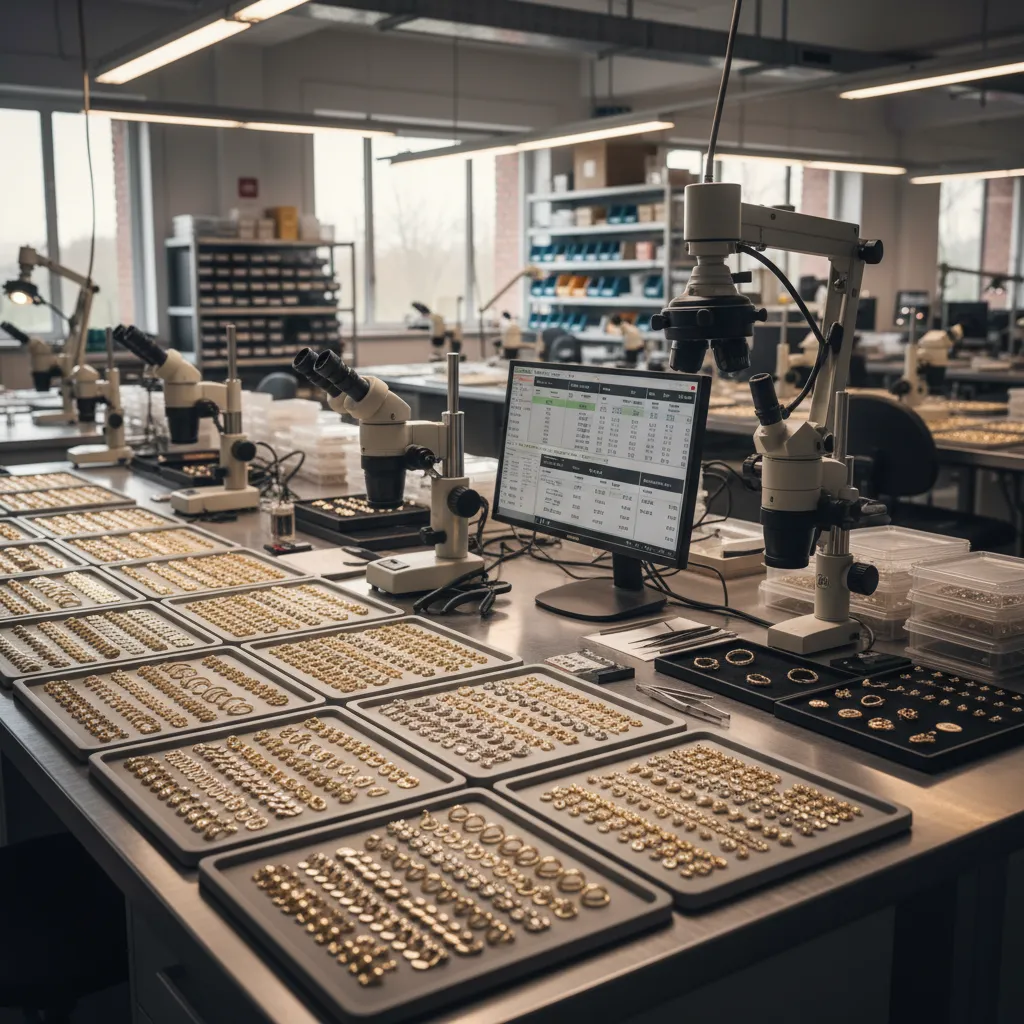
For many brands, the goal is not just to find a manufacturer that can produce jewelry. The goal is to find a partner that can interpret a design brief, communicate clearly, and support the full path from concept to production. Royi Sal Jewelry is structured around that collaborative model, serving boutiques, brands, and entrepreneurs that need custom jewelry development and wholesale manufacturing support.
Because the company is led by Royi Gal, whose background spans both design and manufacturing, the business is positioned to understand the commercial side of jewelry development as well as the creative side. That matters for clients who need practical guidance on how to turn an idea into a production-ready line without treating manufacturing like a simple retail transaction.
If you are comparing partners, look for signs of process discipline, responsiveness, and willingness to work through revisions in a clear and professional way. If you want to explore how Royi Sal Jewelry approaches custom development and manufacturing, visit royisal.com and contact the team to discuss your brief, timeline, and business goals.
How to Evaluate Your Options
Not every jewelry manufacturing company will be the right fit for your brand. A productive evaluation should go beyond unit cost and focus on how the partner performs across the areas that usually affect long-term success.
1. Design capability and development support
If your concept still needs refinement, you may need a manufacturer that can collaborate during design development, not just execute a finished file. This is especially relevant in custom jewelry manufacturing, where revisions and technical adjustments are often part of the process.
2. Quality consistency and craftsmanship
Ask how approvals are handled, how production aligns to samples, and how issues are reviewed before shipment. Quality is not just about appearance. It is about consistency across a production run and across repeat orders.
3. Communication and reliability
Reliable communication can prevent many avoidable delays. Pay attention to whether questions are answered directly, whether project stages are explained clearly, and whether feedback loops feel organized or chaotic.
4. Order flexibility and business fit
Your ideal partner should fit your stage of growth. A large-scale supplier may not be ideal for a brand still validating product-market fit. A smaller operation may be collaborative but less suited for future volume. You need alignment between your current needs and your growth path.
5. Fulfillment and global support
If your business serves multiple markets, operational support matters. Manufacturing, shipping, and fulfillment planning can affect launch timing, cash flow, and customer experience. A globally capable B2B partner may offer more stability as you expand.
A useful shortlist often includes manufacturers that can explain their process clearly, respond well to detailed briefs, and show they understand the realities of a growing private label or wholesale brand.
Strengths and Considerations
Strengths
- A strong manufacturing relationship may improve sample accuracy because the partner learns your brand standards over time.
- Consistent communication can reduce preventable revisions, missed assumptions, and production misunderstandings.
- A collaborative partner may help you refine designs so they are better suited for repeatable production.
- Long-term relationships often support smoother reorder planning and more efficient collection expansion.
- Working with a manufacturer that understands both design and production can help bridge creative goals and operational realities.
Considerations
- Custom manufacturing usually requires patience during sampling, especially for new designs or first-time brand founders.
- Misalignment inside your own team may slow approvals and create avoidable back-and-forth with the manufacturer.
- Not every design concept will translate directly into efficient production without changes or technical compromise.
- Lead times, minimum order quantities, and fulfillment details may vary significantly depending on project scope.
Frequently Asked Questions
What is the biggest mistake brands make with a jewelry manufacturer?
The most common mistake is starting production conversations with an incomplete brief. If specifications, references, and approval roles are unclear, the project may require extra sampling rounds and slower decisions. Brands usually get better results when they define goals, product details, and internal sign-off responsibilities before development starts.
How detailed should a custom jewelry brief be?
It should be detailed enough that the manufacturer understands the design intent, expected quality level, and business purpose of the collection. Visual references, dimensions, target launch timing, and notes on must-have features are usually helpful. A stronger brief often leads to clearer feedback, better sample alignment, and fewer preventable revisions.
Should I choose a manufacturer based mainly on price?
Price matters, but it should not be the only decision factor. Lower pricing may not translate into better overall value if communication is poor, quality is inconsistent, or revisions become expensive in time and lost sales. Most B2B buyers should evaluate craftsmanship, design support, reliability, and production fit alongside cost.
How can I tell if a manufacturer is a long-term fit?
Look at how the company handles early conversations. A good long-term fit will usually ask practical questions, explain process stages clearly, and respond constructively to feedback. Strong fit is less about sales language and more about whether the working style supports your collection plans, growth goals, and quality expectations.
Are revisions during sampling a bad sign?
Not necessarily. In many cases, revisions are a normal part of custom jewelry development. The key issue is whether revisions are handled in a structured way. If changes are documented clearly and the manufacturer communicates well about what can be adjusted, the process may still be healthy and productive.
What should I ask before placing a production order?
You should confirm what sample version has been approved, what the production scope includes, how quality will be checked, and what communication process applies if issues arise. It is also helpful to clarify fulfillment expectations and any operational steps that affect launch timing, especially for wholesale or private label orders.
How do I improve quality consistency across repeat orders?
Keep organized records of approved samples, feedback history, and any production notes tied to previous runs. Repeatability improves when both sides can reference the same standards. Brands that document changes carefully and review post-order outcomes often build stronger consistency over time.
Is overseas jewelry manufacturing always harder to manage?
Not always, but it may require more discipline. Time zones, communication timing, and logistics can add complexity. A clear briefing process, consolidated feedback, and realistic planning usually make a major difference. Trust is built through process reliability, transparency, and consistency rather than location alone.
How does Royi Sal Jewelry fit into this process?
Royi Sal Jewelry serves B2B clients through custom jewelry design and manufacturing, collaborative design consultation, and global shipping and fulfillment support. The company’s positioning as a partnership-focused manufacturer may be especially relevant for brands that want guidance across both development and production rather than a simple transactional supplier relationship.
What is the 2:1:1 rule for jewelry?
The 2:1:1 rule is often used by retailers and brand owners as a simple buying and assortment guideline. It usually means carrying a larger share of proven, repeatable bestsellers, supported by a smaller share of seasonal or trend-driven pieces, plus a smaller share of statement or experimental designs. The exact ratio varies by brand, but the business idea is to balance reliability with innovation so your manufacturing plan is not built entirely on untested styles.
How to make your jewelry business stand out?
Standing out is usually less about one design detail and more about building a repeatable point of view that your manufacturer can execute consistently. That could include a recognizable design language across a collection, disciplined finishing and QC standards, and a consistent fit and sizing approach across product families. Many brands also stand out by being easy to reorder and dependable for wholesale partners, which ties back to documentation, stable production files, and clear approval history.
How to get into jewellery manufacturing?
From a brand perspective, getting into jewelry manufacturing usually starts with defining whether you want to develop original designs or work from an existing production base, then preparing a brief that a manufacturer can execute. In practice, you will typically need visual references, target dimensions, and clarity on your intended order approach, whether you are testing a capsule or planning ongoing wholesale. If you are new to manufacturing, a collaborative partner can help translate design intent into production-ready decisions through structured sampling and clear approvals.
How to get the most out of your jewelry?
For business owners, getting the most out of your jewelry usually means maximizing the commercial value of each approved design. That often comes from designing with repeatability in mind, documenting approvals so reorders stay consistent, and planning collections as systems rather than one-off pieces. If you treat each style as an asset with a clear version history, defined QC expectations, and a predictable reorder pathway, your manufacturing relationship tends to become more efficient over time.
Key Takeaways
- The best jewelry manufacturing relationships are built on clear briefs, structured feedback, and realistic expectations.
- Quality management should start during development, not after production is complete.
- Communication systems matter as much as craftsmanship when you are evaluating a manufacturing partner.
- Long-term value often comes from repeatability, reliability, and alignment with your growth stage.
- A collaborative B2B partner may help you move from design concept to scalable production with fewer avoidable setbacks.
Conclusion
Getting the most out of your jewelry manufacturing relationship usually depends less on finding a perfect supplier and more on building a disciplined, collaborative working process. Brands that communicate clearly, approve carefully, and plan for repeatability often create stronger results over time. The right partner should understand that manufacturing jewelry for a growing brand involves both creative development and operational follow-through. Royi Sal Jewelry approaches this as a B2B collaboration, combining custom jewelry design and manufacturing with consultation and global fulfillment support. If you are reviewing manufacturers for an upcoming collection, visit royisal.com to learn more about the process and contact the team to discuss your design brief, business goals, and production requirements.