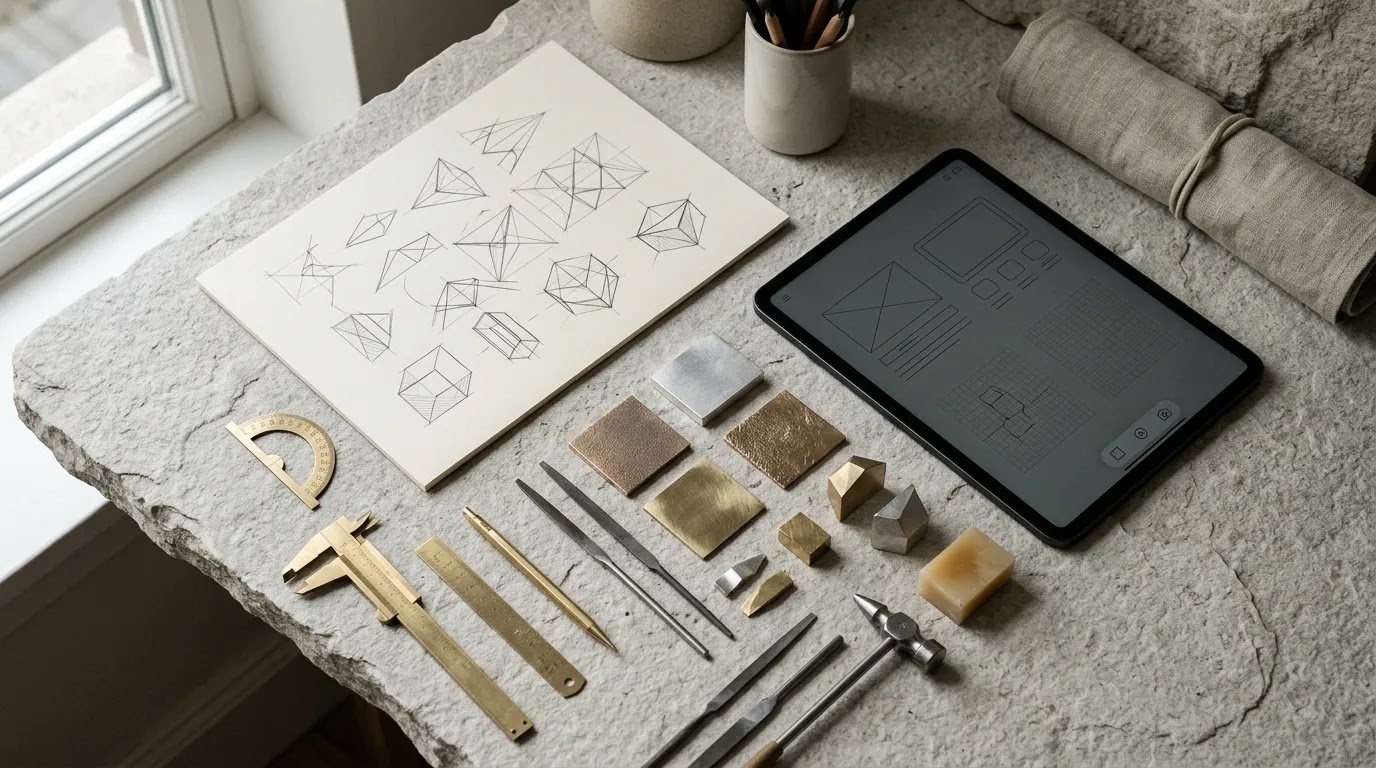
Innovation unbound pushing boundaries jewelry design production advanced technologies helps jewelry brands turn ambitious concepts into manufacturable collections through digital design, 3D printing, clear approvals, and experienced production judgment. For B2B buyers, the value is practical: clearer decisions between the brief, sampling, and the final production run. Technology helps teams test proportions early and document each choice, but it cannot replace a clear brief or close collaboration.
What Innovation Unbound Means for Jewelry Brands
In jewelry manufacturing, innovation unbound pushing boundaries jewelry design production advanced technologies is a working philosophy: teams explore design ideas broadly, then assess them against production realities before committing to a full order. It connects creative direction with the systems that make a collection repeatable, reviewable, and commercially usable.
For example, a founder may begin with a visual reference, a hand sketch, or a set of jewelry design ideas. The development team then needs to translate that direction into information a manufacturer can interpret consistently. This can include dimensions, visual references, version-controlled design files, approval notes, and prototype feedback. The broader role of custom jewelry manufacturers is to help connect those decisions to a feasible production path.
Advanced technologies are useful because they can make details visible earlier. They may support better review of form, proportion, component relationships, and presentation concepts before a brand commits further resources. They do not make complex work effortless. A highly original design can still require revisions, additional sampling, and close communication between the brand and manufacturer.
Brands making material or product claims should also review the FTC Jewelry Guides alongside their own product documentation.
Innovation Unbound Pushing Boundaries Jewelry Development
Digital design interpretation
Digital design tools can turn a broad concept into a more precise representation for review. A 3D jewelry design workflow may help a brand assess proportions and structure before producing a physical sample. It also gives stakeholders a clearer basis for feedback than an informal description alone.
CAD jewelry design and version control
CAD jewelry design is often most valuable as a communication and documentation discipline. Each revision should have a clear file name, date, and approval status. Without that control, a brand risks approving one version while production references another. Digital tools create value only if the project team maintains one recognized source of truth.
Jewelry prototyping and sample review
A digital representation is not the same as a finished piece. Jewelry prototyping creates a practical checkpoint where a brand can review physical scale, wearability considerations, finish expectations, and overall visual balance. Sample feedback should be specific, recorded, and connected to the relevant design version.
AI-supported ideation
AI jewelry design tools may help teams generate visual directions, organize references, or explore early concept variations. Their appropriate role is usually ideation, not unverified production instruction. A concept image can omit functional details or imply shapes that may be difficult to manufacture consistently. Human design and manufacturing teams must review every design before approval.
Presentation and product-system planning
Innovation can extend beyond the jewelry itself. If presentation is part of the brand brief, teams may consider how packaging supports the collection’s identity and operational needs. A separate 3D jewelry box design process can help evaluate dimensions and presentation structure before packaging decisions move forward.
Development glossary
-
CAD: Computer-aided design used to create and refine a detailed digital model.
-
Prototype: A preliminary physical sample used to assess a design before a production run.
-
Revision control: A system that labels and tracks the design file and feedback set the team currently approves.
-
Production feasibility: Whether the manufacturer can reasonably make a design with the expected level of consistency for the intended order.
Innovation Unbound: From Digital Model to Prototype
After the team approves a CAD file, the project moves from a digital instruction to a physical development stage. Depending on the design and manufacturing method, the team may use the digital model to create a physical model through 3D printing or another casting-oriented preparation process. This model gives the development team a tangible reference before final production planning begins.
Digital precision supports this transition, but it does not remove the need for physical evaluation. A screen can show dimensions and overall geometry, while a prototype allows the brand and manufacturer to assess actual scale, construction relationships, visual details, and how closely connected components work together. Small adjustments that appear minor in a file may have a more noticeable effect in the physical piece.
The prototype review should connect directly to the approved CAD version and documented feedback. If the team needs changes, it can update the design information before finalizing production instructions. This stage helps a brand confirm that the concept aligns visually with the brief and provides enough definition for sampling decisions and production planning.
Why Boundary-Pushing Development Matters
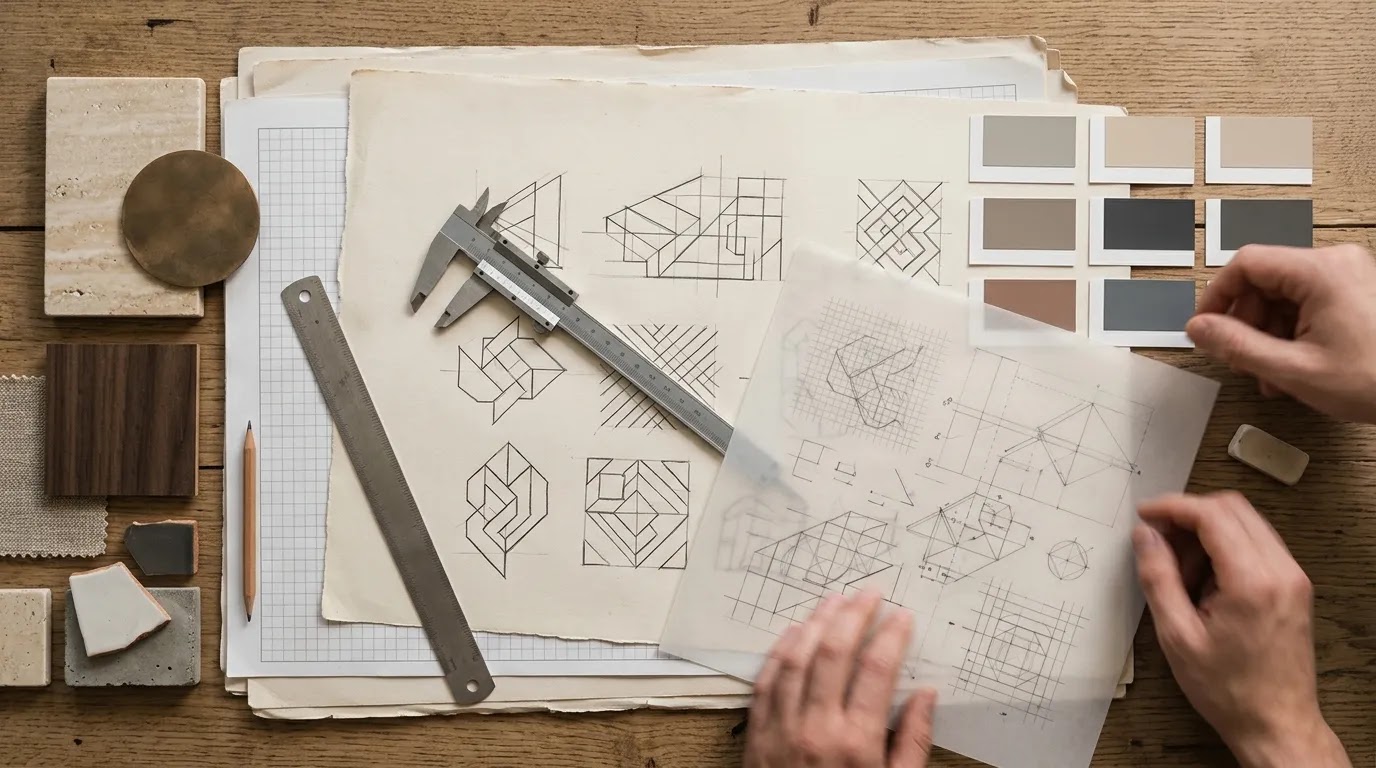
A distinctive collection can create commercial differentiation, but only if the production team can understand and repeat the intended result. Advanced development methods may reduce ambiguity before the project reaches the most consequential stages of sampling and production planning.
-
They can give brand founders a more concrete way to approve proportions and visual priorities.
-
They may reveal missing details in a custom design brief before those omissions affect a sample.
-
They can help separate concept exploration from approved production information.
-
They may support more organized communication among founders, designers, buyers, and manufacturing contacts.
-
They can make future collection extensions easier to discuss because earlier decisions are documented.
The commercial question is not whether a supplier uses the newest terminology. Ask whether its process creates meaningful checkpoints. You should be able to identify who reviews the design, how feedback is recorded, what happens after a revision, and when a sample is needed before moving toward a production run.
Consider a boutique owner who arrives with a rough sketch and a vision but no clear path to production. This is precisely where Royi Sal Jewelry steps in, treating each project as a genuine partnership rather than a simple transaction between client and vendor. Royi Gal, who brings hands-on experience in both design and manufacturing, guides brands, boutiques, and private label businesses through the technical realities of bringing custom pieces to life. The firm understands that translating an ambitious concept into a finished product demands straightforward dialogue and grounded, practical assessment at every stage. Businesses weighing their options are encouraged to review the company’s custom jewelry design services online, gaining insight into how a well-organized design conversation typically unfolds from the very first step.
Innovation Unbound for Complex Jewelry Concepts
Complexity should be reviewed early rather than treated as a problem to solve after a sample is made. Intricate forms, moving components, fine details, and closely connected elements can require additional attention because each feature affects how a design is developed and repeated across a production run.
A manufacturer can review the concept alongside the intended production scale and identify areas that may need refinement. The purpose is not to remove the collection’s creative character. It is to clarify where dimensions, connections, component spacing, or construction details may need adjustment so the manufacturer can produce the approved result with greater consistency.
Creative ambition and production feasibility should be assessed together. Royi Gal’s experience as both a designer and manufacturer reflects why this conversation is valuable during development. A brand can protect the central visual idea while receiving practical feedback before revisions become more difficult to manage. Early review may also help the project team decide whether further sampling or a more detailed approval stage is appropriate.
Advanced Methods vs. Technology for Technology’s Sake
Not every digital feature improves a jewelry project. A useful technology decision should solve a real development problem, such as uncertainty around scale, incomplete approval records, or the need to communicate a concept across locations.
| Approach | Potential Business Value | Risk to Manage |
|---|---|---|
| Digital model review | May clarify overall form and proportion earlier | Screen views may not fully represent a physical sample |
| AI-assisted concept generation | May broaden early creative exploration | Generated visuals may not contain production-ready details |
| Physical prototype review | Supports practical approval of the developed design | Sampling can add time and requires focused feedback |
| Version-controlled project files | Can reduce confusion about the approved direction | Requires discipline from every decision-maker |
A productive evaluation starts with a plain business question: what uncertainty are you trying to reduce? If the answer is unclear, technology may add another layer to manage rather than improve the project. If the answer is specific, such as confirming a complex silhouette before sampling, the process may be worth the additional coordination.
Choosing Digital Tools Based on the Project Brief
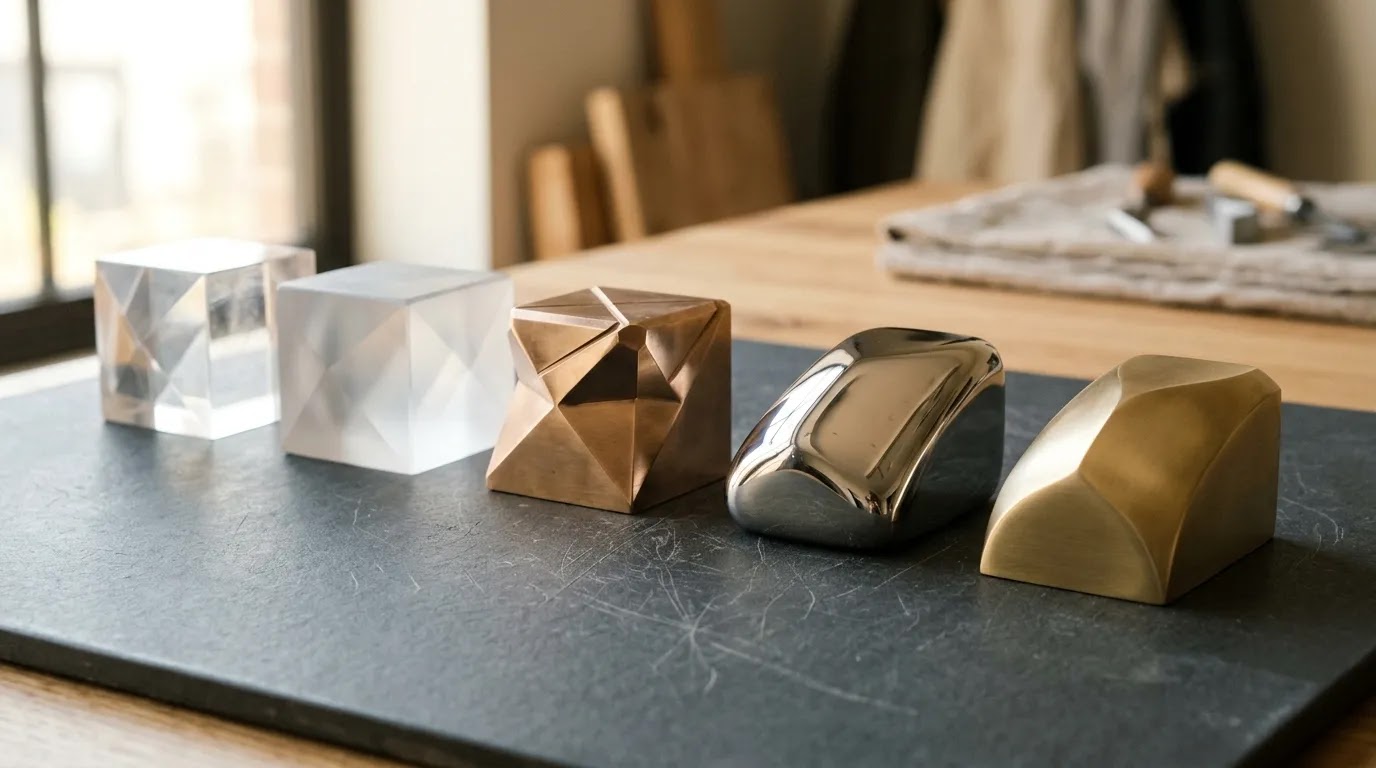
Brands do not need to select CAD software or production technology independently before contacting a manufacturer. The more useful starting point is defining the design problem the development process needs to solve. A clear brief allows the design and manufacturing team to determine which type of digital work is relevant to the project.
Useful factors include the complexity of the design, the number of planned variations, the stakeholders who need to approve the direction, expected sampling needs, and the intended production scale. A single concept with a simple approval path may require a different process from a collection with several related styles, multiple decision-makers, and plans for future extensions.
Early visual exploration tools can help organize references and test broad design directions. Detailed technical design tools have a different role: they prepare a selected concept for manufacturing review by defining form, dimensions, and component relationships more precisely. The brand’s responsibility is to communicate the commercial and creative requirements clearly, while the development process should match the level of detail the project actually requires.
Where Brands Encounter These Methods
You are most likely to encounter advanced design and production methods when launching a new private label collection, translating a concept that has not yet been manufactured, updating an established assortment, or coordinating a project across multiple stakeholders. They are especially relevant where original visual language is central to the brand rather than an afterthought.
For a boutique buyer, the benefit may be a more orderly approval process before committing to a wholesale assortment. For a fashion brand manager, it may be a clearer record of collection decisions across teams. A first-time founder may benefit by learning what information a manufacturer needs before the project can move forward.
Advanced development is also relevant to packaging and presentation, although jewelry and packaging should be evaluated as connected but separate workstreams. A brand should confirm that each part of the project supports the channel where it will be sold, shipped, displayed, or fulfilled.
Strengths and Considerations
Strengths
-
Digital review may help brands identify proportion or design-direction concerns before a physical sample is approved.
-
Documented files and revision histories can improve accountability across a multi-person project team.
-
Structured prototyping gives business buyers a practical point to assess whether the developed concept aligns with their brief.
-
Advanced methods can support more informed conversations with overseas manufacturing partners where direct, in-person review may not be possible.
-
Clear development records may be useful when a successful style is extended into future collection variations.
Considerations
-
Digital models and AI-generated images should not be treated as automatic proof that a design is ready for production.
-
Complex concepts may require additional feedback rounds, sampling, and internal sign-off before production planning can proceed.
-
Technology does not correct a vague brief. Brands still need to define priorities, intended use, acceptable variation, and approval authority.
-
More files and visualization options can create confusion if the project lacks disciplined version control.
Frequently Asked Questions
Does advanced jewelry technology replace physical sampling?
No. Digital design and visualization may help a team reach a better preliminary direction, but physical sampling remains an important review stage for many custom projects. A prototype can expose differences between a screen-based impression and the actual object. The sample review should confirm the aspects of the design that matter most to the brand before a production run is planned.
Can AI jewelry design be used for a private label collection?
When a brand is still weighing different aesthetic directions or gathering visual inspiration, AI-generated imagery can serve as a helpful starting point. What it cannot do is stand in for a full production blueprint. Manufacturers typically require far more precision, detailed specifications, structured review stages, and clear design clarification than any AI-rendered concept can offer on its own. The most effective approach treats these images as a launching pad, with the actual design refined and finalized through a proper, collaborative development process.
What should a brand prepare before discussing advanced design options?
Prepare a concise design brief that explains the collection purpose, visual references, target customer channel, priorities, and decision-makers. Identify which details are essential and which remain open to refinement. If you have sketches, reference images, or prior samples, organize them by style. Clear input can help a manufacturer determine whether digital design, prototyping, or another development stage may be appropriate.
How can I assess whether a manufacturer uses technology effectively?
Ask process-focused questions rather than requesting a list of software. Find out how design files are reviewed, how revisions are approved, when prototypes are used, and how production instructions are documented. A useful partner should be able to explain how its process supports communication and quality consistency without suggesting that technology eliminates all development risk.
How does a CAD jewelry file become a physical prototype?
After the CAD file is reviewed and approved, it may be used to create a physical model through 3D printing or another development method suited to the production plan. That model can support prototype creation and sample review. The brand and manufacturer then assess the physical result, document any revisions, and confirm whether the design information is ready for production planning.
Can 3D printing be used for jewelry development before production?
Yes. 3D printing may be used during development to create a physical reference from a digital design. It can help a brand review size, form, and component relationships before moving further into sampling or production preparation. The appropriate process depends on the design requirements and the manufacturer’s proposed development path.
What types of jewelry designs require additional manufacturability review?
Designs with intricate forms, moving parts, fine visual details, closely connected components, or several related variations may require additional review. These features can affect how consistently a manufacturer can interpret and repeat the approved design. Early discussion helps identify where a concept may need further clarification, refinement, or sampling.
Should a brand choose CAD software before contacting a jewelry manufacturer?
No. A brand can begin by explaining its design brief, visual direction, approval needs, and intended production goals. The manufacturer can then advise on the type of design development that may be appropriate. Early visual exploration and detailed technical design serve different purposes, so the process should reflect the actual requirements of the collection rather than a software preference alone.
Key Takeaways
-
Innovation in jewelry production is most useful when it reduces a specific design or communication risk.
-
Digital design, AI-assisted ideation, and prototypes serve different purposes and should not be treated as interchangeable.
-
A clear brief and controlled approvals remain central to successful custom jewelry development.
-
Technology can support collaboration, especially for global B2B projects, but it cannot replace manufacturing judgment.
-
Evaluate a manufacturing partner by its development discipline, not by software terminology alone.
Conclusion
Innovation unbound pushing boundaries jewelry design production advanced technologies is not a promise that every ambitious jewelry idea will be simple to manufacture. It is a disciplined way to explore creative direction while making better decisions about feasibility, sampling, approvals, and production planning. The strongest technology-enabled projects combine clear brand intent with practical manufacturing input at the right stages. If your business is developing a distinctive collection or needs a more structured route from concept to production, contact Royi Sal Jewelry to discuss your custom jewelry brief. The team can help you begin a collaborative conversation around design development and manufacturing requirements for your business.
Every project brings its own set of variables, from the intricacy of the design and the number of revisions required, to how closely we collaborate with the client throughout the process. As a result, factors such as lead times, minimum order quantities, sampling steps, and end results are never one-size-fits-all. To discuss what applies to your particular business needs, we invite you to reach out to Royi Sal Jewelry directly.
Share this post