
Storytelling Through Jewelry Packaging Design


A jewelry line rarely speaks only through the piece itself. Before a buyer reviews craftsmanship closely, they often register cues from the box, insert, card, message hierarchy, and how the presentation opens. That is why storytelling through jewelry packaging design deserves serious evaluation by brand founders, boutique owners, and private label teams. Packaging can shape how your collection theme is understood, how consistent your assortment feels, and how well your positioning holds up in wholesale settings. For businesses developing custom collections, packaging is also a coordination issue between brand vision, design files, packing workflow, and production repeatability. If you are comparing approaches, it helps to place packaging inside the wider conversation around custom jewelry manufacturers, not outside it.
Why Packaging Storytelling Matters for Jewelry Brands
Storytelling through jewelry packaging design is not about adding decoration for its own sake. For a B2B jewelry business, it is a method for making the collection legible. It gives context to the line, supports perceived coherence across SKUs, and may help retailers or end customers understand why the collection exists and how it should be presented.
A strong packaging story usually works on three levels. First, it signals positioning. Second, it reinforces the language of the jewelry collection itself. Third, it creates consistency across physical touchpoints, from shipping presentation to in-store display handoff. This is especially relevant for brands balancing custom development, private label growth, and repeat ordering across multiple collections.
Packaging narrative also helps reduce internal confusion. Teams often say they want packaging that feels premium, modern, playful, minimal, or giftable. Those words are too broad to guide production well. A story framework gives clearer direction: what mood the collection should create, what the opening sequence should communicate, and which visual cues should stay fixed from one production run to the next.
If your broader collection is still taking shape, it may help to review related foundations in Jewelry Design and how concept work connects to manufacturing planning through Jewelry Manufacturing.
How a Packaging Story Is Built
The most effective packaging stories are structured, not improvised. They tend to begin with a simple narrative brief that answers four business questions:
- What does the collection stand for?
- What should the buyer feel first, second, and last?
- Which brand elements must remain consistent across future launches?
- Which parts of the presentation can change without weakening recognition?
Once those questions are answered, the story gets translated into physical components. That may include box proportions, opening direction, insert layout, typography hierarchy, printed messaging, and the sequence in which the jewelry is revealed. A story-led package does not need many parts. It needs the right parts working in the right order.
For example, a brand focused on architectural precision may choose sharp structure, controlled spacing, and restrained message placement. A line built around sentiment or milestone gifting may favor a slower reveal with a message card placed before the piece. The difference is not simply visual taste. It changes the emotional logic of the handoff.
This planning stage often benefits from visualization tools. Early concept work in 3d jewelry box design can help a business test opening behavior, internal placement, and display logic before approving physical samples.
Turning Brand Concepts Into Packaging Decisions
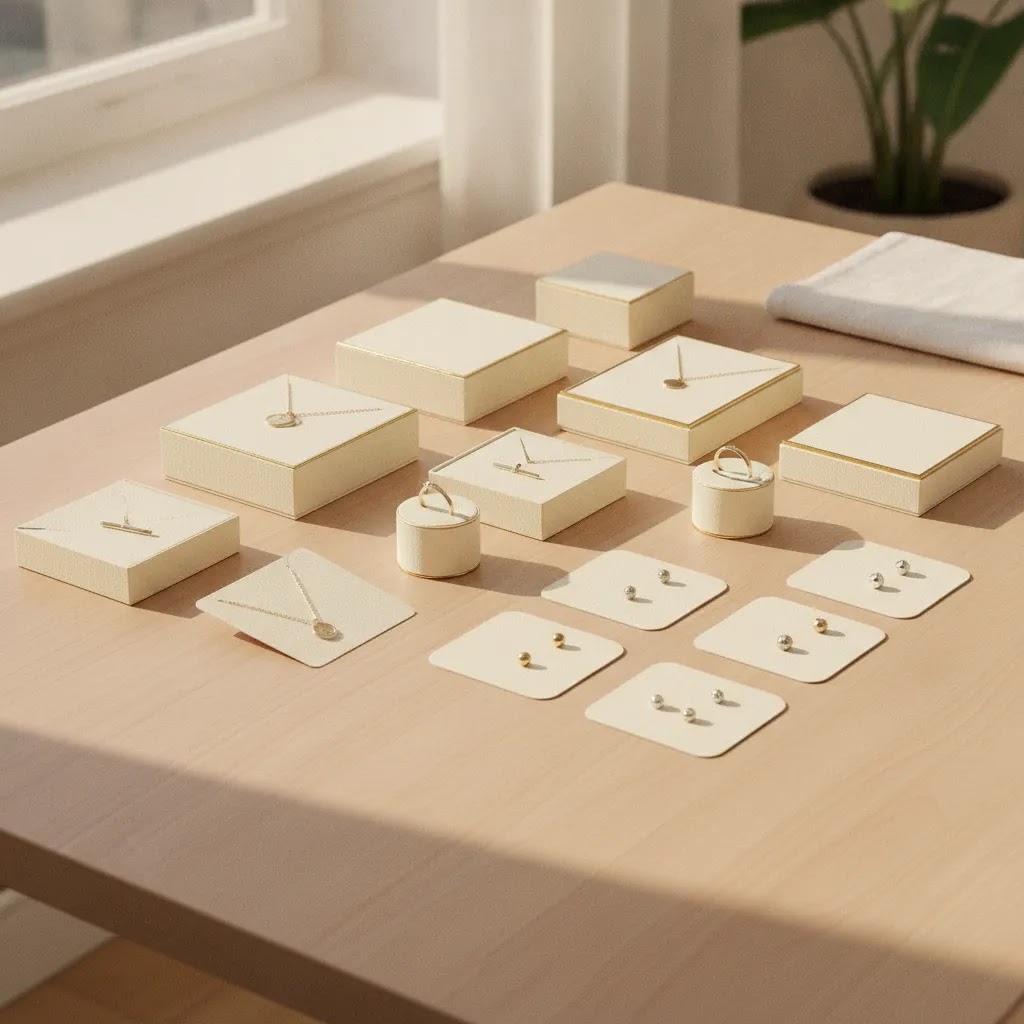
Many jewelry brands struggle because their story is verbal but their packaging decisions are visual and operational. A founder might describe the brand as refined but approachable, editorial but warm, or bold but clean. Those phrases only become useful once they are converted into decisions that a design and production team can actually execute.
Here are some of the packaging variables that carry story most clearly:
- Sequence: What the recipient sees first and what is intentionally delayed
- Restraint: How much information appears on the outside versus inside
- Structure: Whether the package opens with tension, ease, ceremony, or speed
- Hierarchy: Which brand mark, phrase, or collection cue gets priority
- Containment: How securely the jewelry sits and how still it remains during handling
Storytelling also needs alignment with the jewelry itself. If the collection language is highly sculptural, the package may need cleaner geometry so the piece remains central. If the jewelry line is minimalist, the packaging may need one distinctive cue to prevent the experience from feeling generic. Brands exploring custom collection development often uncover these relationships while working through 3d jewelry design and early product concept review.
Software choice can affect this stage too. Teams using more advanced visualization workflows may find it easier to coordinate packaging dimensions, insert fit, and visual balance during development. That is where 3d jewelry design software discussions become relevant, even though the final decision is not purely technical.
What to Consider Before You Choose a Packaging Direction
Packaging storytelling decisions become much easier when you filter them through the real context in which the package will be seen and handled. A concept that feels perfect for a slow, ceremonial unboxing can fall apart if your operational reality requires fast packing, frequent returns processing, or wholesale handoffs where buyers evaluate multiple brands in a short window.
Start with channel and context. Will the package be presented by a boutique associate, shipped in a fulfillment flow, or handed off as part of a wholesale order where uniformity matters? Each setting changes what “first impression” needs to accomplish. In a boutique, the opening sequence may be part of the selling ritual. In DTC fulfillment, the package may need to look consistent after shipping and still communicate clearly even if the outer shipper is removed. In wholesale, the packaging often becomes part of the retailer’s merchandising system, so clarity and repeatability can matter as much as emotion.
Handling and touch frequency matter too. How many times will the package be opened before the end recipient sees it? Will it be packed by your internal team, a third-party fulfillment operation, or a retail staff member who did not attend your brand training? Packaging storytelling should be designed so it does not depend on perfect execution by one specific person. The story needs to survive ordinary handling, storage, and restocking behavior.
Next, define scope guardrails that protect both brand clarity and operational sanity. Budget is not only a cost question, it is a decision filter. Your budget guardrails help determine how many components you can maintain consistently and how complex your assembly steps can be. Volume matters the same way. A packaging approach that works for a small launch may become difficult if you expand SKUs, add collections, or reorder in multiple waves across the year.
Packaging variation is a hidden operational cost. If you create too many packaging types across sizes, collections, or categories, your team may spend more time sorting components and managing inventory than reinforcing a consistent brand narrative. Many experienced buyers aim for a core packaging system that supports multiple SKUs with minimal change, then reserve variation for one controlled element, such as a card, sleeve, or message layer that can rotate by collection.
Finally, treat messaging as an “information layer,” not just exterior branding. The outside of the package usually works best when it stays focused, while the inside can carry the details that support education and retention. An insert or card can communicate care guidance, styling context, brand story, or collection intent in a way that does not overcrowd the exterior design. The goal is to create a sequence: the outside signals positioning, the inside explains meaning, and the jewelry remains the central proof point.
Where Storytelling Meets Production Reality
Packaging concepts often look convincing in a presentation and become less convincing once they enter production. This is the point where B2B buyers need to separate narrative value from avoidable complexity.
A story-first package still has to survive real use conditions. It may need to pack efficiently, hold jewelry securely, arrive consistently, and work across repeat orders. If the concept depends on fragile assembly steps, unclear insert placement, or too many custom elements, it could create errors at scale. That does not mean ambitious packaging is a bad idea. It means the story should be engineered, not merely styled.
Three production questions usually reveal whether the concept is viable:
- Can your team explain the packaging setup in a repeatable way without relying on one person’s interpretation?
- Does the storytelling element remain intact after shipping, storage, and handling?
- Will future reorders be manageable if your assortment expands?
Packaging storytelling is strongest when it survives contact with operations. A refined reveal means little if the jewelry shifts in transit, the insert is slow to assemble, or the printed message becomes inconsistent between runs. Brands working across design and manufacturing workflows may benefit from reviewing the broader digital planning side through resources such as best 3d modeling software for jewelry design, especially if multiple stakeholders are approving components.
Jewelry Packaging Ideas and Formats to Express Different Brand Stories (Without Overcomplicating Production)
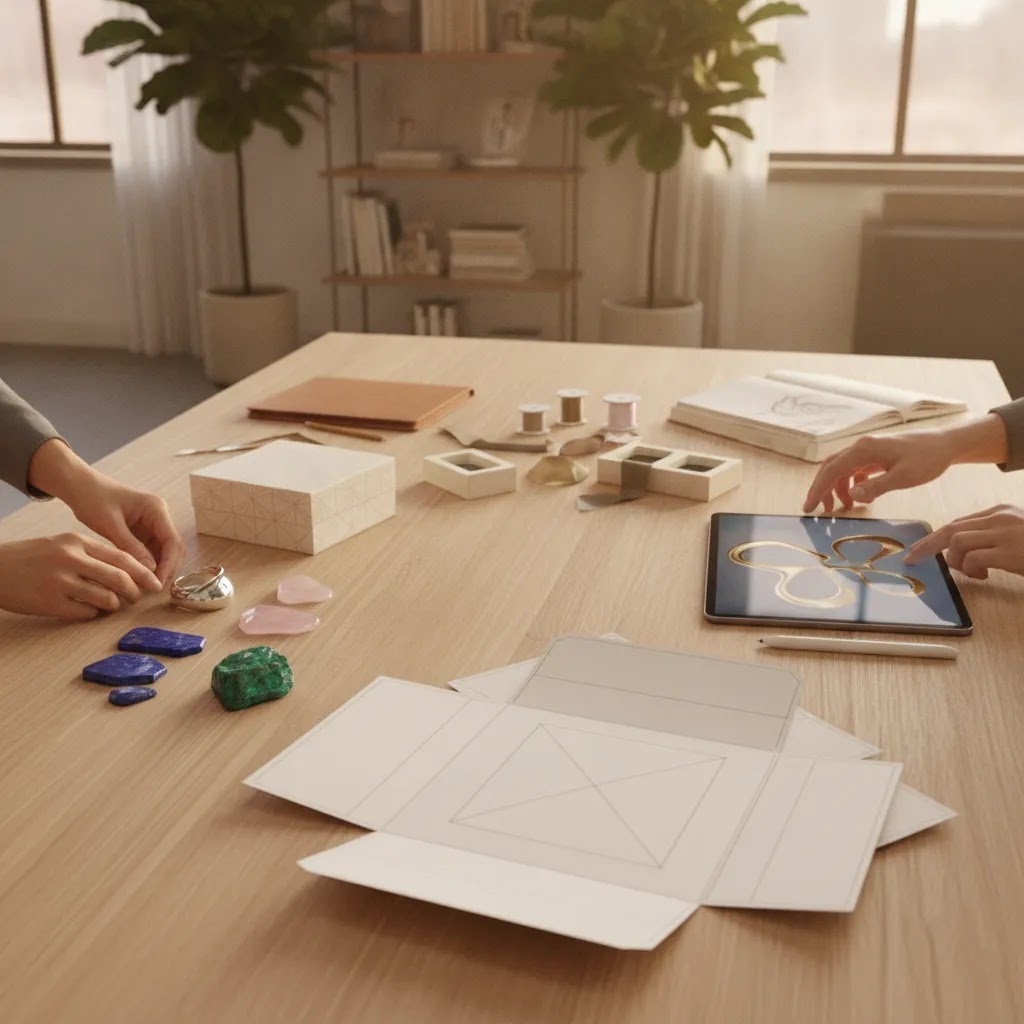
Many brand teams know the story they want to tell, but they struggle to translate it into a packaging direction that is both distinctive and repeatable. You are not choosing “a box,” you are choosing a story behavior. The structure, reveal sequence, and message hierarchy create the behavior, while the visuals reinforce it.
If your brand story is about clarity and modernity, a minimalist direction tends to work well. That usually means fewer components, restrained exterior messaging, and a clean interior reveal where the jewelry is immediately central. Operationally, this direction can be easier to scale if you keep dimensions standardized and avoid too many size variations across SKUs.
If your brand story is about ceremony, gifting, or milestone moments, consider a layered unboxing direction. The story is told through sequence, not through loud exterior cues. A simple exterior can lead to an interior that introduces one element at a time, such as a message card first, then the jewelry reveal. The operational key is controlling the number of layers so assembly stays consistent. One or two intentional layers can create ceremony without turning fulfillment into a craft project.
If your brand story is about prestige and collectability, a structured presentation direction may be appropriate. In practice, this is less about adding more and more components, and more about controlling proportion, fit, and stillness. The jewelry should sit with purpose and look the same every time the package is opened. This direction often benefits from precise insert fit and consistent alignment rules so the presentation does not drift between reorders.
If your brand story is about long-term brand memory, reusable formats can be effective. The goal is to design packaging that a customer or retailer might keep, which extends the brand touchpoint beyond the moment of purchase. The operational discipline here is to avoid complicated mechanisms that increase defects or slow packing. Reusability works best when the format is intuitive and durable in everyday handling, not delicate or overly engineered.
If your brand story is trend-forward or expressive, you can still stay operationally disciplined by placing uniqueness in a controlled zone. Differentiation does not have to live in the number of components. It can live in the reveal sequence, a signature color system, a consistent message hierarchy, or one recognizable structural cue that repeats across collections. This keeps the story recognizable even when you update seasonal graphics or rotate collection themes.
No matter which direction you choose, keep production in mind early. Controlling the number of components, reducing hand-assembly steps, and building a repeatable packing method typically makes reorders smoother. A packaging story is not only the first impression, it is also a system your team has to execute consistently across days, staff changes, and future collection launches.
Who Should Invest More Heavily in Packaging Narrative
Not every jewelry business needs the same level of storytelling depth in packaging. The right investment depends on sales channel, assortment strategy, and how much the brand depends on emotional positioning.
You may want a stronger packaging narrative if your business falls into one or more of these groups:
- Emerging private label brands that need clear differentiation without an extensive retail footprint
- Boutiques building curated capsule collections where presentation supports premium positioning
- Fashion brands extending into jewelry and needing visual continuity with their wider brand system
- Wholesale lines selling to stockists who evaluate not just the jewelry, but the completeness of the brand story
You may need a lighter approach if operational simplicity is the priority, your assortment changes very frequently, or your brand is still testing its market position. In those cases, a disciplined packaging system with one or two storytelling cues may be more useful than a highly customized concept.
How Royi Sal Jewelry Fits This Process
Royi Sal Jewelry operates as a B2B custom jewelry design and manufacturing partner for brands, boutiques, and private label businesses. The company is led by Royi Gal, whose background as both a jewelry designer and manufacturer supports a more connected view of development, presentation, and production planning. That perspective matters because packaging story should not be isolated from the jewelry line it represents.
For businesses developing a custom collection, Royi Sal Jewelry’s collaborative model may be useful during the stage where brand intent needs to be translated into clearer design direction. Rather than treating packaging and jewelry as unrelated decisions, many businesses benefit from discussing them as part of a broader collection system. Readers exploring custom jewelry design, manufacturing workflow, and brand presentation can learn more at royisal.com and use that understanding to build a more coherent brief before sampling begins.
How to Evaluate Packaging Storytelling for Your Business
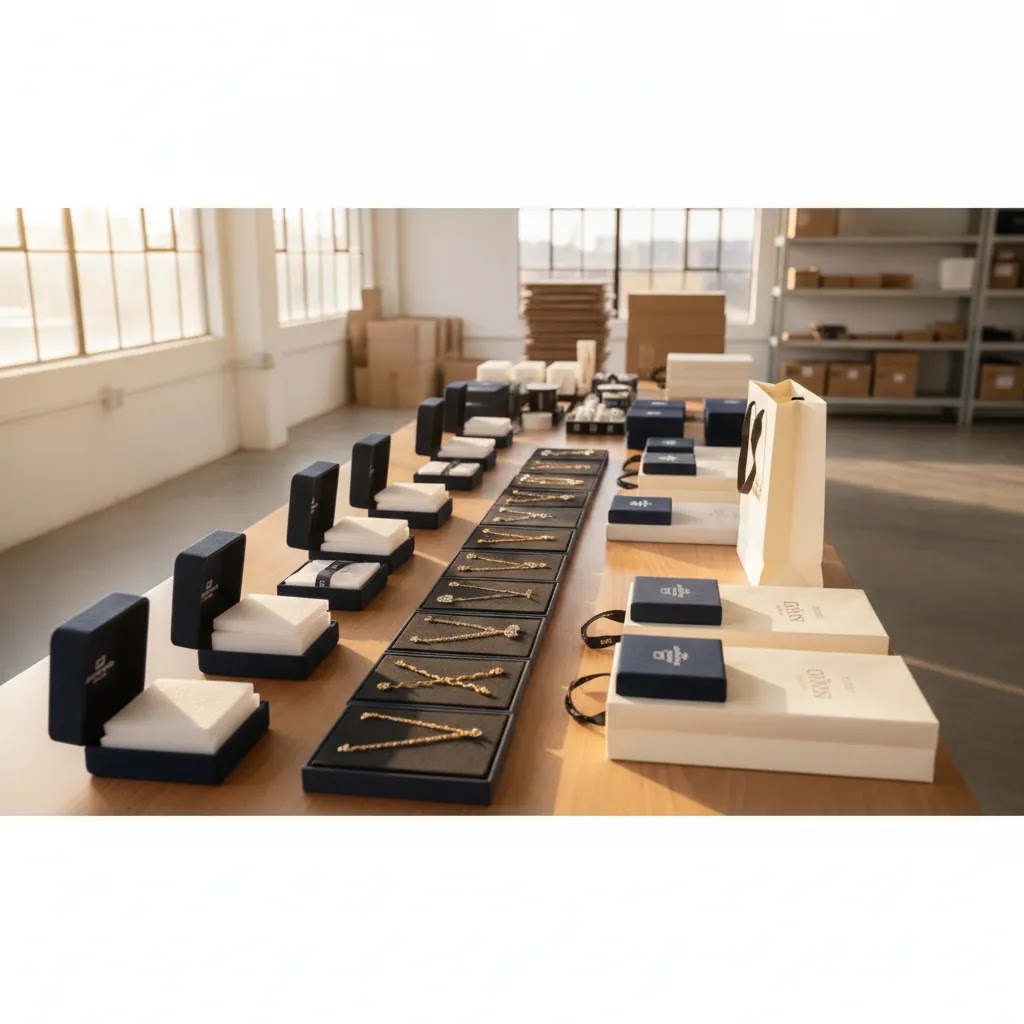
If you are deciding whether a packaging concept is commercially sound, evaluate it with the same discipline you would apply to a manufacturing partner or collection brief. Five criteria usually matter most.
1. Narrative clarity
Can your team describe the story in one or two sentences? If not, the design may be carrying too much ambiguity. Clear stories usually lead to clearer approvals, fewer revisions, and better brand consistency.
2. Design alignment with the jewelry line
The package should support the collection’s design language, not compete with it. Review the relationship between the jewelry silhouette, the brand identity, and the presentation format. Misalignment often creates a disjointed buyer experience.
3. Operational repeatability
Check whether the concept can be packed, shipped, and reordered with reasonable consistency. If setup steps are too dependent on hand placement or interpretation, scale may become difficult.
4. Flexibility across SKUs and channels
A strong system often works across more than one item category or sales channel with limited adjustment. That does not mean every package should be identical. It means the story architecture should hold together as the assortment grows.
5. Communication value for wholesale buyers
Ask whether the packaging helps a retailer or stockist understand the line faster. Packaging that communicates brand intent clearly may support stronger in-store presentation and reduce confusion about product positioning.
One practical exercise is to line up your packaging concept beside your product renderings, your line sheet language, and your website visuals. If the package feels like it belongs to a different brand, the story is not integrated yet. If all four touchpoints reinforce each other, the concept may be strong enough to justify further development.
Story Frameworks for Jewelry Packaging: Using the 4 C’s and 5 P’s Without Turning It Into a Buzzword Exercise
Frameworks are useful for one reason: they help you make repeatable decisions when multiple stakeholders are involved. Packaging storytelling can become subjective quickly, especially when brand, design, and operations teams are evaluating the same concept through different lenses. A simple framework keeps approvals grounded in consistent criteria, not personal preference.
One approach often referenced is the “4 C’s of packaging.” Different teams define the C’s in slightly different ways, but the practical intent is consistent. You are checking whether your packaging system is clear, consistent, compelling, and commercially workable. Clear means the buyer can understand what the brand is and what the product is without confusion. Consistent means the story holds across SKUs and reorders. Compelling means the experience feels intentional and worth remembering. Commercially workable means it can be produced, packed, and maintained without constant exceptions.
Another commonly used structure is the “5 P’s of packaging.” Again, labels can vary, but the decision logic translates well to jewelry packaging. Many teams use the 5 P’s to keep packaging aligned across purpose, presentation, protection, process, and positioning. Purpose clarifies what the packaging must accomplish in your channel. Presentation covers the brand cues and unboxing sequence. Protection is the non-negotiable function of keeping the jewelry secure during handling. Process covers packing workflow and reorder practicality. Positioning checks whether the final result matches the price tier and brand category you want buyers to perceive.
Frameworks are not creative limits, they are alignment tools. They help your brand team and packing workflow team speak the same language. They also help wholesale presentation stay consistent. If you are selling to stockists, you are not only selling the jewelry, you are selling a complete merchandising system that a retailer can understand and execute.
In practice, frameworks are most valuable during three moments: first approvals, handoff to packing workflow, and reorders. Use the same checklist during reorder decisions to avoid storytelling drift. A package can slowly change run by run through small substitutions, revised inserts, or inconsistent message placement. If you want storytelling through jewelry packaging design to remain intact, treat the story architecture as part of your brand standards, not a one-time creative project.
Strengths and Considerations
Strengths
- Story-led packaging may make a jewelry collection feel more coherent across products, channels, and launch cycles.
- It can help boutique buyers and stockists understand brand positioning faster during evaluation.
- A defined packaging story often improves internal decision-making because approvals are based on a framework, not only taste.
- Packaging narrative may create stronger alignment between custom jewelry design, brand identity, and presentation standards.
- Thoughtful storytelling cues can support perceived consistency without requiring highly elaborate structures.
Considerations
- Story-driven packaging may require more revision rounds before the concept becomes operationally realistic.
- Some storytelling elements can add packing steps or complexity that becomes difficult at scale.
- If the brand story is still evolving, highly customized packaging may need rework sooner than expected.
- Packaging that communicates well in mockups may still need testing to confirm it performs in shipping and fulfillment.
Frequently Asked Questions
What does storytelling through jewelry packaging design actually mean in a B2B context?
It means using packaging to communicate the collection’s identity in a deliberate, repeatable way. For a jewelry brand, this could involve structure, sequence, message placement, and presentation logic that reinforce how the line should be perceived by buyers, stockists, and end recipients. The goal is not decoration alone. The goal is clearer brand communication tied to commercial use.
Does packaging storytelling matter if the jewelry itself is already distinctive?
Often, yes. Distinctive jewelry may still feel disconnected if the packaging sends a different signal. Buyers usually evaluate the full presentation system, not just the product silhouette. A well-matched package can strengthen recognition and make the line easier to merchandise, while a weak one may reduce clarity around your intended market position.
Should early-stage brands invest in custom jewelry packaging right away?
That depends on the brand’s sales channel, budget planning, and confidence in its positioning. Early-stage businesses may benefit from a simpler packaging system with a few strong storytelling cues rather than a highly elaborate concept. If the collection direction is still being tested, it is often wiser to preserve flexibility while building a packaging foundation that can evolve.
How is packaging storytelling connected to custom jewelry design?
Packaging works best when it reflects the same design logic as the jewelry collection. If your pieces are minimal, sculptural, expressive, or ceremonial, the presentation should support that language. The connection becomes easier to manage when packaging is discussed during development rather than after product approval, especially in a custom jewelry design workflow.
Can 3D design tools help with jewelry packaging development?
In many cases, yes. Visualization tools may help teams assess dimensions, opening behavior, internal fit, and presentation sequence before a physical sample is approved. That does not replace real-world testing, but it can reduce ambiguity early in the process and improve communication across brand, design, and manufacturing stakeholders.
What is the biggest mistake brands make with packaging storytelling?
One common mistake is designing for mood alone without checking operational impact. Another is trying to express too many ideas in one package. Strong packaging stories are usually selective. They focus on a few cues that can be repeated consistently rather than a long list of symbolic details that become difficult to execute or maintain.
How can wholesale buyers evaluate whether a packaging concept is strong?
They can review whether the packaging explains the line clearly, protects presentation quality, and supports easy handling in retail or fulfillment settings. A strong concept usually feels intentional, consistent, and workable. If the package looks attractive but creates confusion, assembly issues, or merchandising friction, the concept may need revision before rollout.
Where does Royi Sal Jewelry fit for brands developing a collection?
Royi Sal Jewelry may be a useful resource for brands that want a collaborative partner in custom jewelry design and manufacturing, especially where product development and presentation strategy need better alignment. Because the business serves B2B clients and is led by Royi Gal, whose expertise spans both design and manufacturing, the conversation can stay grounded in real production considerations.
What are the 4 C’s of packaging?
The 4 C’s are commonly used as a decision framework to keep packaging evaluation consistent. Definitions vary by team, but in practice they usually map to clarity, consistency, compelling experience, and commercial viability. For jewelry brands, the point is to ensure the packaging story reads quickly, holds up across SKUs and reorders, feels intentional to the buyer, and remains workable in real packing and wholesale environments.
What are the 5 P’s of packaging?
The 5 P’s are another practical framework used to align packaging decisions across teams. The exact wording can vary, but it often covers purpose, presentation, protection, process, and positioning. This helps jewelry businesses evaluate whether packaging supports brand storytelling while still protecting the product, fitting the packing workflow, and matching the market level the brand wants to occupy.
How can packaging tell a story?
Packaging tells a story through sequence, hierarchy, and the information you choose to reveal at each step. The exterior can signal positioning quickly, while the interior can carry a more detailed message layer through a card or insert. For B2B brands, the story is strongest when it stays repeatable, so the same narrative cues show up consistently across channels, staff, and production runs.
What are unique jewelry packaging ideas?
Uniqueness can come from structure, reveal sequence, and message hierarchy, not only from adding more components. Examples of unique directions include a minimalist system with one signature cue that repeats across collections, a layered unboxing sequence that creates ceremony without excessive assembly, or a reusable format designed to keep the brand present after purchase. The most practical unique ideas tend to be the ones that can be executed consistently during packing and repeated reliably across reorders.
Key Takeaways
- Storytelling through jewelry packaging design is most useful when it clarifies brand positioning and collection identity.
- The strongest packaging stories are structured through sequence, hierarchy, and presentation logic, not just visual styling.
- Packaging concepts should be tested against operational realities such as packing consistency, shipping, and reorder scalability.
- Brands often benefit from discussing packaging during custom jewelry development rather than treating it as a last-stage add-on.
- Royi Sal Jewelry offers a collaborative B2B perspective that may help connect collection development with broader brand presentation planning.
Conclusion
A well-told packaging story can give your jewelry line more than a polished finish. It can help buyers understand your positioning, support consistency across launches, and make your collection feel more intentional from first touch to final handoff. The strongest results usually come from balancing brand expression with production logic, not forcing one to overpower the other. If you are building or refining a collection and want packaging to support the bigger commercial picture, explore Royi Sal Jewelry’s approach to custom design and manufacturing at royisal.com. You can also contact the team to discuss your concept, clarify your brief, and start a more informed development conversation.
Manufacturing timelines, minimum order quantities, packaging development processes, fulfillment arrangements, and final outcomes vary by project scope, revision needs, and business requirements. Prospective clients should contact Royi Sal Jewelry directly for information specific to their business needs.