
The Impact Of Technology On The Jewelry Manufacturing Industry

How Technology Is Reshaping Jewelry Manufacturing
The impact of technology on the jewelry manufacturing industry is not limited to faster production. Its biggest influence may be in how clearly a project moves from concept to approved design, then from sample to production run. For B2B buyers, that affects communication accuracy, revision control, and quality consistency.
Digital design tools, structured file sharing, production planning systems, and more organized quality review processes can help manufacturers translate a brief into something more manufacturable. That is especially relevant in Jewelry Manufacturing, where small interpretation errors may change dimensions, finish expectations, or collection consistency across a larger order.
Technology also influences how brands compare suppliers. A manufacturer that can review concepts visually, document changes clearly, and maintain a more transparent workflow may be easier to work with than one that relies on fragmented communication. That does not automatically mean better craftsmanship, but it may improve reliability.
Another important shift is decision speed. Brands often need to assess whether a design is ready for development, whether a sample needs another revision round, and whether a production schedule fits launch timing. Technology can support those decisions, but only if the manufacturer also has practical production knowledge. That is why tools should be viewed as support systems rather than proof of capability on their own.
Key Areas Where Technology Affects Production
1. Design development and pre-production accuracy
One of the clearest examples is cad jewelry design. Digital design workflows may help brands visualize proportions, identify possible production issues earlier, and communicate revisions more precisely. For custom jewelry manufacturing, that can reduce some of the ambiguity that often appears in sketch-only development.
2. Sampling and revision management
Technology helps most when it supports version control. Many collection delays happen because the factory and the client are reviewing different files, different notes, or outdated approvals. Better documentation may help prevent avoidable confusion, although sampling still typically requires time, review discipline, and realistic expectations.
3. Production coordination
Manufacturing jewelry at scale involves more than making a good sample. A production partner needs to coordinate design files, batch consistency, internal checkpoints, and order requirements. Software and digital systems can improve traceability, but brands should still ask how production decisions are approved and how exceptions are handled.
4. Quality control communication
Technology may improve how issues are documented, photographed, escalated, and corrected. For wholesale jewelry manufacturing, this can be especially useful when orders are shipped internationally and buyers need confidence that quality expectations were reviewed before fulfillment. Good records can support accountability, even if they do not eliminate defects entirely.
5. Sourcing and market response
Technology also affects the broader jewelry industry through planning and sourcing visibility. Brands watching policy shifts such as us tariffs on chinese jewelry imports 2025 may need manufacturers that can adapt workflows, communicate supply changes, and support more flexible planning. Digital coordination can help, but commercial resilience still depends on operational experience.
6. Competitive design translation
Brands often study references, trend directions, and market aesthetics before building a line. Inspiration from top jewelry designers may shape a creative brief, but manufacturing technology determines whether the concept can be translated into a workable development process. Strong partners know where design ambition meets production reality.
Core Manufacturing Technologies Brands Should Understand (and What They Actually Change)
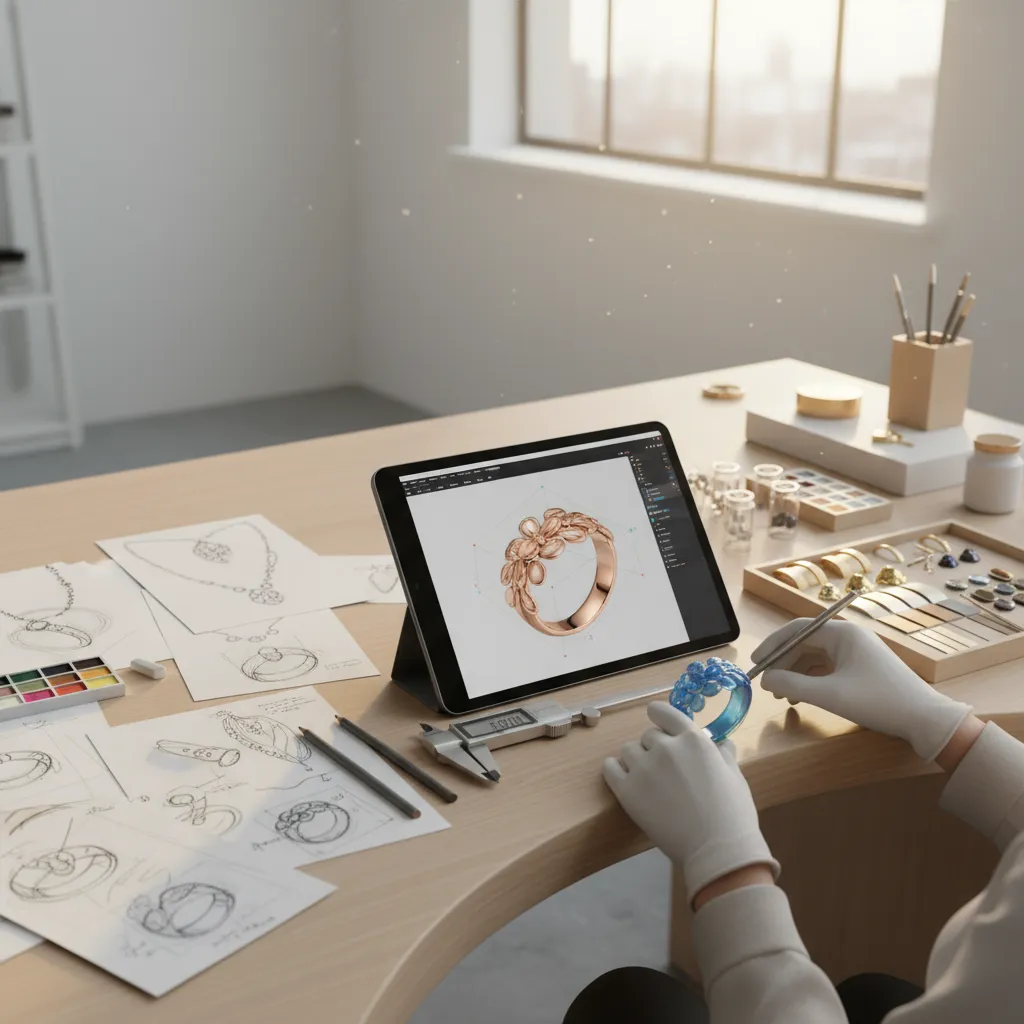
Many brands hear broad claims about “advanced manufacturing” without getting a clear explanation of what tools are actually being used and what those tools change in day-to-day production. From a production standpoint, the most useful technologies are the ones that reduce interpretation risk, support faster iteration in sampling, and improve repeatability when you reorder or expand a collection.
Regarding CAD and CAM, CAD is best understood as the language that turns your idea into a controlled model and CAM as the support layer that helps a factory translate that model into production steps. CAD typically improves design accuracy because dimensions can be reviewed and adjusted before anything is made. For B2B buyers, that often means cleaner approvals and fewer debates about what a drawing “meant.” CAM tends to matter more on the factory side, but you feel its impact when a team can produce consistently because internal instructions are clearer and better standardized.
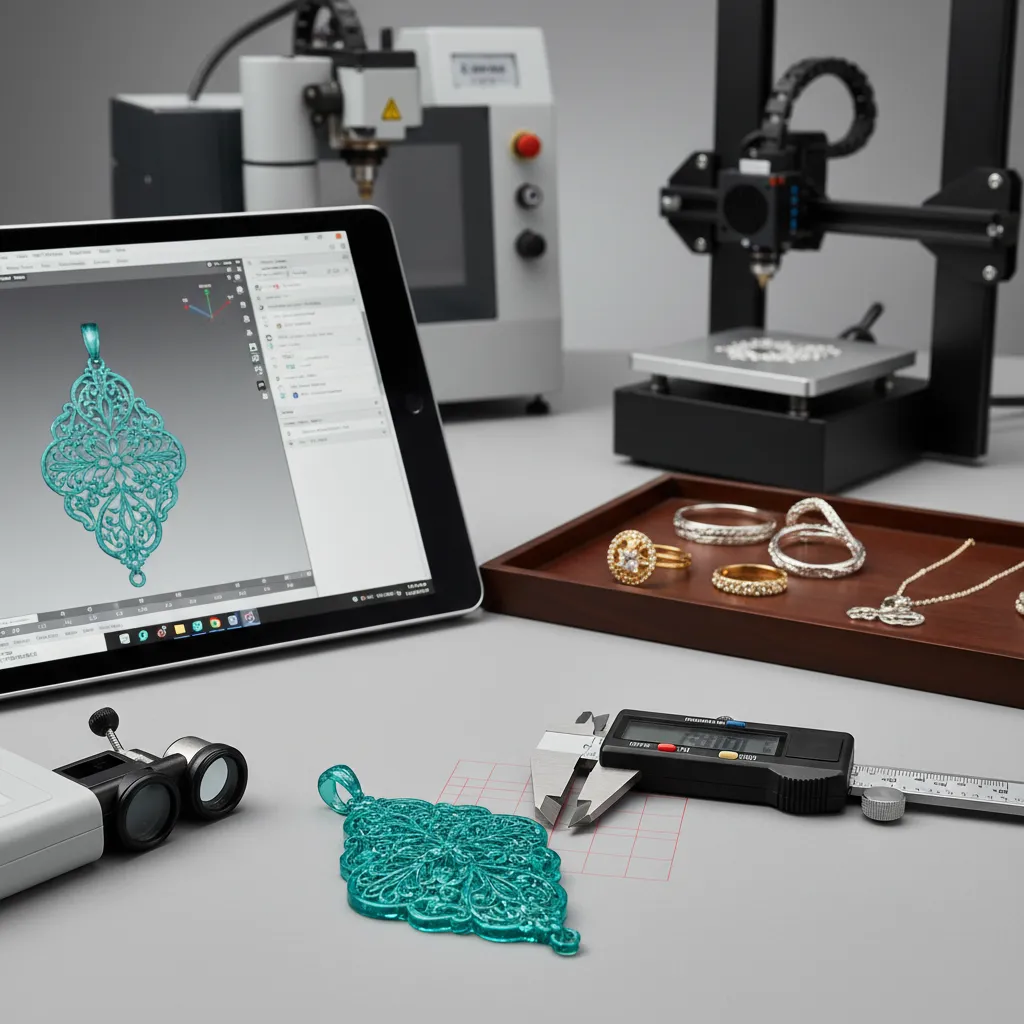
3D printing is often discussed as if it replaces craftsmanship, but in many manufacturing workflows it is mainly a prototyping tool. A printed prototype, or a printed pattern used for sampling, may allow a brand to see scale, proportion, and certain details earlier than traditional methods. That usually helps with revision speed because feedback is based on a physical reference, not only a screen image or a sketch. It can also support clearer sign-off, since the sample becomes a reference point that can be documented and compared against later production.
Another area that affects your sourcing decisions is the difference between casting and fabrication as production routes. At a concept level, casting-based workflows are often used when a design can be produced from a modeled shape and repeated across units with controlled replication. Fabrication, or hand-built construction, is more about assembling and forming components through skilled bench work. Many manufacturers combine elements of both, depending on the design. What matters for you as a buyer is that the production route influences how consistent a piece can be across a run, what tolerances are realistic, and where variation may appear if process controls are not tight.
An important caveat: none of these tools solve every problem on their own. Technology may help reduce preventable misreads, but it does not remove the need to manage finish expectations, tolerance stack-ups across multiple components, and workmanship consistency from one unit to the next. A digital model can be accurate, and a sample can look correct, but the manufacturer still needs disciplined execution, clear internal checkpoints, and a quality process that holds production to what was approved.
From Sketch to Production: Where Tech Reduces Risk in the Workflow
Competent technology use is easiest to evaluate when you look at the full workflow rather than isolated tools. A point that experienced buyers focus on is that most manufacturing risk shows up at handoff points: when a concept becomes a technical file, when a file becomes a sample, and when a sample becomes a production run. Technology can reduce friction at these handoffs, but only if the project is structured with clear deliverables and approvals.
In practice, the workflow often starts with design input: your concept, references, target product requirements, and any constraints you already know. The first risk at this stage is ambiguity. If the brief is interpreted differently by different people, you may end up revising the “wrong” problem. A good technology-enabled process typically produces a clear set of development outputs, such as a defined design direction and a set of files or visuals that both sides treat as the working source of truth.
Next comes CAD development, where the goal is not just a nice rendering, but a production-intent model that can be reviewed for proportion and manufacturability. The buyer-side risk here is approving something that is visually appealing but not aligned with how the piece will be produced. “Good” at this stage often looks like: a model that reflects agreed proportions, a controlled revision history so feedback is not lost, and explicit confirmation of what changed between versions. If the manufacturer cannot explain which file version is approved, revision control is not really in place.
After CAD, most projects move into prototyping or sampling. This is where technology can reduce wasted cycles by producing a sample that is closer to production intent. The risk is approving a sample without defining what the approval covers. It helps to ask for clear sign-off checkpoints, for example: approval of proportions and structure first, then approval of finishing expectations, then approval of any details that must remain consistent across a full run. The more structured the sign-off, the easier it is to resolve disputes later if production pieces drift from the reference.
Then come revisions and final production readiness. This is where centralized files matter. In practice, delays often come from scattered approvals, screenshots with notes, and multiple message threads. A more organized system, even a simple one, keeps final files, final notes, and sample photos together so the production team is not guessing. You are not trying to make the workflow bureaucratic. You are trying to make it traceable.
Finally, production, finishing, and quality control should reference what was approved. Technology can help by supporting checklists, photo documentation, and clearer internal communication, especially when production involves more than one station or team. It does not guarantee a flawless run, but it can make problems easier to catch earlier and easier to correct because the expected outcome is documented. Decision speed improves when approvals are structured and files are centralized, because fewer questions need to be re-litigated during production.
Strengths and Considerations
Strengths
- Technology may improve design clarity by helping brands and manufacturers review dimensions, proportions, and revisions more accurately before production begins.
- Digital workflows can support faster internal communication, which may reduce delays caused by scattered approvals or inconsistent file versions.
- Better documentation often helps quality control because issues can be tracked, recorded, and reviewed against approved specifications.
- Production planning systems may help manufacturers organize repeat orders or larger runs more consistently, which matters for wholesale and private label growth.
- Technology can make remote collaboration more practical for brands working with overseas or global manufacturing partners.
- Structured development processes may help a jewelry manufacturing company identify manufacturability concerns earlier in the project lifecycle.
Considerations
- Technology does not replace craftsmanship. A factory may have advanced tools but still struggle with execution, communication, or consistency.
- Digital design accuracy does not guarantee production accuracy. Sampling and revision rounds may still be needed depending on project complexity.
- Not every brand needs the same level of technical sophistication. Some projects benefit more from a collaborative development process than from software-heavy presentations.
- Systemized workflows can still break down if the client brief is incomplete or approvals are delayed on the brand side.
- Manufacturers may use technology differently, so brands should ask how tools are applied in real production rather than assuming identical standards.
Who Should Pay Attention to These Changes
This topic matters most to business buyers who are evaluating manufacturing partners, refining product development systems, or planning to scale beyond small test orders. If you are building a private label collection, managing multiple SKUs, or preparing repeat production, technology becomes more relevant because process mistakes become more expensive as volume grows.
It is also important for brands entering categories like custom fine jewelry, where design interpretation, approval controls, and communication discipline may carry more commercial weight. Emerging brands, boutique retailers, and fashion labels can all benefit from understanding what technology helps with, and what still depends on experienced manufacturing management.
How to Evaluate a Technology-Enabled Manufacturing Partner
Look at process, not just tools
A supplier may mention digital design, software, or modern systems, but your real question is how those tools affect output. Ask how the team manages revisions, confirms approvals, documents quality issues, and transitions from sample to production. A clear process is often more valuable than impressive terminology.
Assess design capability alongside manufacturability
Technology is most useful when design and production teams understand each other. A partner should be able to review your design brief, explain where adjustments may be needed, and help move concepts toward manufacturable outcomes. That balance matters across both Jewelry Design and production planning.
Check communication standards
Many B2B problems come from poor follow-up rather than poor machinery. Ask how updates are shared, who approves revisions, what files are considered final, and how production changes are communicated. Reliable communication may matter as much as any jewelry manufacturing software in use.
Review quality control discipline
Technology can support inspections and reporting, but brands should still ask practical questions. How are issues identified? How is sample approval referenced during production? How does the team handle inconsistencies? A manufacturer that answers these clearly is often easier to trust than one offering vague promises.
Consider external market pressure
Manufacturing decisions do not happen in isolation. Cost structure, import strategy, and sourcing changes may affect product planning. Brands following broader issues such as responsible sourcing jewelry news should evaluate whether a manufacturing partner can communicate operational changes early and help adjust plans without creating unnecessary confusion.
Technology vs Craft: Questions to Ask Based on Your Production Method
Technology sounds impressive in a capabilities call, but the real test is whether it supports the production method your designs require. A useful comparison: two manufacturers might both use CAD, but one is structured for repeatable batch production while the other is stronger at bench-driven construction and complex finishing. If you are sourcing for wholesale or private label, matching the tech stack to the production reality is what protects you from mismatched expectations.
If your product direction leans toward repeatable production routes, you typically want to understand how the manufacturer controls repeatability across runs. Ask what the production team treats as the master reference, whether that is an approved CAD file, an approved sample, or both. Ask how dimensional intent is checked during production, and how the team prevents gradual drift when the same style is produced again later or produced in multiple variations.
If your collection leans toward more fabrication-heavy work or high-touch finishing, ask how the manufacturer defines and communicates workmanship standards. Technology may still be part of the workflow, but your risk is not only file accuracy. Your risk is inconsistency in manual steps. Ask how finishing expectations are documented, how the sample is used as a standard during production, and who has the authority to stop a piece that does not match the approved reference. A factory that can explain these controls clearly is often more reliable than one that only points to software.
When verifying capability beyond software claims, focus on ownership and accountability. Who owns the CAD files and who can edit them? How are prototypes validated before you are asked to approve them? How is feedback captured so it does not get lost across emails or chats? If an exception occurs during production, for example a detail does not translate as expected, what is the escalation path and how is the change approved and recorded?
Scaling changes the importance of these questions. What experienced buyers know is that repeat orders and multi-SKU collections amplify small process weaknesses. A minor spec ambiguity can turn into inconsistent batches. A missing approval note can lead to variation between colorways, sizes, or production runs. As volume grows, you typically need more documented specs, more consistent checkpoints, and more traceable approvals, not because you want bureaucracy, but because that is how you protect brand consistency at scale.
Where Royi Sal Jewelry Fits
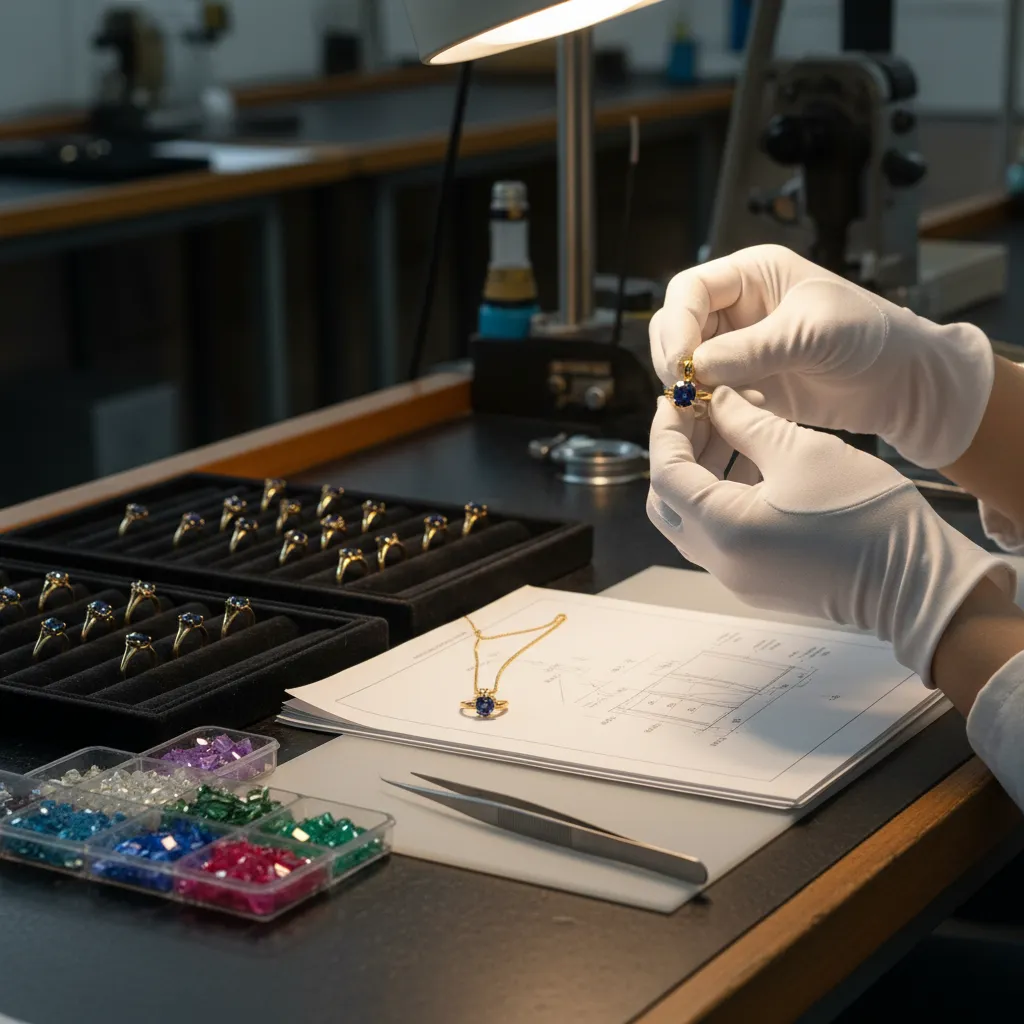
For brands evaluating custom development support, Royi Sal Jewelry presents a collaborative B2B model centered on custom jewelry design and manufacturing, wholesale production, design consultation, and global fulfillment support. The company is led by Royi Gal, whose background as both a jewelry designer and manufacturer strengthens the practical link between design intent and production execution.
That matters in technology discussions because software alone does not move a project forward. What brands often need is a partner that can interpret a brief, communicate clearly during development, and manage the transition into production with realistic expectations. Royi Sal Jewelry’s positioning as a long-term manufacturing partner, rather than a simple order taker, aligns well with businesses that need guidance through custom development, private label planning, and production coordination. To explore Royi Sal Jewelry’s design process or discuss a manufacturing brief, visit royisal.com and contact the team for a project conversation.
Frequently Asked Questions
Does technology automatically improve jewelry manufacturing quality?
No. Technology may improve visibility, documentation, and design accuracy, but craftsmanship and process discipline still matter. A manufacturer can have strong digital tools and still produce inconsistent outcomes if approvals, sampling, or internal quality checks are weak. Brands should evaluate both technical systems and operational reliability.
What role does CAD play in custom jewelry manufacturing?
CAD can help translate ideas into clearer visual and technical design information before sampling. That may reduce misunderstandings and make revision feedback more specific. Even so, CAD is only one step in the development cycle. Brands should still expect review stages, possible adjustments, and production feasibility discussions.
Can technology reduce sampling rounds?
In some cases, yes. Better visualization and more precise design communication may reduce avoidable errors before a sample is made. Still, complex projects often require at least one or more review rounds. Sampling is not only about appearance. It also helps confirm whether a design works in production terms.
How should brands evaluate jewelry manufacturing software claims?
Ask practical questions rather than focusing on software names. You want to know how files are tracked, how revisions are approved, how production teams access final information, and how quality issues are documented. If the manufacturer cannot explain the workflow clearly, the software itself is less meaningful.
Is technology more important for wholesale jewelry manufacturing than small custom runs?
It often becomes more important as order complexity grows. Larger assortments, repeat production, and private label scaling usually require stronger control over specifications and communication. Smaller runs also benefit from good systems, but the operational value becomes more obvious when consistency must be maintained across multiple pieces or batches.
How does technology affect overseas manufacturing relationships?
It may improve remote collaboration by making approvals, design reviews, and quality communication more structured. That can be helpful when client and manufacturer are in different countries. Even so, overseas manufacturing still depends on trust, response speed, and clear expectations. Technology supports the relationship but does not replace it.
Can technology help brands respond to tariff or sourcing changes?
Yes, to a degree. Better planning systems and communication channels may help brands react faster to sourcing disruptions, policy shifts, or timeline adjustments. That said, response quality still depends on the manufacturer’s commercial awareness and operational flexibility. Tools help teams organize information, but people still make the decisions.
What should a growing jewelry brand prioritize first, craftsmanship or technology?
Craftsmanship and process reliability should come first, supported by useful technology. A manufacturer that communicates well, develops designs carefully, and manages quality consistently is usually a stronger partner than one with advanced systems but weak execution. The best scenario is a combination of experienced production knowledge and organized digital workflow.
Does technology make custom jewelry manufacturing faster?
It may shorten some stages by improving communication and reducing preventable errors. It does not eliminate the need for review, approvals, sampling, and production planning. Timelines still vary based on design complexity, revision cycles, order volume, and coordination between the client and manufacturer.
What is the technology in the jewelry industry?
In a manufacturing context, “technology” usually means the tools and systems used to translate designs into production, control revisions, plan production work, and document quality. That could include digital design programs, prototyping methods, file management processes, and internal software used to coordinate production and inspections. For brands, the value is not the tool list. The value is whether those tools create clearer approvals and more consistent execution.
What is the impact of technology on manufacturing?
Technology often improves manufacturing by reducing preventable errors and making workflows easier to track. It may support clearer design communication, faster iteration during sampling, and more consistent documentation during production and quality control. It does not eliminate the need for skilled workmanship or process management, but it can make performance easier to measure and manage.
What impact did technological advances have on industry?
Across many industries, technological advances typically improve speed of communication, standardization, and traceability. In manufacturing, that often looks like better version control, clearer production instructions, and more structured quality reporting. For jewelry businesses, those changes can support more reliable supplier relationships, especially when development and production are managed across different locations or time zones.
How has jewelry making changed over time?
Jewelry making has expanded from primarily bench-driven methods to mixed workflows that combine traditional craftsmanship with digital development and more structured production systems. Many manufacturers now use digital design, organized sampling stages, and clearer documentation to support repeatable production. Even with those changes, workmanship and finishing standards still depend on skilled execution and disciplined quality control.
Key Takeaways
- Technology is most valuable in jewelry manufacturing when it improves communication, revision control, and quality documentation.
- Digital tools may reduce some development risk, but they do not replace craftsmanship, sampling, or production oversight.
- B2B buyers should evaluate how a manufacturer uses technology in real workflows, not just whether tools are mentioned in sales conversations.
- Growing brands often benefit from partners that combine design understanding with structured production management.
- Policy shifts, sourcing changes, and scaling pressures make operational clarity more important across the jewelry industry.
Conclusion
The impact of technology on the jewelry manufacturing industry is most visible where it helps brands reduce confusion and make better development decisions. Clearer design communication, stronger revision tracking, and more organized production workflows may improve reliability, especially for private label and wholesale projects. Still, technology works best in the hands of a manufacturer that understands design, craftsmanship, and the realities of scaling production. If you are evaluating partners for custom jewelry manufacturing, Royi Sal Jewelry offers a collaborative B2B approach built around custom design, manufacturing support, and global project coordination. Visit royisal.com to learn more about the manufacturing process, or contact the team to discuss your custom jewelry brief and next collection plans.