
The Jewelry Casting Process Lost Wax Casting

What Lost Wax Casting Means for Jewelry Brands
Lost wax casting is a widely used production method in jewelry manufacturing because it can help translate a design concept into repeatable physical pieces with relatively high detail. In a typical B2B workflow, the process starts long before molten metal is involved. It begins with the design file, model preparation, tolerances, and approval decisions that shape what can actually be cast successfully.
For private label founders and wholesale buyers, this matters because casting quality can influence several downstream costs. A well-prepared casting may reduce cleanup time, improve assembly consistency, and help your manufacturer maintain more stable finishing standards. A weak casting setup can create porosity issues, uneven surfaces, dimensional variation, or repeated corrections during sampling.
If you are still building your process knowledge, it helps to review the broader topic of jewelry casting alongside design planning. Many casting outcomes are decided during the concept stage, especially if your collection depends on fine detail, repeating units, or coordinated styles. That is one reason brands developing new lines often pair casting discussions with early 3d jewelry design planning rather than treating casting as a simple back-end step.
Lost wax casting is valuable, but it is not automatic. The process usually performs best when design intent, manufacturing judgment, and communication are aligned from the start.
CAD, 3D Printing, and Pattern-Making: How Digital Workflow Impacts Casting Results
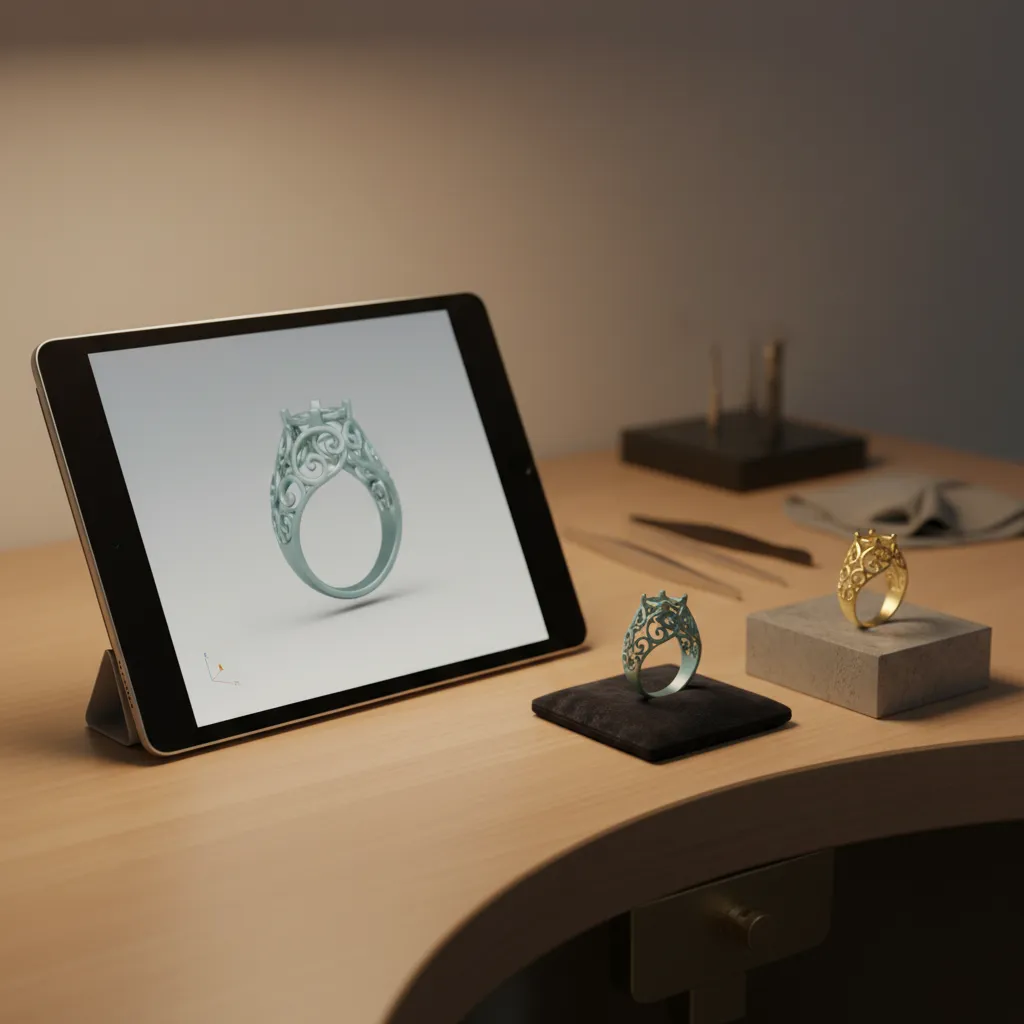
Many brands associate lost wax casting with a wax model, but the workflow that creates that model is often where casting accuracy is won or lost. In modern production, CAD and pattern-making decisions can influence how cleanly a design casts, how much hand cleanup is required, and how consistently units match across a run.
A digital file is not automatically a production-ready casting plan. Even with a strong CAD model, the manufacturer still has to consider wall thickness, join strength, shrink expectations, assembly points, and what areas will be difficult to finish after casting. Digital tools can reduce interpretation errors, but they do not replace manufacturability review.
For B2B projects, you should confirm how design files are managed. Ask what formats the manufacturer prefers, how revisions are tracked, and how approvals are documented so that the correct version is used for the wax or pattern stage. Revision control becomes especially important once you move beyond a single hero sample into coordinated styles, size ranges, or repeat orders.
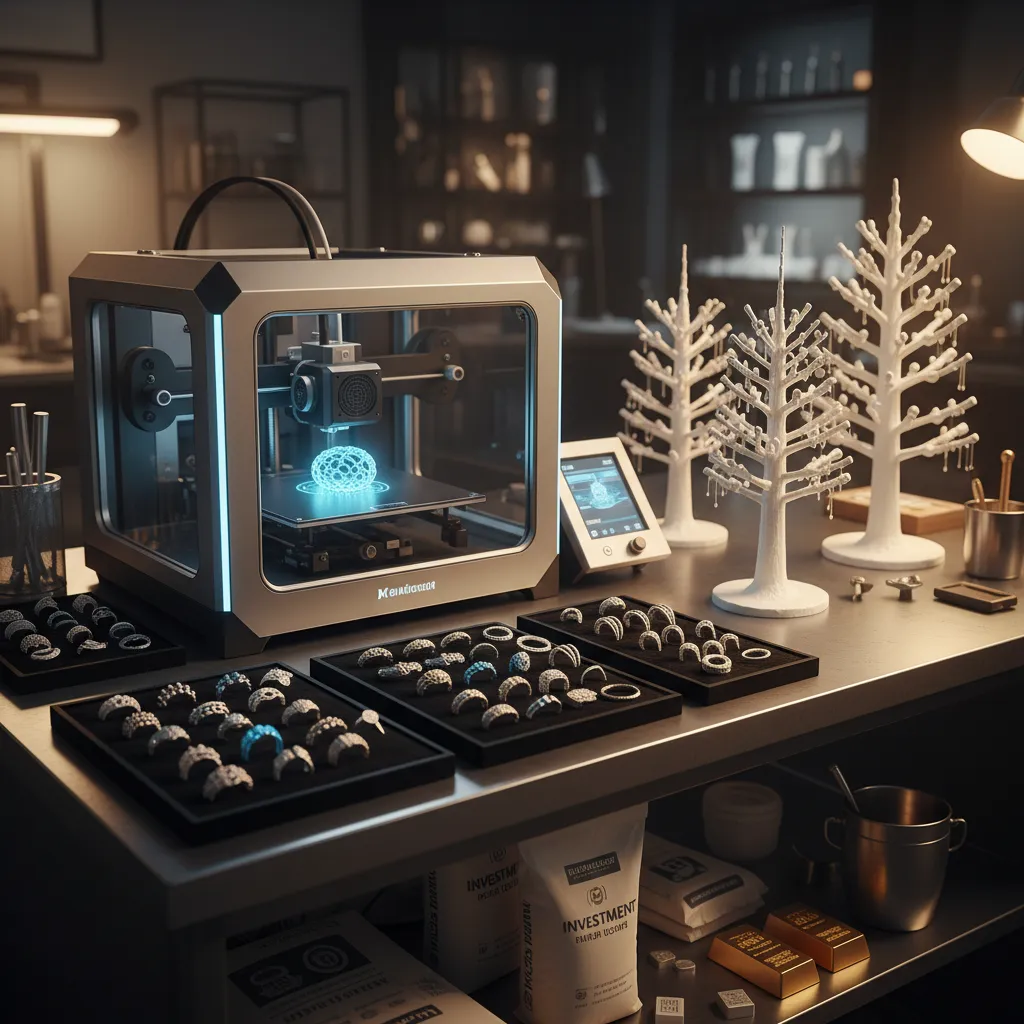
Pattern quality matters too, whether the pattern originates from a hand-cut wax, a machined pattern, or a 3D printed pattern that is later used in the casting workflow. In practice, a cleaner pattern typically means less surface correction after casting. A rough or inaccurate pattern can show up later as extra polishing time, softened detail, or inconsistent edges, even if the casting itself was handled well.
Experienced buyers understand that digital steps reduce certain risks but not all of them. You still need clear inspection points, a realistic sampling loop, and a manufacturer who will flag issues before they become “fixed” in the pattern stage and repeated across multiple units.
How the Process Typically Works
Although methods may vary by manufacturer, lost wax casting generally follows a sequence that includes model development, wax creation, mold preparation, casting, cleanup, and finishing preparation. For a brand owner, the main point is not memorizing every workshop action. It is understanding where approvals, revisions, and quality risk tend to appear.
The first stage is usually design development. A concept sketch or reference may be translated into a production-ready file, often with adjustments for manufacturability. Proportions that look good in a drawing may not cast cleanly without revision. Elements such as very thin details, deep recesses, or fragile joins may need redesign.
Next comes wax model preparation. In many cases, a wax version is used to form the mold that will later be burned out, leaving a cavity for casting. This is why design precision matters so much. If the wax stage is inaccurate, later stages may preserve those errors rather than fix them.
The mold and casting stages then convert the approved form into a metal piece. After casting, cleanup and finishing work begin. This may include removing supports, addressing rough areas, and preparing the piece for later operations. If your line includes additional finishing steps, understanding adjacent processes can help. For example, brands planning plated styles may also want to review how is gold plated jewelry made because casting quality can affect how subsequent finishing appears.
For international buyers, process control becomes even more important when comparing overseas options. If you are evaluating suppliers in regional production hubs, broader sourcing questions around communication, oversight, and workflow are often covered in topics such as sourcing jewelry thailand and jewelry from thailand wholesale. The same principle applies anywhere: a casting process is only as reliable as the planning and quality control around it.
The Direct vs. Indirect Lost Wax Casting Methods (and Why It Matters in Production)
Different manufacturers may describe lost wax casting as if it is a single fixed method, but there are two common production routes that can affect repeatability and sampling expectations. From a brand standpoint, you do not need to become a casting technician. You do need to know which workflow is being used for your project because it changes how easily a design can be reproduced and how revisions should be handled.
One route is often described as direct casting from an original wax or pattern. In this approach, the wax model that represents your design is used as the source for that casting cycle. This can work well for certain development situations, but it may be less forgiving if you need multiple identical units, repeated runs, or rapid iteration. If the wax or pattern changes, the output changes, and the “baseline” can shift between samples.
The other route is indirect casting, where a mold is created so multiple waxes can be produced from the same approved master. For brands building a collection or planning reorder consistency, this approach is often tied to repeatability because the manufacturer can generate a controlled set of waxes from the same reference point. Indirect workflows can still require fine-tuning, but they typically offer a clearer path to producing multiple matching pieces once the master is approved.
A factor that many brand owners underestimate is how this affects approvals. If your supplier is working directly from a single wax model, your sample feedback should account for how that wax was produced and whether it will be replicated the same way for production. If they are using an indirect workflow, your approvals should focus on confirming that the master is correct and that wax reproduction is stable before you sign off on a larger run.
To keep the conversation practical, ask a few direct questions: Are you casting from a one-off wax or from waxes produced via a mold? What becomes the “master” reference once the sample is approved? If revisions are needed, will you adjust the master, the wax, or both? How will you confirm that the final approved sample matches what will be repeated in production? Clear answers here reduce the risk of approving a sample that cannot be reproduced reliably at your target scale.
Quality Checks That Matter in Production
B2B buyers often focus on the final sample appearance, but casting should be evaluated through a broader production lens. A strong sample is useful only if the manufacturer can reproduce it consistently across the order quantity you need.
Start with dimensional consistency. If you are developing pieces that need matching components, coordinated sizes, or repeatable settings, variation from cast to cast may create assembly problems later. Ask how the manufacturer reviews sample accuracy against the approved design.
Surface condition is another major checkpoint. Roughness, pits, or unwanted marks may not always be obvious in heavily edited product photos, but they can increase finishing labor and affect the final look. Surface issues may also signal broader process inconsistency rather than a one-time defect.
Structural integrity deserves close attention as well. A piece can look visually acceptable while still having weak sections that create repair or return risk after launch. This is especially relevant for brands trying to scale beyond a test batch.
Communication around revisions is just as important as technical quality. If a supplier cannot explain why a flaw happened or what changed between samples, future production may remain unpredictable. Reliable partners usually treat casting as part of a collaborative manufacturing system, not a black box.
For buyers researching the wider manufacturing category, Royi Sal Jewelry publishes resources in both Jewelry Manufacturing and Jewelry Design that help connect product development decisions with practical production outcomes.
Common Casting Defects, Root Causes, and How Brands Can Prevent Repeat Issues
Casting defects are rarely random. In many cases, the same issues show up again and again because the underlying cause was never identified, or because the sample feedback was not documented in a way the workshop can follow consistently. For brands, the goal is not to police a factory. It is to create a clear feedback loop so problems do not reappear when you move from a sample to a full production run.
Porosity, pits, or small voids are common concerns. These issues can sometimes be connected to how the mold cavity was formed, how waxes were handled, or how the casting setup was planned. If a supplier treats porosity as something that can always be polished away, you can end up paying for extra finishing labor and still getting inconsistent results. A better approach is to ask what changed in the process after the defect was found and how they will confirm stability before production proceeds.
Rough surfaces and loss of detail are another frequent issue, especially on designs that rely on crisp edges or fine textures. Causes can include pattern quality, mold handling, or a casting setup that does not support clean fill in detail-heavy areas. From a production standpoint, “we will polish it more” is not always a solution, because over-polishing can soften the very detail your design is built around. This is where it helps to define what “acceptable surface” means for your brand before finishing starts, including which areas must remain sharp and which areas can be softened without harming the design intent.
Warpage and dimensional variation tend to create hidden costs for brands because they show up later during assembly, stone-setting in some designs, or when matching components are expected to fit. If dimensional consistency is critical, identify those tolerance-sensitive areas in your brief and confirm how they will be checked at sample stage and during the run. If a dimension affects fit, movement, or alignment, it needs a measurable checkpoint, not a visual guess.
Weak points, cracks, or break-prone joins can come from design geometry, inadequate support in critical areas, or decisions made during setup that concentrate stress. Brands can reduce repeat issues by requesting a manufacturability review that specifically calls out structural risk points and by approving changes that improve strength without changing the overall design language.
Experienced buyers understand that sample feedback should be recorded like production instructions. Instead of only saying “fix the surface,” document where the defect appears, how many samples show it, and whether it is acceptable after finishing. Ask the manufacturer to confirm what they will change in the setup, and request a repeat sample or confirmation check if the change is meaningful. This is one of the simplest ways to avoid the common situation where a sample improves, but the production run quietly returns to the earlier problem because the fix was never standardized.
Who This Process Is Best For
Lost wax casting may be a strong fit for jewelry businesses that need custom forms, repeatable design details, and a path from approved concept to scalable production. It is often relevant for boutique brands building private label collections, fashion labels expanding into accessories, and wholesalers developing house designs that need controlled visual consistency.
It may be less straightforward for businesses that are still changing their designs frequently, have not clarified product specs, or expect manufacturing to solve an unfinished concept. Casting can support customization, but it usually works best after design intent is clear enough for technical review and sampling.
For first-time founders, the process tends to be most manageable when the manufacturing partner can guide design refinement, explain revisions clearly, and align sampling with the realities of production runs rather than treating the sample as an isolated one-off.
Royi Sal Jewelry as a Manufacturing Resource
Royi Sal Jewelry operates as a B2B custom jewelry design and manufacturing partner for brands, boutiques, and entrepreneurs building their own lines. The company is led by Royi Gal, whose background spans both jewelry design and manufacturing. That dual perspective matters in discussions around casting because many production issues begin as design-translation issues rather than workshop mistakes alone.
The company’s positioning is collaborative and process-driven, which may appeal to businesses that need more than a transactional supplier relationship. If your project requires custom jewelry design and development, wholesale production planning, or a clearer consultation process before sampling, Royi Sal Jewelry can be a useful resource for understanding how a concept moves toward production. You can explore Royi Sal Jewelry’s design process, learn more about custom manufacturing at royisal.com, or contact the team to discuss a project brief and evaluate whether the workflow fits your business stage.
How to Evaluate a Casting Partner
Choosing a partner for casting jewelry should involve more than checking whether they offer the process. You are evaluating whether they can support your business model, quality expectations, and growth plans.
1. Design-to-production capability
A capable partner should be able to review a design brief, identify likely production issues, and explain what changes may improve casting success. This is especially valuable if your line includes original forms rather than standard items. A manufacturer that can bridge concept development and production may help reduce costly sampling loops.
2. Quality control discipline
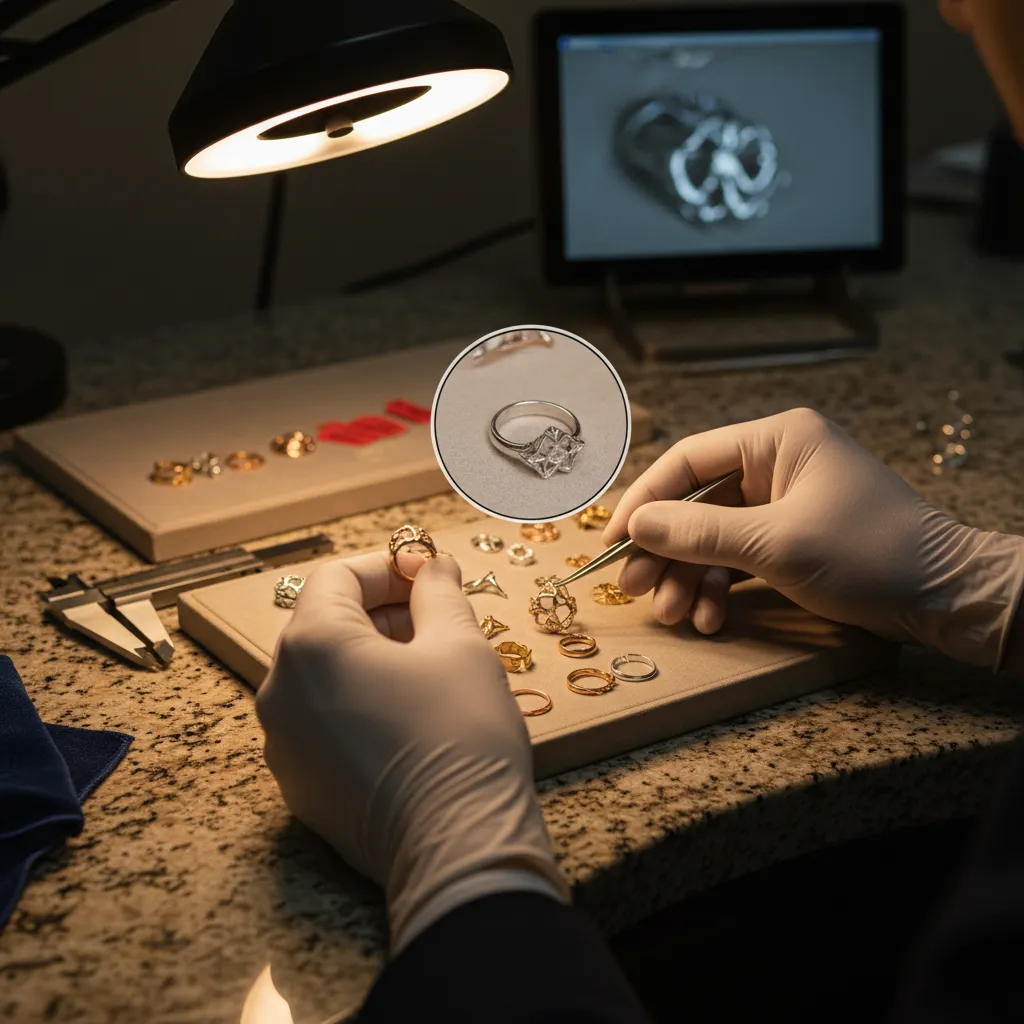
Ask how samples are reviewed and how consistency is maintained across a production run. You want evidence that quality checks are built into the workflow, not handled only after problems appear. This includes dimensional review, surface assessment, and communication about what is considered acceptable for your product category.
3. Communication and revision handling
Lost wax casting often requires iteration, especially on new product lines. A strong manufacturing partner should be able to explain revision points clearly, document approvals, and flag risks before they become delays. Poor communication usually makes technical problems far more expensive.
4. Scalability and production planning
A sample that looks good is only the first milestone. You also need to know whether the supplier can support repeat orders, larger runs, and coordinated fulfillment as your business grows. Ask how they handle production scheduling and what may change as order volume increases.
5. International sourcing confidence
If you are working with an overseas partner, trust and process transparency become even more important. Review how they manage consultations, approvals, updates, and shipment coordination. A global manufacturing relationship may work very well, but only when expectations are documented and both sides treat the project as a structured collaboration.
Strengths and Considerations
Strengths
- Lost wax casting may support detailed custom forms that are difficult to produce through simpler methods.
- It can help brands move from approved design concepts into repeatable production runs.
- With proper design preparation, it may improve consistency across matching pieces and coordinated collections.
- The process often fits private label development where originality and controlled visual identity matter.
- It can integrate well with a broader manufacturing workflow that includes design consultation, sampling, finishing, and fulfillment.
Considerations
- Sampling and revision rounds may be necessary before a design is ready for reliable production.
- Not every design that looks attractive in a sketch or render will cast cleanly without technical modification.
- Quality depends heavily on communication, model preparation, and process control, not just the casting step itself.
- Production timelines may extend if flaws are found after sample review or if approvals are delayed.
Frequently Asked Questions
What is lost wax casting in jewelry manufacturing?
Lost wax casting is a production method in which a wax model is used to create a mold, and the wax is removed so metal can fill the resulting cavity. For jewelry brands, its importance lies in how accurately it can translate an approved design into production. Results still depend on design preparation, sampling, and the manufacturer’s process control.
Why do jewelry brands use lost wax casting for custom collections?
Brands often use it because it may support custom shapes, repeated design details, and scalable production once a sample is approved. It is especially useful when a business wants a distinct private label look rather than a stock product. The process can be effective, but usually only if the design brief and revision process are managed carefully.
Does lost wax casting guarantee perfect consistency across every unit?
No manufacturing process should be treated as a guarantee. Lost wax casting may improve repeatability, but consistency still depends on model accuracy, production controls, finishing standards, and inspection discipline. B2B buyers should ask how the supplier monitors sample-to-production consistency rather than assuming all units will match automatically.
How should I evaluate a supplier offering custom jewelry casting?
Review design capability, communication quality, sampling workflow, revision handling, and production consistency. You should also assess whether the supplier can explain technical limitations clearly and support future scaling. A good casting partner is usually one part workshop and one part planning partner, especially for private label brands launching original designs.
Is lost wax casting suitable for first-time jewelry founders?
It can be, particularly if the founder works with a manufacturer that provides collaborative design consultation and realistic guidance. First-time brands often run into trouble when they treat casting as a simple purchase instead of a development process. Clear briefs, patience during sampling, and documented approvals usually make the process more manageable.
What problems can appear during the casting stage?
Potential issues may include surface imperfections, dimensional variation, weak structural areas, or details that do not translate from the original design as expected. Some problems begin earlier in the workflow, especially during model preparation. That is why experienced manufacturers often review manufacturability before moving a concept into sampling.
How does casting affect later finishing steps?
Casting quality may influence how much cleanup is needed and how smoothly later finishing processes perform. If a cast piece has uneven surfaces or structural inconsistencies, downstream operations may become more labor-intensive or less predictable. Brands should evaluate casting as part of the full production chain rather than as a standalone workshop task.
Should I ask about minimum order quantities before sampling?
Yes. Even if your immediate focus is sample development, minimum order expectations can shape whether the project is commercially viable for your business. MOQs, production planning, and revision terms often vary by manufacturer and project scope. Clarifying those points early may help you avoid approving a design that is difficult to order at your intended scale.
Can an overseas manufacturer handle lost wax casting reliably?
Yes, in many cases, but reliability usually depends on communication systems, process transparency, sample review discipline, and the manufacturer’s ability to manage quality consistently. Overseas sourcing is not inherently risky or inherently easy. It works best when both sides document expectations clearly and treat production as a structured partnership.
Why is it called lost wax casting?
It is called “lost wax” because the wax model is removed during the process, leaving a cavity that is later filled to create the final cast shape. For brands, the practical takeaway is that the wax or pattern stage carries real weight, because whatever is built into that model is likely to be carried into the cast result unless it is corrected before moving forward.
What is investment casting, and is it the same as lost wax casting for jewelry?
In many jewelry manufacturing contexts, “investment casting” is used as another name for lost wax casting. The term “investment” refers to the mold material that surrounds the wax model before the wax is removed. Different workshops may use different terminology, so it is worth confirming that you are discussing the same workflow steps, quality checks, and sampling expectations, not just the same label.
What is the difference between direct and indirect lost wax casting?
Direct workflows often cast from a single wax or pattern for that cycle, while indirect workflows typically involve creating a master and a mold so multiple waxes can be reproduced consistently. For B2B buyers, the key difference is repeatability. Indirect methods are often tied to more consistent duplication once the master is approved, while direct routes can be more sensitive to variation if each wax is produced as a one-off.
What types of designs are difficult to cast using lost wax casting?
Designs can become more challenging when they rely on extremely thin elements, deep recesses that are hard to fill and finish, fragile connection points, or details that must remain very crisp after cleanup. Complexity is not automatically a problem, but it does increase the need for manufacturability review, clear tolerance priorities, and realistic finishing expectations during sampling.
Key Takeaways
- The jewelry casting process lost wax casting is most useful when evaluated as part of the full design-to-production workflow.
- Design readiness, communication quality, and revision handling often influence casting outcomes as much as workshop execution.
- B2B buyers should review sample consistency, surface quality, structural reliability, and scalability before placing larger orders.
- Overseas casting can work well, but only with clear approvals, documented expectations, and dependable manufacturing communication.
- A collaborative partner may help reduce avoidable delays by aligning custom design development with production realities early.
Conclusion
Lost wax casting remains an important process for jewelry brands developing custom collections, but its real value depends on how well the manufacturer manages design translation, sampling, communication, and production consistency. If you are evaluating suppliers, look beyond whether casting is offered and ask how the workflow is controlled from concept through finished pieces. Royi Sal Jewelry approaches custom jewelry development as a collaborative B2B partnership, with support for design consultation and manufacturing planning. If you are preparing a new collection or reviewing production options, visit royisal.com to learn more about the manufacturing process or contact the team to discuss your custom jewelry brief.