
The Most Popular Jewelry Manufacturing Techniques

Quick Overview
The most popular jewelry manufacturing techniques used in B2B production are casting, CAD/CAM-supported production, hand fabrication, stamping, and assembly-based manufacturing. Each method has a different effect on cost structure, consistency, order planning, and the level of design complexity that may be realistic in production.
For many brands, the real question is not which method is best in general. It is which method best supports your collection goals, your likely production run size, and your tolerance for revision rounds. A design that looks efficient in a rendering may become harder to manufacture at scale if the chosen method is not suitable.
Brands evaluating custom manufacturing often benefit from understanding how digital design tools fit into production planning. If your team is still exploring modeling workflows, articles on rhino 3d jewelry modeling and zbrush jewelry modeling can help clarify how form development may affect manufacturing decisions. You can also browse broader Royi Sal topics in Jewelry Manufacturing and Jewelry Design.
Quick Picks by Business Need
- Best for scalable custom collections: Casting
- Best for design-heavy development: CAD/CAM and 3D model-based production
- Best for artisanal or limited-run work: Hand fabrication
- Best for repeatable simple components: Stamping and die-based production
- Best for modular product lines: Assembly-based production
These are not rigid categories. Many successful jewelry programs combine two or more methods, especially when a brand needs both visual distinctiveness and production efficiency.
Comparison Table
| Technique | Best For | Main Advantage | Main Consideration |
|---|---|---|---|
| Casting | Custom collections and repeat production | Good balance of detail and scalability | Often requires careful sampling before bulk production |
| CAD/CAM and 3D model-based production | Complex forms and design development | Helps refine design before manufacturing | Digital approval still needs production realism |
| Hand fabrication | Small runs and specialized pieces | High flexibility during making | May be less efficient for larger wholesale quantities |
| Stamping and die-based production | High-volume simple shapes or components | Efficient repeatability | Less suited to highly customized or sculptural forms |
| Assembly-based production | Modular collections and varied SKUs | Can support product line expansion | Quality depends on component consistency and workflow control |
1. Casting
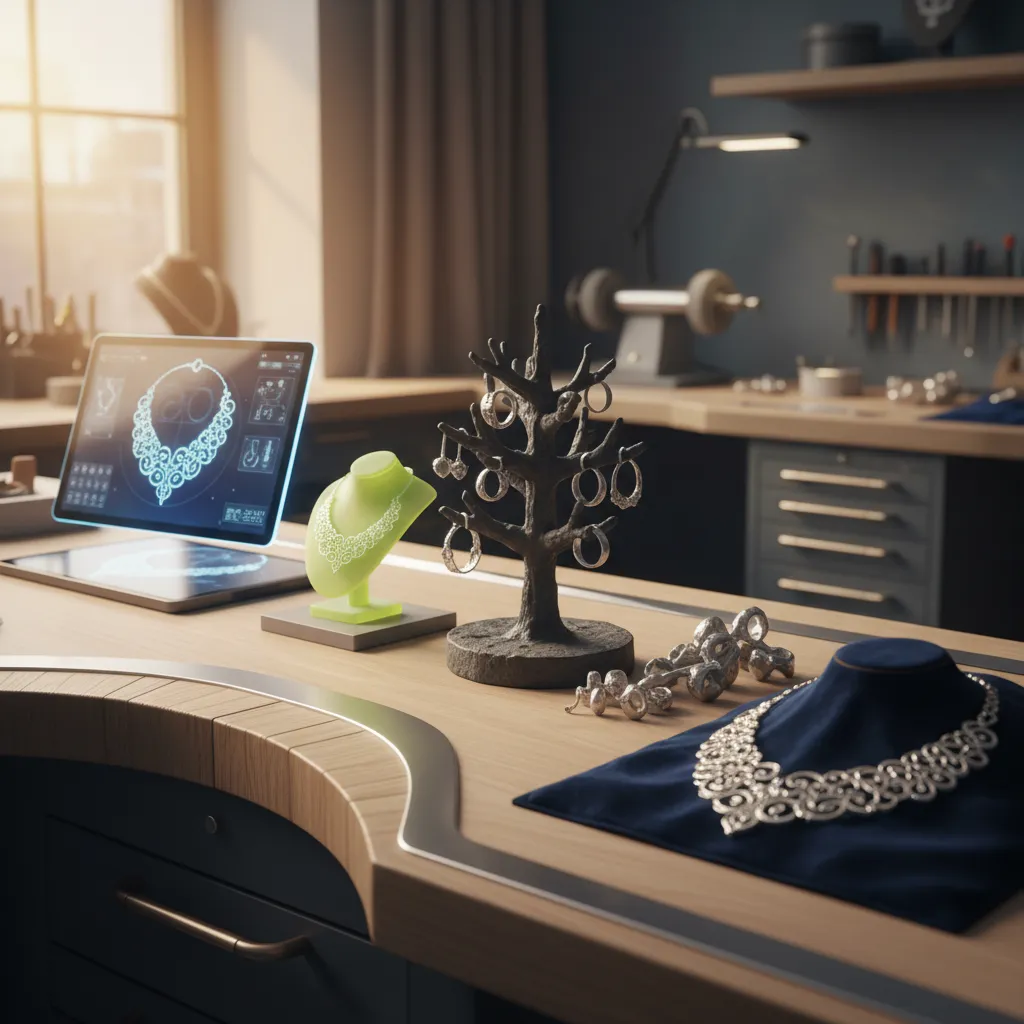
Casting remains one of the most widely used techniques in manufacturing jewelry for brands that need custom forms with reliable repeatability. It is commonly chosen for private label development because it can support a broad range of shapes while still fitting structured production workflows.
Why it stands out: casting often offers the most practical middle ground between creative freedom and production efficiency. Brands that want a recognizable signature look without moving into fully hand-built production often start here.
- Works well for repeatable collection development across multiple SKUs.
- Can support detailed designs that would be difficult to fabricate manually at scale.
- Usually fits established sampling and approval workflows.
- May be easier to standardize for wholesale reorders than highly manual methods.
Considerations:
- Sampling is still critical because design details that look strong in concept may need revision in production.
- Initial setup and approval stages may take time, especially for first-time founders.
- Not every design intent translates cleanly into an efficient casting workflow.
Who it is for: brands launching custom collections, boutiques building private label lines, and businesses that expect reorders or moderate production runs. It is also relevant if you are comparing specialized subcategories such as gold plated jewelry manufacturing and want to understand the production method behind repeatable output.
Verdict: For many B2B projects, casting is the default benchmark because it balances customization with manufacturing practicality.
How the Casting Workflow Actually Runs (From CAD to Finished Sample)
From a production standpoint, casting is rarely a single step. A detail that experienced buyers pay close attention to is the sequence of checkpoints that happen between an approved design and a finished sample. If you understand the order of operations, it becomes easier to control revisions and keep your approvals focused on what actually affects bulk production.
In many B2B programs, the workflow typically runs like this: a CAD file or a master model is finalized, a pattern is created (often based on wax or resin), the piece is cast, then it moves through cleanup, finishing, and final sample approval. Each stage is a chance to confirm you are still aligned on the dimensions, the intended look, and the functional requirements before you scale.
Here is where quality and repeatability can drift if the process is not managed carefully. Pattern accuracy is one common point, because small shifts in the pattern can change how crisp edges look or how parts align. Tolerance and shrinkage management can also matter because even a good model may require realistic allowances to produce consistent results. Finishing consistency is another major variable, since finishing choices and technique can influence the perceived sharpness, surface uniformity, and overall visual match between units.
In practice, you can reduce surprises by providing specific information at each checkpoint. At the CAD or master model stage, confirm critical dimensions, how the piece should sit or function in use, and which areas must remain crisp versus softened. At the pattern stage, confirm the areas where detail cannot be lost and where minor variation may be acceptable. At sample stage after casting, cleanup, and finishing, document what is acceptable visually and what must be measured. Clear acceptance criteria keep iterations controlled, especially when you are building a collection that you expect to reorder.
2. CAD/CAM and 3D Model-Based Production
CAD/CAM-supported workflows are among the most popular jewelry manufacturing techniques because they allow brands to evaluate form, proportion, and design intent before production moves forward. In many cases, digital modeling improves communication between the client and manufacturer, especially in overseas collaboration.
Why it stands out: this method may reduce ambiguity early in the process. For brand founders who are not yet fluent in manufacturing language, a digital model often creates a clearer approval path than sketches alone.
- Helps communicate dimensions, shape logic, and visual balance more clearly.
- Can support design iteration before committing to production tooling or sampling.
- Useful for custom collections with unconventional geometry or branded forms.
- Often strengthens collaboration between design and manufacturing teams.
Considerations:
- A polished digital file does not guarantee a frictionless production result.
- Designs may still need modification for manufacturability, durability, or finishing.
- Founders can over-approve visual aesthetics without fully evaluating production practicality.
Who it is for: businesses developing custom lines, brands with strong visual direction, and teams that need a more controlled pre-production process.
Verdict: CAD/CAM is often less of a standalone manufacturing method and more of a critical bridge between design intent and reliable production.
Secondary Techniques Many Manufacturers Use (And When They Matter)
At the wholesale level, the main technique is only part of the story. Many production outcomes are shaped by secondary operations that happen after the core method is selected. These steps can affect lead time, quality control planning, and how many approvals you should expect before bulk production.
Laser welding is one example. It is often used for precise joins or repair work where heat control and clean assembly matter. From a brand perspective, what matters is not the tool itself, it is the workflow decision. You should know whether these joins are planned as part of the build, or whether they are being used to correct issues later, because that can influence consistency across units.
Stone setting, when part of your product design, is typically its own production stage with its own inspection points. It can introduce additional approvals, because the visual alignment and security of set elements can change the perceived quality quickly. The same goes for ring sizing or size variation programs. Sizing is not just a customer service detail in B2B, it is an operational plan, because size range impacts batching, labeling, and inspection steps.
Finishing is another major operation that often gets under-planned. Many manufacturers treat finishing as a separate department or specialist step because it requires repeatable technique and clear reference standards. What experienced buyers know is that finishing is where two pieces made from the same model can still look different if the workflow is not tightly controlled.
If you want cleaner production planning, ask these questions before approving samples: Will these operations be done in-house or through a specialist partner? What checks happen after each step, especially before packing? If rework is needed, how is it documented, and does it trigger a new approval or can it be corrected within agreed limits? Clear answers help you build a realistic timeline and reduce preventable variation once your program moves into wholesale quantities.
3. Hand Fabrication
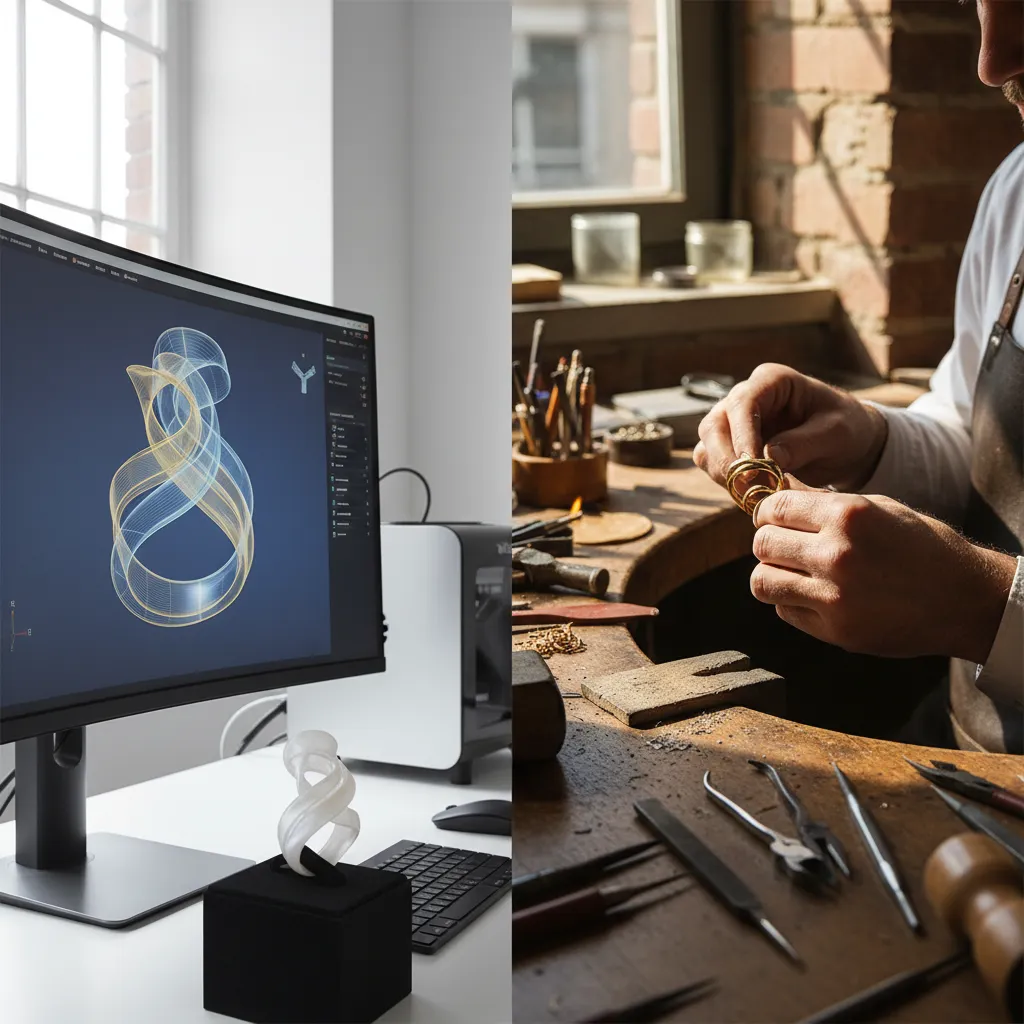
Hand fabrication is still relevant in B2B jewelry manufacturing, particularly for limited runs, artisanal collections, and pieces that require direct bench-level control. It is less about speed and more about flexibility, detail judgment, and making adjustments during the build process.
Why it stands out: it may offer greater responsiveness when a design calls for nuanced construction decisions that are harder to standardize in a larger production workflow.
- Can be well suited to highly specialized or low-volume production.
- Allows direct intervention during the making process.
- May support niche positioning for brands emphasizing craftsmanship.
- Useful where design adaptation is expected during development.
Considerations:
- Consistency across larger wholesale orders may be harder to maintain than with more systemized methods.
- Production speed may be slower depending on design complexity.
- Scaling may require process changes if demand increases.
Who it is for: boutique collections, design-led launches, and founders who expect lower quantities with a stronger artisanal positioning.
Verdict: Hand fabrication can be a strong fit for distinctive brand identity, but it usually requires realistic planning around scale and repeatability.
Handmade vs Mass-Produced in a Wholesale Context (Setting Expectations for Variation)
Many brand owners use the word “handmade” as a quality signal, but in manufacturing jewelry it can mean very different things. For wholesale planning, it helps to separate three common realities: handmade construction, hand-finished production, and production-assisted work where hand steps exist inside a systemized workflow.
Handmade construction usually means the piece is built largely at the bench, with more decisions being made during the making process. Hand-finished production often means the core shape may be produced through a repeatable method, then final surface and detail work is refined by hand. Production-assisted work sits between those two, because hand steps still happen, but they are guided by fixtures, controlled processes, or repeatable checkpoints intended to support consistency.
When setting expectations for variation, you can protect consistency without forcing unrealistic bench work by defining what must be measured and what must be visually matched. Measurements might include key dimensions that affect fit, alignment between parts, or functional clearances. Visual matching might include symmetry, finishing uniformity, and overall silhouette when multiple units are viewed side by side. If you specify what matters most, your manufacturer can focus inspection and rework where it actually protects your brand.
This also ties into merchandising and reorder strategy. A controlled level of variation may be acceptable in limited runs or in designs where slight differences read as part of the craft story. In practice, variation becomes a risk when it creates returns, complicates SKU consistency, or makes reorders look different from earlier deliveries. If your retail partners or customers expect tight unit-to-unit matching, you will want a production plan that treats consistency as a requirement, not a hope. Royi Gal’s dual experience as both a designer and manufacturer matters here, because expectation-setting is not only a creative decision, it is a production decision that should be documented before you scale.
4. Stamping and Die-Based Production
Stamping and die-based production are popular where a brand needs repeatable, simpler forms across larger quantities. This method can support production efficiency, especially for components or designs that do not require heavily sculpted forms.
Why it stands out: it may offer operational advantages when a collection is built around consistency, speed, and repeatable geometry rather than one-off complexity.
- Often supports efficient production for simple and repeatable components.
- May improve consistency across larger runs.
- Can suit brands with stable evergreen product lines.
- Useful in collections where the visual language is clean and standardized.
Considerations:
- Less suitable for highly sculptural, deeply customized, or fluid forms.
- May involve setup decisions that only make sense at certain order volumes.
- Design changes after approval can disrupt efficiency.
Who it is for: established product lines, repeat wholesale programs, and businesses that need process stability more than extensive shape freedom.
Verdict: This technique is often strongest where simplicity, consistency, and reorder planning matter more than visual complexity.
5. Assembly-Based Production
Assembly-based production is common in commercial jewelry programs because it can create wide assortment breadth from a controlled set of components and workflows. For brands managing multiple SKUs, this method may support collection expansion without redesigning every element from scratch.
Why it stands out: it allows product architecture. A business can create visual variety through configuration, component combinations, and finishing choices rather than relying only on entirely new forms.
- Can help expand a collection efficiently.
- Supports modular design thinking across product families.
- May simplify reorder planning if core components remain stable.
- Works well where merchandising variety is important.
Considerations:
- Quality control depends on component consistency and assembly precision.
- Overly complex combinations may create avoidable production errors.
- Visual originality can suffer if the system becomes too standardized.
Who it is for: wholesale brands, boutiques building broad assortments, and private label programs that need efficient SKU variation. It can also intersect with niche component-driven categories, even unusual details such as kumihimo cord, when a collection includes mixed construction approaches.
Verdict: Assembly-based production is often commercially effective for brands that think in ranges and assortments, not just single hero pieces.
How to Choose the Right Technique for Your Business
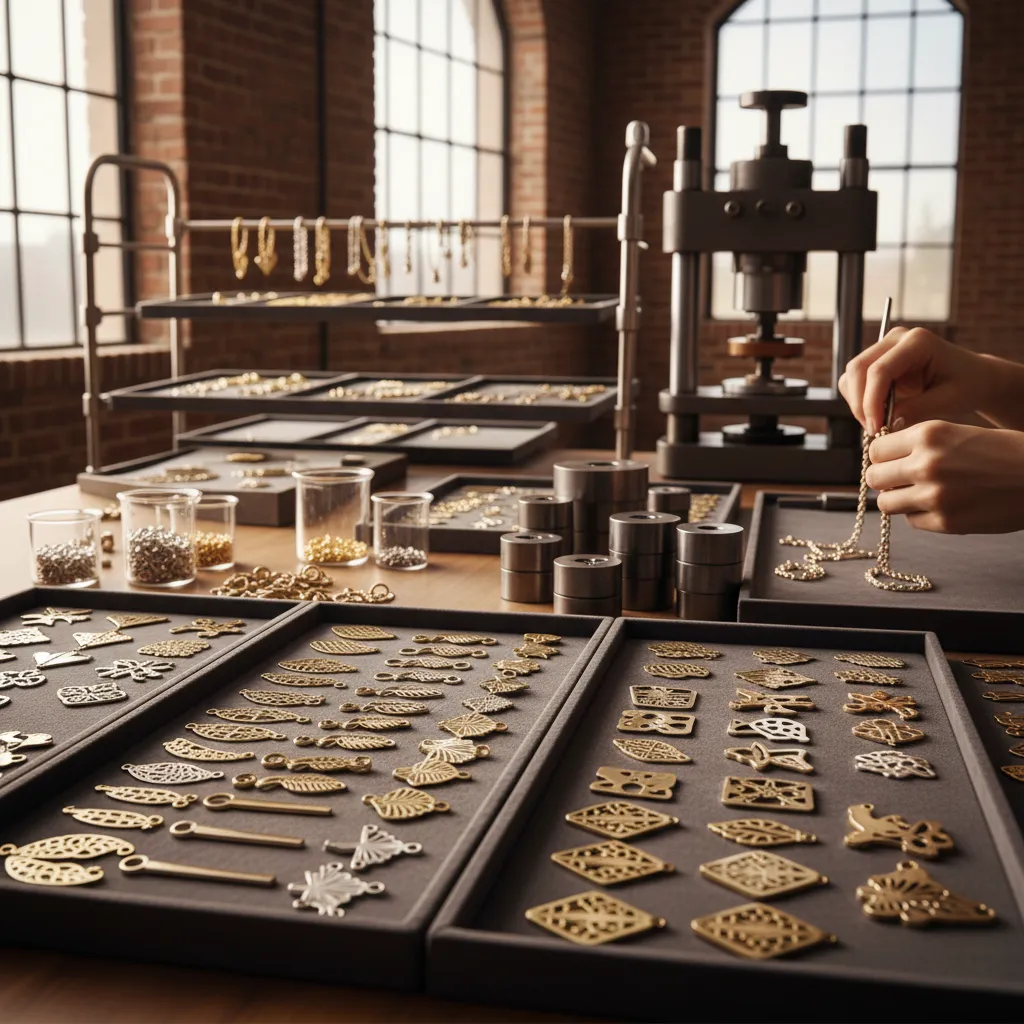
The right manufacturing technique depends on more than aesthetics. Jewelry businesses usually make stronger decisions when they evaluate methods against operational criteria, not just concept boards.
1. Start with your production goal
If your collection is intended for repeat wholesale orders, techniques that support consistency and scalable workflows are often the safer choice. If you are testing a niche concept or a small launch, a more flexible method may be appropriate even if unit efficiency is lower.
2. Match the technique to your design complexity
Complex forms often benefit from digital design development before manufacturing. Simpler shapes may not need the same level of modeling effort. Brands entering custom fine jewelry or custom private label work should pay close attention to whether the chosen production route can realistically support the intended detail level.
3. Evaluate communication and revision risk
This is one of the most overlooked parts of manufacturing jewelry. A technique may look efficient on paper, but if it creates confusion between the founder and the production team, it can lead to delays and revisions. Royi Sal Jewelry’s collaborative model is relevant here because custom development typically works best when design consultation and manufacturing are treated as one connected process rather than separate handoffs.
Led by Royi Gal, whose experience spans both design and manufacturing, the company works with B2B clients who need practical guidance from concept through production. If you are comparing manufacturing routes and want a partner who can help assess feasibility before you commit, Royi Sal Jewelry may be a useful resource to explore at royisal.com.
4. Consider scale, not just launch
Many founders choose a technique based on what works for their first sample, then discover it does not scale well. Ask how the method might perform if you need reorders, SKU expansion, or more structured fulfillment later. Royi Sal Jewelry also supports global shipping and order fulfillment, which can matter once a collection moves beyond its first development stage.
5. Review quality control requirements
Every technique creates different inspection points. Casting may require close review of consistency and finishing. Assembly-based production may depend on component accuracy and workflow discipline. Hand fabrication may need stronger expectation-setting around variation. Your manufacturer should be able to explain where risk points may appear and how approvals are handled before production runs begin.
Methodology
This evaluation prioritizes criteria that matter to B2B jewelry decision-makers rather than consumer trend appeal. The techniques were assessed using six practical factors: manufacturing quality and craftsmanship, design capability and custom service range, trust and communication, order flexibility, lead time impact, and support for global operations.
The ranking is not absolute because no single technique fits every business model. A method that works well for a design-led boutique launch may not suit a wholesale reorder program. The aim here is to help brand founders, retailers, and private label managers compare manufacturing approaches through a commercial lens: how well the technique supports product development, approval accuracy, repeatability, and long-term scaling.
Strengths and Considerations
Strengths
- The most popular jewelry manufacturing techniques each solve a different business problem, from scalable repeat production to highly customized development.
- Brands can often combine methods, which may improve both design freedom and production practicality.
- Digital workflows can strengthen communication before production starts, reducing some avoidable misunderstandings.
- Structured manufacturing choices may improve reorder consistency and help support wholesale growth.
- A clear understanding of technique fit can reduce costly redesigns during sampling.
Considerations
- No technique removes the need for sampling, revisions, and clear approvals.
- What works for a first prototype may not be the best fit for larger production runs.
- Overseas production still depends heavily on communication quality, realistic briefs, and aligned expectations.
- Some methods may require more upfront planning before they become commercially efficient.
Frequently Asked Questions
Which jewelry manufacturing technique is most common for private label brands?
Casting is often one of the most common choices because it can support custom design while remaining practical for repeat production. That said, many private label programs also use CAD/CAM in development and assembly-based methods in final production. The right answer usually depends on your design brief, expected order volume, and how much variation your collection needs.
Is hand fabrication a poor fit for wholesale jewelry?
Not necessarily. Hand fabrication may work well for smaller wholesale runs, artisanal positioning, or specialized pieces. The main issue is scalability and consistency across larger quantities. If your brand expects frequent reorders or broad SKU expansion, you may need to review whether a more systemized approach would be easier to maintain over time.
Do digital jewelry models guarantee a smooth production process?
No. Digital models improve communication and design clarity, but they do not guarantee that every feature is easy to manufacture. A manufacturer may still recommend revisions to support production feasibility, finishing, or consistency. Digital approval is valuable, but it should be paired with technical review and sampling before production runs are finalized.
How do I know if a technique will scale with my business?
Ask how the method performs at sample stage, small-batch production, and reorder level. A technique that works for a launch may become less efficient if demand grows. Review whether the workflow supports repeatability, stable quality control, and operational planning. A capable manufacturing partner should explain where scale may create new challenges.
Are the most popular jewelry manufacturing techniques also the best for quality?
Popularity and quality are not the same thing. Quality depends on how well the method fits the design, how clearly the brief is communicated, and how carefully production is managed. A simpler technique applied correctly may deliver a better commercial result than a more advanced approach that does not suit the product or workflow.
What should I ask a manufacturer before choosing a production method?
Ask how your design will be translated into production, what revision points are typical, how sampling is handled, and where quality risks may appear. You should also discuss minimum order expectations, production planning, and fulfillment implications. Good manufacturers usually explain tradeoffs clearly instead of presenting every design as equally easy to produce.
Can one jewelry collection use more than one manufacturing technique?
Yes, and many commercial collections do. A brand may use digital modeling for development, casting for hero pieces, and assembly-based workflows for SKU expansion. Mixed-method production can be effective if the collection is planned carefully. The key is making sure the visual language and quality expectations stay consistent across the range.
How important is the design brief in manufacturing jewelry?
It is central. Even the best production method may underperform if the design brief is vague or incomplete. Clear drawings, dimensions, intended use, target quantity, and approval priorities help a manufacturer recommend the right process. Strong briefs typically reduce unnecessary revisions and help align business expectations with technical reality.
Does popular jewelry always require advanced manufacturing methods?
No. Some successful collections are built on straightforward methods used very consistently. Popular jewelry in a commercial sense often comes from strong product-market fit, reliable production, and a clear brand point of view. Advanced methods can help, but they are only valuable if they support the collection strategy and operational model.
What are the two most widely used methods of making jewelry?
In B2B production, two of the most widely used routes are casting-based workflows and fabrication-based workflows. Casting is often used when you need repeatability across a collection and a structured sampling path. Fabrication is often used when a piece requires more bench-level decision-making or when quantities are smaller. Many brands blend both by using digital modeling for development, then choosing the production method that best supports reorder consistency.
What is the most commonly used method of making jewellery?
Casting is commonly used across many commercial programs because it can support custom shapes while staying workable for repeat production. The important detail for brand owners is that “casting” usually includes several supporting steps, including pattern creation, cleanup, and finishing, each of which should be managed with clear approvals if you want consistent wholesale output.
What is the 2:1:1 rule in jewelry?
This phrase can be used in different ways depending on the shop and the context, so it is not a universal manufacturing standard. In some product development conversations, brands use simple ratio rules like this as a shorthand to keep visual proportions consistent across a collection, for example relative sizing between a hero element, secondary elements, and supporting details. If your team uses a ratio guideline, treat it as a design communication tool and document what it refers to in your brief, so your manufacturer can apply it consistently across samples and reorders.
What type of handmade jewelry sells best?
From a wholesale perspective, the better question is which handmade positioning fits your assortment and operations. Handmade styles that tend to perform more reliably are often those that can be repeated with controlled variation, are easy to merchandise as a collection, and have clear quality standards that reduce returns. If your brand story depends on handmade value, align early on whether the product is handmade construction, hand-finished production, or a mixed workflow, because that choice affects consistency, reorder planning, and customer expectations.
Key Takeaways
- Casting, CAD/CAM-supported production, hand fabrication, stamping, and assembly-based workflows are among the most popular jewelry manufacturing techniques for B2B brands.
- The best method depends on design complexity, reorder expectations, sampling needs, and long-term scale.
- Digital design tools improve clarity, but they do not replace feasibility review and production sampling.
- Many brands benefit from combining techniques rather than relying on one method across every SKU.
- A collaborative manufacturer can help match your collection goals to a realistic production route.
Conclusion
The most popular jewelry manufacturing techniques are popular for different reasons. Some support scale, some support design freedom, and some help brands build assortment efficiently. The strongest choice usually comes from matching the method to your actual business model rather than following what seems most advanced or most common. Royi Sal Jewelry approaches custom jewelry development as a collaborative B2B process, combining design consultation, custom manufacturing, and global fulfillment support under one roof. If you are comparing production methods for a new collection or reviewing how to scale an existing line, visit royisal.com to learn more about the process and contact the team to discuss your custom jewelry brief.