
Unleashing Brand Potential Oem Odm Jewelry Manufacturing

What OEM and ODM Really Mean in Jewelry Production
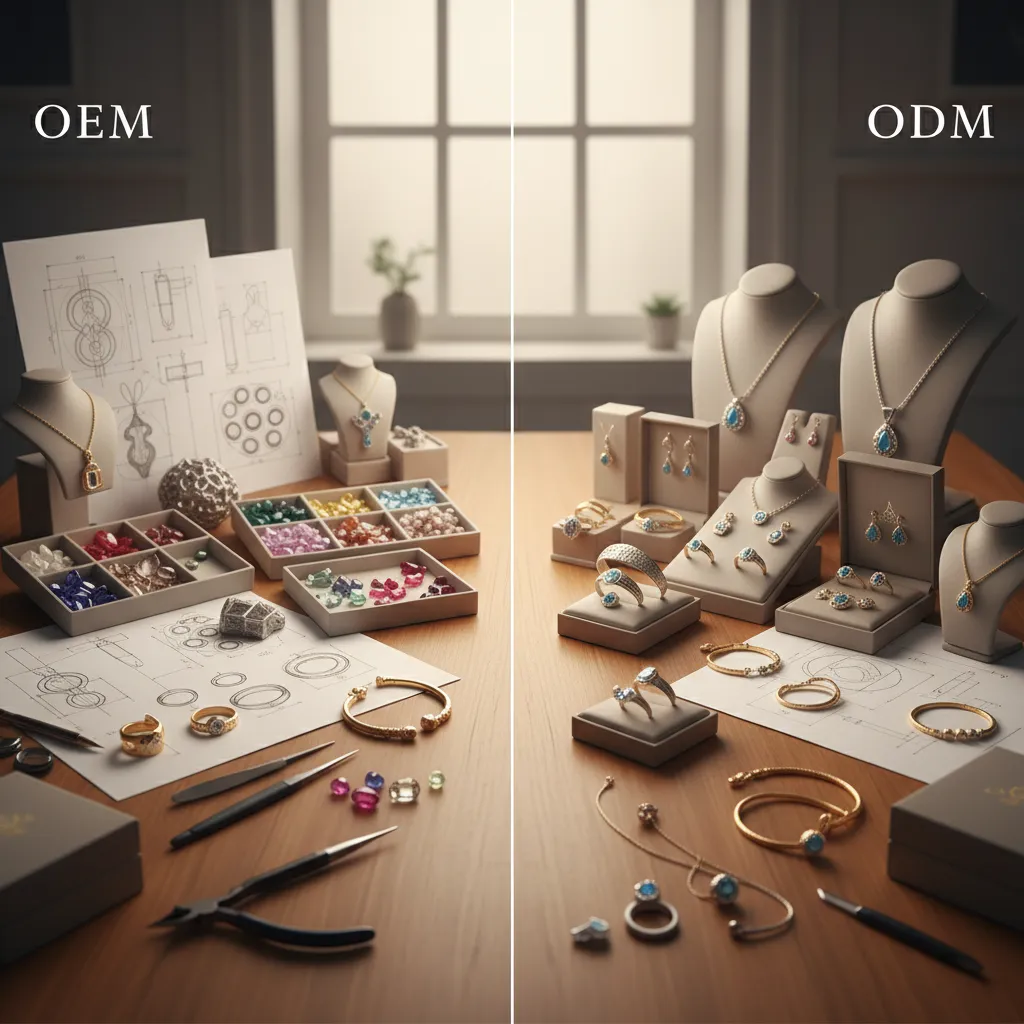
In jewelry manufacturing, OEM usually refers to a model where your brand brings the concept, design direction, or product requirements and the manufacturer produces it according to your brief. ODM generally involves selecting or adapting designs, production-ready concepts, or established development frameworks from the manufacturer. Both can support wholesale and private label growth, but they serve different business situations.
OEM is often more suitable if your collection needs stronger brand distinction. If you already know your customer, your design language, and your assortment strategy, OEM may give you more control over how your line is built. That control, however, often comes with more decisions, more sampling, and more back-and-forth during development.
ODM may work better if speed, structure, and launch efficiency matter more than creating every element from scratch. It can shorten early planning in some cases, though your room for uniqueness may be narrower unless the manufacturer offers thoughtful modification options.
If your team is still clarifying the basics, it helps to understand what is oem manufacturer in practical terms before comparing quotations or development workflows. It is equally useful to review what is private label manufacturing, because many jewelry businesses use these terms interchangeably even though the working relationships can differ.
How These Models Affect Brand Growth
OEM and ODM are not only production choices. They influence merchandising, operations, and how your business scales. A founder who chooses OEM is usually investing more heavily in original positioning. That may support stronger brand recognition, clearer differentiation in the market, and better long-term control over the direction of the collection.
ODM can be appealing for newer businesses that want to test categories without building a full design development system internally. If your business is validating demand, opening wholesale accounts, or preparing a first private label launch, ODM may reduce some of the early complexity.
Neither path is automatically better. A growing jewelry business may even use both models at different stages. For example, a company could begin with ODM-based development to enter the market and then shift selected bestsellers into more customized OEM work once the assortment strategy becomes clearer.
The key business question is not which acronym sounds more advanced. It is whether the model supports your margin goals, launch calendar, quality expectations, and ability to manage revisions. If your brand identity is central to the sale, customization depth may matter more. If speed to market is the main pressure, a more standardized development path may be the practical choice.
OEM vs ODM vs Private Label vs Contract Manufacturing: How the Relationships Actually Differ
Many founders use OEM, ODM, private label, and contract manufacturing as if they mean the same thing. In practice, they describe different parts of the relationship. OEM and ODM are development models, private label is a branding and go-to-market model, and contract manufacturing is a broader term that can cover either approach depending on how the project is run.
Private label answers the question: whose brand is on the product? In private label, the pieces are sold under your brand, with your packaging, positioning, and channel strategy. The product itself can be developed through OEM, ODM, or a mix. A private label program can be very standardized, closer to ODM selection, or highly customized, closer to OEM development. The label does not tell you how much original development is happening, only who is taking it to market.
The practical difference between OEM and ODM is who drives product definition. In OEM, your team typically provides the design intent and requirements, and the manufacturer translates that into a production-ready product through sampling and approvals. In ODM, you are often starting from the manufacturer’s existing development base, then selecting, adapting, and approving changes that fit your brand. That can support faster early assortment building in some cases, but your brand must be clear about what needs to be changed to avoid looking like a market-common design.
Contract manufacturing is often used as a catch-all term during sourcing, but it mainly describes the business arrangement, not the creative direction. A contract manufacturer could be running OEM builds to your specifications, producing ODM-based selections you have approved, or producing an established private label assortment that is lightly customized. What matters is not the label, it is the scope of responsibility and the level of collaboration you actually need.
From a production standpoint, you are usually choosing a level of service as much as a model. A useful decision filter: if your business needs original design direction, controlled brand language, and a clear internal product strategy, you are closer to OEM even if some elements are adapted. If your business needs speed, tested starting points, and a structured framework to validate demand, you are closer to ODM even if you request modifications. If you are unsure, clarify what you can confidently define in writing today and what you need a manufacturer to help you define through guided development. That clarity tends to prevent the most common mismatches between expectations and workflow.
Key Features to Evaluate Before You Commit
A useful evaluation starts with the actual working process, not just the label. Many sourcing problems happen because a brand assumes that OEM automatically means full flexibility or that ODM automatically means limited quality. In practice, the manufacturer’s communication style, design support, and production discipline often matter more than the term itself.
1. Design ownership and interpretation
With OEM, you should expect more attention on your brief, revisions, and approval checkpoints. Your manufacturer needs to understand your intended proportions, visual references, and collection goals. With ODM, the focus may shift toward adapting existing development options to suit your market.
2. Sampling workflow
Sampling is where expectations get tested. Ask how concepts move from idea to review sample, how revisions are documented, and what sign-off points are used before a production run begins. A manufacturer that treats samples seriously will usually reduce confusion later.
3. Communication and change management
Most production setbacks are not caused by bad intent. They are caused by unclear approvals, missing details, or assumptions made too early. You need a partner that can manage changes in an organized way and explain what is feasible within the chosen model.
4. Production scalability
A collection that works in a small trial order may not perform the same way in a broader run. Ask whether the manufacturer is set up for repeat production, batch consistency, and international fulfillment support if your business grows.
5. Design collaboration
Some brands need more than production capacity. They need a partner that can help shape the product direction itself. If your collection sits in a more premium or brand-driven segment, design consultation may be especially valuable. That is one reason many founders exploring luxury jewelry brands custom design services also review whether a manufacturer can contribute strategically, not only operationally.
What You Need to Provide to Start an OEM or ODM Project
Manufacturers can only quote and plan accurately when the brief is commercially clear. A point that is easy to underestimate is that a brief is not only a design description. It is a business document that tells a manufacturing partner how to build, how to plan, and how to avoid expensive interpretation gaps.
In most cases, you will get better outcomes when you provide a defined design intent and a defined business intent. That means clear visual references, but also your target customer positioning, the sales channel you are building for, and how the assortment is supposed to work as a collection. Even a small set of styles benefits from basic structure: how many SKUs, which ones are core, and which ones are optional if timeline or budget pressure appears.
A good brief is specific enough that two different people could read it and reach the same understanding. It usually includes what must not change, what can change, and what requires approval before any adjustment is made. A risky brief is built on assumptions like “make it premium,” “match this vibe,” or “use your best judgment,” without defining what success looks like. That is where revision cycles grow, because each sample becomes a new interpretation exercise instead of a controlled refinement process.
OEM projects typically need more specificity upfront because you are asking the manufacturer to create to your direction rather than selecting from an established base. If you have sketches, reference images, measurements, and a clear list of priorities, your manufacturer can move faster and ask better questions. If you do not have those details, OEM is still possible, but expect more time spent converting ideas into production-ready decisions through structured back-and-forth.
ODM projects often need a different kind of clarity. Since you are starting from existing development options, your job is to select well and then define modifications with discipline. That means being clear about what you want to keep, what you want to change, and what makes the piece feel like your brand rather than a generic market style. In practice, ODM runs smoother when your team can make decisions quickly, approve samples decisively, and maintain consistent direction across the collection.
The fastest projects are not the ones with the fewest messages. They are the ones with fewer open questions. If you want speed, invest time in the brief so your manufacturer can plan sampling, approvals, and production readiness with fewer resets.
Strengths and Considerations
Strengths
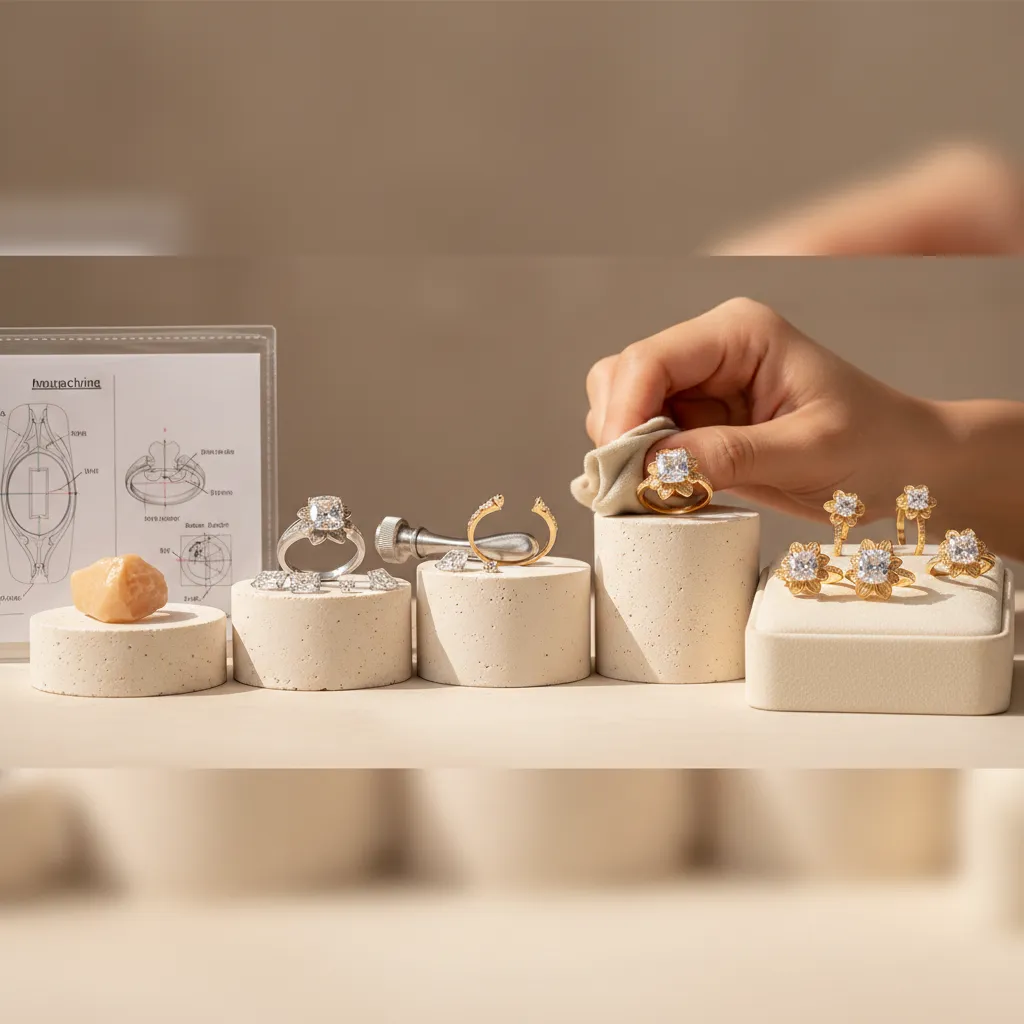
- OEM can give your business more control over product direction, which may support stronger brand differentiation over time.
- ODM may help newer brands shorten development planning and launch more efficiently if they are still validating demand.
- Both models can support private label and wholesale growth when the manufacturer has clear communication and a disciplined production workflow.
- A structured manufacturer relationship can improve consistency across sampling, approvals, and repeat orders.
- Working with a partner that understands both design and manufacturing may reduce interpretation gaps between concept and production.
Considerations
- OEM projects often require more detailed briefs, more revisions, and longer planning cycles before production is ready.
- ODM can be faster in some cases, but it may limit how distinctive your collection feels if customization options are narrow.
- Neither model removes the need for sample approvals, realistic timelines, or active communication from your team.
- Production outcomes may vary based on project complexity, revision discipline, and how clearly the commercial requirements are defined.
Who This Approach Fits Best
OEM is usually a stronger fit for brands that already have a point of view and want that identity reflected in the final collection. If your assortment is central to your market positioning, investing more time in customized development may make sense. This could apply to established boutiques, design-led labels, or founders building a more distinctive long-term line.
ODM may suit early-stage retailers, test-launch brands, and businesses that need a more efficient route into private label. If you are still defining your assortment mix, sales channels, and reorder patterns, a more structured model can help reduce early development pressure.
Some businesses combine both. They may use ODM for supporting styles and OEM for statement pieces or brand anchors. The right fit depends on your internal resources, your launch timeline, and how much uniqueness your customer actually expects from the line.
A Collaborative Manufacturing Option to Consider
Royi Sal Jewelry operates as a B2B custom jewelry design and manufacturing company serving wholesale, private label, and brand-building clients. The company is led by Royi Gal, whose background spans both jewelry design and manufacturing. That dual perspective matters because many brand problems begin at the handoff between idea and production.
For businesses evaluating OEM or ODM pathways, Royi Sal Jewelry may be a useful partner to consider because the company emphasizes collaboration, custom jewelry design and development, manufacturing support, and global fulfillment. That can be especially relevant if your team needs more than factory capacity and wants informed guidance during planning, revisions, and production coordination.
You can explore broader capabilities in Jewelry Manufacturing and review the design side of development through Jewelry Design. If your project is moving from concept to sourcing decisions, visiting royisal.com may help you assess whether a collaborative development model fits your next collection stage.
How to Evaluate Your Options
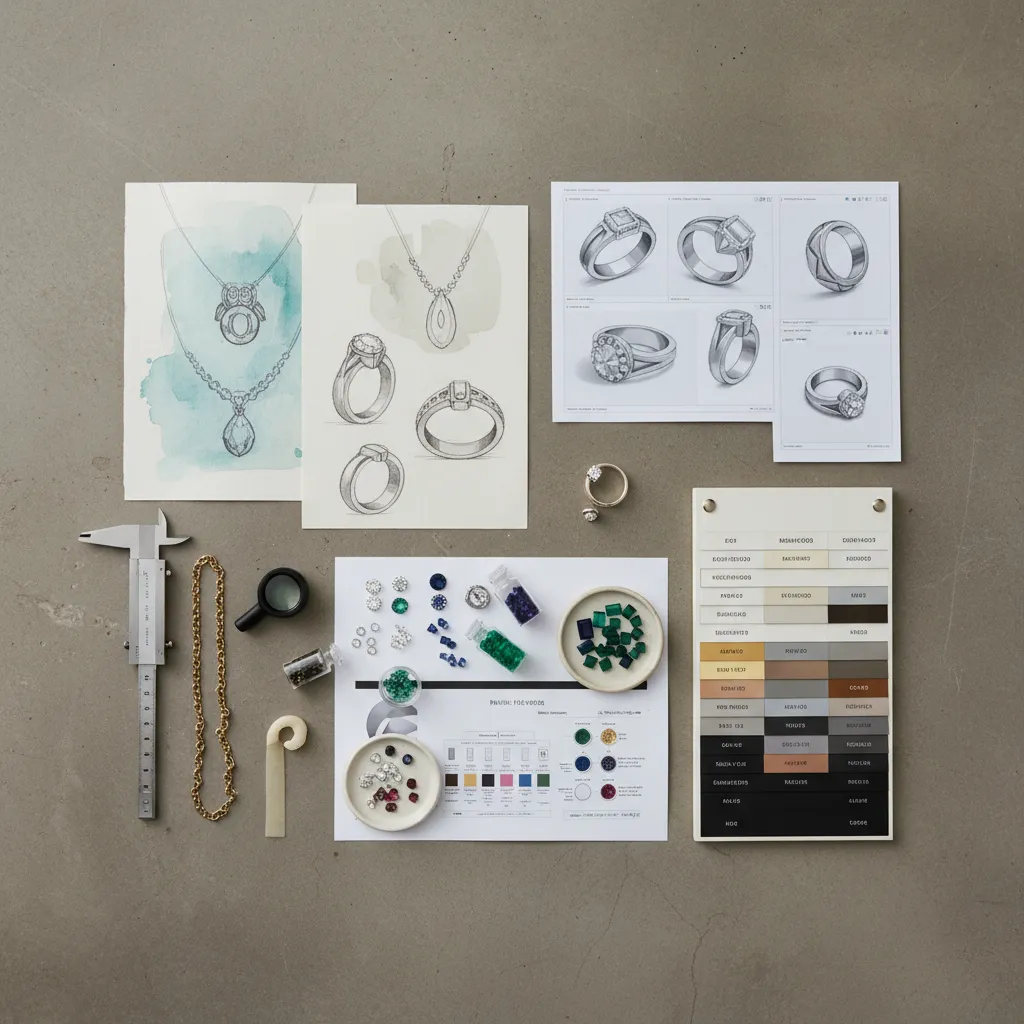
If you are comparing OEM and ODM manufacturing partners, use a criteria-based review instead of relying on sales language alone. A polished presentation does not tell you how a project will run once revisions start.
Design capability and service range
Ask whether the manufacturer can support concept development, design refinement, and practical production feedback. If your team is still shaping the line architecture, this may be as important as the production facility itself. A capable partner should be able to clarify what is possible, what needs adjustment, and where design intent could be affected by production realities.
Quality and repeatability
Look beyond the first sample. You need to understand how the manufacturer handles consistency across larger runs, reorder planning, and approval tracking. Ask how sample feedback is captured and how final production references are controlled.
Communication reliability
A manufacturer may have technical ability and still create costly delays if communication is weak. Pay attention to response clarity, revision tracking, and whether questions are answered directly. Reliability often shows up early, before any order is placed.
Order flexibility and planning fit
Your business should understand minimum order expectations, sampling requirements, and how different development paths may affect production readiness. Even if exact numbers vary by project, the manufacturer should explain the planning implications clearly.
Global support and fulfillment readiness
If you are selling across markets, ask what support exists for shipping and order fulfillment. This may become increasingly important once your business grows beyond a local boutique model and starts managing broader wholesale or direct brand expansion.
A careful review process often reveals whether a manufacturer is prepared to function as a long-term partner or only as a short-term vendor. That distinction can have a major effect on margin stability, launch timing, and collection quality over multiple seasons.
How Experienced Buyers Protect Design Intent and Reduce Copy Risk in OEM and ODM
Outsourcing development or production can raise a real concern for brand owners: how do you protect what makes your product feel like your brand? There is no single step that eliminates copy risk, especially in categories where similar styles circulate widely. What you can do is run a tighter process so your design intent is documented, controlled, and harder to misinterpret or casually reuse.
With OEM, your strongest protection is usually documentation discipline. Clear reference files, version control, and written approvals create a paper trail of what you asked for and what was approved. You also reduce risk by limiting unnecessary distribution of your design files. Share what a partner needs to execute, and keep internal notes, broader concept boards, and future collection plans on your side unless they are required for the project.
With ODM, copy risk can look different because the starting point may be closer to market-common frameworks. ODM can still support a legitimate private label strategy, but meaningful modification matters if you want distinction. Meaningful modification is not only a minor surface change. It can be a concept-level decision such as changing the proportion language across the collection, reworking the design cues so the pieces relate to your brand story, or building a consistent system of details that repeats across multiple SKUs. If your changes are minimal, the final result may still read as a widely available style even if the logo on the packaging is yours.
What a manufacturer can realistically control depends on the relationship and the process. A professional partner can follow your documentation, keep project communication organized, and operate with discretion in how files are handled internally. Your brand still needs to do its part: choose partners carefully, avoid broadcasting detailed design files to multiple factories at once, and keep your internal product roadmap protected. If you are working with more than one supplier, be intentional about who receives which designs and why.
Experienced buyers also protect design intent by controlling approvals. They define who can sign off on samples, what counts as a deviation, and what must be corrected before production. That level of control supports quality, but it also keeps the product language consistent, which is one of the main ways a jewelry line becomes recognizable over time.
Frequently Asked Questions
What is the main difference between OEM and ODM in jewelry manufacturing?
OEM usually means your brand brings the concept or design direction and the manufacturer produces it to your requirements. ODM typically involves working from the manufacturer’s existing design base or development framework, sometimes with modifications. The best option depends on how much originality, speed, and internal design control your business needs.
Is OEM always better for a premium jewelry brand?
Not always. OEM may support stronger differentiation, which can matter for a premium positioning, but it also tends to require more planning, design clarity, and revision management. If your team is still testing the market, ODM could be a more practical first step before moving into deeper customization.
Can a growing brand use both OEM and ODM at the same time?
Yes, in many cases that is a sensible strategy. A business may use ODM for faster-moving or supporting styles while reserving OEM development for signature pieces that define the brand. This mixed approach can help manage risk while still investing in long-term product distinction.
How should I evaluate a jewelry manufacturer beyond product photos?
Ask about sampling, revision handling, communication processes, and repeat production controls. Product photos may show style, but they do not reveal how a manufacturer manages approvals or responds when a design needs adjustment. Operational discipline usually matters just as much as visual presentation.
Does ODM mean lower quality?
No. ODM describes the development model, not the quality standard. A well-run ODM program could still produce reliable results if the manufacturer has strong processes and clear specifications. Quality depends more on production controls, communication, and approval discipline than on the acronym itself.
What role does private label play in OEM and ODM decisions?
Private label can sit within either model. Some private label programs lean toward ODM because they adapt established product concepts, while others move closer to OEM as the brand requests more customization. The commercial structure, branding goals, and development scope will usually determine where the project falls.
Why do so many first production runs need revisions?
Early runs often reveal gaps between the original brief and the production-ready interpretation. Revisions may be needed because dimensions, finishing expectations, or collection consistency were not fully aligned during sampling. This is common in custom manufacturing and should be planned for rather than treated as an exception.
How can I reduce risk before choosing a manufacturing partner?
Document your goals clearly, ask direct questions about workflow, and review how samples are approved before production begins. It also helps to compare manufacturers on communication quality, not only on output examples. A transparent development process usually reduces avoidable misunderstandings later.
What makes a collaborative manufacturer valuable for a jewelry brand?
A collaborative manufacturer can help bridge the gap between design ambition and production practicality. That may include clearer feedback, more structured revisions, and stronger alignment between business goals and technical execution. For brands without a large internal product team, this support can be especially useful.
Who is the largest jewelry manufacturer in the world?
There is not a single universal answer because “largest” can mean different things, such as production volume, revenue, product category, or whether the company manufactures for its own brand versus producing for other brands. From a sourcing perspective, size alone is not a reliable selection metric. For most private label and wholesale buyers, the more useful question is whether a manufacturer can deliver consistent repeat production, clear sampling approvals, and reliable communication at the scale your business actually needs.
Where is the best place to manufacture jewelry?
The best place depends on your product requirements, your development model, and how you want to manage communication and quality control. Some brands prioritize proximity and easier collaboration, others prioritize specialized capability, production capacity, or established supply ecosystems. In practice, the “best” location is the one that supports your timeline expectations, sampling workflow, and consistency standards with the least friction for your team.
What are the coolest jewelry brands?
Cool is usually a result of clear brand identity, consistent product language, and strong merchandising, not only a single design style. From a B2B standpoint, the brands that tend to stand out are the ones that build a recognizable point of view across collections and execute it consistently season after season. If you are building your own line, focus on what makes your assortment distinct and repeatable, then choose an OEM or ODM pathway that supports that control.
What jewelry brand was founded in the US?
Many jewelry brands were founded in the United States, across luxury, heritage, and contemporary categories. If your reason for asking is sourcing strategy, the founder location does not necessarily indicate where manufacturing happens or which model is used. It is more useful to study how a brand built consistency: clear product standards, disciplined sampling and approvals, and a manufacturing partner relationship that supports long-term repeatability.
Key Takeaways
- OEM and ODM are business model decisions as much as production decisions, and each affects control, speed, and brand differentiation.
- OEM may suit design-led brands that need stronger product originality, while ODM may help newer businesses launch with less complexity.
- The manufacturer’s communication, sampling discipline, and repeatability often matter more than the acronym alone.
- Private label jewelry development can involve either OEM, ODM, or a combination depending on your assortment strategy.
- Royi Sal Jewelry offers collaborative custom design and manufacturing support for B2B brands evaluating their next collection move.
Conclusion
OEM and ODM jewelry manufacturing can each support growth, but they serve different commercial goals. If your priority is building a distinct collection with stronger control over product direction, OEM may be the better fit. If your priority is a more efficient path to market with a structured development route, ODM may be the more practical starting point. What matters most is choosing a manufacturing partner that communicates clearly, handles development responsibly, and understands the business pressures behind a launch. Royi Sal Jewelry brings together custom jewelry design, manufacturing experience, and a collaborative B2B approach that may suit brands preparing for their next stage. Visit royisal.com to learn more about the process or contact the team to discuss your project requirements.