
4 Reasons Thai Based Jewelry Manufacturers Should Be Your Next Supplier

Why Thailand Is Often Considered for Jewelry Sourcing
For B2B buyers, the appeal of Thailand is usually not about a single headline advantage. It is about the combination of manufacturing familiarity, supplier networks, export experience, and the ability to handle both recurring wholesale orders and custom development work.
That mix may be especially relevant if your business is in the awkward middle stage. You are too advanced for trading only from generic catalog stock, but you may not yet have the volume, internal technical team, or purchasing leverage of a large global brand. In many cases, Thai based manufacturers are considered because they can fit that middle market requirement.
If your sourcing research is still broad, reviewing the wider Jewelry Sourcing category can help you compare supplier geographies and manufacturing models more clearly. If you are specifically researching the regional picture, this article on thailand jewelry sourcing adds useful context on what buyers may encounter during supplier selection.
Reason 1: Established Production Culture for Jewelry
One of the strongest arguments for sourcing from Thailand is that jewelry manufacturing is not treated as a side capability. In established supplier clusters, jewelry is already part of the local production ecosystem. That can make a difference for buyers who need a manufacturer that understands repeatable processes, production planning, and the back-and-forth that usually comes with collection development.
For a brand owner, this may reduce some early friction. You are less likely to spend every conversation explaining how line sheets, revisions, samples, production approvals, and shipment coordination work. That does not remove risk, but it can make collaboration more workable.
- Manufacturers in established jewelry regions may already understand wholesale order structures and recurring production cycles.
- Sampling and revision workflows are often easier to discuss when the supplier regularly handles design-to-production projects.
- Communication may be more efficient because jewelry terminology and B2B expectations are already familiar.
- Brands looking for continuity may find more stable long-term manufacturing relationships in mature supplier environments.
This still requires verification. You should not assume every Thai supplier operates at the same level. Some may be highly organized, while others may still struggle with documentation, response times, or consistency between sample approval and bulk production.
Reason 2: Better Support for Custom and Private Label Development
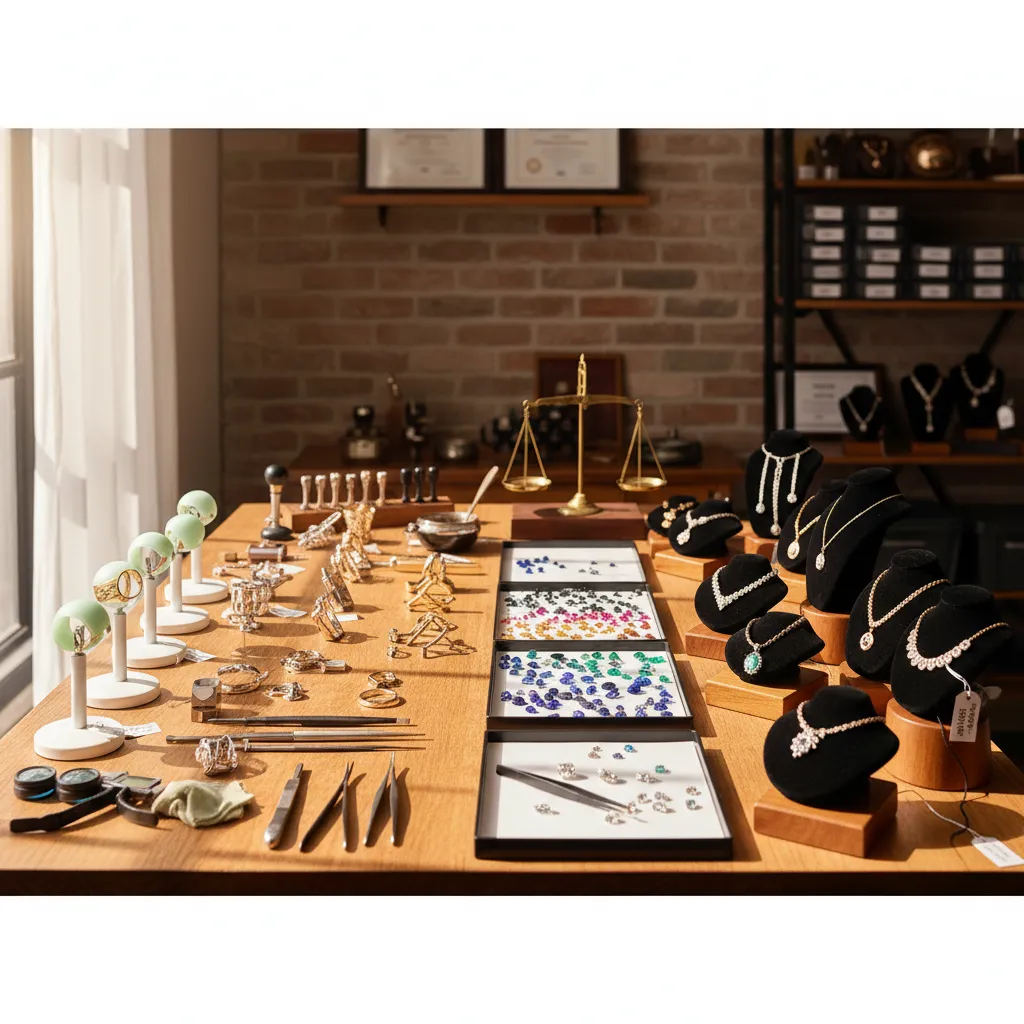
Many jewelry businesses move to Thailand because they are no longer looking for generic stock. They need custom development, private label support, or a manufacturer that can work from sketches, references, or a structured design brief. That is where supplier fit matters far more than headline cost.
Custom manufacturing usually depends on how well the supplier handles clarification, revision rounds, and production alignment. A factory that can only copy basic reference styles may not be the right choice if you are building a brand identity. By contrast, a supplier accustomed to collaborative development may be better positioned to support new product launches and line extensions.
Royi Sal Jewelry operates in this part of the market, focusing on custom jewelry design, collaborative consultation, wholesale manufacturing, private label development, and global fulfillment for business clients. For brands assessing manufacturing partners, it may be helpful to review broader Jewelry Manufacturing resources alongside supplier comparisons.
- Private label brands often need more than production capacity. They need interpretation of the brief, not just execution.
- Custom work may benefit from a manufacturer that can collaborate during development rather than waiting for perfect technical files.
- Design-led businesses usually need a partner that can support revisions before a production run begins.
- Long-term growth often depends on whether the supplier can maintain continuity across future collections, not just one launch.
If your product direction includes region-specific sourcing questions, topics such as wholesale jewelry thailand can help you assess where standard wholesale sourcing ends and true custom manufacturing begins.
Reason 3: Stronger Sourcing Ecosystem for Related Inputs
A manufacturer does not work in isolation. The broader sourcing environment around them often affects timelines, product options, and how efficiently a project moves from development into production. Thailand is often considered attractive because buyers may also access an established ecosystem of related suppliers and industry expertise.
This does not mean every project will be faster or easier. It means there may be supporting infrastructure that helps manufacturers coordinate development more effectively, depending on your product category and sourcing needs.
For example, regional trade and sourcing knowledge connected to topics like chanthaburi sapphire often comes up in discussions about Thailand’s place in the broader jewelry supply chain. Even if your collection does not involve that exact category, it illustrates a wider point: sourcing ecosystems matter.
- A stronger local supplier network may help manufacturers coordinate supporting inputs and production dependencies.
- Buyers may benefit from a region where jewelry-related trade knowledge is already well developed.
- Product development may move more smoothly when the manufacturer is used to working within a specialized sourcing cluster.
- Scaling can become easier if your supplier has access to a dependable support network rather than handling every requirement in isolation.
You should still ask direct questions about what the factory handles internally, what is outsourced, and where quality checks happen. A strong ecosystem helps, but it does not replace clear process control.
What a Thai Jewelry Manufacturing “Ecosystem” Can Include (and What to Verify)
When suppliers talk about “infrastructure” or an “ecosystem,” they often mean something practical: the region can support multiple steps of jewelry production and export without forcing you to piece everything together from unrelated vendors. For a B2B buyer, the value is usually coordination. The more clearly a manufacturer can manage each stage, the fewer gaps you may face between sample approval and bulk delivery.
One important nuance: an ecosystem can exist even when the factory itself does not do every step in-house. Many manufacturers operate as the project owner while certain steps may be handled by specialized partners. That can work well, but only if responsibilities are clearly defined and quality checks are consistent.
- A mature manufacturing environment may include coordinated capacity across development, production, finishing, packaging support, and export documentation handling.
- Export experience can matter in day-to-day execution, not only at the end of the project. It often affects how orders are labeled, packed, documented, and prepared for international shipment.
- Specialization across steps can be a benefit when it improves repeatability, but it can also introduce handoff risk if quality control is unclear.
- Regional coordination is only useful if you can confirm where your project may slow down, and where approvals should be placed to prevent rework.
From a production standpoint, your job is to verify the workflow, not the marketing language. Ask which steps are done internally, which steps involve outside partners, and where quality checks happen at each handoff. Also ask how they keep the sample standard consistent during bulk production, especially if multiple teams touch the product across different stages.
When planning your timeline, keep in mind that lead time is rarely “one number.” It is usually the sum of steps. If one stage becomes a bottleneck, the entire order can slide. Experienced buyers build checkpoints into approvals so issues are caught at the stage where they are still fixable, rather than after everything is already produced.
Reason 4: A Practical Option for Growing Brands, Not Only Large Buyers
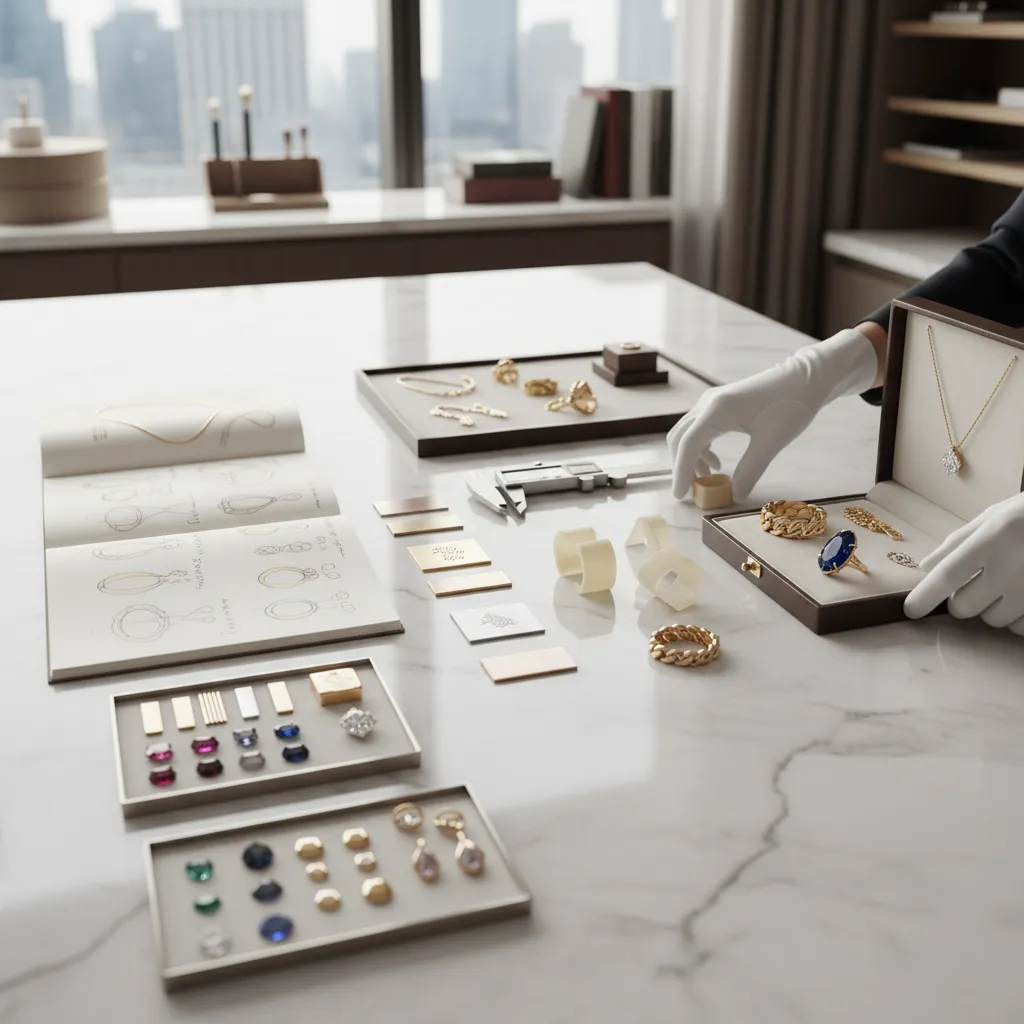
Some sourcing markets work best for very large importers. Others are better suited to tiny test orders with limited customization. Thailand is often considered by brands in between those extremes. If you are a boutique owner, fashion label, or emerging jewelry brand, that middle ground may be exactly what you need.
Many growing businesses want a supplier that can support custom development while still understanding that every project has constraints. You may be balancing launch timing, MOQ concerns, cash flow, sample approvals, and the need to test demand before scaling. A supplier that can work with those realities could be a better fit than one built only for mass volume.
- Growing brands often need flexibility in communication and development planning, not just factory capacity.
- Suppliers familiar with smaller or mid-scale brands may be easier to work with during early collection building.
- Private label founders typically benefit from a partner that understands phased growth.
- A relationship that starts with one collection may expand more effectively if the supplier can scale with your business over time.
This does not mean every Thai supplier is small-brand friendly. Some may still require minimum order quantities or production structures that do not suit a new label. Comparing sourcing regions can help here. For instance, looking at a topic like brass jewelry manufacturer india may help you think more clearly about how manufacturing geography affects product fit, supplier communication, and production expectations.
Strengths and Considerations
Strengths
- Thailand is widely regarded as a serious jewelry production market, which may help B2B buyers find suppliers with relevant manufacturing experience.
- Custom and private label brands may benefit from manufacturers that are used to development-based workflows rather than simple stock order fulfillment.
- A broader jewelry-related sourcing ecosystem may support smoother coordination across development and production stages.
- Thai suppliers may be a practical option for growing brands that need a balance between customization, communication, and scalable production.
- Export-oriented suppliers in mature manufacturing markets often understand the documentation and communication needs of international buyers.
Considerations
- Supplier quality can vary significantly, so country reputation should never replace proper factory evaluation.
- Custom projects may still require multiple sampling rounds, which could affect timelines and launch planning.
- Minimum order quantities, revision limits, and fulfillment scope may differ from one manufacturer to another.
- Communication quality should be tested early because responsiveness during quoting may not always match responsiveness during production.
- Overseas manufacturing still requires clear briefs, approvals, and quality expectations from the buyer’s side.
Cost and Landed-Cost Drivers (Why “Cheap” Can Be Misleading)
Many buyers start their Thailand research with one assumption: that it will be cheaper. Sometimes the quote may look competitive. In practice, “cheap” can be a misleading way to evaluate a manufacturing decision, especially for private label brands that care about consistency and repeatability.
Perceived affordability in a manufacturing region is usually tied to operational structure, not magic pricing. In many cases, established jewelry markets develop specialized labor, repeatable workflows, and supplier density. That can reduce friction, lower certain overheads, and speed up problem-solving. Those factors can influence what you see in a quote, but they do not automatically guarantee the lowest total cost for your business.
What experienced buyers know is that the quote is only one part of your landed cost. Depending on your business model and shipping destination, your true cost per unit can shift based on freight, duties or tariffs, payment terms, and the cost of time. Rework risk is a major hidden driver. If a product arrives out of spec and you need replacements, repairs, additional freight, or delayed launch decisions, the lowest quote can become the most expensive option.
- Freight and customs factors can change your per-unit economics even when the factory price looks attractive.
- Payment structure affects cash flow. A quote that looks lower may still strain your working capital depending on timing and terms.
- Packaging, labeling, and fulfillment scope are often handled differently by different suppliers, so you should confirm what is included.
- Quality drift between sample and production can create costs that never appear on the invoice, especially if issues are discovered late.
In practice, the most useful way to compare countries or factories is to force an apples-to-apples comparison. Send the same specifications, the same quality expectations, and the same approval requirements to each supplier. Clarify whether sampling rounds are included, what counts as a revision, and what packaging or export prep is part of the scope. If you change the assumptions, you are not comparing quotes, you are comparing different projects.
How to Evaluate Your Options
If Thailand is on your shortlist, the next step is not choosing a country. It is choosing a manufacturing partner. That decision usually has more impact on your outcome than the sourcing location alone.
1. Assess design and development capability
Ask how the supplier handles custom development. Can they work from your references and business requirements? Do they explain their sampling process clearly? Do they identify problems early, or do they simply accept every brief without challenge? A manufacturer that asks good questions may save you time later.
2. Review communication discipline
Look at how they quote, answer technical questions, and manage revisions. Reliable manufacturers usually show process discipline before production begins. Slow, vague, or inconsistent communication during sourcing may become a larger issue once orders are underway.
3. Clarify production expectations
Do not move forward on assumptions. Confirm minimum order quantities, sample stages, production lead time ranges, approval checkpoints, and shipping responsibilities. Even experienced buyers can run into avoidable issues if these details are left informal.
4. Check scalability
A supplier may be suitable for a first order but not for long-term growth. Ask whether they can support repeat production, future collection expansion, and volume changes over time. Your best supplier is not only the one who can make the first batch. It may be the one who can support the next five launches as well.
5. Evaluate trust through process, not promises
Do not rely on general claims about quality or service. Ask for a clear workflow. Who manages development? What happens if a sample needs revision? How are approvals documented? How are issues communicated? Trust in manufacturing is usually built through process transparency.
Transitioning Production From Another Country to Thailand (a Controlled Move)
If you already have production running elsewhere, moving to Thailand is rarely a single decision. It is usually a controlled transition. The goal is to reduce operational risk while you confirm that the new supplier can match your specifications, your quality expectations, and your communication needs.
A practical framework many brands use is to start with an internal audit. Identify which SKUs are stable and well-documented, and which products are still changing. Items that are “easy to transfer” are typically those with clear specs, repeatable construction, and straightforward approval history. More complex pieces or products with unresolved quality issues often require redevelopment, not just a factory switch.
- Audit your current assortment, then prioritize transfer candidates based on documentation quality and production stability.
- Separate items that can be replicated from items that should be redesigned or improved during the move.
- Plan sampling before volume. Treat early samples as a process test, not just a product test.
- Build the transition around approval checkpoints so you can stop or adjust before committing to full production.
In practice, transitions fail when brands try to move everything at once. A controlled move often includes a period of parallel production, limited to a few SKUs, so you can compare consistency and resolve gaps. Change control matters here. If you are updating specs, packaging requirements, labeling, or tolerances, document those changes and confirm the factory is building to the same baseline you approved.
To reduce surprises, ask the new factory for operational clarity upfront. A process map helps you understand how your order moves through development and production. A sample plan clarifies how many rounds may be needed and what is evaluated in each round. A responsibilities matrix clarifies what is handled in-house versus via outside partners, and who owns quality checks at each step. Finally, agree on a communication cadence so issues are raised early rather than discovered at the end of production.
A Collaborative Manufacturing Resource to Consider
For brands that want a more collaborative path into custom development, Royi Sal Jewelry is positioned as a B2B custom jewelry design and manufacturing partner rather than a retail seller. The company focuses on custom jewelry design and development, wholesale and private label manufacturing, collaborative consultation, and global shipping support for business clients. Royi Gal’s background as both a jewelry designer and manufacturer adds practical value for brands that need help translating an idea into a production-ready collection.
If your business is comparing overseas manufacturing options, Royi Sal Jewelry may be a useful resource for understanding how a structured, partnership-based process could work. You can explore Royi Sal Jewelry’s design process and manufacturing approach at royisal.com, then contact the team to discuss your project scope, collection goals, and sourcing requirements.
Frequently Asked Questions
Why do jewelry brands consider Thailand for manufacturing?
Many brands consider Thailand because it is commonly associated with an established jewelry production environment. For B2B buyers, that may translate into better familiarity with wholesale processes, custom development, export coordination, and ongoing production relationships. The key point is still supplier fit. A strong manufacturing region can help, but your results will depend on the specific partner you choose.
Are Thai jewelry manufacturers better for custom work or stock wholesale?
That depends on the supplier. Some may be better suited to standard wholesale programs, while others may be more comfortable with private label and custom development. If your brand depends on differentiated products, ask detailed questions about sampling, revision rounds, design interpretation, and production approvals. Those answers usually tell you more than a broad country label.
What should I ask before choosing a Thai jewelry supplier?
Ask about their development process, minimum order quantities, communication structure, sample approvals, production planning, and shipping responsibilities. You should also clarify what is handled directly by the manufacturer and what may involve outside partners. These details are often more important than marketing claims because they affect whether your collection can move from concept to production smoothly.
Can small or growing jewelry brands work with Thai manufacturers?
In many cases, yes, but not every supplier will be the right fit. Some manufacturers may work well with growing brands that need phased development and measured scaling. Others may be set up for larger recurring orders. A good match usually depends on your order size, customization needs, product complexity, and how clearly you can communicate your business requirements.
Do Thai manufacturers usually offer private label support?
Some do, but the level of support may vary a lot. Private label work often requires more than production capacity. It may involve collaborative design interpretation, revision management, and repeat production planning. If private label is central to your business model, verify that the supplier has a clear workflow for custom development rather than assuming that all manufacturers handle it equally well.
How can I reduce risk when sourcing jewelry from overseas?
Start with a detailed brief, document approvals carefully, and confirm each production stage before committing to volume. You should also test communication quality early and ask how changes are handled after sampling begins. Overseas manufacturing can work well, but it is rarely risk-free. Strong process control on both sides usually matters more than geography alone.
Should I compare Thailand with other manufacturing countries?
Yes. Country comparisons can help you understand differences in supplier structure, communication style, product specialization, and business fit. The goal is not to find a universally best country. It is to identify which manufacturing environment and supplier model best match your brand’s product direction, production volume, and need for long-term collaboration.
What makes a good manufacturing partner for a jewelry brand?
A good partner typically combines design understanding, process transparency, consistent communication, and the ability to support repeat production. They should also be honest about limitations, timelines, and order requirements. For growing brands, the best manufacturing relationship is often one where the supplier can support both early-stage development and future scale without constant operational friction.
Is jewelry made in Thailand good quality?
It can be, but quality is determined by the specific manufacturer’s process control, not the country label. Evaluate whether the supplier can document specifications, manage sampling revisions, maintain consistency between approved samples and bulk production, and show clear quality checkpoints. A strong production region may increase your chances of finding capable partners, but you still need to verify fit through process, samples, and communication.
Why is Thailand jewelry so cheap?
The premise is not always accurate, and “cheap” is rarely the right decision filter for a brand. Some projects may quote lower due to specialized workflows or a mature supplier network, but your real cost is usually your landed cost. Freight, duties or tariffs, payment terms, packaging scope, and rework risk can all change the actual economics compared to the initial quote. Comparing suppliers based on the same specifications and the same quality expectations is the most reliable way to evaluate cost.
What is Thailand famous for in manufacturing?
From a B2B sourcing perspective, Thailand is commonly associated with export-oriented manufacturing and established production clusters in certain categories, including jewelry in specific regions. For buyers, the practical benefit is often familiarity with international documentation and recurring production cycles. That said, the strengths that matter most are still factory-specific, such as communication discipline, sampling workflow, and quality consistency.
What are the reasons that make them suitable for making jewellery?
Brands often consider Thailand because it may offer a combination of jewelry-focused production experience, access to supporting supplier networks, and manufacturers that can work with custom and private label workflows. Suitability still depends on verification. You should confirm what is done in-house versus outsourced, how approvals are handled, where quality checks occur, and whether the supplier can support repeat production without drift over time.
Key Takeaways
- Thailand is often considered for jewelry sourcing because it may offer a strong combination of manufacturing experience, supplier networks, and export familiarity.
- Country reputation is only a starting point. Your actual outcome will depend on the supplier’s development process, communication quality, and production discipline.
- Thai manufacturers may be especially relevant for brands that need custom or private label support rather than basic catalog sourcing alone.
- Growing jewelry businesses should evaluate MOQ fit, sampling workflow, scalability, and approval procedures before choosing a partner.
- Royi Sal Jewelry is one collaborative B2B resource for brands that want support with custom jewelry design, manufacturing, and private label development.
Conclusion
Thailand can be a strong sourcing option for jewelry businesses, but the real decision is not whether a country looks promising on paper. It is whether a specific manufacturer can support your product vision, communication needs, and production requirements over time. The best suppliers usually stand out through process clarity, realistic expectations, and the ability to collaborate during development, not just quote quickly. If your business is exploring custom jewelry production or private label manufacturing, Royi Sal Jewelry offers a partnership-driven approach shaped by Royi Gal’s experience as both designer and manufacturer. Visit royisal.com to learn more about the manufacturing process, or contact the team to discuss your custom jewelry brief and sourcing goals.