


Royi Sal Jewelry works with B2B clients on custom jewelry design, manufacturing, and global fulfillment. As a result, the team treats tariff planning as part of the production conversation, not as a finance issue that appears after the order starts moving.
Quick overview: how do tariffs affect jewelry manufacturing costs?
- Identify which SKUs, suppliers, and shipment routes are tariff-sensitive.
- Calculate full landed cost instead of relying on quoted manufacturing cost alone.
- Revise wholesale and private label pricing using margin thresholds, not guesswork.
- Review alternate sourcing setups, production timing, and country strategy.
- Ask manufacturers how tariff risk affects samples, production runs, and fulfillment.
- Create a reorder policy that accounts for changing trade costs before scaling.
What you’ll need for jewelry tariff planning
- Your current or planned SKU list
- Supplier quotes or estimate ranges for development and production
- Shipping, customs, and import cost assumptions
- Your target gross margin by product group
- Reorder planning assumptions for the next 6 to 12 months
- A manufacturer or sourcing partner willing to discuss production structure clearly
Step 1: Map how tariffs affect jewelry manufacturing costs by SKU
Start by listing the products that face tariff-related cost changes. Include current production, incoming sample work, and any private label assortment you expect to reorder. A broad concern about tariffs is less useful than a SKU-level view.
Next, separate your exposure into three buckets: items already in production, styles still in development, and future concepts not yet quoted. The further upstream the item is, the more room you have to adjust design scope, country of manufacture, order timing, or assortment size before costs harden.
If you are still learning the broader topic, review jewelry tariffs first. You can also compare that guidance with tariffs on jewelry to see how import duties can affect business planning across categories.
How do tariffs affect jewelry manufacturing costs through HS codes?
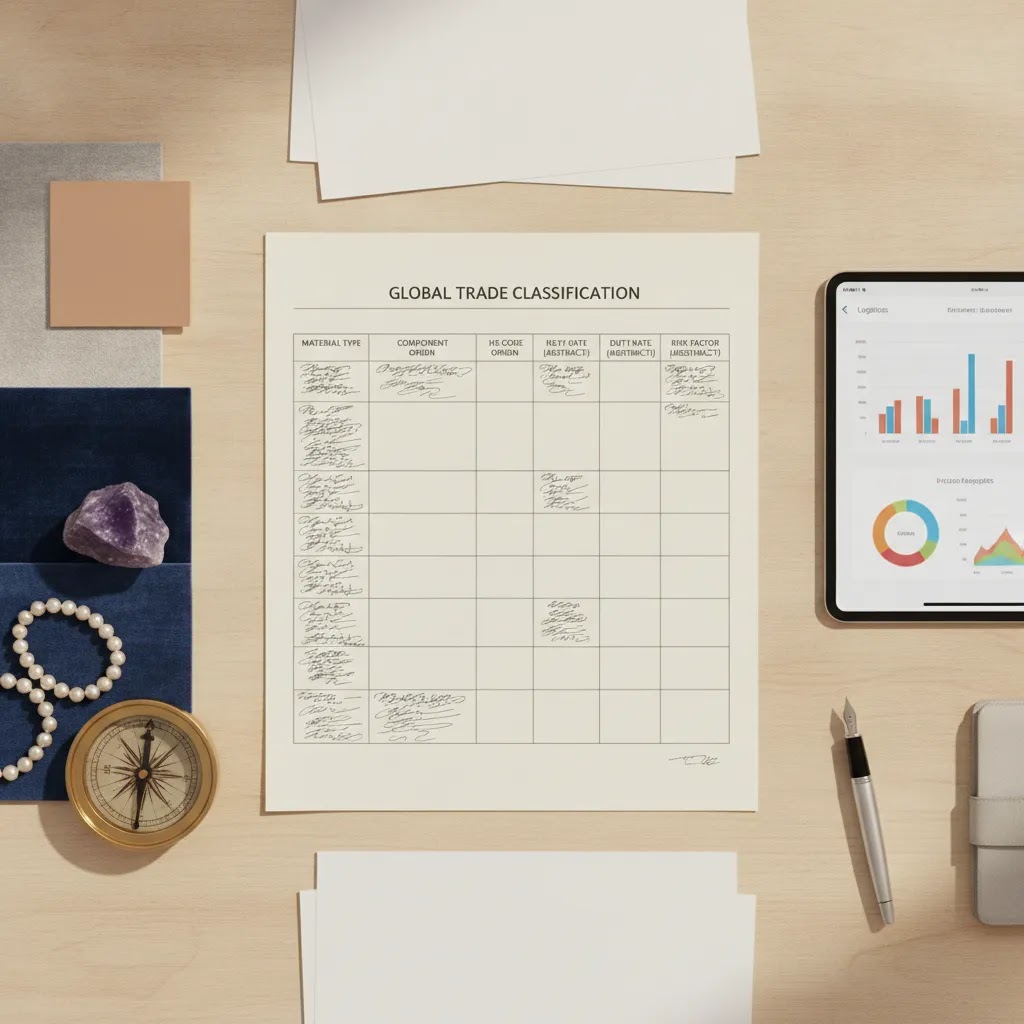
Tariff exposure does not depend on whether something is “jewelry” in a general sense. Customs authorities look at how the item is classified at import. They use HS or HTS codes, the declared product description, and the country-of-origin treatment. That is why SKU mapping works best when each style includes an assumed classification, a consistent description, and the build details that support that description.
For a brand, this is mainly a documentation and consistency issue. It is not usually a do-it-yourself customs exercise. Your customs broker will often confirm classification and duty treatment, but you still control the inputs. Therefore, make sure invoices, packing lists, and product reality match. Keep your internal spec sheet or bill of materials consistent from sampling to production. If shipment paperwork says one thing and the physical product shows another, delays and reclassification become more likely.
Country of origin can be less obvious than it seems, especially in multi-country production. A style might use components from one place, while another team assembles, finishes, or packages it elsewhere. In some cases, those steps can change origin treatment and duty results. If your supply chain spans multiple locations, confirm origin as a data point. Do not treat it as a guess. In addition, keep your manufacturer and broker aligned on how each SKU is described and made.
For official classification research, many importers review the U.S. Harmonized Tariff Schedule. For broader import guidance, the U.S. Customs and Border Protection import guide is also useful.
Step 2: Calculate how tariffs affect jewelry manufacturing costs at landed cost level
Tariffs affect business decisions most when buyers treat factory pricing as the whole story. In jewelry manufacturing, landed cost is the number that matters. It may include manufacturing charges, development costs, freight, customs-related expenses, and any added buffer for cross-border uncertainty.
This matters because a product that looks viable at the unit production stage may look much weaker after import. Small accessories and jewelry lines are especially vulnerable to margin compression. Even a percentage-based change can spread across many SKUs at once.
Use one worksheet for existing suppliers and one for possible alternatives. That gives you a cleaner basis for analyzing the tariffs impact on jewelry prices instead of relying on rough assumptions.
| Cost area | How the article says tariffs affect it |
|---|---|
| Manufacturing charges | Part of landed cost and should not be reviewed alone |
| Development costs | Included in landed cost modeling for custom programs |
| Freight | Can change the final margin outcome after import |
| Customs-related expenses | Can reduce margins even when factory quote stays stable |
| Added buffer for cross-border uncertainty | May be needed when trade costs are volatile |
What products tariffs affect most in jewelry manufacturing
Most brands look at finished goods tariffs first. However, tariff sensitivity can appear in several cost buckets. Finished jewelry is the obvious one, but components and findings used in production, packaging, and even non-merch inserts that ship with orders can also affect landed cost. Small add-ons may look minor at the unit level. Still, they can move margins when you repeat them across an assortment or ship them often.
Sampling is another area that can surprise teams. Early-stage sample shipments may carry higher per-unit freight, brokerage minimums, and handling fees than bulk production shipments. Even when the tariff rate stays the same, the total import and logistics overhead per piece can vary a lot between a one-off sample delivery and a consolidated production shipment. That is why it helps to model samples and production separately.
To keep decisions commercial, apply a simple lens to your SKU list. Which styles are essential to prototype now? Which can wait until duty and logistics assumptions are clearer? Which can move in fewer shipments to reduce repeated customs and brokerage friction? This is not about avoiding development. Instead, it is about sequencing it more carefully.
Step 3: Price for how tariffs affect jewelry manufacturing costs
Once landed cost changes, pricing strategy must change too. You usually have four choices: absorb the cost, increase wholesale prices, redesign the assortment, or use a mixed approach. Most brands combine at least two of these.
Review products by role in the collection. Hero items, entry-price items, and reorder staples should not follow the same pricing response after a tariff shift. Some SKUs can carry a higher increase because they support brand identity or offer stronger perceived value. Others may need a redesign or a temporary pause if the revised economics no longer work.
For brands with silver-oriented lines or related programs, category economics may shift differently across the assortment. That is why broader educational material on wholesale silver jewelry can help when you review price architecture.
Step 4: Adjust sourcing when tariffs affect jewelry manufacturing costs

Tariffs do not always require a full supplier change, but they often justify a sourcing review. The practical question is not only “what is the tariff rate?” Instead, ask which production structure gives the business the best control over cost movement. That may mean changing where some SKUs are made, re-sequencing launches, or separating development from production decisions.
Royi Sal Jewelry operates in custom jewelry design and manufacturing with a collaborative B2B model. Therefore, this kind of review works best early, while design choices, sample planning, and production run assumptions are still flexible. The company’s focus on consultation, manufacturing support, and global fulfillment matters here because tariff strategy often connects directly to execution details.
If country selection is part of your planning, compare your current assumptions with a dedicated resource on thailand jewelry sourcing. You may also find it helpful to review continuous business growth by manufacturing from china to thailand before you test a sourcing shift against your margin targets.
Step 5: Build tariff language into supplier discussions
Many tariff problems begin when buyers and manufacturers discuss product cost without discussing trade-cost volatility. During inquiry and development, ask how quotations are structured, which assumptions are fixed, what may change before production, and how shipping or fulfillment decisions could affect landed cost.
This is also where partnership quality matters. A manufacturer that supports custom development should discuss design briefs, production stages, and order planning in commercial terms, not only technical ones. Royi Gal’s background as both a designer and manufacturer supports that kind of cross-functional conversation, especially for brands balancing aesthetics with margin discipline.
Use your sourcing conversations to clarify whether a style is best quoted as a test run, a sample-led pilot, or a larger production commitment. That distinction can shape exposure significantly.
Step 6: Protect margins when tariffs affect jewelry manufacturing costs on reorders
The first order usually gets the most attention, but tariff pressure often hurts more on reorders. Once a style starts selling, brands can become reluctant to revise specifications or pricing. As a result, they may scale a line whose economics have quietly deteriorated.
Set a reorder review point before committing to expansion. Recheck landed cost, margin floor, and assumptions around freight, customs, and timing. If your business is growing across regions, this becomes part of operations, not just procurement.
For teams that are assessing manufacturing structure, Royi Sal Jewelry’s broader Jewelry Manufacturing resources and its Jewelry Sourcing category can help frame the next discussion with a production partner.
Scenario planning for volatile tariffs: how to build a reorder playbook
If tariffs are volatile, a single landed-cost number is not enough for reorder decisions. Build two to three scenarios for each major product group. Create a base case that reflects current assumptions. Then add a downside case that reflects a meaningful increase in trade and logistics costs. Finally, add a severe-change case that reflects a higher-impact shift.
Each scenario should connect to a clear action. For example, you may set repricing thresholds, prepare a redesign option for the most sensitive SKUs, consider routing or fulfillment adjustments with your broker, or change reorder quantities to reduce small, repeated imports.
To keep reorders controllable, document the assumptions behind your manufacturer’s quotes. Clarify what is included, how long the quote is valid, and who handles each import-related decision under your agreed shipping terms. Also define what triggers a re-quote, such as material input changes, production routing changes, packaging scope changes, or a shift in the documentation required for export and import.
This prevents a common problem. A team may treat a reorder like a copy-paste of the first order, even though the trade-cost environment and shipment structure have changed.
Pricing instability also needs an internal and wholesale-account communication plan. Instead of making ad hoc price changes, set review dates and thresholds. For example, you may trigger a pricing review when landed cost changes beyond a defined percentage or dollar amount. Wholesale accounts usually respond better when changes follow a consistent policy and include lead time for updated price lists and reorder confirmations.
Common mistakes to avoid with jewelry industry tariffs

- Treating tariffs as a last-minute surcharge. By the time goods are ready to move, your useful options may be limited.
- Using one pricing response for every SKU. Different products play different commercial roles and should be reviewed separately.
- Assuming a supplier quote equals landed cost. Import-related expenses can materially change margin outcomes.
- Skipping reorder analysis. A profitable launch does not guarantee a profitable replenishment cycle.
- Changing suppliers without rechecking development realities. New sourcing plans may affect communication, revisions, and production control.
What to do next if tariffs affect jewelry manufacturing costs
If tariffs are starting to affect product planning, review your collection at the SKU and margin level first. Then bring those numbers into a manufacturing conversation. For B2B brands, this approach is usually more effective than waiting for a landed-cost surprise after production is already underway.
Royi Sal Jewelry provides custom jewelry design, collaborative development, manufacturing support, and global fulfillment for business clients. If you are evaluating a new collection, a private label line, or a sourcing adjustment, prepare your assortment goals, target margins, and production questions before reaching out through royisal.com.
Frequently Asked Questions
Do tariffs always lead to higher jewelry prices?
Not always in a direct one-to-one way. A brand may absorb part of the increase, redesign a product, change order structure, or adjust assortment mix instead of raising every price immediately. The real effect depends on margin targets, volume assumptions, and how much of the collection is exposed to cross-border cost changes.
How do tariffs affect custom jewelry manufacturing differently from stock buying?
Custom manufacturing adds development choices that can influence the final economics. Sample planning, revision cycles, production timing, and fulfillment structure may all affect the commercial outcome. That gives brands more room to respond, but it also means tariff planning should start early, while the project is still flexible.
Will tariffs affect jewelry even if the factory quote stays the same?
Yes. A stable production quote does not guarantee a stable landed cost. Import expenses, customs exposure, shipping assumptions, and timing changes can still reduce margins. That is why many B2B buyers track final delivered cost rather than relying only on the manufacturer’s unit pricing.
Can a manufacturer help with tariff planning?
A good manufacturing partner can help frame the operational side of the issue. That may include discussing production structure, sample sequencing, order timing, and fulfillment implications. Royi Sal Jewelry’s collaborative model is relevant here because tariff planning often overlaps with design development and production decisions rather than sitting apart from them.
Should a brand change countries of manufacture because of tariffs?
Sometimes, but not automatically. Country changes can affect communication, development workflow, quality expectations, and reorder stability. The better approach is to compare total business impact, not just one cost line. For some brands, selective sourcing changes work better than a full relocation of all SKUs.
How should private label jewelry brands respond to tariff volatility?
Private label teams usually need a margin-based response plan. Review hero products, entry-level styles, and likely reorders separately. Then decide which items can absorb cost, which need repricing, and which may require redesign or sourcing changes. This protects collection logic while keeping decisions commercial, not reactive.
What should I prepare before contacting a jewelry manufacturer about tariff-related cost pressure?
Bring your SKU list, target margins, expected order volumes, and any current supplier quotes or landed-cost estimates. It also helps to outline which products are strategic, which are experimental, and which are likely reorder candidates. That gives the manufacturing discussion a clearer business frame from the start.
Is gold jewelry exempt from tariffs?
Not automatically. Whether a product is subject to duty, and at what rate, typically depends on its import classification and declared origin treatment, not just the marketing description of the product. If you are importing a jewelry line, confirm classification and treatment with your customs broker. Then keep your product descriptions and documentation consistent from sampling through production shipments.
How much does it cost to manufacture jewelry?
There is no single number because manufacturing cost varies by design complexity, production method, order volume, revision cycles during development, and how the project is structured for sampling and fulfillment. If tariffs are part of the picture, use landed cost as the main decision metric, not only the factory quote. Duties, freight, and customs-related fees can change the margin outcome for the same unit price.
What products will be most affected by tariffs?
The most affected items are usually the ones with the highest tariff and import-cost sensitivity relative to their selling price. In practice, that can include lower-priced styles with tight margin room, SKUs that require frequent small shipments, and products where classification, origin assumptions, or documentation varies across suppliers or seasons. Mapping exposure at the SKU level is the most reliable way to see where risk concentrates.
How much is customs duty in the USA for jewelry?
Duty treatment in the USA can vary based on the product’s HS or HTS classification, the country of origin, and the documentation presented at import. Because rates and treatment can change, and because classification details matter, most brands work with a customs broker to confirm the correct approach for each product group. They then use that information to build a landed-cost model for pricing and reorder decisions.
Key Takeaways
- Tariffs affect more than unit cost. They can alter landed cost, pricing strategy, reorder economics, and sourcing structure.
- SKU-level analysis is more useful than broad concern because tariff exposure rarely affects every product equally.
- Pricing responses should reflect product role, target margin, and reorder potential, not a flat increase across the board.
- Custom jewelry projects offer more room to respond if tariff planning starts during development, not after production is locked.
- Royi Sal Jewelry’s collaborative design and manufacturing model can support B2B discussions where product development and trade-cost planning need to be aligned.
Conclusion
Tariff pressure is manageable when you treat it as a planning variable instead of a surprise charge at the end of the process. For jewelry businesses, the strongest response usually combines landed-cost analysis, selective pricing changes, and a sourcing conversation tied to real production conditions.
This is especially true for private label and custom programs, where development choices can influence margin outcomes before a full production run begins. Royi Sal Jewelry is best suited to B2B clients who want that discussion handled in a practical, collaborative way, with attention to custom design, manufacturing coordination, and international fulfillment.
If tariff risk is affecting your next collection, bring your product plan and commercial targets to royisal.com and start the conversation before the numbers become harder to change.