

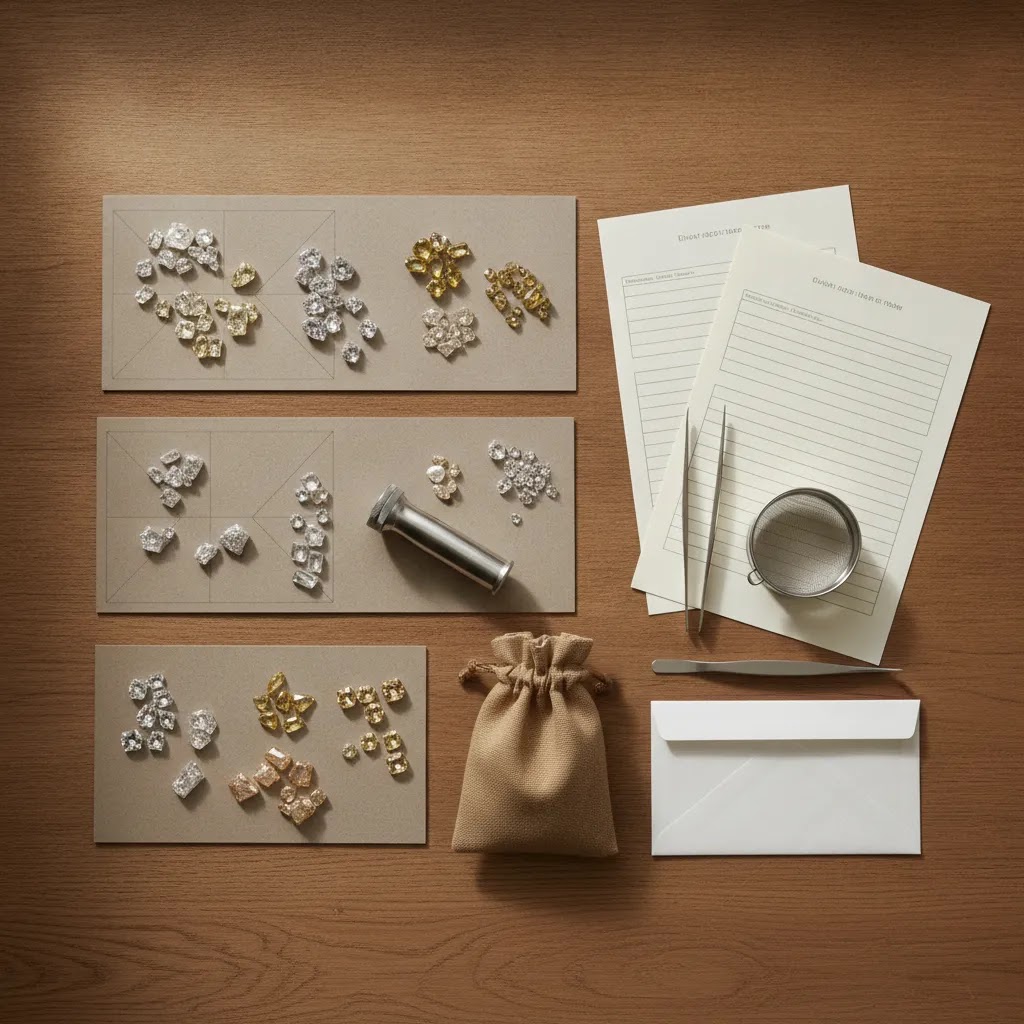
Diamond sourcing decisions shape more than product appearance. They affect how clearly your brand can explain origin, how safely you can make claims, how easily a manufacturer can match your brief, and how confident wholesale buyers feel about reorders. This article focuses on jewelry diamond sourcing for business clients who are weighing conflict-free and lab-grown options for a collection, private label line, or custom development program.
Rather than treating ethical sourcing as one broad label, this guide breaks the topic into eight practical sourcing routes and evaluation paths. If you are building custom diamond jewelry with a manufacturing partner, the goal is simple: choose a jewelry diamond sourcing approach your team can document, communicate, and repeat across sampling, production, and future growth.
- Conflict-free natural diamonds with supplier disclosure
- Lab-grown diamonds for controlled product positioning
- Natural diamonds with SKU-level documentation
- Lab-grown diamonds for entry luxury assortments
- Custom diamond jewelry developed from a tight brief
- Private label sourcing through one manufacturing partner
- Mixed assortments with separate claim boundaries
- Small pilot runs before scale-up
Jewelry Diamond Sourcing Comparison Table
The table below compares eight sourcing paths from a B2B perspective. The goal is not to rank one as universally superior. Instead, it helps brand owners match sourcing language, documentation expectations, and manufacturing practicality before sampling begins.
| Option | Best For | Main Sourcing Angle | Documentation Need | Manufacturing Advantage | Watch-Out |
|---|---|---|---|---|---|
| Conflict-free natural diamonds with supplier disclosure | Brands that want natural diamond positioning | Conflict-free language tied to supplier statements | Moderate | Supports classic product storytelling | Claims must stay narrow and specific |
| Lab-grown diamonds for controlled product positioning | Brands that want a defined alternative to mined stones | Lab-grown product identity | Moderate | Clear assortment planning | Do not blur lab-grown and broader ethical claims |
| Natural diamonds with SKU-level documentation | Teams selling to cautious wholesale buyers | Traceable internal record keeping | High | Better claim discipline across SKUs | More admin and review work |
| Lab-grown diamonds for entry luxury assortments | Growing brands balancing assortment breadth and positioning | Accessible premium category building | Moderate | Useful for line expansion | Positioning must remain consistent |
| Custom diamond jewelry developed from a tight brief | Private label and custom collection launches | Source choice built into development from the start | Moderate to high | Fewer sourcing surprises later | Weak briefs create revision risk |
| Private label sourcing through one manufacturing partner | Brands needing process continuity | Centralized communication and approvals | Moderate | Smoother sampling-to-production workflow | Partner fit matters greatly |
| Mixed assortments with separate claim boundaries | Brands carrying both natural and lab-grown lines | Claim separation by product group | High | Flexible merchandising | Mislabeling risk if controls are loose |
| Small pilot runs before scale-up | Brands testing a new sourcing model | Validation before wider rollout | Moderate | Reduces exposure during transition | Initial pace may be slower |
1. Jewelry Diamond Sourcing for Conflict-Free Natural Diamonds
This option suits brands that want to keep natural diamonds in the assortment while using carefully limited claim language. The practical standard here is not broad moral branding. Instead, it is supplier disclosure that supports a conflict-free sourcing statement for the relevant products.
Why it matters: many B2B buyers still prefer natural diamond positioning, especially in established categories. A brand can keep that positioning while reducing claim risk if it asks for written sourcing information early and keeps its messaging tied to what the supply chain partner can actually confirm.
The main benefit is commercial familiarity. Natural diamond products can fit existing merchandising structures and buyer expectations. However, brands should not stretch “conflict-free” into wider claims about every upstream practice unless separate support exists in writing.
2. Jewelry Diamond Sourcing for Lab-Grown Positioning
Lab-grown diamond jewelry gives brands a clearly defined product path, especially when the goal is to present a modern diamond option without relying on mined supply. For many businesses, that clarity helps with assortment planning and claim consistency.
Why it matters: if your sales team, wholesale partners, and manufacturer all use the same product language from the beginning, sampling and line-sheet communication tend to stay cleaner. As a result, this can reduce confusion during development and help the collection present a more coherent identity.
The advantage is control. Teams often segment products more easily when they intentionally group and describe lab-grown pieces. The caveat is that lab-grown status alone does not answer every ethical sourcing question. Your marketing and sales language still needs defined boundaries.
Lab-Grown Diamond Sourcing: Practical Verification and Labeling Controls
Lab-grown diamonds can simplify assortment architecture, but only if your operational controls keep that identity consistent across your entire B2B workflow. The bigger risk usually comes later. It often appears during reorders, line extensions, or team handoffs when people copy naming conventions and product notes incorrectly.
Start by deciding how your brand will express lab-grown status internally. Your SKU naming, line sheets, invoices, reorder notes, and QC checklists should all use the same labeling logic. If your team uses “LG” in SKUs, make sure the manufacturer sees that same identifier in the tech pack and the purchase order notes, not only in a marketing deck. Consistency is what prevents a mixed assortment from turning into a mixed message.
Before sampling, clarify a few process points with your manufacturing partner. Ask how the team separates lab-grown and natural stones during development and production. Next, ask which checkpoints review the stone type against the SKU. Also confirm who approves any substitution if a stone is unavailable. Many brands build simple internal audit habits too, such as spot-checking a subset of finished goods against the production paperwork and keeping a clean record set per SKU family.
Positioning is also part of control. Lab-grown product language can be accurate and strong without turning into broad ethical claims that your documentation cannot support. If you want to make sustainability or origin statements, decide what you can document, who approves that copy, and how your team will repeat those claims across wholesale accounts and marketing channels over time.
For broader guidance on ethics language, review the FTC Jewelry Guides at https://www.ecfr.gov/current/title-16/chapter-I/subchapter-B/part-23. You can also compare category language with Royi Sal Jewelry’s guide to what is ethical jewelry.
3. Jewelry Diamond Sourcing with SKU-Level Documentation

Some brands need more than a general sourcing conversation. They need internal records tied to individual SKUs or tightly defined product groups. This route is especially relevant if you sell to boutiques or wholesale accounts that ask detailed origin or claim questions.
Why it matters: SKU-level discipline helps prevent a common operational problem. Teams sometimes use one sourcing statement across items that did not develop under identical conditions. Better internal documentation also improves consistency when your team expands the line or reorders later.
The strength here is control over product-specific communication. The trade-off is workload. This approach may require more review, more coordination with the manufacturer, and a stricter approval process before your team finalizes product descriptions.
Jewelry Diamond Sourcing Claims: Traceability and Certifications
Many teams treat traceability like a single checkbox. In practice, it is a spectrum. At one end, you may have supplier disclosure statements or purchase documentation that supports a narrow claim for a product group. At the other end, you may have SKU-level files that include third-party reports and a stronger paper trail. Your job as a brand is to match your claim language to the level you can actually produce on request, especially when wholesale buyers ask follow-up questions months after launch.
If your accounts request certification or formal documentation, keep the request specific and tied to your internal SKU structure. Ask what documentation the supplier can provide per stone or per SKU family. Also confirm what the supplier cannot provide, so your sales team does not need to improvise. Then store records in a way your team can retrieve quickly, ideally with one folder or record set per SKU and a clear revision history if vendors or sourcing routes change.
Marketing approval needs a process, not a good intention. Decide who signs off on sourcing language, and keep that language consistent across product pages, line sheets, and wholesale onboarding documents. A simple claim boundary framework can help. For example, basic disclosure may support a narrow supplier-provided conflict-free statement for specified products, while broader origin statements or deeper transparency language usually require stronger documentation and tighter record keeping. If a claim cannot be supported in writing, it should not appear in sales scripts or product descriptions.
Importantly, the World Diamond Council outlines the industry framework behind conflict-free trade at https://www.worlddiamondcouncil.org/what-we-do/kimberley-process/. For a practical B2B workflow, you may also want to read how to choose ethical jewelry.
4. Jewelry Diamond Sourcing for Entry Luxury Assortments
Brands building an entry luxury range often use lab-grown diamonds to create a premium-looking assortment with a more structured product ladder. In B2B terms, this can help shape a collection that feels elevated without forcing every item into the same sourcing and price logic.
Why it matters: assortment architecture affects wholesale adoption. Buyers often respond better to a line that has a clear internal logic, and lab-grown categories can support that if they are defined properly in the brief, sample review, and sales materials.
The advantage is category flexibility. You can build a distinct sub-line rather than blending every diamond item together. However, positioning must stay consistent from sourcing through fulfillment, or the assortment will feel fragmented.
5. Jewelry Diamond Sourcing for Custom Development
For custom diamond jewelry, your jewelry diamond sourcing decision should sit inside the design brief from the start, not appear later as a marketing layer. A tight brief can define whether the line uses conflict-free natural stones, lab-grown stones, or separate product families for each.
Why it matters: sourcing affects product descriptions, sample approvals, and future reorder discipline. Royi Sal Jewelry operates as a custom design and manufacturing partner with collaborative development, so B2B clients benefit most when their jewelry diamond sourcing position is already clear before prototypes and production planning move forward.
The benefit is alignment. Design intent, manufacturing choices, and sales claims can develop together. The caveat is that vague briefs often create revision cycles, delayed approvals, or later disputes about how a collection should be presented.
6. Jewelry Diamond Sourcing Through One Manufacturing Partner
Private label brands often gain more control when sourcing discussions, design development, and production communication run through one manufacturing relationship. That does not remove the need for due diligence, but it can simplify how information moves through the process.
Why it matters: a fragmented chain creates room for sourcing language to drift between design, sales, and production teams. Royi Sal Jewelry’s business model centers on custom jewelry design, manufacturing, collaborative consultation, and global fulfillment, which is useful for brands that want one partner handling development continuity.
The strength is process coherence. Your approvals and revisions can stay connected to the same team. However, partner selection matters more here because weak communication at the center of the process affects everything around it.
7. Jewelry Diamond Sourcing for Mixed Assortments
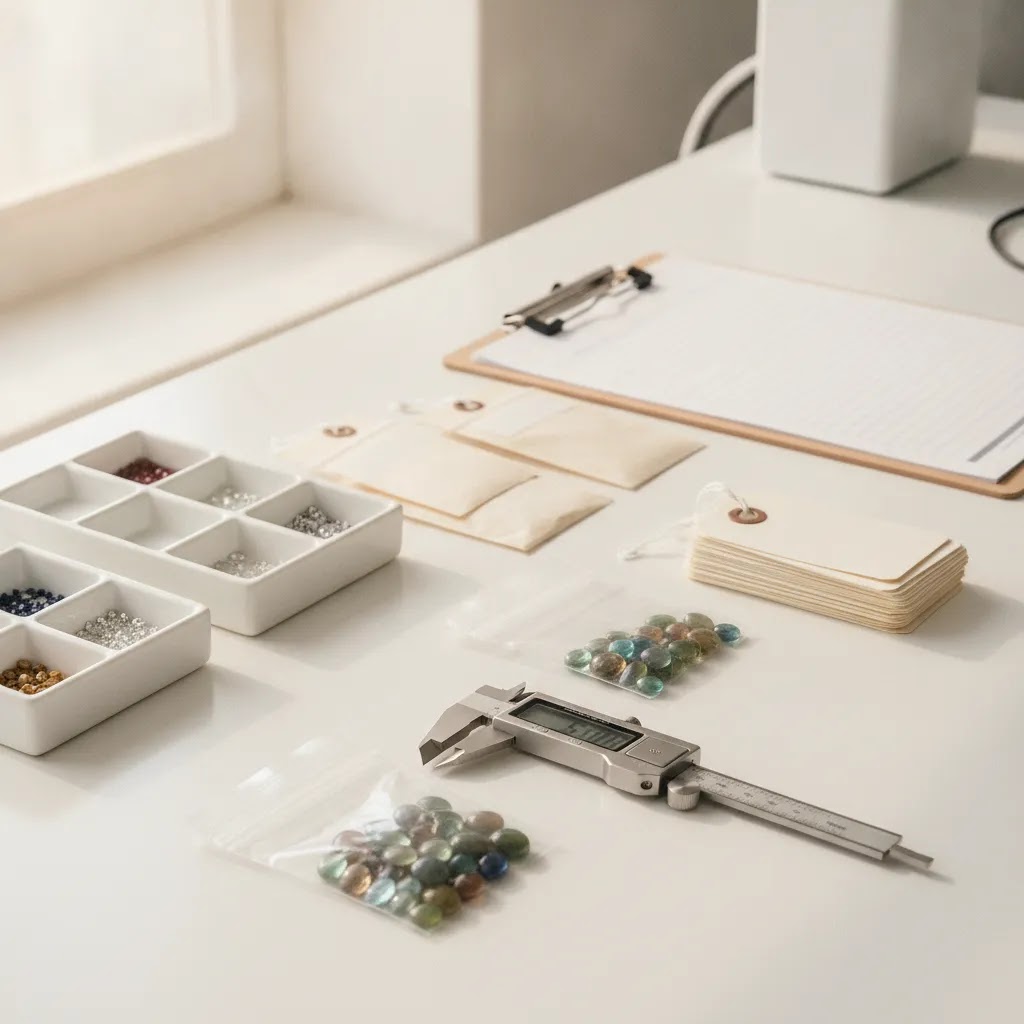
Some brands should not choose a single diamond path at all. A mixed assortment can work well if natural and lab-grown lines are separated clearly by SKU family, sales language, and internal documentation. This allows broader merchandising without flattening all claims into one message.
Why it matters: wholesale buyers may accept a mixed range if the logic is visible and the documentation is organized. This is often stronger than trying to force one claim structure across different product groups with different sourcing backgrounds.
The main advantage is assortment flexibility. You can serve different accounts or categories within one brand framework. The caveat is discipline. If your internal controls are loose, mixed assortments are easier to miscommunicate.
8. Jewelry Diamond Sourcing Pilot Runs Before Scale-Up
If your brand is changing its diamond sourcing model, a pilot run is often the safest first move. This means testing the sourcing language, sample workflow, approval standards, and production communication on a limited group of SKUs before you expand.
Why it matters: a pilot exposes whether your sourcing choice actually works inside day-to-day manufacturing. It also gives your team time to review how the line should be sold, documented, and reordered without committing the entire assortment at once.
The strength is risk control. Problems appear earlier and on a smaller scale. However, pilots may feel slower at the start, but that slower start can prevent more expensive corrections later.
How Jewelry Diamond Sourcing Works in a Real Manufacturing Process
Diamond sourcing only becomes operational when a team translates it into a development workflow. For B2B brands, that usually starts with a sourcing position inside the brief. Then it moves into prototype planning, approval checkpoints, and production records that match the chosen claim language.
Royi Sal Jewelry is led by Royi Gal, a jewelry designer and manufacturer. That dual role matters because teams manage sourcing decisions more easily when design intent and production reality stay connected. The company’s model centers on collaboration, custom development, manufacturing support, and international client service. For a business client, that means the sourcing conversation should be part of the collection build, not a separate marketing add-on.
If you are structuring a wider sourcing framework, the parent resource on ethical sourcing jewelry provides broader context. If landed cost planning matters to your sourcing decision, review the implications of jewelry tariffs as well. In addition, brands planning development stages can review the jewelry manufacturing process concept creation before supplier discussions begin.
Where Jewelers Source Diamonds (and What to Ask as a Brand)
Most brands encounter diamond sourcing through a multi-tier chain, even when communication feels direct. You may buy from a supplier that works through dealer networks, wholesalers, or cutters. In other cases, your manufacturer procures stones on your behalf based on your brief, then documents what was used for each SKU. The route matters because it affects how quickly partners answer questions, how clear origin disclosures can be, and how repeatable reorders are when availability shifts.
Common jewelry diamond sourcing routes
Direct supplier relationships can simplify communication, but they still may involve upstream partners. Dealer networks and wholesaler channels can offer access to broader assortments, but they can also introduce variability in what teams can document per stone versus per batch. Manufacturer-procured stones can be efficient for custom development because procurement ties directly to production planning. However, your brand still needs clear instructions on what the team must record and what substitutions are acceptable.
Questions brands should ask before sampling
Before sampling, send a short question set that forces clarity early. Ask what origin disclosures are available for the stones being quoted, whether traceability is handled at the batch level or at the SKU level, and what paperwork can typically support your planned claim language. Confirm how substitutions work if a specific stone match is unavailable on reorder, and ask whether substitutions require your written approval. These are operational questions, but they directly protect your sales team from making statements that cannot be repeated later.
How to align internal language with jewelry diamond sourcing records
Once you understand the chain, align your internal language to it. If your jewelry diamond sourcing route supports disclosure for a product group but not individual stones, keep claims framed at the product-group level. If your records are SKU-specific, train your sales and wholesale teams to answer at the SKU level, not with one blanket statement across the entire collection. A consistent internal script prevents confusion when retailers ask, “Is this the same sourcing as the other style?” and it keeps your manufacturer and your brand telling the same story.
Jewelry Diamond Sourcing Strengths and Considerations
Strengths
- Conflict-free and lab-grown routes can be evaluated as separate business models, not vague moral labels.
- Custom development works better when diamond sourcing is defined early in the brief and approval process.
- One collaborative manufacturing partner can reduce communication drift between sourcing, design, and production.
- Mixed assortments are possible if natural and lab-grown claims are separated clearly.
- Pilot runs can test sourcing language and manufacturing fit before a larger production commitment.
Considerations
- Ethical claim language can become risky if a brand stretches beyond what suppliers and manufacturing records can support.
- Lab-grown diamonds may simplify category planning, but they do not replace the need for precise documentation and communication.
- Natural and lab-grown products should not share one generic claim framework if their sourcing records differ.
- Timelines, minimums, and development requirements may vary depending on how complex the assortment and review process become.
Who This Jewelry Diamond Sourcing Approach Fits Best
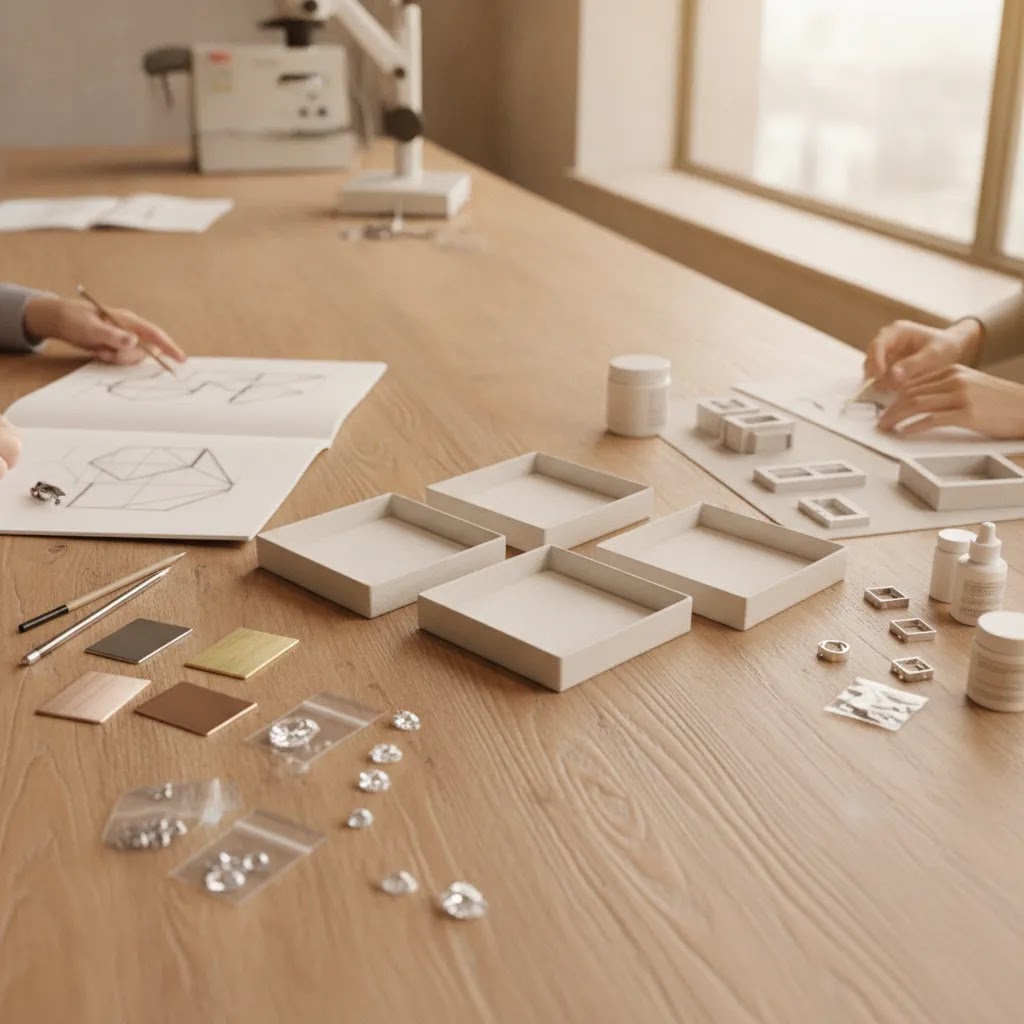
This article is most useful for jewelry brands, boutique owners, private label teams, and entrepreneurs who need a clear jewelry diamond sourcing plan before production starts. It is especially relevant if you are comparing natural and lab-grown strategies, preparing for wholesale buyer questions, or trying to align custom development with a sourcing position that can be repeated across future launches.
Brands also planning adjacent assortments may find it useful to review broader category strategy, including wholesale silver jewelry, when building a balanced collection roadmap. Similarly, if your assortment includes colored stones, the guide to wholesale gemstone jewelry can help you compare sourcing logic across categories.
How to Start the Jewelry Diamond Sourcing Conversation
Begin by defining which of the eight routes best matches your business model. Then prepare a concise brief that covers your collection concept, intended sales channel, whether you want natural or lab-grown diamonds, how narrowly you want claims framed, and which product groups may need separate documentation.
Next, review Royi Sal Jewelry’s broader Jewelry Sourcing and Jewelry Manufacturing resources so your internal team can align on sourcing and production expectations before outreach. From there, contact Royi Sal Jewelry through https://royisal.com/ to discuss your project scope, design direction, and manufacturing requirements. A clearer brief usually leads to a more useful first consultation.
Frequently Asked Questions
Is conflict-free the same as ethical diamond sourcing?
No. Conflict-free usually refers to a narrower sourcing statement, while ethical sourcing can involve wider questions about transparency, documentation, and how claims are communicated. For B2B brands, the safest approach is to use terms carefully and match each claim to what your supply chain and manufacturing partner can actually support in writing.
Are lab-grown diamonds automatically the best ethical option?
Not automatically. Lab-grown diamonds may help a brand build a clearly defined assortment and avoid some issues tied to mined supply, but they still need precise product labeling and disciplined communication. The better question is whether the option fits your brand position, buyer expectations, and ability to document claims accurately across product groups.
What should a brand prepare before asking a manufacturer about diamond sourcing?
Prepare a brief that defines your target collection, intended customer channel, whether you want natural or lab-grown stones, expected claim language, and any wholesale buyer concerns you already know about. Include visual direction and note whether some SKUs need stricter sourcing documentation than others. That makes early manufacturer conversations far more productive.
Can one collection include both natural and lab-grown diamonds?
Yes, if the collection is structured carefully. Many brands use mixed assortments successfully, but the product families should be separated clearly in internal records, sales materials, and sourcing language. This helps reduce confusion during sampling, production, and reorder cycles, especially if wholesale accounts ask product-specific sourcing questions.
How does sourcing affect the custom jewelry development process?
Sourcing influences the brief, prototype review, product descriptions, and final approval language. If sourcing is treated as an afterthought, teams often end up revising samples or rewriting claims late in development. Defining the sourcing route earlier helps keep design, manufacturing, and sales communication aligned throughout the project.
Why does one manufacturing partner help with diamond sourcing control?
A single partner can help maintain continuity between design consultation, custom development, production planning, and fulfillment. That can reduce the chance of details being lost between separate vendors. The benefit is strongest when the partner works collaboratively and keeps sourcing discussions connected to approvals and manufacturing records.
How do jewelers source diamonds?
In B2B practice, jewelers may source diamonds through direct supplier relationships, dealer and wholesaler networks, or by having a manufacturer procure stones against a defined brief. The channel affects what can be disclosed, how quickly questions can be answered, and whether documentation is managed at the batch level or tied to specific SKUs.
Where do jewelers source their jewelry?
Many jewelers source finished jewelry through manufacturers that handle development and production, or through wholesale supply relationships that provide ready-to-sell assortments. Brands building private label collections often use a manufacturing partner so design, sourcing choices, documentation expectations, and production controls stay aligned.
Where are most diamonds sourced?
Diamonds typically reach a jeweler through multi-step supply chains involving suppliers, wholesalers, and other intermediaries, even if a brand feels it is buying “direct.” For a brand, the more useful question is what level of origin disclosure and documentation your specific sourcing route can support, and how consistently it can be repeated on reorder.
Where do Kay Jewelers source their diamonds?
Public sourcing details vary by company and can change over time, and brands do not always disclose supplier relationships in a way that is useful for another business to model. If you are building your own sourcing policy, focus on what your partners can confirm in writing for your SKUs, and set claim language based on that documentation rather than on assumptions about how other retailers operate.
Key Takeaways
- Jewelry diamond sourcing works best when conflict-free and lab-grown options are treated as distinct operating choices.
- Claims should stay as narrow as the documentation supporting them.
- Custom diamond jewelry projects benefit from defining jewelry diamond sourcing direction inside the original brief.
- Mixed assortments can work well, but only with clear SKU separation and claim controls.
- A pilot run may be the most practical way to test a new sourcing model before scaling production.
Jewelry Diamond Sourcing Recap
If you need a short decision view, these are the strongest starting points. Natural diamond brands often begin with conflict-free disclosure and tighter documentation. Brands prioritizing a clearly defined alternative often start with lab-grown product positioning. Multi-category brands usually benefit from mixed assortments only after they have strong internal controls.
| Rank | Option | Best For | Starting Position |
|---|---|---|---|
| 1 | Conflict-free natural diamonds with supplier disclosure | Natural diamond collections | Use narrow, supportable sourcing language |
| 2 | Lab-grown diamonds for controlled product positioning | Defined modern diamond lines | Build clear category boundaries |
| 3 | Custom diamond jewelry developed from a tight brief | Private label launches | Set sourcing rules before sampling |
| 4 | Small pilot runs before scale-up | Brands testing a new sourcing model | Validate process before expansion |
Jewelry Diamond Sourcing Conclusion
Ethical diamond sourcing is not one choice. It is a series of operating decisions about claim scope, documentation, assortment structure, and manufacturing fit. For many B2B brands, the strongest path is the one that can be repeated cleanly across design briefs, sample approvals, line sheets, and reorders without rewriting the story each season.
If your team is evaluating conflict-free natural diamonds, lab-grown diamond jewelry, or a mixed product strategy, Royi Sal Jewelry can support the conversation as a custom design and manufacturing partner. Visit https://royisal.com/ to outline your project, discuss sourcing expectations, and start a consultation built around your collection goals.