Why the sourcing shift is happening
For many jewelry brands, supplier location used to be treated as a cost line. That view often breaks down once collections become more customized, reorder timing matters more, and the business starts carrying the cost of preventable production friction. A lower quoted unit price can lose its appeal if approvals take too long, revisions are poorly documented, or the final run drifts from the sample.
Thailand has gained attention because it is often evaluated as a more manageable sourcing environment for jewelry-specific production. If you are already reviewing thailand jewelry sourcing, the core appeal is usually not just geography. It is production fit. Buyers looking for private label development, repeatable quality, and structured communication may find that a Thailand-based model supports a more stable operating rhythm.
This matters most for businesses that are not buying generic stock. Brands building exclusive assortments, retailer programs, or custom collections usually need a manufacturer that can handle development conversations well, not just output volume.
The operational case for Thailand
The strongest reason to consider Thailand is operational control. In jewelry, the expensive problems rarely come from the invoice alone. They usually come from the gap between concept, sample, approval, and production run. A sourcing move becomes rational if it reduces that gap.
Thailand may be a strong option for brands that need more support during design development, prototype review, and production coordination. Royi Sal Jewelry operates as a custom jewelry design and manufacturing partner for B2B clients, with services centered on custom jewelry development, collaborative consultation, wholesale production, private label work, and global shipping and order fulfillment. That combination is relevant because brands changing countries often need more than a factory. They need a partner that can guide the transition from concept to repeatable production.
Another factor is category specialization. If your current supply chain is broad but not jewelry-centered, communication may stay generic. Specialized jewelry manufacturing conversations tend to be more useful because they focus on design briefs, sampling rounds, production expectations, and fulfillment planning. Businesses also comparing a china brass jewelry manufacturer should weigh whether the supplier discussion is truly about jewelry program management or only about base quoting.
How to transition manufacturing from China to Thailand, step by step
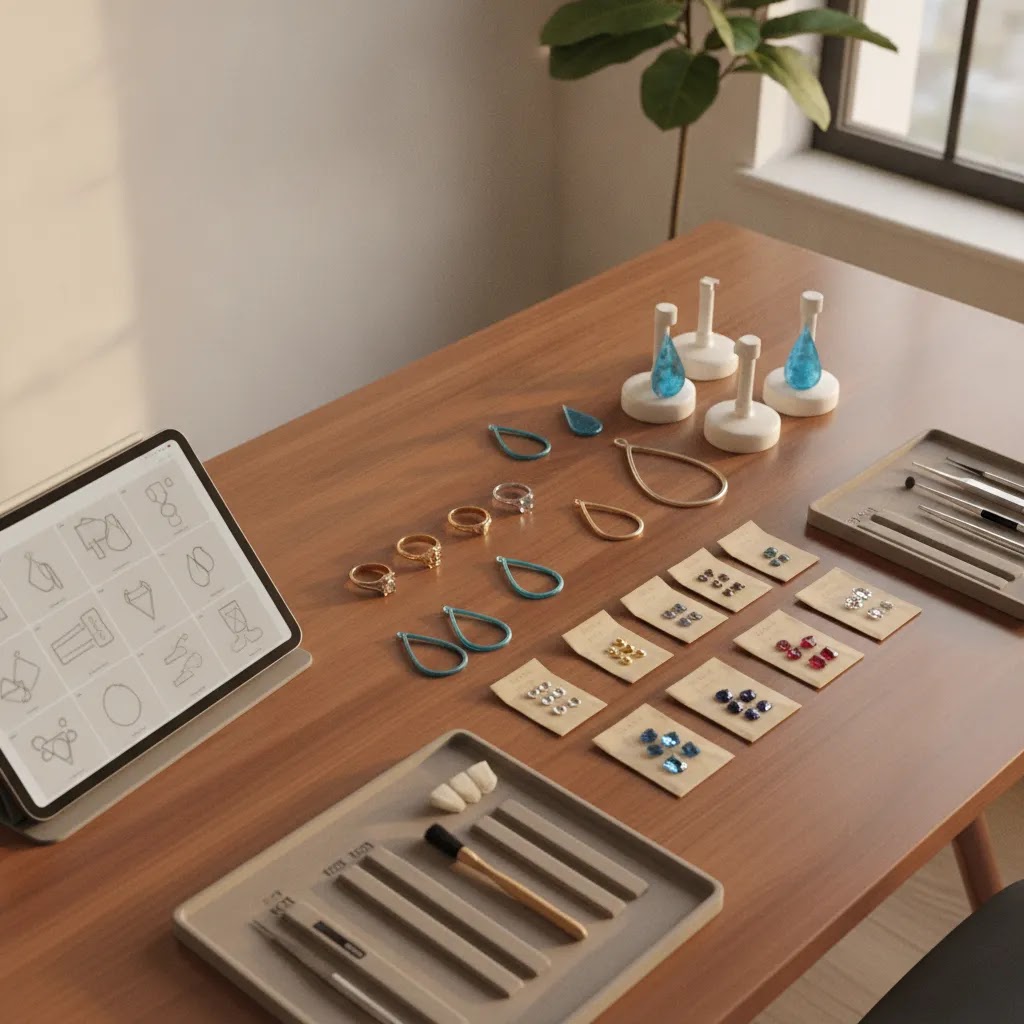
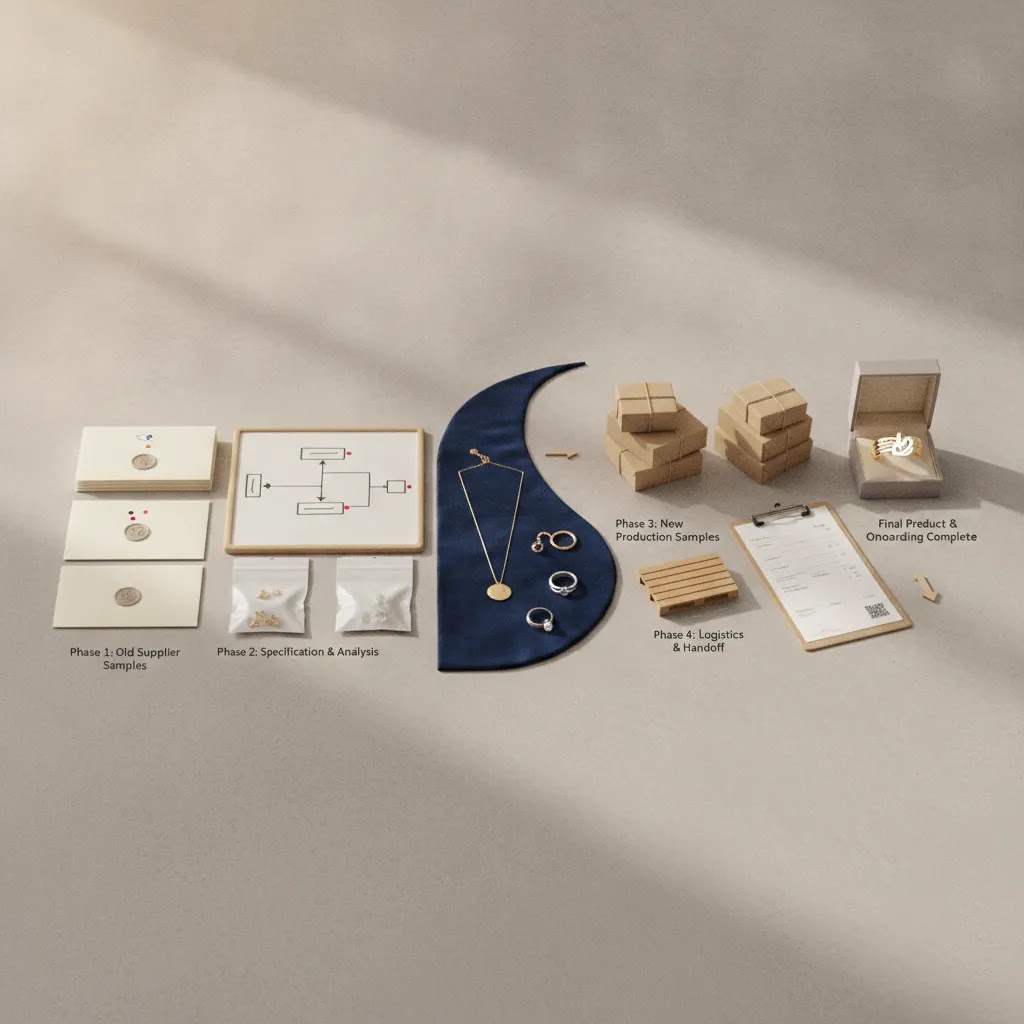
Switching countries is rarely a single decision. It is a controlled migration. The brands that have the cleanest transitions usually treat it like an operations project, with sequencing, documentation, and sign-offs, not like a vendor swap.
Start by auditing your current assortment and paperwork. Identify which SKUs are stable, meaning they have consistent reorders and few issues, versus which pieces are still fragile and revision-heavy. In practice, the most stable items are often the best candidates to move first because you are testing a new partner on known products, not asking them to interpret an evolving design while you are also learning their process.
Next, decide what can be transferred versus what must be redeveloped. Some products may move with minimal change if you have clear specifications and a reliable approved sample. Others may require redevelopment because the old process relied on undocumented tweaks, informal approvals, or supplier-specific know-how. The hidden cost of switching is often re-creating institutional knowledge that lived in email threads, chat messages, or one person’s memory.
To reduce rework, transfer the full project record to the new partner, not only photos. That typically includes any existing samples you can share, the revision history, known failure points, and the exact details that cause disagreements later, such as packaging and labeling requirements, how you want pieces packed for wholesale, and what your reorder expectations look like. If you already know where past production drift happened, document it early so the new partner can build controls around it.
A phased approach usually reduces risk. Run a pilot on a small set of SKUs, approve against defined criteria, then scale into replenishment once the process is proven. Set clear approval gates: a design brief sign-off, a sample approval sign-off, a pre-production confirmation before the bulk run, and a final shipment readiness check. You also want basic change control, meaning when something changes, you define who approves it, how it is documented, and whether it resets timelines or requires a new sample. That is how you prevent “silent” changes from showing up in bulk production.
How the move can affect brand economics
A move from China to Thailand is often justified by total business impact, not only by product cost. Three areas usually matter most.
First, revision efficiency. If design changes are handled clearly and early, brands may reduce waste in sample cycles and lower the chance of approving a product that still carries unresolved issues. Second, assortment confidence. Better production alignment can support cleaner launches, steadier reorders, and fewer internal debates about whether the supplier understood the brief. Third, brand protection. For private label businesses, manufacturing consistency affects how the market reads the brand, especially when collections are meant to feel signature rather than interchangeable.
Trade exposure also enters the equation. Businesses concerned about landed cost volatility should review tariffs on jewelry from china as part of the sourcing decision, because tariff pressure can change the true economics of staying put. The right comparison is not China versus Thailand in the abstract. It is your current model versus a model that may give you better control over quality, approvals, communication, and shipment readiness.
That is where Royi Sal Jewelry’s structure is relevant. The company is led by Royi Gal, a jewelry designer and manufacturer, and the business is built around direct collaboration with brands that need end-to-end support rather than a simple transactional supplier relationship.
What to verify beyond the factory: landed cost and compliance basics
Quoted unit cost is only one part of the sourcing picture. If you are moving production from China to Thailand, you also want to pressure-test the mechanics that drive landed cost and import flow, because those details are often where “savings” get lost or where unexpected delays appear.
Landed cost commonly includes freight, insurance where applicable, customs broker handling, and duties and taxes based on tariff classification. Those inputs can change when you change origin country, shipping mode, or even how a product is described on documents. Your internal comparison should focus on total unit economics delivered to your warehouse or fulfillment point, not only on what the factory quotes.
During country transitions, keep a “verify, do not assume” mindset. Confirm country of origin rules as they apply to your products, confirm what documentation your shipments will need for customs clearance, and confirm who is responsible for producing and reviewing that paperwork. Operationally, you also want to confirm how fulfillment coordination changes, including carton labeling, packing lists, and how shipments are consolidated or separated for your distribution plan.
To keep the comparison honest, set up basic internal tracking before you move volume. Track the same fields for China and Thailand outcomes, including quoted cost, final paid cost, freight and broker charges, duty and tax totals, cycle time from approval to ship, and the number of issues found at receiving. The best sourcing decision is often the one that improves reliability and predictability, even if the initial quote looks similar, because operations stability protects margin over time.
How to evaluate a Thailand manufacturing partner
Not every Thailand supplier will solve the problems that pushed you to reconsider China. A country change only helps if the partner can support your actual operating model.
Start with process clarity. Ask how the manufacturer handles initial design consultation, brief review, development feedback, sample approval, production runs, and fulfillment. Royi Sal Jewelry positions its service around custom design and manufacturing collaboration, which is often a better fit for brands that need more structured involvement before production begins.
Next, review communication discipline. You want precise responses about what is included, where revisions happen, and how approvals are documented. Then assess scale compatibility. A supplier may be excellent for a small launch but less suited to ongoing wholesale replenishment, or the reverse.
It also helps to understand the local buying environment. If your team is researching bangkok jewelry wholesale, separate trading access from manufacturing partnership quality. Wholesale market access can be useful, but a private label or custom production program still depends on development management, consistency, and the supplier’s ability to support your business over time.
For broader orientation, Royi Sal Jewelry’s Jewelry Sourcing and Jewelry Manufacturing sections are useful starting points for understanding how a B2B-focused partner frames the work.
Quality evaluation in practice: sampling standards and production control
Many brand owners treat sampling as a visual checkpoint. For B2B programs, it works better as a production control tool. Your goal is not only to approve a sample you like. Your goal is to approve a sample that can be repeated under real production conditions with predictable results.
Start by defining acceptance criteria before the sample arrives. That typically includes what measurements matter, what finishing expectations you will hold the production to, and what functional checks apply to the piece based on how it is worn and handled. Also align on tolerance expectations, because vague language like “as close as possible” invites disagreement later. If you want a partner to hit consistency at scale, you need to agree on what “acceptable” means, not only what “ideal” looks like.
Preventing sample-to-bulk drift, the controls are mostly documentation and timing. Use documented approvals, limit revision rounds to clear and purposeful changes, and confirm the final approved version right before production begins. A pre-production confirmation step can be the difference between a clean run and a bulk delivery that reflects an earlier version of the design brief.
Operational questions matter as much as design questions. Ask how quality control is handled, how issues are reported, and how rework decisions are made. You want to know what happens if something is off, who flags it, what evidence you will receive, and what the decision path looks like before goods ship. Problems are not always avoidable in manufacturing. Surprises become expensive when the workflow for handling them is unclear or when you learn about them too late to protect your launch schedule.
What clients should expect during transition
Changing countries usually means rebuilding part of your production workflow. Expect to invest more effort at the start. A useful transition often begins with a clear design brief, visual references, target assortment, business goals, and any known pain points from the current supplier. If your previous sourcing setup created repeated issues, document them early so the new partner understands what must improve.
Expect questions during development. A collaborative manufacturer should clarify design intent, revision priorities, and production expectations before a full run moves ahead. Sampling may involve more than one review stage, depending on project complexity. Timelines can vary based on design scope, order requirements, and approval rounds.
For international buyers, global shipping and order fulfillment should also be part of the conversation before production starts, not after. Royi Sal Jewelry states that it serves business clients globally and includes fulfillment within its service model, which may help brands that need one partner to manage both production and shipment coordination.
Strengths and Considerations

Strengths
- Thailand may offer a stronger fit for jewelry-focused production programs where development quality matters as much as manufacturing output.
- A move can improve total operating control if your current supplier struggles with revisions, approvals, or consistency.
- Royi Sal Jewelry combines custom design, manufacturing, collaborative consultation, and global fulfillment in one B2B service model.
- Founder-led expertise matters here. Royi Gal’s background as both a designer and manufacturer supports more informed discussions across design intent and production reality.
- The partnership-based approach is useful for private label brands and wholesale businesses that need more than basic order processing.
Considerations
- A country change does not automatically lower total cost. The right outcome depends on your design needs, revision history, and supply chain priorities.
- Transitioning suppliers may require new sampling rounds, process alignment, and clearer internal documentation from your team.
- Pricing, minimum order quantities, and production timelines can vary by project scope, so assumptions based on market chatter are risky.
- Thailand is not a universal answer for every jewelry business. Brands buying highly standardized items may evaluate the move differently from custom or private label businesses.
Who This Is For
This article is most relevant for jewelry retailers, boutique owners, fashion brands, and founders building a private label line who are reassessing their overseas sourcing model. It is especially useful for teams that have already experienced inconsistent samples, slow communication, unclear revision handling, or uncertainty around total landed cost. Businesses developing custom collections, signature assortments, or repeat wholesale programs are more likely to benefit from this evaluation than buyers looking only for off-the-shelf stock.
How to Get Started
Start by defining why you are considering a shift. List the specific problems in your current sourcing setup, such as delayed approvals, inconsistent production quality, or margin pressure after logistics and import costs. Then prepare a working brief with product direction, expected order pattern, launch goals, and any operational requirements that matter to your business.
Next, contact Royi Sal Jewelry through royisal.com to discuss your project. The most productive first conversation usually includes your concept, target market position, reference images, approximate assortment scope, and questions about development and fulfillment. Because Royi Sal Jewelry works through a collaborative custom design and manufacturing model, early clarity helps determine whether the partnership fits your brand stage and production needs.
Ask direct questions about sampling, revision flow, production runs, and shipping coordination. That will give you a more realistic basis for deciding whether a Thailand-based manufacturing relationship supports your next phase of growth.
Frequently Asked Questions
Why are jewelry brands moving part of their sourcing from China to Thailand?
Many brands are looking for better control over development, communication, and production consistency. The decision is often operational rather than purely cost-driven. If a brand relies on custom design, private label work, or repeat wholesale programs, a sourcing model that supports clearer collaboration may be more valuable than chasing the lowest quoted price.
Does moving to Thailand automatically reduce costs?
No. The better question is whether it improves total business performance. A lower quote in one country can still produce higher overall cost if revisions are mishandled, approvals are unclear, or launches get delayed. Cost should be evaluated alongside quality consistency, communication, landed cost exposure, and the amount of internal time your team spends managing supplier issues.
What kind of brands are most likely to benefit from this shift?
Brands with custom collections, private label assortments, or growing wholesale accounts are often the best candidates. These businesses usually need a manufacturer that can engage with design development and production planning in a structured way. Companies buying simple, highly standardized items may use different criteria and may not see the same benefit from a sourcing change.
What does Royi Sal Jewelry actually offer B2B clients?
Royi Sal Jewelry provides custom jewelry design and development, jewelry manufacturing for wholesale and private label clients, collaborative design consultation, and global shipping and order fulfillment. The business is positioned as a B2B partner for brands, boutiques, and jewelry businesses that need support from concept through production rather than a basic retail-style transaction.
How should a brand prepare before contacting a new manufacturing partner?
Prepare a concise but specific brief. Include your concept direction, reference visuals, desired assortment scope, business goals, target launch timing, and known challenges with your current supplier. If you have existing samples or specifications, organize them before the conversation. A strong brief tends to produce better questions, fewer assumptions, and a faster path to evaluating manufacturing fit.
Is Thailand mainly relevant for wholesale buying or for custom development too?
It can be relevant to both, but the business case becomes stronger when custom development is part of the equation. Wholesale access and manufacturing partnership are not the same thing. Brands that need private label support, repeatable quality, and structured development workflow usually need a supplier relationship that goes well beyond market buying or simple stock ordering.
Is jewelry from Thailand good quality?
It can be. Quality is usually less about the country label and more about the specific manufacturing partner’s process, how sampling is managed, and how production is controlled. If you define acceptance criteria upfront, document approvals, and confirm how issues are handled during production, you can evaluate quality based on evidence rather than reputation.
Why is silver so cheap in Thailand?
Pricing claims can be misleading without context. Market pricing can vary based on design complexity, labor structure, overhead, production scale, and how products are specified and quoted. For a brand, the more useful focus is total landed cost and consistency, not just the apparent price of a material or a single quote.
Is it safe to wear jewelry made in China?
Country of manufacture alone does not define product safety. Safety and suitability depend on what is produced, how it is specified, and the quality controls used during manufacturing. If safety is a key requirement for your brand, set those requirements in your brief, ask how the supplier controls production to match them, and verify what documentation and checks are available for your specific products.
Is sterling silver from Thailand real?
It can be, but authenticity is not something you should assume based on location. If you are producing items described as sterling silver, you will want clear specifications, controlled sampling and approvals, and a verification approach that fits your business requirements. The most reliable path is to confirm details directly with your manufacturing partner for your exact designs and production plan.
Key Takeaways
- The move from China to Thailand is often driven by operational control, not only quoted cost.
- Custom and private label jewelry brands usually need stronger sampling, revision, and approval processes than generic sourcing models provide.
- Thailand should be evaluated through total business impact, including communication quality, consistency, landed cost, and fulfillment readiness.
- Royi Sal Jewelry’s B2B model combines collaborative design, manufacturing, and global fulfillment under founder-led expertise.
- A successful transition starts with a clear internal brief and direct questions about process, scale, and production expectations.
Conclusion
Shifting jewelry sourcing from China to Thailand is rarely about chasing novelty. It is usually a response to a more serious business need: better process control, better production communication, and a supply relationship that supports growth instead of draining management time. Brands running custom, private label, or wholesale programs should judge the move by operational fit and long-term reliability, not by country reputation alone. Royi Sal Jewelry is relevant in that discussion because its service model centers on collaborative custom development, manufacturing, and global fulfillment for business clients. If your current setup is creating friction, the next step is simple: review your sourcing requirements, prepare your brief, and contact the team through royisal.com to discuss whether a Thailand-based manufacturing partnership fits your next collection.
Share this post