Overview
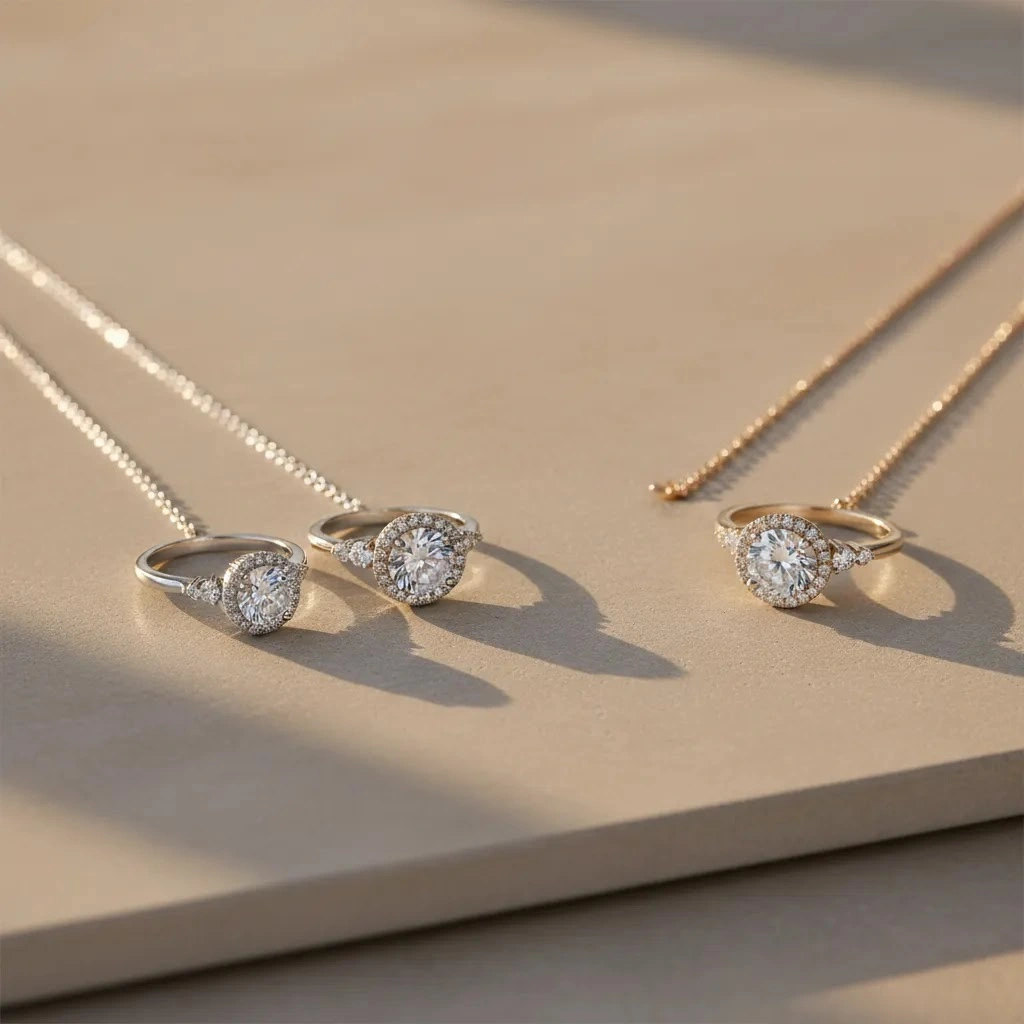
The sterling silver vs white gold decision usually comes down to positioning, margin structure, maintenance expectations, and customer perception. Both can serve a legitimate role in a jewelry line, but they are rarely interchangeable from a business standpoint.
Sterling silver is widely used for accessible fine jewelry and bridge collections. It may work well for brands that want a lower barrier to entry, broader SKU counts, or more flexible seasonal assortment planning. White gold, by contrast, is often considered for higher-ticket ranges where the brand wants to present a more premium offering and support stronger average order values.
For many buyers, the confusion starts with terminology. Brands may compare silver, sterling silver, and plated products without defining the differences clearly. That is why it helps to also review sterling silver vs silver and 925 vs 999 silver before finalizing a line plan. A manufacturer should be able to explain these distinctions in practical production terms, not just product copy language.
At Royi Sal Jewelry, the available business information points to a collaborative B2B model focused on custom jewelry design, manufacturing, and private label development. That matters because material choices usually affect design development, production planning, and fulfillment decisions all at once.
How Sterling Silver and White Gold Differ
1. Collection pricing and market position
Sterling silver often supports a more accessible retail range. That may help a growing brand launch with less pricing pressure and test multiple categories before committing to a narrower premium assortment. White gold usually aligns with higher price architecture, which could strengthen brand perception in some markets but may also slow sell-through if the audience is not ready for that price point.
2. Perceived value in the customer journey
White gold may carry stronger premium signaling for customers shopping at the higher end of the market. Sterling silver still has clear value, especially when positioned honestly and supported by good design, finishing, and merchandising. For boutique owners, this is often less about which material is “better” and more about which one fits the brand story and turnover goals.
3. Maintenance and after-sale expectations
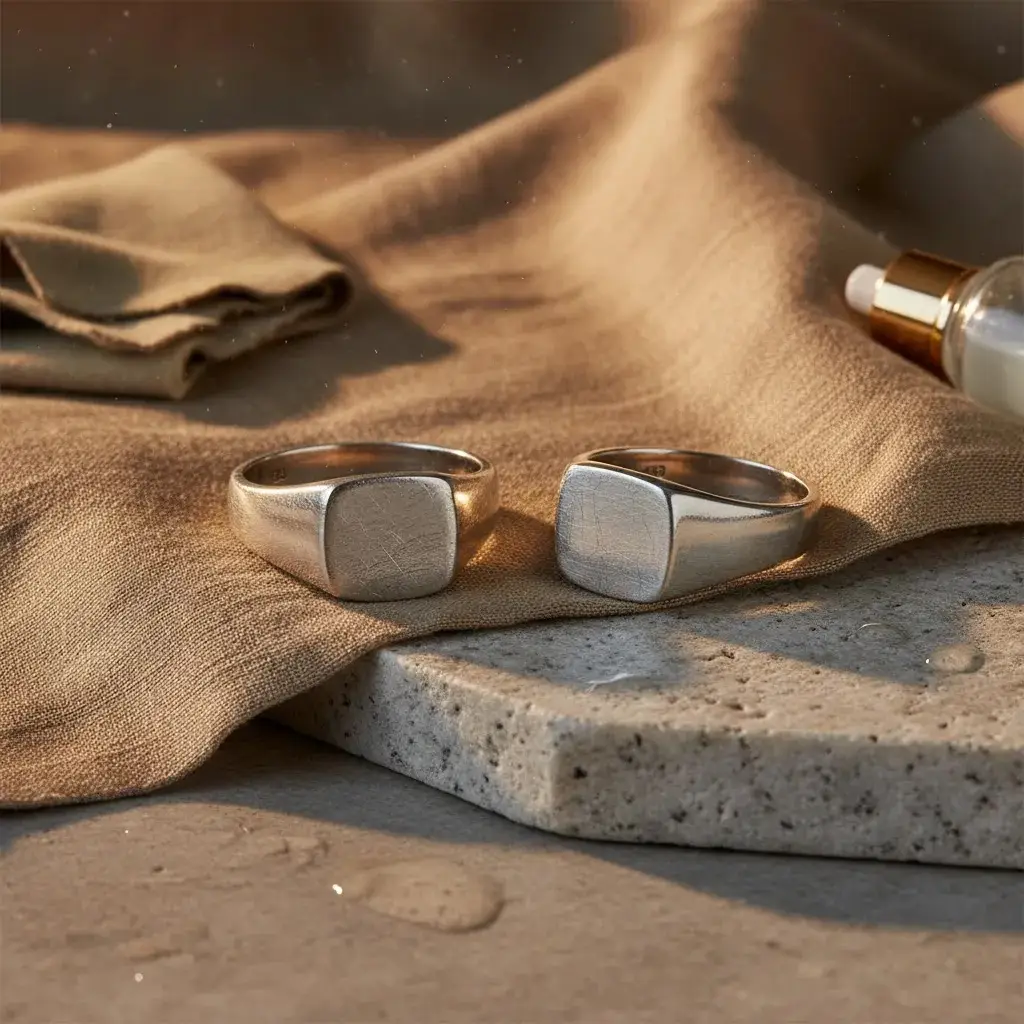
Material choice can influence care instructions, inventory handling, and customer service workflows. Sterling silver lines may require more active planning around storage, turnover, and tarnish prevention. That is particularly relevant for brands holding stock or shipping internationally. If your assortment includes silver, this resource on protecting sterling silver inventory and essential tarnish prevention practices is a practical next read.
4. Product development flexibility
For early-stage brands, sterling silver may provide a more manageable path for testing silhouettes, matching sets, or category expansion. White gold may be more appropriate once the brand has stronger clarity on demand, target price bands, and replenishment confidence. A manufacturer will often ask different questions depending on which route you take, especially around sampling, approval tolerance, and planned production volume.
5. Authenticity and trust in sourcing
Whatever material you choose, clear documentation and accurate product representation matter. For silver collections in particular, brands should understand how to communicate authenticity and specification consistency. This article on how to ensure your jewelry business offers authentic 925 sterling silver is useful if you are reviewing supplier reliability or refining product descriptions for wholesale buyers.
Visual and Merchandising Differences (How They Read in Real-World Selling)
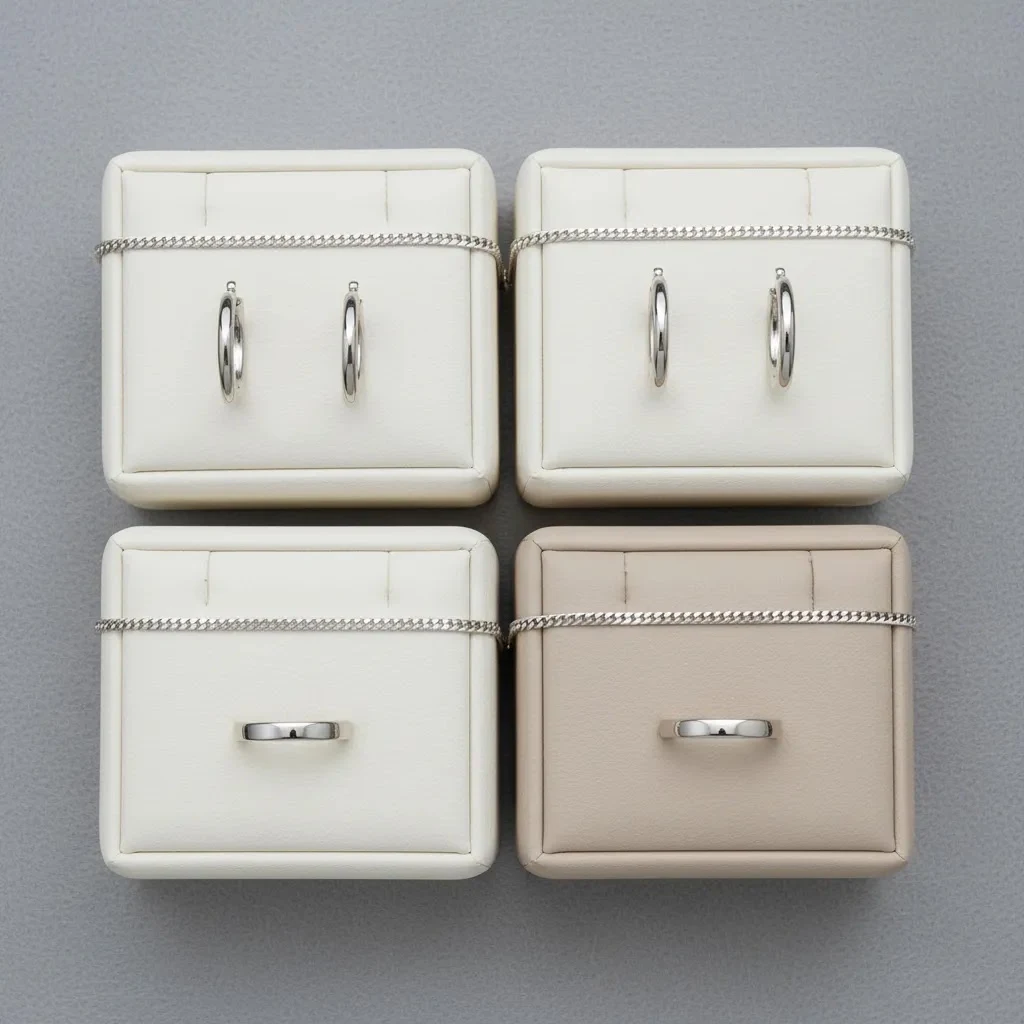
Here’s the thing: “white” metal tones are easy for shoppers to confuse, especially when they are comparing pieces quickly on a display tray, under store lighting, or across a few product photos online. From a wholesale standpoint, that confusion can turn into slower decision-making, more pre-sale questions, and more post-sale friction for your retail partners. If you carry both sterling silver and white gold, your job is to make the visual story clear without forcing a customer to understand metal terminology to feel confident.
White tones can present differently depending on lighting temperature, camera settings, and what the jewelry is photographed next to. The same piece can read cooler or warmer across different environments, and on-skin context changes perception even more. In practice, that matters for product pages, wholesale line sheets, and retailer training because buyers are often deciding from images first. If your visuals are inconsistent, customers may assume the wrong metal, then feel surprised when they see the piece in person.
Consider this: merchandising clarity is usually a naming and presentation system, not a single sentence in product copy. Brands often reduce confusion by using consistent naming conventions across every touchpoint, for example using the same material language on product pages, invoices, and line sheets. Side-by-side displays can help too, especially if you group by material and keep signage simple. In online selling, a consistent approach to photography, including repeatable lighting and a clear “material” callout near the price, can prevent the common issue where customers interpret “silver tone” as “sterling silver” or assume all white metals are the same.
What experienced buyers know is that a cohesive assortment can still include multiple materials without feeling scattered. If you want a “lookalike” story across price tiers, it can make sense to develop parallel silhouettes, the same design offered in different materials, so your collection reads as one brand language. That kind of planning can support upselling and step-up positioning while keeping the visual identity consistent. The key is to be deliberate about how those parallels are presented so retailers can explain the difference quickly at point of sale.
Which Option Fits Different Jewelry Business Models
Boutique and multi-brand retailers
Sterling silver may be a practical fit for boutiques that need wider assortment depth, approachable opening price points, and repeat-purchase potential. It can support staples, gifting ranges, and trend-responsive drops. White gold may work better in a curated premium case, where lower SKU count but higher per-piece value is part of the merchandising plan.
Private label startup brands
Founders launching a first collection often benefit from keeping product architecture manageable. Sterling silver may offer more room to test shapes, price bands, and category response before scaling. White gold could make sense if the brand concept is premium from day one and the target customer, packaging, and sales channel all support that decision.
Established brands adding premium tiers
If you already sell successfully in sterling silver, white gold may serve as a step-up option rather than a replacement. Some brands use silver as the volume driver and reserve white gold for a selective capsule. That structure may reduce risk while allowing you to gauge demand for a more premium offer.
Wholesale suppliers focused on turnover
Brands selling into wholesale accounts often need materials that align with retailer margin expectations and reorder behavior. Sterling silver may be easier to place across a broader account base. White gold may suit fewer accounts, but potentially with stronger premium positioning if the retailer’s audience supports it.
Royi Sal Jewelry as a Manufacturing Resource
Royi Sal Jewelry presents itself as a B2B custom jewelry design and manufacturing company serving wholesale and private label clients. The company is led by Royi Gal, whose background as both a designer and manufacturer strengthens the practical value of material discussions. That dual perspective matters because choosing between sterling silver and white gold is not only a styling decision. It may affect collection structure, sampling expectations, communication during development, and long-term production planning.
The available company information highlights custom jewelry design and development, collaborative consultation, jewelry manufacturing, and global shipping and fulfillment. For a brand comparing materials, that kind of end-to-end support can be useful because the tradeoffs often need to be reviewed across design intent, production feasibility, and business goals at the same time.
If you are planning a new collection or revising an existing range, you can explore Royi Sal Jewelry’s jewelry manufacturing capabilities and review the broader 925 sterling silver category for more context. If your team is ready to move from comparison into development, contacting Royi Sal Jewelry to discuss your design brief may help clarify which direction best fits your brand.

Hallmarks, Stamping, and Specification Communication for Wholesale
For wholesale and private label brands, stamps and hallmarks are part of trust-building, but they are not a complete system by themselves. Buyers may look for familiar marks such as “925” on sterling silver or karat markings on gold jewelry because it signals that the brand is speaking the language of the trade. The reality is that a stamp is typically one checkpoint, not standalone proof of what the product is. Retail partners often want consistency across the stamp, your product description, and whatever supporting documentation you can provide through your supply chain.
From a production standpoint, the bigger win is standardizing how you communicate specs to your manufacturer so there is less room for interpretation. That usually includes clear material callouts, finish notes, and any expectations around tolerances that matter to your customer experience, such as sizing consistency or how much natural variation is acceptable in hand-finished work. Many brand owners overlook the role of inspection checkpoints in reducing back-and-forth later. If you define what gets checked, when it gets checked, and what constitutes an acceptable pass, you reduce the chance that your first time seeing a problem is when a retailer flags it.
Think of it this way: wholesale friction often comes from mismatched language, not only mismatched product. If your line sheet says one thing, your invoices say another, and your product pages use a third set of terms, buyers may lose confidence even if the jewelry itself is well made. Aligning your terminology across product descriptions, packing lists, and B2B sales materials helps retailers educate their staff and set accurate expectations at point of sale. This is one of the most practical ways to protect your brand reputation as you scale into more accounts.
How to Evaluate the Right Option for Your Collection
Start with your target price architecture
Many brands make the mistake of choosing a material first and a pricing strategy second. In practice, that order often creates problems. It is usually better to define your intended retail range, margin goals, and channel strategy before locking your material direction. A collection built for boutique distribution may require a different material mix than one built for direct-to-consumer premium positioning.
Review expected reorder behavior
Ask whether the collection is likely to depend on fast repeat orders, seasonality, or limited runs. Sterling silver may be easier to support in businesses that need broader replenishment flexibility. White gold may work best for slower, more intentional assortments where each style carries more weight and planning discipline.
Assess care, storage, and after-sale workload
Material decisions do not stop at production. Consider how your team will store inventory, educate stockists, prepare care instructions, and handle post-sale questions. This is especially important if you ship internationally or hold inventory for long periods. The more operationally prepared you are, the less likely material-related issues will create preventable friction later.
Match the material to your brand story
If your brand message emphasizes accessible fine jewelry, versatility, or broad everyday assortment planning, sterling silver may be a natural fit. If your story centers on premium gifting, elevated collections, or lower-volume higher-ticket positioning, white gold may be more aligned. Neither route is automatically stronger. The better choice is the one your audience will understand and your operations can support.
Choose a manufacturer that communicates clearly
Material selection is one of the first places where supplier communication quality becomes visible. A reliable partner should help you translate design goals into production decisions, explain tradeoffs honestly, and flag issues before they become expensive. Royi Sal Jewelry’s stated model emphasizes collaboration, custom development, and ongoing partnership. For founders and brand managers, that kind of communication may be just as important as the material itself.
Durability and Wearability Planning (Everyday Wear, Replating, and Returns Risk)
Durability is not only a materials question, it is a product planning question. Daily-wear expectations are different for a ring that customers never take off than for earrings worn occasionally. What many brand owners overlook is that certain categories tend to take more impact and friction in real life, and that changes what “good performance” looks like. If a style is positioned as an everyday essential, you may want to be more conservative about how you spec it, how you finish it, and how you write care guidance so the customer experience matches the promise.
After-sale maintenance is where operations become visible. In practice, this can include customer education load, retailer staff questions, and occasional conversations about refinishing or replating expectations depending on how a piece is worn and cared for. The goal is not to overpromise that a piece will look perfect forever. The goal is to explain what normal wear can look like, what care is reasonable, and what a customer can do to extend presentation over time. Brands that handle this well tend to reduce negative reviews and reduce support tickets that come from mismatched expectations rather than true defects.
Return and warranty implications are also part of the decision. If material-related wear becomes a frequent reason for returns, it can quietly erode margin, especially for wholesale brands that support multiple retail partners. Consider aligning your internal policies, care cards, and retailer training so staff can explain what is normal, what is avoidable, and what might require service. Clear boundaries protect your brand and help retailers feel supported, because they can answer questions confidently without improvising at the counter.
Strengths and Considerations
Strengths
- Sterling silver may support more accessible assortment planning for brands that need broader SKU depth and easier entry price points.
- White gold may help create a stronger premium tier for brands focused on elevated positioning and higher average order values.
- Comparing the two forces better product planning around margins, target customer, and channel fit.
- Both options can work in a professional B2B collection if the material choice is matched to brand strategy rather than trend alone.
- A clear manufacturing partner can help translate material differences into realistic sampling, production, and inventory decisions.
Considerations
- Sterling silver and white gold are not interchangeable in pricing structure, maintenance expectations, or customer perception, so weak positioning may cause confusion.
- Silver-based collections may require more active inventory handling and care planning, especially for stored or slow-moving stock.
- Premium materials can increase product development pressure because mistakes in assortment planning may be more costly.
- Material choice alone will not create a strong collection. Sell-through still depends on design quality, brand fit, and supplier execution.
Frequently Asked Questions
Is sterling silver better than white gold for a new jewelry brand?
Not necessarily. Sterling silver may be easier for many new brands because it can support more accessible pricing and broader assortment testing. White gold may still be the better fit if your brand is launching with a clearly premium position and the expected customer is comfortable with higher price points. The right choice usually depends on brand strategy, not status assumptions.
What is sterling silver in a jewelry business context?
In business terms, sterling silver usually refers to 925 silver used for jewelry production and wholesale assortment planning. For brand owners, the key issue is not just the definition but how consistently that specification is supplied, described, and quality-checked. Your manufacturer should be able to explain what is being produced and how it is represented to buyers.
Is sterling silver real jewelry material for private label collections?
Yes, sterling silver is widely recognized as a legitimate jewelry material for commercial collections. The more important B2B question is whether it fits your retail positioning, expected margins, and care infrastructure. A real material choice still needs a real business case behind it, especially if you plan to scale into wholesale or international fulfillment.
How does 925 sterling silver vs white gold affect pricing strategy?
It may affect your retail architecture significantly. Sterling silver often gives brands more room to offer core styles at approachable price points. White gold may support a more premium range but could narrow your audience if the surrounding branding, packaging, and channel strategy do not justify that step-up. Pricing should be modeled before development begins.
Is sterling silver hypoallergenic?
That can depend on the exact alloy composition and the wearer’s sensitivities, so brands should avoid broad guarantees in product messaging. From a B2B perspective, the safer approach is to confirm specifications directly with your manufacturing partner and describe products accurately. Overstated claims can create customer service issues that are difficult to unwind later.
Should boutiques stock sterling silver or white gold first?
Many boutiques may start with sterling silver if they want wider assortment flexibility and more approachable turnover. White gold can make sense as a selective premium offering when the local customer base supports it. Buyers should look at average transaction value, sell-through speed, and repeat purchase behavior before deciding which category deserves more floor space.
How does a manufacturer help with this material decision?
A good manufacturing partner should explain how your material choice may affect development planning, inventory management, and long-term scaling. Royi Sal Jewelry’s business model emphasizes collaborative consultation and custom design support, which can be useful when a founder needs to connect aesthetic direction with practical production and fulfillment decisions.
Can a brand offer both sterling silver and white gold?
Yes, and in many cases that may be the most practical strategy. Some brands use sterling silver for core commercial volume and reserve white gold for premium capsules or selective hero styles. This can help test demand at different price tiers without forcing the entire collection into one positioning approach.
Does sterling silver require special inventory planning?
It often does. Silver inventory may benefit from stronger storage discipline, clearer care guidelines, and faster turnover planning, especially in humid environments or slower-moving assortments. Brands that ignore these details can create avoidable product presentation issues. Inventory care should be treated as part of merchandising operations, not only warehouse handling.
Which is better, white gold or sterling silver?
Neither is automatically “better” in a B2B context. White gold may be better for a brand that needs premium signaling and higher average order value potential, while sterling silver may be better for a brand that prioritizes accessible pricing, broader SKU depth, and easier assortment testing. The stronger option is the one you can price correctly, explain clearly, and support operationally through care guidance and retailer training.
Can you wear sterling silver every day?
Many customers do wear sterling silver daily, but from a brand perspective the more important question is whether you have planned for daily-wear realities. If you position items as everyday pieces, set expectations in your product copy and care instructions, and make sure retailers can explain normal wear behavior. Daily wear can increase cleaning and maintenance needs, so the customer experience depends heavily on education and support.
What lasts longer, white gold or sterling silver?
Longevity depends on how a piece is worn, the design, the finish, and how customers care for it. For brands, “what lasts longer” should be treated as a wearability planning question: which SKUs are likely to see the most friction, impact, or exposure, and how will you manage maintenance expectations over time. If you want a clearer answer for your specific designs, your manufacturer should be able to review intended use cases and recommend practical specs and care guidance that reduce preventable issues.
Does sterling silver help with arthritis?
Brands should avoid making health-related claims about jewelry materials. If customers ask questions like this, the safer approach is to keep your messaging focused on accurate product specifications, comfort, and care, and to suggest that customers seek medical guidance for health concerns. From a business standpoint, avoiding medical claims helps reduce compliance and customer service risk.
Key Takeaways
- Sterling silver vs white gold is primarily a business decision about pricing, positioning, and operations.
- Sterling silver may suit accessible fine jewelry, broader SKU counts, and collection testing.
- White gold may fit premium tiers, elevated brand positioning, and lower-volume higher-ticket assortments.
- Your manufacturer should help connect material choice to development, communication, and fulfillment realities.
- Clear product specification and honest customer-facing messaging matter as much as the material itself.
Conclusion
There is no universal winner in the silver vs white gold discussion. The better option depends on your brand’s price architecture, customer expectations, assortment strategy, and operational readiness. Sterling silver may be the stronger choice for brands seeking flexibility and wider accessibility. White gold may be better suited to premium positioning and a more selective collection structure. What matters most is choosing the material that your brand can explain clearly, merchandise confidently, and support through production and after-sale care. If you are planning a private label or wholesale collection and want guidance grounded in real manufacturing considerations, visit royisal.com to learn more about the process or contact Royi Sal Jewelry to discuss your custom jewelry brief.