How Brands Should Evaluate Chain Styles
Many first-time founders choose a chain based on appearance alone. In wholesale and private label development, that is only one part of the decision. A chain style also needs to support your margin structure, fit your design language, and work reliably across sampling and repeat production runs.
For B2B buyers, the best jewelry chain styles usually balance three things: visual versatility, manufacturing consistency, and assortment flexibility. A practical chain can support multiple SKUs with relatively small design changes. That matters if you want to build pendants, layering pieces, and coordinated extensions rather than isolated one-off products.
Chain styles also influence how easy it may be to communicate your product brief to a manufacturing partner. If your design direction requires digital development or custom specifications, strong briefing and technical alignment become more important. That is one reason many brands pair chain planning with a broader understanding of jewelry manufacturing and design development workflows.
Royi Sal Jewelry approaches custom jewelry design and manufacturing as a collaboration between brand vision and production reality. Led by Royi Gal, whose background combines jewelry design and manufacturing, the company works with B2B clients developing custom collections, private label programs, and wholesale assortments. If your chain concept needs refinement before sampling, you can also explore how Royi Sal Jewelry approaches design planning through its wholesale jewelry resources.
Quick Picks by Business Goal
- Best for broad commercial versatility: Cable chain
- Best for bold identity and stronger visual presence: Curb chain
- Best for cleaner, more structured design language: Box chain
- Best for texture-driven collections: Rope chain
- Best for a classic line with variation built in: Figaro chain
If your assortment strategy also includes other core categories, chain products often perform best when they are planned alongside adjacent pieces such as wholesale silver stud earrings or staple ring programs like sterling silver rings wholesale. That kind of coordinated planning can make merchandising and reorder logic more efficient.
Comparison Table
| Chain Style | Best For | Commercial Strength | Main Consideration |
|---|---|---|---|
| Cable Chain | Foundational collections, pendants, layering programs | High versatility across multiple SKUs | May feel too familiar if your brand needs a stronger signature look |
| Curb Chain | Statement-led lines and fashion-forward assortments | Strong visual identity and merchandising impact | May not suit every pendant concept or delicate product direction |
| Box Chain | Minimal collections and structured product design | Clean presentation and neat geometry | Requires close attention to proportion and finish consistency |
| Rope Chain | Texture-rich collections and premium-looking basics | Adds depth without requiring extra components | Can complicate a very minimal assortment if overused |
| Figaro Chain | Classic lines with subtle pattern variation | Distinctive rhythm with broad market familiarity | Needs proportion control to avoid looking visually unbalanced |
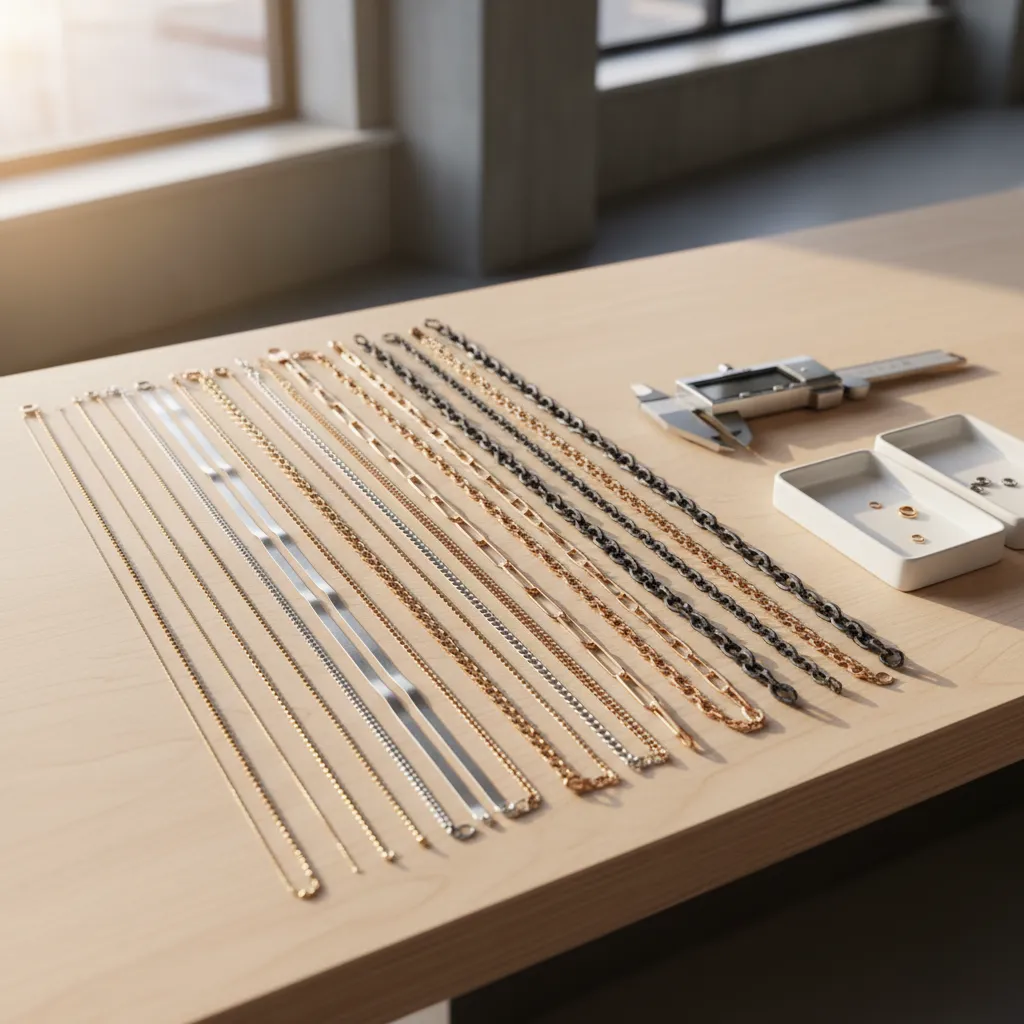
Other Commercially Relevant Chain Styles to Consider (Beyond the “Top 5”)
The five styles above cover a large share of commercial demand, but wholesale programs rarely stay static. Once your core is working, adding one or two supporting chain types can help you build clearer price tiers, refresh line sheets without redesigning everything, and serve different retailer profiles with minimal disruption to production workflows.
Here are a few chain styles that often show up in broader chain jewelry coverage, and can be commercially useful depending on your assortment goals.
Rolo (Belcher) Chain
Best for: Core assortment support, pendant bases, and clean layering SKUs that still feel slightly different from a standard cable.
Main consideration: Spec clarity matters more than it looks. Round-link chains can vary widely in link proportions and overall visual density, which can impact perceived quality and how well the chain holds its identity across reorders.
Paperclip (Trombone) Chain
Best for: Trend-aware capsules, higher-visibility hero SKUs, and merchandising stories built around negative space and elongation.
Main consideration: This style tends to be sensitive to proportion decisions. Small shifts in link length, width, and profile can change the entire feel of the SKU, so you want a clear reference and consistent tolerance expectations if you plan to reorder.
Wheat Chain
Best for: Elevated basics and chain-first products where the chain itself carries the visual value without extra components.
Main consideration: Construction and finish consistency are central because the style reads as more intricate. If your brand is building a reliable wholesale program, sampling should confirm that the chain remains consistent in appearance across lengths and does not create avoidable service issues.
Mariner (Anchor) Chain
Best for: Collections that need a stronger graphic identity while staying commercially familiar, especially for brands balancing classic codes with a clearer silhouette.
Main consideration: Because it has a recognizable structure, alignment and proportion control are important. If the visual rhythm shifts between batches, the chain can look like a different product in photography and on retail displays.
Ball (Bead) Chain
Best for: Add-on SKUs, entry-tier programs, and simple pendant concepts where you want a deliberately casual or utilitarian direction in your assortment.
Main consideration: It is easy to underestimate how much the end components and closures influence customer experience. If you include it, confirm how it will be finished, how it will connect to end findings, and how it will be merchandised so it feels intentional rather than like an afterthought.
You expand beyond the five featured styles when you have a clear reason inside your SKU architecture. If your retail partners are primarily reorder-driven boutiques, your next chain style often needs to solve a practical merchandising need, such as a clearer entry tier or a distinct hero silhouette. If your distribution is more trend-sensitive, adding one directional chain style as a seasonal layer can be enough, as long as it is still briefed and sampled for repeatability.
1. Cable Chain
Cable chain remains one of the most commercially useful styles for brands building a dependable core range. Its linked structure is visually familiar, easy to merchandise, and adaptable across different product directions. For many labels, it works well as a base style for pendants, layering necklaces, and extension into matching categories.
Why it stands out: cable chain typically supports range-building. A single chain direction may be adapted across multiple lengths, pendant formats, or simplified matching concepts without changing the overall brand language too drastically.
Strengths
- Highly flexible for base assortment planning
- Usually works well with pendant-led development
- Easy for buyers and merchandisers to understand quickly
- Can fit both entry collections and more refined core lines
Considerations
- May not create enough visual distinction on its own for a highly directional brand
- Small specification differences can affect perceived quality significantly
- Could feel too standard if your collection depends on strong texture or pattern
Who it suits: Brands launching foundational lines, boutiques that need repeatable core products, and private label programs that depend on SKU efficiency.
Verdict: If your goal is a practical, scalable chain program, cable chain is often the safest starting point. It also pairs naturally with educational content around chain necklace product planning.
2. Curb Chain
Curb chain brings stronger visual presence than many basic linked styles. Its flattened, directional appearance can make a collection feel more assertive and trend-aware without requiring highly complex design additions. For B2B buyers, that can be useful when the goal is to create a recognizable hero piece inside a broader assortment.
Why it stands out: curb chain can act as both a standalone product and a statement foundation within layered or branded collections. It often reads clearly in line sheets and merchandising displays, which may help buyers understand the collection story faster.
Strengths
- Strong visual identity from a simple structural format
- Useful for statement-oriented or fashion-led assortments
- Can anchor a collection with a clear hero style
- Often effective in edited capsule launches
Considerations
- May limit flexibility if your assortment depends on very delicate styling
- Needs careful proportion decisions to avoid overpowering adjacent SKUs
- Could narrow audience fit if your retail partners prefer understated pieces
Who it suits: Brands seeking a bolder identity, retailers building stronger focal products, and collections that need visible structure rather than subtle texture.
Verdict: Curb chain is often a strong option if your assortment needs a confident visual anchor and your buyer profile responds to statement-led product design.
3. Box Chain
Box chain tends to appeal to brands that prefer a cleaner, more architectural look. Its geometry can feel more controlled than rounder linked styles, which makes it useful for collections with a minimal or structured design language. In commercial terms, it may help create a refined impression without relying on heavy ornamentation.
Why it stands out: box chain offers visual order. That can help a product line feel disciplined and consistent, especially when combined with pared-back pendant concepts or clean merchandising.
Strengths
- Supports minimalist and structured brand aesthetics
- Can present neatly in photography and line sheets
- Useful for collections that avoid excessive decorative detail
- May help create a premium visual impression through precision
Considerations
- Minor inconsistencies in execution may be more visible due to the clean geometry
- Could feel too rigid for brands built around softness or heavy texture
- Requires strong proportion control if paired with pendants or modular elements
Who it suits: Design-led brands, cleaner private label concepts, and boutique assortments that prioritize neat visual presentation.
Verdict: Box chain can be a smart choice when precision, simplicity, and collection discipline matter more than overt visual drama.
4. Rope Chain
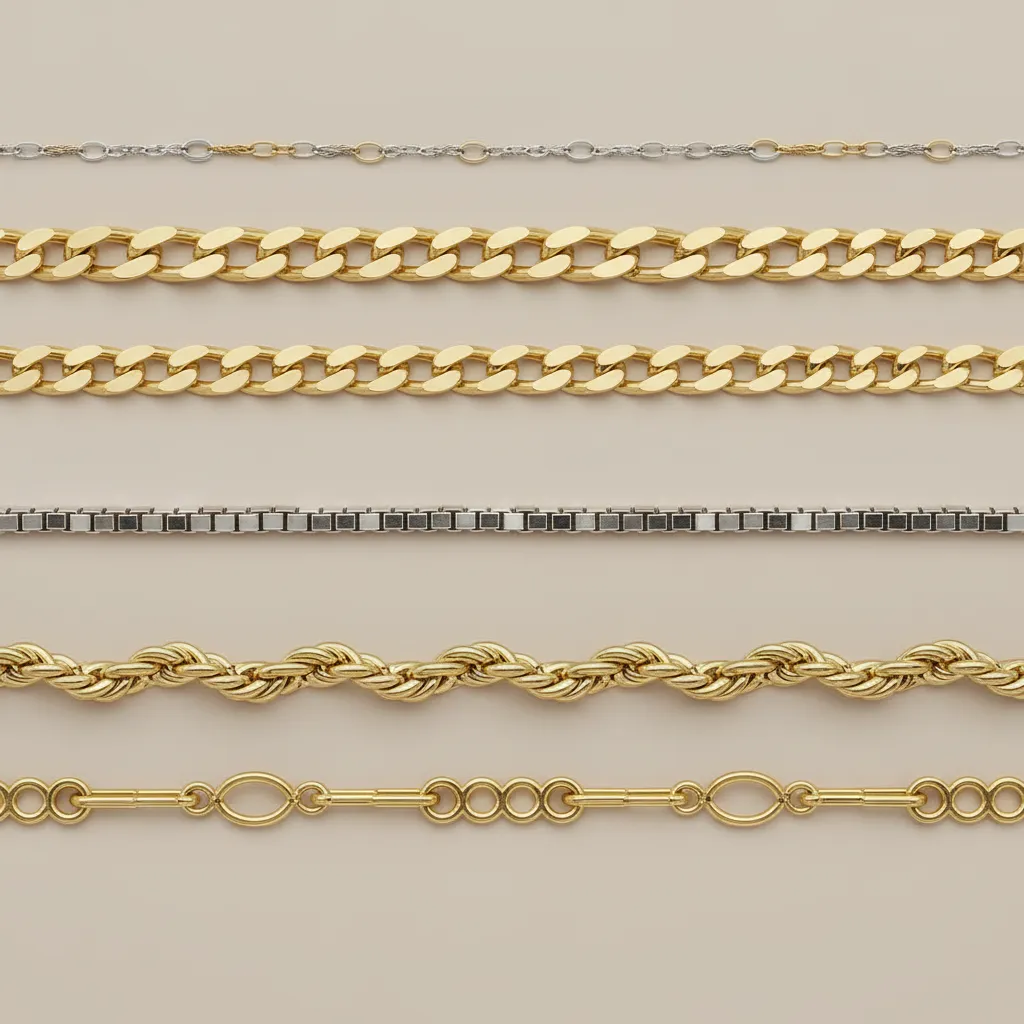
Rope chain brings built-in texture, which can make even a relatively simple product feel more dimensional. That matters for brands trying to create visual richness without adding too many separate design elements. In some collections, rope chain may reduce the need for extra complexity because the chain itself already carries decorative value.
Why it stands out: the texture does more of the design work. That can be commercially helpful in assortment planning, especially if you want a chain-first product rather than a pendant-first one.
Strengths
- Adds texture and visual movement without extra components
- Can support standalone chain concepts effectively
- Often useful for premium-looking basics
- Helps diversify a range that already includes simpler linked styles
Considerations
- May compete visually with detailed pendants or highly embellished concepts
- Could complicate a minimal collection if used too broadly
- Needs careful planning to maintain consistency across a coordinated range
Who it suits: Brands wanting more texture, retailers looking for chain-led visual appeal, and collections that need differentiation without major structural changes.
Verdict: Rope chain is often a strong second or third style in a growing assortment because it adds dimension while remaining commercially familiar.
5. Figaro Chain
Figaro chain offers a clear pattern rhythm that can make a line feel classic but not generic. For B2B buyers, that in-between position can be useful. It gives more character than a very basic chain while remaining recognizable enough for broad merchandising. This balance can support brands that want distinction without moving too far into niche styling.
Why it stands out: it introduces variation directly into the link pattern. That can help a product stand apart on a display or in a catalog without depending on additional design components.
Strengths
- Distinct visual rhythm with broad commercial familiarity
- Useful for classic collections that still need character
- Can work as a standalone style or support selected pendant concepts
- Helps diversify a chain assortment without becoming overly experimental
Considerations
- Pattern proportions need to be controlled carefully for a balanced look
- May not align with ultra-minimal brand identities
- Could be less flexible than simpler chain structures for broad SKU adaptation
Who it suits: Established boutiques, brands with classic styling codes, and product lines that need variation without high design risk.
Verdict: Figaro chain is a useful bridge style for brands that want familiarity, pattern, and enough distinction to avoid a flat core assortment.
Strengths and Considerations
Strengths
- Different chain styles allow a brand to segment its assortment into core, statement, and texture-led products without redesigning every category from scratch.
- Well-chosen chain directions may support collection expansion into pendants, sets, and coordinated merchandising stories.
- Chain-focused products can simplify early range building for newer labels because the silhouette logic is easier to organize than highly detailed custom forms.
- Several commercially proven chain styles are compatible with private label development and repeat wholesale planning, depending on specification clarity.
- Strong chain selection can improve line coherence across necklaces and adjacent categories if the assortment is planned as a system rather than as isolated SKUs.
Considerations
- Sampling may still be necessary even for familiar chain formats, especially if your brand requires custom sizing, branded details, or collection-specific proportions.
- Not every chain style supports every pendant concept, so visual preference should not replace technical review and assortment planning.
- Reorder consistency depends on clear specification, approval standards, and communication with the manufacturing partner.
- Overloading a line with too many similar chain options can create internal competition instead of a clean tiered assortment.
Comfort, Drape, and “Sparkle” Considerations for Merchandising Decisions
Wholesale returns and customer service issues are not always caused by obvious defects. Comfort and wear behavior can be just as important as the look of the chain on a product card. If a chain feels stiff, sits awkwardly, or tends to kink, it can create dissatisfaction at retail even if the piece looks strong in photography.
Comfort and drape: Different chain geometries naturally behave differently on the body. Some styles are more fluid and flexible, others hold a more structured line. From a merchandising standpoint, this affects what the chain is best used for, and how much risk you take on when you distribute at scale. For example, a chain that drapes cleanly may suit a broad base of retailers because it is easier for their customers to wear daily, while a more structured chain can work well as a hero SKU if your retail partners are comfortable selling a more directional silhouette.
Kinking and flexibility risk: Certain constructions can be more prone to kinking if the geometry is tight or if the chain is expected to fold sharply in packaging and shipping. This is not only a product issue, it is a wholesale operations issue. It can influence how you package, how you brief your retailers on handling, and how you prioritize sampling approvals. If your chain direction is likely to be packed flat on cards, coiled in pouches, or shipped in bulk, you want to evaluate how it behaves under those conditions before you commit to deeper production.
“Sparkle” as an attribute: Many buyers ask which chain sparkles the most, but in production terms that look usually comes from geometry and surface interaction with light. Chains with more edges, more visible facets, or higher surface variation often read as more light-catching, especially in display lighting. Finish approach and consistency can also influence how “bright” the chain reads across units. If your brand positioning is minimal and understated, you may prefer a calmer reflection profile. If you are building statement-led SKUs, a chain with more light-play can support that story without adding extra components.
How to translate this into wholesale language: If you want retailers to buy confidently, your line sheet and product naming should communicate what the chain is designed to do. Instead of only listing “chain type,” consider how you describe the role, such as “fluid drape for daily wear,” “structured silhouette for a hero look,” or “light-catching link geometry for display impact.” That helps retailers understand why one chain belongs in a core tier and another belongs in a more statement-driven tier, even when the designs are otherwise simple.
How to Select the Right Chain Style for Your Line
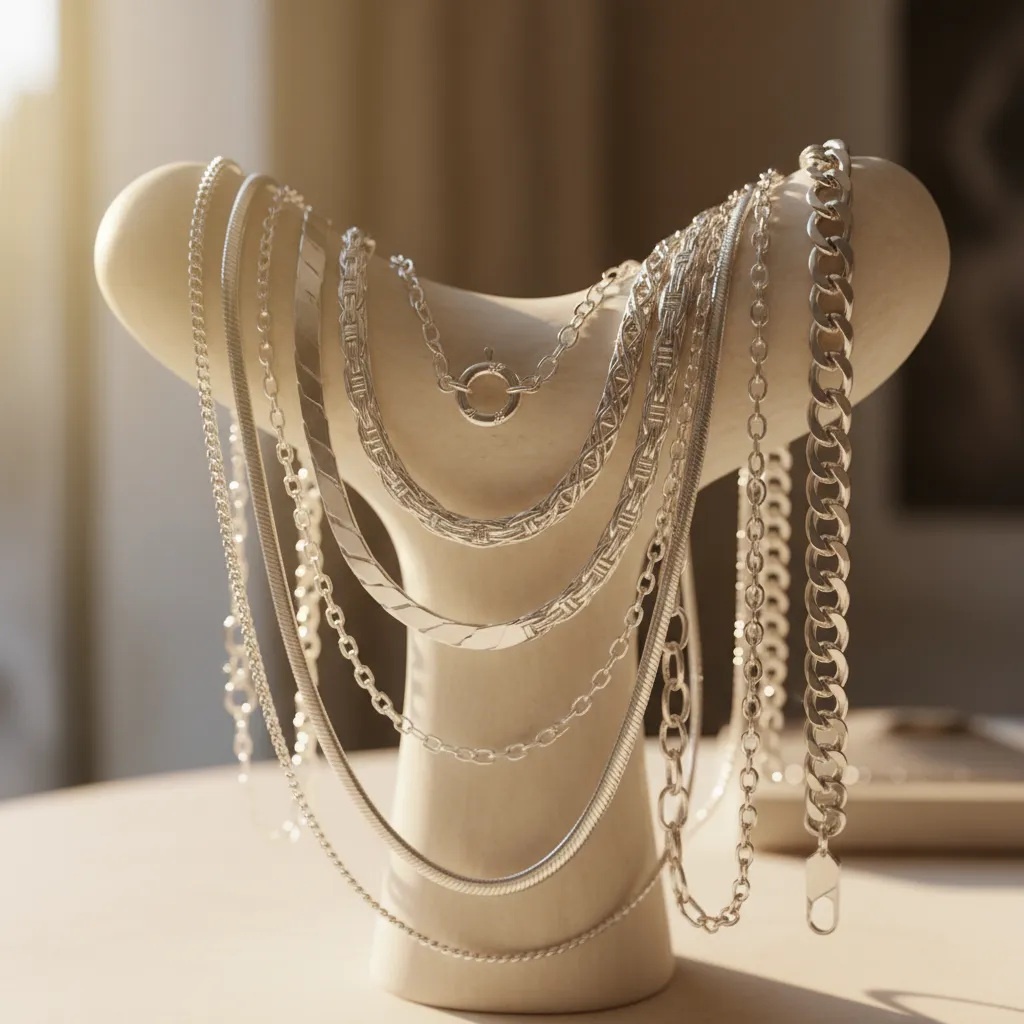
The best chain for jewelry making in a B2B setting is usually the one that fits your business model, not the one that looks best in isolation. A founder preparing for wholesale presentations may need broad commercial appeal. A boutique private label project may need tighter visual identity. A fashion-led capsule could prioritize impact over maximum versatility.
1. Start with your collection role
Decide whether the chain is meant to be a core basic, a hero style, a pendant base, or a texture-led support piece. This prevents overdevelopment and helps you avoid ordering styles that compete with each other rather than building a useful range.
2. Review assortment compatibility
Your chain program should fit your wider product mix. If you already have strong staple items in earrings, rings, or simple linked products, your next chain style may need to add contrast rather than repeat the same visual function. Planning chains alongside supporting categories usually creates a stronger wholesale offer.
3. Match style complexity to your development process
If you are still refining your brand identity, simpler chain structures may be easier to brief, sample, and scale. If your collection relies on custom visual cues, design development becomes more important. In that situation, digital planning resources such as best 3d modeling software for jewelry design and 3d jewelry design software free can help founders understand how design intent is translated before production discussions become more technical.
4. Assess manufacturing communication needs
Even common jewelry chain styles benefit from precise communication. Link shape, spacing, thickness, finish expectations, and how the chain interacts with pendants or closures all need to be understood clearly. This is especially relevant if you are working with an overseas manufacturer and want to reduce avoidable revision rounds.
5. Choose for reorder logic, not only first-launch appeal
A chain that performs well in your first drop should also make sense in future restocks or line extensions. Ask whether the style can support repeat buying, coordinated variations, and clearer SKU planning over time. If your team is already moving from research into supplier evaluation, a focused review of jewelry chain sourcing and specification questions may be the next step.
Royi Sal Jewelry is one useful resource for brands that need support connecting concept direction with manufacturing execution. Because the company works as a B2B custom design and manufacturing partner, and because founder Royi Gal brings both designer and manufacturer experience, the conversation can stay grounded in what is commercially realistic as well as what is creatively possible. If your chain concept still needs clarification, exploring Royi Sal Jewelry’s broader design and manufacturing process may help you brief more effectively before sampling begins.
Chain Specifications That Affect Quality, Wear, and Reorder Consistency
Competitor-style chain roundups often stop at names and visuals, but wholesale performance is usually decided in the specs. A detail that is easy to underestimate is how small construction choices can change how a chain feels, how it wears over time, and how consistent it looks across repeat production. Those differences can affect retailer confidence, customer satisfaction, and your ability to reorder without surprises.
Construction details that change the commercial outcome
Open vs. closed links: Some chains are built from links that are opened and closed during assembly, while others are formed in ways that can be more inherently “closed” by construction. From a production standpoint, this can influence perceived sturdiness, repairability, and how the chain handles stress points. If your wholesale program depends on durability and fewer service issues, ask your manufacturer to clarify how the chain is constructed and what that means for the finished product.
Tolerances and visual consistency: Two chains can share the same name but look different in density, proportion, and overall presence because of small variance in link dimensions and finishing. For reorder-based brands, you want to define what “acceptable” means, so later batches match the first approval. This is especially important for clean geometry chains where minor inconsistencies read clearly in photos and displays.
Link profile and edge treatment: The profile of the link, such as rounder versus more angular surfaces, can affect comfort, drape, and how the chain catches light. It can also affect how the chain sits against pendants, and whether it tends to twist. If your chain is part of a set, these details help maintain a consistent “feel” across the collection.
Clasp and end-finding requirements: Chains are rarely sold as “chain only” in wholesale. They are a system that includes closures and end components. If you do not specify these clearly, you risk inconsistencies across SKUs, such as different clasp looks across lengths, or hardware that does not align with the rest of your line’s visual language.
What to include in your manufacturing brief
In practice, a chain brief needs more than “cable chain, 18 inches.” To support repeatability, include target proportions and reference expectations. That usually means: the intended visual density and proportion, the link profile you are aiming for, finish expectations, clasp type and size direction, end-finding approach, and how the chain should interact with pendants or connectors. If the chain needs to sit flat, resist twisting, or pass through a specific pendant opening, those requirements should be in writing before sampling starts.
Sampling checkpoints that protect repeatability
Sampling is where you protect your reorder stability. A practical sequence is: first sample to confirm the overall look and behavior, a revision loop to correct proportions or hardware details, then a final approved reference that becomes your “golden sample” for future production. For wholesale programs, keeping an approved physical reference and a clear spec record helps your manufacturer reproduce the same result when you reorder or add new lengths and matching SKUs.
How These Styles Were Evaluated
This review uses a business-focused lens rather than a trend or consumer shopping lens. The chain styles were assessed against the criteria that matter most in wholesale and private label decision-making: manufacturing quality and craftsmanship, design flexibility, communication clarity, order planning practicality, lead-time sensitivity, and scalability within a broader collection.
The weighting behind these judgments reflects common B2B priorities. Manufacturing quality and craftsmanship carry the most weight because weak execution can undermine even a strong design direction. Design capability and custom service range matter next, since a good chain style should support more than one isolated SKU. Trust, reliability, and communication are also central because a well-specified chain is easier to reproduce consistently across sampling and repeat production.
The five styles listed here were selected because they are commercially familiar enough to matter to brand owners, yet different enough to serve distinct roles inside a jewelry assortment. The goal is not to declare one universal winner, but to help you choose the right style for your product strategy, retail audience, and manufacturing workflow.
Frequently Asked Questions
What is the best jewelry chain style for a new brand?
For many new brands, a versatile foundational style such as cable chain may be easier to build around because it can support pendants, layering concepts, and coordinated extensions. The better choice still depends on your brand identity, target retailers, and whether you want a core basic or a stronger statement product in your first release.
Which chain style usually works best for pendant programs?
Simpler chain structures often work well for pendant-led products because they do not compete too heavily with the focal design. That said, pendant compatibility depends on proportion, intended visual balance, and how the chain behaves within the finished concept. Sampling and clear design briefing may still be needed before moving into a wider production run.
Should I launch one chain style or multiple chain styles at once?
Many growing brands benefit from starting with one or two clearly differentiated chain directions rather than launching too many similar options. A focused range can make buying easier for retailers and can simplify internal forecasting. Expanding later is often more manageable once you understand which silhouettes your buyers actually reorder.
Are chain-first products good for private label collections?
They often can be, especially if your brand needs a clean starting point for assortment building. Chain-first products may reduce design complexity while still allowing room for customization through proportion, styling direction, or coordinated expansion. The success of that approach depends on briefing quality, target market fit, and how distinct you need the collection to feel.
How do I know if a chain style will scale well in wholesale?
Look at whether the style can support repeat demand, multiple lengths, adjacent categories, and a clear merchandising story. A scalable chain usually fits into more than one SKU logic and does not depend entirely on a single trend moment. Reliable communication with your manufacturing partner also affects whether scaling will be practical.
Do I need 3D design support for chain products?
Not every chain concept requires detailed digital development, but 3D planning may help when your product includes custom proportions, branded details, or integrated components. It can also improve communication before sampling begins. For brands still learning the design side, digital tools can make specification conversations more precise and efficient.
What should I ask a manufacturer before approving a chain style?
Ask how the style will be sampled, what specifications need sign-off, how consistency is managed across repeat orders, and what communication process is used during revisions. You should also clarify how the chain fits your broader assortment plan, especially if it will be paired with pendants, layered looks, or future product extensions.
Is a bold chain always better for retail visibility?
Not necessarily. Bold chains can create stronger display presence, but they may also narrow your buyer base if your assortment needs broader versatility. A more restrained chain can sometimes perform better across different retailers because it supports more styling directions. The stronger option is the one that fits your product strategy and customer profile.
Which chain model is best?
There is no single best chain model across all brands. The better approach is to match the chain model to its job in your assortment. Cable and rolo-type directions often work well as a base for scalable SKUs, while curb, paperclip, or mariner-style directions can act as clearer hero silhouettes. Your “best” model is the one that fits your retailer profile, price-tier architecture, and ability to brief and reorder consistently.
What is the most comfortable chain style?
Comfort usually comes from how the chain drapes and how it feels at the edges, not only from the chain name. Many brands find that more flexible, fluid chain constructions tend to wear comfortably across a broad customer base, while more structured silhouettes can feel more assertive but may be less forgiving. The most reliable way to judge comfort for your market is to review wear behavior during sampling and align packaging so the chain arrives in good condition at retail.
What style of chain sparkles the most?
A more “sparkly” look is typically driven by link geometry and surface interaction with light, such as edges, facets, and visible texture. Rope-style directions often read as more light-catching because of their surface variation, while cleaner chains can read calmer and more minimal. For wholesale merchandising, the key is to define whether you want a high-impact display look or a quieter everyday core, then choose a chain style that supports that positioning consistently in production.
What type of necklaces are in style right now?
For wholesale buyers, what is “in style” tends to show up as a mix of strong core basics and a smaller set of directional hero chains that refresh the assortment. Many retailers balance evergreen chain staples with one trend-leaning silhouette that creates visible newness on displays and in product drops. If you want trend responsiveness without losing reorder stability, keep the core chain program consistent and treat trend-led chains as controlled capsule additions with clear specs and sampling approvals.
How can Royi Sal Jewelry help with chain-based collection development?
Royi Sal Jewelry works with B2B clients on custom jewelry design and manufacturing, with a collaborative process shaped by founder Royi Gal’s experience as both a designer and manufacturer. That can be helpful if you need support refining a chain concept, preparing a clearer brief, or aligning a creative idea with practical production planning.
Key Takeaways
- The best jewelry chain styles for brands are the ones that fit your assortment strategy, not just your visual preference.
- Cable, curb, box, rope, and Figaro chains each serve different commercial roles in wholesale and private label collections.
- Chain selection should account for pendant compatibility, SKU planning, reorder logic, and communication with your manufacturing partner.
- Founders often benefit from starting with a focused chain range rather than launching too many similar options.
- Design development and manufacturing planning are closely linked, especially when a chain concept needs custom refinement before sampling.
Conclusion
The strongest chain choice is rarely about trend alone. It is about how well a style supports your brand position, product architecture, and long-term production planning. Some businesses need a dependable foundational chain that can carry multiple SKUs. Others need a more distinctive style that gives a small collection clearer identity. The right decision usually comes from viewing chain selection as part of a system that includes design briefing, sampling, wholesale fit, and future reorders. If you are developing a private label line or evaluating custom manufacturing options, Royi Sal Jewelry offers a collaborative, B2B-focused approach shaped by real design and manufacturing experience. Visit royisal.com to learn more about the process or contact the team to discuss your chain-based collection brief.
Share this post