


Quotes need context: compare supplier pricing only after confirming that each quote covers the same construction, quantity, packaging, quality checks, and delivery terms.
A boutique buyer may receive two visually similar wholesale silver bangles and assume they are interchangeable. One may feel substantial, while the other uses a lighter profile and different cost structure. Neither option is automatically better. The commercial fit depends on how your customers wear jewelry, how you plan to merchandise the collection, and how much product information your retail team can communicate confidently.
This guide focuses on the purchase decision behind solid and hollow bangles for wholesale programs. It explains which construction may suit different business models, what to include in a manufacturing brief, how to interpret price tiers without relying on misleading comparisons, and where brands commonly encounter trouble during sampling and production.
Who Should Source Wholesale Silver Bangles
Wholesale silver bangles can suit retailers and brand founders who need a recognizable bracelet format with clear visual impact on a display, in a campaign, or as part of a coordinated assortment. Brands building repeatable core styles, gift-oriented collections, stackable bracelet concepts, or a signature silhouette may find a bangle program especially useful. They can refresh that silhouette through different surface details.
They are also useful for businesses that want to create a more complete bracelet assortment beside chain styles. If your current offering relies heavily on flexible bracelets, reviewing wholesale sterling silver bracelets can help you identify where rigid bangles could fill a merchandising gap.
Wholesale bangles may not be the right first product for every business. If your brand has not yet defined its core customer, sizing policy, visual identity, or resale price architecture, a broad bangle launch can introduce unnecessary variables. Rigid jewelry requires a more deliberate fit strategy than many adjustable products, so early-stage brands may benefit from starting with a tightly edited range rather than several untested profiles.
Wholesale Silver Bangles: Solid and Hollow Construction Compared
The central decision in wholesale silver bangles is not simply weight. Solid and hollow options influence perceived value, wear expectations, shipping considerations, retail communication, and the level of care needed during development.
What a solid bangle can offer
Designers often choose a solid bangle for its denser construction and more substantial hand feel. For a brand, that can support a premium assortment position, especially where the design relies on sculptural volume, a clean rounded profile, or a piece intended to become a recognizable hero SKU. The added substance may also make a bangle feel more stable in display photography and in-store handling.
Solid construction does not remove the need for thoughtful design review. A wider or thicker profile may affect comfort, stackability, sizing tolerance, and retail price positioning. Your supplier should be able to clarify the intended dimensions and how the construction supports the design rather than relying on appearance alone.
What a hollow bangle can offer
A hollow bangle may allow a collection to achieve a larger visual profile with less overall weight. This can be commercially attractive for brands that want a noticeable silhouette while maintaining a lighter product feel or a different cost position. It may also create more flexibility when developing statement shapes that would feel overly heavy if built with a denser construction.
The trade-off is that hollow pieces require extra clarity around intended use, profile geometry, and handling expectations. A hollow form can suit many retail programs, but retailers should not present it as identical to a solid construction. Product descriptions, staff training, and quality criteria should reflect what the customer is receiving.
Do not compare only by appearance
Two bangles can share similar outside dimensions yet differ materially in construction, weight, durability expectations, and quotation basis. Ask suppliers to identify whether the piece is solid or hollow in writing, then request the relevant dimensional and weight information for the approved sample. This protects your buying decision and makes reorders easier to manage.
| Construction | Visual and wear profile | Commercial consideration |
|---|---|---|
| Solid | Denser construction and a more substantial hand feel | May support a premium assortment position or a recognizable hero SKU |
| Hollow | Larger visual profile with less overall weight | May support a lighter product feel or a different cost position |
Weight, Wall Thickness, and Production Tolerances
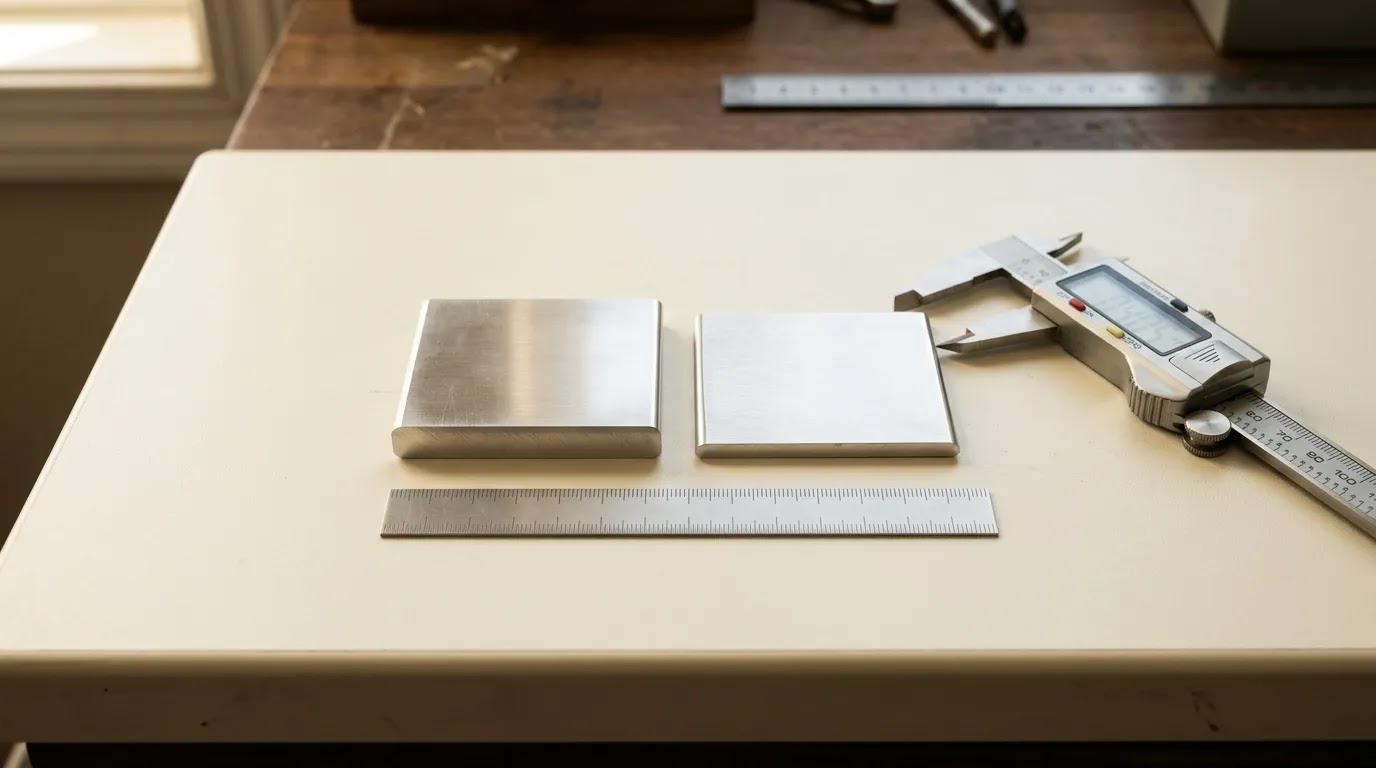
Document target finished weight alongside outside dimensions, inner diameter, and profile measurements. Visually similar bangles can have different finished weights because construction and internal geometry differ. A target weight range gives your team a clearer basis for comparing quotations, reviewing samples, and confirming that later production remains aligned with the approved design.
For hollow construction, wall thickness is a measurable part of the brief rather than a detail to infer from photographs or a general product description. Request the relevant specification in writing, together with the measurement points your supplier uses. This helps prevent a sample from appearing acceptable at first review while differing from the intended construction in ways that affect hand feel, form, or retail communication.
Agree on production tolerances before approval. Small variations can occur in handmade or production processes, but your supplier should clarify the allowable range for weight and dimensions. Recording those limits supports fair quote comparisons, gives quality inspection a defined reference, and reduces uncertainty when you place a repeat order.
Buying Criteria for Wholesale Silver Bangles
1. Intended customer and wear occasion
Start with the job the bangle must perform in your assortment. A minimalist everyday line may need a different profile from a seasonal statement collection or a gift-focused range. Decide whether customers will wear one bangle alone, stack multiple pieces, pair it with a watch, or coordinate it with other bracelet types.
Avoid approving a design solely because it photographs well. Ask whether it fits the movement, comfort, and use patterns of your target customer. Your intended customer informs the construction choice more reliably than trend imagery does.
2. Inner diameter and fit policy
Rigid bangles need clear fit specifications. The inner diameter, internal shape, profile depth, and opening method can all affect whether a bangle can be comfortably put on and removed. A round design may fit differently from an oval design even if both appear similar in photographs.
Confirm which sizes will be offered, what measurement method the supplier uses, and what tolerances are acceptable. Avoid describing size with broad terms such as “standard” or “medium” unless those terms are attached to measurable dimensions in your product documentation.
3. Profile shape and edge comfort
A bangle’s profile can be rounded, flat, faceted, domed, tubular, or shaped in another way. This influences how it catches light, how it stacks, and how it feels against the wrist. The outside visual width may not tell you enough about comfort because the inside edge and overall depth matter too.
Request views that show the bangle from the top, side, and interior. If you plan to sell through boutiques, ask buyers and sales staff to handle the approved sample before committing to a production run. Their feedback can reveal comfort issues that a flat design image may miss.
4. Opening, hinge, and closure requirements
Some bangles are continuous closed circles, while others use hinged or clasped constructions. A closure can broaden accessibility for customers who struggle with a fixed opening, but it also introduces more components and potential points that require inspection. The closure should be evaluated for visual fit, handling, alignment, and repeatable operation.
Do not treat the mechanism as a minor detail. If your design includes an opening feature, include clear requirements for how it should sit when closed, how much play is acceptable, and what the finished piece should look like from multiple angles.
5. Surface detail and collection identity
Texture, engraving, pattern, and decorative elements can make wholesale silver bangles easier to distinguish from generic bracelet offerings. They can also create additional sampling questions. Fine details may read differently across a curved surface, and a pattern that looks balanced on a rendering may need adjustment on a physical sample.
Brands developing coordinated ranges may also consider how bangles work beside sterling silver charm bracelets wholesale programs. A smooth bangle can create contrast beside more detailed bracelet styles, while a heavily decorated bangle may compete for attention.
6. Sample quality and reorder control
Use the approved sample as the reference point for later production. Record the dimensions, construction type, visual finish, decoration placement, closure behavior where relevant, and acceptable variation. Keep dated photos and written approval notes in one project file.
For a broader view of how bangle decisions fit into a bracelet assortment, review the wholesale silver jewelry category. Collection planning is easier when your team can see how individual SKU choices support the overall product mix.
Wholesale Silver Bangles: Price Levels and What They Usually Reflect
Wholesale silver bangles do not fit into dependable universal dollar bands. Construction, dimensions, order quantity, surface detail, component requirements, packaging, sampling needs, and delivery terms can all change the final quotation. A responsible supplier should provide project-specific pricing rather than treating visually similar bangles as equivalent.
Budget-oriented programs
Budget-oriented bangle programs often prioritize simpler forms, fewer development variables, and efficient repeatability. This can suit retailers testing a new bracelet category or brands introducing a focused entry assortment. The key is to protect essential product clarity. A lower quote should not leave construction, sizing, or finish expectations undefined.
Mid-range programs
Mid-range programs may accommodate more deliberate profile development, stronger collection differentiation, or several coordinated variations. Buyers in this category should concentrate on the details that support retail value, such as proportion, sample refinement, packaging requirements, and reliable product documentation.
Premium-positioned programs
Premium-positioned bangles often place greater emphasis on construction, distinctive design language, visual substance, and close sample approval. This does not mean every premium project needs maximum complexity. A refined, well-resolved form can be more commercially effective than excessive decoration if it supports your brand’s identity.
Ask each supplier to separate development costs, sample costs, production pricing, packaging, shipping, and any optional services where applicable. Comparing a complete quotation against a partial quote can create false savings. Businesses expanding into related categories may also find it useful to assess silver jewelry as a wider category, rather than making isolated SKU decisions.
How to Evaluate a Wholesale Silver Bangle Supplier
Before placing a larger order, assess how clearly a supplier can document construction, dimensions, target weight, tolerances, and sample revisions. Responsive communication during development is useful, but the quality of the written record matters equally. Your team should be able to identify which version of the bangle is approved, what changed from the previous version, and which specifications will guide production inspection.
Ask how the supplier manages sample review, revision requests, quality checks, packaging requirements, and repeat orders. These operational details often reveal whether the relationship can support a growing assortment. A controlled sample process and clear reorder records may be more valuable than a fast initial quotation that leaves key requirements open to interpretation.
Available inventory and custom manufacturing serve different buying needs. Ready-stock sourcing may suit retailers that need an existing assortment and can work within established specifications. A manufacturing partner is more suitable when your brand needs a bangle developed around its own dimensions, construction, visual direction, packaging, and production requirements. Clarify which model you are evaluating before comparing offers.
How to Approve Wholesale Silver Bangles Before Production

A clear approval process reduces the risk that the final production run differs from what your team expected. The process should test both appearance and operational details.
- Provide sketches, reference images, intended dimensions, and a written statement of whether the requested bangle is solid or hollow.
- Confirm the target customer, intended retail position, quantity range, sizing plan, and any packaging requirements.
- Review the design development materials and ask questions about proportions, construction, opening method, and visible details.
- Evaluate the physical sample for fit, hand feel, edge comfort, closure behavior, visual balance, and consistency with your collection.
- Document changes in writing, then approve the final sample reference before authorizing production.
When a bangle concept still needs work between the first sketch and a production-ready file, Royi Sal Jewelry steps in as a design partner rather than a vendor filling an order. Manufacturing conversations at this stage are built to hold both sides of the equation, honoring the creative vision while keeping commercial goals firmly in view.
Common Mistakes to Avoid
- Assuming similar dimensions mean similar construction. Confirm whether each option is solid or hollow and request written specifications.
- Launching without a sizing policy. Decide how customers and retail staff will understand fit before product photography and wholesale selling begin.
- Approving only digital visuals. Physical samples reveal weight, comfort, edge treatment, and closure behavior that renderings cannot fully show.
- Comparing supplier quotes line by line without matching scope. Review sampling, production, packaging, shipping, and quality expectations together.
- Overbuilding the first order. A concise assortment of validated profiles can provide clearer sales feedback than a wide launch with too many variations.
- Leaving reorder specifications informal. Preserve approved dimensions, sample photos, and construction notes for future production discussions.
If your collection strategy includes decorative elements or complementary product stories, wholesale gemstone jewelry can provide a useful reference point for planning cross-category merchandising. Keep each category’s production requirements distinct, even when the campaign story connects them.
Buying Checklist for Wholesale Silver Bangles
Before approving a wholesale bangle order, confirm the following items with your supplier and internal team:
- The bangle is identified as solid or hollow in the approved specification.
- Inner diameter, profile width, depth, shape, and sizing options are documented.
- The intended wear position and target customer are clear.
- Any hinge, clasp, or opening method has been tested on a physical sample.
- The approved sample reflects the final decorative details and surface expectations.
- Your quote identifies what is included in development, production, packaging, shipping, and quality review.
- Your team has retained sample photos, written approvals, and reorder-critical specifications.
- Retail product descriptions accurately reflect the construction and fit guidance you plan to provide.
Wholesale Silver Bangles: Material Specification and Product Documentation

Your wholesale bangle brief should state the requested silver specification and any product identification or documentation requirements your business needs. Do not rely on an informal description alone. The approved brief should identify the terminology that will appear in supplier records, purchase documentation, and the product information your retail team uses.
Confirm how material details will be represented throughout the project, including sample records, production paperwork, packaging requirements where applicable, and retail-facing descriptions. This is particularly useful if your business works across multiple suppliers or expects to reorder the same SKU over time. Consistent records make it easier to maintain accurate product information across sales channels.
Material terminology, construction claims, and product descriptions should match the approved specification and sample. If a detail changes during development, update the relevant documents before production and before wholesale selling begins. For U.S. retail-facing descriptions, consult the FTC Jewelry Guides. Clear documentation protects your team from presenting a bangle inconsistently across catalogs, product pages, and retailer communications.
Frequently Asked Questions
How do I choose between solid and hollow wholesale silver bangles?
Choose based on the commercial role of the bangle, not appearance alone. A solid option may suit a collection seeking a more substantial feel or a premium-positioned hero piece. A hollow option may suit a larger visual form with a lighter feel and a different cost structure. Ask your supplier to explain the construction, dimensions, intended use, and sample characteristics in writing. Compare physical samples whenever possible, because weight distribution, comfort, and visual proportions are easier to judge in hand than through product images.
Should a wholesale bangle supplier provide a sample before production?
In many custom or private label projects, sampling is a valuable approval stage because it allows you to inspect the actual profile, fit, construction, edge comfort, and decorative details. A sample can also help your retail team decide whether the bangle supports your intended customer and merchandising plan. Confirm what version of the design the sample represents, what changes may still occur before production, and how revisions are documented. Treat the approved sample as a controlled reference rather than an informal preview.
What specifications should be included in a bangle manufacturing brief?
Your brief should include clear reference images, dimensions, target inner diameter, profile shape, intended construction, surface details, opening or closure requirements, quantity expectations, packaging needs, and target delivery context. Explain how the bangle will be worn and sold, particularly if it is designed for stacking or coordinated sets. If you have a specific quality standard, describe it with measurable expectations rather than vague terms such as “high quality.” The more complete your brief, the easier it is for a supplier to quote and develop the right sample.
How can I compare quotes for wholesale silver bangles fairly?
Compare quotes only after confirming that every supplier is pricing the same design and scope. Check the construction type, dimensions, quantity, sample costs, production inclusions, packaging, quality checks, shipping terms, and delivery destination. A lower unit price may not be the lower total cost if it excludes elements another supplier has included. Request a written breakdown and flag unclear language before moving forward. Fair quote comparison depends on matching specifications, not on selecting the lowest isolated number.
Can a hollow bangle work for a premium jewelry collection?
It may, provided the design, construction, product positioning, and customer communication align. Premium positioning does not depend on one construction choice alone. A hollow bangle may be appropriate if its visual volume, proportion, comfort, and intended use support your collection concept. The important point is transparency within your development process. Do not assume a hollow version should be described or priced as though it has the same characteristics as a comparable solid option. Your approved sample and product documentation should support the retail story.
How should I plan bangle sizing for a wholesale assortment?
Begin by defining the customer group you serve and the fit approach your retail partners can explain clearly. Confirm whether the bangle is circular, oval, hinged, open, or otherwise shaped, because that affects ease of wear. Ask your supplier to use consistent measurement points and document acceptable production tolerances. A small initial size range may be easier to manage than a broad range with unclear demand. Review sample fit with people who represent your customer base before finalizing the size offering.
What quality checks matter most for bangle production?
Quality checks should reflect the specific bangle design. Common areas include overall shape, symmetry, dimension consistency, visible surface quality, edge comfort, decorative placement, and closure operation where applicable. For hollow bangles, review the form carefully for visible distortion or irregularity. For solid designs, confirm that the approved profile and dimensions remain consistent. Agree on the standard before production begins, then use the approved sample and written brief during inspection. Clear criteria are more useful than broad requests for perfection.
How can I protect my bangle design during supplier discussions?
Use organized project documentation and share only the information needed for each development stage. Keep dated design files, reference images, emails, sample approvals, and revision records. You may also want appropriate written agreements reviewed by a qualified legal professional for your market and business circumstances. Protection is not only a legal matter. Strong version control helps prevent operational confusion, such as a supplier producing an older variation after your team has approved a revised profile, closure, or decorative detail.
Can wholesale silver bangles be part of a larger private label collection?
Yes. Bangles can provide a structural anchor within a wider bracelet assortment, especially when paired with flexible bracelet styles, charms, or related jewelry categories. Define the role of each product before development. One bangle may be your clean core SKU, while another may support a seasonal or decorative story. Royi Sal Jewelry works with business clients on custom design and manufacturing projects, so a consultation can help clarify how a bangle concept fits your broader collection before you commit to samples or production planning.
How much should a wholesale silver bangle cost?
There is no dependable universal price for a wholesale silver bangle. The quote may change based on the approved silver specification, solid or hollow construction, finished weight, dimensions, surface detail, order quantity, packaging, sampling, quality requirements, and shipping terms. Request a project-specific quotation with the scope identified in writing. This gives your business a more reliable comparison than using a broad price range from visually similar products.
Which silver specification is more suitable for wholesale bangles, 925 or 999?
The suitable specification depends on your approved product requirements, design intent, retail description, and supplier capabilities. Your brief should identify the requested specification clearly and require that the same terminology appears in the sample records and production documentation. Discuss the intended construction and use with your manufacturing partner before approval, especially if the bangle includes a closure, detailed profile, or other components that need consistent production control.
How does a bangle’s finished weight affect its wholesale quote?
Finished weight can affect a wholesale quote because it is connected to the bangle’s construction, dimensions, and material requirement. It should be reviewed with the rest of the specification rather than as an isolated number. Ask the supplier to provide a target finished weight and an acceptable variation range for the approved sample. This helps your team compare equivalent quotations and gives later quality inspection a measurable reference.
Where should a retailer or brand source high-quality wholesale silver bangles?
Choose a sourcing partner based on the buying model your business needs. Ready-stock suppliers may be appropriate if you need available inventory and can work with established styles and specifications. For a private label or custom collection, look for a manufacturing partner that can document construction, manage sample revisions, communicate clearly about quality requirements, and retain reliable reorder records. Royi Sal Jewelry works with business clients on custom jewelry design and manufacturing projects that require this level of development collaboration.
Key Takeaways
- Solid and hollow wholesale silver bangles should be evaluated as different construction choices, not interchangeable versions of the same product.
- Fit, profile shape, opening method, and wear expectations are central buying criteria for rigid bracelets.
- Request written specifications and a physical sample before approving a production run.
- Compare supplier quotes only after matching construction, scope, quantity, packaging, and delivery terms.
- Keep your approved sample and supporting documentation for quality control and future reorders.
Conclusion
A successful wholesale silver bangle program begins with a precise product decision: what should the piece look like, how should it feel, who is expected to wear it, and what construction supports that role? Solid and hollow options can each serve a legitimate place in a collection, but they should be quoted, sampled, documented, and merchandised according to their actual characteristics.
Before you place an order, reduce uncertainty through a detailed brief, a controlled sample review, and a quote that identifies the full project scope. This process gives your team a stronger basis for assortment planning and helps protect consistency as the collection grows. To discuss a custom bangle concept or a broader wholesale jewelry project, reach out to Royi Sal Jewelry with your design references, quantity expectations, and business requirements.