Wholesale Sterling Silver CZ Rings (2026 Guide)

What Wholesale Sterling Silver CZ Ring Sourcing Involves
Wholesale sterling silver CZ rings are often evaluated as a straightforward replenishment product, but from a business standpoint they deserve closer review. Rings combine visible surface finish, stone setting precision, sizing consistency, and wear expectations in one compact item. Small quality issues are easier for your customers to notice, and return rates may rise if sizing, stone security, or finishing are inconsistent.
For many retailers, this category overlaps with sterling silver rings wholesale in general, but cubic zirconia styles add another quality variable: the visual consistency of the stone work and how well it fits the collection positioning. If you also carry broader silver jewelry, rings with stones may need a slightly stricter approval process because they combine design, comfort, finish, and setting reliability.
From a sourcing perspective, buyers should separate three questions. First, does the supplier understand wholesale production requirements, not just sample presentation? Second, can they communicate clearly about revisions, lead times, and production constraints? Third, are they equipped to support continuity if a style performs well and needs to be reordered?
Those questions matter whether you are buying established designs or developing a private label assortment. Royi Sal Jewelry operates as a B2B custom jewelry design and manufacturing partner, with a service model centered on collaborative design consultation, wholesale production, and global fulfillment. That makes the company relevant for brands that may eventually move from general sourcing into more customized ring development.
Stock Programs vs. Custom Production: What Changes for CZ Ring Buyers
Here’s the thing: many sourcing conversations mix two very different models under the same phrase, “wholesale rings.” In practice, you are usually choosing between a stock program, meaning ready to ship styles from an existing catalog, and custom production, meaning styles are made to order after your approvals. Both can work, but they carry different operational risks and different planning requirements.
With a stock program, the value is speed and simplicity. You are typically selecting from set designs, set photography direction, and pre-defined SKUs, then buying what is available. Your main job as a buyer is to confirm what “in stock” really means for your business. Ask whether stock levels are live and whether availability can change between your inquiry and payment. Confirm how replenishment works, including whether popular sizes or best sellers are restocked on a predictable cycle or whether they can disappear without notice. If your brand depends on continuity, discontinuations and inconsistent restocks can create gaps that show up immediately in customer experience.
With custom production, the value is control. You may be adapting an existing design, building a more cohesive private label assortment, or aiming for better consistency across a collection. Now, when it comes to custom, your risk profile shifts from “will it be in stock” to “will the process be managed well.” You want to confirm how many sample rounds are typical, how feedback is captured, what counts as approved, and how the production plan is confirmed before the full run begins. Sampling can be very efficient with a disciplined partner, but it still requires a real approval workflow on your side, including clear documentation and decision-making.
Consider this when choosing between the two. If you need a fast launch, broad SKU coverage, and minimal development overhead, stock programs often fit better. If your business depends on design control, consistent style families, and a clear collection identity, custom production may be a better long-term foundation. Many brands also run a hybrid approach, using stocked styles to test demand while developing a smaller set of custom anchor designs for long-term continuity.

What to Evaluate Before You Place an Order
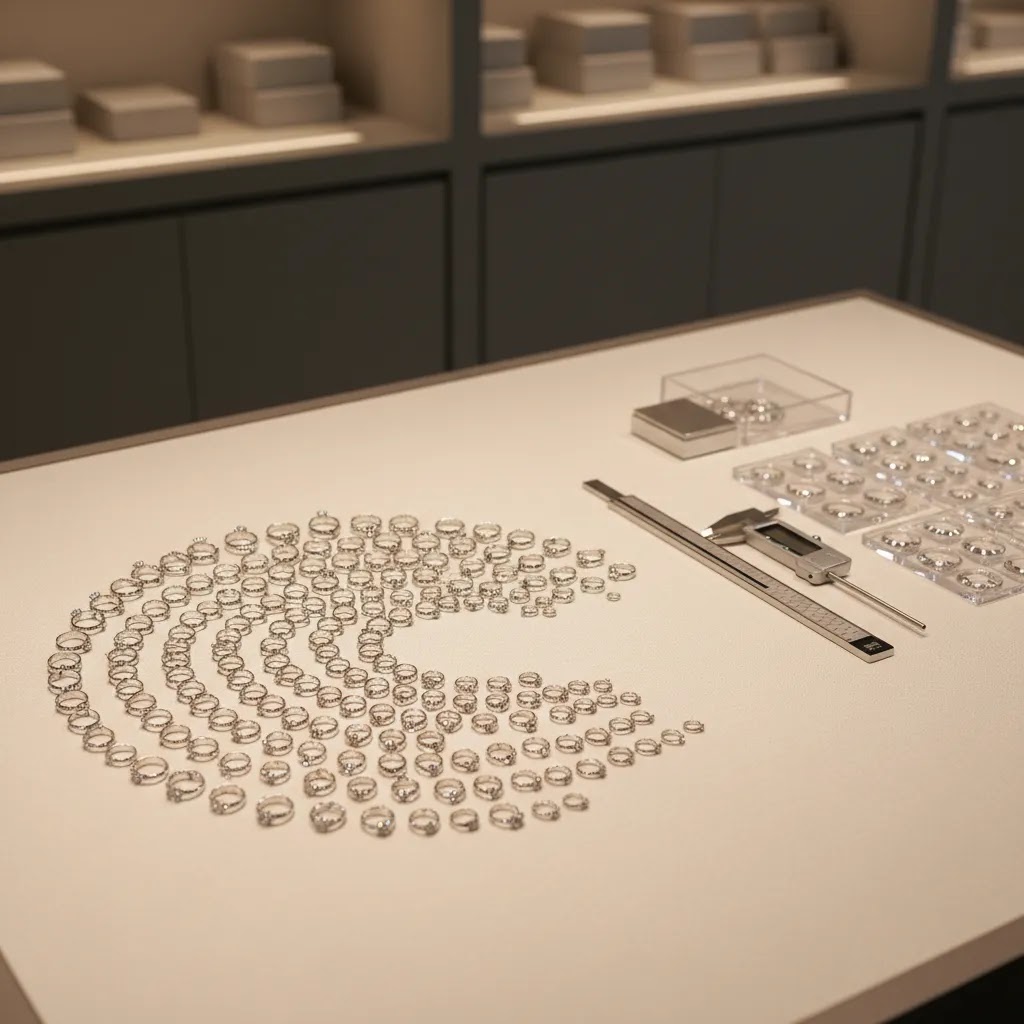
When reviewing wholesale sterling silver cz rings, start with workmanship rather than style count. A large catalog can be useful, but if ring sizing runs inconsistently or finishing varies between batches, assortment breadth does not solve the actual business risk. Buyers usually benefit from reviewing a sample set with a checklist that covers dimensions, finish consistency, setting alignment, and how the ring looks under normal retail lighting.
Stone presentation matters because customers tend to notice inconsistency quickly in this category. If your assortment also includes wholesale sterling silver rings with stones, the supplier should be able to explain how they manage consistency across related styles, especially if you are building a coherent collection rather than purchasing one-off items. The more your assortment depends on coordinated designs, the more process discipline matters.
Communication is another major evaluation point. Many wholesale sourcing problems are not caused by bad intent. They come from unclear briefs, incomplete approvals, or assumptions about details that were never documented. Ask how design changes, sample feedback, and production confirmation are handled. If the answers are vague, you may face avoidable delays later.
Production scalability should also be reviewed early. A supplier may be able to make attractive development samples, but your business needs confidence that a successful design can move into a stable production run. That is especially important if you plan to expand from wholesale 925 silver rings into a broader stone-based ring program with repeat orders and collection updates.
It also helps to understand whether the supplier operates transactionally or collaboratively. Royi Sal Jewelry positions its service around custom jewelry design and manufacturing, collaborative consultation, and support for private label and wholesale clients. For buyers who expect ongoing product development rather than a one-time purchase, that partnership model may be more valuable than a simple catalog relationship.
Ring Sizing Strategy for Wholesale Orders (Range, Mix, and Consistency Checks)
What many brand owners overlook is that ring sourcing is not only a style decision, it is a sizing system decision. Even if your designs are strong, the wrong size range or an inconsistent size program can create avoidable friction through customer service, exchanges, and stranded inventory. Before you place a meaningful order, define your size strategy in business terms: what range you will carry, how deep you will buy per size, and how you will keep size variants organized across SKUs.
Start by choosing a size range that matches your customer base and channel. A boutique might focus on a tighter range with more depth, while an e-commerce brand may need broader coverage to reduce missed sales. The key is to avoid guessing. Think of it this way: you are building a size ladder that should be consistent across your assortment so operations, merchandising, and replenishment can all follow the same logic. If you plan to carry multiple styles, decide whether every style will be offered in the full range or whether certain styles will be limited to your best performing sizes.
During sampling, treat sizing as a measurable quality check, not a general impression. Confirm how sizes are marked or labeled, and how the supplier tracks “same style, different size” in production so that variants do not get mixed or inconsistently packed. Ask what controls exist to keep sizing consistent across batches, especially if you reorder later. Rings can look identical on a tray, so discipline in labeling, variant tracking, and packing accuracy is a real part of wholesale reliability.
For reorders, build a size-level replenishment habit early. Track sell-through by size, not only by style, so your restocks reflect what is actually moving. If you only reorder based on “best sellers,” you can easily overbuy slow sizes or underbuy the sizes that drive revenue. A supplier that can support clean SKU structure and consistent variant handling makes this far easier as your ring category scales.
Who This Category Fits Best
Wholesale sterling silver cz rings may suit several B2B buyers, but the sourcing priorities vary by business model. Boutique retailers often look for commercially dependable styles that can sit within an accessible silver assortment and support regular restocking. E-commerce brands may care more about visual consistency across product photography, sizing accuracy, and repeatability between batches.
Private label founders usually need more than a broad product list. They may need a supplier who can discuss design adaptation, sample review, and the production realities behind ring collections. If your roadmap includes moving from general stone-set assortments toward more curated categories such as wholesale gemstone jewelry, supplier flexibility becomes even more important.
This category is typically a strong fit for businesses that want perceived value, assortment breadth, and design versatility without immediately entering highly complex development cycles. It may be a weaker fit for brands that have not yet defined their quality standards, size strategy, or inventory planning process, because rings tend to expose operational gaps quickly.

Merchandising Coverage: Core Styles, Trend Styles, and Style Families
Competitor catalogs often present CZ rings as an endless wall of styles, but selection is not the same as an assortment plan. From a merchandising standpoint, you will usually get better performance and easier operations by separating your ring buy into three buckets: core styles, trend styles, and style families. This keeps your assortment cohesive without forcing every SKU to carry the same financial and operational weight.
Core styles are the designs you expect to replenish. They should be consistent in look, easy to photograph, and stable enough to keep on your site or in-store fixtures without constant rework. Trend styles are the seasonal or experimental portion of your assortment. They can be important for freshness and marketing, but they should be bought with the expectation that reorders might not be as clean, or the style might not be available forever, depending on the supplier model you choose.
Style families are where many ring programs become easier to scale. A family is a coordinated set of SKUs that share the same design language so that photography, merchandising, and customer shopping behavior stay consistent. A family might include variations that are different enough to justify separate SKUs, but similar enough to create a “collection within the collection.” From a production standpoint, style families can also support clearer communication with suppliers because you can reference a set of shared details, rather than treating every new ring as a new conversation.
To keep style breadth from turning into operational chaos, ask a few practical questions early. How are SKUs named and tracked across sizes and design variations? If a style family expands, can the supplier maintain consistent design cues across the group? What happens if a style is discontinued, and how will you be informed? Clear answers matter because discontinued designs and inconsistent naming can create real problems for reorders, product pages, and inventory accuracy.
A Manufacturing Partner Perspective
For brands that are moving beyond simple wholesale purchasing, Royi Sal Jewelry is positioned as a collaborative B2B resource rather than a retail seller. The company focuses on custom jewelry design and manufacturing, private label development support, design consultation, and global shipping for business clients. Royi Gal leads the business with experience as both a jewelry designer and manufacturer, which is useful for brands that need guidance across the full path from concept to production.
That background matters because ring development often requires balancing design intent with manufacturability, consistency, and scale. A supplier that can discuss those tradeoffs clearly may help reduce revision cycles and prevent unrealistic expectations during sampling. If you are researching sourcing options and also want to understand the broader production side, Royi Sal Jewelry’s pages on jewelry manufacturing and wholesale jewelry provide a useful starting point. You can also contact the team through royisal.com to discuss a custom ring brief, private label requirements, or how a wholesale ring category could fit into a larger collection plan.
How to Evaluate Your Options
A strong evaluation process usually combines product inspection with supplier-process review. Buyers who focus only on design appeal may miss the operational details that determine whether a ring program is actually sustainable.
1. Assess manufacturing quality first
Look closely at finishing consistency, sizing accuracy, and visible stone-setting neatness. Rings are small, but they are closely inspected products. Minor irregularities can create outsized customer dissatisfaction. Ask for samples that represent actual production standards, not only idealized presentation pieces.
2. Review design capability and revision handling
If you expect any private label adaptation, ask how revisions are documented and approved. Clarify whether changes are handled through drawings, sample rounds, or written production notes. Even if your first order is based on existing styles, a supplier’s design process often indicates how well they can support future customization.
3. Test communication reliability
Communication should be direct, specific, and traceable. Ask how the team handles inquiries, sample feedback, order confirmation, and production updates. A reliable manufacturing relationship often depends less on promises and more on whether information is shared clearly and consistently. This is especially important when working across time zones or through international fulfillment arrangements.
4. Understand minimums and production planning
Even when a supplier seems flexible, minimum order quantities and production structures can shape what is commercially realistic. You do not need a rigid guarantee to ask practical questions. Ask what order sizes are typically workable, how assortments are organized, and whether reorders follow the same process as initial runs. This may affect cash flow, launch timing, and style breadth.
5. Evaluate long-term scalability
Your best supplier is not always the one that can ship the fastest first order. It may be the one that can support your brand as it grows. Think about replenishment consistency, range expansion, and whether the supplier can support a broader assortment if your ring category performs well. If your growth plan includes coordinated product families, this becomes even more important.
In many cases, the right sourcing decision comes from balancing design appeal with operational fit. Attractive rings are easy to find. A dependable production relationship is harder to build, but it is usually what protects your margins and your customer experience over time.
Strengths and Considerations
Strengths
- Wholesale sterling silver CZ rings can support a broad assortment strategy, giving jewelry businesses access to multiple style directions within one commercially familiar category.
- This category often works well for repeat sales because ring designs can be reordered or refreshed more easily than highly customized statement pieces, depending on supplier capabilities.
- For boutique owners and private label brands, stone-set silver rings may provide a useful bridge between entry-level silver assortments and more design-led collections.
- Well-managed ring sourcing can create strong collection cohesion when suppliers maintain consistent finishing, sizing standards, and style families across batches.
- Businesses that work with collaborative manufacturers may be better positioned to move from stock-style sourcing into custom development as their brand matures.
Considerations
- Ring categories tend to expose quality issues quickly, especially in sizing, comfort, and visible setting detail, so sample approval should be stricter than many buyers expect.
- Sampling and revision rounds may extend launch timing, particularly if you are developing private label variations instead of purchasing standard wholesale styles.
- Minimum order quantities, production scheduling, and reorder structures can vary significantly by supplier, which may affect assortment planning and working capital.
- Communication gaps can lead to avoidable problems if ring dimensions, finish expectations, and style revisions are not documented clearly before production begins.
Frequently Asked Questions
What should a boutique owner check first when sourcing wholesale sterling silver cz rings?
Start with consistency, not catalog size. Review sample rings for finish quality, sizing accuracy, visual stone alignment, and overall workmanship. Then assess the supplier’s communication process, reorder handling, and ability to maintain similar quality across batches. A strong first sample is useful, but a dependable production system is usually more important for long-term retail performance.
Are wholesale sterling silver CZ rings suitable for private label jewelry brands?
They can be, especially for brands building a commercially balanced ring assortment. The fit depends on whether your supplier can support adaptation, sampling, and production documentation. If your business wants more control over style direction and collection identity, a collaborative manufacturer may be more suitable than a purely transactional wholesaler.
How do wholesale sterling silver rings with stones differ from plain silver ring sourcing?
Stone-set rings add more inspection points. Buyers need to evaluate not only finish and size consistency, but also visible setting precision and overall presentation. That usually means tighter sample approval and clearer quality criteria. As product complexity increases, supplier communication and process transparency become even more important.
What questions should I ask before placing a first ring order?
Ask how samples are approved, how revisions are documented, what production timelines typically look like, how reorders are handled, and whether minimum order quantities apply by style or total order. You should also ask who your main point of contact will be and how production updates are communicated during the order cycle.
Is there a difference between 925 silver rings wholesale and sterling silver rings wholesale?
In many B2B contexts, those terms are used closely together, but buyers should still confirm exact product specifications and quality standards with the supplier. Terminology alone does not tell you how consistent the finish, sizing, or production quality will be. The more important issue is whether the supplier’s process matches your business requirements.
How important are reorder capabilities for this product category?
They are very important. Rings often become repeat sellers, and inconsistent replenishment can create inventory gaps and customer dissatisfaction. A supplier that can explain reorder structure, production planning, and communication expectations may be better suited for growing brands than one that only focuses on initial order conversion.
Should I work with a stock wholesaler or a custom manufacturer?
That depends on your stage of business. A stock wholesaler may be appropriate if you need fast assortment building and lower development complexity. A custom manufacturer may be better if brand identity, design differentiation, and long-term collection building are important. Many businesses begin with wholesale sourcing and later move toward customized development.
How can I reduce sourcing risk with an overseas jewelry supplier?
Use a clear written brief, request representative samples, document approvals carefully, and confirm communication steps before production starts. Risk is rarely eliminated, but it can often be reduced through disciplined review and transparent collaboration. Choosing a supplier that treats the relationship as an ongoing business partnership may also help.
What makes a manufacturing partner more reliable for ring production?
Reliability usually comes from process discipline. Look for clear communication, realistic expectations, a structured sample review method, and a willingness to discuss limitations as well as capabilities. A partner led by people with both design and manufacturing experience may also be better equipped to address product development issues early.
How much is a sterling silver cubic zirconia ring worth?
It depends on how you define “worth” in your business. From a product standpoint, value is usually influenced by the ring’s build quality, finish consistency, stone-setting precision, brand positioning, and whether the supplier can support repeatable replenishment. From a commercial standpoint, worth is tied to your pricing strategy, sell-through, and return rate, especially for size-sensitive categories like rings. If you are evaluating a program, base your decision on verified samples, documented specs, and how reliably the supplier can reproduce the approved standard.
Are CZ rings worth anything?
For B2B buyers, CZ rings can be worth carrying if they fit your customer positioning and you can source them with consistency. Many jewelry businesses use CZ styles to support accessible price points, broader style coverage, and repeatable reorders. The key is not the label alone, it is whether the ring meets your quality expectations and whether the supplier can maintain that standard across sizes and production runs.
Is sterling silver cubic zirconia good?
It can be a good fit for many wholesale and private label assortments, especially when you need style flexibility and a reliable replenishment category. “Good” should be defined by your brand standards: consistent finishing, accurate sizing, clean setting work, and stable production control. Review physical samples under your normal retail conditions, then confirm how the supplier manages repeat production so the rings you reorder match the rings you approved.
How much is 1 carat of cubic zirconia worth?
Carat comparisons are often misunderstood in wholesale buying. Many suppliers and customers use carat language as a visual reference, but it does not automatically translate to commercial value. In practice, the business value of a “1 carat look” ring is shaped by the overall ring quality, how the stone presents in photos and on hand, and whether the supplier can reproduce that presentation consistently. If a specific look is central to your assortment, confirm how stone size and appearance are specified and controlled in production, not only how it is described in marketing terms.
Key Takeaways
- Wholesale sterling silver CZ rings should be evaluated as a process and quality decision, not just a style selection exercise.
- Sample review should cover sizing, finish consistency, visible stone-setting quality, and reorder viability.
- Clear communication and documented approvals may reduce costly mistakes during production.
- Businesses planning private label growth should consider whether a supplier can support future customization, not only current wholesale needs.
- Royi Sal Jewelry may be a useful resource for brands that want a more collaborative path into custom jewelry design and manufacturing.
Conclusion
Sourcing wholesale sterling silver cz rings successfully usually depends on more than finding appealing designs. The suppliers that tend to support long-term growth are the ones that can communicate clearly, manage sampling carefully, and produce with consistency that matches your business standards. If you are comparing ring sourcing options for a boutique, online store, or private label brand, use this category as a test of supplier discipline as much as product appeal. Royi Sal Jewelry offers a B2B-focused approach built around custom design, manufacturing collaboration, and wholesale support for growing jewelry businesses. If you are ready to explore a ring collection, a private label brief, or a broader wholesale sourcing strategy, visit royisal.com and contact the team to discuss your project.