3D Jewelry Design Course Guide (2026)
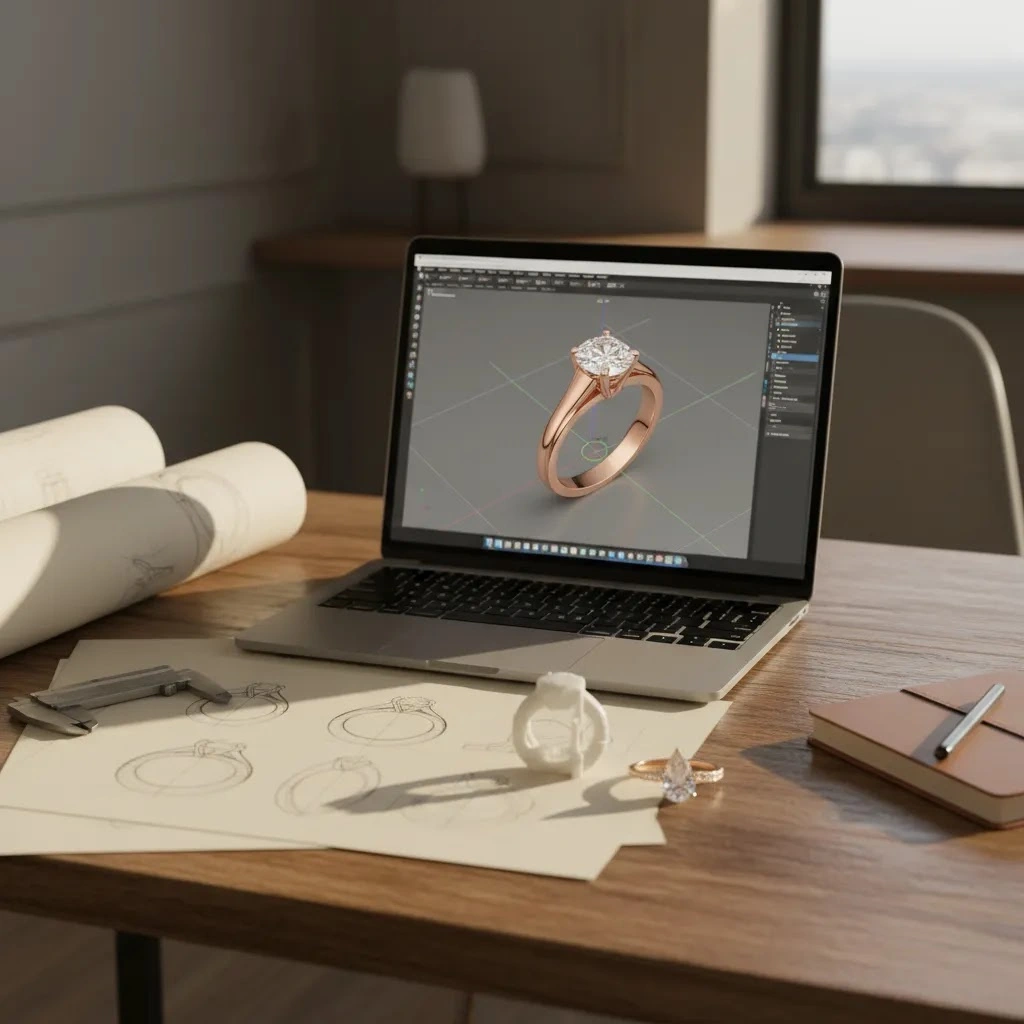
What a 3D Jewelry Design Course Should Actually Teach
A strong 3d jewelry design course should help you move from visual idea to production-ready communication. For B2B jewelry businesses, that matters because design files often sit at the center of approvals, revisions, and manufacturing coordination. A founder, merchandiser, or product developer does not necessarily need to become a full-time CAD specialist, but they do need to understand what good digital design looks like and how it supports sampling and wholesale production.
Many courses market themselves around software mastery. That can be useful, but software alone is not enough. If your business plans to work with a custom manufacturing partner, your team should understand model accuracy, design intent, revision workflow, and the limits of digital perfection once a design enters physical production. That is one reason many brands compare course options alongside broader resources on Jewelry Design and manufacturer-led development processes.
In practice, the best training programs usually cover three layers. First, they teach the software environment and core tools. Second, they explain jewelry-specific design logic, such as building pieces that can realistically move through prototyping and production. Third, they prepare students to communicate with external stakeholders, including founders, buyers, and manufacturing teams. If a course only handles the first layer, it may be too narrow for a growing jewelry business.
That is especially relevant for private label and wholesale brands. In those settings, a CAD file is not the final deliverable. It is part of a chain that may include concept alignment, revisions, sampling, approval rounds, and production planning. Any course worth serious consideration should reflect that business reality.
Key Features to Evaluate in a Training Program
The most useful training programs for B2B jewelry teams usually balance creative instruction with production awareness. Below are the core features worth reviewing before you commit budget or staff time.
1. Jewelry-specific CAD instruction
General 3D modeling courses can teach useful fundamentals, but jewelry has its own geometry, detailing standards, and production expectations. A jewelry-focused program should show how to think through wearability, proportions, and revision control in a way that supports manufacturing communication. If your team is already comparing software paths, Royi Sal Jewelry’s article on matrix 3d jewelry design software training may help clarify what specialized learning looks like in practice.
2. Workflow from concept to manufacturer-ready files
A course has more business value when it teaches process, not just commands. That includes brief interpretation, version control, file organization, and how to present designs for internal approval or supplier review. This is often where many beginners struggle. They can build a digital object, but they cannot explain it clearly enough for a sampling round to move efficiently.
3. Real project examples
Training is usually stronger when it includes case-based exercises rather than isolated tool demonstrations. You want to see how a design evolves through revisions and how instructors solve practical problems. Jewelry businesses rarely operate in a clean classroom environment. Changes happen, line sheets evolve, and designs may need adjustment to fit manufacturing realities.
4. Relevance to your team structure
A solo founder may need broad operational understanding, while a larger brand may only need CAD literacy for product managers or merchandisers. Some courses are designed for future full-time designers. Others are better for decision-makers who need enough technical fluency to brief specialists and approve files confidently. The best fit depends on whether you are building in-house design capability or simply becoming a better manufacturing client.
5. Connection to broader software decisions
Your training choice may also affect your software stack. Before enrolling, it helps to understand whether the course aligns with the platforms your team or manufacturing partners are most likely to use. Royi Sal Jewelry provides a broader reference point through its 3D Jewelry Design Software category, which can help frame course decisions in a wider business context.
6. Commercial relevance for private label brands
If your goal is to launch or scale a collection, your training should support commercial execution. That means understanding how design decisions influence sampling rounds, production communication, and collection planning. Founders often benefit from pairing technical training with broader reading on brand-to-manufacturer collaboration, such as crafting crown jewels guide bespoke jewelry design manufacturing brands.
What File Formats, Outputs, and “Production-Ready” Really Mean in CAD Training
Course listings often promise “manufacturer-ready” output, but what many brand owners overlook is that production readiness is not one universal file. It is a set of habits and deliverables that make handoff clear between design, prototyping, and manufacturing. From a production standpoint, a course should not only teach how to model a ring, pendant, or component, it should train you to package work in a way a partner can review, question, and prototype without guessing your intent.
Consider this: in a real B2B workflow, the most useful deliverables usually include clean model geometry, a clear sense of scale, and files that reflect tolerance awareness. A “clean” model is typically one that avoids messy surfaces, accidental gaps, or overlapping parts that can complicate prototyping. Tolerance awareness means understanding that extremely fine details, razor thin edges, or tight clearances may not translate the same way once a piece is prototyped and prepared for production. A strong course should at least teach you to think in those terms, even if the exact thresholds vary by manufacturer and project.
Now, when it comes to file formats, different teams use different tools, and handoffs can fail when formats are not aligned. In jewelry CAD workflows you will commonly hear about native CAD project files, exchange formats used to move models between programs, and mesh exports used for prototyping or visualization. You do not need to memorize every extension, but you do need to understand what your manufacturer expects to receive and review. Before you pick a course, ask your manufacturing partner what they typically accept for model review and prototyping, and what format they prefer for final handoff. That single question can prevent you from training your team on outputs that create extra conversion steps or translation risk later.
Marketing language around “printable” models is another area worth checking carefully. In practice, you can evaluate those claims by looking for operational details in the curriculum. Does the course teach model inspection routines, or does it only show how to build shapes? Does it include revision notes, naming conventions, and versioning, so your team can track what changed between V1, V2, and V3? Does it teach you how to package a file set for review, so a supplier can confirm scale, identify questions, and respond with comments tied to a specific version? These small systems are often what reduce sampling miscommunications for growing brands.
Think of it this way: a course is not only teaching CAD. It is also teaching your internal standard for how designs are documented, shared, and approved. If your team finishes training with a repeatable file handoff process, that is usually a stronger indicator of business value than any single tool shortcut.
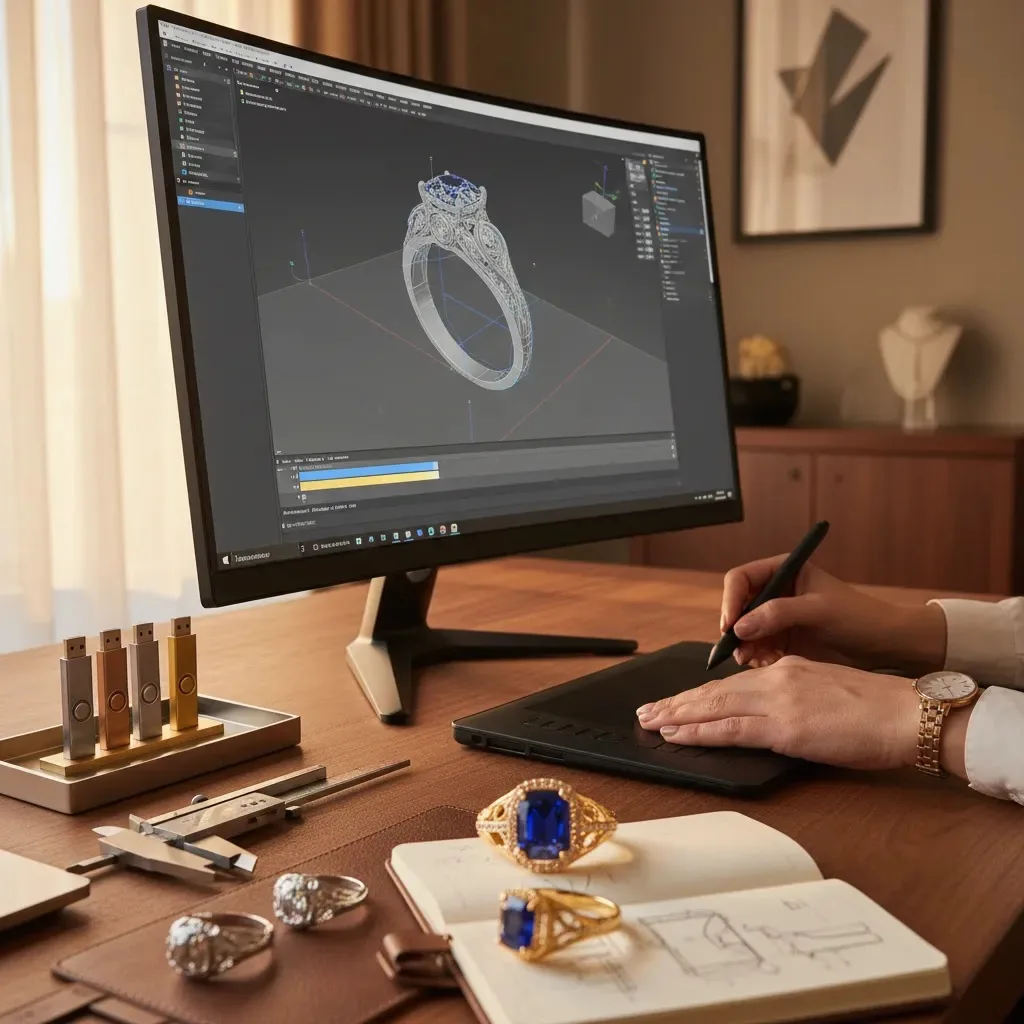
Strengths and Considerations
Strengths
- A well-structured 3d cad jewelry design course may help your team communicate design intent more clearly during sampling and revision stages.
- Course-based training can reduce dependence on vague sketches or verbal explanations, which often create avoidable misunderstandings with manufacturing partners.
- It may support faster internal approvals because stakeholders can review digital concepts with greater precision before a prototype is requested.
- For private label brands, training can improve consistency across collections by establishing a shared design vocabulary and workflow.
- Software-focused education may help founders evaluate outsourced CAD work more effectively, even if they do not plan to design every piece in-house.
- Teams with basic CAD knowledge are often better prepared to ask practical questions about revisions, file handoff, and manufacturability.
Considerations
- Course completion does not automatically mean production readiness. Many programs teach tools well but spend less time on manufacturing realities and supplier communication.
- There may be a learning gap between digital models and physical outcomes, especially if your business has limited experience with sampling or production runs.
- Software training can require meaningful time investment from founders or team members who already manage sourcing, sales, and collection planning.
- Not every course is equally useful for B2B brand operations. Some are better suited to aspiring designers than to product managers or business owners.
Course Structure Signals That Predict Practical Skill Transfer
Strengths and weaknesses are often less about the software being taught and more about how the training is structured. Competitor programs tend to publish operational details that help you evaluate training as a business investment, not a hobby. If you are onboarding staff, assigning training to a product team, or trying to raise CAD literacy across a growing brand, these details affect whether the skill will actually transfer into your workflow.
Start by clarifying time expectations. Course duration, weekly time investment, and how long you can access the material may sound like logistics, but they determine whether learning will survive a real business schedule. A program that requires long, uninterrupted blocks of time might be difficult for founders and lean teams. On the other hand, a course that is too short or too lightweight may create surface familiarity without the practice needed for revision work and file discipline.
Here’s the thing: lectures rarely create production confidence on their own. Skill transfer is usually stronger when training includes coached assignments, structured projects, and feedback loops. Critique matters because the most costly CAD mistakes in B2B development are not always obvious to beginners. You want a format that forces learners to submit work, receive corrections, and rebuild models with clearer intent. That is closer to how sampling rounds work, and it can translate into fewer avoidable miscommunications later, even if outcomes still vary by project and partner.
If you are training more than one person, plan for internal adoption, not just individual learning. In practice, brands often get better results by setting checkpoints. For example, pick one real SKU from your line and apply lessons to that model throughout the course, then run internal reviews at specific milestones. Build a shared “CAD review” checklist your team uses consistently, such as confirming scale, file naming, version history, and what questions need to be answered before a file goes to a manufacturer. That process is often what turns training into operational reliability.
Finally, consider access and support after the program ends. If your team loses access to reference lessons, templates, or project files right when you start applying the skill to real development, the learning curve can return quickly. The strongest training investments are usually the ones that leave behind reusable methods your business can apply across multiple collections, staff changes, and production cycles.
Who This Is For
This topic is most relevant if you are a jewelry brand founder, boutique owner, product developer, or fashion business manager trying to build stronger control over design development. It is especially useful if you plan to launch a private label line, work with a custom manufacturer, or bring some design capability in-house.
A 3d jewelry design course may also be a smart investment for teams that already outsource CAD work but want to review files more confidently and reduce revision back-and-forth. It is less about becoming an expert overnight and more about improving decision quality across concept development, approvals, and production communication.
Royi Sal Jewelry as a Practical Next Step
For many growing brands, the best outcome is not simply taking a course. It is combining stronger design literacy with an experienced manufacturing partner. Royi Sal Jewelry operates as a B2B custom jewelry design and manufacturing company serving wholesale and private label clients. The business is led by Royi Gal, whose background spans both jewelry design and manufacturing, which is relevant when brands need guidance that connects creative direction with production realities.
If your team is learning CAD or evaluating a rhino 3d jewelry design course to improve internal capability, that education may become far more useful when paired with collaborative development support. Royi Sal Jewelry’s approach centers on custom jewelry design and manufacturing, collaborative consultation, and global fulfillment for business clients. For founders who want to connect digital design decisions with commercial execution, it may be helpful to explore how Royi Sal Jewelry approaches custom development and how design thinking relates to broader market planning, including themes covered in jewelry trends watch 2025 key design elements year. You can also visit royisal.com to learn more about the company’s design and manufacturing process.

How to Evaluate Your Options
If you are comparing a 3d jewelry design course online, live classes, or custom team training, use business criteria rather than marketing language. The right choice usually depends on how the course supports your actual workflow.
Design capability and jewelry specificity
Start with the obvious question: does the program teach jewelry design, or is it just general 3D instruction? A course should reflect the level of detail, revision logic, and production awareness needed in jewelry development. This matters even more if you plan to brief external manufacturers or commission bespoke pieces under a private label model.
Production relevance
Ask whether the curriculum prepares students for manufacturing communication. Can graduates explain their files, respond to revisions, and identify possible design issues before sampling? Courses that ignore downstream production can still be useful, but they may create a false sense of readiness.
Communication and collaboration value
For many businesses, the real return on training is better communication. A founder who understands CAD basics may work more effectively with outsourced designers and manufacturers. A product manager with technical literacy may catch misalignment earlier. This can save time, though outcomes still depend on project scope, clarity, and partner responsiveness.
Scalability for your business stage
A startup brand may only need enough training to approve concepts and manage revisions. A larger business might want deeper internal capability. Match the course to your staffing plan, not an idealized future structure. It is common for growing brands to overinvest in technical education before they have the volume or internal roles to support it.
Support after the course
Some training has value only while you are inside the lessons. Other programs leave you with practical templates, better review habits, and stronger briefing methods you can use across collections. Think about whether your team will be able to apply what it learns during real product development. If not, manufacturer collaboration may still need to do most of the heavy lifting.
That is why many brands treat CAD education as one piece of a broader operating model. They improve internal understanding, then rely on an experienced partner for custom design development, sampling coordination, and production planning. In many cases, that balance creates more consistent results than trying to build everything internally too quickly.
Picking the Right Software Track: Rhino vs Jewelry-Specific CAD, and Why It Impacts Training ROI
How to Evaluate Your Options covers the decision criteria, but software choice deserves its own checkpoint because it affects training ROI. The reality is that many course disappointments come from a mismatch between the software being taught and the workflow your business actually needs. Before you commit to a rhino 3d jewelry design course, or a course based on a jewelry-specific CAD platform, it helps to decide what role CAD will play inside your team.
Start with roles. If you are a founder or product lead aiming for CAD literacy, your priority may be the ability to review models, understand revision constraints, and communicate clearly with external designers and manufacturers. In that case, a course that emphasizes review discipline, file handoff, and revision communication can be more valuable than deep specialization. If you plan to hire or develop an in-house CAD specialist, you may benefit from a more intensive track that focuses on building production models repeatedly, handling complex revisions, and maintaining consistency across a collection.
Now, when it comes to the software ecosystem, Rhino is widely used in many design settings, and jewelry-specific CAD platforms often add tooling that is tailored to jewelry workflows. The right decision depends on what your manufacturer expects and what your internal team will maintain over time. What experienced buyers know is that it is often easier to operate when your internal files and your manufacturing partner’s preferred workflow align, even if no single tool is “best” in every situation.
You will also see programs emphasize parametric workflows. The practical business reason is revision speed. Parametric approaches can make certain changes faster and more consistent, which may reduce internal approval friction when multiple stakeholders request adjustments. If your development process includes frequent iteration, multiple sign-offs, or repeated sizing and variation work, ask whether the course teaches a revision method that supports that reality. If a program teaches modeling as a one-off sculpture each time, your team may struggle when the fifth revision arrives and the file becomes hard to edit cleanly.
Before committing, confirm version and platform requirements. Some courses assume a specific software version, and small differences can affect tool availability and file compatibility. Hardware expectations matter too, especially if your team uses mixed setups. If you have staff on both Windows and Mac, verify whether the course and the software workflow are fully supported in your environment, and whether the instructor’s demonstrations match what your team will see on screen. These practical checks can prevent you from paying for training that your team cannot implement consistently.
Finally, treat software selection like any other operational decision. Align it to your product development model, your staffing plan, and the expectations of the manufacturing partners you plan to work with. If you want a second opinion grounded in real production workflow, you can contact Royi Sal Jewelry to discuss how CAD choices typically affect sampling communication, revision management, and manufacturing handoff for B2B projects.
Frequently Asked Questions
What is the main business value of a 3d jewelry design course?
For B2B jewelry businesses, the value often lies in clearer communication and better design oversight. A course may help your team review CAD files, brief external designers, and manage sampling discussions more effectively. It can also reduce confusion between concept approval and production preparation, which is useful when working with custom manufacturing partners.
Do founders need to become full CAD designers?
Not always. Many founders benefit more from CAD literacy than full technical mastery. Understanding how files are built, revised, and reviewed may be enough to improve decision-making. If your business relies on outsourced design or manufacturing, that level of knowledge could still make approvals faster and reduce avoidable misunderstandings.
Is a rhino 3d jewelry design course better than a general 3D course?
It may be, depending on your goals. Jewelry-specific training tends to be more useful when your business needs practical knowledge tied to collection development and manufacturing communication. General 3D courses can build foundational skills, but they may not address the workflows or constraints that matter most in jewelry production.
Can a course replace working with an experienced manufacturer?
No single course is likely to replace manufacturing experience. Training can improve your internal capability, but production outcomes still depend on clear briefing, sampling, revision management, and supplier execution. For most brands, education works best alongside a collaborative manufacturing partner rather than as a substitute for one.
How should a brand choose between live and self-paced 3d jewelry design classes?
Live classes may suit teams that need accountability, direct feedback, and structured progression. Self-paced formats can work for busy founders or lean teams with variable schedules. The better choice usually depends on how quickly you need the skill, how much support your team needs, and whether real project feedback is included.
What should a course teach beyond software tools?
A useful course should also address design logic, revision workflow, file presentation, and production awareness. Without that broader context, students may learn commands without understanding how to apply them in a commercial jewelry setting. For B2B brands, the workflow around the software is often as important as the software itself.
Is a 3d jewelry design course online enough for private label development?
It may be enough for foundational knowledge, especially if your goal is to become a better client or reviewer rather than a full-time CAD professional. Still, private label development usually involves more than digital design. Sampling, approvals, production coordination, and fulfillment planning typically require manufacturer collaboration as well.
How does CAD training help with custom jewelry design projects?
CAD training may help you define requirements more clearly, interpret revisions faster, and spot design issues earlier in the process. That can be valuable in custom jewelry design projects where miscommunication creates delays or extra sampling rounds. It does not remove complexity, but it may improve how your team handles it.
Should a brand build in-house CAD capability or outsource it?
That depends on collection volume, budget, internal staffing, and how central product development is to your business model. Some brands benefit from keeping technical work external while building enough internal knowledge to review output well. Others may justify in-house capability once design volume and process maturity are higher.
How long does it typically take to learn 3D jewelry CAD well enough to communicate with manufacturers?
It depends on your starting point, the course structure, and how consistently you practice. Many business teams reach basic communication value sooner than full design independence. If your goal is manufacturer communication, you are aiming to understand file review, revision language, and what questions to ask during sampling. That often requires repeated exposure to real project scenarios, not just watching lessons. A course with projects and feedback typically helps shorten the time it takes to apply what you learn in a production conversation.
What computer specs or setup do you need for a 3D jewelry design course (Windows vs Mac considerations)?
Course requirements vary by software and version, so the most reliable step is to confirm the instructor’s recommended setup before you enroll. Some programs run on both Windows and Mac, while others may be more commonly taught or supported on one platform depending on the tools used. From a business standpoint, consistency matters. If multiple team members are training, align hardware expectations early so your team is not troubleshooting performance issues instead of learning workflow.
Which file types should I expect to export from a jewelry CAD course for prototyping and manufacturing?
You should expect to work with the software’s native project files and at least one or more export formats used for sharing models between teams, prototyping, or manufacturer review. The exact set depends on the software and the manufacturing partner’s workflow. Before choosing a course, ask your manufacturer what formats they typically accept for review and prototyping, and then confirm the course teaches that export process along with file organization and versioning habits.
Should I learn Rhino first, or start with jewelry-specific CAD software?
It depends on your role and your planned workflow. If you want broad modeling literacy and a foundation that is used across many design settings, Rhino-based training can be a practical entry point. If your business is focused on jewelry development and you want tooling that is tailored to jewelry workflows, a jewelry-specific CAD course may help you reach practical output faster. The deciding factor is often what your manufacturing partner expects to receive and what your team can realistically maintain over time.
Key Takeaways
- A strong 3d jewelry design course should improve production communication, not just software familiarity.
- Jewelry-specific CAD training is usually more useful than general 3D instruction for brands working toward sampling and wholesale production.
- Course selection should be based on workflow fit, production relevance, and team structure, not just platform popularity.
- Many businesses get the best results by combining internal CAD literacy with an experienced custom manufacturing partner.
- Royi Sal Jewelry offers a collaborative B2B model that may help brands connect design development with real manufacturing execution.
Conclusion
Choosing a 3d jewelry design course is really about choosing how your business will communicate ideas, manage revisions, and prepare designs for production. The best programs tend to build both technical confidence and commercial awareness. That combination is especially important for jewelry brands that plan to work with private label or custom manufacturing partners. If you are looking beyond training and want help turning design concepts into production-ready collections, Royi Sal Jewelry may be a valuable resource. The company brings together custom jewelry design, collaborative development, manufacturing support, and global fulfillment for B2B clients. Visit royisal.com to learn more about the process, or contact the team to discuss how your design goals may translate into a practical development plan.