

3D Jewelry Designer Salary (2026 Guide)
What the Role Actually Includes
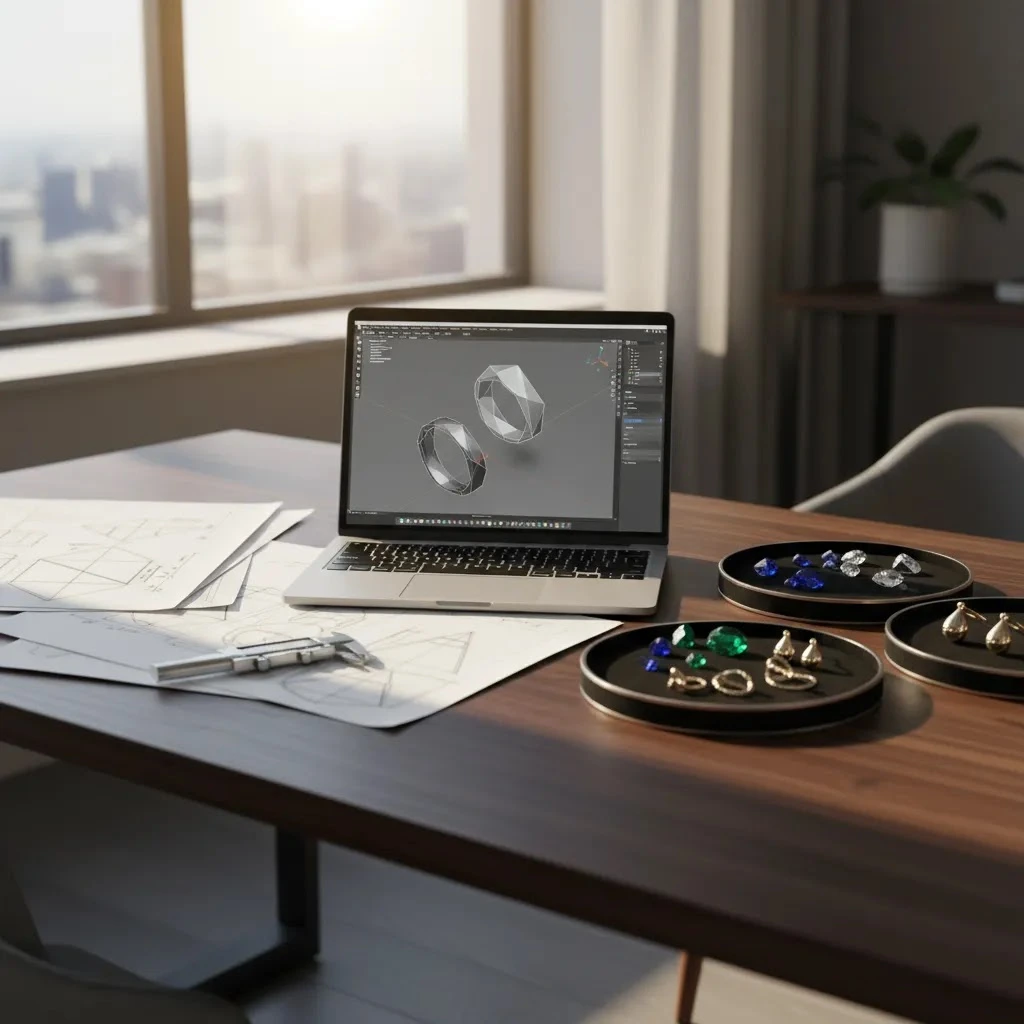
A 3d jewelry designer is rarely just a software operator. In many businesses, this person sits between creative direction and production execution. They may interpret sketches, build digital models, prepare technical files, revise designs after sampling feedback, and communicate details that affect manufacturing feasibility.
Here’s the thing, salary expectations rise when the role touches more of the product development chain. A designer who only creates visual concepts may earn differently from someone who can prepare files with production awareness and help reduce sampling errors.
Core duties that influence pay
Most employers group the role into several overlapping responsibilities:
- Translating sketches or mood boards into 3D models
- Revising files based on fit, proportion, or collection feedback
- Preparing CAD files for prototyping or sampling
- Working with product teams or factories on manufacturability
- Supporting collection launches with multiple file variations
In practice, this means a candidate with strong technical design knowledge often commands more than one who can only produce attractive renders. For a brand owner, the real cost of a weak hire is not just salary. It is delayed sampling, unclear files, repeated revisions, and production confusion.
Software and Workflow Expectations That Affect Pay
A lot of compensation confusion comes from one assumption, that all CAD ability is the same. The reality is that pay often shifts based on the toolchain the designer can operate in and the workflow responsibility you expect them to own. Two candidates might both call themselves a jewelry CAD designer, but one may only build a model from detailed instructions, while the other can structure files for repeated changes across a full collection.
From a production standpoint, the difference shows up the moment you start iterating. If your business runs multiple approval rounds, carries several size variations, or needs consistent details across many SKUs, workflow discipline becomes part of the value you are paying for.
What “advanced” workflow often means in jewelry CAD
For many brands, a higher salary expectation is tied to whether the designer can think parametrically and build models that can be updated without rebuilding from scratch. That could include using repeatable construction logic, keeping clean geometry, and organizing the model so adjustments to dimensions, proportions, or components can be made quickly.
Consider this, a designer who delivers a visually correct model that is difficult to edit can create hidden cost. Every new request becomes a slow rebuild. A designer who plans for change can often turn revision rounds faster, which reduces sampling friction and keeps your development calendar more predictable.
Revision efficiency is a compensation factor
What experienced buyers know is that revisions are not an exception. They are part of the process. Compensation tends to rise when a designer can move through iteration cleanly, without losing track of versions, accidentally changing approved details, or creating file confusion across the team.
In practice, revision efficiency is not just speed. It is also accuracy under change. That includes keeping a clear file structure, separating components logically, and maintaining consistent naming so that your internal team and your manufacturer can follow what changed and why.
What to ask candidates about their workflow
If you want to connect pay expectations to real output, ask practical questions about how they work:
- How they organize project folders and file naming for multiple SKUs
- How they manage versioning and approvals across revision rounds
- What they deliver at handoff, for example source files, export files, and basic documentation of changes
- How they communicate updates, such as change logs or annotated notes for your team or manufacturer
- How they approach iterative feedback when multiple stakeholders comment at once
The goal is not to test jargon. It is to confirm they can operate in the kind of development environment your business actually runs. If the role includes manufacturing handoff, a designer who treats workflow as part of the job often justifies higher compensation than someone who only focuses on the final render.
What Shapes 3D Jewelry Designer Salary
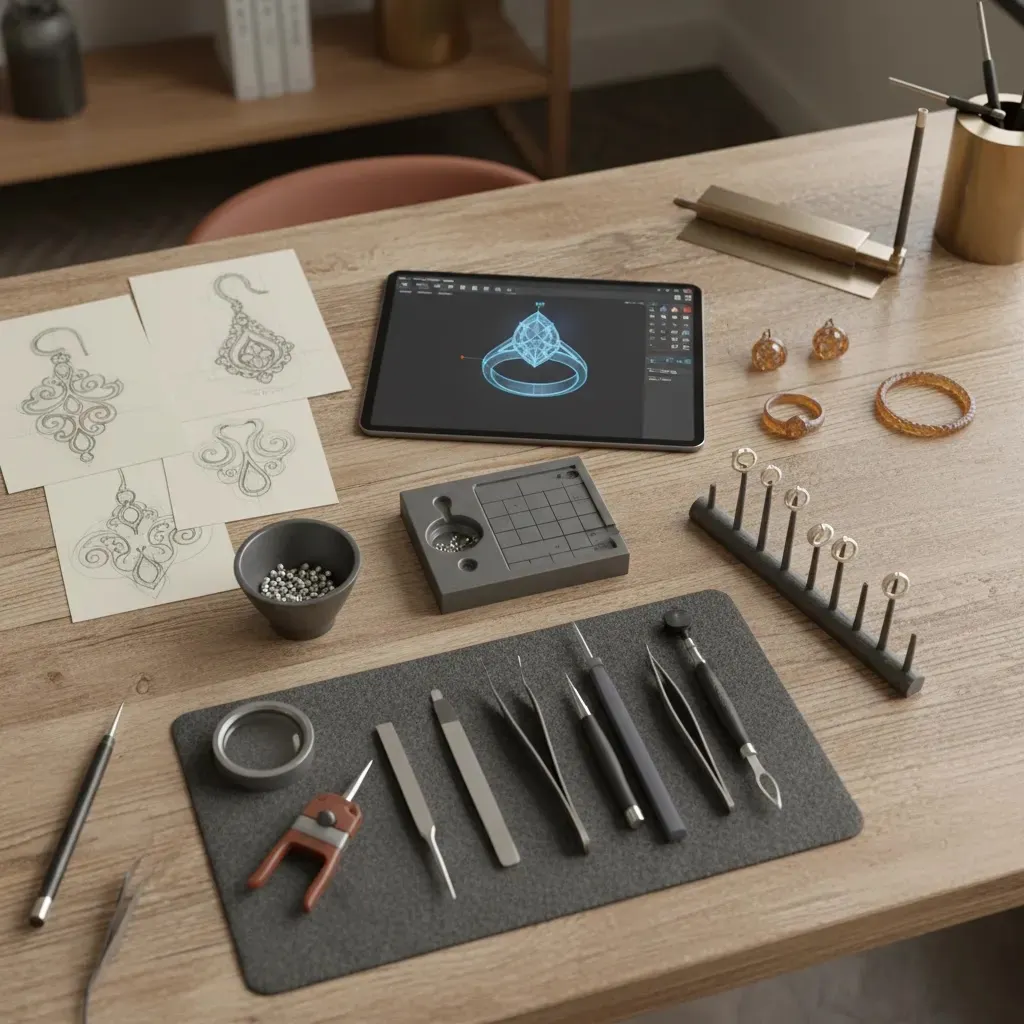
The primary keyword, 3d jewelry designer salary, covers a wide range of compensation outcomes because the role itself varies so much. Two job listings may look similar on paper while requiring very different levels of accountability.
Experience level
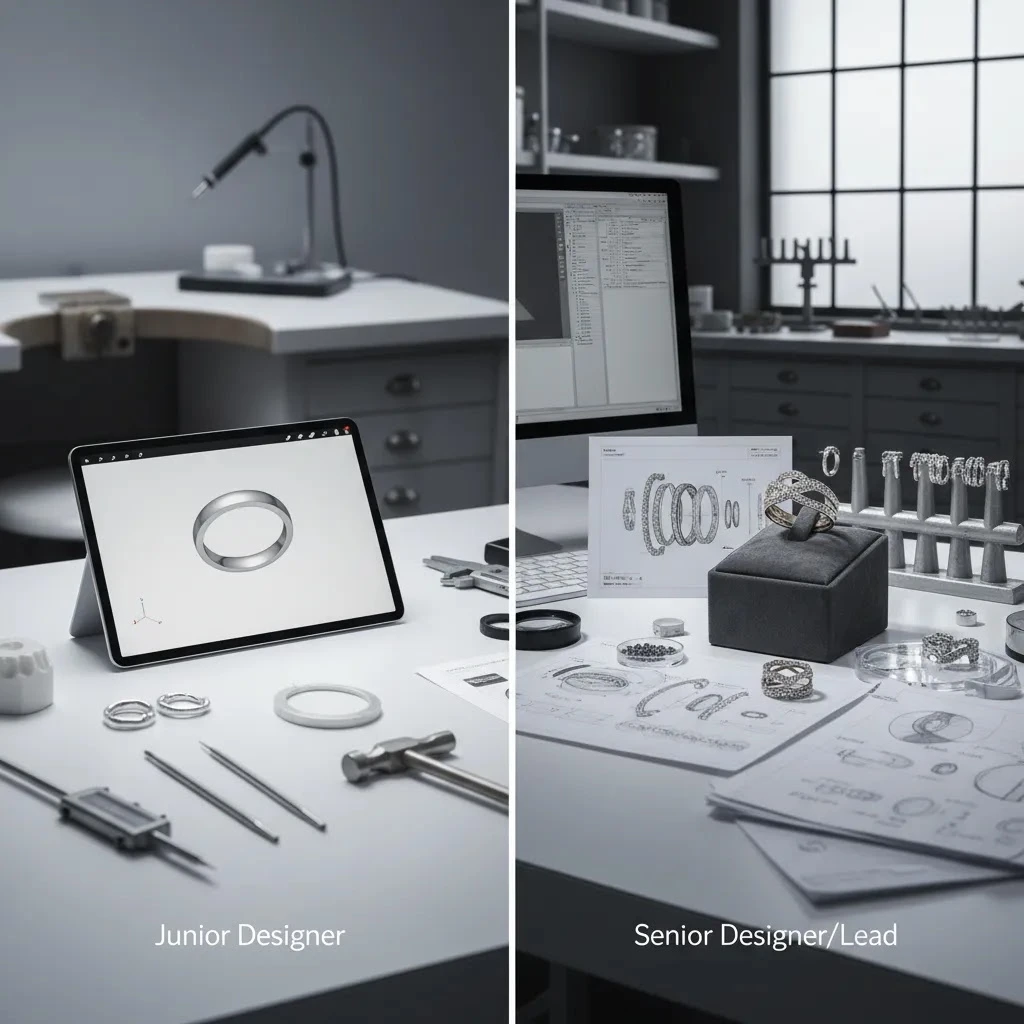
Entry-level candidates are often paid for software execution and support tasks. Mid-level designers usually handle more independent file creation, revision rounds, and communication with internal product teams. Senior designers may contribute to collection direction, mentor junior staff, and troubleshoot design issues before they become manufacturing problems.
That is why comparing jewelry CAD salary figures without reading the actual job scope can be misleading. Consider this, a studio may label someone a CAD designer, while another business expects that same person to act as a hybrid designer, modeler, and technical coordinator.
Type of output expected
If your hire is expected to create concept art, CAD files, and production-ready revisions, compensation often rises. If the role is limited to basic 3D file generation from detailed instructions, salary may be lower. The difference is not just skill level. It reflects business risk and how much the company depends on that person to keep launches on track.
Volume and pace
A designer producing a few custom pieces a month works under a different rhythm than one supporting seasonal collection drops. What many jewelry brands overlook is that speed under pressure is a compensation factor. Designers who can maintain accuracy while managing volume often deliver stronger business value.
If you are benchmarking adjacent digital roles, it can help to compare against broader data around 3d model salary expectations, then narrow the comparison to jewelry-specific requirements.
Salary by Business Model
Not every jewelry company hires for the same reason. Your business model affects what you should pay and what kind of talent you actually need.
Boutique brands and emerging labels
Smaller brands often want versatility. They need someone who can help shape a collection, adapt ideas quickly, and collaborate with outside suppliers. In these settings, compensation may be modest at first, but the role often becomes broader. That can make retention harder if expectations grow faster than pay.
Manufacturers and OEM-focused operations
Manufacturers often value technical consistency, clean files, and repeatable workflows. A designer in this environment may work across multiple clients or product lines. Their pay can reflect how well they support conversion from idea to sample to production. The reality is that manufacturing familiarity can make a significant difference in designer compensation.
This is one reason many businesses study how jewelry designers oem manufacturers collaborate create unique collections before finalizing internal hiring plans. Strong design work matters, but production alignment matters just as much.
Larger retail groups or established private label programs
These companies may offer more structured salaries, clearer titles, and department-based responsibilities. A 3d jewelry designer here could work with merchandisers, production managers, and sourcing teams. Compensation may improve with scale, but specialization also increases. The candidate may be expected to operate within tighter processes and deadlines.
Regional Pay Considerations
Search terms like jewelry cad designer salary in Dubai and jewelry cad designer salary in India are common because location does affect pay. Still, geography alone does not explain compensation well. A lower-cost market may still command higher rates for a designer with strong production knowledge, fast turnaround, and experience serving export-oriented businesses.
Why direct country comparisons can be misleading
A designer working in one market may be hired for local retail support. Another in a different market may support international manufacturing programs with more technical demands. Same title, very different value. From a production standpoint, file quality, revision discipline, and communication skills can carry more weight than geography.
What employers should compare instead
If you are hiring internationally, compare candidates based on:
- Ability to create accurate production files
- Understanding of revision workflows and sampling needs
- Experience with manufacturer communication
- Consistency across multiple SKUs or collection drops
- Responsiveness across time zones and approval cycles
Think of it this way, you are not only buying labor hours. You are investing in fewer design errors, smoother approvals, and better coordination with your production pipeline.
Hiring Market Reality: Titles, Seniority, and What You Are Competing Against
Many salary benchmarks look inconsistent because job titles are noisy in this category. One company posts for a 3d jewelry designer and means a CAD operator who can execute clean models from instructions. Another uses the same title for a CAD and production designer who owns revisions, handoffs, and sampling communication. Then some businesses use the title for a hybrid creative designer who also builds the 3D and supports collection direction.
The result is a wide spread of salary expectations that do not always reflect market volatility. In many cases, they reflect mismatched role definitions.
Align title to responsibility to attract the right level of candidate
If your title implies seniority but the job is execution-only, you may overpay for a scope that does not need it. If your title sounds junior but your workflow expects production accountability, you may underpay and lose the candidates who can actually reduce revision cycles and protect your launch schedule.
What many brand owners overlook is that candidates read scope details as a signal of how your business operates. Clear ownership and clean handoffs can make your offer more attractive without trying to compete only on base pay.
A practical role definition checklist for brands and studios
Before you finalize a range, define where the designer starts and where their responsibility ends. Here are the areas that typically need to be decided:
- What the designer owns: concept interpretation, CAD build, production adjustments, or all of the above
- Who owns technical approval: the designer, a production manager, or an external manufacturer
- Who handles sampling communication: the designer directly, or through your sourcing and production team
- Who tracks versions and approvals: the designer, project manager, or shared process
- What the handoff looks like: source files, export files, and any notes needed for manufacturing review
Once you define those points, salary benchmarking becomes more reliable because you are matching compensation to actual accountability. It also helps you avoid the common problem of hiring a talented designer into a vague role, then expecting them to build your workflow for you under the same pay level.
How to Evaluate Candidates Beyond Salary
The best hire is not always the one with the lowest compensation demand or the most polished portfolio. In jewelry, you need to know whether the designer can work inside a real product development process.
Portfolio quality vs production readiness
Beautiful renders can hide weak technical thinking. Ask whether the designer has handled revisions after prototype feedback. Ask how they prepare files for factory review. Ask what typically causes delays between digital approval and sample output.
Now, when it comes to real-world hiring, these questions often reveal more than a portfolio gallery does. If you want to understand career pathways and role expectations more broadly, reviewing 3d modeling jewelry jobs can help frame the difference between design-focused and execution-focused positions.
Communication and cross-functional fit
A strong 3d jewelry designer should communicate clearly with brand founders, merchandisers, and manufacturers. This matters even more if your business works with offshore production partners. Poor communication creates hidden costs that can quickly outweigh any savings in base pay.
Royi Sal Jewelry operates in a collaborative B2B design and manufacturing model, which reflects a practical truth many growing brands discover early: digital design only works well when it connects cleanly to the rest of the development process. That includes concept review, revisions, production planning, and quality expectations.
Salary vs Outsourcing vs Manufacturing Partner
Some businesses do not need a full-time hire right away. If your volume is still inconsistent, paying a full annual salary may not be the most efficient move. You may get better value from freelance support, project-based CAD help, or a manufacturing partner with built-in design capabilities.
When hiring in-house makes sense
An internal designer is often useful when you launch frequent collections, need daily collaboration, or require close brand control. In these cases, designer compensation can be easier to justify because the role supports constant product development activity.
When external support may be more practical
If you are still validating your line, outside support may reduce fixed overhead. A manufacturing partner that understands both design and production can also help align creative intent with sampling realities. This is especially relevant for private label businesses that want guidance without building a large internal team too early.
Royi Sal Jewelry is one example of the kind of B2B partner brands may evaluate when they need collaborative design development tied to manufacturing workflow rather than isolated CAD execution. For many founders, that structure offers more clarity than hiring a designer before their process is fully defined.
It can also help to watch market direction. Broader product demand, aesthetics, and launch cycles influence how much design capacity your business actually needs, which is why articles such as jewelry trends watch 2025 key design elements year can inform staffing decisions as much as creative planning.

Design File Ownership and IP Protection (What to Agree on Upfront)
Whether you hire in-house, use freelancers, or rely on outside production support, design file ownership and IP expectations should be defined early. Many businesses treat this as a legal detail. In practice, it affects compensation and sourcing decisions because it changes risk.
Think of it this way, if your business pays for the design work but cannot confidently access, reuse, or transfer the source files later, you may end up paying twice. Once for the original work, then again for reconstruction when you scale production, change vendors, or need fast updates across a collection.
Why file ownership affects cost and continuity
In jewelry CAD, the source file is often the real asset because it is what allows revision efficiency. If your relationship ends with only export files or visuals, you may lose the ability to make clean changes without starting over. That can increase future development costs and extend revision cycles at the worst time, such as before a launch.
For private label brands, it also ties into brand protection. You are building product identity. Having clear boundaries on confidentiality and reuse reduces confusion when multiple partners touch the same design over time.
What to define in writing before work begins
Every business handles this differently, but the key is to define expectations clearly before files are created. Topics that are commonly agreed up front include:
- Who owns the source CAD files and related working files once payment terms are met
- What reuse rights exist, for example whether the designer can reuse elements in other projects
- Confidentiality expectations, including whether designs can be shown in portfolios and when
- How files will be stored, shared, and backed up across your internal team and any manufacturing partners
- What happens if you switch vendors, including file transfer expectations and documentation of the latest approved version
The reality is that clear agreements protect both sides. Designers know the boundaries, and brands reduce the chance of rework or disputes. If you are outsourcing or collaborating with a manufacturing partner, this clarity also supports smoother handoffs because everyone is working from the same, current files and approvals.
How to Build a Smarter Compensation Plan
If you decide to hire, build compensation around measurable responsibility, not vague title inflation. That keeps expectations clearer for both sides.
What to define before making an offer
- How many designs or revisions the role is expected to handle
- Whether the designer must support sampling and factory communication
- Whether the role includes concept creation, technical execution, or both
- How success will be measured, speed, accuracy, revision count, or launch support
- Whether the role is local, remote, freelance, or full-time
Designer compensation is easier to manage when the scope is concrete. A business that hires without defining deliverables often ends up with tension around workload, response times, and quality standards.
You may also want to align hiring plans with your broader design structure. Browsing Royi Sal Jewelry’s Jewelry Design and Jewelry Manufacturing categories can help you think through where digital design sits within the larger custom development process.
Jewelry cad salary benchmarking is useful, but your final compensation plan should reflect business reality. If one designer can reduce sample failure, tighten approvals, and improve manufacturer communication, that person may create far more value than a lower-cost hire who needs constant correction.
Frequently Asked Questions
What is included in a 3d jewelry designer salary benchmark?
A useful benchmark looks beyond title alone. It should include software skill, design interpretation, file preparation, revision handling, and the designer’s ability to support production. Some roles are creative-first, while others are highly technical. For a jewelry business, the difference matters because compensation often rises with manufacturing awareness. If a designer can reduce errors during sampling and communicate clearly with suppliers, the business impact may justify higher pay than a basic CAD-only role.
How is jewelry CAD salary different from general 3D design pay?
Jewelry CAD salary is often shaped by precision and production constraints. General 3D design roles may focus on visuals, animation, or concept presentation. Jewelry design usually demands tighter tolerances, cleaner technical thinking, and a closer relationship to manufacturing outcomes. Employers are often paying for accuracy, revision discipline, and product development support, not only artistic output. That is why direct comparisons with broader 3D design salaries can be misleading unless you account for industry-specific expectations.
Should a startup jewelry brand hire full-time or outsource first?
That depends on collection volume, launch frequency, and how much internal product development control you need. A startup with occasional launches may find project-based support more efficient than committing to full-time salary costs early on. A brand with frequent releases or constant revisions may benefit from an in-house designer. The key is matching cost structure to workflow reality. If your process is still developing, outsourcing or working with a design-aware manufacturing partner may offer more flexibility.
Does geography always determine 3d modeler jewelry pay?
No. Geography influences compensation, but it is only one variable. A designer in a lower-cost region may still command strong pay if they support international clients, complex revision cycles, or factory-ready file delivery. Employers should assess communication quality, technical consistency, and production understanding, not just local salary averages. In many cases, the best-value hire is the one who prevents delays and rework, even if their compensation is not the lowest among candidate options.
What skills increase a jewelry CAD designer salary most?
Skills that connect design to execution tend to increase salary potential. These may include translating sketches into workable files, handling prototype revisions, understanding collection consistency, and communicating with manufacturers during sampling. Speed also matters, but only when paired with accuracy. Candidates who can support both creative and technical needs are often more valuable than specialists with narrow output. For employers, these hybrid skills can reduce bottlenecks across the product development cycle.
How can a business tell if a designer is production-ready?
Ask process-based questions, not just portfolio questions. Review how the designer approaches revisions after a sample does not meet expectations. Ask how they organize files, communicate specifications, and manage multiple versions during approvals. A production-ready designer should understand that design decisions affect prototyping and manufacturing. They should be able to explain tradeoffs clearly. Businesses that test for workflow thinking usually make better hiring decisions than those that rely only on visual presentation quality.
Is a higher salary always worth it for a senior 3d jewelry designer?
Not automatically. A higher salary makes sense when the senior designer reduces business risk, supports faster development, and improves collaboration across teams. If the role is narrow and task-based, paying for seniority alone may not produce better returns. The decision should reflect scope. If your designer will shape collection direction, manage revisions, and help prevent production issues, higher compensation may be justified. If not, a mid-level hire or external support could be more efficient.
How should businesses compare jewelry cad designer salary in Dubai or India?
Use country data carefully. Compare actual job requirements, expected output, communication demands, and manufacturing exposure. A role in Dubai may be tied to one market, while a role in India may support export production or vendor coordination. Those are different jobs, even if the title is similar. Instead of focusing only on geography, evaluate how each candidate fits your workflow, deadlines, and collection complexity. That usually leads to a more accurate compensation decision.
Can a manufacturing partner reduce the need for an internal designer?
In some cases, yes. If your business is small, launch cycles are irregular, or your team lacks technical oversight, a manufacturing partner with collaborative design support may reduce the need for a full internal hire. This can be especially helpful for brands moving from concept to first sample. Royi Sal Jewelry, for example, works within a custom design and manufacturing model that reflects how some businesses prefer to build systems first, then expand internal roles later.
What is the highest paid job in 3D?
It depends on the industry and what the role owns beyond modeling. The higher-paid 3D roles are often the ones that control high-risk deliverables and complex workflows, for example owning a full pipeline from design through handoff, managing iterative changes, or leading a team that supports production deadlines. For jewelry businesses specifically, a 3D designer may command higher pay when they consistently deliver production-ready files, handle revisions efficiently, and reduce sampling friction across multiple SKUs.
What is the highest paying job in the jewelry industry?
There is no single answer because jewelry businesses vary widely. In many cases, the highest paid roles are leadership roles that control revenue and risk, such as senior product, brand, or production leadership. On the technical side, compensation often increases for roles that combine design skill with manufacturing accountability, including experts who can prevent costly errors during sampling and scale consistent output across collections.
Is jewelry CAD hard to learn?
Jewelry CAD can be challenging because it is not only about learning tools. You also need precision, strong 3D thinking, and an understanding of how design choices affect prototyping and manufacturing. Many candidates can learn basic modeling, but moving into production-ready work often takes longer because it involves revision discipline, clean file structure, and the ability to adapt designs without breaking the model. For employers, this is why “CAD experience” should be tested through workflow questions, not only portfolio visuals.
How much are 3D designers paid?
Compensation varies widely based on industry, region, and responsibility. A general 3D designer working on visualization may be paid differently than a designer who supports manufacturing deliverables. In jewelry, pay is often tied to how production-ready the designer is, how efficiently they handle revisions, and whether they can support consistent output across a collection. The most useful approach is to benchmark based on your workflow, then match candidates to the level of accountability your business needs.
What is the biggest mistake businesses make when budgeting for this role?
The biggest mistake is budgeting only for software execution instead of business impact. A designer who creates files but cannot support revisions, communicate with suppliers, or align with collection strategy may appear affordable at first and become expensive later. Smart budgeting considers hidden costs such as delays, repeated sampling, and internal confusion. The most effective compensation plan matches salary to scope, accountability, and the role’s influence on successful product development.
Key Takeaways
- A 3d jewelry designer salary depends heavily on role scope, not just title or geography.
- Designers with manufacturing awareness often create more value by reducing revision cycles and sampling issues.
- Emerging brands should compare full-time hiring against freelance or manufacturing-partner support before committing to fixed overhead.
- Portfolio quality matters, but production readiness and communication usually matter more for long-term business performance.
- Compensation plans work best when tied to clear deliverables, workflow responsibility, and launch support expectations.
Conclusion
If you are trying to understand a fair 3d jewelry designer salary, start by defining the business problem the role needs to solve. Do you need concept development, technical CAD support, production-ready revisions, or all three? Once you clarify that, compensation becomes easier to benchmark and far easier to justify.
The reality is that salary decisions in jewelry should connect to workflow, not guesswork. A strong designer can support faster approvals, cleaner communication with suppliers, and smoother product launches. A weak fit can create delays that cost more than the salary difference you were trying to save. If you are mapping out your collection development process and want to understand how design and manufacturing work together, visit royisal.com or reach out to the Royi Sal Jewelry team to discuss your project requirements and collaboration options.



Responses (0)