

3D Modeling Jewelry Jobs (2026 Guide)
What These Jobs Actually Involve
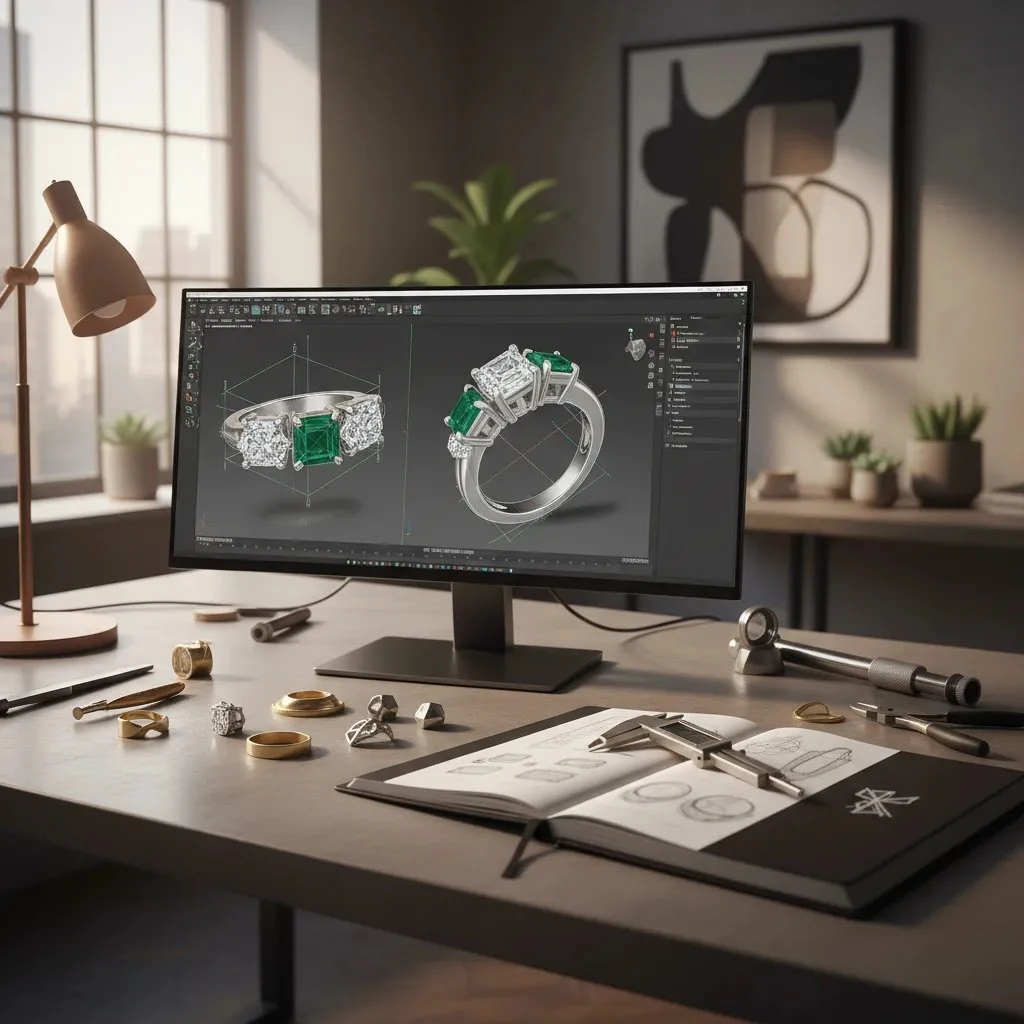
Many people assume 3d modeling for jewelry is just drawing rings on a screen. The reality is much more technical. In most businesses, the role involves building accurate digital models that support design review, prototyping, sampling, and production preparation.
A jewelry modeler may start from a hand sketch, reference image, mood board, or rough dimensions from a founder or buyer. From there, the work often includes adjusting scale, refining proportions, checking wearability, and preparing files that another team can use for approval or manufacturing. In practice, this means a digital designer is not only making something look good. They are helping the brand make design decisions before money is spent on physical samples.
Here is the thing, job titles vary a lot. One company may advertise 3d jewellery designer jobs, another may list jewelry modeling positions, and another may combine design and rendering under a broader digital product development role. The responsibilities can overlap, but the strongest candidates usually understand both aesthetics and production logic.
That overlap is why businesses often value applicants who can move between concept development and file accuracy. A beautiful model that cannot be interpreted correctly by production teams may create delays rather than solve them.
Where Jewelry Modeling Positions Show Up
3d modeling jewelry jobs appear in more settings than many people expect. They are not limited to large manufacturers. Small studios, growing private label brands, wholesale suppliers, and design consultancies may all need this skill set, even if they hire it in different ways.
In-house brand teams
A growing jewelry brand may bring modeling in-house when it launches more styles per season or needs tighter control over development. This setup often works well for founders who want a modeler close to the merchandising, design, and sourcing conversation.
Manufacturing partners
Factories and production partners often hire digital modelers because clear files reduce confusion later in the process. From a production standpoint, modeling roles can support sampling efficiency, revision control, and communication with clients who are still refining their concepts.
Freelance and project-based work
Consider this, many early-stage brands are not ready for a full-time hire. They may outsource design and 3d modeling for jewelry on a project basis while they validate a collection. That creates opportunities for specialists who can communicate clearly, work from incomplete briefs, and deliver files that fit a production workflow.
If you want a more focused look at related hiring paths, 3d cad jewelry design jobs often highlight the more technical side of this same career family.
Skills That Separate Strong Candidates
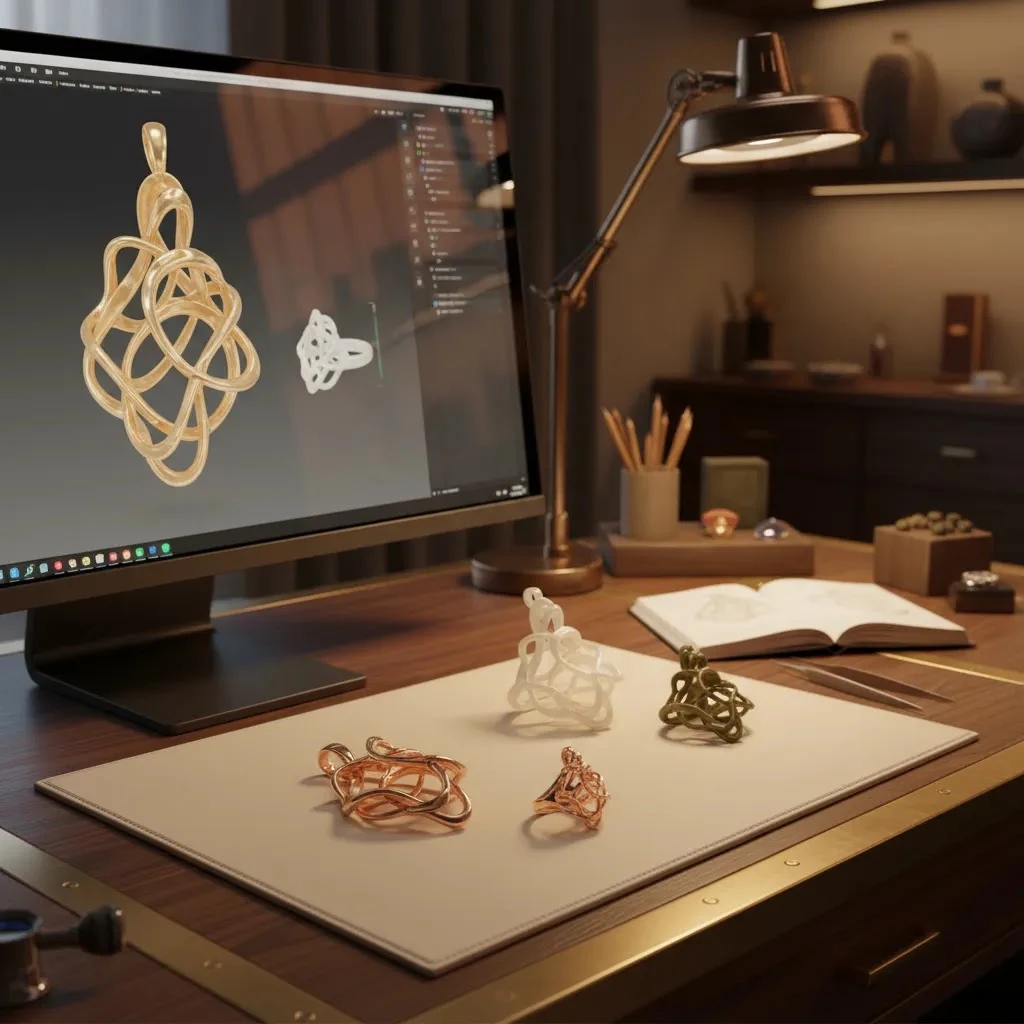
Employers do not just look for software familiarity. They usually want evidence that you understand how jewelry behaves as a product category. A necklace component, a ring head, and an earring drop each create different design and production concerns.
What many jewelry brands overlook is that a strong modeler thinks through wear, scale, assembly, and revision risk before anyone requests changes. That kind of foresight saves time.
Core capabilities employers often value
- Translating sketches or verbal briefs into clear digital forms
- Working accurately with dimensions and proportions
- Preparing models that can support sampling or manufacturing review
- Communicating design revisions in a structured way
- Balancing visual appeal with practical construction concerns
- Managing files, version control, and approval stages professionally
Now, when it comes to hiring, many businesses also pay attention to how candidates present feedback. Can you explain why a feature may need adjustment? Can you identify where a design brief is incomplete? Can you revise without drifting away from the original design intent? Those are real business skills, not just artistic ones.
Teams evaluating talent may also compare responsibilities against compensation benchmarks, which is why career researchers often review pages on 3d model salary alongside actual job descriptions.
Software and Workflow Expectations
Software matters, but workflow matters more. A candidate who knows one program well and understands production logic may be more valuable than someone who lists many tools without showing how they use them.
Still, businesses hiring for 3d jewelry design jobs often expect familiarity with specialized digital modeling environments. Search trends around rhino 3d modeling jewelry are common for a reason. Rhino is widely associated with precision-based modeling work and is often mentioned in digital jewelry design discussions. The exact software requirement depends on the company, but employers typically care about your ability to produce clean, editable files and revise them efficiently.
If you are evaluating tools or planning team training, the Royi Sal site also organizes relevant resources under 3D Jewelry Design Software. For broader category context, you can also review the Jewelry Design section.
What employers usually want to see in a software-based portfolio
- Before-and-after revision examples
- Models shown from multiple angles
- Accurate scale references
- Examples across more than one jewelry type
- Evidence that the file supports downstream production steps
Think of it this way, the software is the tool, but the job is problem-solving. The more clearly your files help a team move from idea to approved sample, the more valuable your work becomes.
3D Jewelry File Formats and Deliverables Employers Actually Expect
Job descriptions often list software, but on the work side, most teams care about deliverables. The model has to move between people, review stages, and sometimes multiple technical steps. That is why being able to produce clean, editable, revisable files tends to matter more than having the longest tool list.
From a production standpoint, deliverables usually fall into two categories. There are editable working files used for revisions, and there are export files used for review, prototyping, or sharing with a manufacturing partner. A strong candidate can explain the difference and can ask the right questions before sending anything out.
Common file types you may be asked to provide
- Native or editable CAD files, such as 3dm, that keep history and structure intact for revision work
- Mesh exports for prototyping or technical review, such as stl or obj
- Exchange formats for moving between software environments, such as step or iges in some workflows
- Presentation and visualization exports, which could include fbx in certain rendering pipelines
- 2D support files, such as dimensioned drawings or annotated screenshots that clarify scale and intent
The reality is that there is no universal standard. One employer may want only mesh exports for a quick prototype, while another may require the editable file so the team can keep iterating internally. If you are a brand owner working with a freelancer, or a candidate starting a new role, confirm deliverables up front. Ask what format the manufacturing partner accepts, what format the internal team can edit, and what file version they need for compatibility.
A practical handoff checklist for brands and candidates
- File naming conventions that include style code, version number, and date
- A simple version log stating what changed and why, especially after feedback rounds
- Measurement notes that call out key dimensions and any areas where scale is sensitive
- Clear views for review, such as top, side, and perspective, plus close-ups of critical details
- Notes on what is editable versus what is locked, so the next person understands how to revise without rebuilding
What experienced buyers know is that small misunderstandings multiply once a file leaves the design desk. A structured deliverable package reduces the risk of rework, whether you are handing off to an internal team or coordinating with an external manufacturing partner.
How the Work Connects to Manufacturing
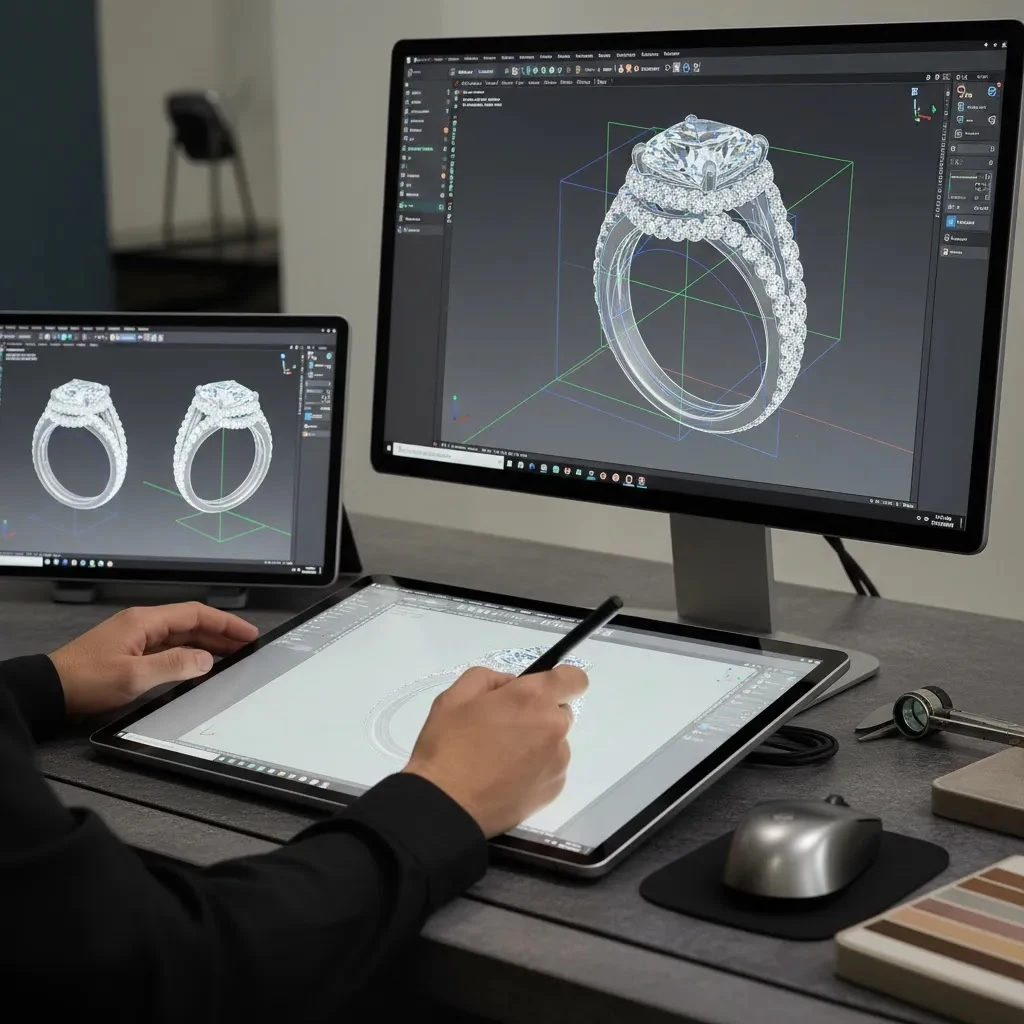
This is where digital design stops being abstract and starts affecting real business outcomes. A model that looks polished on screen still needs to fit into a larger development sequence that may include approvals, sample reviews, production planning, quality checks, and shipping coordination.
For brands, the main question is not simply whether a designer can model. It is whether that modeling work supports a reliable handoff to production. The best digital designers understand that their files are part of a chain of communication.
Typical production touchpoints influenced by 3D modeling
- Initial concept review
- Design revisions before sampling
- File preparation for prototype development
- Internal approval and client sign-off
- Coordination with manufacturing teams
- Documentation for repeat orders or future edits
The reality is that digital modeling becomes even more important when teams work across countries or time zones. Clear files reduce misinterpretation. They also help protect design intent when the founder, buyer, and manufacturing team are not in the same room.
Royi Sal Jewelry operates in this B2B space as a custom design and manufacturing partner, with a collaborative approach that connects concept development to production planning. For business owners, that kind of structure can matter because a digital file is rarely the finish line. It is usually one stage in a larger manufacturing process.
If you are tracking where the industry is headed, it helps to study both design direction and technical change. Relevant reading includes jewelry trends watch 2025 key design elements year and technology jewelry design innovations shaping industry.
Real-World Collaboration Workflow: Approvals, Feedback Loops, and Version Control
Most problems in 3d modeling jewelry jobs are not caused by modeling ability. They come from unclear approvals, scattered feedback, and version confusion. In B2B jewelry development, a model is often reviewed by several people, and each person may focus on something different.
In practice, the workflow may look like this. A founder or buyer provides a brief, the modeler returns an initial draft, then feedback comes back from brand leadership, merchandising, and sometimes a production contact who flags manufacturing questions. The modeler revises, the brand approves the updated file, and only then does the project move forward to prototyping or sampling. Where misunderstandings usually happen is when feedback arrives from multiple channels, or when the latest version is not clearly identified.
How experienced modelers reduce delays during revisions
- They send annotated screenshots with clear callouts, instead of relying on long messages that can be misread
- They include a short change log that lists what was updated in each version
- They confirm dimensions that impact wearability or fit, using explicit numbers and reference views
- They ask questions early when a brief is incomplete, rather than guessing and rebuilding later
Consider this, many brands also benefit from defining the collaboration rules before any modeling begins. Decide who signs off, how feedback is collected, and what the cadence will be. Even simple alignment, such as one consolidated feedback message per round, can prevent the modeler from chasing conflicting requests.
For brands hiring freelancers or onboarding a new in-house designer, set expectations around revision rounds and decision ownership. There is no universal number that fits every project, but it helps to agree on what a typical iteration cycle looks like for your team. The goal is not to restrict creativity. It is to keep the project moving with controlled, traceable updates so approvals are faster and production questions can be answered with confidence.
How to Build a Portfolio That Gets Attention
A polished portfolio for 3d modeling jewelry jobs should show more than attractive renderings. Employers and clients want proof that you can think through a product development process.
In many cases, the most convincing portfolio pieces are not the most ornate ones. They are the projects that reveal your reasoning, your revision discipline, and your understanding of how a design moves toward sampling.
What to include
- Concept origin, such as a sketch, client brief, or product reference
- Model development, including structure, proportions, and key edits
- Revision history, showing how feedback changed the result
- Production relevance, such as notes on file readiness or manufacturing communication
- Range, with examples beyond only one category like 3d modeling ring jewelry
What many hiring managers appreciate most is clarity. Label your role. Explain what changed. Show where you solved a problem. If you collaborated with a founder, merchandiser, or production contact, say so. That context helps your work feel commercially relevant.
For those entering the field through self-study or a 3d modeling jewelry course, this approach is especially useful. It helps compensate for limited job experience by showing process maturity.
Security and IP Protection for Digital Jewelry Models (What Brands Should Set in Writing)
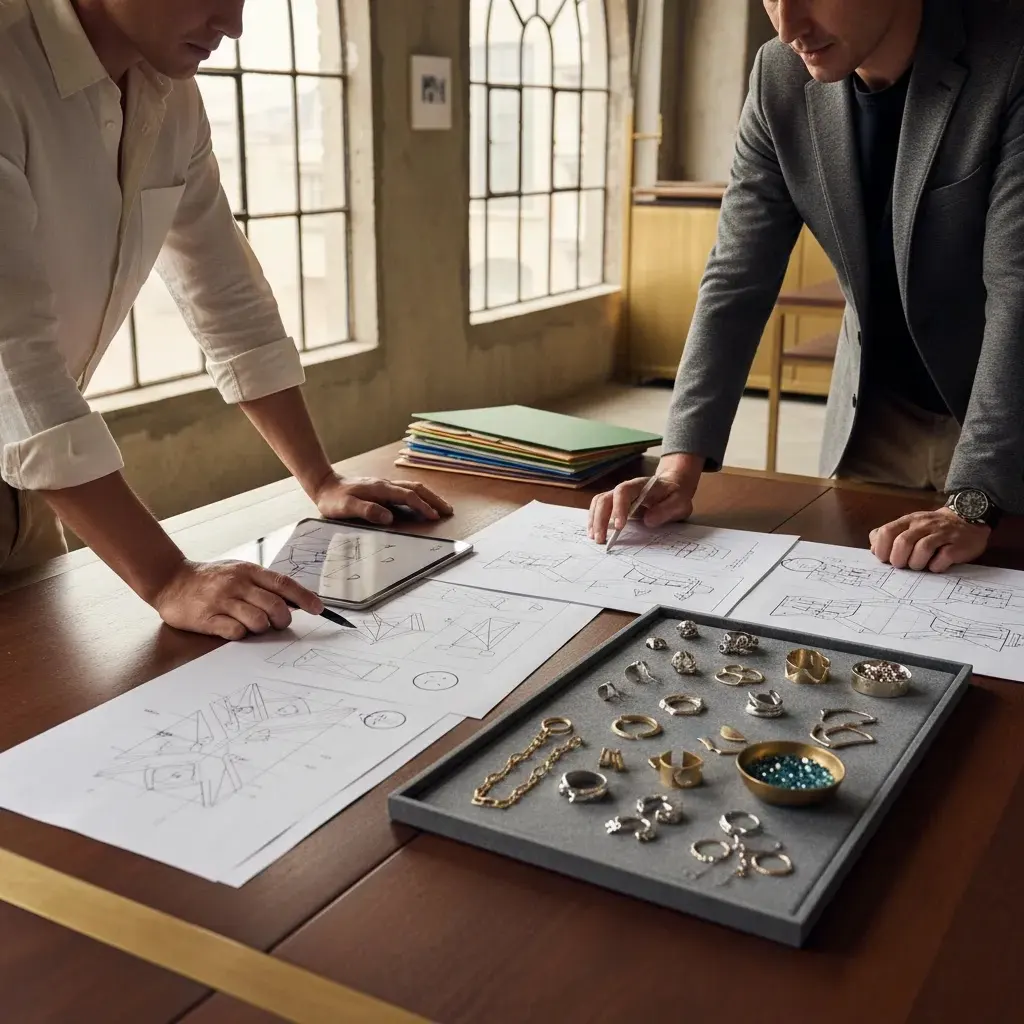
For private label brands, 3D jewelry files are not just design documents. They are business assets. They represent product development investment, upcoming launches, and often a brand’s competitive differentiation. What many brand owners overlook is how easily those files can be forwarded, duplicated, or reused once they leave your internal team.
If you work with external designers, freelancers, or overseas production partners, set expectations for confidentiality and ownership in writing. This is not about creating friction. It is about protecting your product pipeline and making the working relationship more professional.
Practical protections brands often set around 3D assets
- Limit file sharing to the people who need access for the current project stage
- Use controlled sharing settings when possible, so access can be updated as the team changes
- Share watermarked renders or low-detail visuals for early review when full editable files are not required
- Define who owns the source files, who can reuse elements, and what happens if the relationship ends
- Document what deliverables are included, including which versions are considered final for production
For designers, there is a portfolio reality here too. You need to show work to win 3d jewellery designer jobs, but you also need to respect client confidentiality. Portfolio-friendly approaches often include sanitized case studies that remove brand identifiers, partial views that demonstrate skill without exposing the entire model, and permission-based publishing when a project is no longer sensitive. This kind of professionalism is a trust signal for serious brands.
In B2B manufacturing relationships, clarity protects both sides. It reduces disputes, reduces accidental leakage of designs, and helps everyone focus on building the next collection with confidence.
Career Growth and Business Value
3d modeling jewelry jobs can lead in several directions. Some professionals stay highly technical and become specialists in complex digital modeling. Others move toward creative leadership, product development, or CAD management. Some eventually work closely with sourcing and production teams because they understand how digital decisions affect cost, sampling, and repeatability.
For business owners, hiring this role can also be a strategic move. A capable modeler may help shorten revision cycles, improve communication with a manufacturing partner, and make it easier to scale a collection without recreating every detail from scratch.
Royi Sal Jewelry, led by founder Royi Gal according to the client context provided, reflects the kind of collaborative model many brands look for when connecting design intent to manufacturing execution. That is relevant here because digital design roles deliver the most value when they operate inside a clear development workflow rather than as isolated creative services.
If you are building a team, review candidates for both technical quality and operational fit. If you are pursuing jewelry jobs yourself, focus on showing how your work supports business decisions, not only aesthetics. That is often the difference between being seen as a software user and being seen as a valuable development professional.
Frequently Asked Questions
What is the difference between 3d modeling jewelry jobs and general CAD design roles?
Jewelry-specific digital roles usually require more category knowledge than general CAD work. You are not only building forms. You are dealing with scale, wearability, design detail, and production communication in a category where very small adjustments can change the final result. A general CAD background can help, but jewelry employers often prefer candidates who understand how decorative products move from concept to sample and then into production. That is why portfolios with jewelry-specific examples tend to carry more weight than broad technical design samples alone.
Do employers usually expect manufacturing knowledge for jewelry modeling positions?
Often, yes. Not every role requires deep factory experience, but employers usually value candidates who understand what happens after the model is completed. That may include sampling, revisions, approval cycles, and communication with a production team. In a B2B environment, digital files are part of a larger workflow, so modelers who can anticipate downstream issues are often easier to work with. Even a basic understanding of how manufacturing handoff works can make you more competitive and help reduce costly misunderstandings during development.
Is Rhino required for 3d modeling for jewelry work?
Not always, but Rhino is commonly associated with digital jewelry design, which is why rhino 3d modeling jewelry appears so often in job searches. Some employers may ask for a specific software background, while others care more about output quality and file usability. If you know a different tool, you may still be considered if you can show accurate models, clean revisions, and a strong understanding of jewelry construction. The job posting should guide your preparation, but transferable modeling logic often matters more than software branding alone.
Can freelance designers compete for 3d jewelry design jobs?
Yes, especially with smaller brands, startups, and project-based product development teams. Many businesses do not need a full-time modeler at first, so they work with freelancers for collection launches, sample preparation, or revision-heavy projects. To compete well, you need a portfolio that shows process, communication, and consistency. Freelancers who only present polished final images may look less prepared than those who document revisions and explain how their files support real product development. Professional communication and clear scoping also matter a great deal in freelance work.
How should a beginner build experience without full-time jewelry jobs?
A beginner can build credibility by creating portfolio projects that simulate real briefs. Use sketches, mock founder requests, or redesign exercises that show your process from concept through revision. Include measurements, alternate views, and notes on production intent. If you take a 3d modeling jewelry course, turn assignments into polished case studies rather than simply collecting screenshots. The goal is to show employers that you understand how digital work serves product development. Practical thinking usually stands out more than decorative complexity alone.
What do business owners look for when hiring a digital jewelry designer?
Business owners often look for a mix of creative interpretation and operational discipline. They want someone who can understand the brand direction, produce accurate models, handle revisions efficiently, and communicate clearly with sourcing or manufacturing partners. Reliability matters just as much as design talent. If you miss details, lose version control, or need constant clarification, the project may slow down. In a commercial setting, strong candidates help the business make decisions faster and reduce confusion before the sample stage begins.
Are renderings enough to win jewelry modeling positions?
Usually not. Good renderings can make your portfolio more appealing, but employers generally want to understand how you think, how you revise, and whether your files can support production-related next steps. A rendering shows presentation skill. A development case study shows professional value. If possible, combine both. Show the concept, the model, a few edits, and the final visual output. That gives hiring teams a fuller picture of your capabilities and helps them imagine you working inside an actual product development cycle.
How do 3d modeling jewelry jobs relate to private label manufacturing?
They are closely connected. In private label development, digital modeling often helps translate a brand’s concept into something a manufacturing partner can review and produce. Clear models may reduce interpretation issues and support faster feedback during the early stages of a collection. For brands launching multiple styles, digital files can also improve consistency across the line. This is one reason many B2B manufacturers value design collaboration early in the process. Better design communication often leads to smoother sample development and clearer approvals.
Should a portfolio focus on rings only, or show multiple product types?
Showing range is usually the stronger choice. A portfolio built entirely around 3d modeling ring jewelry may still be impressive, but employers may wonder whether your skills transfer well to other categories. Including a small but varied set of work can make your portfolio feel more commercially useful. You do not need dozens of pieces. A focused group of projects that demonstrates different forms, levels of detail, and revision needs often works better. Range suggests adaptability, which is valuable in both brand and manufacturing environments.
How important is communication in digital jewelry design work?
It is essential. Even highly skilled modelers can struggle if they cannot interpret briefs, ask useful questions, or explain changes clearly. Jewelry development often involves founders, buyers, and production contacts with different priorities. A good digital designer helps keep everyone aligned. In practice, this means documenting revisions, confirming dimensions, and identifying unclear instructions before they create delays. Communication is especially important in global production settings, where the model may serve as a shared reference point across teams and time zones.
What is the highest paying job in the jewelry industry?
It depends on the segment of the industry and the business model. High-compensation roles are often tied to revenue responsibility, specialized expertise, or ownership. In many companies, senior leadership roles, top sales and business development roles, and highly specialized technical positions in design, product development, or manufacturing management may rank among the highest paid. For brand owners, the more useful question is which role reduces risk and increases repeatability in your product pipeline, because that is often where long-term financial value is created.
What is the highest paid 3D artist job?
Across industries, the highest paid 3D roles are typically senior positions tied to complex technical output, team leadership, or high-stakes production, such as lead 3D artist roles, technical director style responsibilities, or senior product visualization leadership. In jewelry, compensation tends to rise when a modeler can consistently deliver production-usable files, manage revisions with minimal friction, and support a high-throughput development calendar. The more your work reduces rework and improves handoff reliability, the more valuable your role becomes to a business.
How much do jewelry CAD designers make in the US?
Pay varies widely based on location, experience level, employment type, and whether the role is in-house, freelance, or attached to a manufacturing operation. Responsibilities also matter. Some roles focus on concept modeling and visuals, while others carry production-oriented accountability such as revision management, documentation, and handoff readiness. If you are benchmarking, compare job descriptions carefully. Titles can be similar while expectations, and pay, differ significantly.
Is jewelry CAD hard to learn?
It can be challenging, mainly because jewelry work combines precision with small-scale design detail. You are learning software skills, but you are also learning how jewelry is constructed and how small dimensional changes affect fit, wearability, and production feasibility. Many people progress faster when they treat it like product development training rather than only an art skill. If you build habits around measurement accuracy, organized revisions, and clean file structure early on, the learning curve tends to become more manageable over time.
Key Takeaways
- 3d modeling jewelry jobs sit at the intersection of design creativity and production practicality.
- Employers often value category knowledge, revision discipline, and communication skills as much as software proficiency.
- A strong portfolio should show process, not just final renderings.
- Digital modeling has direct business value because it can improve sampling clarity and manufacturing communication.
- Brands and professionals both benefit when digital design work is tied to a clear development workflow.
Conclusion
3d modeling jewelry jobs are no longer niche roles at the edge of the industry. They are becoming a practical part of how jewelry brands develop collections, communicate with manufacturing partners, and reduce uncertainty before sampling begins. If you are hiring, this role can strengthen your development process and support better coordination between design and production. If you are pursuing this path professionally, your best advantage is showing that your digital work supports real product decisions, not just visual presentation.
The most successful professionals in this space usually combine technical precision with commercial awareness. They understand how to interpret a brief, revise without losing intent, and prepare work that fits a larger production sequence. To explore how a collaborative custom manufacturing process works in practice, visit royisal.com. If you are building a collection and want to discuss design development with an experienced B2B partner, you can also reach out to Royi Sal Jewelry to start a conversation about your project requirements.



Responses (0)