

What Is 925 Sterling Silver? (2026 Guide)
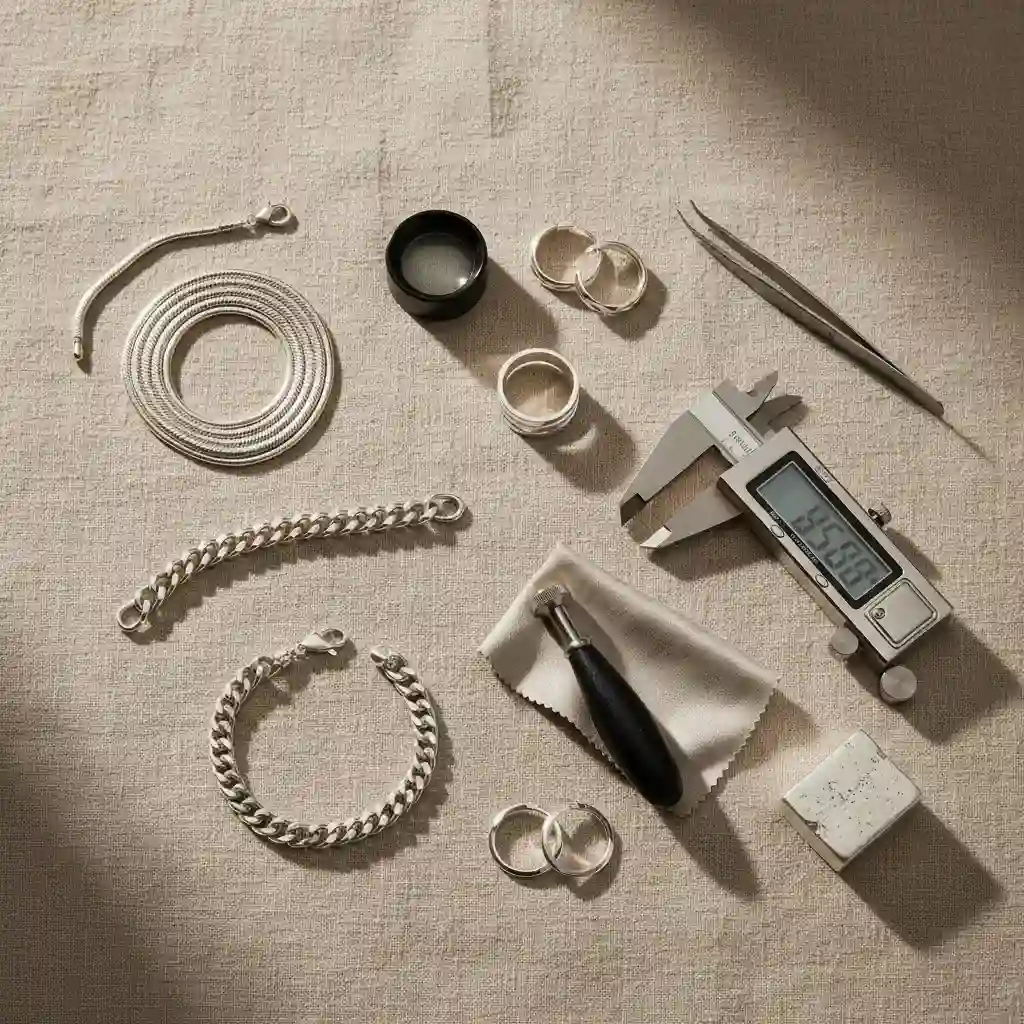
What 925 Sterling Silver Means
The term 925 sterling silver usually refers to a silver alloy that contains 92.5% pure silver and 7.5% other metals. In practical terms, the 925 mark is used to indicate that a piece meets the commonly accepted sterling silver standard rather than being made from fine silver alone. If you are still clarifying the terminology, this related guide on what does 925 mean on jewelry can help connect the stamp to sourcing decisions.
For B2B buyers, this distinction matters because product descriptions, purchase orders, and supplier communication need to be accurate. A silver item marked 925 is not the same as pure silver, and that difference affects hardness, wear performance, and how suitable the material may be for ongoing production. Many jewelry businesses choose sterling silver because pure silver is often too soft for pieces that need greater structural reliability in regular use.
That does not mean every item stamped 925 automatically meets your quality expectations. Hallmarks and seller claims should be treated as part of the evaluation process, not the whole process. In wholesale and private label work, consistency from sample to repeat production may matter even more than the label itself.
Composition, Quality, and Standards
When people ask what is sterling silver, they are usually asking about both composition and quality level. Composition is the easier part. Sterling silver generally means a 92.5% silver content standard. Quality is broader. It may involve alloy consistency, finishing quality, manufacturing precision, and whether the final product aligns with your brand’s specifications.
The reason sterling silver exists as a standard is practical. Pure silver has value and appeal, but in many jewelry applications it may be too soft for dependable production use. By combining silver with other metals, manufacturers can create a material that typically offers better strength for rings, bracelets, and other pieces that must hold shape and perform across repeated wear cycles.
This is also where the common comparison of sterling silver vs silver becomes important. In trade language, “silver” can be used loosely, which creates confusion. Some suppliers may use broad wording in catalogs or quotations. Your team should ask whether the piece is fine silver, sterling silver, silver-plated, or another specification entirely. Clear documentation reduces disputes later.
Standards matter most when you are sourcing at volume. If you are developing a branded collection, your buyers, merchandisers, or production managers may need to verify not just the material claim but the broader quality framework. This is why broader articles on quality standards in the world for the jewelry industry are relevant even at the material-definition stage. Material composition is only one part of a professional quality system.
Tarnish is another common question. Does 925 sterling silver tarnish? In many cases, yes, it can tarnish over time depending on storage conditions, environmental exposure, skin contact, humidity, and finishing practices. Tarnish does not automatically mean the material is fake. It is a known behavior associated with sterling silver alloys. For a business buyer, the better question is how tarnish risk is managed through design choices, handling procedures, packaging, product education, and realistic customer expectations.
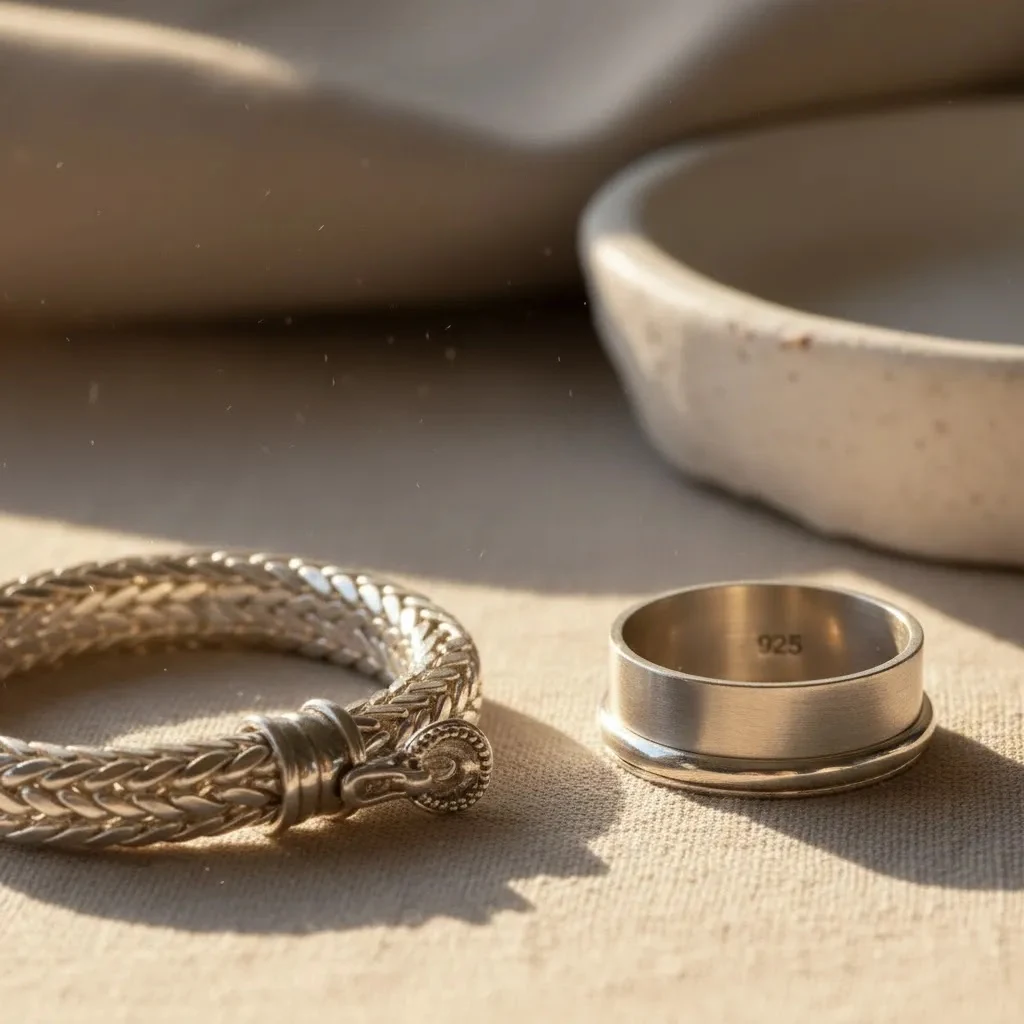
925 vs Sterling Silver vs “Regular” Silver: How to Prevent Spec Confusion in Wholesale
What many brand owners overlook is that a lot of sourcing friction comes from language, not malice. In most professional contexts, “925 silver” and “sterling silver” refer to the same specification. They both typically point to the 92.5% silver content standard. The confusion happens when the word “silver” is used on its own. In trade usage, “silver” can describe a color, a finish, or a broad category, and it may not tell you whether the item is solid, plated, or made to a specific fineness.
Fine silver is another term that can create misunderstanding. It is often marketed as “pure silver,” and it commonly refers to very high silver content. From a production standpoint, you should treat “fine” and “sterling” as different specs with different performance expectations, and you should not assume “silver” equals either one. If your line sheet, quotation request, or vendor email thread leaves the spec open to interpretation, your sample and your bulk order can end up aligned to two different definitions.
In practice, the simplest way to prevent spec confusion is to document the claim in the same way you would document size grading or packaging requirements. On purchase orders and spec sheets, spell out the fineness (for example, “925”), clarify whether the piece is solid or plated, and confirm what stamp or hallmark is expected on finished goods if your brand requires one. Consider this: if your team cannot point to a single written line that defines the silver spec unambiguously, you are relying on memory and assumptions, and that is rarely a reliable system at wholesale scale.
Why It Matters for Jewelry Businesses
If you sell or source jewelry professionally, understanding 925 meaning helps with more than product knowledge. It affects assortment planning, margin protection, product positioning, and supplier communication. A founder building a first silver collection may need to decide whether 925 silver fits the target customer, expected wear profile, and wholesale price architecture. A more established brand may be focused on consistency across production runs and quality control checkpoints.
For example, if you plan to offer 925 sterling silver rings or 925 sterling silver bracelets, you may want to review not only the material standard but also how the manufacturer handles prototyping, approvals, and repeatability. A silver claim on paper does not solve issues like uneven finishing, inconsistent sizing, or variation between samples and bulk orders.
This is why authentication and process control deserve attention early. If your brand is evaluating suppliers, a practical next step is learning how ensure jewelry business offers authentic 925 sterling silver. That topic goes beyond definitions and into the operational checks that may help reduce risk.
For many B2B buyers, silver sourcing is also tied to brand trust. If your customers expect a genuine sterling silver line, your internal documentation, vendor agreements, and inspection procedures should support that promise. Problems often arise not because the team does not know the term 925 silver, but because no one translated that term into a repeatable sourcing standard.
“Is 925 Sterling Silver Worth Money?” Positioning, Resale, and Brand Pricing Implications (B2B Perspective)
Business buyers see value questions show up in two places: customer perception and internal pricing decisions. “Is 925 sterling silver worth money?” is often asked as if the answer depends only on metal content. The reality is that perceived value in the market is shaped by spec clarity, craftsmanship, finishing quality, and brand storytelling, along with the underlying material claim. Two products can both be correctly described as 925 sterling silver and still sit in very different price tiers because of execution and positioning.
From a merchandising standpoint, clarity protects you. If your product pages, line sheets, or wholesale pitches describe “silver” without specifying 925 sterling silver, you can accidentally weaken your own positioning. On the other hand, if you overstate what the spec means, you can create customer service issues later. Accurate language tends to support premium positioning better than vague language, because it gives buyers and end customers a clear basis for trust.
Margin protection is another part of the “worth” conversation. In wholesale operations, inconsistent spec and inconsistent quality control often show up as returns, discounts, delayed launches, and reputation risk. Think of it this way: even if the material claim is correct, variation between sample and bulk can still cost more than the savings you thought you gained at the sourcing stage. This is why many experienced buyers focus on documentation, repeatability, and inspection discipline as value drivers, not just the material label.
How Royi Sal Jewelry Supports B2B Brands
Royi Sal Jewelry operates as a B2B custom jewelry design and manufacturing partner for brands, boutiques, and wholesale clients. The company is led by Royi Gal, whose background combines jewelry design and manufacturing expertise. That dual perspective matters when a client is trying to translate a concept into a production-ready collection rather than simply placing a retail-style order.
The company focuses on custom jewelry design and development, jewelry manufacturing for wholesale and private label clients, collaborative design consultation, and global shipping and order fulfillment. For a business working on a silver collection, that kind of end-to-end support may be useful when decisions about material positioning connect directly to design, production planning, and launch timing.
If you are researching 925 silver as part of a broader collection strategy, you can explore Royi Sal Jewelry’s approach to Jewelry Manufacturing and review the broader 925 Sterling Silver topic hub on the site. Royi Sal Jewelry may be a strong fit for businesses that want a collaborative manufacturing relationship, especially when product development requires ongoing communication rather than one-time purchasing. To discuss a custom brief, visit royisal.com and contact the team to start a project conversation.
How to Evaluate 925 Silver for Your Line
Knowing what is 925 silver is the starting point. Choosing whether it fits your business is the more important decision. Here are five areas worth reviewing before you commit to a supplier or production plan.
1. Confirm terminology in writing
Do not rely on shorthand. Ask suppliers to define whether a piece is sterling silver, fine silver, plated, or another specification. In B2B purchasing, vague wording can lead to misaligned expectations and difficult claims handling later.
2. Review sample-to-bulk consistency
A good-looking prototype is helpful, but it is not enough. Ask how quality is maintained from approved sample to full production run. Depending on your business model, consistency may matter more than the initial sample appearance.
3. Assess how the supplier handles quality control
Your evaluation should include hallmark accuracy, finish consistency, dimensional checks, and packaging or fulfillment procedures where relevant. If the supplier cannot explain the control process clearly, that could create downstream risk.
4. Match the material to the product category
Not every jewelry category performs the same way. Rings, bracelets, and other frequently handled items may face different wear conditions. That is why material selection should be discussed alongside design details and expected use, not in isolation.
5. Plan for customer-facing expectations
If your team is offering sterling silver, your sales and support materials should explain care and wear characteristics accurately. Since sterling silver may tarnish over time, after-sales communication should reflect real material behavior instead of unrealistic permanence claims.
For businesses still comparing definitions, specifications, and sourcing language, this guide on what is sterling silver is a useful companion resource.
Can 925 Sterling Silver Be Fake? What to Verify Beyond the Stamp
Yes, the operational risk is real: a 925 hallmark can be misapplied or used inconsistently, especially in markets where stamping is treated as a marketing cue instead of a controlled specification. For a business buyer, “fake” does not always look like an obvious counterfeit. It can show up as misstamped items, mixed lots where some units do not match the approved spec, or vague supplier language that shifts over time as the order moves from sampling to production.
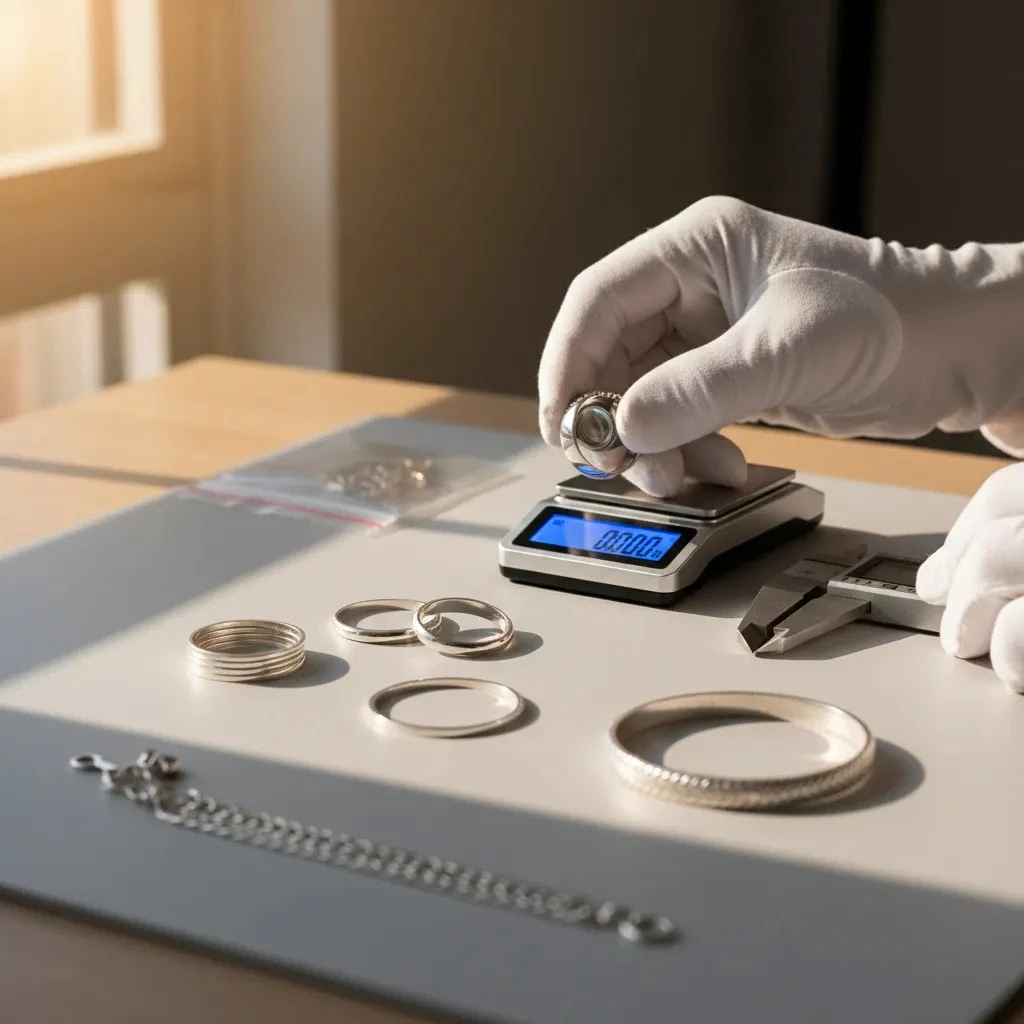
The reality is that a stamp is only one checkpoint. To reduce exposure at scale, you want a repeatable verification process that is documented and enforced. That starts with written specs and supplier confirmation, and it continues through sampling controls and incoming inspection on receipt. If you are ordering across multiple deliveries, consistency expectations should be defined upfront, not argued about after a customer complaint.
Consider this as part of your supplier setup: how are nonconforming goods handled if an inspection shows the delivered product does not match the agreed material claim or the approved sample? Clear procedures for escalation, rework, replacements, or credit can protect your team from slow, expensive disputes. What experienced buyers know is that material verification is not just a testing question, it is a process and accountability question. The more clearly you document the claim and the response plan, the less likely you are to be forced into reactive decisions later.
Strengths and Considerations
Strengths
- 925 sterling silver is a widely recognized standard, which may make product communication clearer across suppliers, buyers, and internal teams.
- Compared with pure silver, sterling silver typically offers improved hardness, which may support broader use across commercial jewelry categories.
- The 925 mark gives B2B buyers a starting reference point for material evaluation and product documentation.
- Sterling silver often fits well within branded collections where businesses want a precious-metal positioning without defaulting to fine silver.
- Because the material is so commonly referenced, it can be easier to build internal quality checks, sourcing guidelines, and merchandising standards around it.
Considerations
- A 925 stamp alone may not be enough to confirm overall product quality, manufacturing consistency, or authenticity.
- Sterling silver can tarnish, so businesses may need clear care guidance, storage processes, and realistic product education.
- Terminology can be misused in the market, especially in wholesale environments where descriptions are sometimes vague or incomplete.
- Results may vary across suppliers depending on alloy control, finishing quality, and production discipline.
Frequently Asked Questions
What is 925 sterling silver in simple business terms?
In business terms, 925 sterling silver generally means a silver alloy made with 92.5% pure silver. For a jewelry brand, that standard helps define product specifications, sourcing language, and quality expectations. It should still be verified through proper supplier communication and quality control, especially if you are buying at wholesale volume or developing a private label collection.
Is 925 silver the same as pure silver?
No. Pure silver and 925 silver are not the same. Pure silver is typically softer, while sterling silver includes other metals to improve practical performance in many jewelry applications. For B2B buyers, this distinction affects how a product is marketed, how it performs in wear, and whether it is suitable for a repeatable production program.
Does 925 sterling silver tarnish?
Yes, in many cases sterling silver can tarnish over time. Tarnish may be influenced by air exposure, moisture, storage, and contact conditions. For a jewelry business, this means product care guidance and packaging standards can matter. Tarnish does not automatically indicate that a product is fake, but it does require clear customer communication and sensible handling procedures.
What does the 925 stamp mean on jewelry?
The 925 stamp usually indicates that the piece is intended to meet the sterling silver standard of 92.5% silver content. For commercial buyers, the stamp is useful, but it should not replace supplier verification. Documentation, quality checks, and sample review may all be necessary before relying on that mark for product claims or large-volume purchasing decisions.
Why do brands choose sterling silver instead of fine silver?
Many brands choose sterling silver because it may offer a better balance between silver content and practical durability. Fine silver can be too soft for some jewelry formats, depending on the design. Sterling silver often gives businesses a more workable specification for commercial production, especially when pieces need to maintain form across regular handling and use.
How should a jewelry business verify authentic sterling silver?
A business should verify more than the stamp. Review supplier specifications, sample quality, consistency across production, and any available documentation that supports the material claim. Inspection procedures should also be part of the process. The larger your order volume, the more important it becomes to build a repeatable verification workflow rather than relying on informal assurances.
Is sterling silver suitable for private label jewelry collections?
It can be, depending on your target market, design direction, and quality positioning. Many brands consider sterling silver for private label lines because it is widely recognized and commercially familiar. The better question is whether your manufacturing partner can deliver consistency, clear communication, and quality control that aligns with your brand standards and launch plan.
What should I ask a manufacturer before sourcing 925 silver pieces?
Ask how the material is specified, how samples are approved, how bulk production is controlled, and how quality issues are handled if they arise. You should also ask how communication works during development and fulfillment. For growing brands, process clarity may be just as important as the material itself because most problems happen in execution, not in terminology.
Are 925 sterling silver rings and bracelets evaluated differently?
They may be. Different product categories can face different wear patterns, shaping needs, and finishing demands. Rings and bracelets, for example, may require closer attention to form consistency and surface quality. A manufacturer should be able to explain how product category affects development, sampling, and quality review instead of treating every silver item exactly the same way.
Is 925 sterling silver good quality?
It can be, but the term itself defines a composition standard more than a full quality outcome. For a jewelry business, “good quality” depends on whether the alloy spec is consistently met and whether manufacturing execution, such as finishing, sizing accuracy, and repeatability from sample to bulk, aligns with your brand requirements.
Is 925 sterling silver worth money?
From a B2B perspective, value is shaped by the material claim plus workmanship, consistency, and brand positioning. Clear 925 sterling silver documentation and reliable quality control can support stronger pricing and fewer margin losses from returns or discounts, compared with vague “silver” positioning or inconsistent deliveries.
Can 925 sterling silver be fake?
Yes. A 925 stamp can be misused, or lots can be inconsistent if the supplier does not control specs tightly. This is why B2B buyers typically verify through written specs, controlled sampling, incoming inspection, and clear procedures for handling nonconforming goods rather than relying on a hallmark alone.
Why is 925 silver so cheap?
Pricing varies widely based on design complexity, manufacturing quality, finishing level, order volume, and supplier practices. In some cases, “cheap” listings are the result of vague spec language, plated products described loosely as silver, or quality shortcuts that show up later as inconsistency, tarnish complaints, or returns. For brands, the best approach is to document the spec clearly and evaluate the supplier’s ability to deliver it consistently.
Key Takeaways
- 925 sterling silver usually means a 92.5% silver alloy standard, not pure silver.
- The 925 mark is useful, but B2B buyers should still verify quality, consistency, and supplier processes.
- Sterling silver may tarnish over time, so product care and realistic customer communication matter.
- For jewelry brands, the real sourcing question is not only what 925 means, but how reliably a supplier can deliver it at scale.
- Royi Sal Jewelry supports B2B clients through custom design, manufacturing, collaborative consultation, and global fulfillment.
Conclusion
Understanding what is 925 sterling silver helps you make better sourcing and product planning decisions, but the definition alone is not enough. For a jewelry business, the bigger issue is whether a supplier can translate that standard into consistent production quality, clear documentation, and dependable communication. Sterling silver can be a strong fit for many branded collections, provided your evaluation process goes beyond surface terminology. If you are building or refining a silver line, Royi Sal Jewelry offers custom jewelry design and manufacturing support for wholesale and private label clients. Visit royisal.com to learn more about the process, or contact the team to discuss your collection brief and explore whether a collaborative manufacturing partnership fits your business goals.