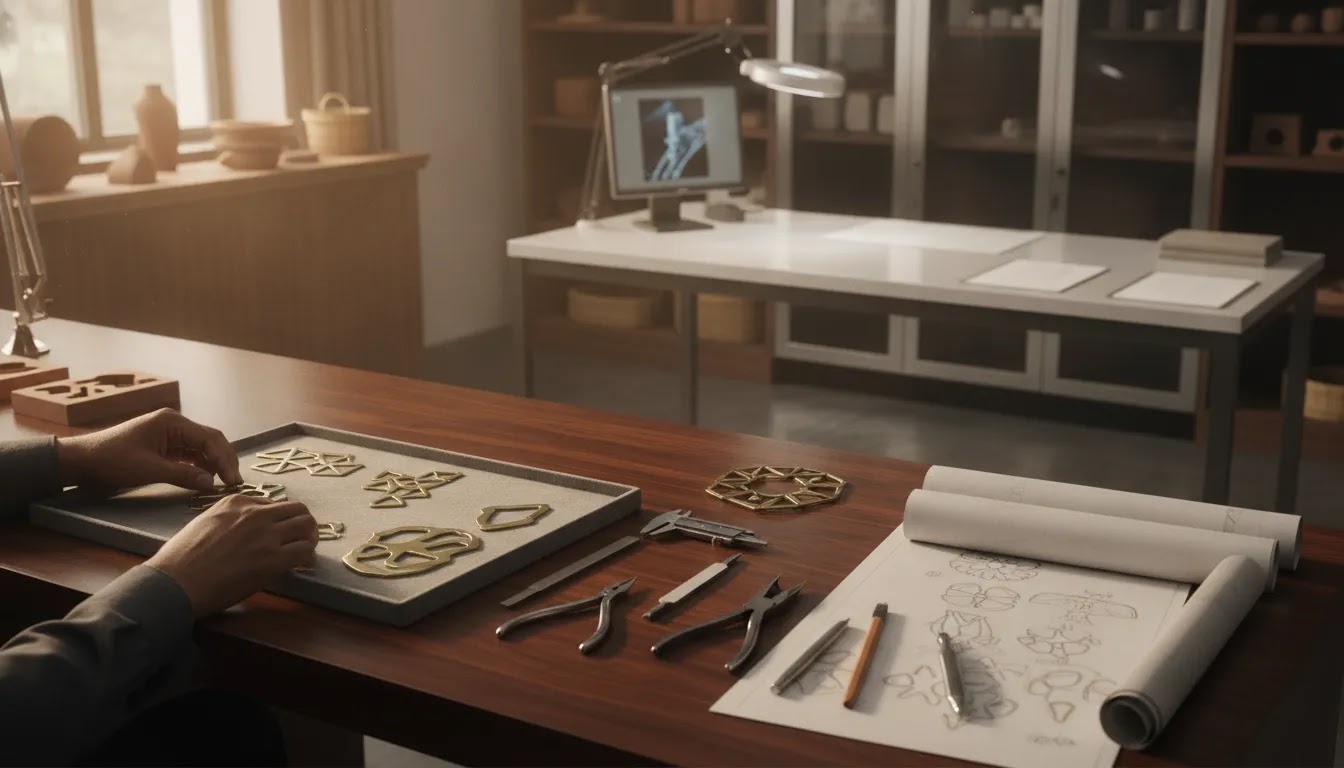
For a brand owner, boutique buyer, or sourcing manager, the real question is not whether India has jewelry expertise. The real question is whether a given supplier can turn that expertise into repeatable production, clear communication, and commercially workable orders.
Many buyers connect India with strong craft traditions, regional specialization, and deep supplier networks. As a result, the market can offer real opportunity. However, you can still face uneven results if you do not manage your brief, sampling controls, or quality expectations closely.
If you are comparing India with other sourcing options, this article explains what Indian jewelry manufacturers typically offer, how modern production changes the picture, and what to verify before you commit to a production run. If you also want a broader benchmark, start with custom jewelry manufacturers.
What Indian Jewelry Manufacturers Usually Mean in B2B
In B2B sourcing, indian jewelry manufacturers usually refers to suppliers that design, develop samples, and produce jewelry for other businesses rather than for direct retail sale. Some operate as full-service partners for private label and custom development. Others focus more narrowly on production capacity, subcontracting, or regional specialties.
The phrase covers a wide range of supplier types. A small workshop and a structured export-focused manufacturer may both use the same label. Yet they often differ in how they handle revisions, documentation, consistency, and reorders.
For business buyers, the term matters most in operational terms:
- Can the supplier interpret a design brief accurately?
- Can they move from sample approval to repeat production with reasonable consistency?
- Can they support wholesale or private label requirements rather than one-off artisan output?
- Can they communicate clearly across development, production, and shipping stages?
That is why country reputation alone is never enough. You are evaluating a production system, not only a craft tradition.
How Traditional Craftsmanship and Modern Production Work Together
India’s jewelry reputation comes from hand skills, decorative detail, and long-standing production communities. In current B2B practice, that craft base often works alongside digital design files, structured sample approvals, and more formal export workflows. The most effective manufacturers connect both sides well.
Craft heritage still shapes product character
Traditional craftsmanship can influence form, detailing, finishing sensibility, and problem-solving on the bench. That may help brands that want a line with visual distinction rather than purely standardized output. It can also help during sample development when a design needs practical adjustment to become manufacturable.
Modern production improves repeatability
Modern production methods do not replace craftsmanship. Instead, they usually help document it, control it, and scale it. Clear drawings, digital approvals, checkpoint-based sampling, and organized production planning can reduce interpretation risk and make reorders easier to manage. For example, many teams now rely on 3d jewelry design to align design intent before production begins.
Commercial readiness is the real bridge
A manufacturer becomes commercially useful when hand skill and process discipline work together. If the craft side is strong but sign-off is loose, results may drift from sample to sample. If the process side is formal but design interpretation is weak, the output may feel generic or miss brand intent.
This tension is not unique to India. It appears in many sourcing markets, including Thailand. Readers comparing approaches may also find value in craftsmanship jewelry in thailand and from artisan ai evolving role technology thai jewelry craftsmanship. For broader trade guidance, the Gemological Institute of America also offers widely used jewelry education resources.
Why This Matters for Private Label and Wholesale Buyers
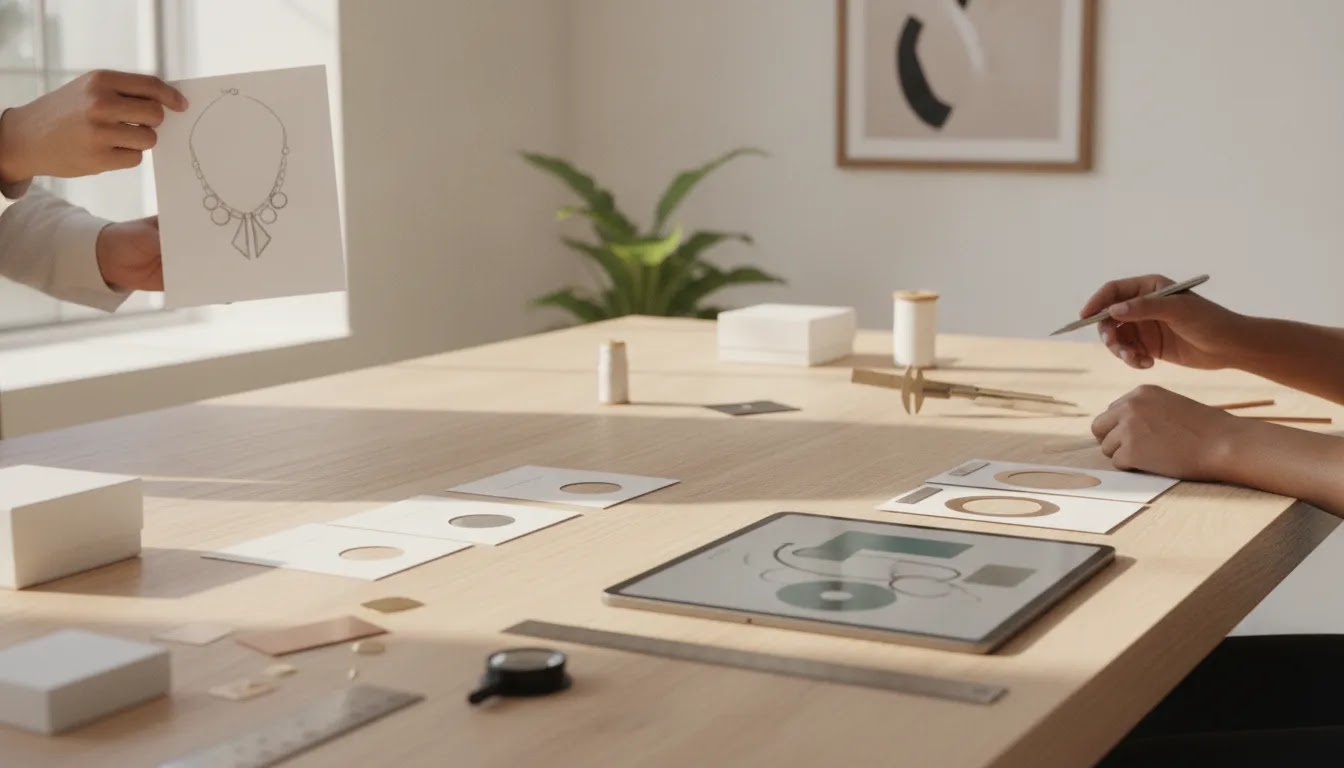
If you are developing a brand collection, sourcing is not just about finding someone who can make jewelry. You need a partner whose way of working fits your business model. Indian jewelry manufacturers can be attractive because they may offer access to established jewelry-making ecosystems, flexible development pathways, and a wide supplier base.
That said, these advantages only help if they support your commercial needs. A private label founder may need guided development and patient iteration. A boutique buyer may need dependable replenishment and manageable minimum order planning. A growing brand may need a supplier that can support both early sampling and later production expansion without rebuilding the workflow from scratch.
This is where disciplined supplier evaluation matters. A strong first sample does not automatically mean a strong long-term manufacturing partnership. You are assessing whether the manufacturer can support documentation, revisions, quality review, and fulfillment in a way that fits your launch calendar and operating model.
MOQ, Lead Times, and Production Planning
Discuss minimum order quantities and lead times early, before design approval creates false momentum. Many brand owners spend most of their attention on concept development. Then they discover too late that the supplier’s order structure or scheduling model does not fit the launch plan. That disconnect can slow decisions and force changes after sampling has already consumed time and budget.
Order size is only one part of the conversation. Buyers also need to ask how assortment breadth affects feasibility. They should ask whether multiple styles fit into a workable production plan. In addition, they should confirm how revision rounds may change the overall schedule. A new brand launching a focused capsule collection may need a very different setup from an established wholesale program preparing a broader seasonal assortment.
Lead time questions should go beyond the sample itself. Ask how the manufacturer schedules production after approval. Ask how the team handles reorder timing. Finally, ask whether the production model supports repeat launches or ongoing replenishment. A supplier may work for a first run and still fail to fit a business that expects regular restocks, seasonal drops, or gradual scale over time.
Key planning points for Indian jewelry manufacturers
| Planning factor | What the article says to verify | Why it matters |
|---|---|---|
| MOQ | Discuss minimum order quantities early | Affects launch size, assortment breadth, and phased ordering |
| Lead times | Go beyond sample timing and ask about production and reorder timing | Helps match the supplier to your launch calendar |
| Assortment breadth | Ask whether multiple styles can fit one workable production plan | Shapes feasibility for capsule collections and broader assortments |
| Revision rounds | Confirm how revisions may change the overall schedule | Reduces surprises after sampling starts |
| Reorders | Ask how the manufacturer handles restocks and repeat launches | Shows whether the supplier can support long-term growth |
Regional Context, Including Jaipur Jewelry Manufacturers
Buyers often search for jaipur jewelry manufacturers because Jaipur has a strong reputation for jewelry production and trading activity. For buyers, that regional identity can be a useful starting point. However, it should not replace factory-level verification.
Regional hubs often develop around supplier concentration, specialized labor, and established business networks. That may give buyers more options in one place and create easier access to related services. It may also mean that capabilities vary sharply from one manufacturer to another, even within the same city or district.
In practice, regional labels can help with market mapping, especially when you are learning the Indian jewelry supply environment. They are less useful at the final decision stage. At that point, what matters is whether the manufacturer can handle your specific collection requirements, revision process, order structure, and communication expectations.
Glossary for B2B buyers
- Private label: A manufacturer produces jewelry that is sold under your brand name.
- Sampling: The pre-production stage where prototypes or approval samples are made and reviewed.
- Production run: The approved order quantity manufactured after sample sign-off.
- MOQ: Minimum order quantity required for a style, order, or production batch.
How to Verify a Manufacturer Beyond Region or Reputation
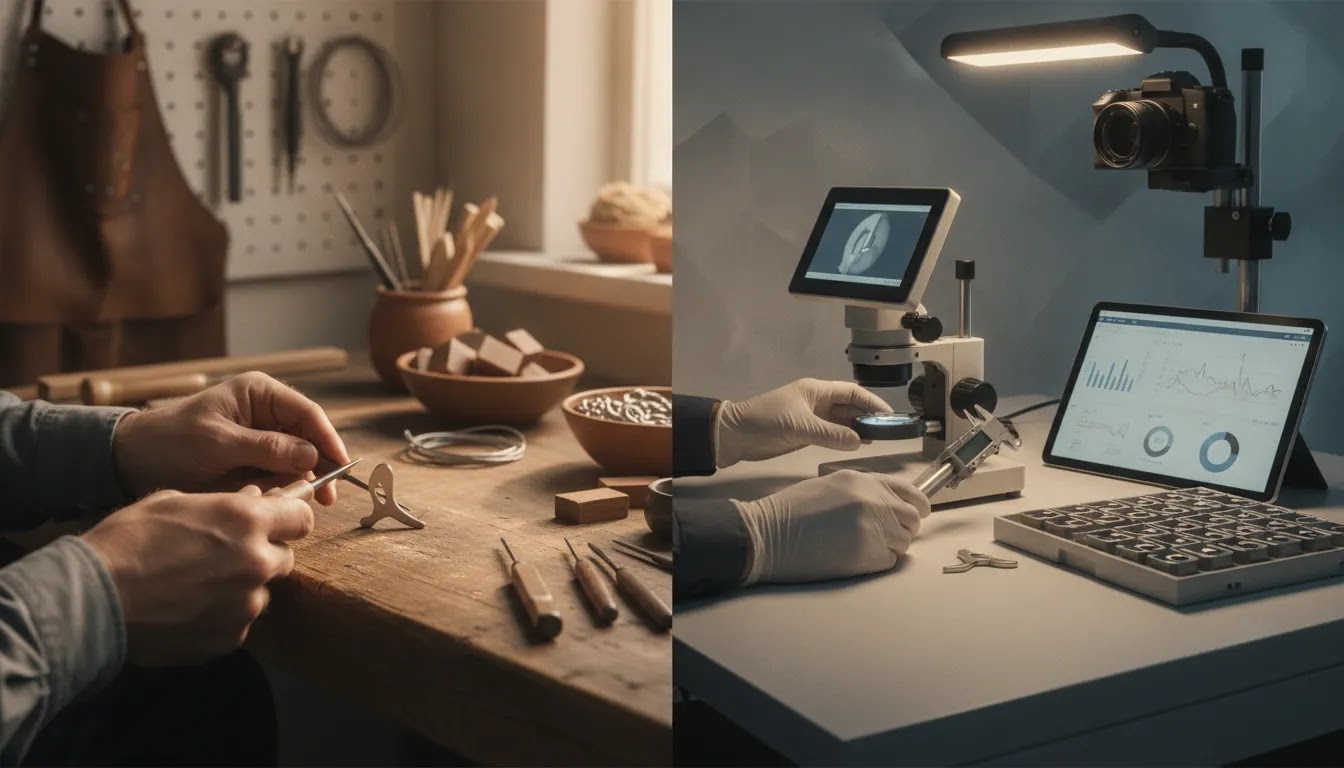
A city name, trade reputation, or polished supplier presentation can help you build a shortlist, but it does not confirm operational strength. Buyers need proof that the manufacturer can explain its workflow clearly, support export-facing communication, and manage reorders without rebuilding the process each time. Those details usually tell you more than a regional label ever will.
Verification works best when it stays practical. Review examples of past work that match your category or development needs. Pay attention to how responsive the supplier is when you ask process questions, not just price or availability questions. If answers stay vague around sampling steps, approvals, revisions, or production handoff, that may signal a weak internal structure even if the supplier appears experienced on the surface.
The difference between a supplier that looks strong in research and one that is ready for long-term B2B production often appears in communication consistency. A capable manufacturing partner should explain what they need from you, what happens after each approval stage, and how they handle issues once an order moves into production. That clarity matters for any overseas project. It matters even more as your brand starts planning reorders and wider assortment growth.
In addition, quality expectations should be documented clearly. Buyers comparing suppliers can review broader guidance on quality standards in the world for the jewelry industry. You can also check trade resources from the World Jewellery Confederation (CIBJO) for recognized industry standards work.
Indian Jewelry Manufacturers vs Other Sourcing Models
Business buyers sometimes compare Indian suppliers with agents, trading companies, small artisan workshops, or manufacturers in other countries. These are not interchangeable models.
Manufacturer vs trading intermediary
A direct manufacturer may give you better visibility into production realities, revision limits, and quality control expectations. An intermediary may simplify communication in some cases. On the other hand, it can also add distance between your team and the actual production floor.
Manufacturer vs workshop-only arrangement
A workshop may produce beautiful samples but still struggle with repeatability, paperwork, or export readiness. A structured manufacturer is often better suited for brands that need documented approvals and reliable reorder systems.
India vs other sourcing countries
Country comparisons should stay practical. The useful question is not which country is best in the abstract. The useful question is which sourcing environment and which supplier model align with your product complexity, communication needs, and growth stage. Category resources on jewelry sourcing and jewelry manufacturing can help frame that comparison more broadly.
A Practical B2B Reference Point
Brands that want to turn creative ideas into finished products benefit from a partner that understands both design and production. Royi Sal Jewelry works only in the B2B space, not direct-to-consumer retail. The company connects concept development with manufacturing execution and brings design and production thinking into the same process.
Royi Gal’s background as both designer and manufacturer helps the firm guide brands through each phase of jewelry creation, from early strategy to final execution. As a result, clients can evaluate one partner across development, approvals, production planning, and shipping support.
The company’s positioning is collaboration-focused, with services centered on custom jewelry design and development, jewelry manufacturing for wholesale and private label clients, design consultation, and global shipping support. That combination matters if you are less interested in country labels alone and more interested in how a manufacturing partner manages communication, development, and scale over time.
When you assess Indian jewelry producers alongside competitors from other regions, Royi Sal Jewelry offers a useful example of a collaborative, process-driven manufacturing partner. Visit royisal.com to review its custom design and production methodology, then apply those insights to refine your evaluation criteria for potential suppliers.
How to Evaluate Your Options
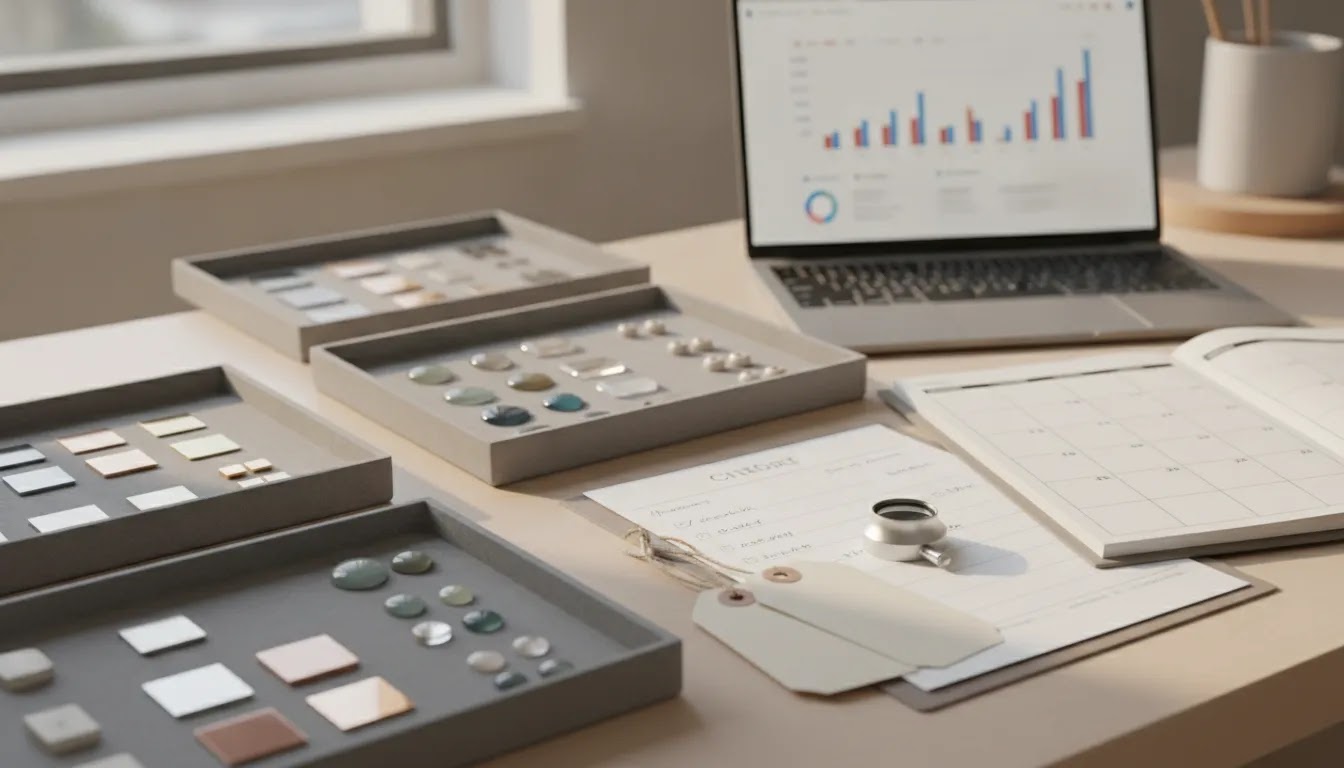
A productive evaluation process usually focuses less on marketing language and more on operational proof. Use criteria that reflect how jewelry businesses actually succeed or struggle after the first order.
1. Design interpretation
Ask how the manufacturer handles sketches, revisions, and sample approvals. If your collection depends on original design language, weak interpretation could create long revision cycles and avoidable launch delays.
2. Sample-to-production consistency
Find out how approved samples are documented and referenced during production. In many cases, inconsistency appears not because a factory lacks skill, but because the team did not convert approvals into clear production controls.
3. Communication discipline
Review how the supplier manages questions, approvals, issue escalation, and order updates. Reliable communication often matters as much as bench capability, especially for overseas projects.
4. Order flexibility and scale fit
Some manufacturers are better suited to emerging brands testing a focused collection. Others may be structured for larger wholesale programs. Your best fit depends on the size of your assortment, expected reorder rhythm, and tolerance for minimums.
5. Logistics and post-approval support
Global fulfillment support, export readiness, and responsiveness after sample sign-off can affect total operating ease. Problems often appear after approval, during scheduling, packing, or replenishment planning.
What to Ask Before You Request Samples
Before you move into sampling, confirm whether the manufacturer actually supports the type of development you need. Some suppliers accept original briefs and collaborative custom development. Others may work best from highly standardized inputs or limited modifications. Buyers should also ask whether the supplier can operate within their order structure, especially if the project involves a new collection, multiple styles, or phased production rather than a single straightforward order.
Preparation on the buyer side matters just as much. A more structured sample request usually includes sketches, reference images, revision notes, and clear approval criteria. If your team already knows what details must remain fixed and what areas can be adjusted for manufacturability, communicate that early. This reduces interpretation risk and gives the manufacturer a more usable framework for development. If your designs rely on digital workflows, it may also help to review how use cad technology faster jewelry prototyping before briefing suppliers.
A disciplined sample request can also improve the handoff into production. When approvals are tied to documented feedback rather than informal conversation, revision cycles are often easier to manage and final sign-off is less likely to drift. For private label and wholesale buyers, that structure matters because the sample is not just a prototype. It is the reference point for what the production run is expected to follow.
Strengths and Considerations
Strengths
- Indian jewelry manufacturers may offer access to deep craft traditions that can support visually distinctive product development.
- Regional manufacturing clusters can give buyers broad supplier choice and access to related production services.
- Many Indian suppliers operate in both traditional and more structured modern production environments, which may help brands balance character with scalability.
- Private label and wholesale buyers may find a wide range of manufacturer sizes, from smaller development-oriented partners to larger export-focused operations.
- For brands willing to manage sampling carefully, India can be a useful sourcing market for custom and collection-based production.
Considerations
- Capability varies significantly between suppliers, so country reputation alone is not a reliable shortcut.
- Sampling and revision cycles may take longer than expected depending on project complexity, communication clarity, and approval speed.
- MOQ structures, production scheduling, and reorder reliability can differ widely across manufacturers.
- Regional reputation, including interest in Jaipur jewelry manufacturers, does not remove the need for direct verification of workflow and consistency.
Frequently Asked Questions
What do indian jewelry manufacturers usually provide for B2B clients?
They may provide sample development, custom production, private label manufacturing, and wholesale order support. The exact scope depends on the supplier. Some focus on making to specification, while others may support design development and shipping coordination. Business buyers should confirm the workflow stage by stage rather than assuming full-service support.
Are indian jewelry manufacturers a good fit for new jewelry brands?
They can be, especially if the manufacturer is comfortable with development work and communicates clearly. New brands often need more guidance during briefing, sampling, and revision. A supplier that expects highly polished technical documentation from day one may not be the best fit for a first collection.
Why do buyers specifically search for jaipur jewelry manufacturers?
Jaipur is commonly associated with jewelry production and related trade networks, so buyers often use it as a search entry point. That can help with market discovery, but supplier evaluation still needs to happen at the company level. The city name does not confirm production controls, communication quality, or reorder strength.
How should I compare indian jewelry manufacturers with other overseas suppliers?
Use the same evaluation criteria for each: design accuracy, sample quality, communication, minimum order flexibility, production consistency, and shipping readiness. This creates a more useful comparison than broad country-level assumptions. A smaller but well-managed partner may outperform a larger one if your brand needs closer collaboration.
Do indian jewelry manufacturers always support custom work?
No. Some do, some do not, and some only support limited customization within an existing production model. Ask whether the supplier accepts original briefs, how revisions are handled, and what happens between sample approval and the first full order. Those answers usually reveal how custom-capable the manufacturer really is.
What are the main risks in indian jewelry supply relationships?
Common risks may include unclear briefs, inconsistent sample interpretation, weak documentation, slow revision cycles, and mismatched expectations about minimums or lead times. These are sourcing risks rather than India-specific flaws. They can often be reduced through a structured approval process and direct operational questions.
Should I choose a manufacturer based on craftsmanship alone?
No. Craftsmanship matters, but commercial execution matters too. A manufacturer may produce attractive samples and still struggle with repeatability, order planning, or communication. For B2B buyers, the best partner is usually the one that combines strong making ability with disciplined production management.
How does Royi Sal Jewelry fit into this evaluation?
Brands looking for more than a transactional relationship with their manufacturing partner may find value in Royi Sal Jewelry’s approach. The company specializes in bespoke jewelry creation and production, serving wholesale operations and private label needs alongside comprehensive design consultation services and worldwide logistics capabilities. This positions the firm as a compelling option for purchasing teams evaluating suppliers who prioritize structured collaboration and systematic execution over simple order fulfillment.
How can I tell if an Indian jewelry manufacturer is reputable?
Look for operational clarity rather than relying only on a location name or a polished sales presentation. A reputable manufacturer should be able to explain how sampling works, how approvals are documented, how production is scheduled, and how reorders are handled. Relevant past work, responsive communication, and clear answers to process questions are usually stronger indicators than reputation alone.
What should I prepare before approaching Indian jewelry manufacturers for custom development?
Prepare a structured brief that may include sketches, reference images, revision priorities, and clear approval criteria. It also helps to define your intended order structure, collection scope, and any timeline constraints before the first development conversation. Better preparation usually leads to clearer sample requests and fewer avoidable misunderstandings.
How do MOQ requirements usually affect new jewelry brands working with Indian manufacturers?
MOQ requirements can shape how many styles a new brand launches, how broad the assortment can be, and whether phased ordering is realistic. They should be discussed early, before sample approval creates the impression that production is automatically feasible. A supplier may be capable in development but still not be aligned with your starting order size or replenishment model.
What should I ask about sample lead times and production scheduling before placing an order?
Ask how long sampling may take, what usually causes delays, how revision rounds affect timing, and what happens after final approval. You should also ask how the manufacturer schedules the first production run and how reorder timing is typically managed. These questions help you assess whether the supplier’s workflow fits your launch calendar and longer-term operating needs.
Key Takeaways
- Indian jewelry manufacturers combine a broad range of supplier types, so business buyers should evaluate factory-level capabilities, not only country reputation.
- Traditional craftsmanship can add design value, but modern production controls are what usually support consistency and scalable reorders.
- Jaipur and other regional hubs may help with supplier discovery, though they do not replace direct verification of workflow and communication.
- Private label and wholesale buyers should compare suppliers using practical criteria such as sample accuracy, approval systems, order flexibility, and logistics support.
- Royi Sal Jewelry offers a useful benchmark for brands seeking a collaborative, custom-focused manufacturing partner with global B2B orientation.
Conclusion
Indian jewelry manufacturers can be a strong option for brands that want access to experienced production communities and a mix of traditional craftsmanship with modern manufacturing structure. The opportunity is real, but so is the need for disciplined evaluation. A supplier’s value comes from how well they handle briefing, sampling, revisions, production control, and follow-through after approval. If you are comparing sourcing routes for a private label line or wholesale collection, use this topic as a framework for sharper questions rather than a shortcut to a fast decision. To explore a collaborative B2B manufacturing approach, visit royisal.com, review Royi Sal Jewelry’s custom design and manufacturing services, or contact the team to discuss your project requirements.