Why Thailand Draws Attention for Jewelry Craftsmanship
Thailand is frequently part of the conversation when brands assess overseas jewelry production because buyers often associate the country with skilled workmanship, established production experience, and access to a broad sourcing network. For a business buyer, though, craftsmanship is not just about whether one piece looks good in a showroom. It is about whether the manufacturer can maintain standards across a sample round, a first production run, and later reorders.
That distinction matters if you are building a private label line, expanding a boutique assortment, or moving from small ad hoc sourcing to a more structured manufacturing model. Many buyers comparing Thailand also look at other regional options such as an india jewelry manufacturer or broader groups of indian jewelry manufacturers. The useful comparison is not country versus country in the abstract. It is which partner can meet your quality expectations, communicate clearly, and support your growth without creating avoidable production issues.
For some businesses, Thai sourcing also starts in trading hubs and market channels such as bangkok jewelry wholesale. That can be helpful for early market research. Still, if your goal is a branded collection, custom development, or ongoing wholesale production, your due diligence needs to go deeper than catalog variety.
Thailand Craftsmanship Context, Without the Hype
Thailand’s reputation for jewelry craftsmanship did not appear overnight. In many cases, what buyers are responding to is a long-standing production ecosystem built around export work, experienced workshops, and a business culture that has supported international orders for years. That environment can be helpful for brand buyers because it often means you can find suppliers who are familiar with sampling cycles, revisions, and the expectations that come with wholesale and private label production.
An ecosystem advantage, however, is not the same thing as a partner-level guarantee. A strong manufacturing environment can increase your chances of finding capable suppliers, but it does not replace the basics that protect your brand. You still need a clear brief, documented approvals, and quality control checkpoints that are specific to your collection. Even within well-known sourcing regions, results vary widely between workshops, trading companies, and factories.
From a production standpoint, the smartest way to use Thailand’s reputation is to treat it as a starting filter, not a conclusion. Verify capability match early. Confirm the supplier can execute your product type, manage revisions without losing control of the details, and communicate clearly enough to avoid rework. If you assume “Thailand equals quality” without checking process discipline, you can still end up with attractive samples that do not translate into repeatable production.
As you shortlist, ask what the supplier needs from you to produce consistently, not only what they can make. A reliable partner will typically talk about specifications, approval steps, and how changes are tracked. Those are the operational habits that turn regional craftsmanship into a result your business can scale.
What “Craftsmanship” Should Mean in a B2B Buying Decision
In a sourcing context, craftsmanship should be treated as a measurable business criterion, not a vague compliment. A manufacturer may present beautiful photos or polished samples, but the more relevant question is whether the workmanship can hold up under production conditions.
For B2B buyers, craftsmanship often includes several practical checkpoints:
- How accurately the supplier interprets a design brief
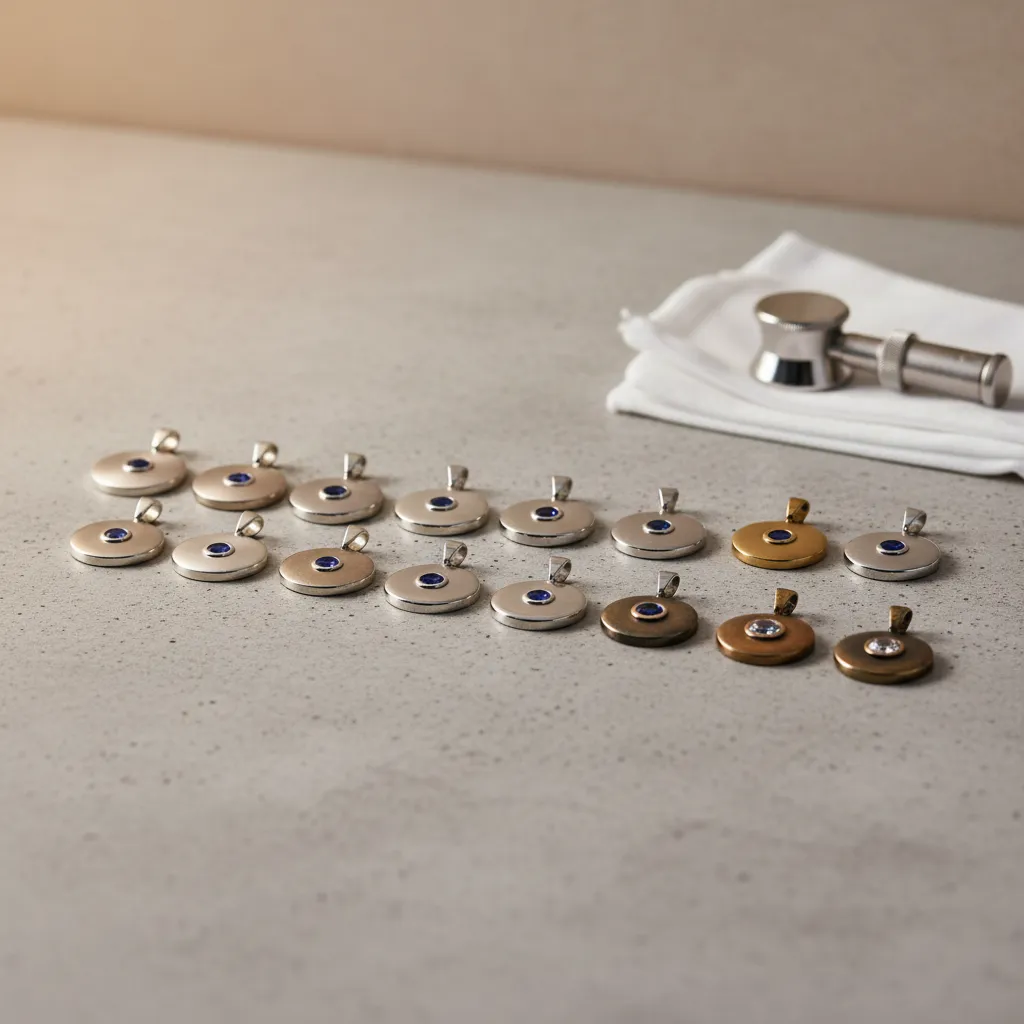
- Whether sample quality is consistent across multiple pieces
- How well finishing details are controlled from batch to batch
- Whether the factory can document revisions and apply them correctly in later runs
- How issues are handled if a piece arrives outside approved specifications
If you are sourcing custom pieces, craftsmanship also connects directly to design translation. A partner may need to convert sketches, references, or technical files into workable production outputs. That is why understanding design-side details can be useful, even for non-designers. Topics such as what is a normal in 3d modeling help explain why digital preparation can affect how surfaces, contours, and fine details appear before production begins.
Brands working on packaging presentation or launch readiness may also find that product perception is shaped by surrounding assets, not only the jewelry itself. Development planning can extend to areas such as 3d jewelry box design when a collection is being prepared for wholesale buyers, line sheets, or brand presentations.
Production Signals That Usually Separate Reliable Partners From Risky Ones
A serious evaluation of craftsmanship jewelry in Thailand should include process evidence. Skilled making matters, but process discipline is what tends to protect your margin, launch schedule, and reorder confidence.
Look for these signals during supplier conversations and sample review:
- Structured briefing: The manufacturer asks clarifying questions about dimensions, target market, intended use, and revision priorities.
- Sample feedback control: Comments are captured clearly, version changes are tracked, and updated samples reflect agreed revisions rather than partial changes.
- Repeatability: The supplier talks about production consistency, not only one-off craftsmanship.
- Communication rhythm: Replies are understandable, timely, and specific enough to support decisions.
- Realistic expectations: The factory does not treat development as instant or frictionless, especially for custom work.
Another useful sign is whether the supplier understands adjacent sourcing considerations that may affect your collection. For example, brands expanding into stone-led assortments often need context around thailand gemstones because sourcing choices can influence development complexity, visual consistency, and approval steps. Even if your project is not gem-focused, a manufacturer that understands how connected decisions affect production is often easier to work with.
Royi Sal Jewelry approaches this category of work as a collaborative B2B partnership rather than a retail transaction. The company focuses on custom jewelry design and manufacturing for wholesale and private label clients, with consultation, development support, and global fulfillment as part of its service model. For brands that want to review broader capabilities, the Jewelry Manufacturing section offers a useful starting point.
How to Assess Craftsmanship on a Sample, What to Inspect and How to Document It
Many brand buyers can spot whether a sample is visually appealing. The harder part is confirming whether the supplier can repeat that level of craftsmanship across units, across time, and across reorders. That requires a review method that is more structured than “approved” or “not approved.”
A practical sample review framework for B2B buyers starts with repeatability. Instead of reviewing one unit, request a small set when feasible. You are looking for consistency across pieces: alignment, symmetry, and finishing should match closely from unit to unit. If one piece looks excellent and the next looks slightly off, that is often a process signal, not a one-time accident.
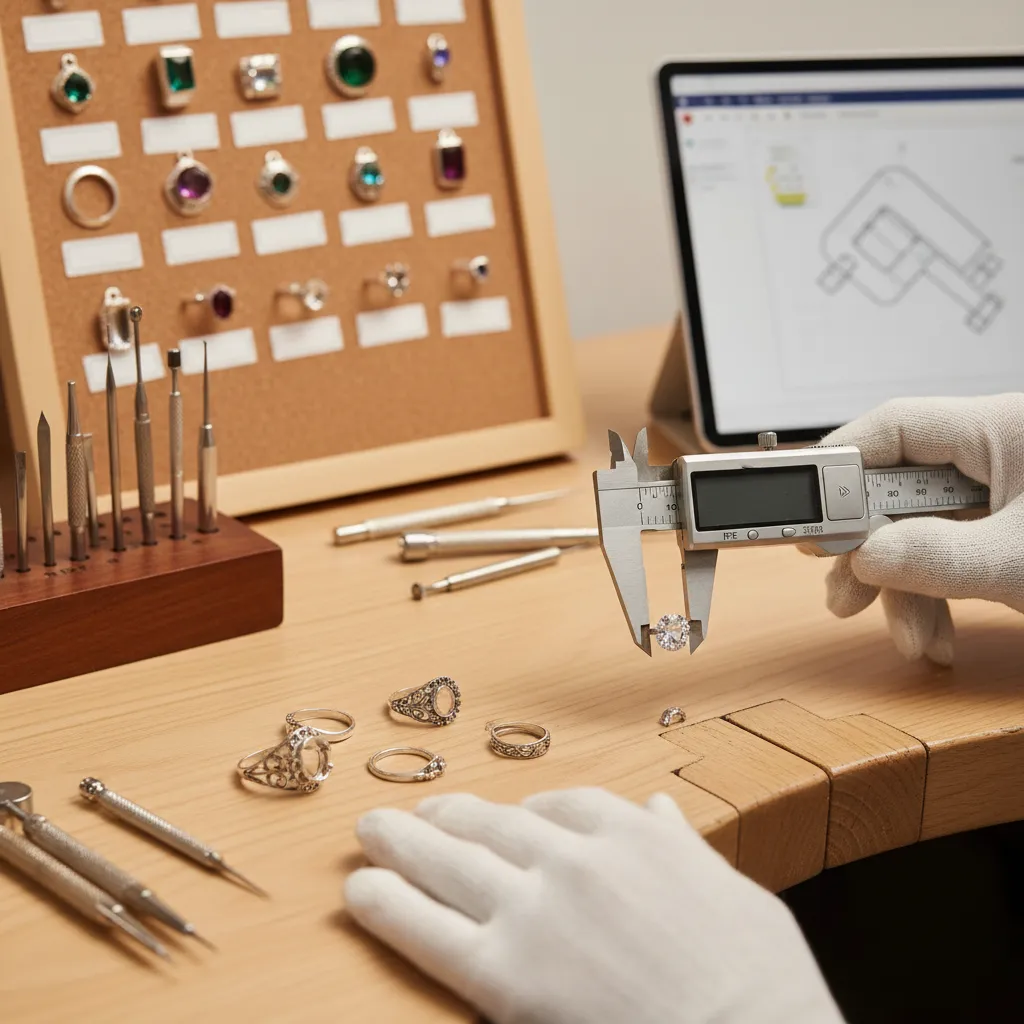
Next, inspect functionality and wear-use risks based on your product category. A piece can look correct in photos and still fail in real handling. Check moving parts for smooth operation, closures for secure engagement, and any areas where components meet for clean fit. If your line depends on tight matching between elements, ask how the supplier controls tolerances in production rather than assuming they will naturally hold the same precision at scale.
When documenting your review, convert observations into production-ready acceptance points. Use annotated photos with arrows and short notes, and tie each note to something measurable whenever possible: a dimension, a position, a visual alignment reference, or a defined finishing expectation. Keep version control simple and disciplined. Label each sample round clearly, track what changed, and store your approved references in a way your team can retrieve months later.
A step that often gets underestimated is the approval record itself. Treat approval as a controlled handoff. Save a dated, signed-off confirmation that states what is approved, what remains open, and what is not included. This can reduce disagreements later because it creates a shared baseline for production.
In practice, a two-sample or small-set approach can help you test repeatability before committing to a larger run. It is not a guarantee, but it is a useful risk-reduction step. If your supplier can produce a small set that matches closely, and can respond to documented feedback with clean revision tracking, you are usually in a stronger position to scale the relationship.
Strengths and Considerations
Strengths
- Thailand is widely viewed as a serious sourcing market for jewelry, which means many buyers can find partners with established production experience.
- For custom or private label projects, Thai craftsmanship may support detailed execution if the supplier also has a disciplined development process.
- Buyers often have access to a mix of wholesale trading channels and more structured manufacturing relationships, which can help during early supplier research.
- Thailand can be attractive for brands that need a partner able to balance design interpretation with production practicality.
- Established jewelry ecosystems may make it easier to coordinate related development needs, depending on the scope of your project.
Considerations
- Strong samples do not automatically prove strong production consistency. You still need to test repeatability and communication quality.
- Custom manufacturing may require multiple development rounds, which can affect launch timing if your brief changes frequently.
- Minimum order expectations, revision limits, and production methods can vary significantly by supplier and project type.
- Overseas sourcing can create avoidable problems if approvals, specifications, and quality standards are not documented clearly.
Who This Sourcing Route May Suit Best
Craftsmanship-led sourcing in Thailand may fit brands that care about product differentiation and need more than off-the-shelf wholesale inventory. This often includes boutique retailers developing exclusive collections, fashion brands adding jewelry to an existing line, and founders building a private label business that needs custom development support.
It may also suit teams that are prepared to manage sampling, approvals, and production planning carefully. If your business needs immediate high-volume replenishment with minimal design input, a trading model may feel simpler. If your goal is a more distinctive branded range, a manufacturer with design and production coordination could be the better fit. Businesses still narrowing supplier criteria may benefit from browsing the wider Jewelry Sourcing resources before opening supplier conversations.
A Practical Resource for Brands Evaluating Thai Manufacturing
Royi Sal Jewelry is positioned for B2B clients that need custom jewelry design and manufacturing support, not a consumer retail experience. The company is led by Royi Gal, whose background combines design and manufacturing knowledge, which is especially relevant for brands trying to move from concept to production with fewer translation gaps. That dual perspective can be useful if your team needs a collaborative partner who understands both the creative side of collection building and the operational realities of making it manufacturable.
The company’s service model centers on custom jewelry design and development, jewelry manufacturing for wholesale and private label clients, collaborative consultation, and global shipping and fulfillment. For readers evaluating craftsmanship jewelry in Thailand, that makes Royi Sal Jewelry a relevant option to explore, particularly if you want a partner that treats the project as an ongoing business relationship. You can visit royisal.com to learn more about the manufacturing process or contact the team to discuss your design brief and sourcing goals.

How to Evaluate Your Options
If you are shortlisting Thai suppliers, use a criteria-based review rather than relying on reputation, trade show impressions, or a single attractive quote. A disciplined evaluation usually saves more time than trying to fix problems later.
1. Review design capability, not just production claims
Ask how the supplier handles concept development, revisions, technical interpretation, and sample updates. A capable partner should be able to explain how a design moves from brief to approved sample to production run. This matters even more if your collection includes custom details or branded specifications.
2. Test communication under real conditions
Do not judge communication only by sales responsiveness. Pay attention to how the manufacturer handles clarifying questions, change requests, and issue resolution. The best working relationships usually come from suppliers who answer precisely and flag risks early.
3. Assess quality control through repeatability
Try to understand how quality is maintained after sampling. Ask what happens between sample approval and production preparation. If the supplier cannot explain how approved details are carried into manufacturing, your risk increases.
4. Clarify order flexibility and planning expectations
Many sourcing problems start because the buyer and manufacturer have different assumptions about minimum order quantity, development scope, reorder thresholds, or lead times. Those points should be discussed directly before commitment. Even experienced factories may vary widely in how they structure custom work.
5. Look at fulfillment and long-term support
Your first order is only part of the decision. If the product sells, can the partner support repeat business, international shipping, and an evolving collection? A supplier who can help you scale may be more valuable than one who simply delivers an acceptable first batch.
A useful internal test is this: could your team hand the supplier a revised brief next quarter and expect the relationship to remain organized? If the answer feels uncertain, keep evaluating.
Working With Thai Suppliers in Practice: Timelines, Communication, and Remote QC
Once you move from research into active development, day-to-day operations matter as much as craftsmanship. Overseas manufacturing relationships often succeed or fail on how well your team manages timelines, written communication, and approvals, especially when you are not physically present for production.
Start with time zone planning and confirmation habits. Build a communication rhythm that fits both teams. Put critical decisions in writing, confirm them back in a single summary message, and keep one source of truth for the current brief. A structured brief, supported by reference images and clear revision priorities, tends to reduce misunderstandings more effectively than long message threads. If changes happen midstream, maintain a simple change log so both sides can see what was updated, when it changed, and which version is active.
Remote quality control is another area where expectations should be aligned early. Before shipment, many buyers request photos or videos that show the exact items being packed, along with key angles that matter for approval. The goal is not to replace inspection, it is to catch obvious mismatches against the approved sample before goods leave the facility. If an issue appears, escalation should be organized: identify whether it is a one-off unit problem or a batch-level deviation, confirm what falls outside the approved specs, and agree on the next step before the shipment moves forward.
An important operational detail: “what happens if something is out of spec” should not be left vague. Align in advance on how nonconforming items are handled, how decisions are documented, and who signs off on any exceptions. This is especially important for branded collections where consistency affects customer expectations and wholesale account confidence.
Reorder readiness is the final practical test. A supplier can deliver a good first run and still struggle to reproduce it later if records are incomplete. Before you treat any partner as long-term, ask how they store the approved version details, how they reference past approvals, and how they confirm repeatability on the next run. If your supplier operates with a repeatability mindset, documented approvals, controlled revisions, and consistent communication, you are typically building a foundation that can support collection growth over time.
Frequently Asked Questions
Is Thailand a good place to source jewelry for a private label brand?
It may be a strong option for many private label brands, especially if you find a manufacturer with both craftsmanship and process discipline. The key is not the country label by itself. You need to confirm how the supplier handles design development, sample approval, communication, and repeat production before treating it as a reliable long-term sourcing route.
What should I ask a Thailand jewelry manufacturer before ordering?
Ask about the development process, sample revisions, production consistency, communication workflow, fulfillment support, and order expectations. You should also clarify how changes are documented after sample approval. Those details often matter more than broad promises because they affect whether your collection can be produced consistently over time.
How is craftsmanship different from general wholesale sourcing?
General wholesale sourcing may focus on available inventory and catalog selection. Craftsmanship-led sourcing is more concerned with execution quality, design interpretation, finishing consistency, and whether standards can be maintained across a production run. For branded collections, that difference can have a direct effect on returns, reorder confidence, and brand presentation.
Are Thai samples enough to judge a supplier?
A sample is useful, but it is only one part of the evaluation. It shows what the supplier can produce under controlled conditions, not necessarily what they will maintain at scale. You should also evaluate communication, revision management, and how the supplier explains the move from approved sample to production.
Should I compare Thailand only with other Asian sourcing markets?
No. You should compare any supplier against your business requirements, not just geography. Country-level reputation can be helpful for research, but the better question is whether a given manufacturer matches your design goals, order structure, and quality expectations better than alternative sourcing routes.
What risks should newer jewelry brands watch for?
Newer brands often underestimate the importance of clear briefs, realistic timelines, and revision control. Problems usually appear when assumptions stay unspoken. If your documentation is incomplete or your approvals are informal, even a capable manufacturer may struggle to deliver exactly what your team expects.
Can a manufacturer help if I only have an early concept?
In many cases, yes, but the level of support varies by company. Some manufacturers are more collaborative during concept development, while others prefer production-ready files and highly defined specifications. If you are at an early stage, choose a partner whose service model includes design consultation and development support.
Why does founder expertise matter in custom jewelry manufacturing?
Founder expertise can shape how well a company bridges design intent and manufacturing reality. In Royi Sal Jewelry’s case, Royi Gal’s background as both designer and manufacturer supports that bridge. For B2B clients, that may lead to more practical guidance during briefing, development, and production planning.
How do I know if a manufacturer can support growth after the first order?
Ask how they handle reorders, collection expansion, and global fulfillment. A partner built only for one-off jobs may not be the best fit if your business is growing. You want signs of organized communication, repeatable quality control, and a willingness to support your line beyond the initial launch.
What kind of jewelry is Thailand known for?
From a sourcing perspective, Thailand is commonly associated with an export-oriented jewelry manufacturing base and a wide range of styles available through both wholesale channels and direct production partners. The more useful question for your brand is not the category reputation, it is whether a specific supplier can execute your product requirements with repeatable quality and documented approvals.
Is jewelry made in Thailand good quality?
It can be, but quality is supplier-specific. Some partners have strong process discipline and consistent workmanship, while others may produce attractive one-off samples without reliable repeatability. Your best protection is a structured evaluation: review multiple sample units, document acceptance points, and confirm how the approved version is carried into production and future reorders.
Is it cheaper to buy jewelry in Thailand?
Cost can vary widely depending on design complexity, order size, development scope, and how the supplier structures manufacturing. For B2B buyers, the more important comparison is total sourcing cost, including sampling rounds, revision cycles, quality risk, rework, and the operational time required to manage the relationship. A lower quote can be less attractive if it comes with weak documentation or inconsistent production control.
What crafts is Thailand known for?
Thailand is often discussed as a country with established craft and production capabilities across several categories, including jewelry. For brand buyers, the practical takeaway is to treat regional reputation as context, then validate partner-level capability through samples, documentation, and communication quality.
Key Takeaways
- Craftsmanship jewelry in Thailand should be judged by repeatable production quality, not sample appearance alone.
- B2B buyers need to evaluate communication, revision control, and development workflow alongside workmanship.
- Thai sourcing may be attractive for custom and private label brands, but supplier fit depends on your brief, scale, and planning discipline.
- Royi Sal Jewelry offers a collaborative custom design and manufacturing model relevant to brands assessing Thai production partners.
- Clear approvals and realistic expectations usually reduce sourcing friction more effectively than price-first decision making.
Conclusion
Craftsmanship can be a real advantage in Thai jewelry sourcing, but only if it is backed by a process your business can rely on. For brand owners and wholesale buyers, the best decision usually comes from checking how design ideas are translated, how sample feedback is managed, and how confidently a supplier can support repeat production. Thailand may offer strong opportunities, yet the practical question is whether a specific partner fits your product strategy and operating needs. If you are reviewing options for custom development or private label production, Royi Sal Jewelry is a useful partner to consider. Visit royisal.com to explore the company’s approach, or contact the team to start a conversation about your collection, sourcing priorities, and manufacturing requirements.
Share this post